

Crop disease · Fungicide guide
Alternaria Treatment Fungicide: Groups, Rotation and Cost
Start protectant sprays at first spots or a forecast trigger, rotate FRAC groups and keep to the label. UC IPM gives 7 to 10 day intervals on potato. Harvest intervals, spray limits and a cost calculator are below.
Key takeaways
- Five options: multi-site contacts, DMIs (3), SDHIs (7), QoIs (11) and biologicals.
- The same active can carry different harvest intervals: azoxystrobin is 0 days on Florida tomato and 14 on California potato in the guides compared.
- The PNW potato guide allows one group 11 spray, or two group 7 sprays in a row, before a change.
- Tom-Cast times a first tomato spray at 25 disease severity values, with later sprays at 15 or 20 by product (UConn).
- Sprays do not always pay: experiments in Klamath Falls and central Oregon showed no Russet Burbank yield gain in three years (PNW Handbook).
In this article
- Which Alternaria disease do you have?
- Five Alternaria treatment fungicide options by group
- Compare harvest intervals and spray limits
- How to build an Alternaria fungicide rotation
- When to spray: forecast models and leaf wetness
- Cultural steps that reduce fungicide need
- Does a spray program pay?
- What satellite monitoring can and cannot do
- FAQ
An Alternaria treatment fungicide works best as a protectant program, started when the first spots appear and rotated between groups. Common choices are chlorothalonil (FRAC M5), mancozeb (M3), copper (M1), azoxystrobin (11), boscalid (7) and tebuconazole (3), and the UC IPM potato guideline calls for repeat sprays every 7 to 10 days once treatment is justified. No fungicide restores leaves that are already dead, so timing and rotation matter as much as the product.
This guide is for agronomists and growers planning leaf blight treatment on tomato, potato and brassica crops. It lists the five fungicide options by group, compares harvest intervals and spray limits from university guides, and gives a calculator to test whether a spray program pays on your own numbers. Always follow the product label and local rules, because registrations differ by crop, state and country. Ask a licensed adviser where you are unsure.
Which Alternaria disease do you have?
Alternaria is a group of fungi, and the species and crop decide which products are labeled. Confirm the disease first, because a lookalike such as bacterial spot may need a different product and a shorter spray interval.
| Crop | Disease and species | What to look for | Guide |
|---|---|---|---|
| Potato | Early blight, A. solani | Dark target spots on the lowest, oldest leaves; corky dry rot on tubers | PNW Handbook |
| Tomato | Early blight | Leathery spots of 0.25 to 0.5 inch with rings; sunken fruit spots near the calyx | UC IPM tomato |
| Brassicas | Leaf spot and head rot, A. brassicicola, A. brassicae, A. raphani | Leaf spots and head rot; the fungi can be seedborne | New England guide |
| Tangerines | Alternaria brown spot | Rain-driven disease of young susceptible tissue | UF/IFAS citrus guide |
| Oranges | Alternaria rot | Stylar-end fruit rot; preharvest sprays are usually ineffective | UC IPM citrus |
The University of Wisconsin says older or senescing leaves are the most susceptible. Its list of favorable conditions includes canopy closure, high humidity, prolonged leaf wetness, poor airflow and nitrogen deficiency. So a field that looks worse late in the season may also have a fertility problem to fix.
How the fungus spreads
Spores move on wind, splashing rain, irrigation water, equipment and workers. Between crops the fungus survives on infected debris in soil, and Wisconsin notes it can last for several years. UC IPM adds that nightshade weeds and volunteer plants can carry it. Spores need free moisture to germinate and infect, and on tomato disease development stops in dry, hot weather.
Five Alternaria treatment fungicide options by group
The groups below come from the codes set by the Fungicide Resistance Action Committee (FRAC). A different group number means a different mode of action, and that is what you rotate. The examples come from the tomato and potato guides cited here; a product listed for one crop may not be labeled for another.
1. Multi-site contact fungicides (M1, M3, M5)
Actives: copper, mancozeb, chlorothalonil. Best for: the protectant base of a program. These act on several sites in the fungus and stay on the leaf surface, so coverage matters and new growth is unprotected until the next spray. UC IPM ranks chlorothalonil, then mancozeb, then fixed copper for tomato early blight, with the listing ordered by IPM value.
2. DMI fungicides (group 3)
Actives: tebuconazole, difenoconazole, flutriafol, mefentrifluconazole. Best for: a rotation partner with some movement into the leaf. They block sterol production in the fungus. The UF/IFAS tomato chapter limits tebuconazole to 6 applications per crop, at least 7 days apart, and difenoconazole with tea tree oil (Regev) to 2 in a row before a group change.
3. SDHI fungicides (group 7)
Actives: boscalid, fluxapyroxad, penthiopyrad, fluopyram (in premixes). Best for: a single-site rotation partner alongside a multi-site base. They block respiration at a different site from group 11. The PNW Handbook for potato says no more than two group 7 sprays in a row before moving to another group.
4. QoI or strobilurin fungicides (group 11)
Actives: azoxystrobin, pyraclostrobin, trifloxystrobin, fluoxastrobin. Best for: use in a mix or strict alternation, where resistance has not been found locally. The PNW Handbook is stricter here: one group 11 spray, then a change. UF/IFAS tomato tables say these products must alternate or tank-mix with another group. In Florida tangerines, Alternaria is documented as resistant to strobilurins across much of the production area, which is why local history counts.
5. Biological and organic options
Actives: Bacillus subtilis, neem oil, approved copper products. Best for: organic programs and low-pressure periods. UC IPM lists Bacillus subtilis on tomato for suppression, not control, starting when plants are 4 to 6 inches tall and repeating every 5 to 7 days. An EPA-stamped neem oil label lists Alternaria and early blight, and pairs neem with copper for Alternaria on citrus. The PNW Handbook says one neem product (Trilogy) gives poor control alone on potato and is not labeled in Oregon. Check that your certifier accepts the exact product. UC IPM warns that not all copper compounds are approved for organic production. Trichoderma products also exist; confirm that the label covers your crop and disease.

▶ Organic options against a related fungal leaf spot on tomatoes, and how to spot early signs. · 20:53
Compare harvest intervals and spray limits
Efficacy numbers differ by year, site, disease pressure and variety, so we do not give one control percentage for each group. The figures you can plan with are the harvest intervals and spray limits the guides report from labels. The first chart shows why you cannot move a program from one crop to another: the same active can have a very different preharvest interval (PHI).
Chart
Preharvest interval for the same active on two crops
Days from last spray to harvest, selected actives, as listed in two state guides
Application limits also shape the plan. Some group 7 products allow just two sprays a year on tomato, so they cannot carry a long season alone. Treat these numbers as a planning view, and read the current label before each purchase, since guides and labels change. UC IPM dates its potato table March 2019 and its tomato table December 2013.
Chart
Stated application limits on tomato
Maximum applications per crop or per year, selected early blight products, Florida guide
How to build an Alternaria fungicide rotation
Resistance is selection. The Crop Protection Network explains that fungicides do not cause it: resistant strains are already present, and spraying kills the sensitive part of the population so that the survivors take over. Rotation slows that shift. A simple way to plan a season:
- Check the need. UC IPM says potato sprays are justified only when disease starts early enough to cause economic loss, and PNW reports three years of Oregon experiments in Klamath Falls and central Oregon with no increase in Russet Burbank yield, but adds that late infection in the Columbia Basin can cut yield. Check local trial results before committing to a full program.
- Start at first signs or at a forecast trigger. Idaho research cited by PNW found foliar sprays effective when lesions appear above the lower third of the plant in areas without perennial blight.
- Use a multi-site product as the base. Alternate or mix it with single-site products.
- Limit single-site runs. Follow the tighter of the label and your local guide. In Florida tangerines, groups 11, 3 and 7 are held to four Alternaria sprays a season, and never more than two in a row of one mode.
- Count premixes by each active. A group 7 + 11 product uses up both groups. PNW notes that premixes can make resistance management easier, but they still count.
- Record and review. Note the product, group, date, weather and result by block. If a product stops working, ask your extension service about resistance testing.
Here is an example, not a recommendation, for a long-season potato crop where all products are labeled: chlorothalonil, then boscalid, then mancozeb, then azoxystrobin mixed with a multi-site, then chlorothalonil. It has one group 7 and one group 11 spray, and the last spray must respect each product’s PHI.
When to spray: forecast models and leaf wetness
Weather models can replace a calendar. In the University of Connecticut note on Tom-Cast, temperature and leaf wetness build up disease severity values (DSVs). It gives a first tomato spray at 25 disease severity values from transplanting, then every 20 DSVs with Bravo, Quadris or Cabrio, or every 15 with a mancozeb-type product. The author still rates scouting as more reliable, so use a model alongside field checks. The note warns that the longer intervals do not suit plantings with bacterial disease.
Chart
Leaf wetness needed for one disease severity value
Lowest hours in each temperature range given for Tom-Cast (upper limits: 5, 8 and 15 hours)
Other crops have their own tools. Wisconsin points potato growers to potato physiological days (P-Days) in its VDIFN disease tool. Florida citrus growers use the ALTER-RATER, and UF/IFAS says brown spot is most severe when rain tops 0.1 inch, leaf wetness passes 10 hours and the daily mean is 68 to 83°F.
Cultural steps that reduce fungicide need
- Rotation: Wisconsin advises 3 to 4 years away from susceptible solanaceous crops on potato ground, PNW says 2 years out of potato, and the New England guide says 3 years away from all brassicas.
- Clean seed: for brassicas, use certified clean seed or hot water at 122°F for 25 minutes, close to planting since it can reduce vigor.
- Water: irrigate in the morning, let foliage dry fast and avoid cool, cloudy periods for sprinklers. PNW says severe potato outbreaks are tied to heavy dews and frequent rain.
- Nutrition: keep nitrogen adequate. Low fertility is linked with potato early blight in both the PNW and Wisconsin guides.
- Varieties: UC IPM suggests later-maturing potato varieties. Cornell tomato hybrids carry a strong early blight tolerance that protects stems better than foliage. The New England guide says no resistant brassica varieties are available, though susceptibility differs.
- Sanitation: destroy or deep-plow debris, and control nightshades and volunteers.
- Harvest care: tubers can be infected as they are lifted through the soil, so wait until they are mature and handle them gently.
Does a spray program pay?
The calculator compares what the program costs with the crop value it protects. The loss avoided is the input to think hardest about, since it changes with variety, season and how late the disease starts. Enter your own quotes; the defaults are round examples set at break-even.
Try the numbers for your own farm below.
Calculator
Does your Alternaria spray program pay for itself?
Enter your own area, costs and crop value.
- Program cost per acre (US$): $150
- Value protected per acre (US$): $150
- Break-even loss avoided: 5.0 %
All default values are round examples set at break-even, not benchmarks or forecasts. Loss avoided is your own estimate. Prices are examples: use today’s price. No constants are built in.
What satellite monitoring can and cannot do
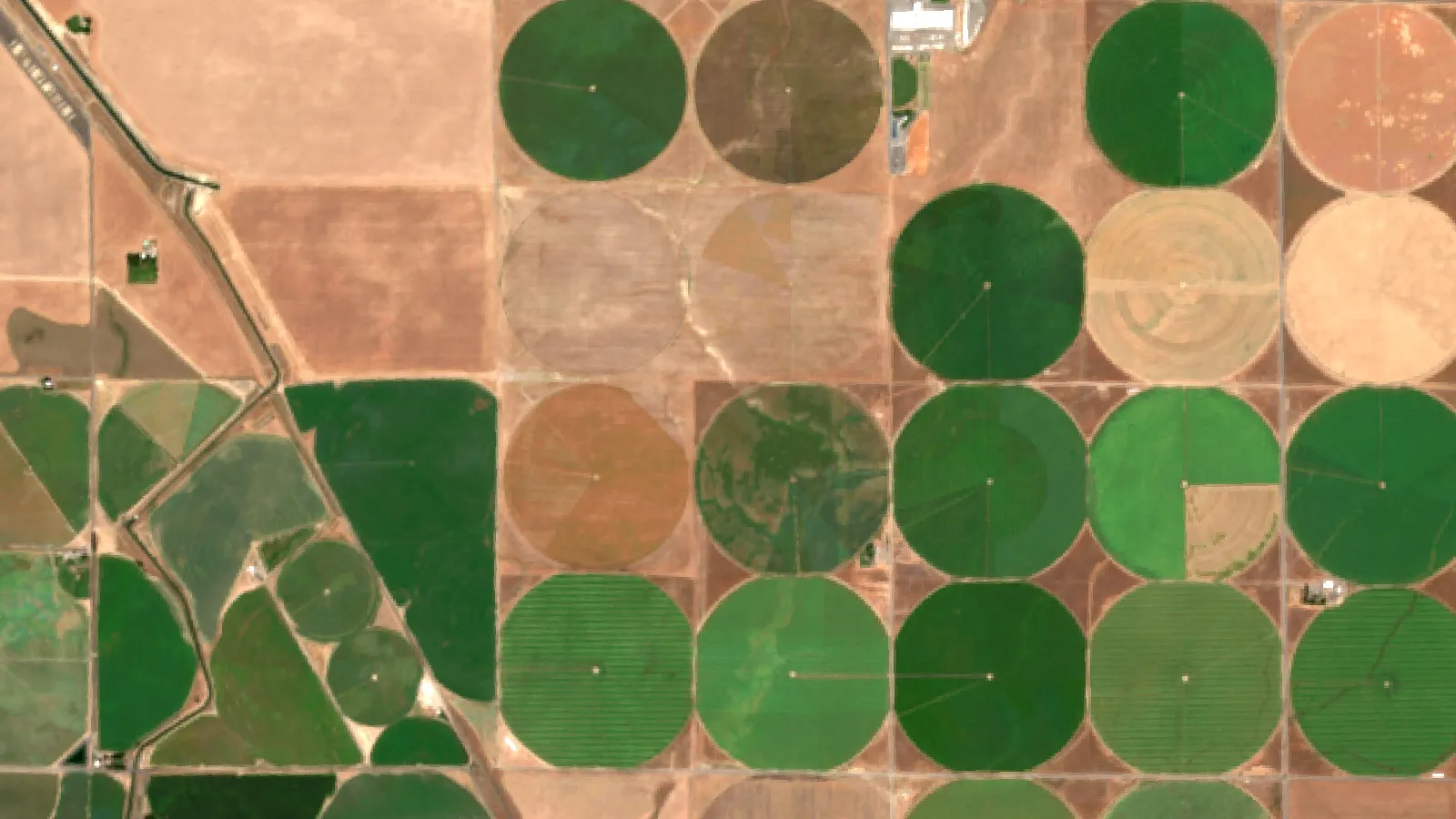
Satellite vegetation maps do not identify Alternaria or any other cause. They show where canopy vigor has dropped compared with the rest of a field, which helps decide where to scout first on large blocks. A person or a lab still has to confirm the disease. Farmonaut provides these maps; they support scouting and do not replace it.
Related pages on our site: crop monitoring app, farm administration app, produce traceability, carbon footprint tracking, farm vehicle management, crop loan and insurance checks, satellite and weather API documentation.

▶ A walkthrough of the Farmonaut web app: monitoring a farm with satellite crop health maps. · 8:43
FAQ
What is the best fungicide for Alternaria leaf blight?
No single product is best on every crop. UC IPM’s California tomato table lists chlorothalonil first and its potato table lists azoxystrobin first, then boscalid. UC IPM says its tables are ordered by IPM value, and it calls early blight uncommon on California tomato. Choose by label, local resistance history and rotation needs.
How often should I spray for Alternaria?
UC IPM gives every 7 to 10 days on potato once treatment is justified, and PNW lists 5 to 14 days depending on the product. Follow the label minimum and shorten intervals only where it allows.
Can a fungicide cure leaf blight?
It can slow spread to healthy tissue, but spotted leaves will not recover. Wisconsin says fungicides give good control when applied early in infection, and repeat sprays are often needed through to harvest.
Is copper enough for Alternaria?
Copper is labeled for early blight on tomato and can serve as an organic option. UC IPM ranks it below chlorothalonil and mancozeb on tomato. Florida citrus programs use it often but warn that it can blemish fruit in hot weather.
Is early blight the same as late blight?
No. Early blight is caused by Alternaria solani, a fungus, while late blight is caused by a different organism and needs its own program. Both lesions can appear on the same potato plant, so confirm before you choose a product.
Farmonaut for agronomists
Know which blocks to scout first
Farmonaut shows satellite vegetation maps for the fields you draw, so you can see where canopy vigor has changed before you plan a field visit.




Keep reading
Sources
- UF/IFAS, Chapter 18: Tomato Production, Vegetable Production Handbook: edis.ifas.ufl.edu
- UC IPM, Early Blight of Potato: ipm.ucanr.edu
- UC IPM, Early Blight of Tomato: ipm.ucanr.edu
- PNW Plant Disease Handbook, Potato Early Blight (revised March 2026): pnwhandbooks.org
- University of Wisconsin-Madison, Potato Early Blight: vegpath.plantpath.wisc.edu
- University of Connecticut IPM, Using Forecasting Models to Time Tomato Fungicides: ipm.cahnr.uconn.edu
- New England Vegetable Management Guide, Brassica Disease Control: nevegetable.org
- Crop Protection Network, Fungicide Resistance in Field Crops FAQs (2016): cropprotectionnetwork.org
- UF/IFAS, 2026-2029 Florida Citrus Production Guide: Alternaria Brown Spot: edis.ifas.ufl.edu
- Cornell University, New York-adapted tomatoes with multiple disease resistance: vegetables.cornell.edu
- Fungicide Resistance Action Committee: frac.info
- UC IPM, Alternaria Rot of Citrus: ipm.ucanr.edu
- US EPA, Neem Oil 70% label notice (June 2023): www3.epa.gov
Discussion
Questions, corrections or field experience? Share them below. First-time comments are reviewed before they appear, and your email is never published.
No comments yet. Be the first to add a question or your experience.

 Suminter India Organics
 Crossprod
 Patrick America
 Liquify Digital
 CU Foods
 BeyondTech Global
 Rouge VC
 AgroGreen Dynamics
 AgroRisk
 Oath Inc
 Reddane Farming
 Esri North East Africa
 Cresol
 MDCV UK
 Zerella Group
 Etech Consulting Madagascar
 Vestlandsforsking
 Delicio
 WB Dev
 Sama Premium

 Exploration consultancy · South Africa · Gold
 Licence holder · Niger · Gold
 Client · Tanzania · Gold
 Client · Somalia · Gold










