

Gold prospecting · Gear list and prices
Gold Prospecting Equipment List With Prices
Pan kits start near US$60, hand sluices near US$135, the four detectors we priced at US$399 to US$6,999 and small dredges near US$2,800. Every price is dated and sourced, and the permission rules show which items you can use.
Key takeaways
- A pan kit with classifier, bottle and vials was listed at US$59.99 on 16 October 2026 (Academy, Garrett Deluxe Gold Pan Kit).
- Keene’s price list of 9 February 2026 shows hand sluices at US$134.95 to US$174.95 and a 2-inch backpack dredge at US$2,799.95.
- The four gold detectors we priced ranged from US$399 (Fisher Gold Bug Pro, Kellyco) to US$6,999 (Minelab GPX 6000, Kellyco) on 16 October 2026.
- California prohibits suction dredging; Oregon allows registered small dredges outside essential salmon habitat under a DEQ general permit (CDFW; Oregon DEQ).
- The US EPA says gold can be recovered safely without mercury; use sluices and other gravity methods.
In this article
- The gold prospecting equipment list, ranked by what to buy first
- How we chose and priced these items
- Pans, classifiers and small hand tools
- Hand sluices and sluice boxes
- Metal detectors for gold
- Dry washers, highbankers and dredges
- Wash plants, trommels and fine gold
- Safety gear you should not skip
- Permission, permits and no mercury
- Payback calculator for your gear budget
- Pick the ground before you buy the gear
- Frequently asked questions
A complete starter kit for panning costs about US$59.99, a hand sluice costs about US$135 to US$175, the four gold detectors we priced run from about US$399 to US$6,999, and a small backpack dredge starts near US$2,800. This page lists the gear in the order most people should buy it, with each price dated and sourced, plus the permission rules that decide which items you can legally use.
It is written for consultants, claim holders and first-time buyers who need to budget a field programme or a weekend trip. Prices are snapshots from 16 October 2026 (retailer pages) and the maker’s price list of 9 February 2026. Use them to size a budget; check the seller for today’s price.
The gold prospecting equipment list, ranked by what to buy first
The ranking metric is simple: the order in which a beginner gets the most return for the least spend and the least legal risk. Hand tools come first because they work almost anywhere. Detectors and powered equipment come later, because they cost more and face more rules. The table shows one or two example items per row, with the price, the seller and the date of the price.
| Order | Item | Used for | Example price | Source and date |
|---|---|---|---|---|
| 1 | Pan kit (pans, classifier, bottle, vials) | Washing and sorting gravel | US$59.99 | Garrett Deluxe Gold Pan Kit, Academy listing, 16 Oct 2026 |
| 2 | Crevice tool, magnet, tweezers | Cleaning cracks, removing black sand, picking flakes | US$14.95, US$12.95, US$13.95 | Keene price list, 9 Feb 2026 |
| 3 | Digital pocket scale | Weighing recovered gold | US$39.95 | Keene price list, 9 Feb 2026 |
| 4 | Mini sluice box or hand sluice | Catching gold from moving water | US$134.95 to US$174.95 | Keene price list, 9 Feb 2026 |
| 5 | VLF gold detector | Finding small nuggets near the surface | US$399 | Fisher Gold Bug Pro, Kellyco, 16 Oct 2026 |
| 6 | Mid-range gold detector | Water-ready search for nuggets | US$639.99 | Garrett AT Gold, Garrett Direct, 16 Oct 2026 |
| 7 | Dry washer | Dry ground with little water | US$859.95 to US$1,399 | Keene price list, 9 Feb 2026 |
| 8 | Highbanker | Moving more gravel with a pump | US$1,349.95 | Keene A52S double pumper, 9 Feb 2026 |
| 9 | Pulse induction detector | Deep nuggets in difficult ground | US$6,999 | Minelab GPX 6000, Kellyco, 16 Oct 2026 |
| 10 | Backpack dredge, 2-inch | Working gravel under water, where allowed | US$2,799.95 | Keene 2004SNF, 9 Feb 2026 |
Two items sit outside the table: personal protective equipment, covered below, and a way to check land status before you travel. Both cost little next to a fine or a lost trip. If you are comparing makers rather than items, our guide to gold mining gear brands covers who builds what.
How we chose and priced these items
We included each category that a small-scale prospector can use without a mill or a crew: hand recovery tools, sluices, detectors, dry washers, highbankers and small dredges. Larger plants are covered on separate pages (see the wash plant and trommel section below). For each category we looked for a current price on the maker’s own price list or on a named retailer page, and we show the date. Where a retailer shows a list price and a lower selling price, we show both in the detector chart.
We do not rank brands, and we do not claim that one model finds more gold than another. Gold recovery depends on the ground, the operator and the water. A price tells you what to budget; it does not tell you what you will find.
Pans, classifiers and small hand tools
A gold pan is a shallow dish used to wash lighter gravel away so that heavy gold stays behind. A classifier is a sieve that sorts gravel by size before you pan it, so you only wash the fine part. The Garrett Deluxe Gold Pan Kit sold by Academy was listed at US$59.99 on 16 October 2026 (the page labels it “Our Price in Cart”, so the checkout figure can differ). It contains a 14-inch gold trap pan, a 15-inch super sluice pan, a 14-inch sifter and classifier, a 10-inch backpacker pan, a squeeze bottle for picking up gold, two vials, tweezers, a magnifier and a guide. The maker’s own page for a similar kit describes green pans that make gold easier to see.
Chart
Hand recovery gear prices
US$, Keene Engineering master price list of 9 February 2026
Add a few small tools. Keene’s price list of 9 February 2026 shows a crevice tool at US$14.95, a gold magnet at US$12.95, 12-inch tweezers at US$13.95 and a digital pocket scale at US$39.95. A crevice tool is a narrow hook or spoon that scrapes gold out of bedrock cracks, where heavy flakes collect. A magnet removes magnetite, the black sand that rides along with gold in many streams.
- Best for: anyone starting out, any site where only hand tools are allowed.
- Pros: low cost, nothing to break, no engine noise, works on most open public land.
- Cons: slow; you wash only a few buckets an hour.
Hand sluices and sluice boxes
A sluice box is a trough with ridges (riffles) set in flowing water. Gravel is shovelled in, water carries light material out, and gold sinks into the riffles or the mat beneath them. For a deeper comparison of designs, mats and recovery, read our best sluice box for gold comparison, which owns that question; here we only give the budget.
On Keene’s price list of 9 February 2026 the A51 mini sluice box is US$134.95, the A51 mini super sluice US$139.95, the A52 high-production hand sluice US$174.95 and the larger A52S super sluice box US$495.95. Spare riffle sets cost extra: the A51 riffle alone is US$59.95 and the A52 riffle US$78.75.
- Best for: creeks with steady flow where non-motorized sluicing is allowed.
- Pros: no fuel, strong recovery per hour compared with a pan, and it can later be built into a highbanker.
- Cons: needs water depth and a steady current; mats and riffles clog and need cleaning.
Metal detectors for gold
Gold detectors use higher operating frequencies than coin detectors, so they react to small nuggets. A VLF (very low frequency) detector sends a continuous signal at one frequency; Garrett explains that higher frequencies suit small gold, while pulse induction (PI) machines suit deep, larger nuggets in highly mineralized ground (soil rich in iron minerals that confuses detectors). A PI detector fires short pulses and measures how long the signal takes to fade.
Chart
Gold detectors: list price against selling price
US$, retailer pages opened 16 October 2026
The four models below were priced on 16 October 2026:
- Fisher Gold Bug Pro (VLF, 19 kHz, 2.5 lb): US$399 at Kellyco in a two-coil combo, against a list price of US$519. Best for: a first dedicated gold detector. Cons: not the deepest option in heavily mineralized ground.
- Garrett AT Gold (VLF, 5 by 8 inch double-D coil): US$639.99 on Garrett Direct, marked down from US$752.99. Best for: wading, since the coil is waterproof (the supplied headphones are not, and Garrett sells waterproof ones separately, according to its manual).
- Garrett Goldmaster 24K (48 kHz, 3.0 to 3.4 lb): US$679.99 on Garrett Direct, with a waterproof 6 by 10 inch double-D coil. Best for: small, faint nuggets.
- Minelab GPX 6000 (PI, 4.6 lb): US$6,999 at Kellyco, down from a list price of US$8,399. Best for: experienced users working mineralized ground. Cons: the price, and a steeper learning curve.
Only the nugget-hunting end of the market is shown. A detector finds metal, not gold specifically, so budget for a pick or shovel and a pinpointer or small probe to dig targets, and fill every hole. Rules for detecting differ by land owner; see the permission section.
Dry washers, highbankers and dredges
These machines process more gravel per day, and every one of them adds rules and cost. A dry washer blows or vibrates dry gravel across riffles and needs dry, loose ground. A highbanker pumps water from a creek through a sluice that sits on the bank. A suction dredge is a floating or backpack unit that vacuums gravel from the stream bed into a sluice.
Chart
Keene dredge price by dredge size, as listed
US$, one listed model per size; the 2-inch is a backpack unit, larger ones list an engine, 9 February 2026
From Keene’s price list of 9 February 2026: the DW2 mini dry washer with hand crank is US$859.95, the DW3 12-volt aluminium dry washer US$1,399, the A52S double pumper highbanker US$1,349.95, and the complete A52S highbanker assembly US$2,595. Dredges rise steeply with hose size, as the chart shows. A 2-inch backpack dredge with a suction nozzle is US$2,799.95, a 4-inch dredge US$5,050 and an 8-inch dredge with a 40 hp engine US$31,500. Keene also lists a full face mask at US$199.95.
- Best for dry washers: arid placer ground. Cons: dust, which is a health issue (see the safety section).
- Best for highbankers: creek-side work where you can pump and discharge clean water. Cons: in many places mechanized equipment of this kind needs a notice or permit.
- Best for dredges: working deep pockets under water. Cons: banned or tightly permitted in several US states.
Wash plants, trommels and fine gold
Above these machines sits a class of plants that wash gravel at the rate of tonnes per hour. They are a separate purchase with their own price lists and site-works. We cover them on dedicated pages: wash plants for sale, trommel price lists by maker and size and fine gold recovery equipment. If your pan keeps showing gold flakes too small to see in a sluice, the fine-gold page is the next stop.

▶ Follows a gold nugget from rock to ring, showing how gold is mined and refined. · 5:27
Safety gear you should not skip
Gloves, sturdy boots, eye protection, a hat, sunscreen, a first-aid kit and a way to call for help come first. Wear a dust mask or respirator suited to the job when you crush or dry-wash material. OSHA notes that respirable crystalline silica is created when stone, rock and concrete are cut, ground, drilled or crushed, and that breathing it can cause silicosis, an incurable lung disease, as well as lung cancer. Dry washing and crushing rock are exactly the jobs that raise dust.
Work with a partner near deep or fast water, tell someone where you are going, and carry the paper map or offline map of your claim or permit area.
Permission, permits and no mercury
Always get permission and check the rules before you dig. Not all public land is open, and a claim is someone’s private mineral right. This is information, not legal advice.
- Hand panning and small tools. The Bureau of Land Management (BLM), in its Dalton Highway brochure for Alaska, tells recreational miners to get permission from a claimant before panning on an existing claim, and says permission to mine a claim does not extend to anything beyond hand tools. It also says a suction dredge on a federal claim needs BLM authorization first and is not casual or recreational.
- National forest, Washington example. The Washington Department of Fish and Wildlife’s pamphlet (May 2021 edition) says that panning, metal detecting, non-motorized hand sluicing and battery-operated dry washing do not generally require a Notice of Intent on national forest land, while equipment such as a suction dredge or high-banker requires at least a Notice of Intent. Wilderness areas are closed to prospecting.
- California. The state’s wildlife department says suction dredging is currently prohibited and unlawful and that it cannot issue permits for it. Do not buy a dredge for California streams.
- Oregon. A general water-quality permit covers motorized suction dredges up to 30 horsepower with hoses up to 4 inches in diameter, outside essential salmon habitat, but you must register and be approved by DEQ. The same permit (issued 23 May 2025, expires 30 April 2030) says hand panning is exempt.
- Washington streams. The same pamphlet says that using a motorized suction dredge, high-banker or other in-water equipment in state waters requires a Hydraulic Project Approval (HPA) from the department, and it explains how to apply for a written HPA.
- Other countries. Licence rules differ widely. Check with the national or state mining regulator before you ship equipment. Our mining quote form is for licence holders who want help assessing an area, not for permits.
No mercury. Do not use mercury to catch fine gold. The US EPA says mercury use in small-scale mining is dangerous and can cause significant exposure, and that gold can be recovered safely and economically without it using concentration methods such as sluices. Every item on this list works without mercury.
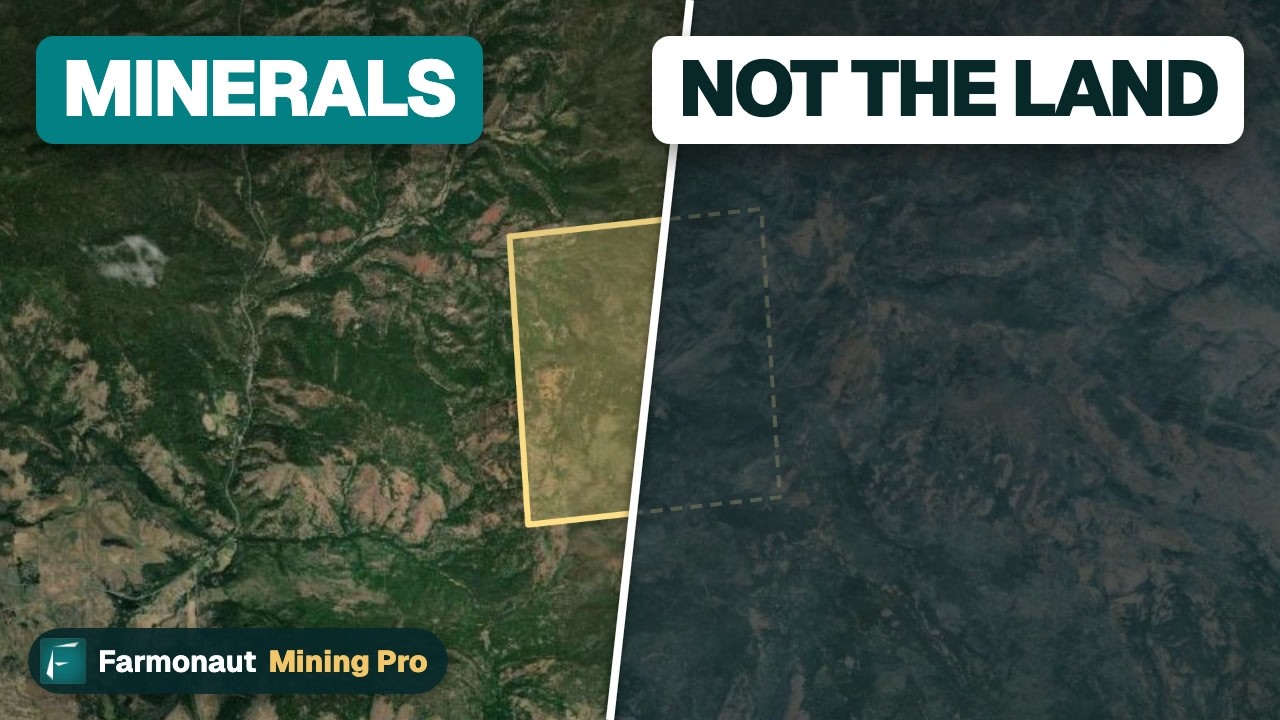
▶ Explains that owning a gold claim is not owning the land, and how to check the ground first. · 3:19
Payback calculator for your gear budget
Use the calculator after this section to test whether a kit can pay for itself. Enter what you spend, how many grams of gold you realistically recover per day, and today’s price. Many hobby trips return nothing, so run it with a low gram figure first.
Calculator
How many days until my gear pays for itself?
Enter your own gear cost, daily gold and trip cost.
- Gold value per day: $64
- Season result after gear and trip costs: -$714
Example values only, not a forecast or a benchmark. The gold price is an input: use today’s price. Many trips recover no gold; try a low gram figure first. Grams are converted at 31.1035 grams per troy ounce.
Pick the ground before you buy the gear
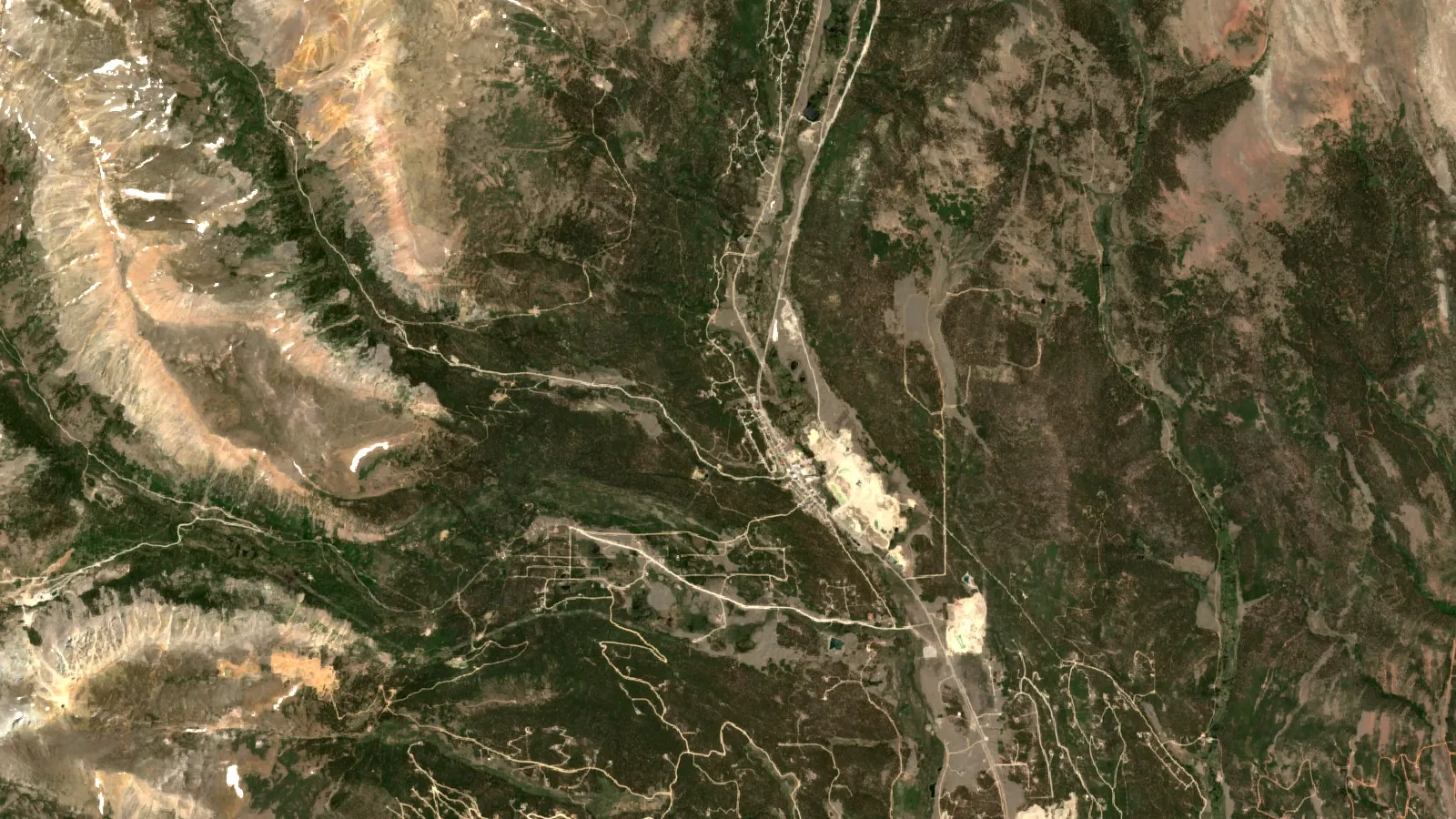
Gear matters less than where you set it up. Old placer districts (places where gold has washed into stream gravel), creek bends where flow slows, and bedrock cracks are the usual first targets, and a geological map or a historical record of production shows where others found gold. For consultants and licence holders working larger areas, satellite imagery can show iron-stained rock, clay minerals and faults across a whole licence before anyone walks it. Farmonaut’s satellite-based mineral detection produces target maps from satellite data; results are exploration targets that need ground checking and are not a resource estimate. The hero image above is a Sentinel-2 summer view of a Colorado placer area.

▶ Explains how satellites help find gold by mapping the rock around it. · 4:25
We cover a connected topic in Gold Prospecting Equipment List With US Prices.
For a closer look at a related question, see our guide: Mining Kits for Exploration: Field Gear List and Lab Fees.
Frequently asked questions
What do I need to start gold prospecting?
A pan, a classifier, a bottle or snuffer for picking up gold, a small shovel, a bucket and protective gear. A kit with the first group of items was listed at US$59.99 by Academy on 16 October 2026. Add a hand sluice later if you work near flowing water.
How much does a gold prospecting kit cost?
Entry panning kits cost about US$60. A hand sluice adds about US$135 to US$175 (Keene, 9 February 2026). The four gold detectors we priced run from US$399 to US$6,999 (Kellyco and Garrett, 16 October 2026).
What is the best metal detector for gold?
It depends on your ground and budget. Higher-frequency VLF machines such as the Goldmaster 24K at 48 kHz suit small nuggets, while pulse induction machines such as the Minelab GPX 6000 suit deep targets in mineralized ground, according to the makers’ pages cited above. We do not rank them.
Do I need a permit to pan for gold?
On many public lands hand panning needs no permit, but you still need permission on a claim, and some areas are closed. Oregon’s permit fact sheet says hand panning is exempt from its water permit. Check with the land manager first.
Is suction dredging legal?
It depends on the state. California prohibits it. Oregon allows registered small dredges under a DEQ general permit, but not in essential salmon habitat, and other state approvals can apply. Along Alaska’s Dalton Highway, BLM authorization is needed first on a federal claim.
Can I use a highbanker or dry washer on public land?
Battery-operated dry washing is among the activities that did not require a Notice of Intent on Washington national forest land, while a high-banker needs at least a notice, according to the WDFW pamphlet. Rules vary by agency and state.
Is a sluice box better than a gold pan?
A sluice processes more gravel per hour in flowing water, and a pan is portable and works anywhere there is a bucket of water. Most people carry both. See our sluice box comparison for details.
Do I need mercury to recover fine gold?
No. Concentration with sluices and other gravity methods is the approach the EPA describes for recovering gold without mercury. Never use mercury.
How much gold can I expect to find?
There is no reliable average. Results depend on the site and the effort. Use the calculator with a low gram figure to see the break-even point for your kit.
Where do I start looking for gold?
Start with maps of old placer workings and geology, then confirm land status and permission. Satellite targets can narrow a large area before you visit.
This page is for information only. It is not legal advice or investment advice. Confirm the rules with the land manager or regulator, get permission before you dig, and never use mercury.
Farmonaut mining
Map your mining site from space
Send a KML, KMZ or polygon and Farmonaut screens the area from satellite images before ground crews go in.

Mining Pro sample view, synthetic data
Keep reading
Sources
- Academy, Garrett Deluxe Gold Pan Kit listing (16 Oct 2026): academy.com
- Garrett, Gold Pan Kit: garrett.com
- Keene Engineering, Master Price List 2/9/2026: keeneeng.com
- Kellyco, Fisher Gold Bug Pro 2-coil combo: kellycodetectors.com
- Kellyco, Minelab GPX 6000: kellycodetectors.com
- Garrett Direct, AT Gold: garrett.com
- Garrett AT Gold manual: garrett.com
- Garrett Direct, Goldmaster 24K: garrett.com
- Garrett, Detector frequency for gold: garrett.com
- OSHA, Silica, crystalline overview: osha.gov
- BLM Alaska, Panning for gold along the Dalton Highway: blm.gov
- Washington Department of Fish and Wildlife, Gold and Fish: wdfw.wa.gov
- California Department of Fish and Wildlife, Suction dredge permits: wildlife.ca.gov
- Oregon DEQ, 700-PM general permit (issued 23 May 2025): oregon.gov
- US EPA, Artisanal and small-scale gold mining without mercury: epa.gov
Discussion
Questions, corrections or field experience? Share them below. First-time comments are reviewed before they appear, and your email is never published.
No comments yet. Be the first to add a question or your experience.

 Denkyira Nkoranza Concession
 Mwerezi Minerals Company Limited
 Congo Mining Solutions
 Mining SARL
 SenGold Invest SAS
 Sania Corporation
 Sean Mining Limited
 NTS Group (Pty) Ltd
 Mine4Africa
 Lithspo Minerals Limited
 Tintina Mining Group
 Dalgety Minerals Pty Ltd
 Vortex Minerals Pty Ltd
 Faith At Work (Pty) Ltd
 Geotech Mining Solutions plc
 Vulcan International Limited
 Kidepo Associates
 GKY Mining
 Alkimy SARL
 Double A Trading
