

Reviewed August 2026 against USDA NASS Census of Agriculture, USDA Economic Research Service, and PLOS ONE peer-reviewed yield research.
Try it: Run your own numbers →
Traditional Agriculture vs Modern Agriculture: Tools, Yields, and Practices Compared
Traditional agriculture relies on manual and animal-powered tools, crop rotation, and locally adapted knowledge with minimal purchased inputs; modern agriculture relies on mechanization, synthetic fertilizer, and data-driven precision tools to raise output per acre. The practical gap shows up in USDA’s own numbers: organic (the closest USDA-tracked proxy for traditional, low-input methods) corn yields sit at 65% of conventional corn yields, and only 27.5% of US cropland was under no-till management as of 2022. This article works through the actual tools, the yield and labor data, and the tradeoffs — using USDA figures, not estimates.
Table of Contents
- What Traditional Agriculture Means
- Traditional Tools Used in Agriculture
- Modern Agriculture: Tools and Methods
- Traditional vs Modern Agriculture: The Difference, By the Numbers
- Soil Management: Traditional vs Modern Practices
- Comparison Table: Traditional vs Modern Agriculture
- Calculator: Estimate Your Transition Labor and Yield Change
- Where Traditional and Modern Practices Meet
- Monitoring Tools That Work for Both Systems
- Frequently Asked Questions
- Conclusion
- Try it: Run your own numbers
What Traditional Agriculture Means
Traditional agriculture is farming organized around local conditions: crop choices, planting dates, and pest management follow seasonal cycles and soil observation rather than lab-directed inputs. In US Census terms, the closest tracked equivalent is certified organic production, which by definition restricts synthetic fertilizer and pesticide use and leans on rotations, compost, and manual or mechanical (non-chemical) weed control. USDA NASS’s Organic Production Survey put certified organic cropland at 3.6 million acres nationwide in 2021 — a small fraction of the country’s roughly 880 million acres of total farmland, but a useful benchmark because it is the only nationally tracked, low-input farming category with hard acreage numbers.
Traditional systems in the US today are concentrated on smaller operations. USDA’s 2022 Census of Agriculture counted 1.9 million farms nationwide, with an average farm size of 463 acres — but that average hides a skew toward small operations: 818,000 farms, or roughly 43% of the total, worked under 50 acres, and 85.3% of all US farms were smaller than 500 acres. Traditional, diversified, lower-input methods are far more practical at that scale than on a several-thousand-acre grain operation running full-time mechanization.
Core features that define traditional agriculture:
- Seasonal cycles: planting and harvest timed to rainfall, temperature, and pest pressure rather than a fixed input schedule.
- Rotation and polyculture: multiple crops or livestock integrated on the same land to manage fertility and pest cycles naturally.
- Manual and animal-powered labor: lower capital cost, higher labor hours per acre.
- Minimal synthetic inputs: compost, manure, and green manure in place of purchased NPK fertilizer.
- Local knowledge transmission: practices adapted and passed down rather than standardized across regions.
Certified organic acreage is a moving number — farms certify and decertify continuously. For a current count rather than the 2021 Census figure cited here, check USDA’s Organic Integrity Database directly, which updates on a rolling basis as certifications change.

Traditional Tools Used in Agriculture
The traditional tools used in agriculture and their uses center on manual precision and minimal soil disruption rather than speed or scale. Each has a specific function that mechanized equipment replaced for large acreage but that smallholders and organic operations still rely on:
- Hoe: shallow tillage and weed control that disturbs less soil structure than a mechanical cultivator pass.
- Digging stick / dibble: places seed at a controlled, consistent depth by hand — still used in transplanting nursery stock.
- Sickle: hand-harvests grain and grass with less shatter loss than machine harvesting on small, mixed plots.
- Animal-drawn plow (wooden or iron): turns topsoil without the compaction a multi-ton tractor can cause on wet ground.
- Machete / handpick: clears brush and harvests row crops selectively, one plant at a time.
- Water bucket and basin irrigation: delivers water directly to the root zone, avoiding the runoff loss of flood irrigation.
Even traditional tillage tools degrade soil structure if used every season without rest. Rotating fields out of tillage and back into cover or pasture is what actually preserves the soil benefit — the tool alone doesn’t guarantee it.
These tools share three practical advantages that explain their persistence on smaller US operations: low capital cost, local repairability, and independence from fuel or parts supply chains. They remain standard equipment on the 818,000 US farms under 50 acres, where a tractor’s fixed cost per acre is hard to justify.

Modern Agriculture: Tools and Methods
Modern agriculture is defined by mechanization, synthetic input use, and — increasingly — sensor and satellite data guiding input decisions. The scale of the labor shift is documented by USDA’s Economic Research Service: mechanization cut farm labor requirements by 74% between 1950 and 1990. That is the single largest structural change separating modern from traditional systems, and it is why average US farm size can run into the hundreds of acres per operator today.
- Tractors and combine harvesters: replace multi-person hand-harvest crews with one operator covering hundreds of acres per day.
- Synthetic fertilizers (NPK, urea, ammonium nitrate): deliver nutrients on a fixed schedule independent of compost availability.
- Pesticides and herbicides: reduce crop loss but carry resistance and runoff risk if not rotated.
- Precision/drip irrigation: meters water to soil-moisture data rather than a fixed schedule.
- Satellite and sensor monitoring: flags crop stress, water need, and pest pressure at the field level before visible symptoms appear.
Federal investment reflects how central mechanization has become to US agricultural policy: USDA agencies put $287.7 million into specialty crop automation and mechanization projects between 2008 and 2018. More recently, funding has shifted partly toward reducing the environmental costs of intensive input use — the Inflation Reduction Act committed $19.5 billion to USDA conservation programs over five years (2022–2027), and in 2023 alone the Natural Resources Conservation Service spent $2.8 billion across 45,000 conservation contracts.
High input use maximizes short-term yield but isn’t free of tradeoffs. Layering traditional practices — rotation, cover cropping — onto a mechanized operation is exactly what the IRA’s $19.5 billion conservation funding is designed to support.

Modern methods raise output, but the input intensity carries a real cost: heavy fertilizer and tillage use can degrade soil structure and increase water demand if not managed. Tools that combine mechanized scale with input precision — like Farmonaut’s Carbon Footprinting platform — let operations measure that tradeoff at the field level instead of guessing at it.

Traditional vs Modern Agriculture: The Difference, By the Numbers
The difference between traditional agriculture and modern agriculture is measurable on three axes: yield, labor, and input source. Yield is the clearest gap. A 2016 PLOS ONE analysis of USDA production data across 14 major US commodity crops found organic yields averaged 80% of conventional yields overall for the 2014 production year — but that average masks wide variation by crop. Organic corn yielded 65% of conventional corn; organic soybeans, 68%; and organic potatoes just 38% of conventional yield, the weakest ratio of any crop studied. Yield gaps that large mean the “traditional/low-input vs modern” choice isn’t uniform — it depends heavily on which crop is being grown.
Labor tells the opposite story. The 74% mechanization-driven labor reduction between 1950 and 1990 means a modern grain operation needs a fraction of the person-hours per acre that a manual or animal-powered operation requires. That tradeoff — lower yield-per-acre-with-lower-input-cost versus higher yield-per-acre-with-higher-capital-and-labor-cost — is the actual traditional-vs-modern agriculture decision most US producers face, not an ideological one.
Soil-conserving practice adoption is the third data point, and it shows modern US agriculture only partially adopting traditional-style soil management: as of 2022, just 27.5% of US cropland was under no-till management, and cover crops — a practice with roots in traditional rotation systems — were used on only about 5% of US cropland acreage on average across 2017–2022. Even among corn and cotton, the crops USDA tracks most closely for this practice, cover crop adoption reached only 8.2% of acreage in the 2019–2021 period.
Soil Management: Traditional vs Modern Practices
Soil management is where the two systems diverge most in philosophy. Traditional practice builds organic matter through rotation, compost, and minimal tillage; modern practice manages soil chemistry directly through synthetic inputs and mechanical tillage, then increasingly monitors the result with precision testing and remote sensing.
Traditional Soil Practices
- Crop rotation and polyculture: breaks pest and disease cycles without chemical intervention, and legume rotations fix nitrogen naturally.
- Compost, green manure, animal manure: build organic matter and feed soil microbial life.
- Minimal tillage: preserves soil structure and reduces erosion — the practice that no-till farming (used on 27.5% of US cropland as of 2022, per USDA ERS) formalizes at mechanized scale.
- Mulching: conserves moisture and moderates soil temperature swings.
Modern Soil Management
- Precision soil testing: directs exact fertilizer application rates, cutting waste versus blanket application.
- Synthetic fertilizers: replenish nutrients quickly but risk runoff and microbiome disruption when overapplied.
- Mechanical tillage: prepares large acreage fast but risks compaction — the opposite of the no-till trend.
- Integrated Pest Management (IPM): combines chemical and ecological control, narrowing the gap with traditional pest suppression.
USDA ERS tracks no-till and cover crop adoption through its Agricultural Resource Management Survey, refreshed annually for selected practices, with the full accounting arriving every five years in the Census of Agriculture — the next full count is due in 2027. Satellite-based field monitoring, such as Farmonaut’s carbon footprinting tools, gives operations a way to track their own soil-relevant metrics between those census cycles rather than waiting five years for a number.
Comparison Table: Traditional vs Modern Agriculture
The table below uses only figures documented in USDA and peer-reviewed sources, cited above, rather than estimated ranges.
| Aspect | Traditional Agriculture | Modern Agriculture | Source / Vintage |
|---|---|---|---|
| Tools | Hoe, sickle, animal-drawn plow, digging stick | Tractors, combine harvesters, GPS-guided equipment | Descriptive; equipment counts not published in available USDA extracts (see Gaps note below) |
| Corn yield vs conventional | 65% (organic corn) | 100% (baseline) | PLOS ONE / USDA, 2014 production year |
| Soybean yield vs conventional | 68% (organic soybeans) | 100% (baseline) | PLOS ONE / USDA, 2014 production year |
| Potato yield vs conventional | 38% (organic potatoes) | 100% (baseline) | PLOS ONE / USDA, 2014 production year |
| All-crop average yield vs conventional | 80% (organic average) | 100% (baseline) | PLOS ONE / USDA, 2014 production year |
| Labor reduction from mechanization | Baseline (pre-1950 labor levels) | -74% labor requirement | USDA ERS, 1950–1990 |
| No-till cropland share | N/A (tillage-based systems) | 27.5% of US cropland | USDA ERS, 2022 |
| Cover crop acreage share | Core practice historically | 5% of US cropland (8.2% on corn/cotton) | USDA ERS / ARMS, 2017–2022 |
| Certified organic cropland | 3.6 million acres | N/A | USDA NASS Organic Production Survey, 2021 |

What’s genuinely not published: a national count of tractors and powered equipment in use (referenced in Census Table 45 but not broken out in available extracts), GPS-guided/precision equipment adoption rates, and current regional farm labor headcounts. USDA collects adoption data on precision technology through its Agricultural Resource Management Survey, and equipment inventories through the Census of Agriculture — the next full census is in 2027, with annual state-level equipment surveys available in the interim through USDA NASS Quick Stats.
Calculator: Estimate Your Transition Labor and Yield Change
Use your own acreage and crop to see how a shift toward lower-input (traditional-style) or higher-mechanization (modern) practice would change expected yield and labor hours, based on the USDA/PLOS ONE ratios cited above.
Run your own numbers
Assumptions: applies the PLOS ONE organic/conventional yield ratios (2014 production year, 14-crop USDA dataset) and USDA ERS’s 1950–1990 mechanization labor reduction (74%) as flat multipliers. It does not account for transition-period yield dips, certification costs, soil-type variation, or crop-specific labor differences beyond the ratios shown. Use it to compare scenarios, not to budget an actual transition.
Where Traditional and Modern Practices Meet
A growing share of US acreage doesn’t sit cleanly in either category. Non-traditional approaches borrow the ecological logic of traditional systems and apply it at mechanized scale:
- Agroforestry: integrates trees and perennial crops with annual rows, adding a traditional structural element to a modern operation.
- Integrated crop-livestock systems: rotates livestock grazing with row crops for fertility cycling without purchased fertilizer.
- Cover cropping on mechanized acreage: already at 8.2% of US corn and cotton acres (2019–2021, USDA ARMS) — a traditional soil practice adopted by modern-scale operations specifically because it reduces fertilizer and erosion costs.
- No-till mechanized planting: at 27.5% of US cropland (2022), this pairs modern equipment with a traditional soil-conservation principle.
The $19.5 billion in IRA conservation funding committed through 2027 is specifically aimed at expanding practices like cover cropping and no-till on mechanized operations — the blended model, not a return to fully manual farming.

Monitoring Tools That Work for Both Systems
Regardless of which end of the spectrum an operation sits on, tracking outcomes requires data that neither a hoe nor a tractor alone provides. Farmonaut’s satellite monitoring platform applies to both traditional smallholdings and modern mechanized acreage:



- Real-time crop monitoring: NDVI-based satellite imagery tracks crop health and soil condition on any size operation, from a 50-acre organic plot to a several-thousand-acre grain farm.
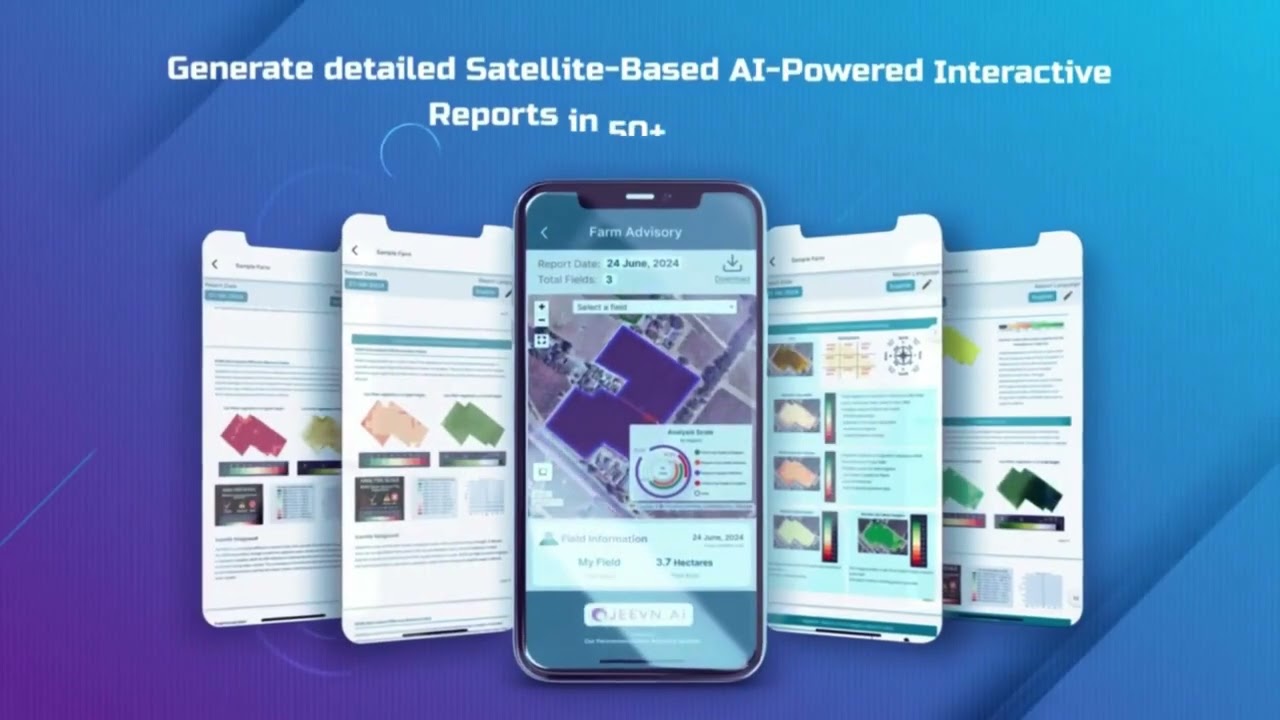
- AI-based advisory: Jeevn AI combines weather and satellite data into field-specific advice, useful whether the response to a flagged issue is a hand-weeding pass or a targeted spray.
- Fleet and resource management: equipment and field-operation tools for mechanized operations scaling up from traditional methods.
- Traceability: blockchain-based origin verification for produce, useful for certified-organic supply chains needing documented provenance.
- Carbon and emissions tracking: Farmonaut’s carbon footprinting tools quantify the environmental side of the traditional/modern tradeoff instead of leaving it qualitative.
- API access: developer API and documentation for integrating satellite and weather data into existing farm management software.
Satellite monitoring doesn’t require choosing modern inputs — it flags water stress and pest pressure early enough for a traditional response (hand-weeding, targeted manual intervention) to still be effective, not just a spray decision.
For operations financing a transition in either direction, crop loan and insurance products increasingly rely on satellite field verification, which works the same way for a certified-organic 40-acre plot as for a mechanized 2,000-acre operation.
Frequently Asked Questions (FAQ)
What is the difference between traditional agriculture and modern agriculture?
Traditional agriculture uses manual or animal-powered tools, crop rotation, and minimal synthetic inputs, guided by local, seasonal observation. Modern agriculture uses mechanization, synthetic fertilizer and pesticides, and increasingly satellite or sensor data to maximize yield per acre. USDA ERS data shows mechanization cut farm labor needs by 74% between 1950 and 1990, while PLOS ONE’s 2014 USDA-based yield study found organic (low-input) yields average 80% of conventional yields across 14 major crops — with the gap much wider for some crops (corn: 65%, potatoes: 38%) than others.
What are the traditional tools used in agriculture and their uses?
The core set includes the hoe (weed control, shallow tillage), sickle (hand harvesting grain), digging stick or dibble (precise seed placement), animal-drawn plow (turning soil with minimal compaction), machete (clearing and selective harvest), and bucket or basin irrigation (targeted water delivery). Each trades speed and scale for low cost, local repairability, and reduced soil disturbance — which is why they remain standard on many of the 818,000 US farms under 50 acres (2022 Census).
Is traditional agriculture still practiced in the United States?
Yes, primarily on smaller and certified-organic operations. USDA NASS counted 3.6 million acres of certified organic cropland nationwide in 2021, and 85.3% of all US farms were under 500 acres as of the 2022 Census — a scale where manual and low-input methods remain practical. For a current organic acreage figure, USDA’s Organic Integrity Database updates on a rolling basis as farms certify and decertify.
Does traditional agriculture yield less than modern agriculture?
On average, yes, but the gap varies sharply by crop. The 2016 PLOS ONE study of USDA production data found organic yields at 80% of conventional yields averaged across 14 crops for the 2014 production year, but only 65% for corn, 68% for soybeans, and as low as 38% for potatoes — the weakest ratio recorded. There is no single “traditional vs modern” yield gap; it has to be checked crop by crop.
Can modern technology support traditional farming methods?
Yes. Satellite monitoring and AI advisory tools flag pest pressure, water stress, and crop health issues regardless of whether the response is a hand-weeding pass or a mechanized spray. Platforms like Farmonaut’s crop monitoring tools are used on both certified-organic smallholdings and large mechanized operations for the same underlying reason: earlier, field-specific data.





Conclusion
The traditional-vs-modern agriculture question isn’t binary, and the USDA data backs that up directly: 27.5% of US cropland is no-till (a modern-mechanized adoption of a traditional soil principle), while 8.2% of corn and cotton acres carry cover crops planted with modern equipment. The honest comparison depends on which metric matters for a given operation — yield (where modern methods lead by a documented 20 to 62 percentage points depending on crop), labor (where mechanization cut requirements by 74% between 1950 and 1990), or input independence (where traditional methods still win outright).
What’s changing next is trackable, not speculative: USDA’s next full accounting of tillage, cover crops, and equipment inventories arrives with the 2027 Census of Agriculture, with annual updates on selected practices available via ARMS and Quick Stats in the interim. Whichever side of the traditional/modern line an operation sits on, satellite monitoring and field-level data — from carbon footprinting to real-time NDVI tracking — narrow the actual decision to numbers instead of assumptions.

 Origo Commodities
 Polaris Digitech
 Teledarbas
 Wild Oak Farm
 SFX
SFX BACF Africa
 Doodlakine
 Exurbia Geospatial
 FieldZero
 Indico Company
 Kubota
 FFBS
FFBS Jontra
 Tucor
Tucor
