

African farming · Systems compared
Traditional Farming Systems in Africa: 8 Types Compared
Pastoral areas cover about 40% of Africa’s land (African Union, 2010), and shifting cultivation, tree parklands, intercropping, zai pits and stone bunds are still used across the continent. Here are eight systems compared, with dated data, African trial results and each system’s main limit.
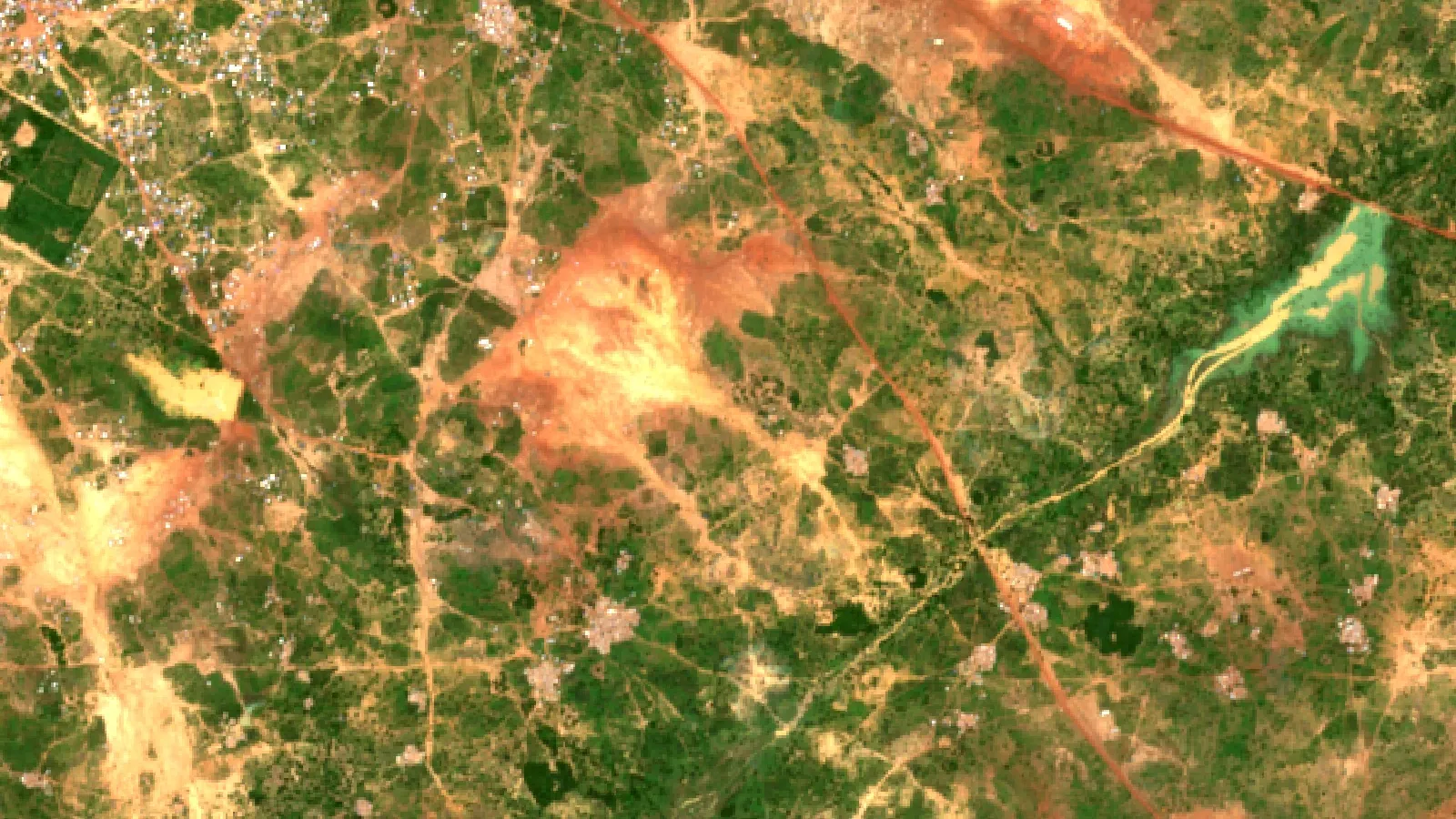
Key takeaways
- Pastoralism is the largest system by area: about 40% of Africa’s land and about 268 million pastoralists (African Union, 2010).
- Farmers regrew trees on an estimated 5 million ha in southern Niger and rehabilitated at least 200,000 ha in Burkina Faso with improved indigenous soil and water conservation (IFPRI, 2009).
- In a Burkina Faso trial, stone rows or grass strips plus compost or manure cut runoff by 84% and raised sorghum yield by about 142%; barriers alone did not raise yields significantly (2003).
- Conservation agriculture in Africa grew from about 0.49 to 3.14 million ha between 2008/09 and 2018/19, still only 1.1% of cropland.
- Sub-Saharan cereal yield averaged 1,570 kg/ha in 2023 against 4,229 kg/ha worldwide (World Bank); trials show traditional practices gain most when nutrients are added.
In this article
- Traditional farming systems in Africa at a glance
- How we compared the eight systems
- 1. Pastoralism and agro-pastoralism
- 2. Shifting cultivation (bush fallow)
- 3. Agroforestry parklands and farmer-managed natural regeneration
- 4. Cereal-legume intercropping
- 5. Mixed crop-livestock farming
- 6. Zai pits and half-moons
- 7. Stone bunds and contour barriers
- 8. Conservation agriculture
- The yield gap behind traditional farming practices in Africa
- How to choose a system for your land
- Using satellite data alongside traditional practices
- FAQ
Traditional farming systems in Africa are the ways farmers have long used land, water, trees and animals with few bought inputs: herding on open range, shifting cultivation, trees kept in fields, mixed crops, planting pits and stone lines. They still cover a large share of the continent. Pastoral areas alone take up about 40 percent of Africa’s land, according to the African Union Policy Framework for Pastoralism (2010).
This guide compares eight of these systems side by side. For each one you get where it is used, how much land it covers where a dated figure exists, what field trials found, and its main weakness. There is also a calculator to test whether an intercrop uses your land better than growing each crop alone, plus charts on yields, fertilizer use and the spread of conservation agriculture.
Traditional farming systems in Africa at a glance
The table sums up the eight systems. The sections below give the source behind each figure. The measures differ from row to row (land area, number of farmers, trial results), so read them as a guide to scale, not as one ranking score.
| System | Main regions | Documented scale in Africa | Main limit |
|---|---|---|---|
| 1. Pastoralism | Sahel, Horn of Africa, dry south | About 40% of Africa’s land; about 268 million pastoralists (AU, 2010) | Land loss, drought, weak services |
| 2. Shifting cultivation | Congo Basin, humid West and Central Africa | About 13.1% of DR Congo’s land area in 2010, nearly 30 million ha (PLOS ONE, 2017) | Fallows get shorter as land fills up |
| 3. Parklands and FMNR | Sahel, West African savanna | Regrowth on an estimated 5 million ha in southern Niger (IFPRI, 2009) | Some trees cut crop yields under them |
| 4. Intercropping | Eastern and Southern Africa, West Africa | No Africa-wide area figure; many trials | Gains depend on fertility and design |
| 5. Mixed crop-livestock | Highlands and savanna zones | No Africa-wide area figure | Too little manure on many farms |
| 6. Zai pits and half-moons | Burkina Faso, Niger, Mali | Part of at least 200,000 ha rehabilitated in Burkina Faso (IFPRI, 2009) | Hard digging, needs compost |
| 7. Stone bunds | Sahel, East African highlands | Part of the same 200,000 ha in Burkina Faso | Labour and stone to build |
| 8. Conservation agriculture | Southern Africa, Ghana, North Africa | 3.1 million ha, 1.1% of cropland (2018/19) | Mulch competes with livestock feed |
How we compared the eight systems
We started from the systems the original version of this page listed, merged overlapping items, and added pastoralism and conservation agriculture because they cover large areas. The order is not a ranking. Pastoralism comes first because it is the system with the largest documented area. The others run from land-extensive systems to field-level practices, with conservation agriculture, the newest, last. Only pastoralism and conservation agriculture have Africa-wide area figures.
For every system we looked for three things: a dated figure on scale from a government, UN or peer-reviewed source; field results from African trials; and the main limit farmers report. We left out claims we could not trace, such as fixed percentages for how much any practice raises yields everywhere. Trial results apply to the sites, soils and seasons studied; they are not promises for every farm.
1. Pastoralism and agro-pastoralism
Best for: dry rangelands where rain is too low or too uncertain for reliable crops.
Pastoralists move cattle, camels, sheep and goats to follow grass and water across the seasons. Agro-pastoralists do the same but also grow some crops. The African Union framework (dated October 2010) estimates about 268 million pastoralists in Africa, over a quarter of the population at that time. It says pastoral areas cover about 40 percent of the continent’s land mass, with large differences between countries, and that pastoralism contributes 10 to 44 percent of GDP in African countries.
The same framework explains why herding fits these lands: pastoral areas are generally less suited to crops, so livestock are the most practical way to turn scarce grass and shrubs into food and income. In an average pastoral household, livestock and related activities provide at least half of the value of what the family sells and eats.
Strengths: uses land that cannot carry crops; mobility spreads grazing pressure; animals are savings that can be sold in hard years.
Limits: the AU notes that human development and food security indicators in many pastoral areas are among the lowest on the continent. Reduced access to grazing land and water makes drought harder to cope with.
2. Shifting cultivation (bush fallow)
Best for: humid forest zones with low population density and long fallows.
In shifting cultivation, a family clears a patch of forest or bush, often burns the cut vegetation, farms it for a few seasons, and then leaves it to regrow while it clears a new patch. The fallow lets the soil recover. It is not a thing of the past. A global review in PLOS ONE (Heinimann et al., 2017) found signs of shifting cultivation in 62% of the one-degree grid cells it studied in the humid and sub-humid tropics, mostly in the Americas (41%) and Africa (37%). The authors estimate that shifting cultivation landscapes, fields plus fallows, cover roughly 280 million hectares worldwide.
For Africa, the review found only one recent national study, on the Democratic Republic of the Congo. A study it cites put the DRC’s “rural complex” of fields and fallows at 13.1% of the country’s land area in 2010, which the authors convert to nearly 30 million hectares. They also note that Africa is under-studied and expect the area under shifting cultivation to fall over this century.
Strengths: needs no fertilizer when fallows are long; fallow land supplies firewood, fruit and medicine.
Limits: when more people farm the same land, fallows get shorter, soils lose fertility and more forest is cleared. Burning also releases carbon.
3. Agroforestry parklands and farmer-managed natural regeneration
Best for: Sahel and savanna farms where trees can be kept or regrown among crops.
Across the West African savanna, farmers keep useful trees such as shea, néré and Faidherbia albida scattered through their millet and sorghum fields. These are called parklands. Farmer-managed natural regeneration (FMNR) is a low-cost way to rebuild them: farmers choose shoots that sprout from old tree stumps and roots, protect them and prune them, instead of planting seedlings.
The best-known case is southern Niger. An IFPRI paper by Reij, Tappan and Smale (2009), with USGS satellite work, estimated FMNR over about 5 million hectares there. The paper links it to less wind erosion and more crops, fodder, firewood and fruit. Trees on farms are common worldwide too: Zomer et al. in Scientific Reports (2016) found that 43% of the world’s agricultural land had at least 10% tree cover in 2010, with high tree cover in central and coastal West Africa.
Trees do not always raise grain yields. A review of 63 studies from Burkina Faso, Mali, Niger and Senegal, by Bayala and colleagues in the Journal of Arid Environments (2012), found the average effect of parkland trees on cereal yield was not positive, while Faidherbia albida had a more positive effect. In cocoa, a three-year CGIAR study in Ghana found higher cocoa yields around selected shade-tree species than in unshaded plots, with significant differences in the main season only (2022).
Strengths: fruit, fodder, fuel and income from the same field; less wind erosion.
Limits: shade and root competition from some species; tree tenure rules can stop farmers from protecting trees.

▶ Seven simple ways to protect soil and water, from cover crops to trees on farms. · 4:34
4. Cereal-legume intercropping
Best for: small farms that need food, fodder and soil nitrogen from the same plot.
Intercropping means growing two or more crops in the same field at the same time, for example maize with beans, pigeon pea or groundnut, or sorghum with cowpea. Legumes fix nitrogen and the mix spreads risk if one crop fails.
Trials show legume systems pay best with at least a little fertilizer. In Malawi, Snapp and colleagues (PNAS, 2010) found that a moderate rate of 35 kg nitrogen per hectare roughly doubled sole maize from 1.05 to 2.17 tonnes per hectare. If fertilizer prices doubled relative to grain, the fertilized legume systems they tested, mostly rotations, stayed profitable with value-cost ratios above 3.6, while fertilized maize alone fell below 2.5. The maize-pigeon pea intercrop in their countrywide trial was the exception: it did no better than sole maize on this measure.
A study of more than 900 on-farm trials of cereal-pigeon pea intercrops in Eastern and Southern Africa, published in Sustainability (Kiwia et al., 2019), found that adding fertilizer to the intercrop raised cereal yields by 71 to 282% and cut cereal yield variability by 40 to 56%, compared with unfertilized intercrops. In the Tanzania trials, intercropped maize with full fertilizer averaged 3,130 kg per hectare, against 1,625 kg without fertilizer. In Mozambique the same comparison was 3,165 against 829 kg.
The usual way to judge an intercrop is the land equivalent ratio (LER), which compares the land you would need to grow the same harvest as sole crops. As Cornell statisticians Federer and Schwager explain, an LER above one means the mixture uses land better than sole cropping; below one means it uses land less well. Use the calculator below with your own yields.
Limits: more complex to plant, weed and harvest; the right row pattern varies by crop and site.
Try the numbers for your own farm below.
Calculator
Does your intercrop use land better than sole crops?
Enter your own yields per hectare for each crop grown alone and in the mixture (mixture yields per hectare of the whole intercrop field).
- Cereal part of the ratio: 0.70
- Legume part of the ratio: 0.30
- Sole-crop land needed for the same harvest: 2.00 ha
- Land saved (negative means land lost): 0.00 ha
Example values only, not a benchmark or a forecast. Land equivalent ratio (LER) = cereal yield in the mix / cereal yield alone + legume yield in the mix / legume yield alone (Federer and Schwager, Cornell University). No fixed constants are used; every number is your input. Use yields from the same season and field conditions.
5. Mixed crop-livestock farming
Best for: farms with both cropland and some grazing, where manure can go back to the fields.
On a mixed farm, crop residues feed cattle, goats or sheep, and their manure feeds the soil. Oxen or donkeys may pull ploughs and carts. Animals can also be sold when a harvest fails. This link between crops and animals is one of the most widespread traditional farming practices in Africa, from the Ethiopian highlands to the West African savanna, although there is no single continent-wide figure for its area.
Manure matters most where soils are poor. In a three-season trial in semi-arid Burkina Faso, reported in Soil Use and Management (Zougmoré et al., 2003), adding compost or manure behind stone rows or grass strips raised sorghum grain yield by about 142%, compared with a 65% rise from mineral fertilizer. The barriers alone did not raise yields significantly.
Limits: many small farms have too few animals to manure all their land, and residues fed to animals cannot also protect the soil as mulch.

▶ A short explainer on mixed farming: manure as fertilizer, crop leftovers as feed and spreading risk across crops and animals. · 2:55
6. Zai pits and half-moons
Best for: crusted, degraded Sahel soils where rain runs off before it can soak in.
Zai (or zaï) pits are small planting holes dug into hard, bare ground in the dry season. Farmers put manure or compost in each pit and sow sorghum or millet there when the rains come. Half-moons are larger semicircular basins that catch runoff on gentle slopes. A Burkina Faso case study in FAO’s 52 Profiles on Agroecology, hosted by the UN Convention to Combat Desertification, describes zai pits of about 30 cm and half-moons several metres wide, both used on bare and crusted soils.
In that study, run from 2013 to 2015 with more than 150 farmers in four communities, improved zai with compost, crop rotation, mixed cropping and drought-tolerant seed gave significantly higher sorghum and pearl millet yields than the farmers’ usual practice. Gains ranged from 8% on half-moon fields to more than 130% for rotation systems. Farmer field schools later took the techniques to 6,832 farmers, over 40% of them women, in 80 villages.
At a larger scale, Reij and colleagues (2009) report that improved indigenous soil and water conservation on Burkina Faso’s Central Plateau rehabilitated at least 200,000 hectares of degraded land, letting farmers grow cereals on land that had been barren. The same paper says this appears to have recharged local wells.
Limits: digging pits by hand across a whole field is hard work, and the study above tested pits together with compost, so it does not show what pits alone add.
7. Stone bunds and contour barriers
Best for: gently sloping fields that lose soil and water to runoff.
Stone bunds are low lines of rocks laid along the contour. They slow runoff, so more water soaks in and silt settles behind the stones. Grass strips do a similar job. In the East African highlands, farmers build stone terraces on steeper slopes for the same reason.
The Burkina Faso trial by Zougmoré and colleagues (2003) gives clear numbers. On a 1.5% slope with about 800 mm of rain a year, barriers alone cut runoff by 59% compared with control plots. With barriers plus compost or manure, runoff fell by 84%. Stone rows cut soil erosion more than grass strips did (66% against 51%).
The lesson in this trial: water harvesting held rain and soil, but higher yields came only when nutrients were added. The West African review by Bayala and colleagues also found that soil and water conservation measures did better where rainfall was below 800 mm.
Limits: labour and stone to build; bunds must be kept in repair after heavy storms.
Chart
How much stone rows and grass strips cut runoff and erosion
% reduction compared with control plots, three rainy seasons, one site in semi-arid Burkina Faso
8. Conservation agriculture
Best for: farmers ready to stop ploughing and keep the soil covered, with access to a direct seeder or planting basins.
Chart
Conservation agriculture area by country, selected African countries
Thousand hectares, 2018/19 season (some figures repeat earlier national estimates)
Conservation agriculture is a newer, codified system, but it builds on old practices such as mulching, minimal digging and crop mixtures. It rests on three principles that FAO set out in 1998: minimum soil disturbance, permanent soil cover, and crop diversity. Its area in Africa grew more than six-fold in a decade.
According to Kassam, Friedrich and Derpsch in Agronomy (2022), the area under conservation agriculture in Africa grew from about 485,000 hectares in 2008/09 to 3.14 million hectares in 2018/19. That is still only 1.1% of Africa’s cropland, against 14.7% worldwide. South Africa had the largest area, about 1.6 million hectares, followed by Zambia, Mozambique, Ghana and Malawi.
Limits: crop residues are also wanted as livestock feed, weeds must be controlled without ploughing, and the authors stress that public and private support for farmers made the difference in the leading countries.
Chart
Conservation agriculture area in Africa
Thousand hectares, survey seasons 2008/09 to 2018/19 (gaps between seasons are uneven)
The yield gap behind traditional farming practices in Africa
Traditional systems save inputs and protect soil, but most of them produce modest grain yields. World Bank data based on FAO figures show that average cereal yield in sub-Saharan Africa was 1,570 kg per hectare in 2023, against 4,229 kg for the world, according to the World Bank cereal yield indicator. The region’s yield has risen since 2000, but the gap to other regions has widened in absolute terms.
Chart
Cereal yield by region, 2000 and 2023
Tonnes per hectare, regional averages
Low input use is part of the reason. Fertilizer use in sub-Saharan Africa was 19.3 kg per hectare of arable land in 2023, against 136.5 kg worldwide, according to the World Bank fertilizer consumption indicator. Power is another reason: on the FAO mechanization partnership page, human muscle provides 65 percent of the power for land preparation in sub-Saharan Africa, against 40 percent in East Asia and 25 percent in Latin America and the Caribbean.
The trials above point the same way. Intercrops and stone bunds gave their biggest gains when farmers added manure, compost or fertilizer, and the zai study used compost in the pits. Traditional practices and modest inputs work best together.
Farm size matters too. A study reported by FAO (2021) found that farms under 2 hectares make up five of every six farms worldwide, operate about 12% of farmland and produce about 35% of the world’s food. Many of the crop-based systems on this list are used by farmers working at that scale.
Chart
Fertilizer use per hectare of arable land, 2023
Kilograms of nutrients per hectare of arable land, regional averages
How to choose a system for your land
No single system fits every farm. Use the questions below as a starting point, and test any change on a small plot first.
- How much rain do you get? Below about 600 to 800 mm a year, water harvesting (zai, half-moons, stone bunds) and mulching tend to pay off more; the West African review found tree coppicing and rotations did better above 800 mm.
- Is your soil crusted or bare? Zai pits and half-moons are designed for crusted, degraded soil. They need manure or compost in each pit.
- Is the field sloping? Stone bunds or grass strips along the contour slow runoff and hold soil.
- Do you keep animals? Mixed farming returns manure to fields, but decide how much residue goes to feed and how much stays as mulch.
- Do you need food and cash from one small plot? A cereal-legume intercrop spreads risk and adds nitrogen. Check its land equivalent ratio with the calculator.
- Are there young trees or stumps in your fields? FMNR is a low-cost way to rebuild tree cover; favour species that compete less with crops; the West African review found Faidherbia albida more positive for cereal yields than parkland trees in general.
- Can you get a direct seeder or rent one? Conservation agriculture needs a way to sow without ploughing and a plan for weeds.
For any practice that involves fertilizer or herbicide, follow the product label and local rules.
Using satellite data alongside traditional practices
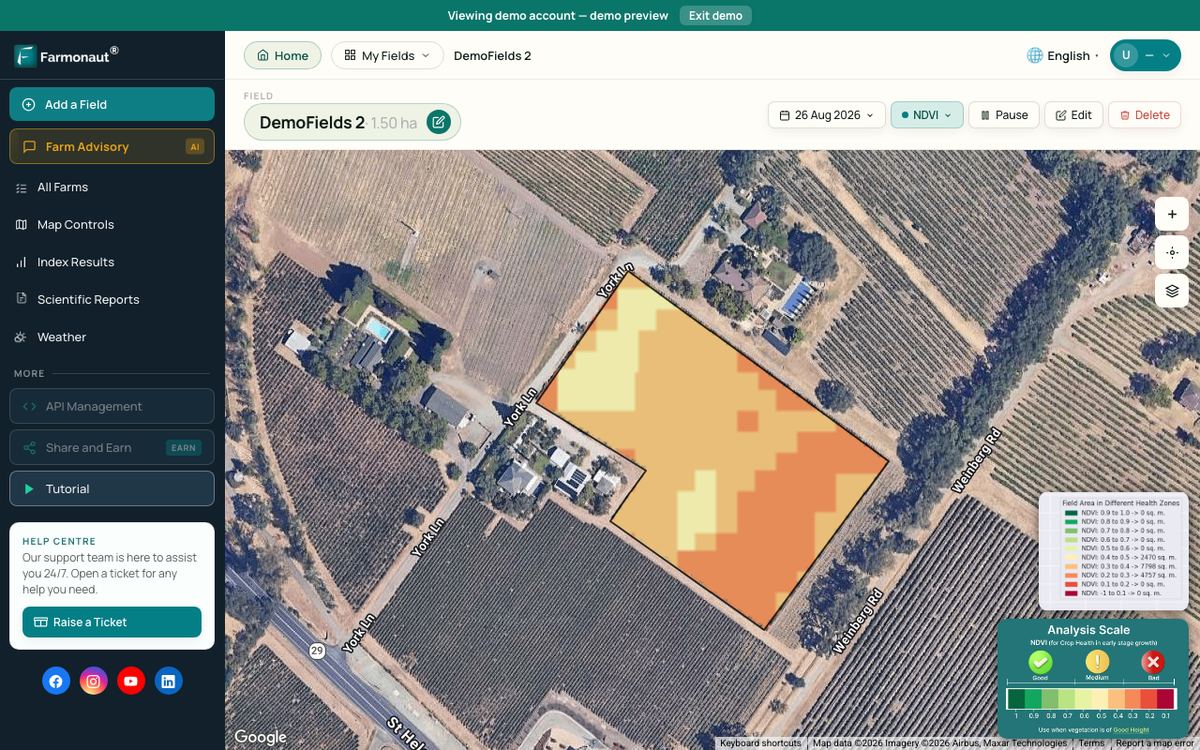
Many of these systems are about changing land over years: regrowing trees, restoring crusted soils, or keeping fields covered. Satellite images can show that change field by field. The Farmonaut Satellite + AI Farm Monitoring System maps vegetation over your own fields each time a clear image is available, so you can compare a field with stone bunds or FMNR against a neighbouring one, or see where crops are stressed. Satellite maps show how green and dense the vegetation is; they do not show the cause, so check the field before acting.
It works on web, Android and iOS through the app. Related pages on our site: the admin app for agribusinesses, carbon footprinting, product traceability, crop loan and insurance, the API documentation and the API sign-up page.

▶ How NDVI satellite maps show crop stress across a whole farm before it is visible from the ground. · 4:09
FAQ
What are the main traditional farming systems in Africa?
The main ones are pastoralism, shifting cultivation, agroforestry parklands with farmer-managed natural regeneration, cereal-legume intercropping, mixed crop-livestock farming, zai pits and half-moons, and stone bunds. Conservation agriculture is a newer system built on traditional practices such as mulching.
Which traditional system covers the most land in Africa?
Pastoralism. The African Union’s 2010 framework estimates that pastoral areas take up about 40 percent of Africa’s land mass and that the continent has about 268 million pastoralists.
Is shifting cultivation still practised in Africa?
Yes. A 2017 global review found signs of it in many humid and sub-humid parts of Africa, and estimated fields and fallows in the DR Congo at about 13.1% of the country’s land in 2010. The authors expect the area to decline over this century.
Do zai pits really raise yields?
They can when compost or manure goes into the pits, which is how they are normally used. A 2013 to 2015 study in Burkina Faso found significantly higher sorghum and pearl millet yields with improved zai and compost than with farmers’ usual practice. Trials of stone bunds found that water harvesting alone did not raise yields significantly.
What is a good land equivalent ratio for an intercrop?
Any value above 1.0 means the intercrop needs less land than growing the same harvest as separate sole crops. A value of 1.3 means sole crops would need 30% more land. Enter your own yields in the calculator to find yours.
Can traditional farming feed a growing population?
On its own, often not at current yields: sub-Saharan cereal yields averaged 1,570 kg per hectare in 2023, well below the world average (World Bank). Trials show that combining traditional practices with manure, compost or small amounts of fertilizer can raise yields while keeping the soil benefits.
Conclusion
Traditional farming systems in Africa are not museum pieces. Pastoralism still covers about two-fifths of the continent, shifting cultivation is widespread in the humid tropics, farmers have regrown trees across millions of hectares in Niger, and conservation agriculture grew more than six-fold in a decade. Their weak point is low yield on poor soils. The trials in this guide show the way forward: keep the water harvesting, trees and crop mixtures, and add the nutrients the soil is missing.
Farmonaut crop monitoring
See your own fields from space
Draw your field once and Farmonaut shows satellite vegetation maps for it each season, so you can follow change on web, Android or iOS.



Keep reading
Sources
- African Union, Policy Framework for Pastoralism in Africa (October 2010): au.int
- Heinimann et al., A global view of shifting cultivation, PLOS ONE (2017): pmc.ncbi.nlm.nih.gov
- Reij, Tappan and Smale, Agroenvironmental transformation in the Sahel, IFPRI Discussion Paper 00914 / USGS (2009): pubs.usgs.gov
- Zomer et al., Global tree cover and biomass carbon on agricultural land, Scientific Reports (2016): pmc.ncbi.nlm.nih.gov
- Bayala et al., Cereal yield response to conservation agriculture practices in drylands of West Africa, Journal of Arid Environments 78 (2012): repo.mel.cgiar.org
- Asitoakor et al. (CGIAR), Selected shade tree species improved cocoa yields in low-input agroforestry systems in Ghana, Agricultural Systems (2022): cgspace.cgiar.org
- Snapp et al., Biodiversity can support a greener revolution in Africa, PNAS (2010): pmc.ncbi.nlm.nih.gov
- Kiwia et al., Sustainable intensification with cereal-legume intercropping in Eastern and Southern Africa, Sustainability (2019): pmc.ncbi.nlm.nih.gov
- Federer and Schwager, On the distribution of land equivalent ratios, Cornell University Biometrics Unit: ecommons.cornell.edu
- Zougmoré et al., Effect of combined water and nutrient management on runoff and sorghum yield in semi-arid Burkina Faso, Soil Use and Management (2003): research.wur.nl
- FAO 52 Profiles on Agroecology: Impact of agroecological techniques on sorghum and pearl millet in Burkina Faso (UNCCD-hosted): droughtclp.unccd.int
- Kassam, Friedrich and Derpsch, Successful experiences and lessons from conservation agriculture worldwide, Agronomy 12:769 (2022): mdpi-res.com
- World Bank, World Development Indicators: Cereal yield (kg per hectare), 2023 data: data.worldbank.org
- World Bank, World Development Indicators: Fertilizer consumption (kg per hectare of arable land), 2023 data: data.worldbank.org
- FAO, Sustainable agricultural mechanization: CEMA partnership (accessed October 2026): fao.org
- FAO newsroom, Small family farmers produce a third of the world’s food (2021): fao.org
Discussion
Questions, corrections or field experience? Share them below. First-time comments are reviewed before they appear, and your email is never published.
No comments yet. Be the first to add a question or your experience.

 Etherspace Network
 Teledarbas
 Wild Oak Farm
 SFX
SFX BACF Africa
 Doodlakine
 Exurbia Geospatial
 FieldZero
 Indico Company
 Kubota
 FFBS
FFBS Jontra
 Tucor
Tucor
 Licence holder · Niger · Gold
 Licence holder · Nigeria · Gold + lithium










