

Madagascar · Country guide
Madagascar Mining Industry: Mines, Owners, Permit Rules
Madagascar’s mining is led by the Ambatovy nickel-cobalt mine and Rio Tinto’s QMM ilmenite operation, plus graphite, mica and a large artisanal gold and gem sector. See output, owners and how the Mining Code grants permits.
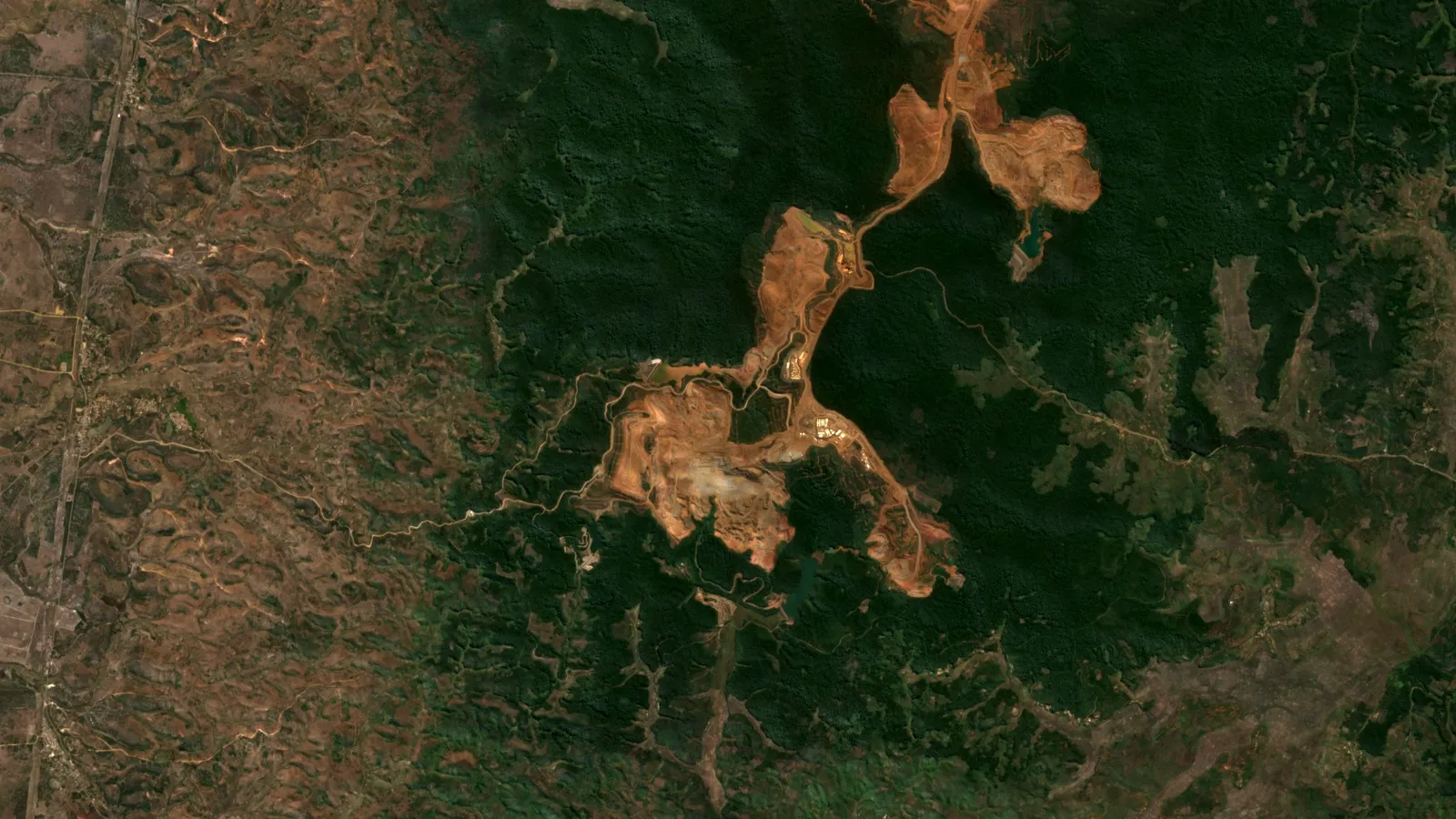
Key takeaways
- Mining was about 49% of Madagascar’s exports but only about US$22 million of government revenue in 2024 (IISD country profile, July 2026).
- Madagascar mined an estimated 80,000 t of graphite and 70,000 t of scrap and flake mica in 2025, about 4.4% and 20% of the world totals USGS reports (USGS Mineral Commodity Summaries 2026).
- Ambatovy made about 28,000 t of nickel in 2024 (NTU); a February 2026 cyclone halted it, and its shareholders are now the AMRI consortium and KOMIR after Sumitomo’s 54% stake was sold (Ambatovy, 2026).
- The Mining Code (Law 2023-007) sets a 5-year research permit and a 25-year exploitation permit, with a special tax of 5% of export value.
- The 16-year freeze on new permits ended in January 2026, but new gold permits remain suspended (Ecofin Agency, NTU).
In this article
- What Madagascar mines and how much
- Ambatovy: the nickel and cobalt mine
- QMM: ilmenite and mineral sands near Fort Dauphin
- Graphite: Molo, Gallois and smaller projects
- Chromite, iron ore and coal
- Rare earths and the Vara Mada mineral sands project
- Gold, mica and gemstones: the artisanal sector
- How the Mining Code grants permits
- The reopening and what is still closed
- Taxes, royalties and community funds
- Political and operating risks to weigh
- What to check before applying for or buying a Madagascar permit
- Frequently asked questions
Madagascar’s mining industry is built on one giant nickel-cobalt mine, one mineral-sands operation and a long tail of graphite, mica, gold and gemstone workings. Mining made up about 49% of the country’s exports in the EITI data summarised by the International Institute for Sustainable Development, yet it produced only about US$22 million in government revenue in 2024 (IISD country profile, July 2026). The island ranked first in the world for scrap and flake mica and second for natural graphite in 2024 by the same profile, and its Ambatovy mine is the biggest single operation. This page covers the main mines, who owns them, what the figures show, and how the revised Mining Code (Law No. 2023-007) grants and prices permits.
It is written for investors, mining consultants and licence seekers. Output numbers come from the US Geological Survey’s 2026 Mineral Commodity Summaries unless stated, and every company or ownership statement carries a source and a date. For comparison with other jurisdictions, see our guides to mining concessions and to mining cadastre portals by country.
What Madagascar mines and how much
The island is a mid-sized producer of several industrial and battery minerals rather than a leader in one metal. The USGS table below gives mine output for 2024 and the 2025 estimate, in metric tons unless the unit column says otherwise (USGS graphite, mica, cobalt, titanium minerals, rare earths). Nickel is not listed by country in the USGS nickel table, where Madagascar sits inside “other countries”; company data for nickel follow in the Ambatovy section.
Chart
Estimated mine production value by commodity
US$ million, 2024, selected commodities, estimated from USGS volumes and prices
| Commodity | Unit | 2024 | 2025 estimate | World 2025 estimate | USGS reserves |
|---|---|---|---|---|---|
| Natural graphite | metric tons | 85,000 | 80,000 | 1,800,000 | 27,000,000 |
| Mica, scrap and flake | metric tons | 90,000 | 70,000 | 350,000 | “Large” |
| Cobalt (contained) | metric tons | 3,100 | 3,900 | 310,000 | 100,000 |
| Ilmenite (TiO2 content) | thousand metric tons | 300 | 300 | 9,400 | 30,000 |
| Rare earths (oxide equivalent) | metric tons | 1,400 | 2,700 | 390,000 | Not available |
The value of that output is dominated by one project. The IISD profile, using USGS volumes and prices, puts the 2024 production value of mined nickel at US$526 million, against US$104 million for titanium concentrates and US$38 million for graphite. Nickel mining and refining together supplied 73% of government mining revenue by commodity in its 2024 breakdown.
Ambatovy: the nickel and cobalt mine
Ambatovy, near Moramanga in the east, is a lateritic nickel mine with a processing plant and refinery at the port of Toamasina. It has been described as the largest foreign investment in Madagascar’s history, developed by Canadian, Japanese and Korean partners including Sherritt, Sumitomo and Korea Resources (IISD). Nickel and cobalt leave as metal briquettes and powders, with Japan and South Korea the main buyers of the nickel.
Output has run well under the original design. Ambatovy produced about 28,000 t of nickel and 2,500 t of cobalt in 2024, according to the NTU Centre for African Studies, and about 29,000 t of nickel and 2,700 t of cobalt in 2025, according to Mining Focus Africa. The IISD profile, using S&P Global data, has about 27,000 t of nickel and 2,000 t of cobalt for 2025. Cobalt is a by-product of the nickel circuit, which is why the USGS cobalt table shows Madagascar at 3,900 t in 2025.
Two events changed the picture in 2026. First, a cyclone damaged key plant in February and halted production; one acid plant restarted on 23 May and the company guided to about 2,500 t of nickel and 250 t of cobalt for June (Mining Focus Africa, June 2026). Second, Sumitomo announced on 1 May 2026 that it would sell its 54% stake to AMRI, a consortium led by Essenwood Partners with Zungu Investments (Ambatovy). Ambatovy’s own site now gives its shareholders as AMRI and KOMIR, the Korean state mineral agency that already held the other 46%. Sumitomo financed part of the sale and expects a US$418 million loss on the disposal (Mining Focus Africa, June 2026). Sulphur, a key input for the acid leach, has risen sharply in price, which is one reason the project has struggled to earn consistent margins.
For cobalt supply context, the Democratic Republic of the Congo produces most of the world’s cobalt (230,000 t in 2025 in the USGS table); our guide to copper mining in the DRC covers that side of the market.
QMM: ilmenite and mineral sands near Fort Dauphin
QIT Madagascar Minerals (QMM) mines heavy mineral sands near Fort Dauphin in the Anosy region of the south-east and produces ilmenite, a source of titanium dioxide pigment, plus zirsill (a zircon-bearing product) and monazite, a rare earth mineral. The deep-water Port of Ehoala ships product to Rio Tinto’s Quebec plant and to customers abroad (Rio Tinto, QIT Madagascar Minerals). Rio Tinto’s QMM page shows 80% ownership, and its half-year results report an economic interest of 85%; the Government of Madagascar is the other shareholder, with a 20% participation according to IISD (Rio Tinto, 2026 half-year results).
The IISD profile puts QMM’s 2025 estimated output at 240,000 t of titanium concentrate (TiO2 content), 26,000 t of zirconium concentrate and 2,700 t of rare earth oxide equivalent from monazite. The USGS ilmenite figure of 300 thousand t of TiO2 content for Madagascar covers all producers. QMM sits in a business unit that Rio Tinto tested for impairment in 2025 because of weak titanium dioxide markets; Rio’s results note a transformation programme at its Canadian site and QMM together. QMM’s own power mix is moving to renewables, with a 14 MW solar plant running and the country’s first wind facility commissioned in July 2026, which Rio Tinto says can supply up to 60% of the operation’s power.
Graphite: Molo, Gallois and smaller projects
Madagascar produced 80,000 t of natural graphite in 2025 (estimate), about 4.4% of a world total dominated by China’s 1.4 million t (USGS, 2026). Graphite here is flake material, which is the form used in battery anodes and refractories.
Chart
Madagascar’s share of world mine output
Percent of world total, 2025 estimate, selected commodities, calculated from USGS tables
The IISD profile names two main producers. Molo, in the south, is controlled by NextSource Materials (TSX: NEXT) and produced an estimated 17,000 t in 2025. Etablissements Gallois, a private company described as Chinese, mines three deposits (Antsirakabo, Marovintsy and one unnamed) at an estimated 30,000 t. NextSource says Molo has over 100 million t of measured and indicated resource grading about 6.3% graphitic carbon, produces concentrate at 94 to 97% fixed carbon, and ships its SuperFlake product through the port of Toliara; the mine’s initial capacity is 17,000 t a year (Mining.com, October 2025).
The company’s website lists a 10-year offtake with thyssenkrupp Materials Trading for up to 35,000 t a year of SuperFlake and an updated feasibility study, released on 27 July 2026, for an expansion to 150,000 t a year of concentrate (NextSource Materials). Expansion has not been built; the study is a plan, not production. Other graphite projects in the IISD development list include the Vatomina project, run by a London-listed graphite developer, and the Maniry project, each with modest base-case values compared with Molo’s US$0.4 billion net present value.
Prices are the main risk. China produces roughly three-quarters of world graphite, which gives it influence over pricing and holds down returns for other producers, as the IISD profile notes.
Chromite, iron ore and coal
Chromite comes from the state-owned Kraomita Malagasy (KRAOMA), which works the Andriamena and Bemanevika deposits north-west of Antananarivo. The IISD profile lists KRAOMA as the controlling company but gives no production figure for 2024, and chromium does not appear as a Madagascar line in the USGS 2026 chromium table. No 2024 output figure is published in these sources.
Iron ore and coal are mostly projects, apart from Wuhan Iron and Steel’s Soalala iron ore mine, described by NTU as among the biggest Chinese-backed operations; Akora Resources’ Bekisopa iron project appears in the IISD development list; and the Sakoa coalfield in the south-west has stalled for more than a decade after the government refused to renew permits, according to the NTU Centre for African Studies (NTU, 2026).
Rare earths and the Vara Mada mineral sands project
Rare earths are the fastest-moving story. Madagascar’s rare earth output rose from 1,400 t to an estimated 2,700 t of oxide equivalent between 2024 and 2025 in the USGS table, all of it as a by-product of monazite from QMM. The IISD profile ranks the island eighth in the world on that measure and shows that 94% of the 2025 exploration budget went to titanium, zirconium and rare earth (monazite) projects.
The largest development is Energy Fuels’ Vara Mada project (formerly Toliara) in the south-west. The updated feasibility study of 8 January 2026 reports a net present value of US$1.8 billion, an after-tax internal rate of return of 24.9% and a 38-year life, with average annual output of 959,000 t of ilmenite, 66,000 t of zircon, 8,000 t of rutile and 24,000 t of monazite (Ecofin Agency). A December 2024 protocol with the previous government set a 5% royalty and US$80 million of social payments, but a definitive fiscal agreement was still being negotiated after the October 2025 coup, and the company’s final investment decision depends on it. Harena Rare Earths is another company reported to be waiting for a mining permit (Ecofin Agency, January 2026).
Gold, mica and gemstones: the artisanal sector
Most of the people who work in Madagascar’s mines are artisanal miners. The IISD profile estimates about 600,000 people directly in artisanal and small-scale gold mining against about 12,500 in industrial mining. A 2026 planetGOLD study cited there puts artisanal gold output at nearly 14 t a year and mercury use at about 18 t a year, and notes that Madagascar was the first country to finish a national action plan under the Minamata Convention. Official records show far less: declared gold in the latest year was just over 13 kg (NTU, 2026).
Gold is the one commodity left out of the 2026 reopening of permits. Under the Code, hand panning of river gold is done by Malagasy nationals holding a commune-issued card called a Kara-bolamena, valid only within that commune and outside protected areas (Articles 162 to 164 of the Mining Code text).
Mica and gemstones follow the same pattern. Madagascar mines between 10% and 15% of the world’s mica depending on the year, with about two-thirds of it, mainly phlogopite, coming from artisanal workings in the Anosy region; PACT estimated in 2024 that around 10,000 children were involved with their families, an indicative figure rather than a verified count (IISD). The USGS puts scrap and flake mica at 70,000 t in 2025 against 350,000 t worldwide, which gives the 20% share in the chart above. USGS notes that data for some producers are missing, and IISD puts Madagascar at 10% to 15% of world mica depending on the year.
Artisanal miners produce most of the island’s aquamarine, emerald, garnet, ruby, tourmaline and sapphire. The IISD profile lists the main areas as Tsaramanga for aquamarine, Mananjary for emerald, Behara for garnet, Andilamena for ruby, Alatsinainy Ibity for tourmaline, and Ilakaka, Andranondambo, Ambatondrazaka and others for sapphire. Rough stones are mostly sold on to trading centres in Bangkok and Colombo. A 2016 sapphire rush inside the Ankeniheny-Zahamena rainforest corridor, found by unlicensed gold prospectors, brought thousands of miners within weeks and caused deforestation (NTU, 2026).
▶ The seven environmental impacts of mining, explained in clay with satellite maps. · 2:31
How the Mining Code grants permits
The revised Mining Code, Law No. 2023-007, is published on the government legislation site (cnlegis.gov.mg) (Loi n° 2023-007). Chambers’ mining guide lists the implementing decree as No. 2024-1464 of 23 July 2024 and notes that the Large Mining Investment law is being reformed to match (Chambers Mining guide). Rights come only from a permit issued by the Bureau du Cadastre Minier de Madagascar (BCMM), and permit files are handled in order of registration, “first come, first served”, unless awarded through a competitive tender (Articles 75 to 77). The unit of land is a square (“carré”) of 625 m by 625 m, which is 39.06 hectares.
Chart
Permit terms under the Mining Code
Years, initial term against initial term plus renewals stated in the Code
| Title | What it allows | Term | Area limit |
|---|---|---|---|
| AERP (reserved-area authorisation) | Prospecting only; not transferable | 3 months, not renewable | 2,500 km² (6,400 squares) per authorisation |
| PR (research permit) | Exclusive right to prospect and explore; pilot plant allowed | 5 years, renewable twice for 3 years each | 5,000 km² total held by one person or company |
| PE (exploitation permit) | Mining; granted to a PR or PREA holder who converts | 25 years, renewable once for 15 | 500 km² total held by one person or company |
| PREA (artisanal operators’ permit) | Small-scale mining for artisanal operators | 8 years, renewable twice for 4 years each | 50 km² total held |
| AMEA (artisanal authorisation) | Interim artisanal rights for groups, leading to a PREA | 6 months, renewable once | 4 squares per group |
Several rules matter in practice. A PR holder must give back at least 25% of the area at the first renewal and 25% of what remains at the second, and must meet a minimum research spend; if the spend is not made, a further 25% of the original area is cut at renewal (Articles 51 to 55 and 89). A PE can only be granted to someone who already holds a PR or PREA and asks to convert it (Article 60). A holder can ask to convert a PR at any time, which is why most mine-stage projects start with an exploration title.
Foreign-company access follows the Code and the investment law rather than a mandatory state joint venture: Chambers reports no obligation for government participation, but local-content duties for jobs, training and purchases. Tax stability agreements of five to ten years are available, and stability guarantees of up to five years renewable are described in the same guide. Strategic mining substances can be declared by regulation, and holders of permits covering them may sell or export at market prices, but the State can decide what share of output must go to domestic industry (Articles 72 to 74). No list of strategic substances is given in the Code itself.

▶ Whether a foreigner can get a small-scale mining licence in Africa, and the three routes that are open. · 5:16
The reopening and what is still closed
Madagascar froze new permits in November 2010, citing speculation in mining titles. On 27 January 2026 the Council of Ministers ended that freeze, but gold stayed excluded; about 1,650 applications were pending at the end of 2023 according to the EITI report summarised by Ecofin Agency, which says no timeline for processing them has been given (Ecofin Agency, January 2026). The government told reporters it cannot yet regulate or monitor gold properly, according to the NTU Centre for African Studies.
For an applicant that means three things: queue position counts because of the first-come rule, gold titles are not being granted, and approval of any large project also depends on the fiscal agreement and the environmental assessment. Environmental approvals run through the Ministry of Environment and the national environment office under the MECIE rules updated by Decree No. 2025-080 (Chambers).
Taxes, royalties and community funds
The Code sets a single special tax on mine products of 5% of the export value, split into a 2% “ristourne” for local authorities and a 3% royalty for the State (Article 283). A 30% reduction in the rate applies when the substances are processed within the meaning of the Code (Article 288), and royalty proceeds are shared with local bodies. Holders of PE permits also pay into a social and community investment fund (FMISC) an amount equal to 3% of the direct investment stated in the pre-feasibility study (Article 281). Local sales use a different tax base (Article 289), so the calculator below applies to export sales only. Corporate income tax, VAT, annual permit fees and any fiscal-stability agreement are not covered here.
Use the calculator to see what the special tax and the initial community contribution look like for your own export volume and price.
Calculator
What special tax would an export project pay?
Enter your own export volume, price and investment.
- Export value per year, US$: $20,000,000
- Local ristourne (2%), US$ per year: $400,000
- State royalty (3%), US$ per year: $600,000
- Initial community fund (3% of investment), US$: $4,500,000
Example values only, not a forecast. Rates are from Articles 281, 283 and 288 of Loi n° 2023-007: 5% of export value (2% local ristourne, 3% State royalty), 30% reduction in the rate if processed within the Code’s meaning, and an initial community-fund contribution of 3% of direct investment. The volume, price and investment shown are example inputs: replace them with your own. Corporate tax, VAT and permit fees are not included.
Political and operating risks to weigh
Madagascar’s government changed in October 2025, when the military removed President Andry Rajoelina after youth-led protests; Colonel Michael Randrianirina now leads the country (Mining.com; Energy Fuels filings as reported by Ecofin Agency). NextSource reported no disruption at Molo, and the new mines minister has said the government is open to all operators who want to invest. Even so, the Vara Mada talks show that agreements signed before the change still need to be confirmed.
Infrastructure is the other limit. The IISD profile scores Madagascar 2.3 out of 5 on the logistics index and reports electricity access of 39.4% of the population (2023). Toamasina handles roughly 90% of international cargo and is being expanded with financing from the Japan International Cooperation Agency, which supports Ambatovy’s exports (NTU). Weather matters too: the February 2026 cyclone cost Ambatovy several months of output.
What to check before applying for or buying a Madagascar permit
These checks apply whether you are an investor, consultant or small licence owner:
- Search the BCMM cadastre map for overlapping permits, protected areas and reserved zones; an AERP or PR cannot cover them.
- Confirm the permit type and remaining term against the table above, and ask for proof of the minimum research spend and of renewals filed.
- For gold, confirm whether the activity is a commune-level Kara-bolamena operation by Malagasy nationals or a company title; no new gold titles are being granted.
- Check the environmental approval and the protected-area status of the squares, including forest corridors such as Ankeniheny-Zahamena.
- Ask for any fiscal-stability agreement and the community-fund terms in writing.
- Read the resource statement: a company feasibility study, such as Molo’s or Vara Mada’s, is not the same as a production record.
Satellite imagery is useful for the first screen. Multispectral satellite data can help screen large areas for alteration zones inside a square before a site visit, so a team can rank squares for field checks. This is a screening step ahead of sampling, not a resource estimate. See our guide to the mining licence process for the general steps elsewhere.
Frequently asked questions
What are the main minerals mined in Madagascar?
Nickel and cobalt from Ambatovy, ilmenite and zircon from QMM, graphite, mica, chromite, gold and a wide range of gemstones. The IISD profile lists nickel, titanium concentrates, cobalt, zirconium, graphite and mica as the top revenue commodities by 2024 value.
Who owns the Ambatovy mine?
Ambatovy’s shareholders are AMRI, a consortium led by Essenwood Partners with Zungu Investments, and Korea’s KOMIR, which holds 46% (Ambatovy, 2026). AMRI took over the 54% stake that Sumitomo Corporation had held since the project’s start.
Who owns QMM?
Rio Tinto owns 80% of QMM and reports an economic interest of 85%. The Government of Madagascar holds the rest (IISD puts its participation at 20%).
How much graphite does Madagascar produce?
The USGS estimates 80,000 t in 2025, down from 85,000 t in 2024, and reserves of 27 million t.
Is gold mining allowed in Madagascar?
Artisanal panning by Malagasy nationals with a commune-issued Kara-bolamena is allowed within set zones. New gold mining permits remain suspended after the January 2026 reopening of other permits.
How long does a Madagascar exploration permit last?
A research permit (PR) lasts five years and can be renewed twice for three years each time, with 25% of the area given up at each renewal.
How long does a mining permit last?
An exploitation permit (PE) lasts 25 years and is renewable once for 15 years. Later renewals must meet the conditions in Articles 87 and 88 of the Code.
What royalty do miners pay?
The Code sets a special tax of 5% of export value: 2% to local authorities and 3% to the State. PE holders also contribute 3% of their direct investment to a community fund.
How big is a mining square?
625 m by 625 m, or 39.06 hectares. A PE holder can hold at most 500 km² in total, which is 1,280 squares.
Who regulates mining titles?
The Bureau du Cadastre Minier de Madagascar (BCMM) registers and processes permits, and the Minister of Mines signs the grant order.
Is Madagascar’s mining sector affected by the political change?
Operating mines such as Molo reported no disruption. Projects that depended on pre-coup fiscal protocols, such as Vara Mada, are renegotiating terms with the new government.
This page is for information only. It is not investment or legal advice. Mining law, permits and company ownership change; confirm the current rules with the Bureau du Cadastre Minier de Madagascar and a local lawyer. Gold panning and prospecting need permission, and mercury should never be used.
Farmonaut mining
Screen a Madagascar square from space
Licence owners and investors can request a quote for a satellite report that maps alteration and disturbed ground inside a permit boundary as exploration targets, ahead of any resource estimate.

Mining Pro sample view, synthetic data
Keep reading
Sources
- IISD, Madagascar country profile (July 2026): iisd.org
- USGS, Mineral Commodity Summaries 2026: Graphite: pubs.usgs.gov
- USGS, Mineral Commodity Summaries 2026: Mica: pubs.usgs.gov
- USGS, Mineral Commodity Summaries 2026: Cobalt: pubs.usgs.gov
- USGS, Mineral Commodity Summaries 2026: Titanium minerals: pubs.usgs.gov
- USGS, Mineral Commodity Summaries 2026: Rare earths: pubs.usgs.gov
- Mining Focus Africa, Sumitomo funds exit from Ambatovy (June 2026): miningfocusafrica.com
- Mining Focus Africa, Ambatovy resumes nickel production (June 2026): miningfocusafrica.com
- Rio Tinto, QIT Madagascar Minerals: riotinto.com
- Rio Tinto, 2026 half-year results: riotinto.com
- Mining.com, NextSource says graphite operations not impacted (October 2025): mining.com
- NextSource Materials, company website: nextsourcematerials.com
- Ecofin Agency, Energy Fuels renegotiates Madagascar mineral sands project: ecofinagency.com
- Ecofin Agency, Madagascar ends mining permit freeze (January 2026): ecofinagency.com
- NTU Centre for African Studies, Madagascar reopens access to critical minerals (2026): ntu.edu.sg
- Government of Madagascar, Loi n° 2023-007 (Code minier): cnlegis.gov.mg
- Chambers, Mining 2026: Madagascar: practiceguides.chambers.com
- Ambatovy, AMRI acquires majority stake in Ambatovy (2026): ambatovy.com
Discussion
Questions, corrections or field experience? Share them below. First-time comments are reviewed before they appear, and your email is never published.
No comments yet. Be the first to add a question or your experience.

 Timestream Mining
 Lithspo Minerals Limited
 Tintina Mining Group
 Dalgety Minerals Pty Ltd
 Vortex Minerals Pty Ltd
 Faith At Work (Pty) Ltd
 Geotech Mining Solutions plc
 Vulcan International Limited
 Kidepo Associates
 GKY Mining
 Alkimy SARL
 Double A Trading
 GemSprout Metals Limited
 Qader Group
 Ileys General Trading
 SG Gold Mining LLC
 VRV Global Pte Ltd
 Omsri International FZE
 G.I.T.T.
 Jaunita Erss Ltd
 Almosi SARL
 SRK Consulting
 Berks Gold Limited
 Mwerezi Minerals Company Limited

 Exploration consultancy · South Africa · Gold










