

Agriculture Poland & Thailand: 7 Sustainable Trends 2026
“Poland’s organic farmland is expected to reach 7% of total agricultural land by 2025, compared to Thailand’s 3%.”



Agriculture in Poland and Thailand: A Comparative Outlook for 2025
Agriculture remains the cornerstone for both Poland and Thailand, significantly contributing to rural employment, economic growth, and national food security. Despite their geographic and climatic differences, the agricultural sectors in both countries are experiencing a paradigm shift towards sustainability, climate-smart solutions, and technological innovation as we approach 2026.
In this comprehensive guide, we’ll explore the key sustainable agriculture trends shaping future food systems, environmental management, and rural development in the agriculture of Poland and Thailand. We’ll also examine the most promising sustainability-driven practices, the role of digital innovation (including Farmonaut’s solutions), and a comparative analysis of impactful changes for food security and the environment.
- ✔ Sustainable practices are now mandated in EU-backed Polish farmland, improving climate resilience.
- 📊 Data-driven farming accelerates yield, reduces waste, and enhances rural prosperity in both countries.
- ⚠ Extreme weather and fragmented landholdings remain risks, especially in Thailand’s vulnerable regions.
- 🌱 Organic agriculture is witnessing growth, driven by consumer demand and government incentives.
- 🛰️ Adoption of digital platforms and satellite monitoring is transforming field management nationwide.

Agriculture of Poland – 2025 Sustainability Focus
Overview: From Grain Staples to Climate-Smart Modernization
The agriculture of Poland is characterized by its diversity—ranging from large-scale grain, vegetable, and rapeseed production to robust livestock farming (pigs, cattle). As an EU member, the country leverages the Common Agricultural Policy (CAP), providing financial subsidies and supportive frameworks for sustainable agricultural practices.
Poland’s climatic conditions—cold winters and warm summers—favor a mix of cereals (wheat, barley, rye), alongside potatoes, sugar beets, and a growing area for organic crops. These strategies remain critical to maintain competitive rankings among Europe’s leading producers while ensuring environmental and economic balance.
“Leverage satellite-based monitoring tools to optimize precise input usage, reduce waste, and achieve climate-driven yield targets. Farmonaut’s carbon footprinting solutions enable Polish farmers to track and reduce environmental impact across all farm sizes.”
Key Features of Agriculture Poland (2026 Outlook)
- Cereal Crops Remain Staple: Wheat, barley, rye, and maize as core components of Polish crop rotation.
- Vegetable and Rapeseed Production: Diversification into rapeseed, potatoes, and sugar beets bolsters market resilience.
- Livestock: Pig and cattle rearing plays a key role in rural employment and national food supply.
- Technological Integration: Precision agriculture, drones, satellite imagery, and advanced sensors are increasingly adopted, driving efficiency and sustainability.
- Organic Growth: With rising consumer demand for sustainably produced food, organic farming is targeted for significant growth by 2026.

Supportive Policies and CAP Funding
Poland benefits from CAP’s subsidies which encourage environmentally sustainable practices and crop diversification. CAP-aligned programs promote precision irrigation, organic certification, biodiversity protection, and investment in digital infrastructure for farming.
- ✔ EU funding provides grants for modern equipment, water-efficient systems, and on-farm renewable energy.
- ✔ Cross-compliance regulations link subsidies to environmental outcomes like soil management and carbon sequestration.
- 📗 Poland’s forest management sector remains vital for biodiversity and carbon sinks.
Challenges for Polish Farmers
“Neglecting climate variability and soil health in long-term planning leads to unexpected yield dips and sustainability gaps. Proactive soil testing and integrating data-driven advisory tools are essential.”
- ⚠ Climate Risks: Increasing droughts, erratic weather, and shifting seasons threaten crop yields and rural livelihoods.
- ⚠ Soil Degradation: Intensive practices without regeneration lead to loss of arable land.
- ⚠ Balancing Productivity with Environmental Protection: Need for advanced techniques to maintain yields while safeguarding ecosystems.
Agriculture of Thailand – 2025 Sustainability Focus
Rice and Tropical Diversification: Thailand’s Adaptation Model
The agriculture of Thailand is a vital pillar for both national food security and export earnings. The sector remains the main employer in rural regions, with rice as the principal staple. Thailand is consistently ranked among the world’s top rice producers and exporters, capitalizing on its tropical climate for cultivars and value-chain diversity.
Thailand’s agricultural system is renowned for tropical fruit production (mango, durian, pineapple), rubber, sugarcane, and cassava. These high-value crops complement integrated, climate-adaptive systems designed to enhance output and resilience.
“Investments in post-harvest infrastructure and cold storage logistics are rapidly reducing losses for Thai rice and fruit exports. Options like smart fleet management services increase supply chain efficiency and profit margins.”
Key Features of Agriculture Thailand (2026 Outlook)
- Rice Remains the Staple Crop: 2026 projections report Thailand maintaining world-class rice yields. (See trivia below!)
- Tropical & Export Crops: Diversifying into rubber, sugarcane, cassava, mango, and pineapple mitigates market volatility.
- Smallholder Landscape: Farms are generally smaller and more fragmented compared to Poland.
- Sustainability Drive: Initiatives reduce chemical inputs, increase integrated pest management (IPM), and support water conservation.
- Digital & Mechanization: With variable adoption rates, digital advisories and smart tech are reaching more Thai farmers every year.

“By 2025, Thailand’s rice yield per hectare is projected at 4.4 tons—20% higher than Poland’s average yield.”
Policy and Sustainability Initiatives
Key measures driving agriculture of Thailand sustainability:
- Chemical Input Reduction: With government and grassroots support, the shift toward bio-pesticides and organic fertilizers is accelerating.
- Integrated Water Management: Investment in community-level irrigation and flood mitigation, particularly in flood-prone rural regions.
- Farmer Digitalization: Weather and market advisories delivered via mobile and web platforms, making input decisions easier for thousands of smallholders.
- Climate-Resilient Rice: R&D focuses on drought-tolerant and submergence-tolerant rice varieties, alongside pilot projects in crop diversification.
Emerging Challenges
- ⚠ Fragmented Landholdings: Limits rapid scale-up of mechanization and digital adoption.
- ⚠ Weather Extremes: Drought, flooding, and changing rainfall patterns put stress on key staple crop supply.
- ⚠ Limited Access to Finance: Credit constraints often impact the adoption of new technologies or sustainable inputs.
Comparative Sustainability Trends Table: Poland vs. Thailand
To help understand the evolving dynamics and key sustainability practices of Agriculture Poland and Thailand (2025/2026), the table below contrasts important metrics across both countries, highlighting their respective contributions to food security, climate action, and rural development.
| Trend/Practice | Poland (Estimated 2025) | Thailand (Estimated 2025) | Impact on Food Security & Environment |
|---|---|---|---|
| Organic Farming Adoption (% of farms) |
7% of agricultural land | 3% of agricultural land | Supports eco-system health, enhances market value, reduces chemical load |
| Use of Precision Agriculture Technologies | Expanding rapidly; ~34% cereal acreage using tech by 2026 | Gradual rise; ~10% smart tech adoption among commercial farms | Yields optimized, input waste reduced, improved traceability |
| Water Conservation Practices (% of farms) |
45% using drip, efficient irrigation systems | ~18% leveraging modernized water management (and growing) | Mitigates risk of drought/flood, underpins rice and cereal output |
| Biodiversity Initiatives (hectares/protected zones) |
220,000+ ha under agri-biodiversity schemes, CAP linked | 80,000+ ha ongoing forest/agro-biodiversity projects | Preserves pollinators, reduces deforestation, boosts resilience |
| GHG Emission Reduction (% change from 2020) |
-9% by 2025, driven by green practices and tech | -4.5% by 2025, led by reduced chemical input and rice paddy methane | Safeguards environmental health, aligns to global climate goals |
| Government Incentives ($ Value / Number of Programs) |
$3.5B+ annual CAP/EU funds, ~80+ green support programs | $900M+ in eco and irrigation support, ~30 key initiatives | Accelerates farm adoption of sustainability, infrastructure upgrades |
| Climate-Resilient Crop Uptake (% of total crops) | 21% (climate-adaptive cereals, beets, rapeseed) | 28% (diversified rice, sugarcane, tropical fruit) | Improves coping strategies for both countries’ harsh weather risks |
“While Poland is leveraging large-scale, policy-driven sustainability, Thailand’s progress is propelled by smallholder innovation and localized resource management. Both models provide critical lessons for global food resilience.”
🌾 Evolution of Sustainable Agriculture Practices (2025–2026)
- 🌱 Eco-Certification: Growing organic and regenerative agriculture trends across export segments.
- 🔗 Digital Traceability: Use of blockchain-backed systems for transparent supply chains and fair trade credibility.
- 🌊 Water Resource Innovation: Tech-enabled irrigation and conservation battle against drought risks.
- 🛰️ Satellite Monitoring: Geospatial crop and resource tracking ensures accurate reporting and efficiency gains.
- 🌍 Biodiversity Corridors: Creation of landscape-level protection zones for pollinators, wildlife, and forest buffers.
7 Sustainable Agriculture Trends Shaping Poland & Thailand (2026+)
With 2026 around the corner, both Poland and Thailand are at the forefront of integrating sustainable environmental practices, innovation, and climate resilience into their agricultural policies and farmer action plans. Here are the 7 most dynamic trends we expect to define the future of agriculture in these diverse countries:
-
Precision Agriculture and Smart Farming: Adoption of satellite imagery, AI-driven advisory, drones, and sensor-based field monitoring are expanding, especially in Polish grain belts and Thai rice valleys.
Benefit: Optimizes resource use, reduces input waste, and boosts yields per hectare supporting food security.
-
Climate-Resilient Crop & Livestock Systems: Both countries are rapidly integrating climate-tolerant crop varieties and livestock breeds into their systems, strengthening resilience to fluctuating weather patterns and market disruptions.
- Poland: Drought-resistant wheat, barley, and root crops
- Thailand: Flood and drought-tolerant rice, plus diversified tropical fruits
- Organic and Regenerative Agriculture Growth: Consumer demand and policy incentives are boosting organic adoption, especially within Poland’s EU-aligned export markets and Thailand’s value-added fruit/rice sectors.
- Water Resource Management: Innovative irrigation (drip, sensors, flood early warning systems) is helping both reduce water waste and preserve water for climate-stressed seasons.
-
Supply Chain Digitization & Traceability: Blockchain and cloud platforms are providing trust to buyers and lenders by making origin, chemical-free status, and logistics visible, and reducing fraud risk.
Explore Farmonaut’s Traceability Platform to discover how supply chain authenticity is secured through satellite data and blockchain.
- Biodiversity & Landscape-Scale Conservation: Landscape corridors, pollinator meadows, forest buffer strips, and rotational grazing improve GHG drawdown, reduce pests, and drive resilient productivity.
- Financial & Digital Inclusion: Expansion of satellite-based verification tools (Farmonaut’s Crop Loan and Insurance Solution) and mobile digital advisories delivers credit and agronomic advice to underserved rural regions, unlocking investment in sustainable practices and inputs.
🚀 Digital Technology Adoption Pathways (2026)
- 🧑🌾 Direct to Farmer: Satellite-powered crop alerts & NDVI health maps on mobile/web apps
- 🏦 For Financial Institutions: Verification for crop loans and parametric insurance using robust satellite data
- 🏢 Enterprise Scale: Fleet monitoring, compliance and reporting, digital farm administration on large-scale farm management platforms
- 🌳 Forest & Plantation: Landscape-level environmental monitoring and carbon sequestration assessments via Farmonaut’s Plantation Advisory Tools
- 🚚 Smart Logistics: Route optimization and vehicle use tracking via fleet management APIs

Smart Farming, Digital Innovation & Farmonaut’s Role in Sustainable Agriculture (2026+)
Digital agriculture and satellite technology are key to reducing risks, improving productivity, and enhancing sustainability in both agriculture of Poland and agriculture of Thailand as we head into 2026.
Why Satellite & AI are Game Changers
Satellite monitoring, AI-based advisories, and blockchain traceability systems are transforming how farmers, businesses, and governments approach crop management, environmental monitoring, and resource allocation.
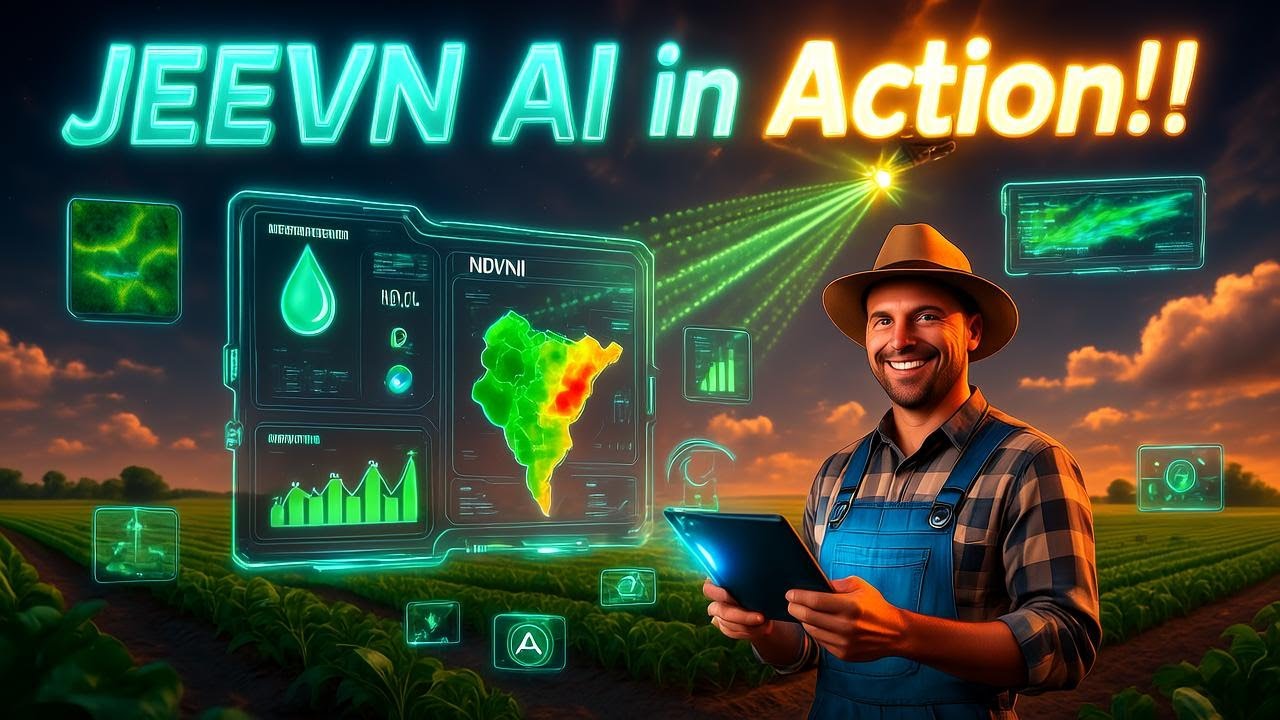
- 🛰️ Remote Crop Health Assessments: Satellite quantitative indices (NDVI, NDWI) offer early warnings on plant stress, pest, or water issues.
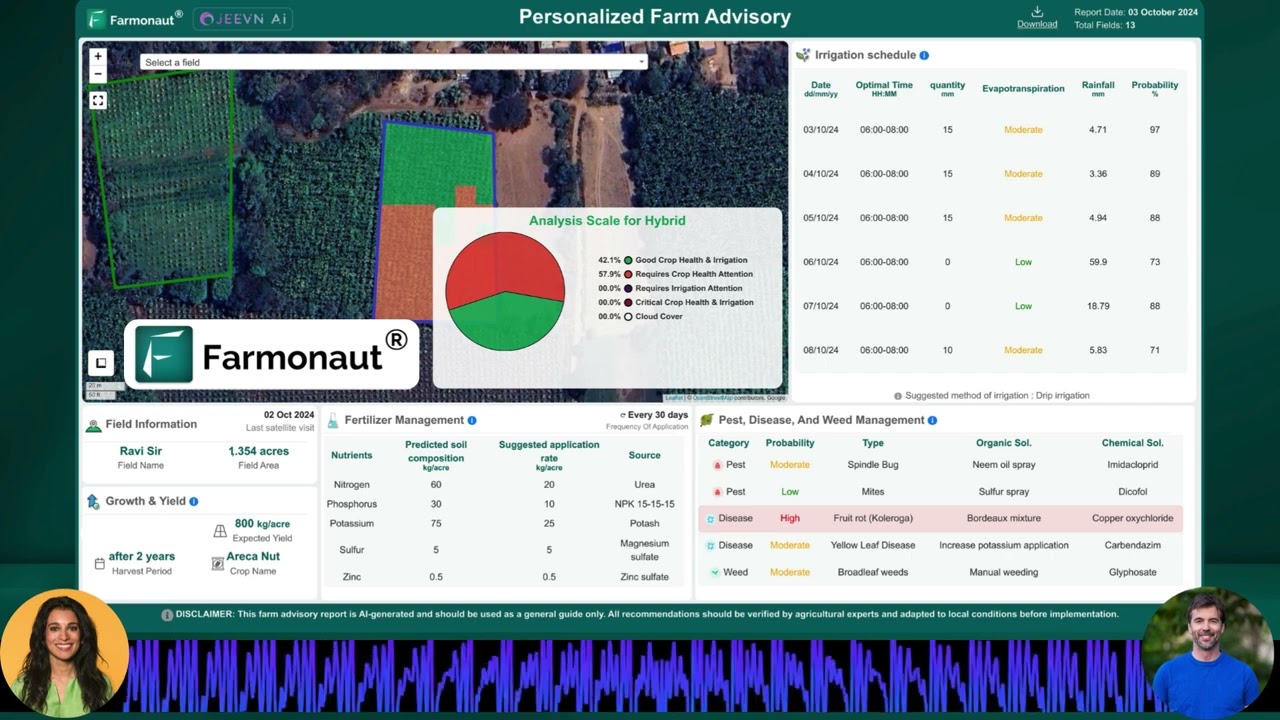
- 📱 Real-Time Agronomic Advisories: AI platforms, like the Jeevn AI Advisory System, provide actionable, location-based advice covering weather, soil, and crop strategies.
- 🔗 Blockchain-Backed Traceability: Secure, transparent food and product origin validation—essential for international markets and eco-assurance.
– Integrate satellite-driven data for live crop, forest, and infrastructure monitoring.
API Developer Docs
– Full integration guide for digital agriculture solutions on any custom platform.
As a satellite technology leader, our solutions are making high-fidelity satellite data, AI-based crop advisories, and traceability tools affordable and accessible to all stakeholders in the agricultural sector. Whether you’re optimizing input for oilseed rape in Poland, or tracking rice water stress in Thailand, our platform empowers smarter, faster, and more sustainable decisions.
empower agricultural lenders and insurers to deliver risk-free, fraud-proof services based on tamper-resistant, historical satellite monitoring.

Track your carbon footprint with Farmonaut’s satellite-powered carbon assessment—an essential step in EU-aligned sustainability reporting and climate-risk insurance models.
Learn more here.
Affordable choices for farmers, businesses, and government use. Unlock the benefits of advanced satellite and digital agriculture today:
Key Insights, Highlight Boxes, and Takeaways
- 📊 Poland is leveraging CAP-driven modernization for rapid upscaling of precision tech, irrigation systems, and organic farming.
- 🌱 Thailand’s diversification into tropical, high-value crops (beyond rice) increases both food security and climate resilience.
- 🧑🌾 Smallholder innovation is Thailand’s true strength—with digital adoption rising faster among young rural farmers.
- 🌍 Biodiversity and water management are strategic priorities across both countries, given shared climate risks.
- 🛰️ Farmonaut’s technology empowers all stakeholders to access, analyze, and act on climate and productivity insights affordably.
Adopt digital weather advisories—microlocal forecasts are proven to reduce risk for both large-scale Polish farmers and Thai smallholders.
Efficiency upgrades in irrigation and cold storage logistics offer excellent ROI in both Poland and Thailand, especially as exports rise.
Smallholder field digitalization is fastest where mobile and web apps are affordable and localized—removing language barriers is essential.
Ignoring local microclimate modeling or NDVI/NDWI satellite indices can result in poor fertilizer timing and sub-optimal irrigation cycles.
New CAP-linked environmental incentives and Thai biodiversity credits will further boost investment into sustainable practices post-2026.
FAQs – Agriculture in Poland and Thailand (2026)
1. What are the main differences between agriculture of Poland and agriculture of Thailand in 2026?
Poland’s agricultural sector is defined by its continental climate (cold winters, warm summers), EU policy alignment, large farm sizes, and leadership in cereal and root crops. Thailand’s tropical agriculture prioritizes rice, fruits, and smallholder livelihood, with growing sustainable practices led by both export demand and grassroots innovation.
2. What sustainable practices are trending in both countries?
Key trends include: organic and regenerative farming adoption, precision agriculture (drones, sensors, satellite imagery), water conservation systems, climate-resilient crop research, and supply chain digitization (blockchain/traceability).
3. How does climate change affect farming in Poland and Thailand?
Both experience heightened risk of drought, floods, and shifting seasons. Climate change adaptation includes breeding resilient crop varieties, diversifying cropping patterns, and deploying digital early warning systems for better management.
4. What digital solutions support modern farming in these economies?
Satellite imagery, mobile/web-based advisory platforms, blockchain traceability, environmental impact monitoring, and remote fleet/resource optimization tools empower all stakeholders. Explore full benefits on the Farmonaut application page.
5. Where can I access API/data integration services for smart agriculture?
Visit Farmonaut’s API portal and developer documentation for tools supporting agricultural, environmental, and geospatial use cases.
Conclusion: Building the Future of Sustainable Agriculture in Poland and Thailand
The agriculture of Poland and agriculture of Thailand are entering a new era marked by policy-driven sustainability, demand for resilient food systems, and the digital transformation of rural economies. Strategic investment in climate-smart practices, digital technology (AI, satellite, blockchain), and capacity-building will be essential for both countries to thrive in the face of climate, market, and demographic challenges. By combining their unique strengths—Poland’s institutional capacity and Thailand’s smallholder dynamism—they are set to shape the benchmarks for sustainable, adaptable agriculture in 2026 and beyond.
For businesses, policymakers, and farmers seeking the most advanced, affordable digital agriculture solutions, our tools at Farmonaut deliver actionable insight and operational advantage—enabling a secure, productive, and environmentally sound future for global farming.
Discussion
Questions, corrections or field experience? Share them below. First-time comments are reviewed before they appear, and your email is never published.
No comments yet. Be the first to add a question or your experience.

 Hiteshi Infotech
 Clubhouse OS
 Progenseed
 SkyHarvest
 Polaris Digitech
 Teledarbas
 Wild Oak Farm
 SFX
SFX BACF Africa
 Doodlakine
 Exurbia Geospatial
 FieldZero
 Indico Company
 Licence holder · Niger · Gold










