

What is O-Farming & E-Farming? Powerful Trends for 2025
Introduction: Understanding O-Farming & E-Farming in 2025
In the rapidly evolving landscape of agriculture, we are witnessing new methodologies emerging to tackle the dual challenge of increasing food production while minimizing environmental impact. The year 2025 stands at the forefront of this evolution, with methods like O-Farming (Organic Farming), E-Farming (Electronic Farming), and Eco-Farming (Ecological Farming) gaining significant attention.
These innovative sustainable agriculture practices focus on improving soil health, crop resilience, fostering resource efficiency, and promoting a healthier environmental balance. But what is o-farming? How does e-farming transform modern farming? And why is eco-farming increasingly recognized as essential for a sustainable future?
This comprehensive guide uncovers the core concepts, distinctions, and the powerful trends shaping sustainable agriculture in 2025. We’ll explore how modern tools, including satellite technology, AI, and blockchain, multiply the benefits of each method—helping farmers, businesses, and governments collectively address climate and food security challenges.
What is O-Farming? (Organic Farming Explained)
The Definition & Principles of O-Farming
What is O-Farming? O-Farming (Organic Farming) is a method of agriculture that emphasizes natural processes, avoids synthetic chemicals (such as pesticides, herbicides, and fertilizers), and focuses on maintaining soil health, biodiversity, and ecosystem balance.
- Natural Inputs: O-farming avoids the use of synthetic pesticides and fertilizers, instead leveraging natural alternatives like green manure, composting, and crop rotation.
- Soil Health: This approach emphasizes the holistic health of the soil, focusing on its organic matter, microbial life, and nutrient cycles.
- Biodiversity and Ecosystem Balance: O-farming promotes a diverse, sustainable ecosystem, providing habitat for pollinators and beneficial organisms while supporting ecological functions like pest control.
- Biological Pest Control: Instead of relying on chemical interventions, o-farming utilizes beneficial predators and plant species that naturally suppress pests.
- Crop Rotation & Polyculture: O-farming encourages regular rotation and multi-cropping to disrupt disease cycles and improve soil fertility.
O-Farming in 2025: Not Just a Niche, but a Movement
By 2025, o-farming is a global movement. As more farmers confront the realities of climate change, soil degradation, and health concerns about food residues, organic agriculture emerges as a resilient answer.
Major benefits include:
- Improved soil health and resilience; soils in organic farms tend to store higher carbon
- Reduced chemical runoff into water systems
- Greater biodiversity on and around the farm
- Premium market prices for certified organic products
However, o-farming also presents challenges—requiring advanced management knowledge, more labor, and adaptation to lower synthetic input yields. The opportunity: increased resilience against market and climate volatility, with growing consumer support for organic food.

O-Farming the online course is not farming
Many people searching for “O-Farming” or an “O-Farming review” are not looking for organic agriculture at all. O-Farming is also the name of a paid online training programme, promoted by Rashid Al Shari, that teaches people to act as brokers between crude-oil buyers and sellers for a commission. In that programme, “farming” means finding and brokering deals, not growing crops.
Independent reviews in 2026 list an entry price of $67, with upsells running to several thousand dollars, and note that the course offers no verified buyer or seller contacts (Mark’s Insights review). Oil brokering is a regulated trade that depends on credentials and industry relationships built over years.
Before paying for any course that promises large commissions, the US Federal Trade Commission advises asking for written proof of typical earnings, reading testimonials with caution and getting a second opinion (FTC consumer advice). This article covers O-farming in the agricultural sense: organic farming.
Core O-Farming Practices
- Composting: Recycling farm waste and organic material back to the soil to improve fertility
- Green Manure: Using specific crops to add organic nutrients in-between main crops
- Biological Pest Control: Introducing or encouraging natural enemies of crop pests
- Crop Rotation & Diversification: Preventing depletion of soil nutrients and breaking the cycle of pests/diseases
- Careful Tillage: Organic farms usually rely on cultivation to control weeds, so many limit how often and how deeply they till to protect soil structure
These o-farming methods help enhance long-term soil fertility, boost plant growth, and minimize risks from synthetic pesticide residues. But in the context of 2025, advanced approaches, often powered by technology, multiply their impact.
How a farm becomes certified organic
In agriculture, O-farming is organic farming, and in most markets the word “organic” on a label is legally controlled. In the United States, the USDA National Organic Program sets the rules. The main points for a grower starting out:
- Three-year transition. A field must have had no prohibited substances applied for three years before the harvest that is sold as organic, and it needs buffers from neighbouring conventional land (7 CFR 205.202).
- A written organic system plan. This covers seeds, soil fertility, pest control and record-keeping, and is reviewed by a USDA-accredited certifier.
- An annual inspection. The certifier visits each year and checks records and fields.
- Small-farm exemption. Farms selling $5,000 or less of organic products a year can call them organic without certification, provided they follow the standards, but cannot use the USDA Organic seal (7 CFR 205.101).
The EU, UK and Canada run similar schemes with their own conversion periods and approved certifiers.
What is E-Farming? (Electronic Farming Demystified)
The E-Farming Revolution: Digital-Driven, Precision Agriculture
What is e-farming? E-farming, also known as Electronic Farming, Digital Agriculture, or Smart Farming, refers to the use of modern technological tools such as sensors, the Internet of Things (IoT), drones, satellite imagery, machine learning, and data analytics to optimize agriculture production.
- Real-Time Monitoring: Sensors and satellite data allow farmers to remotely track soil moisture, nutrient levels, crop health, and more.
- Precision Input Application: Data-driven algorithms enable automated machinery to apply water, fertiliser, and pesticides with pinpoint accuracy—reducing waste and lowering environmental impact.
- Automated Farm Management: Robotics and AI-based systems can perform planting, irrigation, and harvesting, greatly reducing manual labor.
- Early Warning Systems: Drones, IoT, and satellite imagery provide real-time alerts for pest outbreaks, disease, climate risks and resource shortages, increasing farm resilience.
By 2025, e-farming transforms traditional agricultural practices worldwide, with emerging economies rapidly catching up.
Key Technologies Used in E-Farming
- IoT Sensors: Deployed in fields to record and transmit live data on soil conditions and crop health.
- Satellite Imagery & Remote Sensing: Provides a birds-eye view to monitor crop stress, water deficits, and land use.
- Drones/UAVs: Conduct aerial surveys for plant health analysis, pest detection, and even targeted pesticide spraying.
- Farm Management Apps: Digital platforms for scheduling, recording, and analyzing farm operations and results.
- Blockchain Traceability: Ensuring transparency and security in food supply chains.
- Artificial Intelligence: Machine learning algorithms for yield prediction, disease diagnosis, and optimal input recommendations.
These tools empower farmers to increase yields, reduce inputs and waste, mitigate climate and pest risks, and support regulatory compliance and sustainability goals.
Example: Satellite-Based Solutions in E-Farming
Leading-edge platforms—such as ours at Farmonaut—enable farmers and businesses to monitor fields remotely, access real-time AI-driven crop health analysis, and make better agronomic decisions.
Our unique value proposition is offering large-scale farm management tools that integrate satellite, IoT, and AI insights, all accessible through simple web and app interfaces.

What is Eco-Farming? (Ecological Agriculture for a Sustainable Future)
The Eco-Farming Concept: Working with Nature
Eco-farming, or ecological farming, is an umbrella term for sustainable practices that nurture the environment and support biodiversity. It combines organic farming principles, agroecology, permaculture, and conservation to create agricultural systems that work with, not against, nature.
- Diversification: Multiple crops and animals to foster natural balance and ecosystem functions
- Soil Regeneration: Intensive focus on techniques that build and protect soil organic matter
- Water Conservation: Methods that prevent runoff, manage rainfall, and protect water bodies
- Habitat Preservation: Integrating field margins, hedgerows, and native habitats
- Minimal External Inputs: Reliance on on-farm or local resources, reducing dependency on outside fertilizers and chemicals
- Fair Trade & Social Responsibility: Empowering smallholder farmers and supporting equitable supply chains
In 2025, eco-farming is recognized as critical not just for environmental health but for global food security, climate resilience, and the well-being of local communities.
- Eco-farming reduces synthetic chemical use—paving the way for greater biodiversity and less pollution
- These systems can build soil carbon, though gains vary with soil, climate and management
- They often rely on advanced monitoring technology (IoT, satellite) for ecosystem performance tracking

O-Farming vs. E-Farming vs. Eco-Farming: Comparative Matrix for 2025
The main differences: o-farming is defined by what it leaves out (synthetic inputs), e-farming by the digital tools it uses, and eco-farming by its whole-ecosystem approach. A farm can combine all three.
Powerful Sustainable Trends in Agriculture for 2025
The Rise of Smart, Eco-Conscious, and Resilient Practices
In 2025, the intersection of o-farming, e-farming, and eco-farming defines sustainable agriculture worldwide. Let’s review the trends revolutionizing how we grow food and manage landscapes:
- Hybrid Approaches: Leading farms combine organic soil strategies with data-driven, electronic monitoring for best results.
- Climate Adaptation: E-farming tools alert farmers to climate risks (droughts, floods, pest outbreaks), enabling rapid, informed response and adaptation.
- Input Use Efficiency: Satellite-guided precision application of water and nutrients reduces total input cost and loss due to over-application.
- Carbon Footprinting and Environmental Impact Monitoring: Tracking and reporting agricultural carbon emissions, vital for climate policy and sustainability benchmarks. Platforms like Farmonaut’s carbon footprinting tool support these initiatives by providing advanced satellite-based environmental tracking.
- Traceable, Transparent Food Chains: Blockchain-based traceability is becoming a new standard for food safety, authenticity, and trust. Discover more at Farmonaut Product Traceability.
- Resource Management and Fleet Optimization: Large and small agriculture businesses are leveraging AI and satellite insights for efficient fleet and resource management to cut operational costs.
- Soil and Water Conservation: Adoption of regenerative farming, reforestation, and water-saving irrigation to reverse degradation trends.
- Premium Value for Certified Organic and Eco-Friendly Products: Mounting consumer demand for transparent, sustainable products is spurring certification and market premiums.
Connecting the Dots: O-Farming, E-Farming, and Eco-Farming
These trends are not isolated—integrated systems are the foundation of future sustainable agriculture. Many organic and eco-farms now use e-farming tools to:
- Monitor and optimize soil health, making organic strategies more effective
- Enable sustainable pest and disease management with minimal chemicals
- Fast-track climate resilience and improve operational efficiency

How Technology Empowers Sustainable Farming (Farmonaut Solutions)
Advanced Tools Making a Difference
Satellite technologies, AI-driven analysis, and blockchain are game changers in the agriculture sector—making smart, sustainable approaches accessible. At Farmonaut, we help users around the world:
- Remotely monitor fields for crop health, soil moisture, pest outbreaks, water stress, and nutrient levels—via easy-to-use apps.
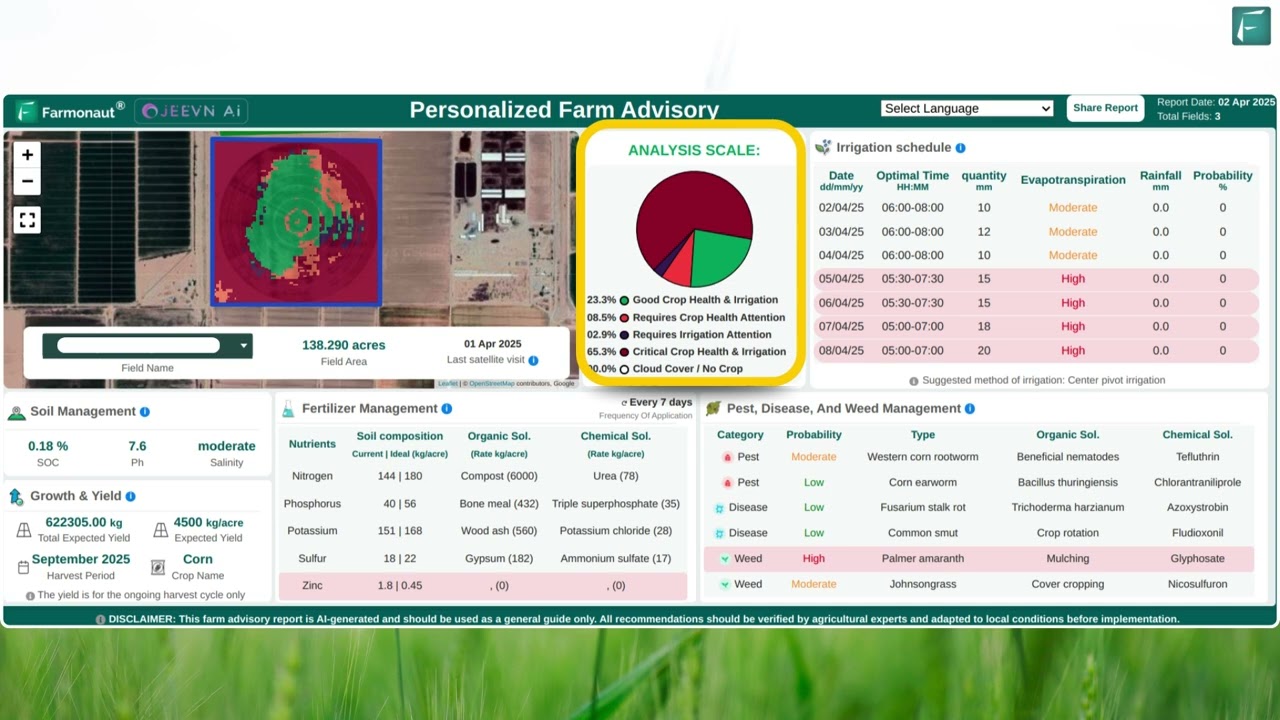
- Access real-time AI advisories (via Jeevn AI) for smarter, more ecological farm decisions.
- Trace every input and transaction in food and resource supply chains using blockchain technology—protecting integrity, transparency, and consumer trust (find out more).
- Comply with modern sustainability standards using environmental impact monitoring—including carbon emission calculations for eco-certification (carbon footprinting).
- Integrate fleet and operational management tools for agriculture logistics and resource tracking (fleet management).
- Enable easier access to crop loans and insurance by leveraging satellite-based field verification—a major advantage for modern, data-driven farmers (more info here).
Our mission is to make affordable, evidence-based agricultural intelligence available to every user. Sustainability is not a privilege—it’s a basic necessity.
Key Features of Farmonaut’s Technology Suite
- Satellite Monitoring: Get vegetation indices (NDVI), soil conditions, water status, and threat alerts—on any device (Android, iOS, Web, or API).
- AI-Jeevn Advisory: Farmonaut’s Jeevn AI translates satellite data into actionable recommendations for crop, pest, and water management—enabling best organic, electronic, and eco-farming outcomes.
- Blockchain Traceability: Authenticate each stage in the journey from farm to table—protecting consumers and brands alike.
- Environmental Reporting: Real-time tracking of carbon footprint and compliance with global sustainability standards.
Farmonaut’s large-scale farm management platform is entirely scalable. Whether you’re an individual farmer with a single field or a government project manager overseeing thousands of hectares, our solutions adapt to your scope and needs.



For integration and API access, see our
Farmonaut Satellite Weather API and Developer Docs.
Essential Resources & Farmonaut Links
- Farmonaut Carbon Footprinting – Tools for tracking, managing, and reporting farm and supply chain emissions.
- Farmonaut Product Traceability – Blockchain-powered transparency for food, crops, and agricultural supply chain validation.
- Crop Loan & Insurance Services – Satellite-based verification for faster, fraud-resistant financing.
- Farmonaut Fleet Management Solutions – Efficient tracking of vehicles and machinery for resource optimization.
- Large Scale Farm Management Platform – Full suite for managing farm resources, workers, crop plantation, forest advisory, and much more.
- Download Farmonaut App (Web/Mobile) – Get started with advanced satellite-powered monitoring for your farm or agribusiness.
Frequently Asked Questions (FAQ) on O-Farming, E-Farming & Eco-Farming
Q1: What is o-farming?
O-farming stands for Organic Farming. It’s an agricultural approach that avoids synthetic pesticides, herbicides, and fertilizers—instead relying on natural inputs, composting, and crop rotation to foster healthy soil, biodiversity, and ecological balance.
Q2: What is e-farming?
E-farming, or Electronic Farming, is the application of digital and precision technology—such as IoT sensors, drones, satellite monitoring, and AI—for optimizing farm operations, input use, water management, and plant health tracking.
Q3: How does eco-farming differ from traditional organic farming?
Eco-farming is broader than organic farming. It integrates principles from organic, permaculture, and agroecology, putting greater emphasis on biodiversity, landscape restoration, and social equity—not just certifications for input use.
Q4: Are these methods suitable for small and large farms?
Yes. Both smallholders and large-scale farm operations can benefit from o-farming, e-farming, and eco-farming principles—especially as accessible, modular technological solutions like satellite monitoring become available.
Q5: Can e-farming conflict with organic or eco-farming?
Not at all. E-farming tools support organic and eco methods by enabling precision and real-time data, reducing manual labor, identifying pest/disease issues early, and supporting sustainable input use.
Q6: How do Farmonaut’s solutions support sustainable farming?
We offer affordable, user-friendly apps and APIs for satellite monitoring, AI-based recommendations (Jeevn AI), blockchain traceability, and carbon/emissions tracking. Our features enable more resilient, transparent agriculture—serving individual users, businesses, and governmental institutions globally.
Q7: Where can I learn more or get started?
Visit Farmonaut’s app portal or access our API developer docs.
Conclusion: The Future of Sustainable Farming Is Here
Sustainable agriculture in 2025 and beyond is being shaped by the complementary and powerful trends of o-farming (organic farming), e-farming (electronic farming), and eco-farming (ecological farming). Understanding each approach—along with the technological tools now available—enables farmers and producers to choose the most suitable path for their land, business, and region.
By combining natural, ecological principles with the precision and efficiency of modern technology, the global agriculture sector can solve the dual challenge of feeding a growing world and restoring the planet. The ability to improve soil health, foster biodiversity, minimize chemical inputs, optimize resource use, and transparently monitor results is now within reach of every farm, everywhere.
The next era of farming is collaborative, transparent, and data-driven: shaping not just food security, but the wider social, economic, and environmental resilience needed for the challenges ahead. The future is green, smart, and ethical—let’s grow it together.
Discussion
Questions, corrections or field experience? Share them below. First-time comments are reviewed before they appear, and your email is never published.
No comments yet. Be the first to add a question or your experience.

 GlobalQuant
 MDCV UK
 Zerella Group
 Etech Consulting Madagascar
 Vestlandsforsking
 Agritein
 Delicio
 WB Dev
 Sama Premium
 Prochecker
 Tres Valles
 LACOS Geoinformation
 Magrifly
 LatConnect 60
 Blickwinkel
 Agricultural Credit Policy Council
 Marei Nursery
 eKGIS
eKGIS Mostas Tech
 Exploration consultancy · South Africa · Gold
 Licence holder · Niger · Gold
 Licence holder · Nigeria · Gold + lithium










