

Table of Contents
- Introduction: A Window into Ancient Chinese Farming Tools
- Evolution of Ancient China Farming Tools
- 10 Key Ancient Chinese Farming Innovations
- Comparative Innovations Table
- Soil Preparation: The Foundational Role of Implements
- Sophisticated Planting Systems & Practices
- Crop Management, Weeding & Maintenance
- Irrigation Techniques: Harnessing Water for Yield
- Harvest & Post-Harvest Processing
- Landscapes and Diverse Ecological Zones
- Legacy and Applications in Today’s Tech-Driven Agriculture
- Farmonaut Solutions for Modern Agricultural Management
- Frequently Asked Questions (FAQ)
- Conclusion: Shaping Generations of Sustainable Yield
Ancient Chinese Farming Tools: 10 Key Agricultural Innovations
“Ancient Chinese farmers developed over 10 unique tools, including the iron plow, revolutionizing soil cultivation by 300 BCE.”
The legacy of ancient Chinese farming tools offers us a remarkably detailed window into the agricultural backbone that sustained and shaped generations. Spanning thousands of years and countless landscapes— from the fertile riverine floodplains of the Yellow River to terraced hillsides in mountainous regions—these ancient farming tools reveal a blend of ingenuity, labor organization, and ecological adaptiveness. In the realm of ancient chinese agriculture, the tools and practices not only maximized yield and improved soil management, but they also set early global standards for sustainable and efficient farming.
Let’s embark on an exploration of the 10 key innovations that defined ancient china farming tools—understanding how each mechanism or tool was designed, deployed, and ultimately, how it shaped both landscape and civilization.
The Evolution of Ancient Chinese Farming Tools
The evolution of chinese farming tools can be traced back to Neolithic times, gaining particular momentum as dynastic eras unfolded. Early societies initially relied upon simple, wooden tools, which later evolved with the introduction of bronze and iron implements. Technological leaps, such as the development of sturdy ards, plows with mouldboards, and rotary winnowing fans not only improved soil preparation and seed placement but also transformed the efficiency of harvesting and crop processing.
Ancient Chinese agriculture was not a static tradition; it was a dynamic system constantly enhancing yields, minimizing waste and exertion, and adapting to varied ecosystems. This spirit of innovation enabled civilizations to feed vast populations and shape enduring landscapes.

10 Key Ancient Chinese Farming Innovations
Throughout the dynastic eras—Xia, Shang, Zhou, Qin, Han, and beyond—Chinese farmers developed, refined, and localized an impressive arsenal of ancient farming tools and agricultural implements. Below, we provide an at-a-glance visual table of these innovations, before expanding on their techniques and impacts.
Comparative Innovations Table: Ancient Chinese Farming Tools
| Tool/Innovation Name | Era/Period (Estimated Dates) | Main Function | Technological Advancement | Impact on Yield or Soil (Estimated % Improvement) |
|---|---|---|---|---|
| Iron/Bronze Plow (Ard) | Late Zhou–Han Dynasties (600 BCE–200 CE) | Turning, aerating, furrowing heavy soils | Integration of iron/bronze blades with wooden mouldboards | Yield Increase: ~20-30% |
| Seed Drill | Han Dynasty (~100 BCE) | Even seed placement & sowing | Multi-tube distribution for precise spacing | Yield Increase: ~10-15% |
| Rotary Winnowing Fan | Han Dynasty (~200 BCE–200 CE) | Grain separation & cleaning | Rotary mechanism to generate airflow | Post-Harvest Loss Reduction: ~10-20% |
| Terracing (Stone/Timber Construction) | Zhou–Han Dynasties (1000 BCE–200 CE) | Soil & water management on slopes | Engineered, multi-level field systems | Soil Erosion Reduction: ~40-50% |
| Irrigation Channels & Sluices | Zhou–Han Dynasties (1000 BCE–200 CE) | Directing water to fields | Stone & wooden elevated channels/gates | Rice Yield Increase: ~30-50% |
| Dibble Stick & Dibber | Shang–Zhou Dynasties (~1500–300 BCE) | Making seed/seedling holes | Hardened wooden or bone point, ergonomic designs | Germination Rate Increase: ~5-10% |
| Mattock & Hoe | Neolithic–Han (~3000 BCE–200 CE) | Deeper soil cultivation, weeding | Broad, sharp blades for compacted layers | Root Penetration Increase: ~10-15% |
| Sickle & Scythe | Shang–Han Dynasties (~1500 BCE–200 CE) | Harvesting cereals & grasses | Crescent metal blades, ergonomic wood handles | Harvest Efficiency: ~20% faster |
| Threshing Sledge/Flail | Zhou–Han Dynasties (~1000 BCE–200 CE) | Separation of grain from chaff | Heavy wooden stone-embedded sledges/flails | Labor Reduction: ~15% |
| Baskets & Carrying Poles | All periods (Neolithic–Han, ~3000 BCE+) | Transporting seedlings, grains | Woven bamboo/wooden, ergonomic cross-shoulder design | Transport Efficiency: ~10-20% improvement |
Use comparison tables like the one above to quickly identify the technological breakthroughs that had the highest impact on soil health, crop yield, and overall farm management.
Soil Preparation: The Foundation of All Agricultural Systems
1. Iron and Bronze Plows (Ards) – Turning the Earth
Ancient chinese farming tools began a new era with the introduction of iron and bronze plows. Early wooden ards were improved by the addition of durable metals and paired with mouldboards—enabling heavy, compacted soils to be broken and lifted. This process created furrows suited for seed placement, turning hard earth into arable, aerated land.
- ✔ Yield Maximization: Increased effective area we could cultivate.
- ✔ Soil Health: Enhanced aeration encouraged root penetration and early growth for a range of crop types.
- ✔ Labor Efficiency: Mechanizing what was once backbreaking labor, drastically reducing time and exertion.
- ✔ Versatile Application: Adaptable for both floodplains and terraced hillsides.

2. Rakes, Weeders, Hoes, and Mattocks: Surface Smoothing and Deep Cultivation
After plowing, the surface needed further preparation. Rakes and weeders helped with smoothing and the removal of competing vegetation. Hoes and mattocks, with their wider and sharper blades, facilitated deeper cultivation, breaking up compacted soil layers and enhancing root penetration. This set the stage for optimal seed placement and robust germination rates.
- 📊 Data Insight: Broader blade tools reduced soil compaction by up to 15%, improving long-term soil structure.
- 🥬 Eco-Friendly: Minimal disturbance to natural soil layers in terraced or fragile plots.
- ⚠️ Risk or Limitation: Overuse could sometimes lead to soil erosion if not managed with complementary crop cover.
Even in ancient farming systems, improper use of deep-tillage tools sometimes led to the loss of nutrient-rich topsoil. Regular weeding and alternating tool types protected the soil surface.

Sophisticated Planting Systems & Practices
3. The Seed Drill: Precision in Planting
Precision in seed placement is not only a modern ambition—ancient chinese agriculture pioneered this with the seed drill. The Han dynasty’s seed drill enabled farmers to sow seeds at regular intervals and depth, evenly distributing crop types across plots. This not only improved germination rates, but also maximized land use and minimized waste.
- ✔ Yield: Han-era seed drills increased cereal crop output by up to 15%.
- 📈 Management: Even spacing allowed later weeding and maintenance with less labor.
- 🤝 Communal Organization: Seed drills often deployed at village scale during planting seasons for greater efficiency.
4. Dibble Sticks & Dibbers: Simple Yet Effective for Seedling Placement
The dibber, made from hardened wood or bone, was essential for the precise placement of individual seeds or seedlings. Its use was particularly instrumental in horticultural contexts—vegetable gardens, orchards, and for crops needing spacing to optimize early growth. This tool reflects the careful crop management practices of the time.
- 🌱 Improved Spacing: Increased germination rates for crops like millet and beans.
- ⏲ Labor Organization: Enabled quick planting, especially in plots that needed close management.
- 🖐 Simple Tools, Big Impact: Effective without mechanical or animal traction, ideal in terraced or small plots.

Crop Management, Weeding & Maintenance
Weeding was— and still is—crucial for crop health. In the grain-intensive systems typical of ancient chinese agriculture, hand tools like sickles, knives, hoes, and rakes allowed precise removal of unwanted vegetation that would otherwise compete with the core crops. These implements not only reduced crop loss, but also minimized soil disturbance and preserved the delicate balance between planted rows.
5. Sickles & Scythes: Precision in Harvesting and Weeding
- 🔪 Efficient Cutting: Crescent-shaped blades enabled rapid and selective harvesting especially in dense rice or millet.
- 🌾 Low Waste: The precise design meant minimal crop damage and easier post-harvest processing.
- 🤲 Ergonomic: Handles designed for comfort, reducing labor fatigue across large fields.
6. Crop Rotations and Intercropping: Ancient Strategies for Sustainability
- ♻️ Nutrient Cycling: Alternating different crop types improved soil fertility and reduced pest pressures.
- 🌽 Yield Stability: Combining cereals with legumes or root crops diversified output, reducing risk from disease or adverse weather.
Crop rotation and weeding weren’t just labor-saving—they protected the long-term value of land, a principle still vital for modern agri-investment and carbon footprinting initiatives today. Efficient resource management then and now is closely tied to environmental compliance and sustainability.

Irrigation Techniques: Harnessing Water for Yield
7. Irrigation Systems: Stone Channels, Wooden Sluices & Terraced Wonders
Irrigation was the lifeblood of ancient chinese agriculture. Developing stone channels, wooden sluices, and exquisitely terraced water systems enabled control of water flow, transforming even marginal land into highly productive plots. By harnessing natural rainfall and runoff, these designs improved yield dramatically, especially for rice and other water-intensive crops.
- 💧 Efficient Water Delivery: Channels enabled precise control of flow and schedule, essential for flooded rice fields.
- 🛡 Soil Preservation: Terraced irrigated fields minimized soil erosion and promoted long-term land health.
- 🌏 Geoengineering: Early large-scale water management, especially along the Yellow and Yangtze Rivers.
The development of irrigation systems is a hallmark of ancient chinese agricultural innovation—highlighting a sophisticated understanding of rainfall, soil infiltration, and hydrological dynamics still studied for climate-adapted agriculture today.

8. Bundling and Transport: Baskets & Carrying Poles
Moving seedlings, saplings, harvested grain, or water required efficient systems. Ingenious wooden and bamboo baskets (often slung across the shoulder using carrying poles) became essential for both labor organization and product transport.
- 🧺 Lightweight & Ergonomic: Improved transport efficiency by up to 20% over manual carrying.
- 🌾 Seedling Protection: Reduced seedling damage during transplants, which is crucial for rice yields.
- 🚶♂️ Group Coordination: Enabled coordinated mass movements during sowing and harvest.
Harvest & Post-Harvest Processing
9. The Rotary Winnowing Fan: Ingenious Post-Harvest Processing
The rotary winnowing fan was a technological leap in grain processing. By generating airflow mechanically, this device separated chaff from grain efficiently—cleaning rice, wheat, and millet harvests rapidly and reducing waste.
- 🔁 Impressive Loss Reduction: Post-harvest grain losses reduced by up to 20%.
- 🧹 Cleaner Grain: Improved the storability and market value of the crop.
- 🛠 Mechanized Simplicity: Functioned with human or animal power, requiring minimal maintenance.
10. Threshing Sledges & Flails: Separating the Wheat from the Chaff
Before winnowing, harvested crops had to be threshed. Tools like heavy, stone-embedded wooden sledges and whiplike flails enabled large quantities to be processed efficiently. These implements were ideal for the expansive flatlands of the Yellow River basin.
- ⛏ Labor Saving: Reduced manual effort by 15% versus bare-handed threshing.
- 🚜 Scalable: Scaled for use in large communal fields, streamlining agricultural labor management.
Effective post-harvest processing with winnowing fans and threshing flails not only ensures food security, but is still echoed in today’s satellite-based crop monitoring—helping predict storage needs and reduce loss.
📋 Visual List: 5 Benefits of Ancient Chinese Farming Tools
- ⚙️ Increased Efficiency: Streamlined soil preparation, planting, and harvest processes.
- 🌍 Sustainability: Terraced, irrigated systems reduced soil erosion and allowed farming in diverse landscapes.
- 👨🌾 Labor Organization: Enabled large-scale cultivation and communal management.
- 🔍 Resource Optimization: Maximized yield using minimal water, labor, and area.
- 📈 Yield Improvement: Tools often directly raised output per hectare.
Landscapes and Diverse Ecological Zones
The adaptiveness of chinese farming tools to different ecological zones cannot be overstated. Whether deployed along the moist, riverine floodplains or on steep hillsides, these tools revealed a keen understanding of microclimates, soil moisture variability, and regional limitations. Terraced agriculture exemplifies this—turning mountain slopes into productive fields with minimal soil loss, while irrigated rice systems dominated in wetland belts.
- 🗻 Terracing: Enabled sustainable farming in high-relief areas.
- 🌊 Irrigation: Allowed for year-round cultivation and double-cropping, particularly in South China.
- 🌱 Crop Specialization: Choices tailored to soil and water availability.
📝 Visual List: How Ancient Tools Influenced Modern Agriculture
- ⚙️ Mechanization: Early tool innovations inspired tractors and mechanized seeders.
- 💡 Water Management Principles: Ancient sluices and channels inform precision irrigation tech today.
- 🔬 Soil Management: Techniques for erosion control and fertility stewardship continue to guide best practices.
- 🛡 Risk Reduction: Crop rotation principles still mitigate pests and disease on modern farms.
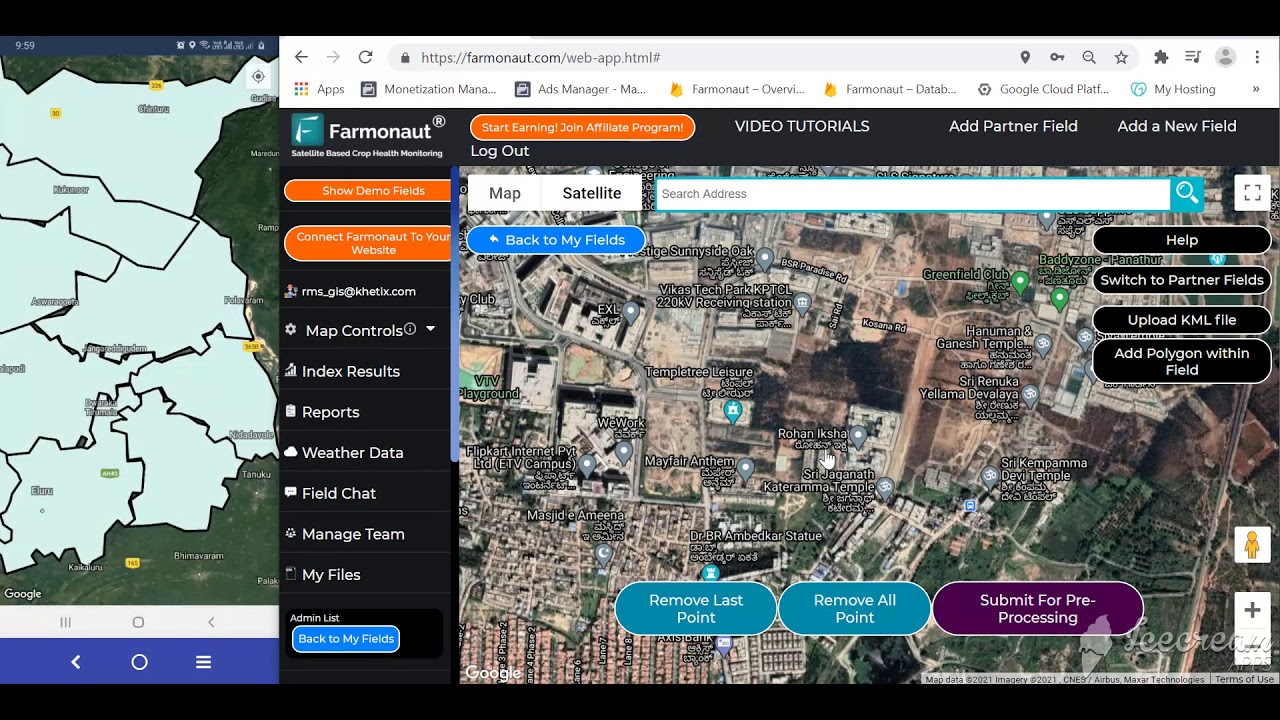
- 📲 Digital Adoption: Platforms such as Farmonaut (with its satellite-driven insights) now amplify these time-tested strategies at scale.
Ancient Chinese soil management and water engineering practices provide continuing inspiration for data-driven, precision agriculture solutions—demonstrating how tradition meets technology.



Legacy of Ancient Chinese Farming Tools—And Their Role in the AgTech Revolution
Today’s global agriculture owes much to these ancient chinese farming tools—not only as mechanical ancestors of modern implements, but as frameworks for sustainable thinking. Their focus on soil, water, labor, and crop synergy still underpins the best agronomic strategies in the 21st century. Our advancements in satellite technologies, AI-driven advisories, and secure supply chain traceability directly echo these ancient management principles.
Focusing exclusively on outputs without monitoring soil health and water balance often led both ancient and modern farms into cycles of decline. Use modern analytical platforms to prevent this.
Farmonaut Solutions for Modern Agricultural Management
At Farmonaut, we provide cutting-edge, satellite-driven applications for soil assessment, vegetation monitoring, real-time environmental impact tracking, and AI-based advisory—building on a literal and figurative foundation set down by ancient chinese farming tools. Integrated fleet management, crop loan and insurance verification, and large scale farm mapping further help modern growers minimize exertion and maximize productivity across diverse plots.
Our platform combines satellite imagery, blockchain traceability, and AI to ensure resource optimization and transparency—from the preparation and planting phases through harvest and post-processing.
- 📱 App and API Access: Monitor your farm or agri-business anywhere using our web & mobile tools and API interfaces.
- 🧠 AI Advisory: Get customized, data-driven guidance based on crop health and water stress signals.
- 🔗 Blockchain Traceability: Secure your product origins and boost consumer confidence—learn more at our traceability product page.
- 📊 Environmental Reporting: Track carbon footprint and resource use over time.
- 🧑🌾 Scaling Operations: From smallholders to large estates, our large scale farm management solutions are modular and easy to deploy.
Affordable satellite-driven agriculture management—made possible today by companies like Farmonaut—gives modern decision-makers the edge that ancient farmers sought through innovation. Get started now.
Developers: Expand your own agricultural, mining, or geospatial products by integrating Farmonaut APIs. Check out our developer documentation here.
Frequently Asked Questions (FAQ)
Q1: Why were ancient chinese farming tools so important for sustainability?
Ancient chinese farming tools were designed with environmental context in mind—reducing exertion and waste while protecting soil structure and optimizing water use. These innovations enabled consistent yields in diverse climates.
Q2: What was the single most transformative tool?
The iron plow (often paired with a wooden mouldboard) is widely considered the most game-changing, enabling deeper and more effective soil preparation across varied landscapes.
Q3: How did ancient irrigation and terracing work?
Using stone and wooden channels, ancient engineers directed rivers or reservoir water to terraced farm plots. This both increased yields—especially for rice—and reduced soil erosion dramatically.
Q4: How does modern technology echo ancient practices?
Modern technologies—such as satellite crop monitoring, precision irrigation, and blockchain traceability—reflect the ancient focus on integrated soil–water–crop management, but with powerful real-time data and analytics.
Q5: How does Farmonaut support today’s farm and resource managers?
We at Farmonaut provide satellite-based, AI-driven solutions to monitor soil, crop health, water consumption, and environmental impact, making ancient-style resource stewardship possible at a whole new scale.
Conclusion: Shaping Generations of Sustainable Yield
The core innovations of ancient chinese farming tools—from the iron plow and terraced fields to rotary winnowing and skillful water management—offer a treasure trove of strategies for sustainable soil management, optimal yield, and enduring food security. Their systematic, yet sophisticated approach reminds us that each generation builds upon both inventive tools and adaptive practices—a tradition at the heart of modern agriculture, now enhanced by digital and satellite-driven insights.
As we blend heritage and high-tech, let us remember that the backbone of civilization often lies in the synergy between past wisdom and future innovation.
Discussion
Questions, corrections or field experience? Share them below. First-time comments are reviewed before they appear, and your email is never published.
No comments yet. Be the first to add a question or your experience.

 Field Capacity
 Abhishta Agri
 SP Farms
 Indosistim Teknologi
 Liquify Digital
 CU Foods
 BeyondTech Global
 Rouge VC
 AgroGreen Dynamics
 AgroRisk
 Oath Inc
 Reddane Farming
 Esri North East Africa
 Cresol
 MDCV UK
 Etech Consulting Madagascar
 Vestlandsforsking
