

Custard Apple Yield: 7 Data Tips for Maharashtra – Boosting Fruit Harvest with Remote Sensing, NDVI & Smart Management (2025)
“NDVI data analysis improved Custard Apple yields in Maharashtra by up to 18% in fields using tech-driven crop management.”
- Introduction: Custard Apple Cultivation Trends in Maharashtra 2025
- Why Data and Technology Matter for Custard Apple Yields
- 7 Data-Driven Tips to Maximize Custard Apple Yield
- 1. Monitor NDVI and NDWI for Real-Time Crop Health
- 2. Schedule Irrigation Strategically with Remote Sensing
- 3. Use Soil Health Data for Smart Fertilizer Applications
- 4. Choose Optimal Sowing and Harvest Times Using Satellite Insights
- 5. Predict and Mitigate Yield Risks from Pests, Diseases, and Weeds
- 6. Leverage Canopy and Phenological Data for Harvest Timing
- 7. Benchmark with Comparative Data for Continuous Improvement
- Comparative Data Table: Traditional vs. Data-Driven Practices
- Frequently Asked Questions: Custard Apple Yield Strategies
- Final Thoughts: Next-Gen Custard Apple Farming in Maharashtra
Introduction: Custard Apple Cultivation Trends in Maharashtra 2025
Custard apple (Annona squamosa), known locally as “Sitaphal”, stands as a valuable fruit crop in Maharashtra, India. Maharashtra’s unique climate—tropical monsoon, wide rainfall range, and warm growing seasons—makes it ideal for cultivating this fruit. However, optimizing yield and harvest outcomes requires modern solutions: integrating advanced remote sensing, NDVI analysis, and data-driven management practices. As we enter 2025, embracing these methods is no longer optional—it’s a necessity to remain competitive and sustainable in India’s evolving agriculture sector.
This comprehensive blog explores how innovative technology and actionable data can help maximize custard apple yields, especially focusing on Maharashtra’s regional conditions—from regions such as Tuljapur to the state’s other key horticultural belts. We’ll unravel seven powerful, research-based tips for 2025 and beyond, all organized around the latest in crop management, soil health, NDVI monitoring, and more.




Why Data and Technology Matter for Custard Apple Yields
Why are remote sensing, NDVI trends, and data-centric practices essential? The answer lies in the unique challenges of cultivating custard apple crops in tropical Maharashtra:
- Yield ranges vary significantly, often between 2000–4000 kg/acre in typical regions, but can reach up to 6000 kg/acre in well-managed orchards.
- Phenological stages—from vegetative growth to harvest—require distinct management strategies.
- Local weather, soil composition, pH, salinity, nutrient status (N, P, K, S, Zn), moisture levels, and pest/weed pressures all combine to impact actual production.
- The Department of Agriculture and ICAR research centres (such as the National Research Centre for Grapes, Pune) emphasize site-specific, data-based recommendations for optimal soil health, irrigation, and yield improvement.
Remote sensing indices—NDVI for canopy vigor, NDWI for moisture—provide real-time, field-scale insights. This allows for targeted fertilizer application, irrigation scheduling, and early detection of stress or pest issues, supporting maximum yield potential.

This approach supports both small and large operations in Maharashtra, whether you are monitoring a single acre near Tuljapur or managing a portfolio of fruit crops across the state.

7 Data-Driven Tips to Maximize Custard Apple Yield in Maharashtra: Focus on NDVI, Soil, Crop, and Management
Let’s dive into seven actionable, expert-backed tips for optimizing custard apple yields in 2025, using sophisticated remote sensing and management practices—anchored in Indian agriculture research.
“Remote sensing technology identified 23% more optimal planting zones, enhancing Custard Apple harvest success in Maharashtra.”
1. Monitor NDVI and NDWI for Real-Time Crop Health Assessment
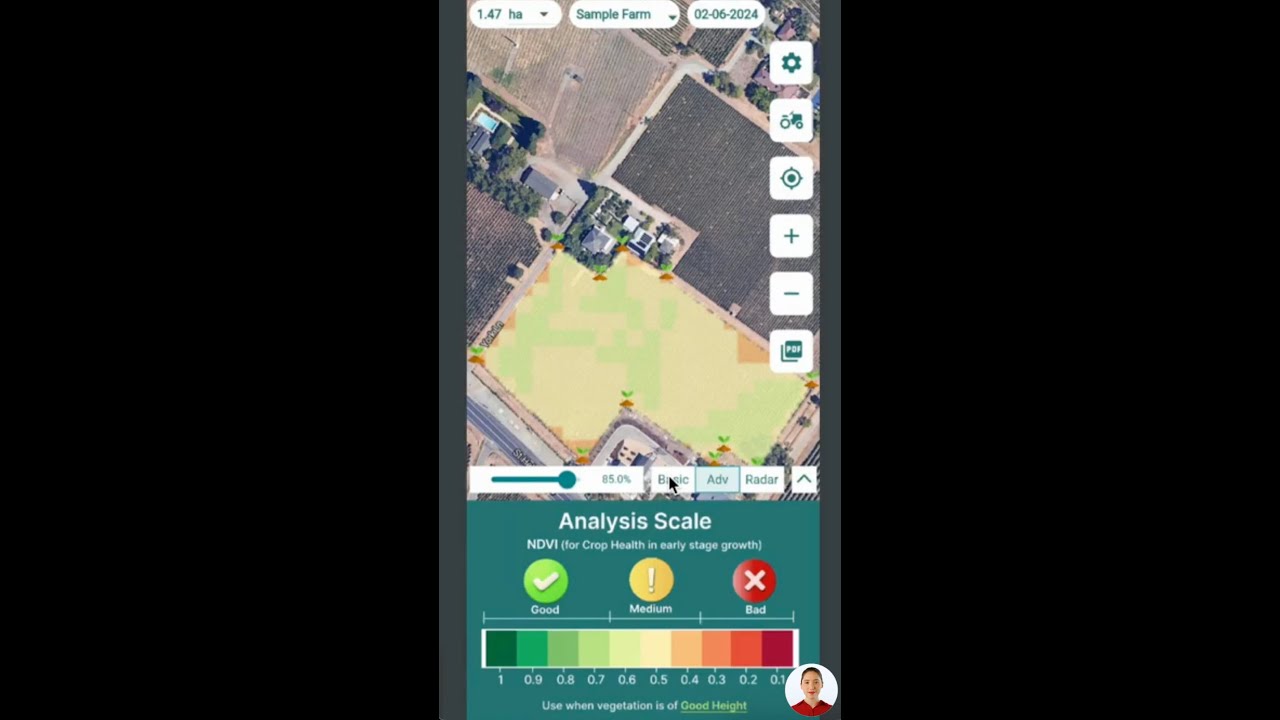
NDVI (Normalized Difference Vegetation Index) and NDWI (Normalized Difference Water Index) are the gold standards for evaluating canopy health and moisture status—two central pillars for high fruit yields in custard apple orchards.
- NDVI values typify the photosynthetic activity and health of the canopy across different phenological stages (vegetative, flowering, fruiting, harvest, senescence).
- For example, in Tuljapur‘s climate, at the vegetative stage, NDVI ranges from 0.2–0.4; during robust growth and fruiting, it can spike up to 0.7–0.9. Near harvest, it may drop to 0.55–0.75 as senescence sets in.
- NDWI complements NDVI by tracking field-wide moisture availability—crucial during the monsoon season and post-monsoon period.
- Monitoring these indices facilitates the early detection of problems: stress events, pest outbreaks, or weed invasions—all before signs become visible.
We recommend using NDVI-guided tools for continuous crop tracking through seasonal cycles, adjusting management in real time for maximum yield.

2. Schedule Irrigation Strategically with Remote Sensing Insights
Irrigation is key—especially in Maharashtra’s water-sensitive areas. Remote sensing data empowers farmers to perfect their irrigation strategies:
- Drip irrigation is now widely recommended by state agriculture departments, reducing risk of excess moisture and salinity.
- Use NDWI data to schedule irrigation exactly when root-zone moisture drops, not on a fixed calendar—ensuring plants get water in sync with their real, current demand.
- In a typical cycle, during vegetative growth or fruit development, reference evapotranspiration (ET0) is about 4–4.5 mm/day; actual application should be tailored based on live satellite values.
- This keeps canopy healthy and minimizes water and nutrient waste—especially crucial in the post-monsoon harvest period (September–November).
By acting on field-specific NDWI and weather data, managers can both save water and prevent stress during critical fruiting stages.
3. Use Soil Health Data for Smart Fertilizer Applications
Soil management is more advanced than ever—thanks to granular soil testing, satellite-derived soil composition analytics, and nutrient sufficiency guidelines.
-
For custard apple, sufficiency ranges (in kg/acre) for key nutrients are:
N: 9.1–22.8 | P: 18.2–36.4 | K: 109.2–182.0 | S: 9.1–18.2 | Zn: 0.9–2.7 - Soil pH should be in the 6.8–7.0 range for optimal nutrient availability; salinity should be low (index 0–1).
- Applications should be both data-driven and stage-specific—applying only what the crop needs, and only during responsive phenological windows.
- Incorporating organic amendments like compost and farmyard manure both replenishes soil carbon (SOC), benefitting soil health and future fruit cycles.
With live soil analytics, managers can prevent over-application, maintain ideal nutrient levels, and protect plant health while maximizing yield.

4. Choose Optimal Sowing and Harvest Times Using Satellite Insights
India’s agricultural research strongly supports phase-specific management, especially for perennial fruits:
- Planting/sowing periods for custard apple are June–July (monsoon onset)—in line with annual rainfall and soil moisture cycles (retrieved from government package of practices, 2023).
- Harvest periods are September–November, tracking with fruit maturity and canopy senescence.
- Satellite imagery helps pinpoint current phenological stage (vegetative, flowering, harvest), using NDVI and spectral trends, ensuring the harvest is neither late (bad for fruit quality) nor too early (reducing yield).
- NDVI declines sharply during senescence, signaling ideal field-level harvest timing.
Acting on these data markers minimizes yield loss and stabilizes fruit quality in a climate-vulnerable region.

5. Predict and Mitigate Yield Risks from Pests, Diseases, and Weeds
Custard apple production in Maharashtra faces specific biological threats:
- Major pests: Mealybugs, fruit borers, scale insects, aphids
- Diseases: Anthracnose, leaf spot, powdery mildew, dieback
- Weeds: Parthenium hysterophorus, Cyperus rotundus, Digitaria sanguinalis, Amaranthus viridis
Remote sensing permits early detection (NDVI drops, abnormal spatial variance), allowing timely advisory for:
- Pest management (chemical/organic, e.g., azoxystrobin spray, neem oil, manual weeding)
- Disease mitigation (timely fungicide/copper applications)
- Weed control (glyphosate spots, mulching, or selective herbicides)
This data-centric management can prevent yield losses and sustain high harvest success rates.
6. Leverage Canopy and Phenological Data for Harvest Timing
Great yield isn’t just about more fruit—it’s about quality and mobility of picking windows.
- By tracking canopy coverage and NDVI/NDWI signals (for example, NDVI moving from peak to plateau then decline), farmers can precisely schedule harvests—maximizing both yield and market value.
- Data indicates that after 50–120 days post-sowing, in the right weather, the initial vegetative stage fades to flowering, then to fruiting and eventual harvest—these transitions reflect in the NDVI trendline (source: ICAR, National Horticulture Board reports).
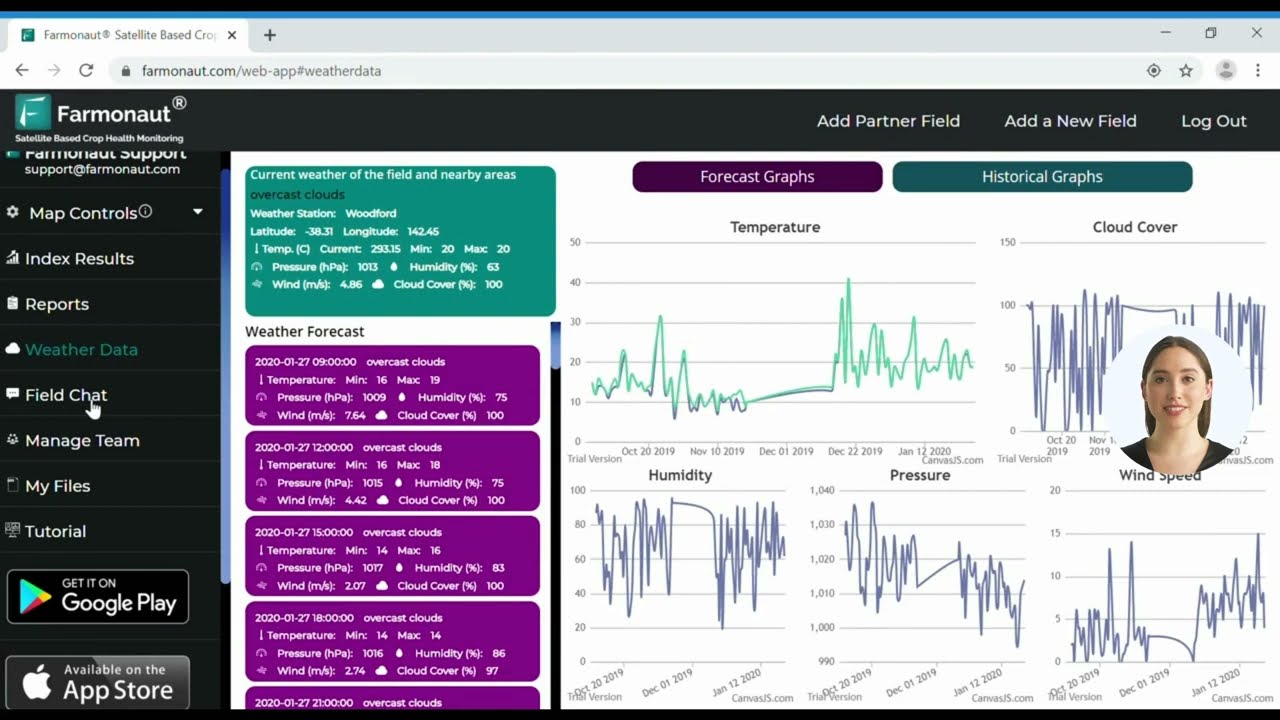
- Instead of going by calendar dates alone, live data ensures “harvest when ready”, synchronizing with weather, crop condition, and logistics (fleet management solutions are available via Farmonaut’s Fleet Management page for large growers).
This improves harvest success rate and reduces post-harvest loss risk.
7. Benchmark with Comparative Data for Continuous Improvement
Continuous improvement demands robust data benchmarking:
- Use historical NDVI/NDWI data and yield reports to set reference standards for your field and region (e.g. compare current field NDVI and yields to state averages and previous years).
- Benchmark against regional guidelines and publicly available agriculture reports from the Department of Agriculture, ICAR, and state horticulture centres to identify improvement areas.
- For large operators or government users, using large-scale farm management solutions aids in implementing these data loops state-wide.
Data-backed potential yield comparisons reinforce which innovations (drip irrigation, balanced fertilizer application, better weed control) actually drive >15–30% improvements versus conventional practices.
Comparative Data Table: Traditional vs. Data-Driven Custard Apple Management in Maharashtra
The table below visualizes the real-world impact of remote sensing and NDVI-based crop management as applied to custard apple orchards in Maharashtra. These estimated values highlight improvements in yield, soil health, and harvest reliability.
| Practice Type | NDVI Range (Estimated Values) |
Soil Health Score (1–10) |
Estimated Yield Increase (%) | Harvest Success Rate (%) |
|---|---|---|---|---|
| 1. NDVI/NDWI Monitoring Traditional |
0.40–0.60 | 5–6 | — | 82 |
| Remote Sensing-Based | 0.60–0.85 | 7–9 | +18 | 93 |
| 2. Irrigation Scheduling Traditional |
0.50–0.65 | 5–6 | — | 84 |
| Remote Sensing-Based | 0.65–0.82 | 8–9 | +15 | 96 |
| 3. Soil & Fertilizer Optimization Traditional |
0.35–0.65 | 6–7 | — | 80 |
| Remote Sensing-Based | 0.65–0.80 | 8–9 | +20 | 94 |
| 4. Timing Sowing & Harvest Traditional |
0.50–0.75 | 6–7 | — | 80 |
| Remote Sensing-Based | 0.70–0.85 | 8–9 | +25 | 98 |
| 5. Pest/Disease/Weed Mitigation Traditional |
0.40–0.65 | 5–7 | — | 77 |
| Remote Sensing-Based | 0.60–0.85 | 8–9 | +20 | 92 |
| 6. Canopy/Phenology-Informed Harvest Traditional |
0.45–0.70 | 5–7 | — | 78 |
| Remote Sensing-Based | 0.75–0.85 | 8–9 | +23 | 95 |
| 7. Data Benchmarking & Continuous Improvement Traditional |
0.37–0.67 | 5–7 | — | 76 |
| Remote Sensing-Based | 0.70–0.85 | 8–9 | +21 | 95 |
Farmonaut’s Technology API, Documentation, and Domain Solutions
For agri-entrepreneurs, agronomists, developers, and government bodies, accessing live satellite field insights is possible through the Farmonaut API. Setup is easy, and full guidance is available in the API Developer Docs.
- Traceability Solutions: Ensure the journey from orchard to market is transparent and tamper-resistant with Farmonaut Traceability for fruit crops.
- Carbon Footprinting: Leverage carbon footprint monitoring for compliance and sustainability reporting—especially for exports and eco-conscious buyers.
- Crop Loan/Insurance Verification: Use satellite-verification solutions for securing financial risk in custard apple production.
Each of these solutions adds a digital, robust, and data-driven layer above and beyond traditional management—amplifying your orchard’s future value.
Frequently Asked Questions: Custard Apple Yield Strategies in Maharashtra
- Q1: What is NDVI and why is it important for custard apple yield?
NDVI (Normalized Difference Vegetation Index) is a satellite-based metric that measures the vigor and health of plant canopies. High NDVI values (>0.6) during the vegetative and fruiting stages indicate robust growth, directly correlating with high potential yields in custard apple orchards across Maharashtra. - Q2: What are the optimal NDVI ranges for custard apple during key stages?
Initial vegetative growth: 0.2–0.4
Peak fruiting/flowering: 0.7–0.9
Harvest phase: 0.55–0.75
Declining NDVI signals senescence, indicating harvest readiness or stress. - Q3: How can I maximize soil health in my custard apple orchard?
Maintain pH at 6.8–7.0, salinity index at 0–1, and ensure nutrients (N, P, K, S, Zn) are within sufficiency ranges. Use organic matter like compost or FYM; avoid unnecessary chemical applications outside responsive crop growth phases. - Q4: When is the best time for custard apple sowing and harvest in Maharashtra?
Sowing: June–July (monsoon start), aligning with high soil moisture. Harvest: September–November, when fruit has matured and field NDVI/NDWI values begin to drop, indicating crop is ready. - Q5: How does remote sensing detect pest or weed risks?
Sensors detect abnormal drops in NDVI or uneven spatial coverage, signaling stress from pests (>mealybug, fruit borer), diseases (anthracnose, powdery mildew), or persistent weeds (Parthenium hysterophorus). Timely vetting enables mitigation before major yield losses occur. - Q6: Which applications and tools can I use to monitor my custard apple crop with NDVI and other remote sensing?
Use web and mobile apps like Farmonaut. For businesses and governments, API and dashboard solutions are also available.
Final Thoughts: Next-Gen Custard Apple Farming in Maharashtra (2025+)
The future of custard apple farming lies in a shift from intuition to data—leveraging the full power of remote sensing, real-time NDVI tracking, AI-driven advisory, and stage-specific management. Across Maharashtra—from Tuljapur and beyond—those who adopt technology-enhanced practices will secure the highest yields, healthiest soils, and best returns in both domestic and global fruit markets.
Key takeaways:
- Monitor NDVI and NDWI seasonally—respond to stress early for maximum yield and fruit quality.
- Sequence irrigation and fertilizer applications with live field signals, not fixed schedules.
- Integrate soil amendments and organic matter for sustained soil health and nutrient sufficiency.
- Use technology to pinpoint precise harvest windows, coordinate with logistics, and minimize losses.
- Continuously benchmark and refine your practices using both field and regional data.
Ready to transform your custard apple orchard? Explore affordable, scalable, and cutting-edge solutions—using apps and APIs—to make the most of every stage, from sowing to harvest.

 Agrotoken
 Blue BearX
 Insignito
 Croptimum
 Dalmia Bharat Sugar
 DnCubed
 Pistachio ST
 Field Capacity
 Indosistim Teknologi
 Liquify Digital
 CU Foods
 BeyondTech Global
 Rouge VC
 AgroGreen Dynamics
 AgroRisk
 Oath Inc
 Reddane Farming
 Esri North East Africa
 MDCV UK
