

Hydroponic Farming Setup: Cost, Solutions & Companies India

Introduction to Hydroponic Farming in India
Hydroponic farming has rapidly emerged as a transformative approach to modern agriculture, especially relevant for India’s diverse climates and regions where soil quality or local environmental conditions restrict traditional cultivation. At its core, hydroponics substitutes soil with a hydroponic nutrient solution, ensuring that every plant root system circulates through precisely balanced water, minerals, and oxygen. By focusing on scientific root support and environmental controls, hydroponic farming setups empower farmers and entrepreneurs to achieve higher yields, faster crop cycles, and vastly more efficient land use compared to standard open-field farming.
The adoption of hydroponic farming solutions in India brings tremendous possibilities for year-round production, reduced pesticide use, and water conservation—a crucial advantage as resource efficiency becomes central to the sustainability of modern agriculture.

Hydroponic Systems Overview: Types & Technology
Hydroponic systems are engineered to supply nutrients, water, and oxygen directly to roots via a controlled mechanism. Based on design, automation, and scalability, different hydroponic system types exist, each with unique cost profiles and optimal growing conditions for a range of crops (think leafy greens, tomatoes, cucumbers, herbs, and more).
Core Components of a Typical Hydroponic Farming Setup
- ✔ Growth System: The infrastructure where plants grow (NFT, vertical towers, DWC).
- ✔ Nutrient Delivery Mechanism: Circulates water-based solution containing minerals.
- ✔ Root Support Structure: Inert media such as coco coir, perlite, or rockwool hold seedlings.
- ✔ Environmental Controls: Maintain optimum light, humidity, and temperature.
- ✔ Monitoring System: Tracks pH, EC, dissolved oxygen, water and nutrient consumption.
- ✔ Automation: Regulates dosing, climate, and lighting (LED) for higher efficiency.
List: Most Popular Hydroponic System Types (India)
- Nutrient Film Technique (NFT): Thin film of nutrient solution flows around plant roots—favored for leafy greens and space-saving vertical farms.
- Deep Water Culture (DWC): Plants float on nutrient-rich water using a raft system, with constant oxygenation.
- Drip System: Precise dosing of water and nutrients directly to plant roots, adaptable and scalable for many crop types.
- Ebb and Flow (Flood & Drain): Periodic flooding delivers nutrients, then drains away—ideal for high-growth setups.
- Aeroponics: Roots dangled in the air inside misted chambers, maximizing oxygen and resource efficiency.

Hydroponic Farming Setup in India: Practical Approach
Setting up a hydroponic farming system in India means balancing capital investment, scalability, crop selection, and environmental management. The adaptability of hydroponics allows for both small-scale installations (even rooftop or modular) and large, commercial vertical farms.
Step-by-Step Visual List: Setting Up a Hydroponic Farm
- 🌱 Site Assessment (location, water source, sunlight exposure, climate, power availability)
- 🏗️ System Design (select NFT, DWC, Drip, Ebb & Flow, or Aeroponics as per crop & space)
- 🔧 Construction & Setup (install plant bed, irrigation, reservoirs, root support media)
- 💧 Nutrient Mix Preparation (dissolve precise amounts of minerals—tailor to crop needs)
- 🌡️ Environmental Controls (automate temperature, humidity, lighting, pH/EC monitoring)
- 📱 Real-time Monitoring (use sensors, dashboards, satellite tools, Farmonaut AI if desired)
- 🍃 Seedling Planting (choose healthy rootstock & optimal density)
- ⏰ Growth & Harvest (monitor root health, nutrient uptake, adjust control systems)

— Integrate real-time field, soil, and crop monitoring into your automated hydroponic farm management system for higher yields and better resource efficiency.
API Developer Docs
— See how to leverage satellite, AI, and weather data in your hydroponic dashboards and control systems.
Hydroponic Crop Selection: Most Common Choices in India
- ✔ Leafy Greens: Lettuce, spinach, kale, broccoli—fast turnover, high demand, optimal in NFT/vertical setups.
- ✔ Herbs: Basil, mint, coriander—short cycles, premium value, consistent quality from nutrient control.
- ✔ Tomatoes and Cucumbers: Suited for larger DWC/Drip systems—excellent water use efficiency.
- ✔ Strawberries & Exotic Crops: High-profit niche, require advanced climate/lighting control and careful root management.
Common Mistake
Hydroponic farming setup in India must be tailored to the precise requirements of each region (e.g., Rajasthan’s dry air vs. coastal humidity). A “one-size-fits-all” approach often leads to inefficient nutrient use and lower yields.

Hydroponic Farming Setup Cost in India: Breaking Down the Numbers
Initial investment in a hydroponic farming setup in India can vary widely based on system type, scale, automation, crop density, and infrastructure. Let’s break down the major economic considerations and how your choices influence operating costs over time.
Factors Impacting Hydroponic Farming Costs
- ✔ Choice of Hydroponic System (NFT, DWC, Drip): Each system has unique capital outlays and resource requirements.
- 📊 Level of Automation: Automated dosing, LED lighting, and climate controls increase upfront costs but reduce ongoing labor and energy costs.
- ✔ Scale: Small setups (backyard/rooftop) may cost as little as INR 400–1,000/sq. ft.; large, commercial greenhouses may require INR 1,200–2,000/sq. ft. or more.
- ⚡ Energy and Water Consumption: LED lighting, pumps, and climate systems use power; efficient designs and renewable energy options improve long-term savings.
- ✔ Infrastructure: Polyhouse/greenhouse construction, reservoirs, plumbing, sensors, and monitoring equipment.
- ✔ Crop Selection and Density: High-value crops (like exotic herbs, microgreens) can justify higher initial costs.
- ✔ Regional Costs: Land, labor, water, and utility prices vary across regions in India.

Hydroponic Farming Setup: Basic vs. Advanced Example
- • Basic Home/Rooftop System: Setup Cost: ₹30,000–₹60,000 for 50–100 sq. ft.
Features: Drip system or compact NFT; manual nutrient mixing; passive lighting, low automation. - • Commercial Polyhouse/NFT Vertical: Setup Cost: ₹10–₹15 lakh per 1,000 sq. ft.
Features: Automated dosing, environmental controls, modular scalable racks, LED grow lights.
Operating Expenses Trend Downward Over Time
- ✔ Faster crop cycles mean more revenue in less time.
- ✔ Less pesticide use and controlled environment = lower crop loss and better produce quality.
- ✔ Water consumption is far reduced due to closed-loop recirculating systems.
- ✔ Efficient energy management and renewable power can further optimize costs.

Best Hydroponic Farming Setup Company in India: Solutions & Services
A reliable hydroponic farming setup company in India offers end-to-end services—crucial for both new entrants and commercial scale agri-businesses. The right partner supports on-site assessment, system design, component procurement (pumps, manifolds, sensors), installation, calibration, and continual maintenance.
Hydroponic Service & Solution Offerings
- ✔ Site Assessment & Analysis: Local climate, humidity, water availability, and power reliability review to optimize design.
- ✔ Custom System Configuration: NFT, DWC, Drip, aeroponics—tailored setups matched to crops and scale.
- ✔ High-Quality Root Support Materials: Inert coco coir, perlite, rockwool for healthy root structure and nutrient retention.
- ✔ Environmental Controls & Sensors: Automated monitoring of temperature, humidity, pH, EC, oxygen, and water levels.
- ✔ Post-Installation Support: Maintenance, nutrient dosing plans, and integrated software for real-time monitoring.
Farmonaut does not sell hydroponic farming equipment or materials but delivers cutting-edge satellite-based monitoring and AI-powered advisory solutions for operational optimization, environmental tracking, and risk management.
Key Insight

Is Hydroponic Farming Sustainable? Technology & Innovation
Is hydroponic farming sustainable? Sustainability is one of the driving forces behind the hydroponic farming movement—especially in resource-stressed regions of India. Hydroponics reduces water use by up to 90% compared to conventional soil farming due to its closed-loop recirculation and precise dosing of mineral nutrients.
- ✔ Lower land use thanks to vertical stacking & modular system expansion.
- ✔ Reduced pesticide needs—controlled environments and root media greatly reduce disease risk.
- ✔ Closed-loop nutrient cycling—mitigates runoff, prevents soil/water table contamination.
- ✔ Year-round crop production (independent of rain patterns or seasons).
- ✔ Potential for renewable energy integration (solar, wind) to lower carbon footprint per kg produce.
However, some hydroponic systems depend on synthetic inputs (nutrients, plastics for system structure). To strengthen environmental sustainability:
- ✔ Use recyclable/biodegradable inert media (coco coir, perlite).
- ✔ Implement recycling programs for plastics & spent media.
- ✔ Opt for highly efficient LED lighting with adjustable spectra to minimize energy consumption.
- ✔ Track and optimize carbon emissions—Our Carbon Footprinting Tool helps growers monitor and manage the environmental impact of their hydroponic (or soil-based) operations at every stage.
Investor Note
Hydroponic Systems Comparison Table: India-Focused Analysis
| System Type | Estimated Setup Cost (INR/sq. ft.) | Water Usage (liters/month) | Space Efficiency (kg/sq. m.) | Yield Potential (kg/year) | Technology Level | Sustainability Rating |
|---|---|---|---|---|---|---|
| Nutrient Film Technique (NFT) | ₹800–1,200 | 40–80 | 7–12 | 300–450 | Advanced | ★★★★☆ |
| Deep Water Culture (DWC) | ₹700–1,100 | 80–100 | 10–14 | 350–500 | Advanced | ★★★★☆ |
| Drip System | ₹600–900 | 60–120 | 8–10 | 280–400 | Basic/Advanced | ★★★☆☆ |
| Ebb & Flow (Flood & Drain) | ₹700–1,200 | 70–100 | 9–12 | 320–450 | Advanced | ★★★☆☆ |
| Aeroponics | ₹1,100–1,600 | 30–60 | 13–18 | 400–550 | Highly Advanced | ★★★★★ |
Note: Values are approximate and may vary based on local infrastructure, climate, plant density, and automation level. Always consult an expert or reputable hydroponic farming setup company in India for the most accurate project budgeting.
Tech Advancements & Real-time Monitoring in Hydroponic Farming
Today’s hydroponic farming industry is being propelled forward by rapid advancements in real-time monitoring, automation, and environmental control technology. These innovations make it easier to manage complex hydroponic projects in varied Indian environments, while also supporting sustainable best practices.
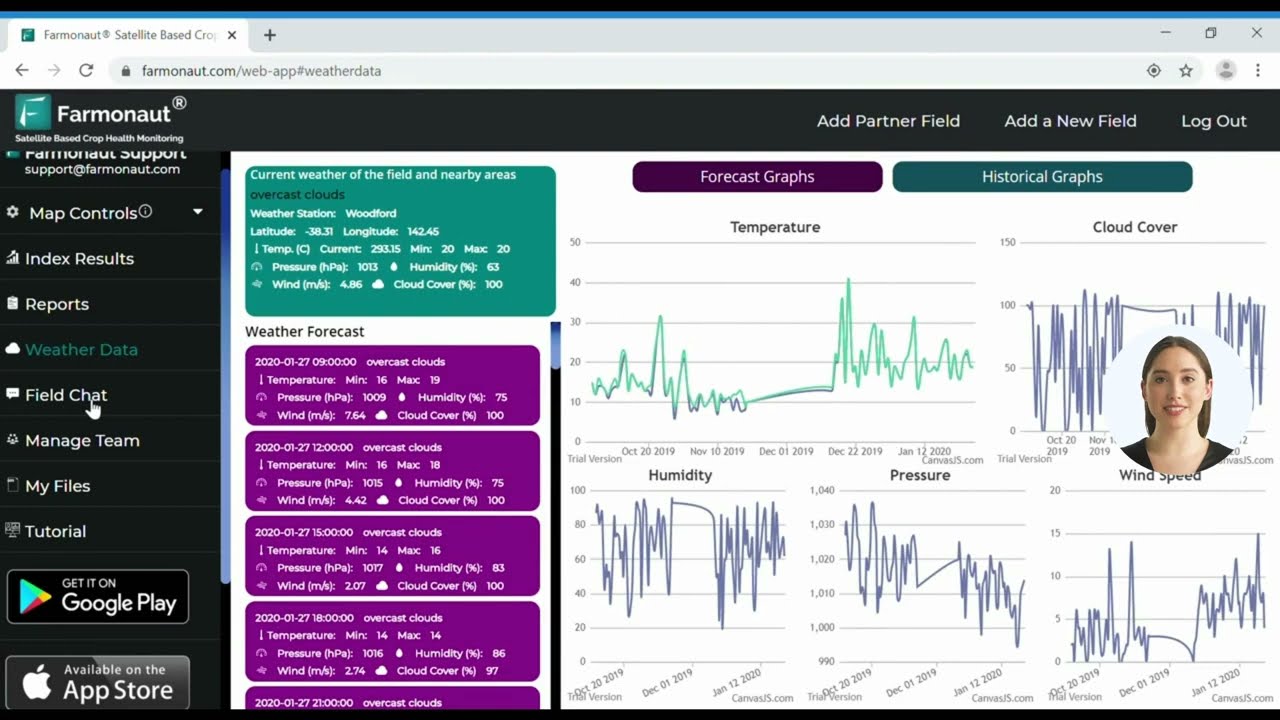
Farmonaut delivers cutting-edge satellite, AI, and blockchain tools for integrated crop, environment, and resource monitoring—empowering agricultural practitioners with real-time data, sustainability metrics, and yield optimization dashboards for hydroponic operations.
- ✔ Real-time pH/EC Sensors: Continuous monitoring for optimal nutrient absorption and prevention of deficiencies/toxicities.
- ✔ Oxygenation Controls: Maintain dissolved oxygen for strong root development and disease prevention.
- ✔ Automated Nutrient Dosing: Programmable delivery tailors solution to crop growth stage, climate variation, and plant variety.
- ✔ Smart LED Lighting Systems: Adjustable spectra and intensity cut power costs and promote faster, higher-quality yields.
- ✔ Cloud-Based Analytics & Dashboards: Forecast crop cycles, monitor environmental KPIs, and optimize plant health remotely — explore Farmonaut’s large-scale farm management platform for automated yield, water, and field data insights.
Tip: Real-time remote sensing powered by satellite and AI will be a defining aspect of competitive hydroponic operations in India, supporting everything from environmental impact tracking to loan and insurance risk reduction. See how Farmonaut’s crop loan/insurance solutions use satellite verification to minimize fraud and boost agri-financing opportunities.
Download the Apps for Real-Time Data and Advisory


Pro Tip
Key Insights, Tips, and Highlights
- ✔ Hydroponic farming delivers higher, more consistent yields and can use up to 90% less water compared to traditional soil-based farming in India
- 📊 Automated, app-based, and satellite-aided monitoring make it easier than ever to manage large hydroponic farms remotely
- ⚠️ Common Risk: Failing to adapt nutrient formulas to crop stage and local water quality can lead to stunted growth or contamination
- ✔ Modular designs enable scalable expansion—start small, reinvest profits, and increase capacity over time
- 🔋 Energy costs can be controlled by integrating LED lighting and renewable power solutions
Key Insight
Why Choose Hydroponic Farming? (Visual List)
- 🌟 Year-round Cultivation: Not limited by monsoon, soil, or local weather
- 💧 Massive Water Savings: Closed system recycles up to 90% of irrigation
- 🌱 No Herbicides/Pesticides: Controlled environments mean cleaner produce
- 📈 Scalable and Modular: Expand as demand grows, harvest more frequently
- 🔬 Precision Nutrient Management: Tailor delivery to crop’s exact needs for superlative quality
Common Mistake
Leverage training, expert support, and digital advisory systems like Farmonaut’s Jeevn AI platform to bridge knowledge gaps, avoid costly mistakes, and optimize for both quality and sustainability.
Sustainability and Technology: The Future of Hydroponics
- ♻️ Reduced Environmental Impact: Carbon monitoring tools make green operations measurable and verifiable
- 🌍 Supports Urban Agriculture: Vertical and rooftop setups fit modern Indian cities and peri-urban areas
- 👨💻 Remote Monitoring & Automation: Cloud-integrated dashboards help manage farms from anywhere
- 🛒 Traceability and Market Trust: Blockchain solutions create supply chain transparency for hydroponic produce
- 🏆 Premium Crop Quality: Consistently high nutrient and flavor content boosts market value
Pro Tip
Investor Note
Key Insight
Frequently Asked Questions (FAQ) — Hydroponic Farming in India
-
What is hydroponic farming and how does it differ from soil-based farming?
Hydroponic farming uses a nutrient-rich water solution in place of soil to deliver essential minerals directly to plant roots. This method supports faster growth, higher yields, reduced water usage, and enables year-round production, unlike traditional farming constrained by soil quality, seasons, and rain patterns.
-
How much does a basic hydroponic farming setup cost in India?
A small rooftop or home-based hydroponic setup can cost ₹30,000–₹60,000 for 50–100 sq. ft. Commercial polyhouse or vertical farms may require ₹10 lakh–₹20 lakh or more for 1,000+ sq. ft., depending on automation and system complexity.
-
Is hydroponic farming sustainable in India?
Yes. Hydroponic farming is more sustainable than conventional agriculture. It uses up to 90% less water, reduces pesticide and fertilizer runoff, and delivers higher yields per square meter—making it ideal for India’s limited water zones and urban agri-projects.
-
Which crops are best suited for hydroponic farming in India?
Leafy greens (lettuce, spinach, kale), herbs (basil, mint, coriander), tomatoes, cucumbers, and capsicum/peppers are popular, but with good system design, even strawberries and exotic vegetables can be grown profitably.
-
What types of hydroponic systems are commonly used in India?
NFT (Nutrient Film Technique), DWC (Deep Water Culture), Drip Systems, Ebb & Flow, and Aeroponics are all widely adopted, each varying by capital outlay, crop fit, and desired automation.
-
What are the main challenges of hydroponic farming in India?
Key risks include climate fluctuations, power outages, system failure, skill gaps in nutrient/water management, and marketing. Investing in reliable controls, backup power, and remote monitoring is vital for resilience.
-
How can technology improve hydroponic farming sustainability?
By deploying AI, satellite monitoring, automated nutrient dosing, and environmental sensors, growers can reduce losses, optimize resource use, and monitor real-time sustainability metrics (e.g., via Farmonaut).
-
Where can I get advisory, real-time data, or monitoring tools for hydroponic farming?
Use subscription-based platforms like Farmonaut for satellite, AI-powered advisory, and monitoring tailored to Indian conditions. Find the app on Android or iOS.
Conclusion: Hydroponic Farming in India—A Technology-Driven Future
Hydroponic farming in India isn’t just a technological trend—it’s a comprehensive, sustainable solution for resilient, high-output, and resource-efficient agriculture. As the climate changes and arable land is stretched, hydroponic systems will play a central role in securing India’s food and nutritional independence, especially in urban, peri-urban, and water-stressed environments.
Whether you’re a farmer, entrepreneur, investor, or agricultural enthusiast, the hydroponic farming setup process requires careful planning and investment—but the returns include up to 30% higher yields, faster cycles, lower water and pesticide use, and improved produce quality. By leveraging best-in-class solutions from leading hydroponic companies in India, adopting smart automation, and taking advantage of digital advisory tools such as Farmonaut (for real-time monitoring, AI strategy, and environmental tracking), the step toward a more sustainable food system is closer than ever.
Adapt, innovate, and grow—hydroponic farming represents the sustainable, tech-driven future of Indian agriculture.

 Grow Indigo
 FFBS
FFBS Jontra
 Kalustyan
 Tucor
Tucor Geno
Geno Hayleys Agriculture
 Linx Agritech
 Adinet
 Save Your Soils
 Grandstream Algérie
 XOS Realty
 Geospatial Lab Africa
 Agro La Gándara
 HIPSAC
 ZOL Zimbabwe
 Juligerm
