

Reviewed September 2026 against USDA NASS and USDA ERS data.
Try it: Run your own numbers →
Is organic farming the future of agriculture? The USDA data says: partially, and unevenly. Certified organic cropland in the United States grew 79% between 2011 and 2021 to reach 3.6 million acres, and the organic food market is valued at $98.32 billion in 2025 — yet organic farms still occupy only about 1% of total U.S. farmland, and certified organic acreage actually fell by 40,585 acres between 2024 and 2025. Growth and contraction are happening at the same time, in different parts of the sector.
This page works through what “area under organic farming” means in U.S. terms, how it compares by year, what it’s worth in dollars, how organic yields and profits stack up against conventional farming, and where the sector is forecast to go through 2035. Every figure below carries its source and its date, plus a link to check whether it has moved since.
Snapshot: U.S. Organic Farming in Numbers
Start with the headline figures, each traceable to a specific USDA release:
- 📊 4.89 million acres of total certified organic land in the United States, per the 2021 USDA NASS Organic Survey.
- 🌾 3.6 million acres of that total is certified organic cropland — up 79% from 2011, also per the 2021 NASS Organic Survey.
- 📉 −40,585 acres year-over-year, 2024 to 2025, according to the USDA Organic Integrity Database (reported December 10, 2025).
- 💵 $9.6 billion in U.S. certified or exempt organic product sales in 2022, up 32% from 2017, per USDA.
- 👨🌾 39,506 organic producers counted in the 2022 USDA Census of Agriculture.
- 🥇 1% of total U.S. farmland is certified organic, per USDA ERS analysis of 2019 data — the clearest single number on how far organic farming actually reaches into American agriculture.
These numbers answer “area under organic farming in the U.S.” at two different altitudes: 3.6 million acres of cropland specifically, or 4.89 million acres including pasture and other certified organic land. Both are 2021 NASS Organic Survey figures — the most recent full census-style count publicly available as of this review. USDA NASS fields the next Organic Survey with results expected around October 30, 2026, after the 2025 survey forms were mailed to producers in December 2025. Check the USDA NASS Organic Production survey page directly for whichever year is current when you’re reading this.
Area Under Organic Farming: The 2011–2025 Trend
The clean way to track “organic farming area” over time is the NASS Organic Survey, which USDA has run since 2008 and repeats every five years alongside the Census of Agriculture, with off-cycle updates via the Organic Integrity Database. Three data points anchor the trend:
- 2011: Certified organic cropland baseline — the 2021 survey’s “79% increase” figure implies roughly 2.0 million acres at this point, though NASS’s own 2011-year table is the authoritative source if you need the exact figure.
- 2021: 3.6 million acres of certified organic cropland; 4.89 million acres of total certified organic land (cropland plus pasture and rangeland).
- 2024 to 2025: A net decline of 40,585 acres in certified organic farmland, per the USDA Organic Integrity Database’s December 2025 report — the first contraction signal in this data series in over a decade of steady growth.
That contraction matters for anyone asking about “the future of organic farming in the U.S.” specifically. It doesn’t mean the sector is shrinking overall — sales were still climbing as of the 2022 figures — but it does mean acreage growth is no longer guaranteed to track sales growth. Certification costs, input price gaps, and the three-year transition period farmers must complete before certifying new land all bear on why some acreage exits the certified rolls even as demand holds up.
For a state-by-state or region-by-region breakdown, NASS’s public Organic Survey summaries do not publish that detail beyond national totals in the standard release. If you need county- or state-level acreage, the path is the full NASS Organic Production survey microdata, which breaks out state-level certified operations counts in its detailed tables.

State of Organic Farming: Producers, Certification, Concentration
The “state of organic farming” in the U.S. is best read through three lenses: how many producers are certified, how concentrated the sector is, and how it compares to the rest of American agriculture.
- 🧑🌾 39,506 organic producers were counted in the 2022 USDA Census of Agriculture — a small fraction of the roughly 1.9 million total U.S. farms counted in the same census cycle.
- 🌍 1% of total farmland is certified organic, per USDA ERS’s analysis of 2019 data — this is the figure to cite if someone asks how big organic farming really is relative to conventional agriculture.
- 📈 Certified organic cropland grew 79% from 2011 to 2021, meaning the sector roughly doubled in acreage over a decade even while staying at about 1% of total farmland — both things are true because conventional farmland is vastly larger to begin with.
| Metric | Figure | Year | Source |
|---|---|---|---|
| Total certified organic land | 4.89 million acres | 2021 | USDA NASS Organic Survey |
| Certified organic cropland | 3.6 million acres | 2021 | USDA NASS Organic Survey |
| Cropland growth since 2011 | +79% | 2011–2021 | USDA NASS Organic Survey |
| Year-over-year acreage change | −40,585 acres | 2024–2025 | USDA Organic Integrity Database |
| Certified organic sales | $9.6 billion | 2022 | USDA (ERS) |
| Sales growth since 2017 | +32% | 2017–2022 | USDA |
| Organic producers counted | 39,506 | 2022 | USDA Census of Agriculture |
| Share of total U.S. farmland | 1% | 2019 | USDA ERS |
| U.S. organic food market size | $98.32 billion | 2025 | Precedence Research |
| Projected U.S. organic food market | $276.77 billion | 2035 (forecast) | Precedence Research |
Read this table as the reference point for every “how big is organic farming” question this page targets. When a fresher NASS or ERS release lands, the row to update first is acreage — sales and market-size figures update on a different, usually annual, cycle via the USDA ERS organic agriculture topic page, which folds in the annual Organic Situation Report.




Yields and Profitability: Organic vs. Conventional
The most useful comparison for anyone deciding whether organic farming is worth the transition isn’t acreage — it’s the yield and profit trade-off, and USDA-linked research has quantified both sides.
- 🌾 80% — organic crop yields average 80% of conventional yields across multiple crops and years, per a peer-reviewed PLOS ONE study analyzing commercial crop data.
- 💰 22% to 35% higher profitability for organic systems despite the yield gap, according to USDA ERS economic research — the premium organic buyers pay more than compensates for lower output per acre, on average.
That combination — lower yield, higher margin — is the mechanism behind the acreage growth of the 2010s and the reason acreage can still contract even when the underlying economics look favorable: profitability depends on maintaining the price premium and controlling transition-period costs, both of which are more volatile than a yield ratio. USDA does not publish a systematized breakdown of per-acre organic transition costs or state-by-state break-even timelines in its public statistics; if you’re modeling a specific transition, your certifier’s cost worksheet or your state’s USDA Farm Service Agency office is the source for current numbers, not a national average.
Market Size and the Sales Numbers Behind the Growth Claim
“Is organic farming the future” is really two separate questions — one about acreage, one about demand — and the demand side looks stronger than the acreage side right now.
- 🛒 U.S. certified or exempt organic product sales reached $9.6 billion in 2022, up 32% from 2017, per USDA.
- 📈 The broader U.S. organic food market — which includes non-certified-organic-labeled retail categories tracked by private market research — was sized at $98.32 billion in 2025 by Precedence Research.
- 🔮 Precedence Research projects the U.S. organic food market to reach $276.77 billion by 2035, implying a compound annual growth rate of 10.9% for 2026–2035.
These two market figures — the $9.6 billion USDA certified-sales number and the $98.32 billion Precedence Research market-size number — are not measuring the same thing, and conflating them is a common mistake. USDA’s figure counts sales specifically tied to certified or exempt-organic products reported in Census of Agriculture data; the market-research figure sizes the broader organic food retail category using different methodology and inclusion criteria. When you cite either, name which one you mean and its year.
For the current-year edition of USDA’s sales tracking, the ERS “Organic Situation Report” is republished annually, typically landing mid-year with the prior one to two years of data. The next edition was expected around mid-2026 with 2024–2025 sales figures; check the USDA ERS organic agriculture page for whichever edition is live.
Calculator: Organic Transition Break-Even Estimator
Use your own acreage, expected yield ratio, and price premium to see how the 80% yield / 22–35% profitability figures above translate to your farm’s bottom line.
Run your own numbers
Assumptions: uses a single blended revenue-per-acre figure rather than separate price and yield-per-bushel inputs, ignores certification fees, the multi-year transition period before land can be sold as certified organic, and any transitional-label price premium. Default values (80% yield ratio, 30% premium) sit inside the ranges reported by the PLOS ONE yield study and USDA ERS profitability research cited above — replace them with your own crop's numbers for a farm-specific estimate.
Is Organic Farming the Future? What the Trend Lines Say
Three trends, read together, answer the core question this page targets:
- Demand is climbing faster than supply. A $98.32 billion market in 2025 projected to grow at 10.9% annually through 2035 outpaces the acreage trend, which actually reversed by 40,585 acres in the most recent year measured.
- Profitability still favors organic, on average. The 22–35% profitability edge from USDA ERS research is why farmers keep entering the sector even against an 80%-of-conventional yield ceiling — but that edge depends on premiums holding, which isn't guaranteed county to county or year to year.
- Organic remains a rounding error in total acreage. At 1% of U.S. farmland, "the future of agriculture" framing overstates organic's near-term trajectory as a wholesale replacement for conventional systems; it is better read as a fast-growing, high-margin specialty segment.
The single most useful thing to watch going forward is whether the 2025 acreage decline was a one-year blip or the start of a trend — that will only be answerable once USDA NASS's next Organic Survey results land around October 30, 2026, and once the annual Organic Integrity Database updates are compared year over year past 2025. Track both at the USDA NASS Organic Production page.

Organic Practices: What Actually Changes on the Ground
Certified organic status in the U.S. requires following USDA National Organic Program standards: no synthetic fertilizers or pesticides, no genetically modified seed, and a three-year transition period on any field before its output can be sold as certified organic. Within that framework, the practices that make up the yield and profitability numbers above include:
- 🌱 Cover cropping and green manures to rebuild soil organic matter during and after the transition period.
- 🐄 Compost and approved organic amendments in place of synthetic nitrogen, phosphorus, and potassium inputs.
- 🔄 Crop rotation to break pest and disease cycles without synthetic pesticides — a major factor behind the yield gap in row crops specifically.
- 🐜 Approved biological and mechanical pest control, including beneficial insects and cultivation, replacing synthetic pesticide programs.
- 📋 Certification recordkeeping — the paperwork burden that USDA-accredited certifying agents audit annually, and the most commonly cited barrier smaller operations report when weighing whether to pursue or maintain certification.
Farmonaut's related coverage of on-farm practice details — composting methods, biofertilizer choices, and crop-specific rotation planning — is in our natural farming methods guide, which goes deeper on technique than this page's focus on U.S. acreage and market data.


Traceability for certification and buyers: Maintaining the recordkeeping trail that certifying agents require — and that buyers increasingly ask for — is where Farmonaut's blockchain-based product traceability solutions apply directly: a verifiable, timestamped record from field activity to sale supports both the annual certification audit and premium-buyer due diligence.
Satellite Monitoring, Traceability & Farmonaut's Role
The recordkeeping and monitoring burden organic certification imposes is exactly where satellite and digital tools change the economics for a transitioning or certified operation:
- 🔍 Field-level crop health and soil monitoring in real time, supporting the documentation certifying agents review.
- 🗺️ Mapping and compliance reporting for certified acreage, useful for operations managing multiple fields at different points in the transition timeline.
- 💡 AI-driven advisories for pest, irrigation, and input-timing decisions within organic-approved input constraints.
- 🔗 Blockchain traceability for the supply-chain documentation organic buyers and certifiers both request.
- 🌱 Carbon footprint tracking, relevant to operations pursuing climate-smart or regenerative add-on certifications alongside organic status.
Financing the transition: The three-year transition period is a cash-flow gap — yields may already reflect organic-method constraints while the crop still sells at conventional prices. Farmonaut's satellite-based verification solutions help lenders and insurers assess risk and speed up credit access for operations in that gap.
Managing multiple fields or operations: For farms or agribusinesses managing organic transition or certified acreage across several parcels, Farmonaut's large-scale farm management platform centralizes monitoring, advisories, and analytics across the portfolio.
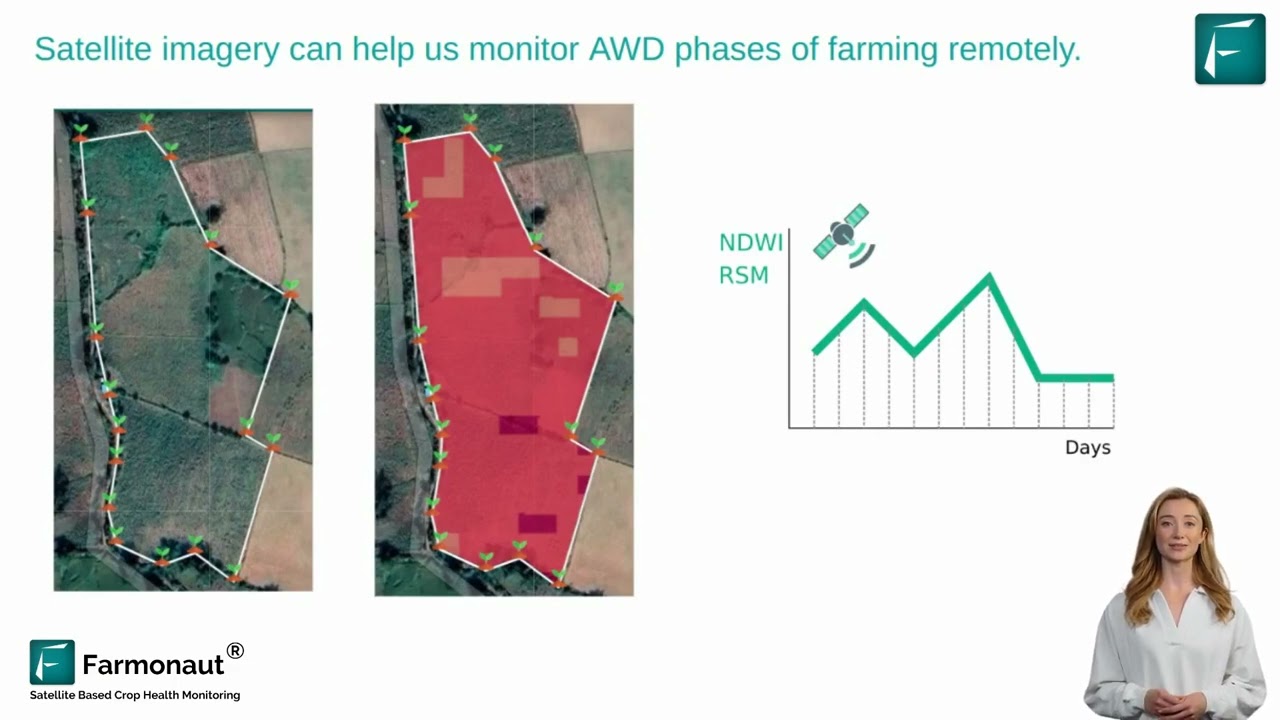
Emissions tracking: Farmonaut's carbon footprinting tools let operations quantify and reduce emissions — relevant as more organic buyers and retail partners ask for climate data alongside the organic label itself.

Developer and API access: Agribusinesses and software teams building on top of satellite monitoring data can integrate directly through the Farmonaut Satellite API, with full technical reference in the API Developer Docs.
Frequently Asked Questions
Q1. What is the area under organic farming in the United States?
As of the 2021 USDA NASS Organic Survey — the most recent full survey publicly available at the time of this review — certified organic cropland totaled 3.6 million acres, and total certified organic land (including pasture) totaled 4.89 million acres. NASS's next Organic Survey results are expected around October 30, 2026; check the NASS Organic Production page for the current figure.
Q2. Is organic farming acreage growing or shrinking?
Both, depending on the period. Cropland grew 79% from 2011 to 2021. But the USDA Organic Integrity Database recorded a 40,585-acre net decline between 2024 and 2025 — the first documented contraction in this data series. Whether that is a one-year dip or a trend will only be clear once 2026 figures publish.
Q3. Is organic farming more profitable than conventional farming?
On average, yes: USDA ERS research finds organic systems 22% to 35% more profitable than conventional systems despite yields averaging only 80% of conventional yields (per a peer-reviewed PLOS ONE study). The premium price organic crops command outweighs the yield shortfall in the aggregate data, though this varies by crop and by whether the price premium holds in a given market.
Q4. How big is the organic food market in the United States?
USDA counted $9.6 billion in certified or exempt organic product sales in 2022 (up 32% from 2017). Separately, Precedence Research sized the broader U.S. organic food market at $98.32 billion in 2025, projecting growth to $276.77 billion by 2035 at a 10.9% compound annual growth rate for 2026–2035.
Q5. What share of U.S. farmland is organic?
About 1%, per USDA ERS analysis — the clearest indicator that organic remains a specialty segment rather than the dominant model, even as its dollar value and producer count both continue to expand.
Q6. How many organic producers are there in the U.S.?
39,506, per the 2022 USDA Census of Agriculture — out of roughly 1.9 million total farms counted in the same census.
Conclusion: Reading the Next Data Release
The honest answer to "is organic farming the future of agriculture" is that it's a fast-growing, high-margin niche — not yet, and not obviously trending toward, a wholesale replacement for conventional systems. The area under organic farming in the U.S. sits at 3.6 million acres of cropland and 4.89 million acres total as of the 2021 NASS survey, having grown 79% over the prior decade, but posting a 40,585-acre pullback in the most recent year measured. Meanwhile the dollar side of the sector — $9.6 billion in certified sales in 2022, a $98.32 billion broader market in 2025, projected toward $276.77 billion by 2035 — keeps climbing.
The durable way to track this yourself, regardless of what year you're reading this: pull the current NASS Organic Survey acreage figure, compare it to the prior release to see the direction of change, then check the USDA ERS Organic Situation Report for the matching sales figure. If acreage is falling while sales keep rising, that's a sector concentrating into fewer, larger, more specialized operations — a materially different story than acreage and sales both rising together. Both data sources are linked above; both update on a predictable annual or five-year cycle, so the comparison stays current no matter how far this page ages.

 FarmSetu
 Progenseed
 SkyHarvest
 Polaris Digitech
 Teledarbas
 Wild Oak Farm
 SFX
SFX BACF Africa
 Doodlakine
 Exurbia Geospatial
 FieldZero
 Indico Company
 Kubota
 FFBS
FFBS
