

Soil Moisture Sensor Agriculture: Best Soil for India
“Soil moisture sensors can increase irrigation efficiency by up to 30% in Indian agriculture.”
“Over 60% of Indian farmers still rely on traditional soil testing, missing out on sensor-based precision.”
Table of Contents
- Introduction to Soil Moisture Sensor Agriculture
- Key Principles of Soil Moisture Sensing
- Choosing the Best Soil Moisture Sensor for Agriculture
- Best Soil for Agriculture in India: Moisture Management and Sensor Integration
- Comparison Table of Soil Types vs. Sensor Benefits
- The Role of Soil Testing Lab for Agriculture in Data-Driven Farming
- Practical Implementation Tips: Maximizing Sensor Benefits
- Farmonaut: Harnessing Satellite and Sensor Data for Crop Yield & Sustainability
- Key Insights, Pro Tips, and More
- Frequently Asked Questions (FAQ)
- Conclusion
Introduction to Soil Moisture Sensor Agriculture
Soil moisture sensors are transforming the landscape of Indian farming, setting the foundation for more sustainable, efficient, and profitable agriculture. In a country where water is both precious and often scarce, harnessing real-time data about soil moisture and integrating insights from a soil testing lab for agriculture can revolutionize how we schedule irrigation, conserve water, and improve crop yields.
The best soil for agriculture in India is not a one-size-fits-all concept. Different regions—from the fertile alluvial plains of the north to the rich black soils of the Deccan—present unique opportunities and challenges in moisture management. By deploying soil moisture sensor agriculture technologies, Indian farmers and agribusinesses can maximize productivity and build resilience against changing climate patterns.
In this comprehensive guide, discover how soil moisture sensors, data analytics, and the results from soil testing labs converge to create a blueprint for high-yield, water-smart, and sustainable agriculture in India and beyond.

Key Principles of Soil Moisture Sensing in Agriculture
At its core, a soil moisture sensor for agriculture measures the volumetric water content—the amount of water contained in the soil, typically expressed as a percentage of soil volume. This reading is critical for farmers, agronomists, and land managers because it provides actionable data on when and how much to irrigate, directly influencing yields, water conservation, and soil health.
Types of Soil Moisture Sensors
- Capacitance-based Sensors: These devices measure changes in the soil’s dielectric constant, which varies with moisture content.
- TDR (Time Domain Reflectometry) Probes: These use the travel speed of an electrical pulse along a probe to estimate soil water content with high accuracy.
- Tensiometers: They directly measure soil matric potential—the energy status of water in the soil, reflecting how readily plants can access moisture.
- Neutron Probes: Less common on farms due to safety and regulatory concerns; typically used in research.
- Capacitance-Frequency Devices: Often wireless and robust, with remote connectivity.
Key Insight:
Reliable sensors, when paired with smart interpretation and calibration, help farmers precisely gauge soil moisture and schedule irrigation—directly improving efficiency and yields.
How Do Soil Moisture Sensors Work?
Most sensors estimate soil water by sending an electrical signal through the soil and measuring how its transmission is altered by the presence of water. The result is shared as a volumetric water content or, for tensiometers, as soil water potential. By installing sensors at the right depths—in the root zone of target crops—farmers obtain information on the actual moisture available to plants, rather than guesswork or indirect signs.

Key Measurement Parameters
- ✔ Volumetric Water Content (%): Most common output; direct indicator of available soil moisture.
- 📊 Soil Water Potential / Matric Potential: Indicates ‘plant available water’ and how tightly moisture is held in the soil matrix.
- ⚠ Calibration Need: Different soil textures (like sandy, clay, or loamy soils) can affect sensor readings—field calibration is often necessary.
Choosing the Best Soil Moisture Sensor for Agriculture
With a variety of soil moisture sensor agriculture technologies available, selecting the right tool depends on the unique properties of your soils, the crops cultivated, and your irrigation infrastructure. Here’s how to evaluate your options:
Sensor Compatibility With Soil Types
- ✔ Sandy Soils: Rapid water movement; sensors must handle quick moisture changes. Calibration for low-retention is required.
- ✔ Loamy Soils: Balanced retention and drainage; most capacitance and TDR probes perform well.
- ✔ Clay Soils: High retention, slow drainage. Sensors should measure both content and potential to avoid over-irrigation.

Try the Farmonaut Satellite App: Real-time Soil and Crop Monitoring
Sensor Installation Depths & Best Practices
- 📏 Vegetables: 15–30 cm (shallow root zone).
- 📏 Field crops: 30–60+ cm (deeper root zone).
- 🟢 Multi-depth Monitoring: Use multiple layers to capture full moisture dynamics.
Sensor Durability & Data Integration
- 💪 Weather Resistance: Devices must handle temperature swings, humidity, root growth, and soil movement.
- 🔗 Wireless Data Transmission: Critical for managing remote fields and integrating with irrigation controllers.
- 📡 Reliable Connectivity: Choose sensors that integrate smoothly with data loggers and smartphones.
Common Mistake
Common Mistake:
Installing sensors too close to emitters, in compacted patches, or non-representative zones can skew readings and undermine data-driven management decisions.

Best Soil for Agriculture in India: Moisture Management and Sensor Integration
India’s remarkable agricultural diversity is partly thanks to its varied soils. However, each prevalent soil type—from alluvial to black, red, and lateritic—poses unique opportunities and challenges for moisture management. Optimizing sensor use and irrigation schedules requires understanding these differences.
- Alluvial Soils (found in the Indo-Gangetic plain): Excellent water retention, extensive cropping options, but risk of waterlogging in low-lying areas.
- Black Soils (Deccan Plateau): High clay content, remarkable moisture-holding, best for cotton but challenging for drainage.
- Red Soils (southern/eastern India): Lower retention, often improved with organic matter and regular irrigation.
- Laterite Soils (western/southern coasts): Porous and acidic, benefit from soil amendments for water and nutrient management.
Pro Tip:
Loamy soils, rich in organic matter, generally offer the best balance for sensor accuracy and crop success—aim to improve structure and retention in less ideal soils with compost and cover crops.
Visual List: Soil Texture & Sensor Compatibility
- 🔬 Sandy Soils: Fast drainage; need high-frequency sensor readings
- 🌾 Loamy Soils: Ideal for most sensors; optimal yield potential
- 🌑 Clay Soils: Go for TDR + soil water potential monitoring
- 🍂 Laterite: Benefit from deep, robust probes

Comparison Table of Soil Types vs. Sensor Benefits
| Soil Type | Estimated Water Retention (%) | Recommended Crop Types | Optimal Sensor Depth (cm) | Sensor Accuracy Potential | Estimated Yield Increase (%) |
|---|---|---|---|---|---|
| Alluvial | 30–40 | Rice, Wheat, Sugarcane | 20–40 | High | 20–35 |
| Black (Regur) | 35–50 | Cotton, Soybean, Sorghum | 30–50 | Very High | 25–40 |
| Red | 10–20 | Groundnut, Pulses, Millet | 20–40 | Medium | 15–28 |
| Laterite | 8–18 | Cashew, Coffee, Coconut | 30–50 | Medium | 12–22 |
| Loamy | 25–35 | Vegetables, Fruits, Field Crops | 20–40 | Very High | 28–38 |
| Desert/Sandy | 4–10 | Barley, Date Palm, Mustard | 15–30 | Medium | 10–18 |

The Role of Soil Testing Lab for Agriculture in Data-Driven Farming
While soil moisture sensors deliver real-time data on available water, a soil testing lab for agriculture is essential for a holistic view of soil health, fertility, and long-term crop productivity. Combining both approaches unlocks powerful synergies.
- Soil Structure & Texture: Laboratory analysis provides precise measures of sand, silt, and clay fractions, informing optimal sensor selection.
- Organic Matter Content: Higher organic matter improves water retention and soil microbial health, directly affecting irrigation intervals.
- pH & Salinity: Extreme pH or high conductivity can stress crops and impact sensor response; lab data helps set context-appropriate irrigation thresholds.
- Macronutrients & Micronutrients: N, P, K, and trace elements are quantified, essential for balanced nutrient management along with irrigation scheduling.
With local soil testing labs available in most agricultural regions of India, regular testing—at least once a year—supports sensor calibration, yield forecasting, and sustainable land stewardship. Learn more on how these labs assist:
Farmonaut Large-Scale Farm Management: Data-Driven Decisions For Enterprises
Investor Note:
Farms leveraging routine soil testing plus sensor-based irrigation consistently report higher input efficiency and up to 40% more predictable yields—a key driver for agricultural investment resilience.

Did You Know?
Many farmers in India still rely on seasonal experience and traditional soil testing, which can miss the rapid, real-time changes that affect optimal irrigation schedules and moisture management.

Practical Implementation Tips: Maximizing Sensor Benefits
Simple Steps for Real-World Farm Success
- Pick Representative Locations: Install sensors where crops’ roots access most water—avoid non-typical patches (shaded, compacted, near boundaries or emitters).
- Multiple Depths Matter: For long-season crops, place probes at two or more depths (e.g., 20 cm & 40 cm) to monitor the active root zone throughout the season.
- Calibrate Sensors to Your Soil: Take gravimetric soil samples to compare with sensor readings—this boosts accuracy for site-specific soil conditions.
- Integrate with Weather & Cropping Models: Combine sensor signals, rainfall forecasts, and crop growth models for predictive, water-smart irrigation schedules.
- Automate Alerts & Plans: Use platforms like Farmonaut for real-time data visualization, auto-generated recommendations, and integration with irrigation controllers.
Explore Farmonaut’s Carbon Footprinting Tool: Track Environmental Impact with Satellite Precision
Learn About Blockchain Traceability for Agriculture and Mining
Access Farmonaut’s Satellite Verification For Crop Loans & Insurance
Monitor and Manage Farm Fleets Remotely: Farmonaut Fleet Management
Unlock Farmonaut’s Crop Plantation & Forest Advisory Tools Now
Visual List: Top 5 Sensor Integration Benefits
- 🌱 Improved Crop Health: Accurate water delivery supports root & soil microbial vitality
- 💧 Efficient Irrigation Scheduling: Reduces water waste and operating costs
- 🚜 Resilience Against Drought: Data-driven irrigation supports crop survival during dry spells
- ⚡ Optimized Fertilizer Use: Right water content prevents nutrient leaching and boosts effectiveness
- 🌏 Supports Sustainability: Reduces resource use, enhances long-term soil health & stewardship
5 Key Takeaways
- ✔ Soil moisture sensors are pivotal for modern water management in farming.
- 📊 Lab testing + sensors yield the most actionable data for irrigation scheduling.
- ⚠ Improper calibration or placement can undermine data reliability.
- 🚀 Modern platforms enable real-time alerts and AI-based advisories.
- 🌾 Soil improvement practices enhance both retention and sensor effectiveness.


Access Farmonaut API: Bring Satellite & Sensor Data Into Your Workflow
Developer Docs: Integrate Farmonaut’s Satellite Weather API
Farmonaut: Harnessing Satellite and Sensor Data for Crop Yield & Sustainability
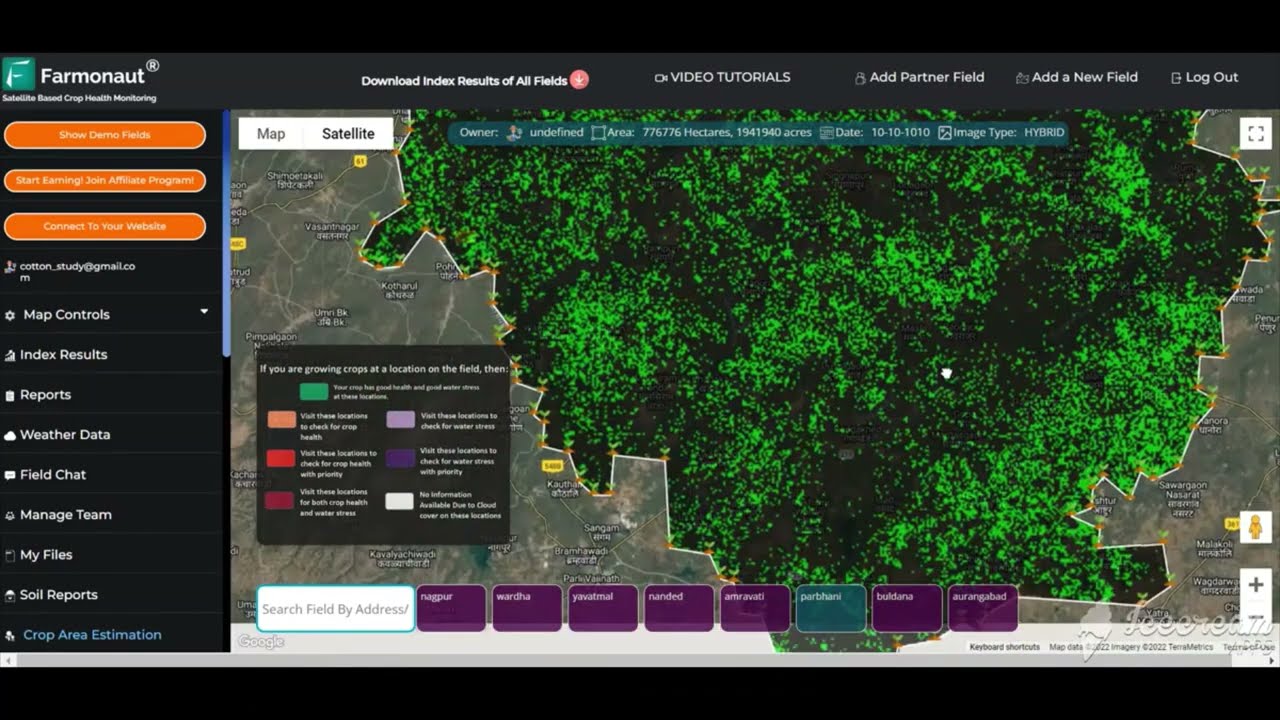
At Farmonaut, we use advanced satellite technology, AI, and real-time analytics to enable Indian farmers and agribusinesses to monitor soil moisture, track crop health, and manage irrigation effectively. Our solutions integrate sensor data with high-resolution satellite imagery, providing a holistic view of field conditions for informed, data-driven decisions. Here’s how we’re driving transformation:
- 👁 Satellite Soil Moisture & Health Monitoring: Multi-spectral analysis captures moisture patterns and plant vitality across large areas, pinpointing stress zones early.
- 🤖 AI-based Advisory Systems: Jeevn AI delivers actionable, site-specific recommendations for irrigation, nutrient management, and more, increasing efficiency and protecting yields.
- 🔗 Blockchain Traceability: Our platform secures the entire agricultural supply chain—from planting to market—building trust and boosting quality control.
- 📱 Real-Time Alerts & Remote Access: Mobile apps and web dashboards keep farmers updated anytime, anywhere.
- 🌱 Resource & Environmental Impact Management: Tools for tracking carbon footprint, optimizing water use, and adopting regenerative practices for sustainable stewardship.
Pro Tip:
Pairing real-time sensor data with satellite-based maps on the Farmonaut app ensures actionable alerts and year-round visibility of both micro (field) and macro (regional) trends.
Key Insights, Pro Tips, and More
Combining soil testing lab for agriculture reports with frequent soil moisture sensor data yields the most accurate, field-ready irrigation guides for Indian farms.
For sandy/low-retention soils, prioritize fast-response sensors and automate alerts for rapid irrigation shifts during dry spells.
Over-irrigating clay soils by following fixed schedules leads to waterlog, stunted roots, and yield loss—let sensors drive your timing.
Precision irrigation, powered by sensors and analytics, not only cuts costs but boosts asset value—essential for long-term land & farm investments.
Soil moisture sensor agriculture strategies reduce risk, support compliance, and enable high-value sustainable farming—driving India’s future-ready agriculture sector.
Frequently Asked Questions (FAQ)
What is the best soil for agriculture in India?
Loamy soils are widely regarded as the best soil type for agriculture in India due to their balanced texture, drainage capacity, and high organic matter content. Black (regur), alluvial, and improved red soils are also highly productive when managed with proper moisture and nutrient scheduling.
How do soil moisture sensors improve crop yields and sustainability?
By giving accurate, real-time data on moisture content in the root zone, they allow optimal irrigation—reducing water waste and improving crop health, thereby supporting sustainable farming and higher, more stable yields.
How often should I calibrate my soil moisture sensors?
Calibration is recommended whenever the field conditions change—such as after plowing, the start of a new crop season, or soil amendment. A minimum of twice per year, cross-checking with gravimetric testing is a good rule of thumb.
Which crops benefit most from sensor-based irrigation?
All crops—including rice, wheat, sugarcane, cotton, vegetables, pulses, and orchard crops—benefit. However, high-value fruits and vegetables show dramatic improvements in yield and resource efficiency with precise soil moisture management.
Can I integrate soil sensor data with satellite analytics?
Yes! Platforms like Farmonaut allow you to unify sensor, satellite, and advisory data for a complete picture of soil moisture, crop health, and input planning.
Conclusion
India stands at the threshold of a new agricultural revolution—one defined by precision, sustainability, and modern technology. Soil moisture sensor agriculture empowers farmers to maximize yields, safeguard soil health, and conserve water—keys to food security and rural prosperity. When combined with data-driven soil testing labs, these tools unlock new benchmarks in lean resource use and environmental stewardship.
At Farmonaut, we are committed to bringing advanced satellite, sensor, and AI solutions within reach of Indian agriculture. Step into data-driven farming—where your soil, your crops, and your future prosper together.

 MCSOD
MCSOD Marei Nursery
 Sayaji Group
 eKGIS
eKGIS Mostas Tech
 Native Seeds
 Andex
Andex FCF India
 Unifrutti Gulf
 Deluxe Conseil
 TVS Electronics
 WICO
WICO Chimera Innovation
 SkyHarvest
 Polaris Digitech
