

Table of Contents
- Introduction: The Paradox of South Korea’s Agriculture (2026)
- South Korea 2025-2026 Trivia
- South Korea Agriculture Problems: 2026 Structural & Demographic Challenges
- Key Agricultural Products of South Korea in 2026
- Technology, Smart Farming & Innovation in South Korea Agriculture Industry
- Video: JEEVN AI & Smart Farming in Korea
- Market Trends, Management, and Global Competition
- Expert Insights & Highlight Callouts
- Innovations Addressing Key Agriculture Problems in South Korea (2025-2026)
- Environmental, Climate Resilience & Sustainable Agriculture
- Video: Regenerative Agriculture in South Korea
- Consumer Demand, Certification, and Market Access
- Satellite Solutions for South Korea Agriculture
- Frequently Asked Questions – South Korea Agriculture Products 2026
- Conclusion: South Korea’s Modern Agricultural Path Forward
South Korea Agriculture Products: 2026 Problems & Solutions
South Korea agriculture problems present a striking paradox as we move into 2026: despite robust technological advancements and diverse agricultural production capabilities, the sector faces deep-rooted vulnerabilities. These range from demographic shifts to global market competition, threatening both sustainability and the livelihoods of rural communities. In 2025 and beyond, agriculture remains a linchpin of food security and domestic employment, yet it grapples with an aging farmer population, high production costs, and relentless import pressure that shapes every aspect of policy, research, and market dynamics.
This blog dives deep into: the emerging landscape of South Korea agriculture products, persistent south korea agriculture problems, cutting-edge technology such as smart farming and AI, climate resilience strategies, and the market trends determining the future of the south korea agriculture industry in 2026.
“By 2026, over 60% of South Korean farms are projected to adopt smart farming technologies for increased efficiency.”
South Korea 2025-2026 Trivia
- 📈 Over $10 billion: “South Korea’s agricultural exports are expected to surpass $10 billion by 2025, driven by tech-driven crop innovation.“
- 🌱 Main Focus: Emphasis on technology and innovation in all aspects of production.
- 👨🔬 Labor Force: The average age of Korean farmers exceeded 65 in 2024, with labor shortages accelerating.
- 🔗 Supply Chain: Blockchain-based traceability is surging in the agricultural products of South Korea.
- 🌾 Export Boom: High-value crops, like ginseng and strawberries, are increasingly in demand on the global stage.
South Korea Agriculture Problems: 2026 Structural & Demographic Challenges
The south korea agriculture industry in 2026 is characterized by a sharp paradox: while technology and product diversity thrive, structural and demographic challenges persist, threatening the long-term sustainability of agriculture and the livelihoods of rural workers. These structural issues dominate the agricultural landscape:
-
👵
Aging Population: Over 50% of farmers are now over 65—a number expected to rise by 2026. -
⚠️
Labor Shortages: Fewer young entrants, leading to high labor costs and generational renewal delays. -
🔄
Land Fragmentation: Small, fragmented plots complicate efficient cultivation and pose barriers for precision farming. -
🚜
Scale Pressures: Many operations are pushed toward larger, automated scales or forced into retirement. -
💰
High Production Costs: Inputs, land, and workforce expenses remain elevated.
Summary of Key South Korea Agriculture Problems
- Structural vulnerabilities threaten sector sustainability.
- Labor remains costly and increasingly scarce.
- Fragmented land ownership complicates efficient cultivation and productivity gains.
- Persistent competition from imports challenges smallholder viability.
Key Agricultural Products of South Korea in 2026
The unique climate and topography of Korea foster a diverse portfolio of agricultural products, many of which adapt well to the latest technologies and fetch high demand in both domestic and export markets:
-
🍓
Strawberries: Cultivated in high-tech greenhouses, a shining export product. -
🍐
Pears and Apples: Premium varieties, crucial for local consumption and export. -
🌶️
Peppers: Essential in Korean cuisine, benefitting from vertical and hydroponic systems. -
🌾
Rice, Barley, and Grains: Still forming the backbone of food security, but import competition is significant. -
🌱
Ginseng & Herbal Crops: Traditional and highly valued specialty crops with strong global demand. -
🐖
Pork, Beef, and Dairy: Meeting growing domestic demand and export competition. -
🍄
Mushrooms & Niche Sectors: Leveraging value-added processing capabilities.
The agricultural products of South Korea reveal a balance between tradition (rice, ginseng), innovation (AI-augmented greenhouses), and sustainability (organic certification, soil health programs).
Innovations Addressing Key Agriculture Problems in South Korea (2025-2026)
| Agriculture Problem | Estimated 2025 Impact | Innovative Solution/Technology | Description | Estimated 2026 Improvement |
|---|---|---|---|---|
| Labor Shortage & Aging Farmers | -17% workforce, higher costs | Robotics, AI-Driven Machinery, Large-Scale Smart Farm Management | Autonomous tractors, drones, and precision robots ease labor strain; smart apps improve operation efficiency | Up to +13% productivity, +18% efficiency, -22% labor costs |
| Land Fragmentation | Only 32% average plot efficiency | Land Banking, Consolidation Incentives, Carbon Footprinting & Plot Mapping | Policy-driven land consolidation & eco mapping for optimized use; environmental credits for sustainable plots | ~10% higher yields, +7% plot efficiency |
| Climate Vulnerability (Typhoons, Droughts) | $800M annual crop loss risk | Smart Greenhouses, AI Weather Systems, Satellite Weather APIs | AI-based prediction, climate-resilient greenhouses; satellite monitoring and real-time alerts | ~35% reduction in weather-based crop loss |
| Crop Disease & Pest Infestation | ~$310M loss/year | Remote Sensing, AI Crop Health Monitoring, Crop & Forest Advisory | NDVI, multispectral satellite imagery detect diseases early, AI provides instant advisories | Up to +20% yield, lower pesticide use |
| Supply Chain Gaps (Traceability, Quality) | 10% post-harvest loss, low export premium | Blockchain Traceability Platforms, End-to-End Product Traceability | Blockchain ensures authentic origin, quality, and safety, enabling higher market access | 15-25% export price premium, up to -30% fraud loss |
| Resource Inefficiency (Water, Fertilizer) | $250M excess costs | AI-Based Irrigation, Precision Inputs, Irrigation Advisory Tools | Sensor-integrated irrigation and targeted fertilizer minimize waste and cost | 10–17% cost savings, 8% yield gain |
This table clarifies the intersection of south korea agriculture problems and 2026-ready innovative solutions, highlighting the technology-centric shift within the south korea agriculture industry.
Technology, Smart Farming & Innovation in South Korea Agriculture Industry
Technology and innovation are now the central strategy of all policy and production moves in south korea‘s agriculture. Policymakers and private actors aggressively promote smart farming to boost yields, reduce inputs, and mitigate weather risks.
- Sensor networks, AI-driven irrigation, and autonomous farm machinery automate or greatly ease labor.
- Rapid adoption of greenhouses and vertical farming (notably for peppers, strawberries, herbs) ensures year-round, high-value production.
- AI-platforms bridge labor gaps and support smaller holders to maintain productivity on smaller plots.
- Blockchain traceability platforms transform supply chain transparency and export readiness.
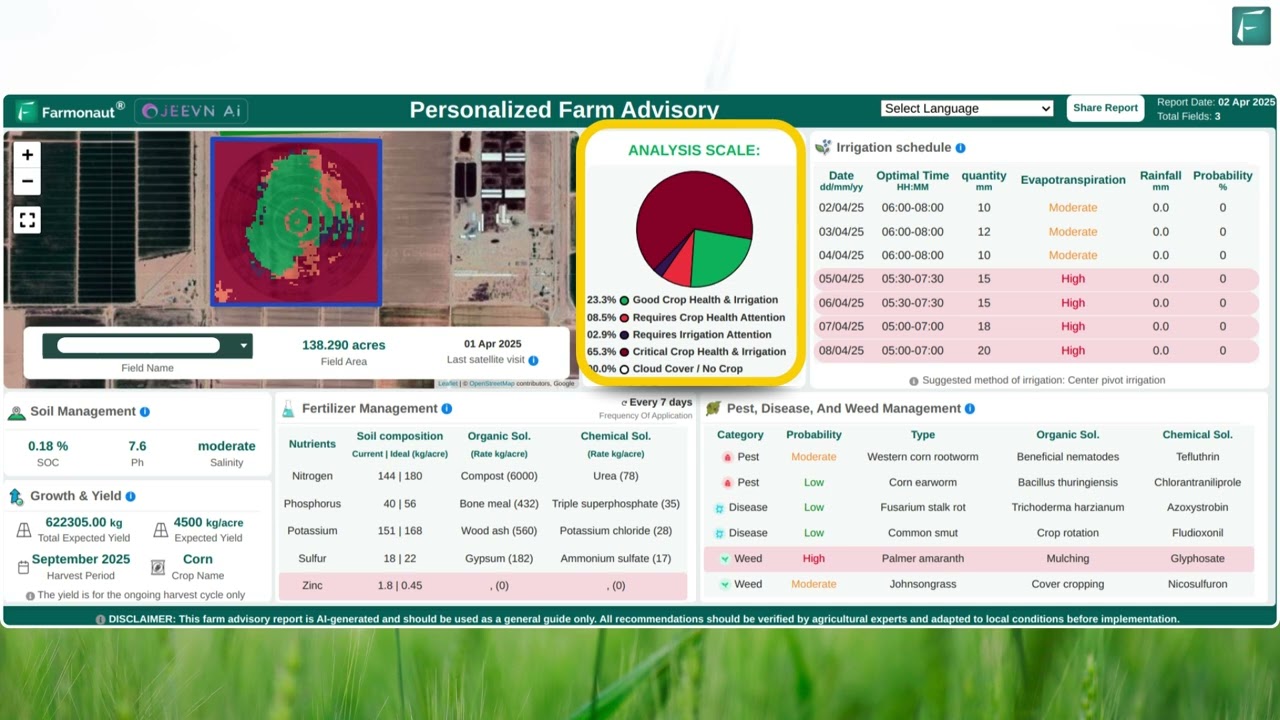
Farmers can maximize efficiency and meet global sustainability standards by leveraging AI-based advisory tools, satellite monitoring, and blockchain traceability—readily available through modern platforms.
Video Highlight: JEEVN AI & Smart Farming in Korea

Get a firsthand look into how AI and satellite-based insights are bridging the gap in labor shortages and plot management across agricultural products in south korea.
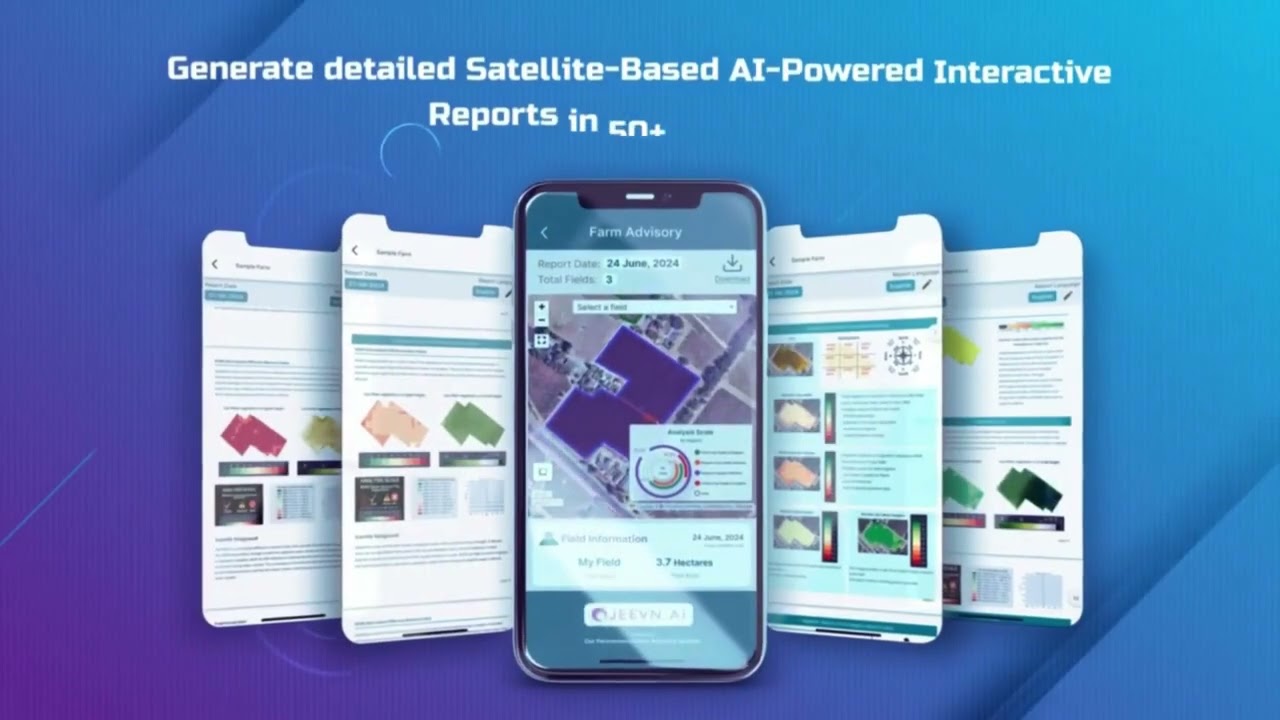
Discover how satellite monitoring empowers efficient farm and crop management—an essential for resilience in an aging sector.
Market Trends, Management, and Global Competition
The market dynamics of south korea agriculture products are shaped by domestic supply constraints, policy incentives, and global competition. Here’s how these factors shape production, pricing, and export strategies:
- South Korea is a net importer of grains and certain fruits; import dependence leaves the sector vulnerable to global supply shocks.
- Policy responses include guaranteed market access for sensitive crops, price support schemes, and strategic reserves.
- Export programs encourage high-value specialty products (fresh produce, ginseng, strawberries) to access East Asian and global markets.
- Price volatility is an ever-present risk, with import competition exerting downward pressure on grower margins.
The expanding market for AI-powered supply chain data and certified origin labels adds new investment opportunities across South Korea’s agricultural value chain.

See the economic impact of vegetable equipment innovation and how AI telematics are fueling a billion-dollar market in south korea agriculture products.
Expert Insights & Highlight Callouts
Key 2026 Takeaways for South Korea Agriculture
- ✔ Smart tech adoption: Over 60% of farms utilizing smart farming platforms, sensors, and AI.
- 📊 Production efficiency: Up to 18% better efficiency on large and mid-sized farms implementing AI/automation.
- ⚠ Risk: Import competition remains the biggest threat for small-scale producers in the south korea agriculture industry.
- ✔ Sustainability push: Environmental, certification, and traceability schemes bring premium market access.
- 📊 Market growth: Tech-driven exports expected to exceed $10B by 2025–2026.
Environmental, Climate Resilience & Sustainable Agriculture
Climate and environmental management are front and center in South Korea’s agriculture, especially for rural plots exposed to seasonal weather extremes (typhoons, droughts, and heavy rainfall).
- Climate–smart agriculture (CSA): Policy incentives drive adoption of resilient crop varieties, risk insurance schemes for weather losses, and disaster-response infrastructure.
- Sustainable farming: Reduced chemical use, promotion of organic methods, and widespread soil health certification programs are accelerating.
- Water-saving irrigation: Precision irrigation networks become the standard for major crops, reducing waste and increasing output.
- Integrated pest management: National plans for biological, AI-powered pest surveillance, and disease forecasting protect yield and environmental health.
- Policy support: Government emphasizes climate adaptation, reward schemes, and alignment with global sustainability standards.
Video Spotlight: Regenerative Agriculture, Soil Health & Climate-Smart Solutions

Learn how soil health tracking, carbon farming, and sustainability analytics support South Korea’s transition toward resilient, climate-smart agriculture products.
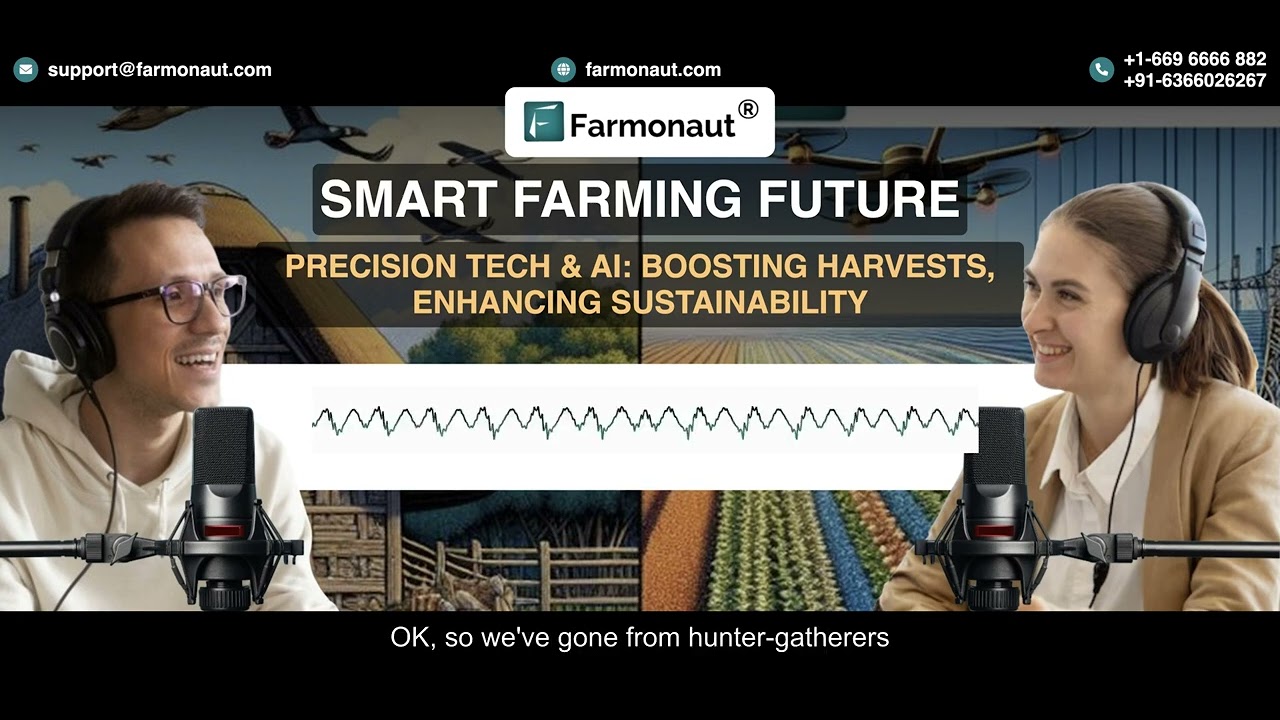
See the future of smart agriculture and why precision technology is now mandatory for compliance and market access in South Korea.
Consumer Demand, Certification, and Market Access
Modern consumer trends are now transforming the types of agricultural products in south korea that reach both domestic and overseas markets.
- Traceable, certified domestic products are in high demand among health-conscious consumers.
- Origin labeling, organic certification, and environmental responsibility have become the standard for premium pricing across most crops.
- Innovative marketing highlights the “Korean farm story” – advanced technologies, heritage crop varieties, and regional specialties.
- Tech-driven solutions (blockchain, satellite data) act as key enablers for improved supply chain efficiency and export compliance.
Explore Our Agricultural Technology Tools
Leverage Farmonaut’s satellite-powered ecosystem for real-time crop monitoring, supply chain traceability, carbon footprinting, and more:



Developers & Ag-Tech Businesses: Access the Farmonaut Satellite Weather API for real-time climate, crop, and soil data in south korea agriculture products—link: Farmonaut API.
See API Developer Documentation for setup and integration.
- Product Traceability: Farmonaut Traceability Solution offers blockchain-secured records from crop field to market—vital for export compliance and premium product pricing.
- Environmental Monitoring: Carbon Footprinting tools allow Korean farms to quantify, certify, and reduce agro-sector emissions—crucial for global buyers and sustainability schemes.
- Crop Insurance & Loans: Satellite-verified Crop Insurance solutions reduce fraud and improve small-holder financing access, supporting generational renewal and rural livelihoods.
- Fleet Management: Farmonaut Fleet Management platform provides logistics optimization and asset utilization to reduce machinery downtime and operational costs.
- Large Scale Farm Management: Agro Admin Application for multisite, multi-commodity operation monitoring—including AI-based planning to maximize yield and efficiency.
Frequently Asked Questions – South Korea Agriculture Products 2026
What are the main agriculture problems in South Korea by 2026?
Labor shortages due to an aging workforce, land fragmentation, high production costs, climate risks, and increased competition from imports dominate South Korea’s agriculture problems. Policies focus on smart farming adoption, farm consolidation, and innovation to mitigate these challenges.
Which agricultural products in South Korea are strategic for 2026?
Key products include specialty crops like ginseng and strawberries, fresh fruits (pears, apples, mandarins), vegetables (peppers), grains (rice), mushrooms, and livestock products (pork, beef, dairy). High-value and certified products are prioritized for both domestic and export markets.
How is technology shaping agriculture in Korea?
The rapid adoption of AI-driven machinery, smart irrigation networks, blockchain traceability, and greenhouses/vertical farms is boosting efficiency, yields, and climate resilience. These technologies are crucial for overcoming labor and resource constraints.
What is the government doing to support sustainable agriculture?
Incentives for consolidation, smart farming tech, climate adaptation, and certifications dominate policy. Subsidies and price guarantees protect smallholders, while environmental and food safety standards support premium, export-oriented production.
How can Farmonaut help the South Korea agriculture industry?
We offer satellite-driven solutions—crop health monitoring, climate risk analytics, resource optimization, blockchain traceability, and real-time advisory systems—to empower Korean farmers, businesses, and government agencies to be more productive, resilient, and globally competitive.
Conclusion: South Korea’s Modern Agricultural Path Forward
The ongoing evolution of South Korea agriculture products is a testament to the sector’s ability to blend the best of tradition with world-class technology and innovation. Despite ongoing hurdles—labor shortages, fragmented land, volatile markets, and climate threats—South Korea is setting regional standards for smart, sustainable, and globally competitive agriculture.
- Productivity is being restored and expanded through robotics, smart farming, and green tech integration.
- Export growth is fueled by product innovation, end-to-end traceability, and premium branding for certified, sustainable crops.
- Sustainability is no longer optional—carbon tracking, organic practices, and soil health metrics are embedded in both policy and practice.
- Rural livelihoods are protected via strong policy incentives, farm consolidation, and advanced insurance and financing models.
As we look toward 2026 and beyond, the south korea agriculture industry is well-positioned to not only feed the nation, but also to shape global agricultural trends—thanks to its relentless pursuit of technology, efficiency, and sustainability.

 Teledarbas
 Dreamz Tech
 Wild Oak Farm
 SFX
SFX BACF Africa
 Doodlakine
 Exurbia Geospatial
 FieldZero
 Indico Company
 Kubota
 FFBS
FFBS Jontra
 Tucor
Tucor
