

Agricultural Vehicles & Farm Equipment Auctions Explained
Reviewed August 2026 against the Association of Equipment Manufacturers’ U.S. Ag Tractor and Combine Reports, USDA NASS’s 2022 Census of Agriculture, and Sandhills Global’s TractorHouse market reports.
Try it: Max-Bid Calculator for Equipment Auctions →
An agricultural vehicle is any self-propelled machine built to work farmland — tractors, combines, sprayers, and utility vehicles are the core four. Buying one, new, used, or antique, runs through three channels: dealer showrooms, online timed auctions, and regional auction houses that still run a live ring. Which channel makes sense depends on what you’re after: U.S. new-tractor sales fell for a fourth straight year in 2025, used-equipment asking prices kept sliding into 2026, and a handful of pre-1930 tractors are now worth more restored than most people’s houses.
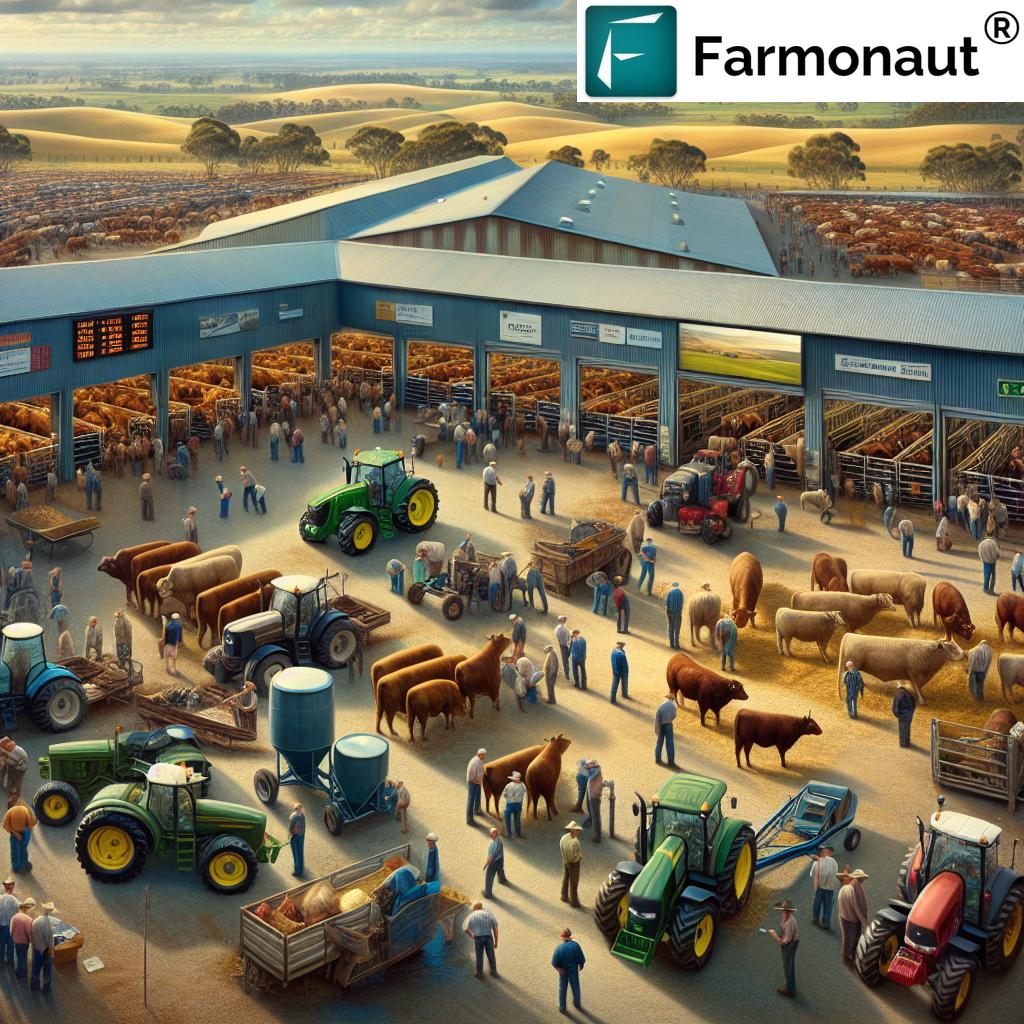
What Is an Agricultural Vehicle, Exactly?
Farm equipment vehicles are usually grouped into four working categories, and almost everything on a dealer’s lot or an auction docket falls into one of them:
- Tractors — the base power unit for tillage, planting, mowing, and loader work, ranging from sub-40-HP compact utility models to 400-HP-plus 4WD articulated units.
- Harvesting equipment — combines, forage harvesters, and cotton pickers built around a single harvest window each year.
- Application and tillage implements — planters, sprayers, disc harrows, and grain drills, most of which are pulled or mounted rather than self-propelled.
- Utility and transport vehicles — UTVs, grain trucks, and skid steers that move people, feed, and grain around the operation rather than working a field directly.
What actually qualifies as farmland in the first place shapes which of these a property needs at all — see our breakdown of rural agricultural land and its best uses. And on new machines, GPS guidance, variable-rate controllers, and telematics have gone from optional to expected, part of a broader wave of innovative farming technology reshaping how row-crop operations spec a tractor before they ever drive it.
The Market for New and Used Agricultural Vehicles
New tractor demand has been retreating since a pandemic-era buying spike. Annual U.S. farm tractor sales rose from 244,771 units in 2019 to a peak of 317,944 in 2021, then fell for four straight years to a preliminary 195,857 units in 2025 — the lowest total in the series and 9.9% below 2024 — according to farmdoc daily at the University of Illinois, which compiles the manufacturer-reported totals behind the Association of Equipment Manufacturers’ monthly reports.
Combines fell even further: preliminary 2025 sales of 3,579 units were down 35.6% from 2024’s 5,556, the steepest drop of any major category farmdoc daily tracked. Dealers felt it directly — 67.5% of surveyed dealers reported new-equipment sales declines of two percentage points or more in 2025, and 46.3% reported similar declines on the used side.
Tariffs are part of the story. Deere & Company absorbed roughly $600 million in tariff costs in fiscal 2025 and projects about $1.2 billion for fiscal 2026; AGCO expects its tariff burden to climb from about $40 million in 2025 to as much as $110 million in 2026, per the same farmdoc daily analysis. A February 20, 2026 Supreme Court ruling, Learning Resources, Inc. v. Trump, found that tariffs imposed under the International Emergency Economic Powers Act exceeded the president’s authority, and those specific tariffs were terminated days later — manufacturers still face duties under other statutes, so check farmdoc daily’s ongoing coverage for the current tariff picture rather than treating any single figure here as final.
What Used Equipment Is Actually Selling For
Asking prices on the used market softened alongside new-equipment demand. In Sandhills Global’s August 2025 TractorHouse report, used 100-to-174-HP tractors led the declines, down 2.87% month-over-month and 16.55% year-over-year; the broader 100-HP-and-up category slipped a smaller 0.11% for the month but was still off 6.22% for the year, the 300-HP-and-up segment eased 0.66% monthly and 6.29% annually, and used combines fell 5.84% for the month against a 2.82% annual decline. By March 2026, Sandhills reported high-horsepower used-tractor inventory down 16.71% year-over-year and still contracting after 13 straight months of decline — check TractorHouse’s current monthly market report for this month’s numbers, since this series moves fast.
That inventory glut is one reason late-model used planters and sprayers with intact yield monitoring and mapping hardware still command a premium over otherwise-comparable units — buyers are paying for the data layer, not just the iron underneath it.
How Farm Equipment Auctions Work
Most agricultural vehicles change hands at auction rather than through a private sale, and the format matters as much as the price:
| Auction Format | Buyer’s Premium | Settlement Window | Best Suited For |
|---|---|---|---|
| Online timed (e.g. BigIron, AuctionTime) | Commonly a fixed percentage, often capped — confirm on the specific listing | Typically 24–48 hours to pay | Remote bidders, high lot volume, unreserved sales |
| Live ring / bank auction | Varies by house — ask before bidding | Day-of, cash or certified funds | Local dispersal sales, fast turnover |
| Dealer consignment | Built into the asking price | Standard financing terms available | Inspected, sometimes-warranted used equipment |
| On-farm retirement / estate sale | Set by the auctioneer, posted in the terms | Usually same-day | Complete fleets, antique and collector lots |
Farm Equipment Auctions in South Dakota
South Dakota genuinely has an outsized farm-equipment auction market — but no independent body publishes a ranked “best auctions” list, so treat any page claiming one with skepticism. What’s verifiable: the average South Dakota farm grew to 1,495 acres in the 2022 Census of Agriculture, up 52 acres (4%) from 2017, and that kind of consolidation reliably feeds dispersal and retirement sales as smaller operations exit. Tractor Zoom’s directory listed 26 auctioneers operating in South Dakota within its 770-auctioneer national network as of this check in August 2026 — a live count that will have moved by the time you look. Wieman Land & Auction Co. in Marion, SD, founded in 1949 and now in its third generation of family ownership, is one of the state’s longest-running examples; see wiemanauction.com for its current sale calendar.
A short checklist works for any regional house, South Dakota or otherwise:
- Confirm the auctioneer’s state license and how long they’ve operated locally.
- Get the buyer’s premium and payment deadline in writing before you bid, not after you win.
- Ask whether the sale is unreserved — a reserve changes your negotiating position entirely.
- Pull recent sold-lot results for the same make, model, and hours on TractorHouse or AuctionTime and compare them to the opening bid.
- On dispersal sales tied to an estate or bankruptcy, get lien-search confirmation in writing.
Once you have a comparable sold price and know the buyer’s premium, the calculator below turns those two numbers into an actual bid ceiling instead of a guess.
Max-Bid Calculator for Equipment Auctions
Assumptions: excludes financing costs, sales tax, and any warranty; assumes the "comparable sold value" is a recent realized price, not another auction's asking price. Confirm the exact buyer's premium in the auction's own posted terms before you bid.
Antique and Vintage Farm Equipment: Values, Records, and Where They Sell
Antique farm equipment auctions are a different market from used-equipment auctions — buyers are paying for rarity and originality, not remaining working hours. Two subscription guides are the closest thing this niche has to a blue book: the Hot Line Antique Tractor Guide, which compiles auction and sale results for tractors, crawlers, and combines built through 1984 and is used by some ag lenders to set collateral value, and the Antique American Tractor and Crawler Value Guide, which prices pre-1960s American tractors across five condition grades from realized auction prices rather than asking prices. Neither is free, and neither substitutes for pulling recent sold-lot data on the specific model, but both beat guessing.
Within any model, four things move the price most: originality (unrestored-but-complete usually beats over-restored), documented provenance, completeness of matched implements, and — because this is a thin, collector-driven market — how many serious buyers are actually watching that specific sale. Not every old farm equipment sale is a six-figure event; most vintage tractors at a county consignment sale bring anywhere from a few hundred dollars for a parts-grade unit to the low five figures for a clean, running, collector-grade example, and the guides above are the right place to check where your specific model and condition falls before setting a reserve.
The very top of the market moves in single sales, not trends. Aumann Auctions' 2022 Pre-'30 sale set the standing world record for any tractor when a 1913 Case 30-60 — one of only five known survivors of an original run of roughly 500 — sold for $1,470,000 on April 21, 2022, breaking Aumann's own previous record of $535,000 for a 1910 Marshall Colonial Class C, set in 2019. Three of the next four highest recorded tractor sale prices also came out of Aumann's Pre-'30 auctions, per Aumann's own release and a results compilation from Classic Tractor Fever TV.
Vintage Machinery Outside the US: Melbourne, Victoria
Two of the terms this page also gets found for — antique equipment melbourne and melbourne farm automation — point to Melbourne, Victoria, Australia, not a U.S. location, so it deserves a straight answer rather than a stretch. Victoria's vintage-machinery scene runs through regional clubs rather than one marketplace: the Melbourne Steam Traction Engine Club, formed in 1963 and based on a 6.5-hectare site in Scoresby, runs its annual Scoresby Steamfest every March long weekend, alongside similar clubs around Kyabram and the Goulburn Valley. On the automation side, Australia's national farm-survey body, ABARES, tracks broadacre technology adoption as part of its ongoing farm survey program rather than a single automation index — there's no one figure to cite here, so check ABARES' published survey data directly for whatever metric matters to your operation.
Where Satellite Data Fits Once You've Bought the Equipment
None of the equipment above tells you where in a field it's actually needed. Farmonaut's satellite layer — NDVI vegetation health, soil moisture, and the Jeevn AI advisory engine — is built to sit on top of whatever fleet an operation already owns, from a decades-old restoration project to a GPS-guided sprayer, and turn field-level variation into a decision about where that machine should go this week. The same push toward telematics and variable-rate control on new tractors is showing up in other equipment-heavy corners of agriculture, including controlled-environment agriculture technology in Canada and the spread of GPS guidance into agricultural machinery in emerging markets worldwide.



Developers integrating satellite and weather data into their own fleet-management or precision-ag software can start with the Farmonaut API and its developer docs.
Frequently Asked Questions
- What is an agricultural vehicle?
Any self-propelled machine built to work farmland — tractors, combines, sprayers, and utility/transport vehicles are the four core categories; pulled implements like planters and discs are equipment but not vehicles in the strict sense. - Where do antique farm equipment auctions happen?
Mostly through specialist auction houses that run dedicated pre-war or "pre-'30" sales (Aumann Auctions is the best-documented U.S. example), plus regional vintage-machinery clubs that pair a show with a consignment sale. - Are South Dakota's farm equipment auctions worth the trip?
There's no independent ranking of "best" auctions anywhere, including South Dakota, but the state's large average farm size and active auctioneer network (26 listed on Tractor Zoom as of August 2026) mean genuine volume moves through it regularly — check current listings rather than relying on any single "best of" claim. - What is a vintage farm tractor actually worth?
It depends almost entirely on originality, documented history, completeness, and how many collectors are watching that specific sale — from a few hundred dollars for a parts-grade unit to seven figures for a documented, ultra-rare survivor. Check a current sales-based value guide for your specific model before setting a reserve. - How does Farmonaut fit in after I've bought equipment?
Satellite NDVI, soil moisture data, and the Jeevn AI advisory layer help decide where a machine — new, used, or restored — is actually needed in a field this week, independent of what's parked in the shed.
Farmonaut Subscriptions




 CU Foods
 BeyondTech Global
 Consulthink Global
 Rouge VC
 Yutz Automation
 AgroGreen Dynamics
 AgroRisk
 Oath Inc
 Reddane Farming
 Esri North East Africa
 Cresol
 Atur Kuliner
 MDCV UK
 Zerella Group
 Etech Consulting Madagascar
 Vestlandsforsking
 Delicio
 WB Dev
 Sama Premium
 Prochecker
 Tres Valles
 LACOS Geoinformation
 Magrifly
 LatConnect 60
