

Machinery · Used tractor buyer guide
Second-Hand Tractors: Prices and Inspection Checklist
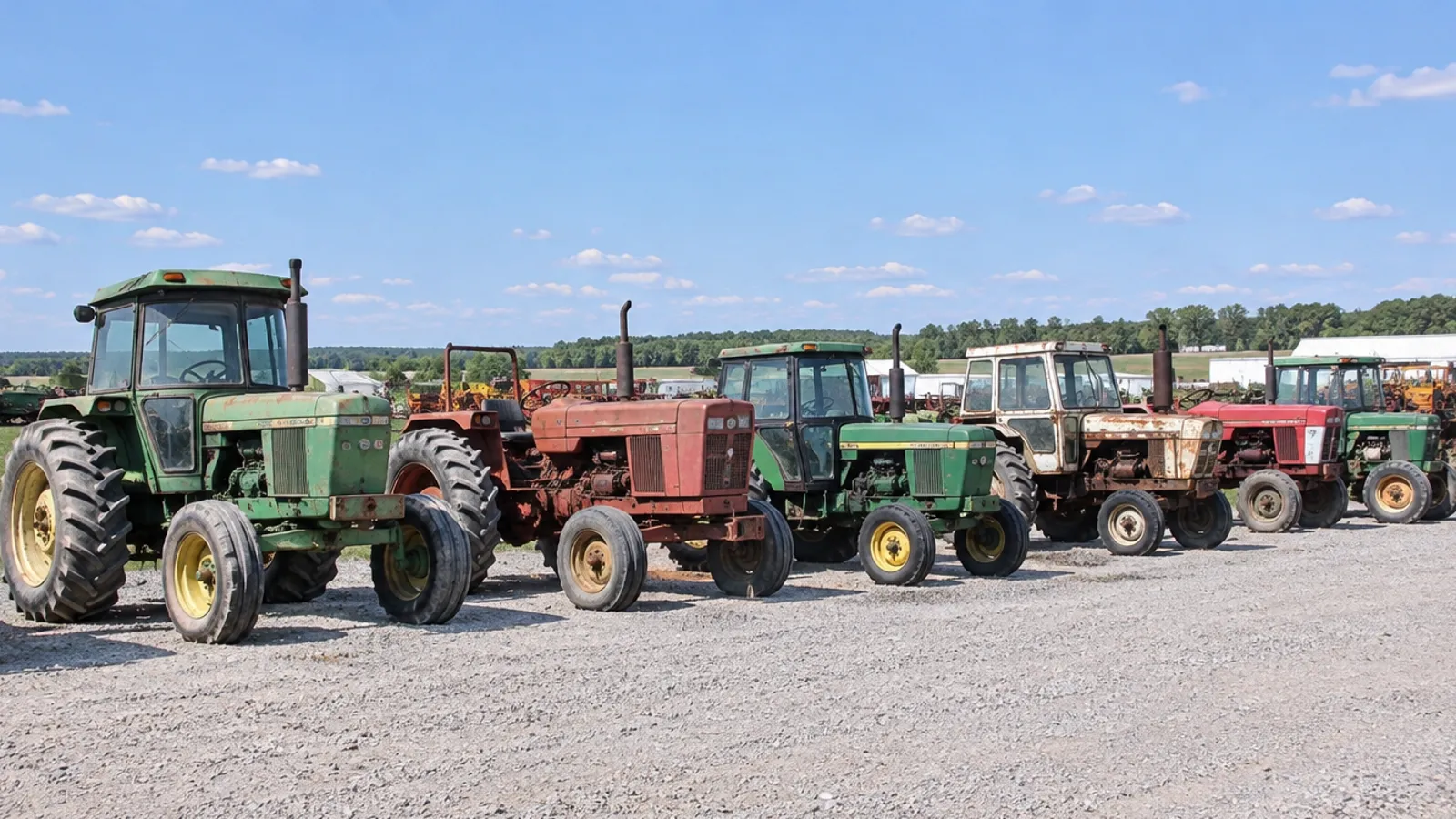
Recent US auction results for used tractors, from $45,200 for a 2008 Kubota to $385,000 for a 2024 John Deere 8R 370, with what moves the price, a 12-point inspection checklist and a cost-per-hour calculator.
Key takeaways
- Machinery Pete’s rule of thumb: a well-kept, late-model used machine should sell at auction for about 70-75% of the new dealer advertised price (AgWeb, June 2025).
- The USDA NASS tractor price index rose from 114 in 2020 to 138 in 2023 (2011 = 100), a 21% rise in three years (farmdoc daily, October 2025).
- Hours matter, but care matters more: some tractors with 4,000-5,000 hours are still in very good shape (Ritchie Bros.).
- Add buyer fees, tax, transport and repairs to any bid, and run a lien search before you pay.
- Owning only pays when you use the tractor enough hours a year; compare your cost per hour with a local hire rate.
In this article
- Second-hand tractor prices: recent auction results
- How used tractor prices compare with new
- What sets the price of a second-hand tractor
- Where to find second-hand tractors for sale
- Used tractor inspection checklist: 12 checks
- What a second-hand tractor really costs per hour
- Is a used tractor worth it? Cost per hour calculator
- New, used or hire: how to choose
- Buying second-hand tractors outside the US
- How to get a fair deal on a used tractor
- Looking after a second-hand tractor
- How we checked the numbers
- FAQ
Second-hand tractors cost far less than new ones, but the gap is smaller than many buyers expect. Machinery Pete’s rule of thumb, reported by AgWeb in June 2025, is that a well-kept, late-model machine should sell at auction for about 70% to 75% of the new dealer advertised price. Older and high-hour units sell for much less, so the right price depends on age, hours, condition and where you buy.
This guide gives dated auction results for second-hand tractors, explains what moves the price, and walks you through a 12-point inspection checklist. It also has a calculator that shows what a used tractor really costs per hour of work once you count resale value, interest and repairs. Prices are for the US unless we say otherwise; the same checks apply in Canada, the UK, Europe, Australia and New Zealand.
Second-hand tractor prices: recent auction results
Auction results are the best price guide for a used tractor because they show what a buyer actually paid. Dealer listings show what a seller hopes to get. The results below are auction sale prices reported by Machinery Pete in AgWeb, with the sale date. Buyer fees, tax and transport come on top.
- 18 September 2026, BigIron John Deere dealer auction: 2025 John Deere 8R 250, 991 hours, $241,500 (AgWeb Pete’s Pick of the Week, September 2026).
- September 2026, Schram Auction farm retirement sale in Gretna, Nebraska: 2018 John Deere 8295R, 655 hours, $270,000; 2008 John Deere 7330 Premium with loader, 1,285 hours, $136,500; 1987 John Deere 4650, 6,556 hours, $53,500 (same report).
- 30 June 2026, Schmid Auction, Moweaqua, Illinois: 2008 Kubota M108X with loader, 1,780 hours, $45,200 (AgWeb, July 2026).
- July 2026, Memphis, Missouri: two 2024 John Deere 8R 370 tractors, 124 hours at $385,000 and 534 hours at $356,000 (AgWeb, July 2026).
These are single sales, not averages. Two tractors of the same model can sell for very different sums because of hours, options, tyres and the number of bidders on the day. Use them to get a feel for the range, then look up recent results for the exact model, hours and region you want.
Notice the pattern. The two 8R 370 units from the same sale were only 410 hours apart, but the lower-hour unit brought $29,000 more. At the other end, a 1987 tractor with more than 6,500 hours still sold for over $50,000. Well-kept older models with a good reputation hold value for a long time, which is good news for sellers and less good for bargain hunters.
Chart
Used tractor auction prices, mid-2026
Reported sale price in US dollars, single sale results
How used tractor prices compare with new
New tractor prices rose fast after 2020, and that lifted used values too. The USDA NASS tractor prices-paid index was 100 in 2011 and reached 114 by 2020. It then climbed to 123 in 2021, 131 in 2022 and 138 in 2023, according to a farmdoc daily analysis from the University of Illinois (October 2025). That is a 21% rise in three years, against 14% in the nine years before.
Chart
USDA tractor price index
Index of tractor prices paid by farmers, 2011 = 100, selected years
The ratio between auction and new prices is a handy check. In June 2025 AgWeb reported an average auction price of $334,578 for a used John Deere 8R 410, against an average dealer price of $450,430 for a new one, about 74% (AgWeb rounds it to 76%). A July 2026 report put the average auction price of a 2024 8R 370 at $377,059 against a dealer advertised price of $435,050, about 87%. Late-model, low-hour tractors are holding value well.
The same AgWeb reports describe a shortage of five- to 12-year-old machines in 2026. So a clean tractor in that age band is unlikely to be cheap. If your budget is tight, look at older, simpler models with good service records, or at smaller horsepower classes where there are more units for sale.
Demand for new machines is soft, which can help buyers of trade-ins. Year to date to July 2026, US dealers sold 105,185 farm tractors, 13.1% fewer than a year earlier, according to Association of Equipment Manufacturers data reported by Farm Policy News. Fewer new sales mean fewer trade-ins reaching dealer lots, but dealers holding older stock may also be more open to a deal.
Chart
Used auction price vs dealer price
US dollars; 8R 410 figures from June 2025, 2024 8R 370 figures from July 2026
What sets the price of a second-hand tractor
Six things explain most of the gap between two similar listings. Check each one before you compare prices.
- Engine hours. Hours matter more than age on most farms. Still, Ritchie Bros. notes in its used tractor inspection tips that some tractors with 4,000 to 5,000 hours are in very good shape when they were well kept.
- Service history. Records of oil, filter and hydraulic changes add value. A machine with no records should be priced lower.
- Horsepower and drive. Four-wheel drive, a front loader, a cab with air conditioning and a power-shift transmission all add to the price.
- Hydraulics and PTO. The number of remote outlets and the flow rate decide which implements the tractor can run.
- Tyres and tracks. New rear tyres on a large tractor can cost thousands of dollars, so worn tyres should cut the price.
- Region and season. Prices often rise before spring work and fall after harvest. Moving a tractor across a state or a border adds cost.
Where to find second-hand tractors for sale
Most used tractors reach buyers through five routes. Each has its own mix of price, risk and paperwork.
| Route | Typical upside | Main risk | Best for |
|---|---|---|---|
| Dealer used lot | Inspected units, some warranty, finance on site | Higher asking prices | Buyers who want less risk |
| Farm auction | Real market prices, many units on one day | As-is sale, buyer fee | Buyers who can inspect in person |
| Online auction | Wide choice, photos and inspection notes | Buying unseen, transport cost | Buyers who know the model well |
| Government surplus | Low starting bids | Older, high-hour units | Small farms and hobby farms |
| Private seller | No fees, room to negotiate | Scams, liens, no warranty | Buyers who check paperwork |
Auctions charge a buyer fee on top of the bid. For example, Ritchie Bros. charges a tiered buyer fee that falls as a share of the bid on larger lots; check its buyer fees page before you bid. Other auction houses use their own rates, so read the terms before you bid.
Public agencies also sell used tractors and mowers. In the US, federal surplus goes through GSA Auctions, and many states and counties run their own sales. These units are often older and well used, but the starting bids can be low.
We cover each buying route in more depth in our guides to agriculture machinery for sale, used farm equipment for sale by owner and repossessed tractors for sale. This page sticks to used tractors: what they sell for and how to check one.
Used tractor inspection checklist: 12 checks
Inspect every second-hand tractor in person or pay a mechanic to do it. Start the engine cold, so you can see how it behaves before it warms up. Take photos of every plate and meter.
- Serial number. Match the serial plate to the paperwork and the listing.
- Hour meter. Compare the reading with wear on pedals, seat and steps. A new meter with low hours and a worn cab is a warning sign.
- Cold start. Listen for knocking and watch for heavy smoke. White smoke that does not clear can mean coolant in the cylinders.
- Blow-by. With the engine running, remove the oil filler cap. Heavy fumes or oil puffing out point to worn rings.
- Fluids. Check engine oil, coolant and hydraulic oil. Milky oil can mean a head gasket problem. Ritchie Bros. notes that air filters should be replaced every 100 to 200 hours, so a clean filter suggests regular service.
- Leaks. Look under the tractor and around hoses, cylinders and seals. Fresh washing over one spot can hide a leak.
- Transmission. Drive it in every gear, forward and reverse. Shift under load. Slipping, grinding or delay are costly to fix.
- Hydraulics. Lift a heavy load with the three-point hitch and the loader. Watch for drift when the load is held. Count the remote outlets.
- PTO. Engage the PTO at each speed and listen for noise.
- Steering and brakes. Check for play in the steering wheel and even braking on both sides.
- Tyres and frame. Measure tread depth, look for cracks and check welds on the frame and loader mounts.
- Cab and electrics. Test lights, gauges, the air conditioner and any GPS or display. Mud and rubbish in the cab hint at poor care.
Ritchie Bros. adds a point that many buyers miss: match the tractor to your implements. Its guide notes that many air drills need at least three hydraulic outlets and one auxiliary line with about 38 gallons per minute of flow. A cheap tractor that cannot run your gear is not a bargain.
Paperwork and lien checks
Most tractors have no title, so lenders record their claim with a UCC financing statement at the state filing office. A filing lasts five years and can be extended, under section 9-515 of the Uniform Commercial Code as adopted by each state. Run a UCC search under the seller’s legal name before you pay. In Canada, search the provincial personal property registry. In the UK and Europe, ask for registration documents for a tractor that goes on the road. Laws differ by place, so check local rules and get legal advice for a large purchase.
Lien checks matter more when farm finances are tight. The American Farm Bureau Federation counted 315 Chapter 12 family farm bankruptcies in 2025, 46% more than in 2024, according to AFBF Market Intel. More stress means more machines with a lender’s claim on them.
What a second-hand tractor really costs per hour
The price tag is only the start. A used tractor costs you depreciation (the drop in value while you own it), interest on the money tied up in it, repairs, fuel, insurance and housing. Spread those over the hours you use it each year, and you have a cost per hour you can compare with hiring a contractor or renting.
Machinery costs on farms have risen with prices. On central Illinois corn farms, machinery costs rose from $136 per acre in 2021 to $171 in 2024, with depreciation up from $69 to $87 per acre, according to the same farmdoc daily article. Repairs rose from $32 to $39 per acre.
Use the calculator below with your own numbers. The defaults are examples, set close to break-even, not a price for any model. A tractor you use only a few hundred hours a year may cost more per hour to own than to hire.
Chart
Machinery cost per acre, central Illinois corn
US dollars per acre, Illinois FBFM farms, 2021 vs 2024
Is a used tractor worth it? Cost per hour calculator
Enter the purchase price, the value you expect when you sell, the years you plan to keep it and your yearly use. The result compares your cost per hour of ownership with a local hire or rental rate.
Try the numbers for your own farm below.
Calculator
What does this used tractor cost per hour?
Enter the price, expected resale value, years kept, repairs and yearly hours.
- Depreciation per year: 3,125 $
- Interest per year: 3,325 $
- Total ownership cost per year: 9,550 $
- Ownership cost per hour: $27 $/h
Example values only, set near break-even; they are not a price or hire rate for any model. Yearly ownership cost = (price – resale) / years + interest on the average value ((price + resale) / 2) + repairs + insurance and housing. Fuel and labour are not included. Get a local hire or custom rate from your extension service. This is not financial advice.
New, used or hire: how to choose
A used tractor makes the most sense when you need the machine often, when you can inspect it well, and when good units are available nearby. A new tractor makes more sense when you need a warranty, the latest emissions and guidance systems, or dealer finance offers that cut the true cost. Hiring a contractor makes sense for jobs you do only a few days a year.
- Best for small farms and hobby farms: an older 40-75 hp utility tractor with a loader, bought after a full inspection.
- Best for row-crop farms: a five- to ten-year-old tractor with records and enough hydraulic flow for your planter and drill.
- Best for rare jobs: hire a contractor and keep your cash.
Financing changes the picture. In the US, the USDA Farm Service Agency publishes current farm loan interest rates each month, which you can use as a benchmark against dealer or bank offers. Compare several offers, since rates and terms vary between lenders. For tax, US farmers can depreciate used machinery; see IRS Publication 225, Farmer’s Tax Guide. This is general information, not financial or tax advice, so talk to your lender and accountant before you buy.
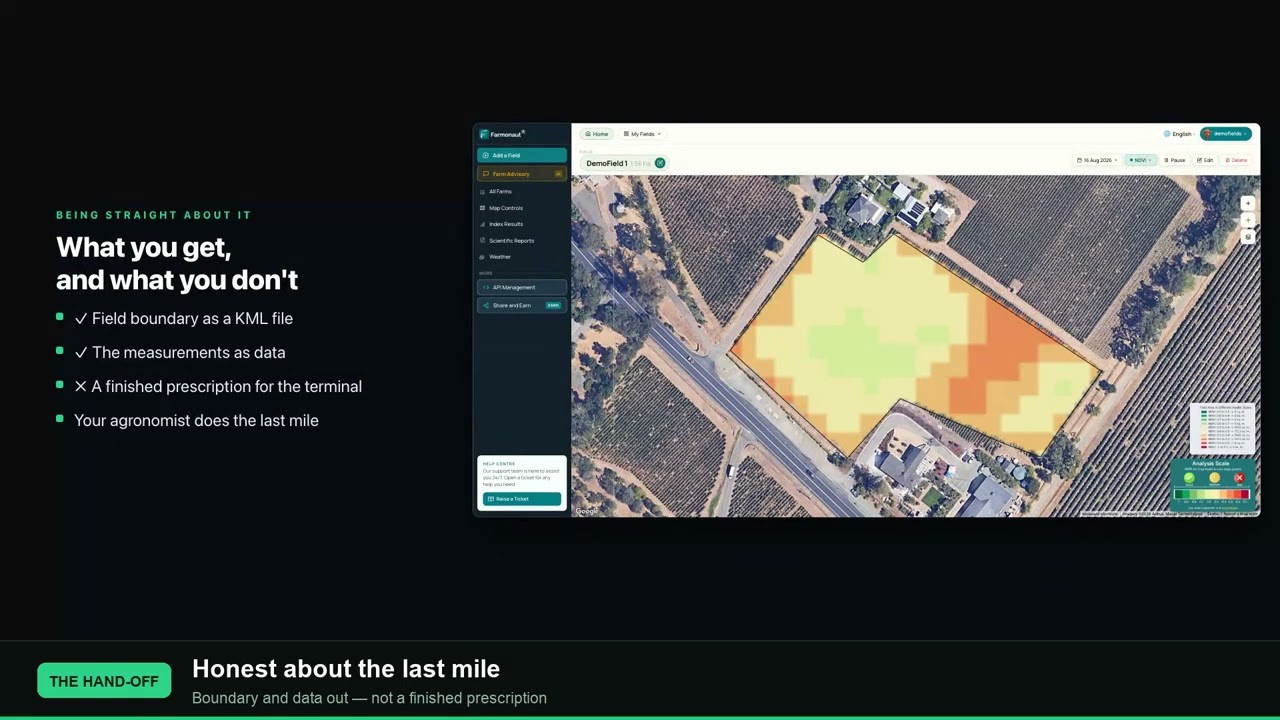
▶ How satellite crop maps and precision farming equipment work together, useful when choosing guidance and display options. · 2:12
Buying second-hand tractors outside the US
The same price logic works in other markets, with local twists. In Canada, dealer networks and farm auctions work much like they do in the US, but a tractor bought across the border brings duty, brokerage and exchange-rate costs. In the UK and Europe, a tractor used on public roads needs registration documents and working lights and brakes. In Australia and New Zealand, clearing sales and online auctions carry much of the used trade, and long distances make transport a big part of the landed cost.
Wherever you buy, convert prices to your currency on the day, add every fee and tax, and compare like with like: same model, similar hours, similar options.
How to get a fair deal on a used tractor
- Build a price list. Record recent auction results and dealer asks for your model, with year, hours and location.
- Set a walk-away price before you look at any machine. Include fees, transport and a repair reserve.
- Inspect, or pay for an inspection. A few hundred dollars for a mechanic is cheap next to a failed transmission.
- Ask for an oil sample report. A lab test of engine or hydraulic oil can show wear metals before a failure.
- Check for liens and match serial numbers to the paperwork.
- Pay safely. Never wire money for a tractor you have not seen. Use an escrow or a dealer you can visit.
- Time your purchase. Off-season buying can widen your choice and soften prices.
Looking after a second-hand tractor
Once the tractor is home, change all fluids and filters so you know where you stand. Keep a logbook of hours, services and repairs. A good record raises resale value and helps you spot a problem early. Farms with several machines can track location and use with fleet management tools. Knowing which fields need work, and when, also helps you size the tractor you need; satellite crop maps from Farmonaut can show where crops are under stress, so trips go where they count.
Plan to sell well, too. Clean the tractor, gather the records and fix small faults before you list it. Sell just before the season when that size of tractor is in demand. If you also have old implements to clear, see our notes on old farm implements for sale.

▶ Six plain steps to start precision farming with the machines you already have. · 4:18
How we checked the numbers
We took auction prices only from reports with a named sale and date, and we say when a figure is a dealer ask rather than a sale. Index values and per-acre costs come from University of Illinois farmdoc daily (October 2025). Buyer fee details point to the Ritchie Bros. buyer fees page. Inspection points draw on the Ritchie Bros. used tractor guide and common mechanic checks. We removed the old page’s claim of “up to 40% savings”, which we could not trace to a source, along with general statements about world markets that had no data behind them.
Related pages on our site: new farming equipment, types of farming, Agro Admin app, crop loan and insurance, carbon footprinting, product traceability, API, weather API docs.
FAQ
How much does a second-hand tractor cost?
It depends on size, age and hours. Recent US auction results ran from $45,200 for a 2008 Kubota M108X with 1,780 hours to $385,000 for a 2024 John Deere 8R 370 with 124 hours (AgWeb, July 2026). Small utility tractors sell for much less than large row-crop models.
How many hours is too many on a used tractor?
There is no fixed limit. Care matters more than the meter. Ritchie Bros. notes that some tractors with 4,000 to 5,000 hours are still in very good shape when they were well kept. Ask for service records and an oil sample report.
What percentage of the new price should I pay?
Machinery Pete’s rule of thumb puts a well-kept, late-model machine at about 70% to 75% of the new dealer price at auction. Older and high-hour tractors should sell for much less. Compare the same model, hours and options.
Is it cheaper to buy a used tractor or hire a contractor?
It depends on how many hours a year you need the tractor. Owning spreads fixed costs over your hours of use, so low use means a high cost per hour. Use the calculator above with a local hire rate from your extension service.
How do I check that a used tractor has no loan on it?
In the US, run a UCC search at the state filing office under the seller’s legal name and match the serial number. In Canada, search the provincial personal property registry. Get legal advice for a large purchase.
Farmonaut crop monitoring
Send your tractor where the crop needs it
Draw your fields once and Farmonaut shows satellite crop-health maps for each one through the season, on web, Android or iOS.



Keep reading


Sources
- AgWeb, Swathers to Sprayers: Strong Oklahoma Auctions and the Machinery Pete Ratio (June 2025): agweb.com
- AgWeb, Pete’s Pick of the Week: 2025 John Deere 9RX 710 Sells for $626,350 (September 2026): agweb.com
- AgWeb, Pete’s Pick: John Deere S780 and S670 Lead Record-Breaking June Auctions (July 2026): agweb.com
- AgWeb, Pete’s Pick: International 1468 Shatters Record at $77,250 (July 2026): agweb.com
- farmdoc daily (University of Illinois), Large Increase in Machinery Costs Suggests Need to Reconsider Machinery Purchase Decisions (October 2025): farmdocdaily.illinois.edu
- Farm Policy News (University of Illinois), Tractor Sales Fall in July Amid Continued Ag Economy Pressure (August 2026): farmpolicynews.illinois.edu
- Ritchie Bros., Inspection tips: what to inspect before buying a used farm tractor: blog.ritchiebros.com
- Ritchie Bros., Buyer fees (October 2026): rbauction.com
- US General Services Administration, GSA Auctions: gsaauctions.gov
- American Farm Bureau Federation, Farm Bankruptcies Continued to Climb in 2025: fb.org
- USDA Farm Service Agency, Current FSA Loan Interest Rates: fsa.usda.gov
- IRS, Publication 225, Farmer’s Tax Guide: irs.gov
Discussion
Questions, corrections or field experience? Share them below. First-time comments are reviewed before they appear, and your email is never published.
No comments yet. Be the first to add a question or your experience.

 Agricultural Credit Policy Council
 BayWa
BayWa Azure Clouds
 MCSOD
MCSOD Marei Nursery
 eKGIS
eKGIS Mostas Tech
 Native Seeds
 Andex
Andex FCF India
 Unifrutti Gulf
 Deluxe Conseil
 TVS Electronics
 WICO
WICO Chimera Innovation
 SkyHarvest
