

New Farming Equipment: 10 Innovations Farmers Must See



Summary: The Modern Farming Equipment Revolution
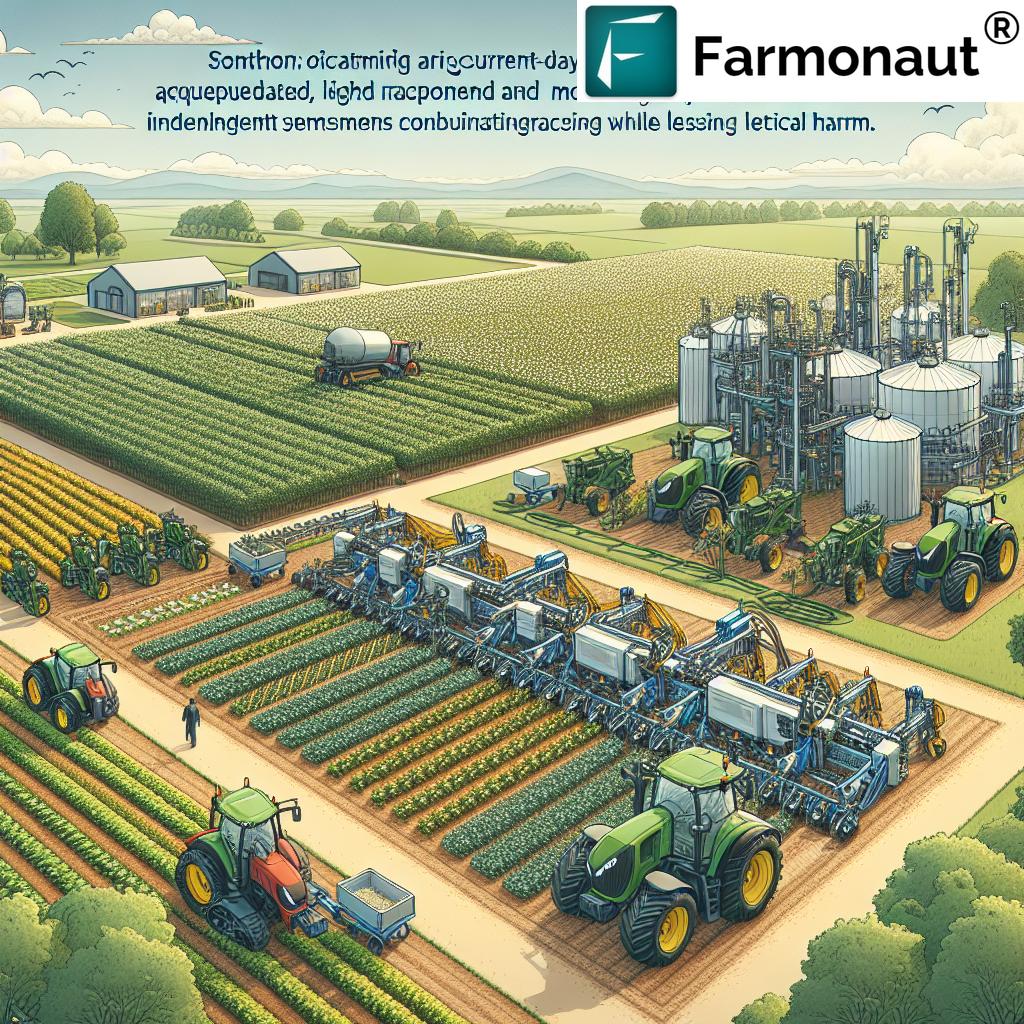
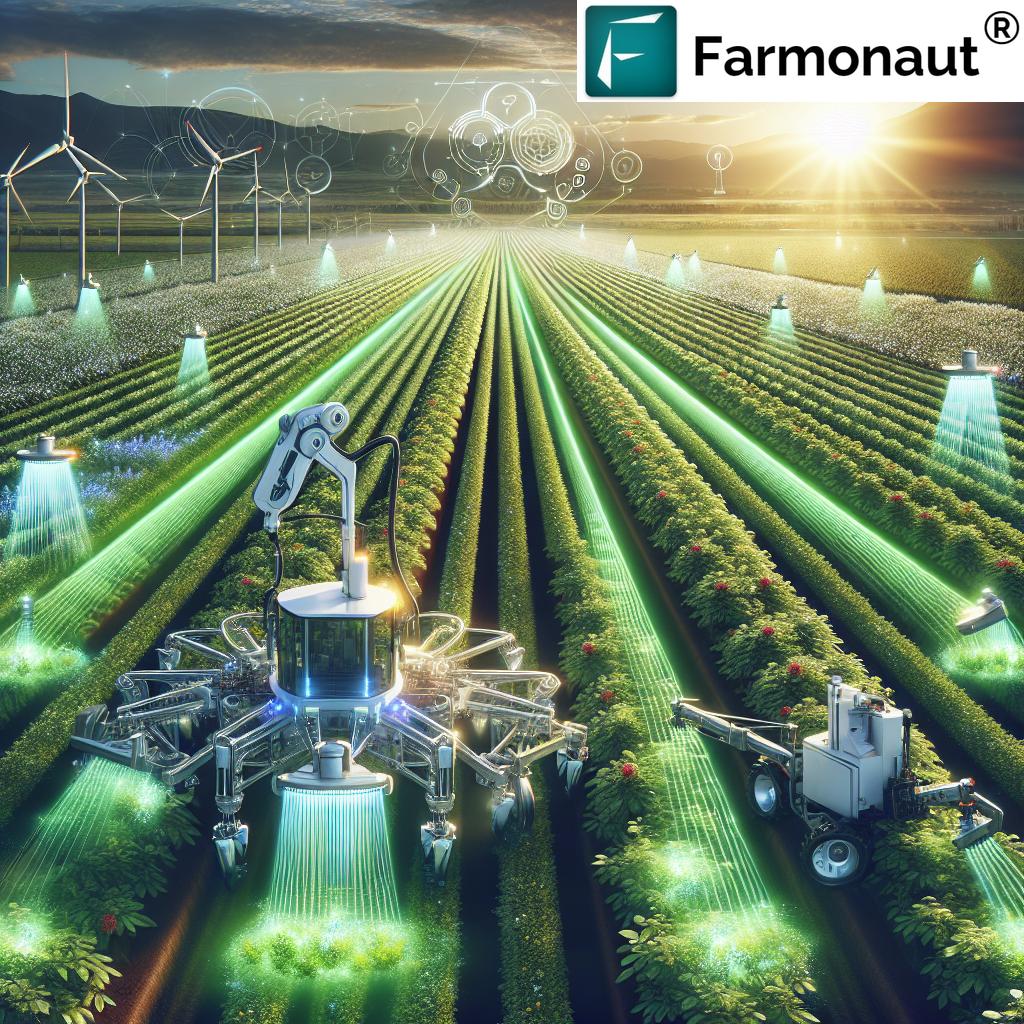
The agricultural industry is undergoing a significant transformation, driven by rapid advancements in technology, smart machinery, and precision agriculture technology. Today, a new wave of innovative farming equipment is empowering farmers to enhance efficiency, maximize yields, and adopt sustainable farming practices across the globe.
- Modern autonomous farming equipment is addressing critical labor shortages and enabling precision field operations, from robotic harvesters to advanced spraying drones.
- Smart irrigation systems and AI in agriculture help reduce water and chemical usage while optimizing crop health.
- New electric tractors and hydrogen-powered machines are lowering emissions, while modular farm machinery and blockchain-enabled solutions are improving flexibility, transparency, and efficiency.
Below are ten types of new farm equipment and what each one does.
Recent new farm equipment launches
Most “new farm equipment” today is an existing machine type with cameras, lidar, a battery or a bigger tank added. The launches below are real products or announced models, with the maker’s own figures. Check local availability before you plan around any of them.
| Machine | Maker | What is new | Status |
|---|---|---|---|
| Autonomous 9RX tractor | John Deere | Second-generation autonomy kit with 16 cameras for a 360-degree view, aimed at tillage | Shown at CES, January 2025 (John Deere) |
| Autonomous 5ML orchard tractor | John Deere | Autonomy kit with added lidar for air-blast spraying under tree canopies; diesel first, battery version to follow | Shown at CES, January 2025 (The Grower) |
| LaserWeeder G2 | Carbon Robotics | 240-watt lasers (up from 150 W) and faster processors; maker says twice as fast as the first version | Released early 2025 (Future Farming) |
| Agras T100 spray drone | DJI | Up to 100 litres of spray payload, lidar and radar for obstacle sensing | Global launch July 2025 (DJI); check local rules before buying |
| e100 V Vario electric tractor | Fendt | 100 kWh battery, about five hours per charge, built for vineyards and orchards | In series production (Fendt) |
| KFAST autonomous sprayer | Kubota | Self-driving orchard sprayer with a 2,000-litre tank, RTK GPS and lidar | Limited launch planned mid-2026 (Kubota) |
1. Autonomous Farming Equipment: The Future is Now
At the forefront of the agricultural revolution, autonomous farming equipment is reshaping how we approach field operations. At CES in January 2025, John Deere showed an autonomous 9RX tractor with 16 cameras giving a 360-degree view, and an autonomous 5ML orchard tractor that adds lidar for work under tree canopies (John Deere).
- Autonomous tractors can perform pesticide and fertilizer application with high accuracy and consistency.
- Thanks to smart sensors and imaging systems, these machines identify field variations in real-time.
- This technology reduces operational costs, addresses labor shortages, and improves crop management.
- Integration with AI platforms allows for continuous optimization and learning from field data.
Key Benefits:
- Increased efficiency in farm operations
- Significant reduction in labor costs
- Enhanced precision and reduced waste
- Greater consistency in fertilizer and pesticide application
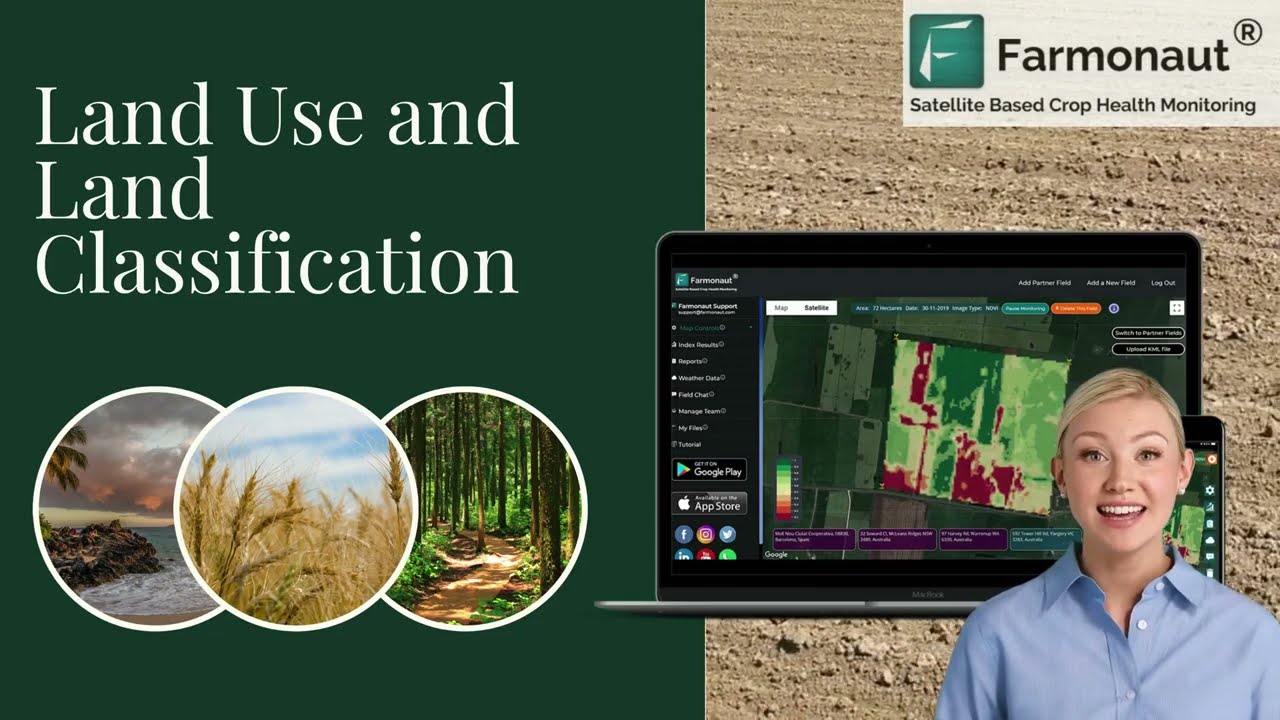
As these innovations continue to evolve, autonomous machinery will become an essential component of modern farms, enabling us to meet the rising global demand for food more sustainably.
- For enhanced farm management using real-time data, explore: Farmonaut’s Large Scale Farm Management Solution
2. Precision Spraying Drones & Agricultural Drones for Spraying
Precision spraying drones are transforming agricultural spraying operations, offering targeted application of fertilizers, pesticides, and herbicides. Equipped with AI-driven imaging systems, these agricultural drones for spraying can identify weeds, diseases, and areas needing attention — allowing for minimal chemical usage and optimized crop protection.
- Drones utilize multispectral imaging to collect field data, analyze plant health, and direct precise chemical application.
- The result: minimized environmental impact, enhanced sustainability, and maximized yields.
- Spraying only the patches that need it can cut the amount of chemical used.
By deploying agricultural drones for spraying alongside platforms such as Farmonaut’s real-time satellite-based crop health monitoring, farmers gain actionable insights for instant decision-making and resource optimization.
-
For precision monitoring and advisory, utilize the
Farmonaut Platform App
— supporting Android, iOS, and browser devices.
3. Robotic Harvesters, Robotic Weeding, and Laser Weeding Technology
Robotic harvesters and weeding systems are revolutionizing labor-intensive tasks across agriculture.
- Robotic harvesters leverage machine vision to identify ripe crops, performing precision harvesting that minimizes waste.
- FarmWise built its Titan FT-35 weeding robot on AI and computer vision, then stopped producing it after 2023 in favour of the Vulcan, a tractor-pulled weeder using the same plant detection (Future Farming, Farm Progress).
- Laser weeders use cameras and lasers to find and kill weeds without herbicide. Carbon Robotics released its LaserWeeder G2 in early 2025 with 240-watt lasers, up from 150 watts (Future Farming).
These innovative robots not only reduce labor requirements, but also improve sustainability by eliminating unnecessary chemical usage and preserving soil health.
- For advanced AI-driven recommendations and crop management, Farmonaut’s Jeevn AI Advisory System provides tailored advice to optimize yields.
-
Want to know your field’s real-time health and weed presence?
Use Farmonaut’s Crop Plantation & Advisory Tools for instant NDVI and pest alerts.
4. Smart Irrigation Systems & Water Management
Water management is crucial for both efficiency and sustainability. Variable rate irrigation (VRI) on centre pivots applies different amounts of water to different zones of a field. Valley’s VRI builds those zone prescriptions from soil maps, elevation or NDVI imagery (Valley Irrigation).
- Integrated sensors monitor soil moisture in real-time, ensuring only the necessary amount of water is supplied for optimal plant growth.
- AI algorithms analyze and adapt irrigation based on changing weather or crop demand, reducing waste and lowering costs.

Precision irrigation solutions — especially when integrated with Farmonaut’s satellite-based soil moisture monitoring — not only boost yields but also contribute to sustainable farming practices.
- Access Farmonaut’s API to integrate real-time irrigation and soil data directly into your existing farm management platforms.
- Fleet & Resource Management Tools help optimize machinery movement, saving both water and fuel during irrigation campaigns.
- For deeper data access, explore Farmonaut’s API Developer Docs.
5. Electric Tractors, Hydrogen & Hybrid Farm Equipment
One of the most exciting advancements in farming equipment is the rise of electric tractors and alternative fuel machinery. These solutions address both rising fuel prices and the pressing need for cleaner emissions in agriculture.
- Electric tractors and hybrid equipment are quieter, produce lower emissions, and cost less to operate over time.
- New Holland’s NH2, shown in Paris in 2009, was an experimental 106 hp hydrogen fuel-cell tractor whose only exhaust was water; it never went into production (TractorData). Battery tractors are now on sale: the Fendt e100 V Vario has a 100 kWh battery and runs about five hours per charge (Fendt).
- These machines significantly contribute towards sustainable farming practices by improving carbon footprints and reducing dependence on fossil fuels.
-
For carbon emissions tracking and sustainability monitoring, see:
Farmonaut’s Carbon Footprinting Solution.
6. Modular Farm Machinery & Multi-tasking Implements
Modular farm machinery enables farmers to adapt and customize equipment for various agricultural tasks. Tractors with interchangeable implements (plows, tillers, seeders, sprayers) save time and money and boost efficiency.
- Multi-tasking implements combine functions like tilling, fertilizing, and seeding in one pass.
- This innovation is especially valuable in regions with tight growing seasons, allowing quick field preparation.
- Modular design also reduces the overall footprint of machinery fleets.
- For streamlined dispatch and fleet performance tracking, leverage Farmonaut Fleet Management Tools.
7. AI in Agriculture & Integration with Platforms
Artificial intelligence (AI) in agriculture is increasingly central to decision-making for farmers and farm managers.
- AI algorithms analyze data from imagery, field sensors, and weather models to suggest optimal resource allocation, identify diseases, and improve yields.
- Integration with agricultural management platforms provides real-time monitoring, crop health analysis, performance tracking, and yield estimates.
Farmonaut’s advanced AI-based advisory system delivers personalized recommendations — including weather forecasts, fertilizer schedules, irrigation alerts, and resource monitoring — tailored to every farm’s unique conditions.
-
Want to enable AI-based traceability for your entire supply chain?
Explore Farmonaut’s Blockchain-based Product Traceability Platform for transparency.
8. Smart Sprayers & Smart Planter Imagers
Smart sprayers and planter imagers represent the next stage of precision agriculture technology. These machines use cameras, AI and other sensors to identify weeds, pests and diseases and apply the precise amount of needed chemicals exactly where required.
- Kubota’s KFAST autonomous orchard sprayer, shown at Agritechnica in November 2025, carries a 2,000-litre tank and navigates by RTK GPS and lidar; Kubota plans a limited commercial launch in mid-2026 (Kubota).
- These solutions reduce chemical drift, minimize input usage, and support sustainable farming practices.
-
Farmonaut’s satellite imaging and analytics enable better decision support for smart spraying strategies. Access via:
Farmonaut Web & Mobile App
9. Blockchain in Agriculture Machinery and Traceability
Blockchain technology is transforming agriculture machinery tracking, supply chain transparency, and equipment authenticity.
- By recording equipment performance, maintenance history, and ownership records, blockchain allows farmers to buy, sell, or lease machinery with increased security and trust.
- This tech reduces fraud, improves transparency, and supports efficient resource management.
-
Farmonaut’s blockchain-based product traceability solution ensures the full supply chain — from planting to harvest and equipment handling — is visible and verifiable.
Learn more about traceability and blockchain applications in farming
10. Robotic Pruning Technology
Robotic pruning automates the delicate and often labor-intensive process of vineyard and orchard management.
- Using machine vision and AI, pruning robots identify growth points and make precision cuts for better plant health and improved yields.
- Robotics platforms are now compact, flexible, and capable of operating in varied terrains and across different fruit species.
- This addresses labor shortages, improves operational efficiency, and reduces costs.
- The continued advancement of AI in agriculture means even more autonomous systems will emerge, improving yields and sustainability for all.
What to check before buying new farm machinery
New machines carry more software than the ones they replace. That changes the questions to ask a dealer.
- Compatibility. Ask whether the tractor and implement both support ISOBUS, the ISO 11783 standard that lets one terminal run implements from different makers. The Agricultural Industry Electronics Foundation certifies compatible products.
- Subscriptions. Autonomy, guidance corrections and fleet apps often need a yearly licence or data plan. Get the running cost in writing, not only the purchase price.
- Connectivity. Remote monitoring needs mobile signal or a satellite link in the field. Check coverage on your own ground.
- Service. Ask how far the nearest trained technician is, and which repairs you or a local mechanic can do.
- Charging and fuel. For electric models, ask what power supply the charger needs and how long a full charge takes.
- Proof on similar farms. Ask for a demonstration on a field like yours, with your crop and row spacing.
Farmonaut’s Role in the Agricultural Technology Revolution
At Farmonaut, our mission is to democratize precision agriculture, making cutting-edge technology, AI, and data-driven insights accessible to every farmer, agribusiness, and agricultural institution worldwide. Through our Android, iOS, and web apps, as well as our robust API offering, we bridge the gap between traditional farming and the most advanced digital solutions.
- Satellite-Based Crop Health Monitoring: We use multispectral satellite images and advanced AI analytics to deliver actionable intelligence on vegetation health, soil moisture, and pest presence — optimized for both smallholder farms and large plantation estates.
- Jeevn AI Advisory: Our AI-driven personalized advice platform offers real-time insights, weather updates, and expert farm management recommendations, directly accessible via our apps.
- Blockchain-Based Product Traceability: Ensure full transparency from farm to fork. Our traceability solution benefits both farmers and agri-corporates, helping combat fraud and verify equipment and crop provenance.
- Fleet & Resource Management: Enhance farm logistics, fleet performance, and reduce operational costs with our fleet management suite.
- Carbon Footprinting: Our carbon tracking tools help agribusinesses monitor emissions and take steps towards true sustainability.
- API and Developer Integration: Access core satellite and weather data for custom integrations via our Farmonaut API and detailed API Developer Docs.
- Subscription Flexibility: Choose plans that scale with your acreage, frequency of updates, and specific operational needs — check the pricing table below to find the model that fits you.
Farmonaut Subscription Plans
Frequently Asked Questions (FAQ)
What is the most impactful innovation in farming equipment for 2025?
Autonomous farming equipment and precision agriculture technology are two of the most transformative advancements, overcoming labor shortages, reducing costs, and maximizing yields through automation and data-driven operations.
How does Farmonaut make precision agriculture accessible for small farmers?
Farmonaut uses satellite imagery, AI advisory, and subscription-based pricing to deliver affordable, scalable solutions — without expensive hardware — to support small and mid-scale farms in adopting next-gen precision farming.
Do electric tractors really lower environmental impact?
Yes. Electric and hydrogen-powered tractors operate with lower emissions and reduced fuel requirements, supporting sustainable farming practices and helping the industry address climate change.
How can blockchain be used with farm machinery?
Blockchain in agriculture machinery securely records performance metrics, maintenance data, and ownership trails, giving buyers and users transparency and boosting confidence in equipment integrity.
Can Farmonaut integrate with existing farm management platforms?
Yes. With the Farmonaut API and API Developer documentation, agricultural businesses can plug Farmonaut data directly into their own platforms.
How does precision spraying with drones benefit farmers?
Precision spraying drones identify problem areas and apply chemicals only where needed, cutting costs, conserving resources, and improving yields by minimizing over- or under-application.
Is Farmonaut a manufacturer or online marketplace?
No, Farmonaut is neither a manufacturer nor a marketplace. We are a technology platform specializing in satellite-based monitoring, AI advisory, blockchain traceability, and resource management for farming.
Conclusion: Embracing the Future of Agriculture
We are witnessing unprecedented transformation in the agriculture industry — driven by autonomous machinery, precision spraying drones, smart irrigation systems, electric tractors, modular equipment, advanced AI, blockchain traceability, and more. Each technology addresses specific challenges, from labor shortages and resource management to sustainability and yield optimization.
At Farmonaut, we believe the integration of technology and innovation is not just a future goal — it is today’s reality. By leveraging satellite analytics, AI, and data-driven platforms, farmers worldwide can maximize their productivity, lower their environmental impact, and build resilient, thriving operations.
Whether you manage a family farm, oversee plantation estates, run a government agricultural program, or support agribusinesses with technology, now is the time to embrace the evolution of farming equipment. Connect with Farmonaut and step confidently into the future of smart, sustainable agriculture.

 Sama Premium
 Mahaswami
 Prochecker
 Tres Valles
 LACOS Geoinformation
 Pulsar Supernova
 Magrifly
 LatConnect 60
 WebsEdge
 Blickwinkel
 Agricultural Credit Policy Council
 MCSOD
MCSOD Marei Nursery
 eKGIS
eKGIS Mostas Tech
 Andex
Andex FCF India
 Unifrutti Gulf
 Deluxe Conseil
