

Reviewed September 2026 against USDA National Agricultural Statistics Service (NASS), USDA Economic Research Service (ERS), and USDA Agricultural Research Service (ARS) data.
Try it: Run your own numbers →
Tractors and combines are on 90% of US farms as of 2023, per USDA NASS — the mechanized core of American agriculture hasn’t changed in decades. What has changed is everything layered on top of that core: GPS autosteer now runs on 70% of large-scale crop farms, a 200-horsepower tractor costs 287% more than it did in 1990, and a growing share of that machinery is protected less by a padlock than by the same satellite systems that steer it. This article covers the tools themselves — from the sickle to the autonomous grain cart — the hand-tool category that still shows up in searches for agricultural tools sickle and agriculture outils, and the specific, verifiable ways US operations protect equipment worth six figures.
Farm Tool Adoption in 2023: What USDA Actually Counted
Start with what’s actually measured. USDA NASS reports that 90% of US farms operate tractors or combines as of 2023, a figure that has held near-saturation for years because tractor ownership isn’t a growth market — it’s infrastructure (USDA NASS Mechanization Trends). The growth is in what rides alongside the tractor. USDA’s Economic Research Service, in report ERR-217, found 27% of all US farms had adopted some form of precision agriculture practice as of 2023, but that average hides a sharp size split: 52% of midsize farms run autosteer guidance systems, versus 70% of large-scale crop operations (USDA ERS Report ERR-217). Smaller operations lag not because the technology doesn’t work for them — USDA’s Agricultural Research Service estimates guidance systems can lift efficiency by 20% for small-scale producers — but because the up-front cost is harder to absorb on fewer acres (USDA ARS: Benefits and Evolution of Precision Agriculture).
At the far edge of automation, adoption is still thin. A CropLife/Purdue survey found only 6% of surveyed US cropland was harvested using autonomous grain carts in 2023 — a reminder that “autonomous” and “adopted” are not the same word yet (CropLife/Purdue Precision Agriculture Proceedings 2024).
| Metric | Figure | Year | Source |
|---|---|---|---|
| Farms with tractors/combines | 90% | 2023 | USDA NASS |
| All-farm precision ag adoption | 27% | 2023 | USDA ERS ERR-217 |
| Autosteer on midsize farms | 52% | 2023 | USDA ERS ERR-217 |
| Autosteer on large-scale farms | 70% | 2023 | USDA ERS ERR-217 |
| Cropland harvested with autonomous grain carts | 6% | 2023 | CropLife/Purdue Survey |
| GPS guidance positional accuracy | 1 cm | 2024 | USDA ARS |
This table changes as USDA releases new survey years. Query current equipment-ownership figures by farm type, state, and year directly at USDA NASS Quick Stats, which updates quarterly and folds in new Census of Agriculture data every five years — the most recent full Census was 2022.
Agricultural Farming Tools: Hand Tools vs. Mechanized Tools
“Agricultural farming tools” covers two very different categories, and conflating them is why generic buying guides read as vague. One category is hand tools — sickles, hoes, spades, pruning shears — used for harvesting, weeding, and small-plot work where a machine either can’t fit or isn’t worth mobilizing. The other is mechanized equipment — tractors, ploughs, seeders, sprayers, harvesters — which is where almost all of the measured US data, and almost all of the dollar value, actually sits.
On hand tools specifically, there’s a real gap worth naming plainly rather than papering over: USDA does not publish federal commodity pricing for individual hand tools like sickles, hoes, or spades under $500, because they move through retail and farm-supply distribution rather than commodity markets. If you need a current sickle price for budgeting, the reliable path is to check farm-supply retailers directly (Tractor Supply Co., Rural King, or a regional co-op) rather than looking for a USDA series that doesn’t exist. The sickle remains standard equipment for hand-harvesting forage, clearing fence lines, and small-plot grain cutting in the US — its use hasn’t been displaced so much as narrowed to jobs where mechanized harvesting isn’t practical.
Mechanized tools are the opposite problem: well-measured, and increasingly expensive. USDA-sourced farm equipment price analysis puts the price increase for a 200-horsepower tractor at 287% between 1990 and 2024, and for a 300-horsepower tractor at 275% over the same period (USDA farm equipment price analysis via AgDirect). That’s roughly three-and-a-half decades of inflation, steel costs, and added electronics compounding into a single sticker price.
Market size confirms where the growth actually is: tractors hold 48% of US agricultural equipment sales share in 2024, and the overall US agricultural equipment market is projected to reach 345.7 thousand units by 2031, up from a 2025 baseline of 300.21 thousand units — a 2.38% compound annual growth rate (Mordor Intelligence: North America Agricultural Equipment Market; National Law Review market forecast).
Agricultural Tools Protected: What “Protection” Means for a $400K Combine
Searches for agricultural tools protected usually mean one of three things: physical theft prevention, mechanical/warranty protection, or data-driven monitoring that catches a problem before it becomes a loss. All three matter more as equipment prices climb — a stolen or idle asset now represents a bigger number than it did even a decade ago.
- Physical security: GPS-trackable telematics units (often bundled into the tractor’s factory guidance system) let an owner locate equipment moved off-property. This is the same GPS infrastructure driving the 1-cm positional accuracy USDA ARS documents for planting and spraying — it does double duty as an anti-theft asset tag.
- Mechanical protection: extended warranties and telematics-based predictive maintenance reduce unplanned downtime, which matters more as the equipment itself gets pricier to replace or rent as a stopgap.
- Data/decision protection: satellite and IoT monitoring platforms protect the season’s output, not just the machine — verifying that a $30,000+ input spend (seed, fertilizer, fuel) actually produced the field conditions it was supposed to.
Pair mechanized assets with an AI-powered fleet management layer to monitor utilization, location, and idle time in one place: Discover Farmonaut Fleet Management – automate vehicle usage tracking and reduce operational costs on tractors, combines, and support vehicles.

Detailed Overview: The Core Machines and What They Cost Now
1. Tractor: The Cornerstone of Mechanized Farming
The tractor sits on 90% of US farms and anchors nearly every other tool on this list — ploughs, seeders, and sprayers are almost always tractor-attached implements rather than standalone machines. Modern tractors carry GPS guidance capable of 1-cm positional accuracy for planting and spray-application passes (USDA ARS), which is the difference between overlapping rows and clean, non-overlapping coverage across a full field.
- ✔️ Key Benefit: Precise guidance reduces fuel burn and soil compaction from overlapping passes.
- 📊 Data Insight: A 200-hp tractor now costs 287% more than in 1990; a 300-hp model, 275% more (USDA/AgDirect).
- ⚠ Risk: High up-front cost and financing exposure — protect the asset with tracked utilization data, not just insurance.
- 🔄 Pro Tip: Pair with AI-powered fleet management to monitor utilization and catch idle time.
Discover Farmonaut Fleet Management – Automate vehicle usage and reduce operational costs.

2. Plough: Tillage Equipment Alongside Reduced-Till Adoption
Ploughs — reversible moldboard and chisel designs — remain standard tillage tools on operations that haven’t shifted to no-till or reduced-till systems. USDA NASS’s Quick Stats database (linked above) tracks tillage-practice adoption by state and can tell you the current no-till share for a given county, which is a better planning number than any national average.
- ✔️ Key Benefit: Precision-depth ploughs improve soil aeration and root development.
- ⚠ Risk: Repeated ploughing accelerates topsoil loss; USDA ARS material on precision agriculture (linked above) covers reduced-tillage alternatives.
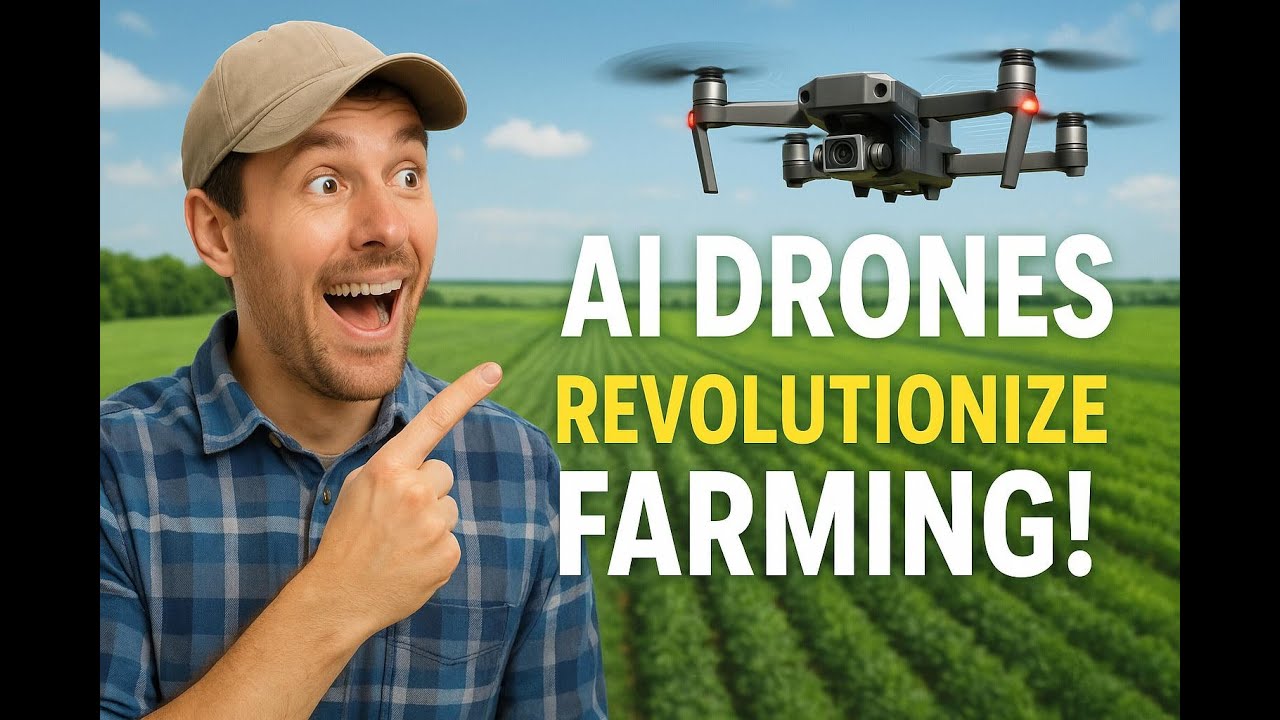
3. Seeders and Planters: Variable-Rate Placement
Seeders and planters with variable-rate technology adjust seed drop rate in real time against soil and yield-map data. This category sits inside the same 27% precision-ag adoption figure cited above — variable-rate seeding is one of the specific practices USDA ERS tracks under that umbrella, alongside autosteer and variable-rate fertilizer application.
- ✔️ Key Benefit: Reduces seed waste versus fixed-rate drilling.
- ⚠ Risk: Calibration drift causes uneven stands — verify field uniformity with periodic satellite imagery rather than relying on the planter’s own sensors alone.
4. Sprayers (Including Drones): Targeted Application
GPS-guided sprayers and drone-assisted application systems apply inputs at the same 1-cm guidance accuracy that governs planting passes. The practical payoff is fewer double-sprayed strips and fewer skipped ones — both of which cost money whether the input is fertilizer, herbicide, or fungicide.
- ✔️ Key Benefit: Uniform coverage with reduced overlap and skip.
- ⚠ Risk: Misapplication near field edges can affect pollinators — cross-check spray boundaries against a current field map, not last season’s.
5. Harvesters and Autonomous Grain Carts
Combine harvesters remain part of the 90% tractor/combine adoption figure, but the frontier here is the autonomous grain cart — equipment that moves harvested grain without a driver. As of the 2023 CropLife/Purdue survey, that frontier covered only 6% of surveyed US cropland, which tells a buyer this is still an early-adopter category, not a mainstream one yet.
- ✔️ Key Benefit: Reduces labor bottleneck during the harvest window, when timing losses compound daily.
- ⚠ Risk: High capital cost for a technology at 6% adoption — verify local dealer support and parts availability before committing, since a thin adoption base means a thin service network in some regions.

6. Sickles and Hand Tools: Still Standard for Specific Jobs
The sickle, hoe, and hand pruning tools persist in the US toolkit for jobs a machine can’t reach efficiently: fence-line clearing, small-plot forage cutting, orchard and vineyard pruning, and any harvest on ground too steep or too small for a combine pass. As noted above, there’s no USDA commodity price series for these — check current retail pricing at a farm-supply chain or regional co-op for a number specific to your operation. What USDA does track is labor: there were 2.06 million self-employed and family farm workers in the US in 2000, the population most likely to still be doing hand-tool work on smaller acreages (USDA NASS Farm Labor Survey). That figure is from 2000 — for a current farm labor count, query NASS’s ongoing Farm Labor survey series directly, since this is exactly the kind of number that moves every year.
Satellite Monitoring: Protecting the Investment, Not Just the Field
Farmonaut layers satellite imagery, AI, and blockchain onto the mechanized tools above, delivered through Android, iOS, web, and API access. The goal is to make the data that justifies a tractor or sprayer purchase — soil condition, crop stress, irrigation need — checkable in real time rather than inferred at season’s end.
- ✔️ Satellite-Based Monitoring: Assess crop health, soil conditions, and irrigation needs remotely for fields, plantations, or forests.
- ✔️ Jeevn AI Advisory System: Personalized weather and resource recommendations.
- ✔️ Blockchain Traceability: Track a crop’s journey from planting to harvest to consumer with tamper-proof records. Farmonaut Traceability
- ✔️ Fleet & Resource Management: Monitor agricultural machinery for fuel savings and reduced downtime. Fleet Management Solutions
- ✔️ Environmental Impact Monitoring: Real-time carbon and water footprint tracking. Carbon Footprinting

For API access and integration: Farmonaut API Portal | Developer Documentation
Blockchain-based traceability (Discover Blockchain Traceability with Farmonaut) extends this same protection principle to the supply chain — verifying, with tamper-proof records, that inputs and outputs match what was reported at every stage.
Tractor Upgrade Payback Calculator
Enter your own acreage, fuel cost, and price premium to see the payback period on an autosteer-equipped tractor versus a base model — using the 20% small-farm efficiency gain USDA ARS reports as your adjustable starting assumption.
Run your own numbers
Assumes the efficiency gain applies uniformly to your entered per-acre cost, and does not account for financing interest, resale value, or maintenance differences between guided and unguided systems. It also excludes labor savings from reduced re-passes. Use it as a starting estimate, not a loan-approval figure.
Innovative Agricultural Tools and Accessories: Where Adoption Is Actually Headed
Anyone searching for innovative agricultural tools and trends is really asking where adoption goes next, not what exists today. The measured trajectory: precision-ag adoption sat at 27% of all US farms in 2023 against 70% autosteer adoption on large operations alone — meaning the growth path for smaller and midsize farms is catching up to where large operations already are, not inventing a new category. The equipment market backs this: 48% of US ag equipment sales share sits with tractors in 2024, and the market is forecast to grow from 300.21 thousand units in 2025 to 345.7 thousand units by 2031 (Mordor Intelligence; National Law Review).
Autonomous grain carts, at 6% cropland adoption in the 2023 CropLife/Purdue survey, sit at the genuinely early-stage end — worth watching, not yet worth assuming as standard equipment. The durable check for any of these adoption figures: USDA ERS republishes technology-adoption data as part of its annual Agricultural Resource Management Survey (ARMS) and the Census of Agriculture; visit USDA ERS directly for the latest release rather than relying on any single year’s snapshot, including this one.
Want to future-proof large-scale operations against this adoption curve? Try Farmonaut Large Scale Farm Management – seamless monitoring and decision-making for business or corporate farms.

Equipment financing and insurance follow the same cost curve documented above — as tractor prices have risen 287% (200-hp) and 275% (300-hp) since 1990, loan and coverage decisions carry more weight than they did a generation ago. Farmonaut’s satellite-verified data can support loan and insurance workflows: Farmonaut Crop Loans & Insurance.

Farmonaut Subscription Plans
Choose a package for your farm, cooperative, or agribusiness to leverage the latest satellite, AI, and blockchain technologies.





Frequently Asked Questions (FAQ)
What does “agricultural tools protected” actually mean for a farm’s equipment?
What are the most common agricultural farming tools in US operations?
Is the sickle still used on US farms?
What’s driving innovative agricultural tools and accessories trends?
How does Farmonaut support protection of agricultural tools and investment?
How do I access Farmonaut solutions on different devices?




 Godrej Agrovet
 Hayleys Agriculture
 Linx Agritech
 Adinet
 Save Your Soils
 GalaxEye Space
 Grandstream Algérie
 XOS Realty
 Geospatial Lab Africa
 Agro La Gándara
 HIPSAC
 ZOL Zimbabwe
 Juligerm
 AdBio
AdBio MISE Maroc
 NWNS
NWNS Red August Group
 Farm Inc
 WeMe Global
 Agrotoken
 Blue BearX
 Insignito
 DnCubed
 Indosistim Teknologi
 Liquify Digital
 CU Foods
 BeyondTech Global
 Rouge VC
 AgroRisk
 Oath Inc
 Esri North East Africa
 MDCV UK
 Etech Consulting Madagascar
 Vestlandsforsking
 WB Dev
 Sama Premium
 Tres Valles
 Blickwinkel
 Agricultural Credit Policy Council
 eKGIS
eKGIS Mostas Tech
 Andex
Andex Deluxe Conseil
 WICO
WICO Chimera Innovation
 SkyHarvest
 Teledarbas
 Exurbia Geospatial
 FieldZero
