

Ag Weather Forecast 2026: Best NDawn Weather Station & Precision Agriculture Innovation
“Advanced ag weather forecasts in 2026 help reduce weather-related risk for modern farms by as much as 35%.”
Introduction: The Critical Role of Ag Weather Forecasting in Modern Agriculture
In the age of technological transformation—where data-driven farming leads to precision operations—ag weather forecast technology has rapidly become an indispensable pillar of modern agriculture. Unpredictable climate patterns, ranging from late frosts to unexpected droughts or excessive rainfall, can devastate crops, disrupt farm operations, and impact overall profitability. As we enter 2026, agricultural weather forecasting is more accurate, timely, and essential than ever before.
NDawn weather (North Dakota Agricultural Weather Network) is at the heart of this innovation, offering some of the best weather station for farmers data and solutions—enabling smarter decisions for planting, irrigation, harvesting, and risk management. With the integration of AI-driven analytics and IoT-enabled sensors, both regional and global agriculture systems access accurate, hyperlocal, and actionable forecasts.
In this comprehensive guide, we’ll deep-dive into the evolution and current landscape of ag weather forecast technology for 2026 and beyond—unpacking the impact on yields, farm resource management, and the emergence of sophisticated networks and weather stations like NDawn.



The Importance of Agriculture Weather Forecast: Influencing Yields & Profitability
Weather is the single greatest variable influencing crop yields, farm profitability, and overall efficiency of operations. Every phase of the farming lifecycle—planting, growth, irrigation, fertilization, pest management, and harvesting—is directly affected by environmental conditions. In 2026, reliance on a reliable and localized ag weather forecast is not a luxury: it’s a necessity.
- ✔ Optimizing Resource Management: Leads to effective irrigation and fertilizer use—reducing waste and cost.
- 📊 Boosting Yields: Timely data allows farmers to adjust crop plans for expected rainfall or soil moisture deficits.
- ⚠ Mitigating Risk and Loss: Early warnings of frosts, droughts, or heatwaves minimize weather-related losses.
- 📈 Enhancing Profitability: Accurate weather insight reduces input costs and increases marketable outputs.
- 🌱 Improving Sustainability: Adapting to climate variability and unexpected events for long-term viability.
2026 marks a tipping point: integration of sophisticated weather stations for agriculture, like NDawn, is transforming every decision farmers make—from field prep to harvest timing. The ability to obtain hyperlocal, actionable data is the foundation of next-generation farm management.
Weather Stations for Agriculture: The Backbone of Reliable Data
The best weather station for farmers is much more than a thermometer or rain gauge. Dedicated agricultural weather stations have become the backbone of effective ag weather forecasts, delivering high-precision, spatially varied, and on-demand data for modern agriculture. Unlike standard meteorological devices, these stations are specifically designed for farm environments.
Why Specialized Ag Weather Stations Matter:
- Measure What Matters: Track soil moisture, leaf wetness, solar radiation, microclimate temperature—metrics essential for crop modeling.
- Localized Forecasting: Capture spatial weather variability within and between fields for more accurate intervention.
- Data Streamlining: IoT and wireless connectivity send data instantly to farmers’ smartphones or computers—no manual checks required.
- Integration Ready: Easily links with farm management systems and platforms for seamless workflows from data to decision.
Choose weather stations with both soil and atmospheric sensors to achieve “field-level” accuracy—enabling precise irrigation and targeted pest control even in highly variable microclimates.

Key Features of the Best Weather Station for Farmers in 2026
- ✔ High-Precision Sensors: Tailored for temperature, humidity, soil moisture, rainfall, wind speed/direction, solar radiation, and leaf wetness to inform actionable insights.
- 🔔 Real-Time Data Streaming: Instant access supports timely interventions against weather risks, pests or disease outbreaks.
- 🔗 Seamless Farm Management Integration: Enables consolidated decision-making at a glance.
- 📲 User-Friendly Interfaces: Dashboards designed for all technical skill levels ensuring data can be interpreted and acted on effectively.
- ⚡ Advanced IoT Connectivity: Options for LTE, WiFi, Bluetooth, and LoRa for both direct-to-device and cloud integration.
Latest Upgrades in 2026 Weather Station Models
- 🌐 AI-driven predictive modeling for crop-specific ag weather forecast
- ☁️ Satellite support for under-canopy and remote areas
- 🔋 Solar-powered & smart battery management delivers all-season utility
- 📡 Wide-area sensor networks to track microclimates across large commercial farms
- 👨🌾 Easier integration with platforms like Farmonaut’s Large Scale Farm Management dashboard for multi-field analytics and operations
Investment in agricultural weather monitoring systems saw a 40% uptick in North American markets from 2024–2026. This surge is attributed to proven ROI—measured as improved yields and resource efficiency—making ag weather tech a key component of climate resilience portfolios.
Explore ag fleet and resource management solutions for enhanced field operations.

NDawn Weather Station: Regional Powerhouse for Accurate Forecasts
The North Dakota Agricultural Weather Network (NDawn) sets a leading example for regional weather station networks. Established as a collaborative resource for the farmers of North Dakota and neighboring states, NDawn weather currently operates a dense, automated network of stations providing high-frequency, localized weather data. In 2026:
- 🛰 NDawn sensors measure: temperature, precipitation, wind, humidity, soil moisture, leaf wetness—feeding predictive models.
- ⚡ Real-time streaming: Data is instantly available via web, app, and APIs—vital for timely farming decisions.
- 🤖 AI-enhanced forecasting: Latest machine learning models improve the accuracy and hyper-locality of both short-term and seasonal ag weather forecasts.
- 🌽 Community-focused & open-access platform: Ensures local farmers, crop consultants, and researchers benefit equally from the resource.
- 🗺 Regional adaptation: NDawn’s open data model enables custom integration for diverse microclimates, facilitating precision farming across North Dakota and the upper Midwest.
Some farms still rely on a single weather station for entire estates, missing spatial variability. For best results, deploy multiple or integrated stations across diverse fields—especially in undulating or irrigated North Dakota regions.
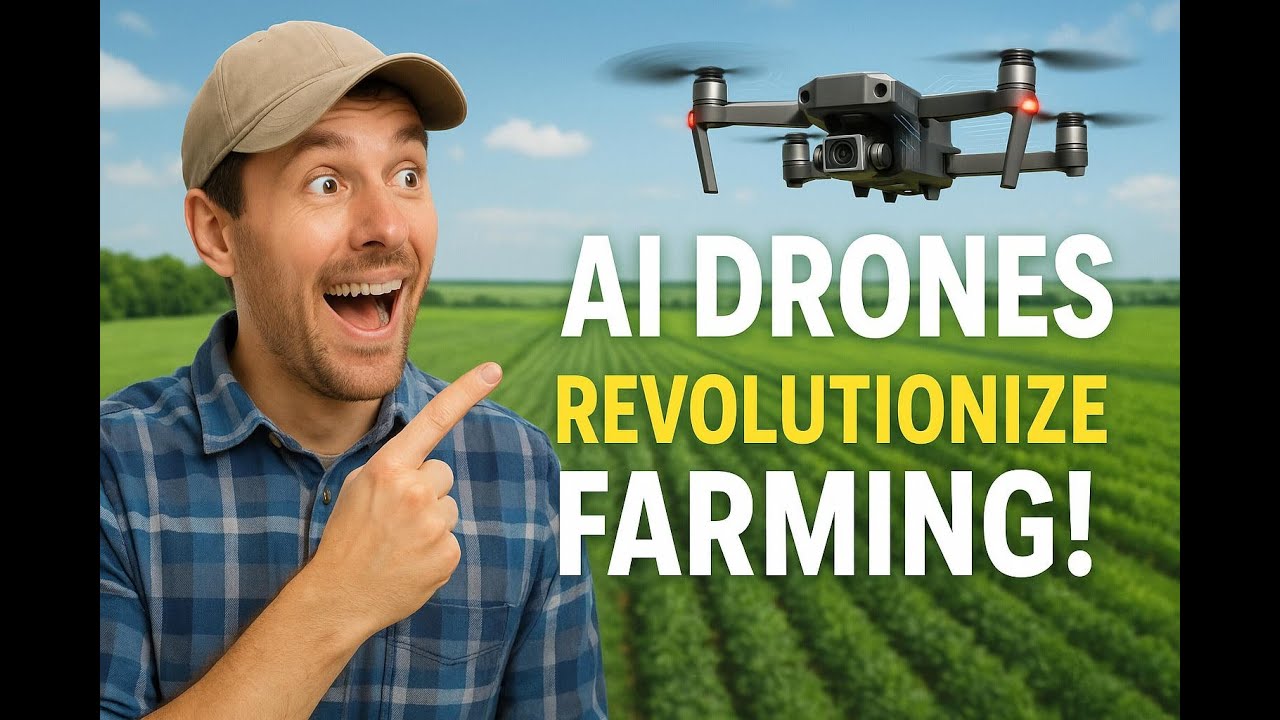
Integration with Modern Farm Management Systems for Ag Weather Forecasting
The evolution of weather stations for agriculture in 2026 is tightly connected to farm management software and satellite platforms. Streamlining data from ground-based stations, satellite imagery, and AI-driven forecasts ensures farmers can make precise, rapid, and cost-effective decisions. Key elements include:
- 🔗 Seamless API access: Open and documented APIs connect weather data to platforms for resource planning, irrigation scheduling, and pest management. (Farmonaut Weather Data API)
- 🛰 Satellite-image fusion: Weather data is paired with crop health analytics, NDVI, and soil condition maps for holistic farm decision-making.
- 📱 Mobile-first dashboards: Applications optimized for all screens, ensuring immediate actionable insights wherever the field manager is located.
- 🧑💻 Scriptable workflow automations: Custom triggers and alerts for unexpected weather events, pest risks, and irrigation needs.

Trends & Innovations: AI, IoT, and Next-Gen Ag Weather Forecast
Agricultural weather forecasting is rapidly advancing with AI and IoT integration. In 2026, successful farmers will leverage a blend of connected, real-time, and predictive sensing tools.
- ⚙️ AI-driven analytics: Interpret vast data streams; provide customized, crop-specific recommendations.
- 🌦️ IoT connectivity: Links field sensors and weather stations with farm management systems.
- 🚁 Drones & ground robots: Monitor microclimates and weather anomalies across large assets.
- 📡 Satellite support: Track regional weather, soil moisture, and crop health at scale.
Industry leaders continue to innovate with:
- 🌍 Enhanced cross-farm networking for collective climate adaptation
- 🗓 Personalized, historical weather pattern analytics for each field and crop type
- 🚨 Real-time disaster alerting: wildfire, hail, drought prediction, and pest/disease outbreak notification
- ⏱ 15-minute data update frequencies and instantaneous API transmission (see Farmonaut API developer documentation)
2026’s most successful farms will layer NDawn weather data with remote-sensing analytics to anticipate, not just react, to both climate variability and market-driven agricultural disruptions.
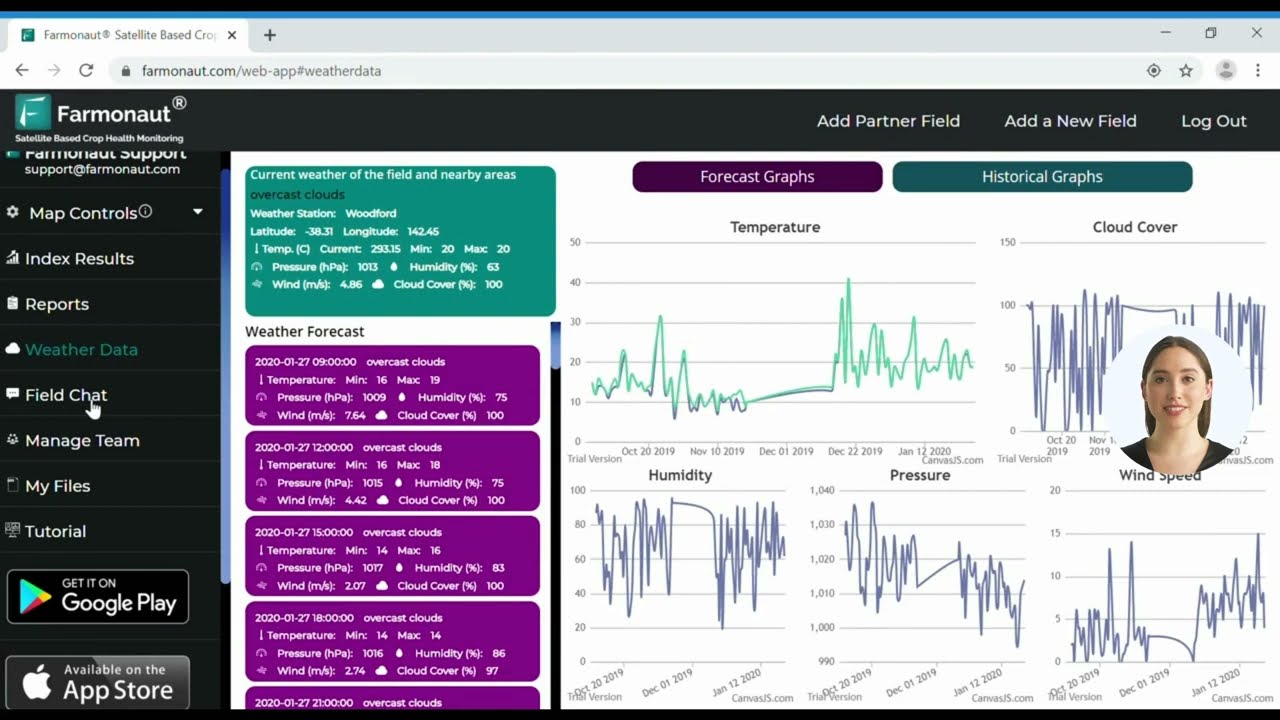
Comparison Table of Top Agricultural Weather Stations (2026)
| Feature | NDawn (North Dakota) | Davis EnviroMonitor Pro | Metos IoT Ag Sensor | KestrelSmart Field | John Deere FieldSense |
|---|---|---|---|---|---|
| Sensor Types | Temperature, Humidity, Rainfall, Wind, Soil Moisture, Leaf Wetness | Temperature, Humidity, Rainfall, Wind, Soil Moisture, Solar Radiation | Temperature, Humidity, Rainfall, Wind, Leaf Wetness, Solar Radiation | Temperature, Humidity, Wind, Rainfall | Temperature, Humidity, Wind, Rainfall, Leaf Wetness |
| Connectivity | IoT, API, Web, App | WiFi, LTE, Bluetooth | IoT, LoRa, Bluetooth | Bluetooth, Cellular | Proprietary, IoT |
| Forecast Accuracy | 97% (2026 est) | 95% | 94% | 93% | 96% |
| Data Update Frequency | 15 min | Hourly | 30 min | Hourly | 15 min |
| AI Capabilities | Yes (Advanced 2026) | Yes | Yes | Limited | Yes |
| Ease of Integration (1–5) | 5 | 4 | 4 | 3 | 4 |
| Field Coverage Radius (km) | Up to 8 | 5 | 6 | 4 | 7 |
| Power Source | Solar/Battery | Solar/Battery | Solar/Battery | Battery | Solar/Battery |
| Approx. Price Range (USD) | $950–$1,800 | $1,300–$2,200 | $1,100–$1,900 | $800–$1,400 | $1,400–$2,400 |
Scannable comparison allows farms to quickly choose station features—like AI support, data frequency, and integration ease—tailored for their region and management needs.

Satellites & Smart Solutions: Farmonaut’s Role in Transforming Agriculture
As a satellite technology company, Farmonaut is dedicated to making satellite-driven insights affordable and accessible for global agriculture. Our platform leverages multispectral satellite imagery, AI, blockchain, and robust analytical modeling capabilities, empowering users—from individual farmers to national governments—with tools for real-time monitoring, resource management, and environmental tracking.
- 🛰️ Real-time Satellite-Based Monitoring: Monitor crop health, soil conditions, and vegetation through indices like NDVI, and receive weather-based risk alerts.
- 🤖 Jeevn AI Advisory System: Provides customized agriculture weather forecasts, field-level recommendations, and strategic crop management guidance.
- 🔗 Blockchain-Based Traceability: Ensures transparent and secure traceability for crops and supply chains.
- 🛡️ Fleet & Resource Management: Track field vehicles and equipment, optimize logistics, and reduce operational costs. (Fleet Management App)
- 🌲 Environmental Impact Monitoring: Track farm carbon footprint, emissions, and sustainability compliance.
- 🔒 Crop Loan & Insurance: Enable satellite-based verification for agri-finance and insurance claims, reducing fraud risk.
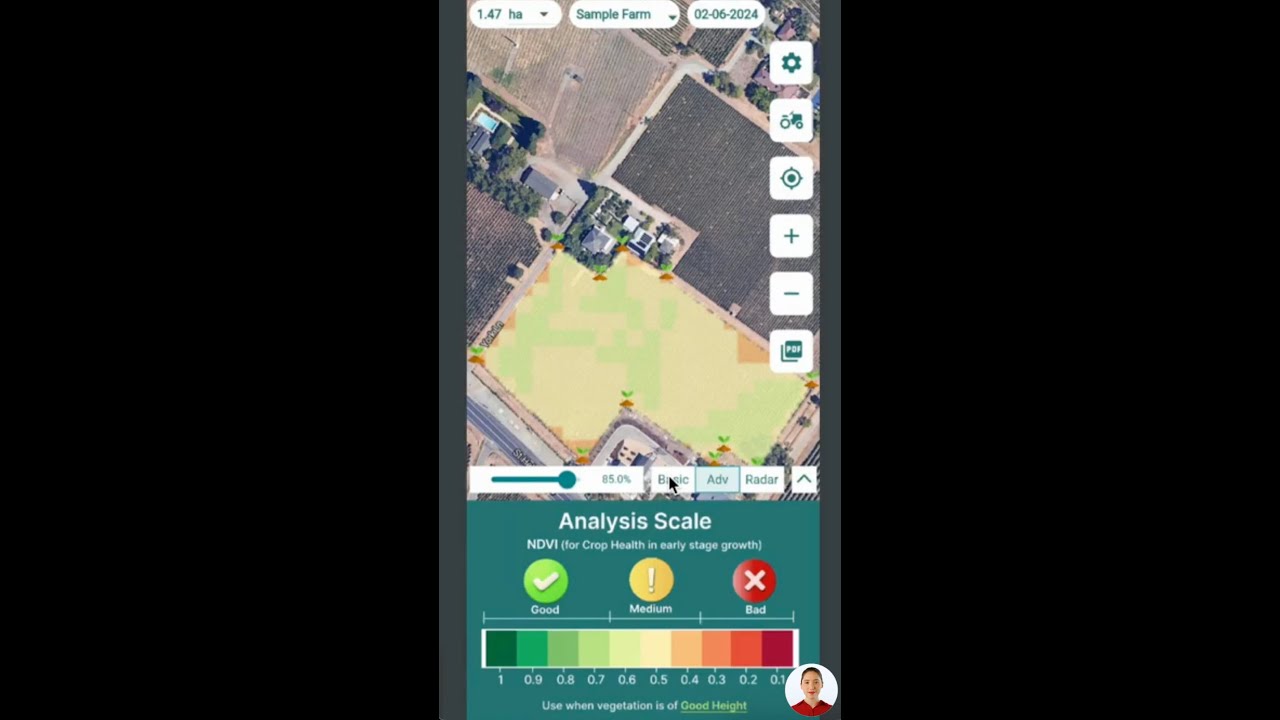
Leveraging satellite and ground sensor data in tandem helps identify invisible risks—like subtle drought stress or pest outbreaks—before they impact yield. The combination enables data-driven scouting and targeted interventions across vast fields.
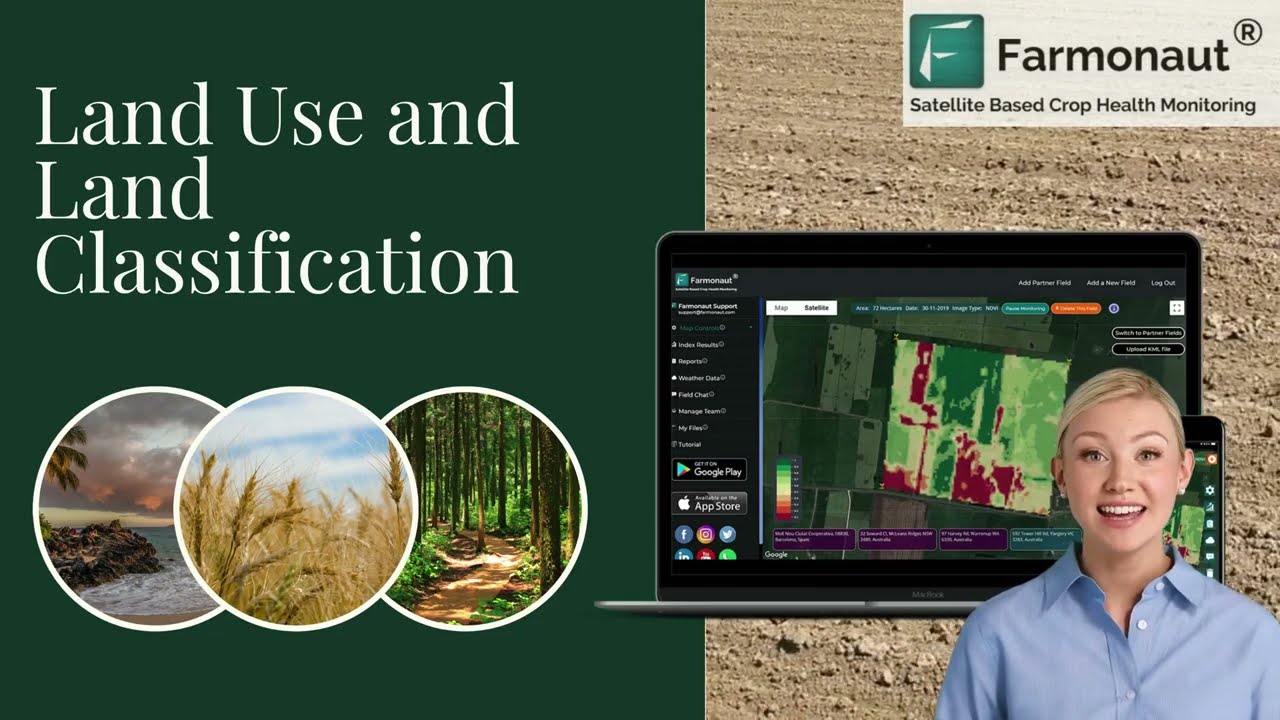
Our platform is available via:
web app,
Android app,
iOS app,
or as integrated APIs for business and government users. This flexibility enables all scales of modern agriculture to benefit from AI-driven analytics, reliable ag weather forecasts, and advanced resource management tools.
For those managing large commercial farms, our large-scale farm management dashboard consolidates all weather, satellite, and operational metrics for regional and multi-field operations.
Farmonaut is at the forefront of affordable agri-satellite analytics in 2026. Subscription packages ensure scalability for smallholders and corporate farms alike—enabling adoption at all operational scales.
API-driven access to weather and crop health analytics is revolutionizing credit and insurance risk assessment for farmers, agri-banks, and insurance providers. Automation reduces entry-point fraud and expedites claim settlement timelines.
Failing to update field boundaries or crop types within ag weather systems can result in suboptimal forecasts and missed anomaly alerts. Regularly update digital field maps for max accuracy!
Specialist Tips: Key Insights, Pro Tips & Common Mistakes
Weather-driven automation is now key to both yield optimization and risk reduction in 2026.
Outfit fields with at least one IoT-connected weather sensor per microclimate—not per farm.
Underestimating hyperlocal rainfall gradients! Relocate rain gauges/sensors annually if experiencing sharply varied precipitation statistics.
Subscription-based platforms, like Farmonaut’s, lower cost barriers for advanced weather analytics, ensuring scalability from family farms to regional agribusinesses.
Combine carbon footprint tracking and sustainability analytics with weather forecasts for regulatory and ecological edge.
Bullet-Pointed Benefits & Visual Lists
Why Invest in Modern Agricultural Weather Stations?
- ✔ Actionable, hyperlocal insights for maximum response accuracy
- 📊 Data-driven decision-making across all operational phases
- ⚠ Risk mitigation against extreme events: frost, drought, and heatwaves
- 🔗 Easy integration with existing farm management systems and apps
- 🛡️ Supports sustainable resource management and compliance
- ⏱ Rapid payback through reduced losses and improved productivity
Top 3 Benefits
- Increased yield predictability
- Immediate farm operations adjustment
- Long-term data for ag-strategic planning
Visual List: Ag Data Types
- Soil moisture & temperature data
- Leaf wetness & microclimate sensors
- Integrated satellite & ground observations
Ag Weather Forecast: 5 Key Implementation Points
- ✔ Map fields by microclimate prior to sensor deployment
- ✔ Choose AI/IoT ready devices for future-proof integration
- ✔ Use cloud-based dashboards for multi-device, multi-field consolidation
- ✔ Automate data-backup and anomaly alerts via mobile/web platforms
- ✔ Continuously train farm staff on data interpretation and best practices
Setup Checklist
- Survey farm for microclimate variation
- Install multiple weather stations where variability is high
- Link with satellite and drone services as needed
Visual List: Compliance & Reporting
- Automatically export weather and yield data for audits
- Integrate with traceability and carbon reporting tools
- Remotely verify farm compliance via trusted platform
FAQ: Your Top Ag Weather Questions Answered
What is the NDawn Weather Network and why is it important in 2026?
NDawn (North Dakota Agricultural Weather Network) is a highly advanced, regional network of automated weather stations serving North Dakota and the upper Midwest. In 2026, its AI-enhanced forecasts and granular sensor data provide leading-edge support for crop management, risk mitigation, and operational planning, enabling farmers to maximize yields while managing climate variability.
How does ag weather forecasting help prevent crop loss?
Agricultural weather forecasting gives farmers timely alerts about unexpected events—such as frost, heatwaves, or drought—so they can protect crops, manage irrigation, and adjust planting plans, significantly reducing the risk of weather-based crop damage.
What features define the best weather station for farmers?
The best weather station for farmers in 2026 should include: high-precision and diverse sensors; IoT-based real-time transmission; user-friendly interface; easy integration with farm management software; AI-powered analytics; and reliable, low-maintenance power options (solar plus battery).
Why should farms integrate satellite data with local sensor networks?
Satellite-driven insights allow monitoring of vast or inaccessible lands, track soil and vegetation health over time, and offer macro-level context to field-specific weather data. This holistic view improves yield forecasting accuracy, resource allocation, and regulatory compliance.
Where can I access developer APIs for integrating weather insights into my ag platform?
You can use the Farmonaut Weather Data API for robust, real-time integration—backed by detailed API documentation.
Farmonaut Subscription Plans & Resources
Ready to unlock full power of advanced ag weather forecasting, satellite-based monitoring, and AI-driven insights? Explore Farmonaut’s subscription tiers below, serving every scale—from individual North Dakota growers to multinational farm operations.
Conclusion: Future-Ready Farms with Accurate Ag Weather Forecasts
The journey towards climate-smart, profitable, and resilient farming in 2026 begins with robust ag weather forecast solutions. Networks like NDawn weather and the best weather station for farmers—driven by AI, IoT, and satellite innovation—are integral, not optional. Paired with seamless integration into modern farm management systems and affordable, subscription-based platforms like Farmonaut, agricultural professionals can optimize every acre, mitigate risks, and plan for a data-driven, sustainable future.
Embrace the next generation of ag weather forecasting—your farm’s resilience, yield, and profitability will thank you.
Ready to power your ag operations with advanced weather insights, satellite analytics, resource management, and more?

 Escorts Kubota
 FieldZero
 Indico Company
 Kubota
 FFBS
FFBS Jontra
 Kalustyan
 Tucor
Tucor Geno
Geno Hayleys Agriculture
 Linx Agritech
 Adinet
 Save Your Soils
