

Agri Commodity Trading 2026: Tech-Driven Opportunities
Meta description: Explore how agricultural commodity trading evolves in 2025—discover tech trends, market volatility, supply chain risks, and sustainability opportunities now.
Table of Contents
- Introduction: Agricultural Commodity Trading in 2025
- The Core of Agri Commodity Trading: Understanding the Market Dynamics
- Major Trends in 2025: How Agricultural Commodity Trading is Transforming
- Tech Innovations Driving Agri Commodity Trading in 2026
- Comparative Trends Table: Agri Commodity Trading 2024 vs. 2026
- Market Volatility & Supply Chain Risks in Agri Commodity Trading
- Sustainability Opportunities & Challenges in Agro Commodity Trading
- Financial Instruments and Price Risk Management
- Farmonaut: Impact of Satellite Technology in Trading
- Infrastructure and Chain Evolution in Agri Commodity Trading
- The Future Outlook: Navigating Agri Commodity Trading in 2026 and Beyond
- Access Farmonaut Solutions & Resources
- FAQ: Agri Commodity Trading 2026
Introduction: Agricultural Commodity Trading in 2025
Agricultural commodity trading remains a cornerstone of the global economy, directly impacting food security, rural livelihoods, and national economies. As we move into 2025—and prepare for rapid changes in 2026—agri commodity trading is undergoing a technology-driven revolution. This transformation, shaped by emerging tech trends, climate variability, evolving risks, and sustainability opportunities, is rewriting the rules for farmers, traders, investors, and policymakers engaged in agri commodity markets around the world.
At the core of agricultural commodity trading lies the exchange of foundational commodities such as wheat, corn, rice, oilseeds (like soybean and sunflower), pulses, spices, and fibers. These raw products serve as vital inputs for food processing industries, livestock feed, biofuels, and textiles. The various markets—from spot to futures contracts—offer critical platforms for buying and selling these goods, enabling immediate delivery or price hedging for risk management.
As the dynamics of agro commodity trading continue evolving, understanding the critical factors—including advanced digital technologies, market volatility, supply chain risks, and sustainability concerns—will determine who thrives in the sector beyond 2025.

The Core of Agri Commodity Trading: Understanding the Market Dynamics
Agricultural commodity trading involves the buying and selling of raw, foundational products integral to the world’s food and industrial chains. These commodities include:
- Grains: Wheat, corn, rice
- Oilseeds: Soybean, sunflower
- Pulses, spices, fibers
- Foundational inputs for processing industries, livestock feed, biofuels, textiles
Agri commodity trading can take place across various market forms:
- Spot Markets – For immediate delivery and settlement, reflecting real-time supply and demand factors
- Futures Markets – For enabling hedging and advanced risk management strategies by locking in prices for future delivery
The sector is characterized by heightened volatility due to weather events, shifting policies, and unpredictable consumer preferences. Traders and investors must continually assess risks, forecast prices, and monitor supply chains to remain competitive and ensure sustainable market access.
Major Trends in 2025: How Agricultural Commodity Trading is Transforming
The trading landscape for agricultural commodities in 2025–2026 is being transformed by several trends:
- Digital Integration: Precision agriculture, IoT sensors, and advanced analytics are increasingly integrating into trading operations.
- AI and Data-Driven Decisions: Artificial Intelligence (AI) models help forecast trends, assess risks, and optimize trade offers across markets in real time.
- Transparency and Traceability: Blockchain technologies provide tamper-proof verification for agro commodity trading, boosting sustainable practices and regulatory compliance.
- Climate and Sustainability Concerns: Heightened focus on climate adaptation, low-carbon supply chains, and sustainable certifications directly influences trade.
- Geopolitical and Policy Influences: Export/import restrictions, tariffs, and trade agreements introduce both opportunity and risk for traders and investors.
- Market Volatility: Unpredictable weather and global events continue to disrupt regular trading patterns and price stability.
These changes make understanding the evolving dynamics of agri commodity trading essential for everyone engaged in the sector.

Tech Innovations Driving Agri Commodity Trading in 2026
The convergence of technologies—including satellite-based imagery, IoT, AI, blockchain, and advanced digital platforms—is fundamentally reshaping agricultural commodity trading in 2026 and beyond. These innovations are breaking down historical barriers, supporting better access to markets, improving risk management, and fostering resilient, transparent, and sustainable value chains.
Precision Agriculture & Real-Time Data Integration
Through an array of sensors, drones, and satellites, today’s agri commodity trading sector gains real-time insights into:
- Crop health and expected yields
- Weather trends and threats
- Logistic and storage bottlenecks
- Soil and resource conditions
This data-driven intelligence supports advanced decision making, enabling traders and farmers to adjust strategies proactively and minimize losses caused by unexpected events.

The Role of AI, Analytics & Predictive Modeling
AI-driven analytics, powered by machine learning and big data, are at the forefront of agricultural commodity trading:
- Forecasting commodity prices with greater accuracy
- Predicting supply-demand imbalances
- Optimizing bid/ask strategies for traders
- Assessing and mitigating risks from weather, policy, and geopolitical shifts
- Enhancing the efficiency of procurement and distribution processes
IoT, Blockchain, and the New Era of Transparency
IoT sensors deployed throughout the supply chain capture data flows at every stage—from the farm gate to international ports. In parallel, blockchain technology assures traceability and verification for raw commodities and processed goods, critical for maintaining trust with buyers and meeting sustainability demands.
-
Blockchain in Trading: Guarantees the authenticity, origin, and handling of batches—helpful for tracking carbon footprint, certifications, and fair-trade status.
Learn how Farmonaut’s blockchain traceability platform is redefining the transparency of agricultural supply chains.
Satellite Imagery: Monitoring and Risk Assessment
Satellite imagery stands as a game-changer for farmers and traders, providing region-wide views of climate patterns, crop growth stages, and disease outbreaks not visible from the ground. This is vital for:
- Estimating real-time output and local availability
- Supporting insurance and loan verification
- Proactively identifying weather threats and market opportunities
As users base crucial trading decisions on this technology, actionable insights now power more efficient markets and sustainable practices.
Comparative Trends Table: Agri Commodity Trading 2024 vs. 2026
| Technology/Trend | Description | 2024 (Status/Adoption %) | 2026 (Estimated Adoption %) | Potential Impact on Trading |
|---|---|---|---|---|
| AI-Driven Forecasting | Use of AI/ML for price trends, demand-supply analysis, and weather prediction. | 50% of major traders; limited smallholder participation | >75% including SMEs & cooperatives | Sharply improves efficiency, boosts risk management, reduces market shocks. |
| Blockchain for Transparency | Blockchain ensures traceable, tamperproof trade records and product origins. | 15–20% in pilot/export chains | 60%+ across global, regional chains | Deepens buyer trust, meets regulatory & consumer standards, enhances pricing. |
| IoT for Supply Chain Monitoring | Use of connected devices to monitor logistics, storage conditions, and transport | 30% (mostly export-focused players) | 65% (integrated into national & regional flows) | Reduces bottlenecks, cuts losses, supports real-time risk response. |
| Predictive Analytics Platforms | Advanced analytics combine multi-source data for actionable trade strategies. | 40% | 80% | Enables proactive trading, better resource allocation, reduces waste. |
| Sustainable Sourcing Solutions | Digital certifications, carbon tracking, and compliance tools integrated in trade. | 10% of traded volumes | >40% and growing | Opens new markets, secures premium pricing, ensures regulatory compliance. |
Market Volatility & Supply Chain Risks in Agri Commodity Trading
Price volatility and supply chain risks remain defining features of agricultural commodity trading in the post-2025 era. The global sector is increasingly shaped by:
- Unpredictable Weather & Climate Shocks: Erratic rainfall, heatwaves, droughts, and floods disrupt harvest cycles for key commodities like wheat, corn, and rice.
- Policy & Geopolitical Shifts: Sudden restrictions (export bans, tariffs) change market equilibrium and impact domestic and international prices.
- Supply Chain Bottlenecks: Labor shortages, port congestion, and logistic disruptions increase costs and threaten timely delivery.
Solutions involve blending real-time weather data, analytics, and digital workflow platforms for rapid response and improved trade resilience.
- Farmonaut’s tools for large-scale farm management harness satellite data and AI to optimize resource use, monitor crops and respond to weather risks.
- Fleet & resource management platforms streamline agri logistics—minimizing disruptions and operational cost spikes.

Sustainability Opportunities & Challenges in Agro Commodity Trading
Sustainability has moved from being a peripheral concern to a central pillar in agro commodity trading. Consumers and regulators now demand that agriculture delivers not only food and raw materials, but does so with traceability, fairness, and a reduced carbon footprint.
Opportunity: Sustainable Certification & Premium Pricing
- Certified commodities attract global buyers seeking to meet sustainability targets.
- Digital traceability—powered by blockchain—is increasingly integrated into procurement and contract negotiations for grains, oilseeds, fibers, and processed goods.
Carbon footprinting and regenerative practices are also creating new revenue streams for producers.
Explore Farmonaut’s carbon footprint solutions for responsible, future-ready farming.
Challenge: Compliance, Transparency & Costs
- Smallholder farmers and less digitized value chains face higher barriers to adoption for emerging sustainability standards.
- Investment in digital traceability, compliance testing, and certification is required to unlock premium markets.

Financial Instruments and Price Risk Management in Agri Commodity Trading
The expansion of financial instruments is providing farmers and traders with new tools for navigating price swings and income uncertainty in agricultural commodity trading:
- Futures & options markets: Lock in forward prices and hedge against sudden market drops.
- Weather derivatives: Specialized contracts pay out based on satellite or IoT-confirmed rainfall/temperature data.
-
Insurance tied to satellite monitoring: Accurate loss verification reduces fraud and speeds up claim processing.
Farmonaut’s crop loan & insurance platform is making financial protection faster and more accessible for the agri sector. - Integration with digital platforms: Facilitates participation for rural farmers, improves liquidity, and reduces barriers to entry in commodity trading.

Farmonaut: Impact of Satellite Technology in Trading
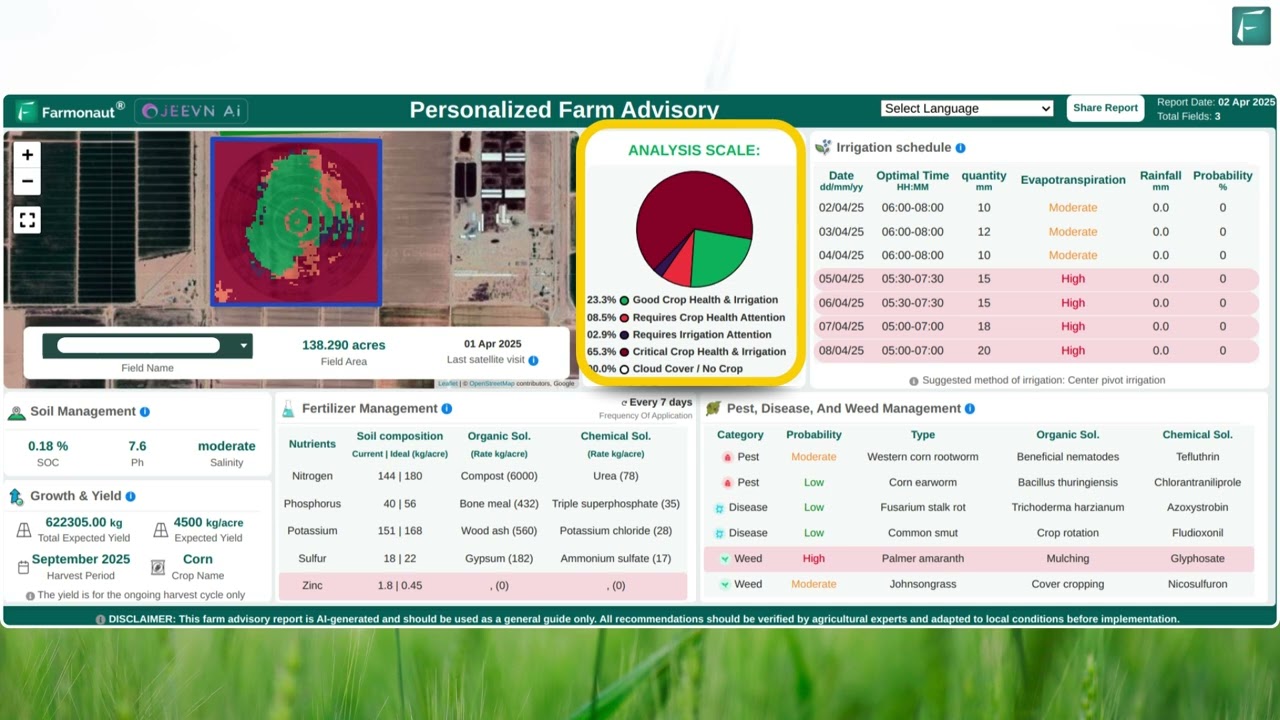
As a pioneering satellite technology company, we at Farmonaut deliver affordable, accessible, high-impact satellite-based insights for agriculture and allied sectors. Our platform leverages multispectral satellite imaging, AI-driven advisory, blockchain-based traceability, and robust resource management to address the critical challenges of today’s agri commodity trading landscape.
- Satellite Crop Monitoring: Enables real-time crop health tracking, yield estimation, and early detection of weather-induced threats.
- Jeevn AI Advisory: Our proprietary AI system delivers granular insights and crop-specific alerts, driving productivity for traders and farmers.
- Blockchain Traceability: Digital tamperproof logs for full supply chain transparency in agri commodity trading—a core demand for sustainability and consumer trust.
- Environmental Impact Monitoring: Live carbon footprint data allows compliance with evolving regulatory frameworks and supports participation in carbon credit schemes.
- Fleet and Resource Optimization: Our tools simplify logistics and reduce inefficiencies across rural and national commodity chains.
Farmonaut tools are available via Android, iOS, Web, and API—serving individual farmers, agri-businesses, institutional investors, and governments. For developers, our public API and developer documentation allow for rapid integration of satellite intelligence into enterprise systems.

Infrastructure and Chain Evolution in Agri Commodity Trading
The efficiency and resilience of agro commodity trading depend on foundational infrastructure—from storage silos and cold chains to transportation networks and digital connectivity.
- Investments in modern storage and logistics: These reduce post-harvest losses for raw grains, oilseeds, and perishable commodities, improving profitability throughout the market.
- Cold chain development: Particularly important for high-value, perishable agri commodities in expanding regional and global markets.
- Digital chain management: IoT and blockchain are standardizing transparency and reducing friction in delivery, contracts, and payments.
As governments and private sector players invest in connecting rural producers to domestic and global buyers, market reach grows for all stakeholders in the sector.
The Future Outlook: Navigating Agri Commodity Trading in 2026 and Beyond
Agri commodity trading in 2026 stands at the convergence of tradition and rapid technological advancement. The sector is increasingly marked by:
- Intelligent Data-Driven Decisions: Widespread integration of AI, satellite imagery, and predictive analytics will become the norm by 2026, narrowing information asymmetry.
- Resilient and Sustainable Trading Chains: Blockchain-enabled traceability, carbon tracking, and environmental compliance ensure products meet regulatory, investor, and consumer demands.
- Agility in Risk Management: Financial innovation and data-powered insurance tools will give producers and traders protection against unpredictable volatility caused by climate or geopolitical events.
- Expanded Market Access: Digital platforms lower entry barriers, empowering rural and marginalized producers to directly engage in global agri commodity markets.
- Growth of Institutional Investment: Expanding participation by funds and institutional players adds liquidity but also necessitates enhanced regulation for market stability.
Stakeholders who adopt technology-driven solutions, prioritize sustainability, and build resilient supply chains will be best positioned to thrive in the complex, high-opportunity world of post-2025 agricultural commodity trading.
Access Farmonaut Solutions & Resources
Get started with Farmonaut—available on Android, iOS, and web:



Developers & Businesses: Integrate satellite and AI-powered insights for commodity trading through our satellite API. Explore integration instructions on our API developer docs.
Subscription Options:
FAQ: Agricultural Commodity Trading in 2026
What is agricultural commodity trading?
Agricultural commodity trading involves buying and selling raw agricultural products (such as wheat, corn, rice, oilseeds, pulses, spices, and fibers) for use in food, feed, biofuels, and industry. Trading can happen in spot markets (for immediate delivery) or derivatives/futures markets (for hedging price risk).
Why is technology crucial for agri commodity trading in 2026?
Technology addresses core sector challenges: AI and predictive analytics enable accurate price forecasts; IoT and satellite imagery provide real-time data; blockchain ensures transparency, traceability, and compliance; digital platforms widen market access for rural producers and lower transaction costs.
How does climate change affect commodity trading?
Climate change creates greater market volatility due to unpredictable weather impacting crop yields, supply, and price stability. Agri commodity traders rely on advanced weather data, diversified sourcing, and agile strategies to navigate risks and optimize decisions.
What sustainable practices are reshaping agro commodity trading?
Sustainable practices include blockchain-based traceability, digital carbon accounting, certification of crops, and low-impact regenerative agriculture. These enable traders and producers to access new markets, comply with regulations, and secure premium pricing.
What is Farmonaut and how does it support agri commodity trading?
Farmonaut is a satellite technology company providing real-time monitoring, AI-based advisory, blockchain traceability, and environmental impact tools accessible via Android, iOS, web apps, and APIs. We empower stakeholders with affordable, scalable, and sustainable tech solutions to enhance decision-making, transparency, and risk management in agricultural commodity trading.

 Godrej Agrovet
 Hayleys Agriculture
 Linx Agritech
 Adinet
 Save Your Soils
 GalaxEye Space
 Grandstream Algérie
 XOS Realty
 Geospatial Lab Africa
 Agro La Gándara
 HIPSAC
 ZOL Zimbabwe
 Juligerm
 AdBio
AdBio MISE Maroc
 NWNS
NWNS Red August Group
 Farm Inc
 WeMe Global
 Agrotoken
 Blue BearX
 Insignito
 DnCubed
 Indosistim Teknologi
 Liquify Digital
 CU Foods
 BeyondTech Global
 Rouge VC
 AgroRisk
 Oath Inc
 Esri North East Africa
 MDCV UK
 Etech Consulting Madagascar
 Vestlandsforsking
 WB Dev
 Sama Premium
 Tres Valles
 Blickwinkel
 Agricultural Credit Policy Council
 eKGIS
eKGIS Mostas Tech
 Andex
Andex Deluxe Conseil
 WICO
WICO Chimera Innovation
 SkyHarvest
 Teledarbas
 Exurbia Geospatial
 FieldZero
