

Reviewed August 2026 against US EPA, USDA Economic Research Service, and industry market-research reports (IMARC Group, Vantage Market Research, Market Research Future).
Try it: Run your own numbers →
Table of Contents
- Summary: Where the Agricultural Fumigants Market Stands
- Market Overview: What Agricultural Fumigants Do
- Market Size: Global, US, and Argentina Figures
- Market Share by Fumigant Type
- The US Agricultural Fumigants Market
- The Argentina Agricultural Fumigants Market
- Agricultural Packaging Market Analysis: Where It Intersects Fumigants
- Regulatory Landscape: EPA Rules and the Montreal Protocol
- Innovations in Fumigant Application
- Biological and Sustainable Alternatives
- Farmonaut’s Role in Fumigant Application Intelligence
- Fumigation Cost & Dosage Calculator
- Challenges and Risks
- Outlook: What Would Change These Numbers
- FAQ
- Farmonaut Subscription Plans
- Try it: Run your own numbers
Summary: Where the Agricultural Fumigants Market Stands
The global agricultural fumigants market was valued at $2.47 billion in 2024, according to IMARC Group, and is projected by Vantage Market Research to reach $3.1 billion by 2030, growing at a 4.5% compound annual growth rate (CAGR) between 2024 and 2030. Argentina’s fumigants market is much smaller in absolute terms — $75 million in 2024, rising to a projected $117 million by 2035 at a 3.719% CAGR (2025-2035), per Market Research Future. A US-specific dollar figure for the fumigants market is not published by any government or industry source we could verify within this research pass; the section below explains exactly how to derive a working estimate from USDA data instead of guessing at one. Phosphine holds roughly 28% of global fumigants revenue as of 2025 (Market Research Future), the largest single-product share, reflecting its dominance in stored-grain protection.
Market Overview: What Agricultural Fumigants Do
Agricultural fumigants are chemical agents applied as gases or volatile liquids to sterilize soil or stored crops, killing nematodes, soil-borne pathogens, insects, and weed seeds before they damage a growing crop or a stored commodity. USDA’s Economic Research Service found that fumigants accounted for 13% of conventional pesticide usage in the United States in 1997 — the most recent figure of this specific kind published in that historical summary. That number is nearly three decades old, and it is cited here precisely because more recent USDA breakdowns of fumigant share within total pesticide use are not consolidated in a single public summary; the way to get a current figure is described in the US section below.
Seven fumigant types have completed EPA reregistration in the US market: chloropicrin, dazomet, metam sodium, metam potassium, methyl bromide (restricted to quarantine and preshipment use), 1,3-dichloropropene, sulfuryl fluoride, and phosphine, according to the EPA’s soil fumigants regulatory status page. That baseline dates to 2009 and the registrations remain the operative list — EPA has not added a new fumigant active ingredient to it since.



Get real-time satellite monitoring, AI-driven crop insights, and resource management anytime, anywhere!
Market Size: Global, US, and Argentina Figures
Three independent market-research firms have published estimates for the global fumigants market, and their numbers are close enough to be useful as a range rather than a single point estimate. IMARC Group puts the 2024 global market at $2.47 billion. Vantage Market Research projects growth to $3.1 billion by 2030 at a 4.5% CAGR from 2024. Market Research Future’s product-level breakdown shows phosphine holding 28% of global fumigants revenue in 2025 — at the $2.47 billion base, that share alone would represent roughly $690 million of annual global revenue, though MRF does not publish that dollar conversion directly, so treat it as an approximation from the two source figures rather than a reported number.
No government agency — not USDA, not the US Census Bureau, not USGS — publishes a standalone dollar value for the US agricultural fumigants market specifically. What USDA NASS does publish is usage data through its Agricultural Chemical Use Program, which surveys pesticide and fumigant application by commodity on a rotating multi-year schedule and reports results through the Quick Stats database, typically 2-3 years behind the current season. If your work requires a US-dollar fumigants figure, the reliable path is: pull the most recent NASS Agricultural Chemical Use survey for your target commodity (e.g., strawberries, almonds, or stored grain), multiply reported per-acre or per-facility application rates by current fumigant pricing from a regional ag retailer, and scale to USDA’s planted-acreage or storage-capacity figures for that commodity — not to rely on a market-research aggregate that doesn’t disclose its US-only methodology.
Market Share by Fumigant Type
The table below sets out what is actually published for each major fumigant category, distinguishing a hard figure (with source and year) from a status description where no market-share number exists.
| Fumigant Type | Published Figure | Regulatory Status (US) | Typical Application |
|---|---|---|---|
| Phosphine | 28% of global fumigants revenue, 2025 (Market Research Future) | EPA-reregistered; low residue, low environmental persistence | Stored grains, nuts, oilseeds |
| Methyl Bromide | Production and consumption phased out globally effective January 1, 2005 under the Montreal Protocol (US EPA) | Permitted only under the Quarantine/Preshipment (QPS) exemption, for use within 21 days of export | Preshipment fumigation of export commodities; quarantine treatment |
| 1,3-Dichloropropene | No current market-share figure published in the sources reviewed | EPA-reregistered; risk assessment last revised in 2007 | Field crops, orchards, vegetables (pre-plant soil fumigation) |
| Chloropicrin | No current market-share figure published in the sources reviewed | EPA-reregistered | Strawberries, tomatoes, peppers, ornamentals; often co-applied |
| Sulfuryl Fluoride | No current market-share figure published in the sources reviewed | EPA-reregistered; non-ozone-depleting | Tree nuts, dried fruit, food-processing facility fumigation |
| Dazomet / Metam Sodium / Metam Potassium | No current market-share figure published in the sources reviewed | EPA-reregistered | Soil fumigation, nursery stock, turf |
Source: Market Research Future (phosphine share, 2025); US EPA ods-phaseout and soil-fumigants regulatory pages (registration status and dates). Where a cell says no figure is published, that reflects an actual gap in public reporting, not an oversight in this table — the REFRESH note in the section below explains where to look as new data is released.

The US Agricultural Fumigants Market
Searches for “us agricultural fumigants market” are usually looking for a dollar figure or a growth rate specific to the United States. As noted above, that standalone figure isn’t published by USDA, EPA, or the major market-research firms reviewed for this article — the commercial reports (IMARC, Vantage, Market Research Future) publish global totals and select country breakdowns (Argentina is one; the US is not, in the versions available for this review). What is verifiable for the US is regulatory history and structure, which shapes demand more directly than any aggregate dollar figure would:
- Methyl bromide’s production and consumption phaseout took effect January 1, 2005, under US commitments to the Montreal Protocol, per the EPA’s ozone-depleting substances phaseout page. The QPS exemption for quarantine and preshipment use remains active today — this is the main reason methyl bromide still shows up in US import/export fumigation despite the phaseout.
- Seven fumigant types carry completed EPA reregistration as of the EPA’s soil fumigants regulatory status page: chloropicrin, dazomet, metam sodium, metam potassium, methyl bromide (QPS only), 1,3-dichloropropene, and sulfuryl fluoride, plus phosphine.
- 1,3-dichloropropene (marketed as Telone) had its EPA risk assessment revised in 2007 — the most recent revision date EPA’s summary lists — tightening buffer-zone and application-rate requirements that still govern use today.
- USDA’s fumigant-specific usage share (13% of conventional pesticide use) is a 1997 figure from the Economic Research Service; it predates the methyl bromide phaseout entirely and should not be quoted as a current number.
To build a current US usage estimate for a specific crop, go to USDA NASS’s Agricultural Chemical Use Program survey list, find the most recent survey year for your commodity (fruit, vegetable, and field-crop chemical-use surveys rotate on a multi-year schedule), and pull the “percent of acres treated” and “average rate per acre” fields for the fumigant active ingredient you’re tracking. That gives a defensible, sourced number for your specific crop and season — a single national dollar figure would necessarily average across commodities with wildly different fumigation intensity (stored grain versus strawberry pre-plant, for example) and would tell you less than the commodity-level NASS data does.
Farmonaut’s Carbon Footprinting tools
can help monitor and reduce greenhouse gas emissions in farming. For agricultural businesses, adopting these tools supports compliance with environmental regulations and helps measure the impact of fumigant usage across large regions.

The Argentina Agricultural Fumigants Market
Argentina’s fumigants market was valued at $75 million in 2024 and is projected to reach $117 million by 2035, a 3.719% CAGR across the 2025-2035 window, according to Market Research Future’s country-level report. That’s a smaller absolute market than the US or the EU, consistent with Argentina’s agricultural export profile being concentrated in bulk grain and oilseed (soybean, corn, wheat) rather than the high-value fumigation-intensive horticultural crops (strawberries, tree nuts) that drive fumigant intensity in the US.
For current Argentine production volumes and any updates to fumigant registration or approval status, the Ministry of Agriculture (Ministerio de Agricultura, Ganadería y Pesca, at magyp.gob.ar) publishes quarterly production reports, and SENASA (Servicio Nacional de Sanidad y Calidad Agroalimentaria) maintains the phytosanitary and chemical-approval registry that governs which fumigants Argentine exporters can legally apply ahead of shipment. Those two sources are the correct place to check for anything more current than the 2024 baseline and 2035 projection cited here — a growth rate under 4% CAGR means year-to-year movement is small, but the underlying $75 million base is worth re-verifying against MRF’s next report vintage before quoting it in a business plan.

Agricultural Packaging Market Analysis: Where It Intersects Fumigants
Agricultural packaging and agricultural fumigants intersect at one specific regulatory point: wood packaging material (pallets, crates, dunnage) used in international shipping must be heat-treated or fumigated under ISPM 15, the International Standards for Phytosanitary Measures, before it crosses borders — and methyl bromide’s QPS exemption is what still permits fumigation as one of the two accepted treatment methods (heat treatment is the other, and is increasingly preferred because it carries no residue or ozone-depletion profile). A full standalone agricultural packaging market-size figure (materials, plastics, modified-atmosphere packaging, etc.) was not part of the research gathered for this article and none is invented here — that market has its own trade associations and USDA Foreign Agricultural Service trade data that a dedicated packaging analysis should draw on directly.
For a fumigant buyer or exporter, the practical packaging-side takeaway is this: preshipment fumigation demand for wood packaging is tied directly to the QPS exemption’s continued existence. If the Montreal Protocol parties were to close the QPS exemption — there is no scheduled date for that in EPA’s current phaseout documentation — export packaging fumigation would shift entirely to heat treatment, and that would be a materially bigger structural change to the fumigants market than any of the CAGR figures above. It is worth monitoring EPA’s ozone-depleting substances page for exactly that kind of exemption-status change, since it would move the market discontinuously rather than at the smooth 3.7%-4.5% CAGRs quoted for the base market.
Regulatory Landscape: EPA Rules and the Montreal Protocol
- Montreal Protocol phaseout: Methyl bromide production and consumption phaseout took effect January 1, 2005 in the US, per EPA. The QPS exemption for quarantine and preshipment applications (within 21 days of export) remains in force with no scheduled end date in current EPA documentation.
- EPA reregistration: Seven fumigant types hold completed reregistration as of the EPA’s soil fumigants baseline: chloropicrin, dazomet, metam sodium, metam potassium, methyl bromide (QPS), 1,3-dichloropropene, sulfuryl fluoride, and phosphine.
- Risk assessment updates: 1,3-dichloropropene’s risk assessment was last revised in 2007, tightening application-rate and buffer-zone rules that remain the operative standard.
For food exporters and large-scale producers, blockchain-powered traceability solutions offered by Farmonaut can document every stage of crop fumigation and post-harvest handling. This increases trust, enables compliance in regulated markets, and adds value to transparent supply chains.
Innovations in Fumigant Application
Application technology is where measurable efficiency gains are happening even where market-share data is thin. Three categories matter most for growers trying to cut fumigant volume without cutting efficacy:
Smart Application Methods
- Automated Soil Injection: Applicators that control dosing precisely, reducing volatilization and operator exposure risk compared with broadcast application.
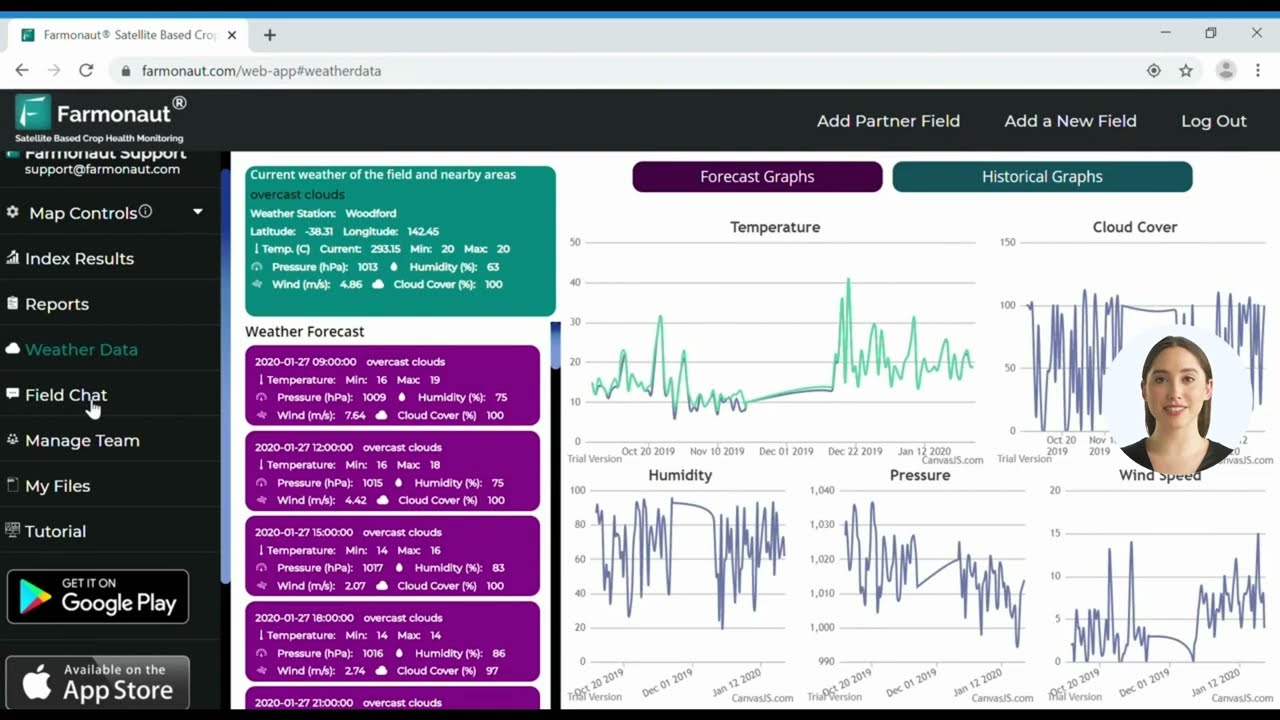
- Soil and Crop Sensors: IoT and satellite-based soil analysis help time and size a fumigant application to actual pest pressure rather than a calendar schedule, cutting wasted product and runoff.
- Remote Sensing and Drones: Used for scouting pest pressure ahead of treatment, checking efficacy afterward, and mapping soil variability to support variable-rate fumigation instead of a flat field-wide rate.
Modern fleet management tools from Farmonaut help agricultural businesses monitor and optimize their machinery and logistics in real-time during peak fumigation windows.
Data Integration for Application Decisions
- Satellite imagery and crop models feed advisory systems that flag where soil-borne pest pressure justifies fumigation versus where it doesn’t — the highest-value use of the data is avoiding unnecessary applications, not just optimizing the ones already planned.
- Blockchain-based chain-of-custody records let supply-chain partners verify what was applied, when, and under what compliance regime, which matters for the residue-limit and phytosanitary requirements discussed above.
- Weather-forecast integration reduces volatilization risk and improves soil-sterilization effectiveness by avoiding application windows with unfavorable wind or temperature inversion conditions.
Biological and Sustainable Alternatives
Regulatory pressure on the older chemistries (methyl bromide’s phaseout being the clearest example) has pushed demand toward alternatives that don’t carry the same ozone-depletion or residue profile:
- Crop rotation and organic soil amendments targeting nematodes and soil-borne pathogens as a non-chemical substitute for pre-plant fumigation.
- Microbial and natural-extract formulations for soil sterilization, used most often where certified-organic status rules out synthetic fumigants entirely.
- Integrated Pest Management (IPM): combining biological, chemical, and cultural controls specifically to slow resistance development in target pests and pathogens — a real risk with any single-mode-of-action fumigant used repeatedly on the same ground.

For progressive agribusiness,
Farmonaut’s Large Scale Farm Management tools
deliver AI-driven recommendations, pest detection, and detailed reports to help control nematodes and weeds proactively—integrating seamlessly with both chemical and organic fumigation strategies.

Farmonaut’s Role in Fumigant Application Intelligence
Farmonaut is not a fumigant manufacturer or a market-data provider — its role is enabling more precise application decisions around whatever fumigant program a grower or exporter is already running, through real-time API access and custom developer integration.
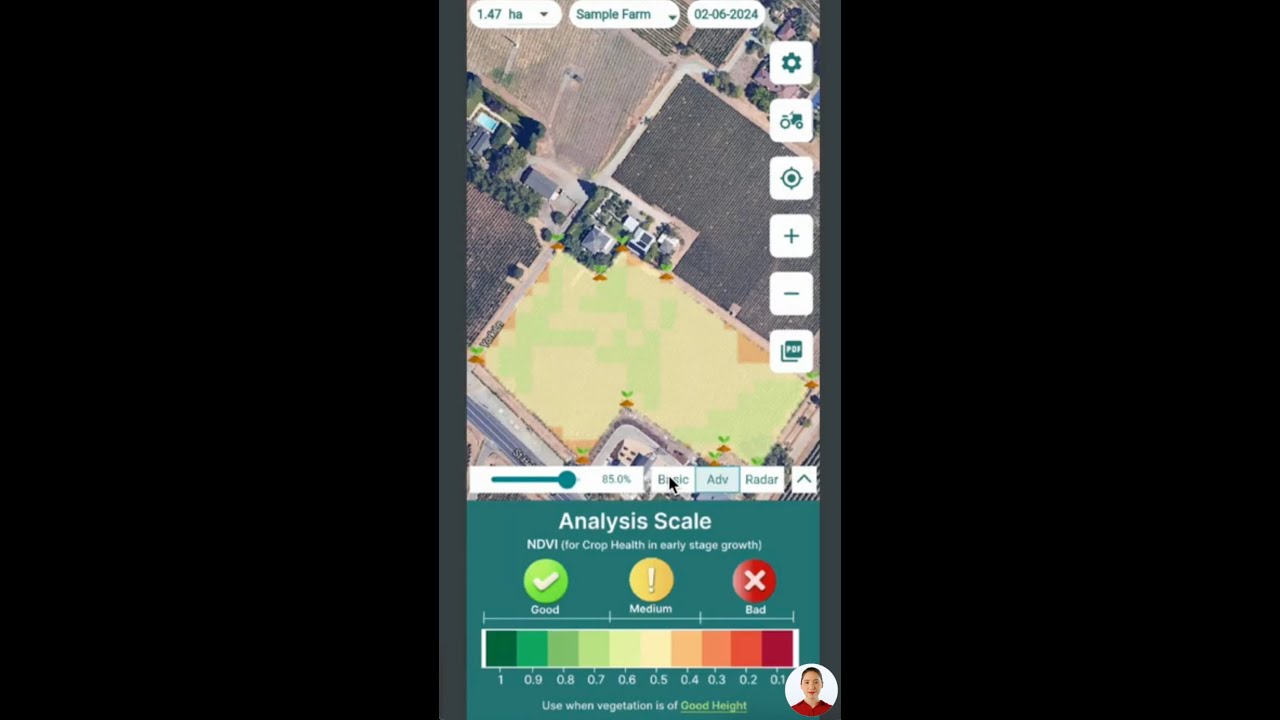
- Satellite imagery and NDVI maps let growers and exporters detect stress, pest pressure, and crop-health anomalies early enough to decide whether a fumigation treatment is actually warranted on a given block.
- AI-driven Jeevn Advisory delivers hyperlocal recommendations and weather alerts relevant to fumigant application timing, including the temperature and wind conditions that affect volatilization risk.
- Blockchain-based traceability supports the compliance record-keeping that residue-limit and phytosanitary export rules require.
- Environmental impact monitoring, including carbon reporting, helps document the footprint of a fumigation program for buyers and regulators who ask for it.
Fumigation Cost & Dosage Calculator
Estimate total product volume and cost for a soil fumigation job by entering your field size, application rate, and local product price.
Run your own numbers
Assumptions: buffer-zone area is approximated as perimeter × buffer width, which overstates the excluded area on non-rectangular fields — for an exact figure, map your field boundary and buffer setback in a GIS tool. Enter your own product label rate and local supplier price; the defaults shown are placeholders, not a market quote. This calculator excludes labor, equipment rental, permit fees, and tarping costs, and does not model QPS preshipment fumigation, which uses a different dosing basis.
Challenges and Risks
- Chemical Residue and Health Concerns: Post-harvest interval compliance and residue-limit transparency remain a persistent pressure point for both domestic sale and export.
- Application Cost and Skill Gaps: Precision application equipment and buffer-zone compliance carry real upfront cost, which is harder to absorb for smaller operations than for large-scale exporters.
- Resistance in Pests and Pathogens: Repeated single-mode-of-action fumigant use on the same ground risks reduced effectiveness over time, which is the core argument for IPM rotation.
- Regulatory Fluidity: 1,3-dichloropropene’s 2007 risk-assessment revision and methyl bromide’s ongoing QPS-exemption status are both examples of rules that can change with limited notice; monitoring EPA’s soil-fumigants and ozone-depleting-substances pages directly is more reliable than relying on any single article’s snapshot.
- Public Perception: Demand for residue-free and organic-certified produce continues to put chemical fumigation programs under greater buyer and consumer scrutiny.
Outlook: What Would Change These Numbers
The 4.5% global CAGR (2024-2030, Vantage Market Research) and the 3.719% Argentina CAGR (2025-2035, Market Research Future) are both smooth, incremental projections — the kind of number that moves slowly year to year. Three things could move the market outside that smooth trend, and each has a specific, checkable trigger:
- A change to the QPS exemption. If Montreal Protocol parties or the EPA narrow or end the quarantine/preshipment exemption for methyl bromide, preshipment fumigation demand would shift abruptly to sulfuryl fluoride or heat treatment. Check the EPA’s methyl bromide phaseout page for any exemption-status update.
- A new EPA risk-assessment revision. 1,3-dichloropropene’s last revision was in 2007; any new revision on that or another registered fumigant would change allowable rates and buffer zones, directly affecting the per-acre cost figures used in the calculator above. Check the EPA soil fumigants regulatory status page periodically.
- Updated market-research vintages. IMARC, Vantage, and Market Research Future all refresh their forecasts annually; a newer report vintage for any of the three could revise the $2.47 billion 2024 base, the $3.1 billion 2030 projection, or Argentina’s $75 million/$117 million figures. Re-check the source links in this article before citing these numbers in a business plan or investment memo dated more than a year from this review.
Beyond regulatory triggers, USDA NASS’s Agricultural Chemical Use Program is the durable method for tracking actual US fumigant application intensity by commodity, regardless of how the dollar-value market projections above get revised. It won’t give a single national dollar figure, but it will give a sourced, commodity-specific number that a global market-research aggregate can’t.
Weather, input, and yield documentation are essential for efficient crop insurance and financing, notably in regions with volatile markets. With Farmonaut’s satellite-based crop loan and insurance verification, institutions and farmers can access accurate data on field health, input applications, and yield risk—ensuring fairer access to financial products and improved risk management in agriculture.
Farmonaut Subscription Plans
FAQ
How big is the agricultural fumigants market?
The global agricultural fumigants market was valued at $2.47 billion in 2024 (IMARC Group) and is projected to reach $3.1 billion by 2030 at a 4.5% CAGR (Vantage Market Research). No standalone US-dollar figure is published by government or the market-research firms reviewed here; see the US section above for how to build a commodity-level estimate from USDA NASS data.
How big is the US agricultural fumigants market specifically?
A US-specific dollar figure is not published in any source verified for this article. What is verifiable: methyl bromide’s US phaseout took effect January 1, 2005, seven fumigant types hold EPA reregistration, and USDA NASS’s Agricultural Chemical Use Program is the correct source for commodity-level US usage data, refreshed on a rotating multi-year survey schedule.
How big is the Argentina agricultural fumigants market?
Argentina’s fumigants market was valued at $75 million in 2024, projected to reach $117 million by 2035 at a 3.719% CAGR (2025-2035), per Market Research Future. Check Argentina’s Ministry of Agriculture (magyp.gob.ar) and SENASA for current production and approval-status updates.
What share of the market does phosphine hold?
Phosphine accounted for 28% of global fumigants revenue in 2025, per Market Research Future — the largest single-product share, driven by its use in stored-grain, nut, and oilseed protection.
Is methyl bromide still legal to use?
Its production and consumption were phased out in the US effective January 1, 2005 under the Montreal Protocol, per EPA. It remains permitted under the Quarantine/Preshipment (QPS) exemption, for use within 21 days of export — this exemption has no scheduled end date in current EPA documentation.
How does agricultural packaging relate to the fumigants market?
Wood packaging material used in international shipping must be treated under ISPM 15 before crossing borders, and methyl bromide’s QPS exemption is one of two accepted treatment methods (heat treatment is the other). A standalone agricultural packaging market-size figure was outside the scope of the sources verified for this article.
How does Farmonaut support fumigant application decisions?
Farmonaut provides satellite-driven monitoring, AI-based advisory, and blockchain traceability that help growers and exporters decide when fumigation is warranted and document compliance — it does not manufacture or sell fumigant products. Learn more via the Farmonaut web app.

 Godrej Agrovet
 Hayleys Agriculture
 Linx Agritech
 Adinet
 Save Your Soils
 GalaxEye Space
 Grandstream Algérie
 XOS Realty
 Geospatial Lab Africa
 Agro La Gándara
 HIPSAC
 ZOL Zimbabwe
 Juligerm
 AdBio
AdBio MISE Maroc
 NWNS
NWNS Red August Group
 Farm Inc
 WeMe Global
 Agrotoken
 Blue BearX
 Insignito
 DnCubed
 Indosistim Teknologi
 Liquify Digital
 CU Foods
 BeyondTech Global
 Rouge VC
 AgroRisk
 Oath Inc
 Esri North East Africa
 MDCV UK
 Etech Consulting Madagascar
 Vestlandsforsking
 WB Dev
 Sama Premium
 Tres Valles
 Blickwinkel
 Agricultural Credit Policy Council
 eKGIS
eKGIS Mostas Tech
 Andex
Andex Deluxe Conseil
 WICO
WICO Chimera Innovation
 SkyHarvest
 Teledarbas
 Exurbia Geospatial
 FieldZero
