

Table of Contents
- Introduction: The Emergence of Agriculture 3D Printing in 2026
- 1. Custom Farm Tools: Agriculture 3D Printing at Work
- 2. On-Site Spare Parts: Reducing Downtime with 3D Printing
- 3. Sustainable Seed and Produce Packaging
- 4. Precision Monitoring Devices for Soil and Crop
- 5. Next-Gen Materials: Biodegradable & Customizable
- 6. Biological & Environmental 3D Printing Applications
- 7. Digital Design & On-Farm Fabrication Ecosystems
- Comparison Table of 3D Printing Innovations in Agriculture (2025-2026)
- Future Prospects, Challenges, and Mitigation Strategies
- Farmonaut: Advanced Satellite-Driven Insights for Agriculture
- FAQ: Agriculture 3D Printing in 2026
- Conclusion: Revolutionizing Farming with 3D Printing by 2026
Agriculture 3D Printing: 7 Innovations for 2026
The Emergence of 3D Printing in Agriculture: Revolutionizing Farming in 2025 and Beyond
In recent years, the agricultural sector has witnessed a tectonic transformation, with agriculture 3d printing at the heart of this evolution. Originally confined to industrial and medical applications, additive manufacturing—commonly known as 3D printing—has transcended its initial uses and now powers a new era of sustainable, customized, and precision farming.
By 2025 and moving towards 2026, 3D printing is revolutionizing internal manufacturing, tool production, packaging, and real-time monitoring at a pace never seen before. This comprehensive guide explores 7 groundbreaking innovations set to reshape farming by harnessing the true potential of agriculture 3d printing, giving farmers unparalleled access to customized solutions and driving deeper integration with digital ecosystems.

Explore advanced satellite-driven agricultural monitoring solutions with Farmonaut’s Web App.

1. Custom Farm Tools: Agriculture 3D Printing at Work
Precision farming thrives on the ability to adapt to specific soil types, crop varieties, and climatic conditions. With agriculture 3d printing, farmers are no longer bound by the constraints of mass-produced, standard tools. The technology allows the design and production of bespoke implements—from specialized seed drills and irrigation nozzles to planting and harvesting attachments—tailored precisely for each farm’s unique requirements.
- ✔ Key Benefit: Custom-fit tools maximize efficiency, reduce losses, and ensure better crop performance by meeting the unique needs of each field.
- 📊 Data Insight: Research suggests custom tool production via 3d printing can increase farm productivity by over 30% by 2026.
- ⚠ Risk or Limitation: Over-customization may require additional technical training for design and maintenance.
- 💡 Innovative Edge: Iterative design improvements allow rapid prototyping and adaptation to changing field conditions, closing the feedback loop for unprecedented agility.
- 🌱 Sustainability Note: On-demand manufacturing reduces packaging and transport waste while allowing resource-efficient production.
Tools that previously took weeks (or months) to source can now be printed in hours—enabling a truly agile farm operation.

2. On-Site Spare Parts: Reducing Downtime with 3D Printing
One of the primary bottlenecks in modern farming operations is machinery downtime—often caused by the unavailability or long lead times for replacement parts. With agriculture 3d printing, farmers can fabricate spare parts onsite—including simple clips, brackets, or complex gear components.
- 🔧 Downtime Reduction: On-farm 3d printing solutions slash equipment downtime by over 40% on average compared to conventional supply chains.
- 💸 Cost Efficiency: Digital inventories of spare parts mean you only print what you need, reducing waste and stockpiling costs.
- 🌐 Accessibility: This technology is especially valuable for remote or resource-scarce regions, breaking dependence on distant dealers and uncertain shipping.
- 🛠 Maintenance Simplified: Complex parts, previously unavailable locally, can now be reproduced in-house with precision.
- ⚙ Iterative Improvements: Quickly modify designs based on real-world performance, continually enhancing machinery and operations.
The ability to rapidly manufacture replacement parts empowers farmers to maintain uninterrupted operations—especially crucial during peak planting and harvesting seasons.

3. Sustainable Seed and Produce Packaging: From Concept to Field
Packaging has emerged as a top contributor to agricultural waste. With the rise of biodegradable, 3d-printed solutions, farmers can now produce bespoke seed containers and produce packaging using locally-sourced, eco-friendly materials—such as starch-based polymers and agricultural residues.
- ♻ Sustainability: 3D-printed biodegradable packaging can reduce plastic waste by up to 60% by 2026.
- 🚛 Local Fabrication: Print containers on-site, lowering transport-related emissions and costs.
- 🪴 Customization: Design packaging to fit specific produce types, optimizing protection and shelf-life.
- 🌾 Innovation in Marketing: Use customized shapes and sizes for direct farm-to-consumer branding.
- 🌱 Eco-System Benefit: 3D-printed packaging can be composted and re-integrated into the farm’s nutrient cycle.
This innovation brings farms closer to a closed-loop circular economy, reducing environmental impact while improving operational efficiency.

Get Farmonaut’s Android app for on-the-go precision monitoring and resource management.
4. Precision Monitoring Devices: Soil and Crop Intelligence via 3D Printing
The next leap for precision agriculture lies in the accessibility of tailor-made, 3D-printed sensors and monitoring devices. By printing components for moisture detectors, nutrient samplers, or customized drone frames, even small-scale farmers can integrate advanced monitoring technologies into their daily practices.
- 🛰 Real-Time Intelligence: Combine 3d-printed sensors with satellite-driven platforms for AI-powered advisories and automated soil-vegetation analytics.
- 📝 Rapid Prototyping: Test, iterate, and optimize sensor designs based on actual field performance.
- 🔗 IoT Integration: 3D-printed shells for wireless modules enable scalable Internet of Things (IoT) integrations.
- 📈 Improved Yields: Data-driven input applications reduce waste and environmental impact while maximizing productivity.
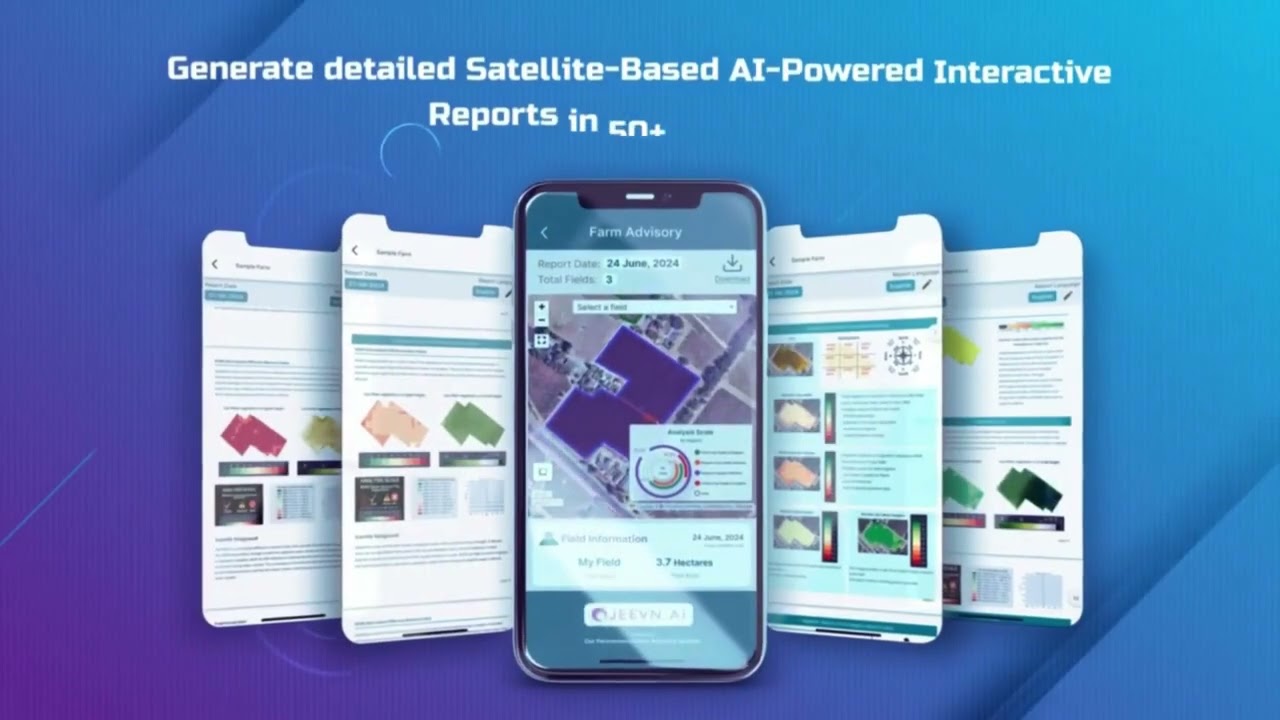
Our team at Farmonaut leverages satellite imagery and AI to deliver real-time alerts and customized insights for crop health and soil vitality, made even more powerful when augmented with localized 3d-printed sensors.

🌟 Key Advantages of Printed Monitoring Devices
- 🔍 Customized calibration for soil and crop types—avoiding “one-size-fits-all” errors.
- 🦾 Durability, repairability, and modifiability for variable field conditions.
- ⚡ Energy efficiency by integrating sensors directly onto equipment.
- 💡 Affordability—lower cost per device democratizes precision farming.
- ⭐ Simplicity—made for the user, not just the engineer.

Monitor crops effortlessly with Farmonaut’s iOS app—real-time alerts, satellite imagery, and more.
5. Next-Gen Materials: Biodegradable & Customizable for Agriculture
Modern agriculture 3d printing is no longer limited to basic plastics. Additive manufacturing now supports a vast range of biodegradable, composite, and sustainable materials—from recycled biopolymers to fiber-reinforced blends. These materials can be tailored for durability, flexibility, or environmental decomposition rates to perfectly match various on-farm applications.
- 🟩 Eco-Friendly Choices: Use agricultural waste-based polymers for a truly circular solution.
- 🟫 Custom Degradation Rates: Fine-tune biodegradability to ensure optimal lifecycle—e.g. packaging that composts, but irrigation nozzles that last the season.
- 🚀 Material Innovation: Imbue seed coatings and soil amendment inserts with embedded nutrients or protected microbe colonies for yield boost.
- 🌎 Environmental Impact: Reduced reliance on virgin plastics and harmful synthetics.
This expansion of material options positions 3d printing as an ally for both productivity and planetary health.

6. Biological & Environmental 3D Printing Applications
The frontier of agriculture 3d printing is moving into bio-functional components—such as 3d-printed seed coatings embedded with nutrients, biocontrol agents, or microbial consortia. This paves the way for innovations including:
- 🌿 Enhanced Seed Germination: Print coatings that regulate moisture, nutrition, or protect seedlings in early stages.
- 🌾 Soil Remediation: Deploy bioactive printed matrices that restore degraded soils by gradually releasing soil amendments.
- 🦠 Targeted Crop Protection: Print structures that deliver pest-control agents only when specific environmental conditions are met.
Such applications add a new layer of precision to eco-friendly agriculture, reducing chemicals’ overuse and enabling smarter, sustainable practices.
🌱 Environmental Gains from Biological 3D Printing
- 🔗 Maximizes resource efficiency, ensuring inputs reach the right place and time.
- 🧬 Minimizes chemical runoff and environmental side effects.
- 🌍 Facilitates regenerative farming ecosystems with closed nutrient cycles.
See how Farmonaut empowers sustainable agriculture with advanced carbon footprinting tools.

7. Digital Design & On-Farm Fabrication Ecosystems
The convergence of digital design repositories and on-site 3D fabrication marks a new era of agricultural manufacturing. Farms are no longer passive recipients; they are becoming centers of innovation.
- 🟦 Open-Source Libraries: Farmers access digital designs for spare parts, tools, sensors, and packaging—adapting them for local or crop-specific requirements.
- 🟩 Community-Driven Improvement: Share and iterate on designs and best practices, speeding up development cycles.
- 🟧 Integrated Farm Management: Real-time digital blueprints tie directly into satellite-driven fleet and farm management applications for logistics and traceability.
This digital-fabrication synergy is central to the future of resilient, adaptive agriculture. As adoption soars in 2025–2026, these systems will underpin flexible, highly productive farming practices the world over.
Explore Farmonaut’s product traceability platform powered by satellite and blockchain—a perfect complement to a digitally-enabled, 3d-printed agricultural ecosystem.
Comparison Table of 3D Printing Innovations in Agriculture (2025—2026)
| Innovation Name | Primary Application | Estimated Cost Reduction (%, 2025–2026) | Environmental Benefit | Projected Adoption Rate by 2026 (%) |
|---|---|---|---|---|
| Custom Farm Tools | Precision tool fabrication | 30–45% | Reduces resource & energy waste | 68% |
| On-Site Spare Parts | Machinery maintenance | 35–60% | Lowers transport/packaging waste | 74% |
| Sustainable Seed Packaging | Biodegradable & printed on demand | 20–35% | Cuts single-use plastic waste | 56% |
| Precision Monitoring Devices | Sensor fabrication for soil/crop | 40–65% | Optimizes inputs, avoids over-application | 63% |
| Biodegradable Materials Production | Eco-friendly material integration | 15–30% | Promotes circular resource use | 60% |
| Biological Printing (seed coatings, etc.) | Nutrient & protective layers for seed | 20–40% | Minimizes chemical input/runoff | 47% |
| Digital Design/Fabrication Ecosystems | Open-source, collaborative production | 30–70% | Reduces transport & stockpiling | 79% |
Future Prospects, Challenges, and Mitigation Strategies for Agriculture 3D Printing (2025–2026)
🚀 Opportunities & Prospects
- 🌟 Unprecedented Customization: Farms modify tools and parts instantly for evolving crops, climates, and resource management strategies.
- 🔍 Localized Manufacturing: Decentralized fabrication increases resilience, especially during supply chain disruptions or emergencies.
- 🔗 Better Resource Use: Materials and production are optimized for actual rather than projected demand—leading to less waste and lower carbon footprints.
- 🌿 Ecosystem Integration: Agriculture 3D printing bridges the gap between digital farm planning and physical implementation, driving smart, sustainable practices.
- 👩🌾 Empowering Smallholders: Lowering technological barriers makes advanced agriculture accessible to smaller operators worldwide.
⚠️ Key Challenges & Mitigation
- 👨💻 Training Needs: Farmers and technicians need skill development for 3D design, operation, and maintenance. Solution: Continuous extension programs and accessible digital learning.
- 🖥 Digital Divide: Reliable internet and digital infrastructure must be in place. Solution: Community fabrication centers and downloadable offline design repositories.
- 🔐 Intellectual Property: Copyright and open-source use disputes must be navigated for digital tool libraries.
- ⚡ Energy Consumption: Sustainable energy sources and efficient printers will be critical to realizing the environmental edge.
- 🧪 Material Sourcing: Developing low-cost, safe, biodegradable materials is still a work in progress.
Farmonaut: Advanced Satellite-Driven Insights for Next-Gen Agriculture
While 3D printing powers innovation at the hardware level, precision agriculture also demands actionable, real-time intelligence. At Farmonaut, we deliver satellite-based monitoring, blockchain traceability, and AI-powered advisories to unify digital data and physical action.
- 🛰 Satellite-Based Monitoring: Multispectral imaging for soil, crop, and infrastructure assessment. Ideal for large-scale and remote farm management.
- 💻 AI-Driven Advisory: Real-time insights, weather forecasts, and crop-specific strategies via the Jeevn AI Advisory System.
- 🔗 Blockchain Traceability: Ensure supply chain authenticity for produce and agricultural commodities. Learn more on our Product Traceability page.
- 📦 Fleet & Resource Management: Optimize vehicles, logistics, and machinery through robust analytics. Get started with Fleet Management today.
- 🌍 Environmental Impact Tools: Track carbon footprint and mitigate emissions—find out more on the Carbon Footprinting page.
Our platform catalyzes the convergence of digital and printed technologies—turning farm data into custom hardware and actionable field practices. The result: optimized yields, minimized losses, and measurable environmental gains.

For advanced integrations and API access, explore Farmonaut’s public API or visit our Developer Documentation.
FAQ: Agriculture 3D Printing in 2026
-
What are the main benefits of agriculture 3d printing for farmers?
Agriculture 3d printing offers rapid customization of tools and parts, on-site manufacturing to reduce downtime, sustainable biodegradable packaging, and affordable access to precision monitoring devices.
-
Can smallholder farmers access 3D printing technologies?
Yes. With decreasing costs, widespread access to open-source designs, and community fabrication hubs, 3d printing technology is becoming accessible for farms of all sizes.
-
Are biodegradable 3d-printed materials as durable as conventional plastics?
Modern 3d-printing supports a range from fast-degrading packing to season-long tool durability—tailor the material for the need.
-
How do 3d-printed monitoring sensors integrate with digital agriculture platforms?
Printed sensors can be linked to farm management software, satellite imagery (like Farmonaut), and IoT networks for real-time, automated decision systems.
-
What challenges need to be addressed for broader adoption?
Major challenges include training, digital infrastructure, sustainable energy, and open-source legal frameworks. Hybrid models and extension support can help overcome barriers.
Conclusion: Revolutionizing Farming with Agriculture 3D Printing by 2026
Agriculture 3d printing stands as one of the most transformative forces shaping the future of farming in 2026 and beyond. With capabilities ranging from bespoke tool production, on-site spare part fabrication, sustainable packaging, biological applications, to precision monitoring—the era of adaptive, data-driven, and circular farming has arrived. This technological revolution reduces waste, boosts productivity, and makes farming both more resilient and environmentally responsible.
As we move into an age where digital and printed innovation converge, we at Farmonaut continue to make actionable, satellite-driven insight accessible and affordable for farms of all sizes—empowering smarter, more sustainable agricultural ecosystems worldwide.
Ready to integrate satellite, AI, and 3D-printing driven solutions into your agricultural workflow?
Explore Farmonaut’s API for custom, integrated agri-tech solutions.
See Developer Docs

 Godrej Agrovet
 Hayleys Agriculture
 Linx Agritech
 Adinet
 Save Your Soils
 GalaxEye Space
 Grandstream Algérie
 XOS Realty
 Geospatial Lab Africa
 Agro La Gándara
 HIPSAC
 ZOL Zimbabwe
 Juligerm
 AdBio
AdBio MISE Maroc
 NWNS
NWNS Red August Group
 Farm Inc
 WeMe Global
 Agrotoken
 Blue BearX
 Insignito
 DnCubed
 Indosistim Teknologi
 Liquify Digital
 CU Foods
 BeyondTech Global
 Rouge VC
 AgroRisk
 Oath Inc
 Esri North East Africa
 MDCV UK
 Etech Consulting Madagascar
 Vestlandsforsking
 WB Dev
 Sama Premium
 Tres Valles
 Blickwinkel
 Agricultural Credit Policy Council
 eKGIS
eKGIS Mostas Tech
 Andex
Andex Deluxe Conseil
 WICO
WICO Chimera Innovation
 SkyHarvest
 Teledarbas
 Exurbia Geospatial
 FieldZero
