

Bio Agriculture & Agri-Technology: 7 Technologies Reshaping US Farms
Reviewed August 2026 against USDA Economic Research Service, USDA Agricultural Research Service, and USDA NASS (via ISAAA) data.
Try it: Run your own numbers →
Bio agriculture combines genetic-level crop improvement—gene editing, biofortification, engineered traits—with data-driven agri-technology like satellite monitoring, drones, and robotics. In the United States, 27% of farms used precision agriculture practices in 2023, and adoption of herbicide-tolerant and insect-resistant crop varieties now exceeds 90% for corn, cotton, and soybeans. This article breaks down what each technology actually does, how many US farms use it, what it saves or earns per acre, and where to check the numbers yourself as they update.
Summary: Bio Agriculture and Agri-Technology in US Farming
“Bio agriculture” and “agri-technology” describe two connected but distinct tracks of change on US farms. Biotechnology works inside the plant—gene editing and trait engineering that change what a crop can tolerate or resist. Agri-technology works around the plant—sensors, satellites, drones, and robotics that change how a farmer sees and manages a field. Both tracks are already measurable in USDA data, not just projected: the USDA Economic Research Service (ERS) reported 27% of US farms using precision agriculture practices in 2023, rising to 68% among large-scale crop farms using yield monitors, yield maps, and soil maps in the same year, according to USDA ERS.
Note: Farmonaut is not a seller or manufacturer of farm inputs or machinery, nor a regulatory body. Our focus is delivering satellite technology solutions and tools to optimize, monitor, and manage farm efficiency and sustainability for individual farmers, agri-businesses, and governments.



US Adoption Data: How Widespread Is Bio Agriculture, Really?
Before comparing individual technologies, it helps to see the baseline. USDA’s Economic Research Service found that 27% of US farms had adopted at least one precision agriculture practice as of 2023, but adoption is far from uniform: 68% of large-scale crop operations used yield monitors, yield maps, and soil maps, compared to a much smaller share of small and mid-size farms, per the same USDA ERS chart.
On the genetic-engineering side of bio agriculture, adoption is close to saturation for the major row crops. USDA NASS data reported via ISAAA’s January 2025 update shows 96% of US soybean acreage planted with herbicide-tolerant varieties in 2024, alongside 93% of cotton acreage and 90% of corn acreage. Insect-resistant (Bt) traits reached 86% of corn acreage and 90% of cotton acreage the same year, according to ISAAA Crop Biotech Update, citing USDA NASS.
These figures are not static snapshots—USDA NASS republishes GE crop adoption percentages annually through its Agricultural Survey, with the next update expected around June. Readers who want the current-year figure rather than the 2024 numbers cited here should query USDA QuickStats directly, filtering by state, crop, and trait category (for example, “Corn, Genetically Engineered, Herbicide Tolerant”).

Biotechnology: Precision at the Genetic Level
Biotechnology—gene editing and genetic engineering—modifies plant genomes directly, rather than relying on the slower, less targeted process of conventional cross-breeding. Tools built on CRISPR-Cas9 and related trait-engineering platforms let breeders introduce specific traits: drought tolerance, pest resistance, or improved nutrient uptake, without waiting for multiple generations of selective breeding.
- Herbicide-tolerant traits now cover 96% of US soybean acreage, 93% of cotton acreage, and 90% of corn acreage (2024, USDA NASS via ISAAA)
- Insect-resistant (Bt) traits cover 86% of US corn acreage and 90% of US cotton acreage (2024, same source)
- These traits reduce reliance on broad-spectrum insecticide applications and simplify weed management programs, which lowers input costs and field-pass counts
Beyond herbicide and pest-resistance traits, biofortification research aims to enrich staple crops with additional vitamins, minerals, and amino acids. Synthetic biology is also producing microbial inoculants and biofertilizers intended to reduce dependency on synthetic fertilizer. Neither of these has a published US farm-level adoption percentage in USDA data at this time—if you need a current figure for a specific crop or state, USDA NASS QuickStats and USDA ERS’s topic pages on biotechnology are the primary sources to check, since neither this article nor any single public dataset currently synthesizes that breakdown.

Agri-Technology: Robot Technology, Satellites, and Smart Farming
Agri-technology covers the sensing, automation, and analytics layer that surrounds the crop rather than altering it genetically. In the US this spans satellite and remote-sensing platforms, IoT field sensors, robot technology in agriculture (autonomous tractors, sprayers, and drones), and AI-driven advisory tools.
- Remote sensing and satellite imagery deliver crop-health and soil-condition data directly to a farmer’s phone or desktop
- IoT sensors collect real-time field-condition data (soil moisture, temperature, canopy status)
- Robot technology in agriculture—drones and autonomous machinery—automates scouting, spraying, and increasingly, harvesting
- AI-powered analytics convert sensor and imagery data into input-timing and resource-allocation recommendations
- Blockchain is being tested for supply-chain traceability and trust (see our Traceability Solutions)
The market size for this layer is growing measurably. The US agricultural drone market was valued at $1.2 billion in 2025, and the broader US agricultural robots market reached $4.3 billion the same year, according to IMARC Group market research. The US smart agriculture market—which includes precision ag software, sensors, and connected equipment—was sized at $7.95 billion in 2025 per Precedence Research. Separately, an industry analysis of US commercial farms found 27% reporting use of agricultural drones in 2024 (IMARC Group).
These are market-size figures in dollars, not farm-adoption percentages—USDA does not currently publish a single consolidated source tracking what share of US farms, by region or crop, use drones or field robots. Market research firms like IMARC Group and Precedence Research update these dollar-value estimates annually, typically in Q1 reports, if you need a more current figure than the 2025 numbers cited here.
Comparing 7 Top Agricultural Technologies
The table below lines up seven agricultural technologies against the figures documented above—no adoption percentage or dollar value here is invented; where USDA or market research has not published a number, the cell says so directly.
| Technology | What It Does | Documented US Figure | Source & Period |
|---|---|---|---|
| Precision Agriculture (overall) | Site-specific monitoring and input management using AI, satellite, and sensor data | 27% of US farms adopted; 68% of large-scale crop farms use yield monitors/maps/soil maps | USDA ERS, 2023 |
| Herbicide-Tolerant Crop Traits | Genetically engineered tolerance allowing targeted herbicide use | 96% soybean, 93% cotton, 90% corn acreage | USDA NASS via ISAAA, 2024 |
| Bt Insect-Resistant Traits | Built-in resistance to specific insect pests | 86% corn acreage, 90% cotton acreage | USDA NASS via ISAAA, 2024 |
| Agricultural Drones | Aerial scouting, spraying, and field mapping | 27% of US commercial farms report use; $1.2B US market size | IMARC Group, 2024–2025 |
| Agricultural Robots (ground) | Autonomous planting, weeding, and harvesting machinery | $4.3 billion US market size | IMARC Group, 2025 |
| Smart Agriculture Software/Sensors | Connected platforms combining data, advisory, and equipment integration | $7.95 billion US market size | Precedence Research, 2025 |
| Biofortification & Microbial Inoculants | Nutrient-enhanced crops and biological soil/fertility inputs | No single published US adoption figure; check USDA NASS QuickStats by crop and state | Not published (see Gaps note above) |
Precision Ag Input-Savings Calculator
Enter your own acreage and per-acre input cost to see the documented USDA input-waste-reduction and operating-profit ranges applied to your farm, rather than a generic industry average.
Run your own numbers
Assumptions: uses USDA Agricultural Research Service’s documented 40–60% input-waste-reduction range and USDA ERS’s documented $118/acre average annual economic value and $66/acre higher operating profit for precision agriculture adopters (2023 figures). This is a planning estimate only—it excludes equipment financing, subscription or hardware costs, and assumes your farm’s input mix and soil variability are within the range USDA studied. It does not account for crop type, region, or existing precision-ag investment.
How Farmonaut Supports Precision Agriculture with AI, Blockchain & Satellite Data
Farmonaut provides satellite-based agri-technology tools to farmers, agri-businesses, governments, and financial institutions.
- Our Android, iOS, and Web/Desktop apps deliver real-time crop monitoring, soil health data, and AI-based agricultural advisory.
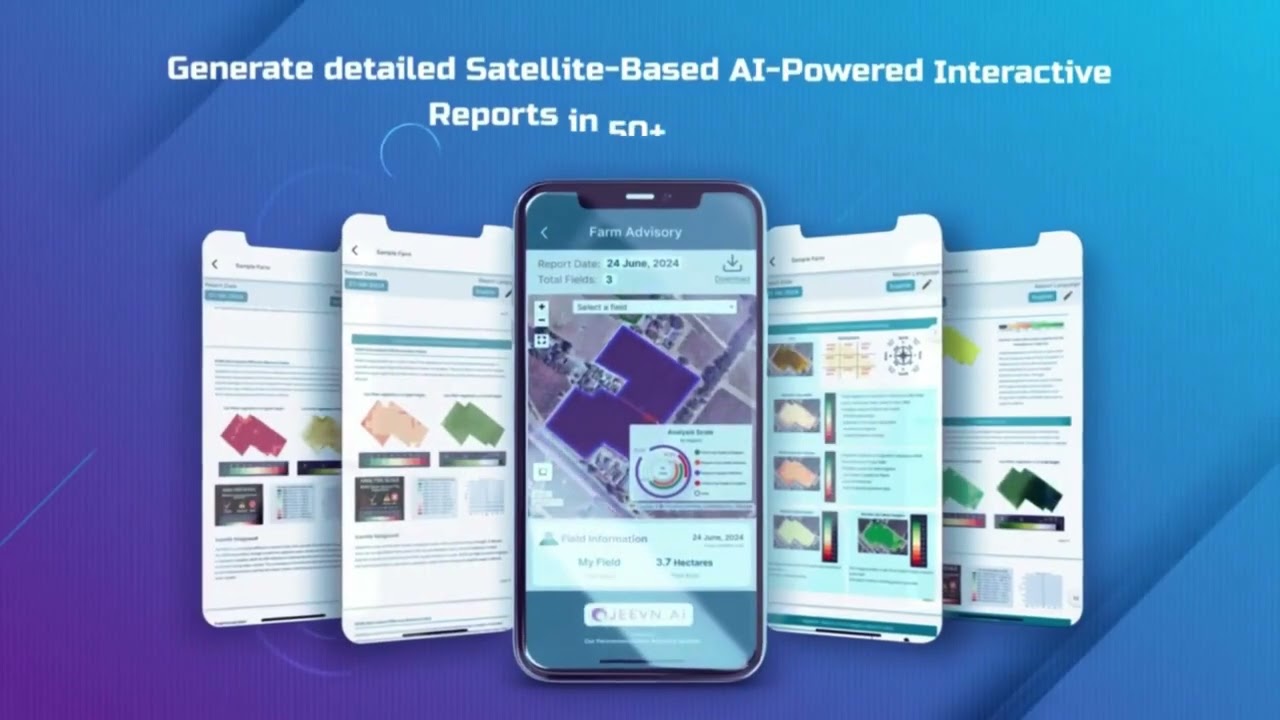
- The Farmonaut Jeevn AI Advisory System provides field-specific, actionable insights—fusing satellite data with AI to support crop management decisions.
- Blockchain-based traceability supports transparency in the supply chain. Learn about Product Traceability
- Resource and fleet management capabilities let agri-enterprises track machinery and logistics. Explore Fleet Management Solutions
- Carbon footprint tracking tools help monitor the environmental impact of agricultural operations. See Carbon Footprinting Service
Through our open API platform, agricultural software developers can integrate Farmonaut’s satellite and weather data into their own workflows and products (Access API, API Developer Docs).
Sustainability & Climate Resilience
Precision agriculture’s documented benefits extend beyond input savings into land-use efficiency. USDA ERS estimates that improved land-use efficiency from precision agriculture has conserved 11.4 million acres of US cropland, based on 2023 analysis (USDA ERS). Separately, the USDA Agricultural Research Service documents a 20–30% yield improvement range attributable to precision agriculture adoption, alongside the 40–60% input-waste reduction cited above, per USDA ARS.
- Climate-resilient crop traits: gene-edited and conventionally bred varieties targeting drought and heat tolerance.
- Precision irrigation and water management: sensor and satellite-based systems supporting more targeted water application. See how Farmonaut’s platform uses satellite data for this purpose.
- Carbon footprint tracking: soil and practice-level monitoring to support emissions reporting. Learn more about our carbon footprint management tools.
- Blockchain traceability: supports verification of sustainable-practice claims through the supply chain.
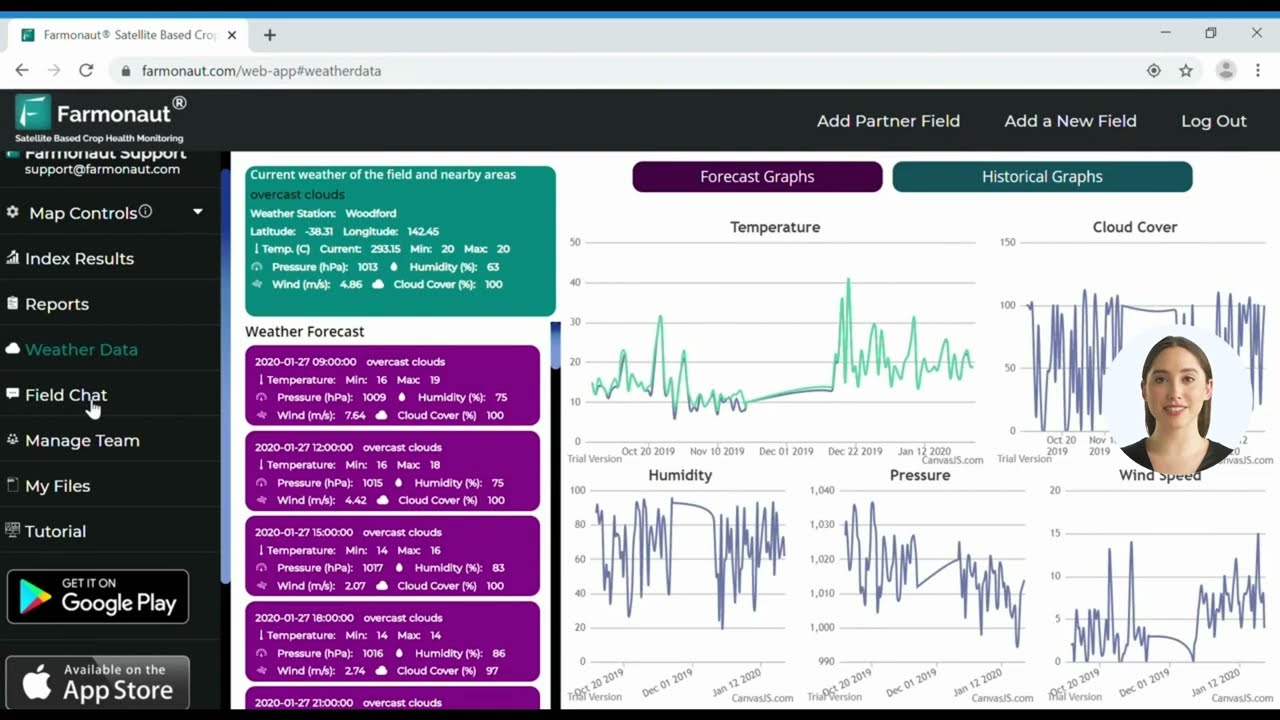
Farmonaut Product Solutions
Farmonaut offers a suite of technologies addressing the agri-technology needs described above:
- Satellite Crop Monitoring: Monitor fields, vegetation health (NDVI), and soil conditions. Try it via our app/web platform or see large-scale farm management solutions.
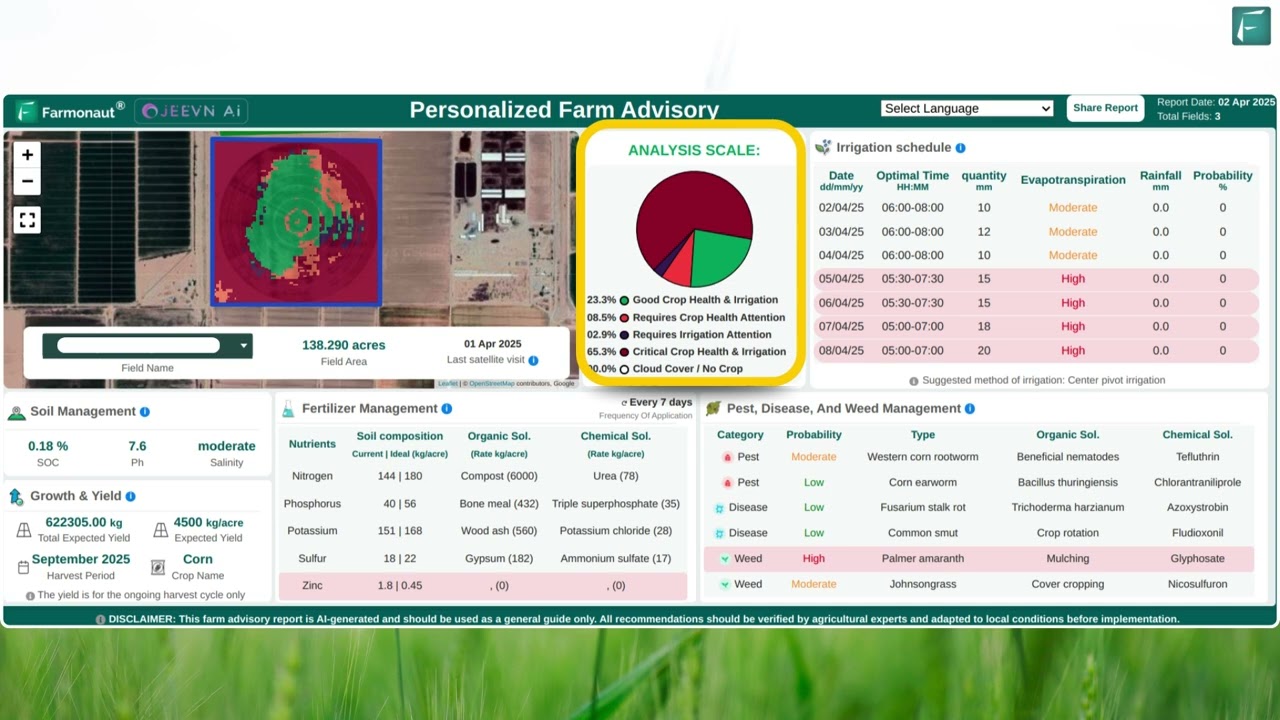
- AI-Driven Advisory: Real-time, tailored guidance for crop management and planting schedules, powered by JEEVN AI and satellite analytics.
- Blockchain Product Traceability: Supply-chain transparency for produce authenticity. Read how.
- Environmental Impact & Carbon Footprinting: Monitor emissions and track sustainability metrics. More details here.
- Crop Loan & Insurance Verification: Data-driven support for financing decisions. Explore crop loan/insurance support.
- Fleet Management: Track equipment use and operational logistics. Learn about fleet solutions.
- Crop, Plantation & Forest Advisory: Insights extending beyond row crops to plantations and forest management. See this service
FAQ: Bio Agriculture and Agri-Technology
- What are the main benefits of biotechnology in agriculture?
-
Biotechnology enables targeted genetic improvement to increase crop yields and build resilience while reducing reliance on chemical inputs. In the US, herbicide-tolerant traits already cover 90–96% of corn, cotton, and soybean acreage, and Bt insect-resistant traits cover 86–90% of corn and cotton acreage (2024, USDA NASS via ISAAA).
- How does precision agriculture improve farm efficiency?
-
Precision agriculture uses satellites, AI, and IoT sensors for site-specific crop and soil monitoring. USDA’s Agricultural Research Service documents a 20–30% yield improvement range and 40–60% input-waste reduction from adoption, and USDA ERS found adopters earn $66/acre more in annual operating profit than non-adopters (2023 data).
- What is robot technology in agriculture, and how common is it?
-
Robot technology in agriculture covers autonomous tractors, sprayers, harvest equipment, and drones. The US agricultural robots market was valued at $4.3 billion in 2025, and 27% of US commercial farms reported using agricultural drones in 2024, per IMARC Group market research. USDA does not currently publish a consolidated farm-adoption percentage for ground robots specifically.
- What counts as agri-technology versus bio agriculture?
-
Bio agriculture refers to genetic-level crop modification—gene editing, trait engineering, biofortification. Agri-technology refers to the sensing and automation layer around the crop—satellite monitoring, IoT sensors, drones, robotics, and AI advisory. Both are documented separately in USDA and market-research data, as shown in the comparison table above.
- What role does Farmonaut play in agri-technology?
-
Farmonaut provides satellite-driven data, AI advisory, and blockchain tools to support data-informed decisions for farmers, agri-businesses, and governments—covering monitoring, resource management, traceability, and carbon tracking.
- Where can I find the current-year USDA adoption figures?
-
USDA NASS republishes GE crop adoption percentages annually via its Agricultural Survey, typically updated around June, at USDA QuickStats. Filter by state, crop, and trait category (e.g., “Corn, Genetically Engineered, Herbicide Tolerant”) for the latest published figure.
- Where can I access Farmonaut services?
-
Download our Mobile/Web App, use the API for developers, or explore our large-scale farm management suite for enterprises and governments.
Bio agriculture and agri-technology are no longer emerging concepts on US farms—they show up in USDA’s own adoption and economic data. Track the sources above as they refresh, and use tools like Farmonaut to put satellite-based agri-technology to work on your own fields.
Discussion
Questions, corrections or field experience? Share them below. First-time comments are reviewed before they appear, and your email is never published.
No comments yet. Be the first to add a question or your experience.

 Adinet
 Save Your Soils
 YelloSkye
 GalaxEye Space
 Grandstream Algérie
 XOS Realty
 Geospatial Lab Africa
 Agro La Gándara
 HIPSAC
 ZOL Zimbabwe
 Juligerm
 AdBio
AdBio MISE Maroc
 NWNS
NWNS Red August Group
 Farm Inc
 WeMe Global
 Agrotoken
 Blue BearX
 Insignito
 Licence holder · Niger · Gold
 Licence holder · Nigeria · Gold + lithium










