

Careers · A to Z pay guide
A to Z Agriculture Careers: Salary, Skills and Outlook
From agricultural engineer to zoologist: 26 agriculture careers with what each job involves, the 2025 US median wage where one is published, the job outlook to 2035 and the three main paths into the field.
Key takeaways
- 2025 US medians range from $35,660 for crop farmworkers to $130,100 for veterinarians; agricultural engineers earn $98,590 and farm managers $89,900 (O*NET, BLS wage data).
- Purdue’s USDA-funded study forecasts 104,766 US job openings a year for graduates in food, agriculture and natural resources from 2025 to 2030; 41% are in business and management.
- Hired farm managers averaged $30.70 an hour and crop farmworkers $18.24 in 2024 (USDA ERS Farm Labor Survey).
- Real wages for nonsupervisory farmworkers reached about 60% of nonfarm wages in 2024, up from just over half in 1990 (USDA ERS).
- In the EU only 10.7% of farm managers were under 40 in 2023 (Eurostat), so retirements will open many posts.
In this article
- A to Z agriculture careers at a glance
- A to Z agriculture careers salary overview table
- The 26 careers, from A to Z
- Pay compared: which agriculture careers earn the most?
- What farm work pays per hour
- Top 3 agriculture career paths: skills and how to start
- Agriculture careers salary outlook
- Calculator: does training for a better-paid role pay back?
- Technology and the new agriculture jobs
- How satellite data is changing farm careers
- Frequently asked questions
- Conclusion: choosing your agriculture career path
Agriculture careers pay anywhere from about $35,700 to $130,100 a year in the United States, depending on the job. Those are the 2025 median wages for crop farmworkers and for veterinarians in O*NET OnLine, which publishes US Bureau of Labor Statistics wage data. Between those two sit agricultural engineers at $98,590, farm and ranch managers at $89,900 and soil and plant scientists at $78,850.
This A to Z guide lists 26 agriculture careers, one for each letter, with what the job involves, the training it needs and the latest pay figure we could tie to a named source. It also compares pay and job outlook in charts, explains the three broad paths into the field and gives you a calculator to test whether training for a better-paid role pays back. If you want a shorter list of five roles with degrees and outlook, see our guide to agricultural careers and salaries.
A to Z agriculture careers at a glance
Agriculture is much more than farm work. The US Department of Agriculture funds a regular study at Purdue University on jobs for college graduates in food, agriculture, renewable natural resources and the environment. The Purdue USDA employment outlook forecasts an average of 104,766 job openings a year in the United States from 2025 to 2030. Only about one in five of those openings is in food and biomaterials production. The rest are in business and management, science and engineering, and education, communication and government services.
Europe shows the same need for new people. According to Eurostat farm labour statistics, about 8.4 million people worked in EU agriculture in 2023, but only 10.7% of farm managers were under 40 and 61.0% were 55 or older. Many farms will need new managers, advisers and technicians over the next decade.
The list below runs from A to Z. Where a career matches a US occupation in O*NET, we give its 2025 median wage. A median is the middle value: half of workers earn more and half earn less. Where no clean match exists, we describe the job without inventing a number.
A to Z agriculture careers salary overview table
This table shows the US occupations with a published 2025 median wage and job outlook. Pay is for wage and salary workers, so it leaves out most self-employed farmers. Projected openings are yearly averages for 2025 to 2035 and include people who leave or retire, not only new jobs.
| Occupation (O*NET) | Median pay, 2025 | Workers, 2025 | Outlook, 2025-2035 | Openings a year |
|---|---|---|---|---|
| Veterinarians | $130,100 | 91,100 | Much faster than average | 3,100 |
| Geographic information systems technologists* | $116,580 | 471,200* | Faster than average | 27,000* |
| Agricultural engineers | $98,590 | 1,500 | Much faster than average | 100 |
| Farmers, ranchers and other agricultural managers | $89,900 | 788,700 | Decline | 70,800 |
| Food scientists and technologists | $88,720 | 14,100 | Faster than average | 1,000 |
| Soil and plant scientists | $78,850 | 19,900 | Much faster than average | 1,400 |
| Conservation scientists | $73,010 | 27,700 | Faster than average | 2,100 |
| Animal scientists | $68,940 | 3,400 | Faster than average | 200 |
| Agricultural technicians | $49,630 | 19,500 | Faster than average | 2,800 |
| Farmworkers and laborers, crop, nursery and greenhouse | $35,660 | 546,800 | Decline | 72,500 |
*O*NET reports pay, workers and openings for GIS technologists under the wider group “computer occupations, all other”, so those figures cover more than farm mapping jobs. Source for all rows: O*NET OnLine summary pages, wages from the BLS 2025 survey, projections 2025-2035.
The 26 careers, from A to Z
A: Agricultural engineer
Agricultural engineers design farm machines, irrigation and drainage systems, storage buildings and the sensors and controls that run them. The O*NET agricultural engineers profile gives a 2025 median of $98,590 a year ($47.40 an hour). It is a small field, about 1,500 workers in the US, but O*NET rates its growth as much faster than average. Most jobs need a bachelor’s degree in agricultural or biological engineering. In Canada and the UK the role is often listed as agricultural or biosystems engineer.
B: Biotechnologist (plant and animal)
Biotechnologists use lab methods to improve seeds, animal health products and biological crop inputs. Many work for seed and animal health companies or universities. In the US federal data most of them fall under soil and plant scientists or animal scientists, so use those two medians as a guide. A master’s degree or PhD is common for research posts.
C: Conservation scientist
Conservation scientists help landowners and governments protect soil, water and rangeland. Many work for agencies such as the USDA Natural Resources Conservation Service. The O*NET conservation scientists page shows a 2025 median of $73,010 and about 2,100 openings a year.
D: Drone operator (agriculture)
Drone operators fly crop scouting and spraying drones and turn the images into field maps. In the US a commercial pilot needs an FAA remote pilot certificate, and spray drones need extra state and federal approvals. There is no separate federal wage series for this job; many operators are self-employed or work for farm service firms. Check the aviation and pesticide rules where you work before you offer the service.
E: Extension agent
Extension agents work for land-grant universities and bring research to farmers through field days, farm visits and short courses. The job suits people who like teaching. Pay follows university and county salary scales, and a bachelor’s or master’s degree in an agricultural subject is the usual entry point.
F: Farm manager
Farm and ranch managers plan crops or herds, hire staff, buy inputs, sell output and keep the books. O*NET puts the 2025 median for farmers, ranchers and other agricultural managers at $89,900. The USDA Economic Research Service (ERS) farm labor page reports that hired agricultural managers averaged $30.70 an hour in 2024, up 6.6% from the year before. The number of jobs is expected to decline slowly as farms merge, but about 70,800 openings a year are still forecast as older managers retire.
G: GIS and remote sensing analyst
GIS and remote sensing analysts turn satellite, drone and field data into maps that show where crops are stressed, where soil changes or where water is short. O*NET lists a 2025 median of $116,580 for GIS technologists and technicians, but that figure covers a wide group of computer jobs. Farm mapping roles at agronomy firms or co-ops may pay less. Skills in GIS software, Python and remote sensing matter more than the job title. Our guide to GIS jobs in agriculture and forestry covers this path in more depth.
H: Horticulturist
Horticulturists grow fruit, vegetables, flowers and ornamental plants, often in greenhouses, nurseries or orchards. Greenhouse growers with crop and climate control skills are needed wherever protected cropping is large, such as Canada, the Netherlands and the UK. Federal data group many of these roles under soil and plant scientists or under farm managers, depending on the job.
I: Irrigation specialist
Irrigation specialists design, install and run water systems such as drip lines, pivots and soil moisture sensors. Some are engineers; others are trained technicians. The work is busiest in dry regions such as California, the Great Plains and Australia’s Murray-Darling Basin.
J: Junior agronomist
A junior agronomist is the usual first job for agronomy graduates. You walk fields, take soil and plant samples and write crop advice under a senior adviser. In the UK, the National Careers Service agronomist profile notes that newcomers can study for the BASIS Foundation Award in Agronomy. In the US, the Certified Crop Adviser (CCA) credential plays a similar role.
K: Knowledge and data manager (agri-food)
Larger farms, co-ops and food companies collect field records, yield maps and traceability data. Data managers keep that information clean and useful. The role mixes database skills with an understanding of how farms work. For a related path, see our guide to the precision agriculture specialist role.
L: Livestock manager
Livestock managers run dairy, beef, pig or poultry units. They handle feeding, breeding, animal health and staff. Some large dairies include housing as part of pay. In US data these managers fall under farmers, ranchers and other agricultural managers.
M: Machinery technician
Machinery technicians service tractors, combines, sprayers and their guidance systems. Equipment dealers often look for trained staff, especially those who understand guidance and electronics. Many start through a dealer apprenticeship or a two-year diesel or ag equipment program.
N: Nutrient management planner
Nutrient planners write fertilizer and manure plans that meet crop needs and water rules. They need soil science training and, in many US states, a state certification. Fertilizer rates and record rules differ by state and country, so check the label and local rules and get professional advice for your own land.
O: Organic certification inspector
Organic inspectors visit farms and processors to check that they follow organic standards. Most are contractors paid per inspection. A background in farming or food safety helps, and certifiers train new inspectors. Our page on the agricultural scientist career shows how inspection fits alongside other science jobs.
P: Plant breeder
Plant breeders develop crop varieties with higher yield, better disease resistance or drought tolerance. They work at seed companies, universities and public research centres. Most posts need a master’s degree or PhD. In federal data they fall under soil and plant scientists, with a 2025 median of $78,850 according to the O*NET soil and plant scientists page.
Q: Quality assurance officer (food)
Quality assurance officers check that food and farm products meet safety and buyer standards. They run audits, keep records and handle recalls. Food science degrees lead here. O*NET gives food scientists and technologists a 2025 median of $88,720, according to the O*NET food scientists page.
R: Rural loan officer and agribusiness banker
Agricultural lenders assess farm business plans, land values and cash flow. They work for farm credit lenders, banks and co-ops. An agricultural economics or business degree and a farm background are common.
S: Soil scientist
Soil scientists study soil chemistry, structure and biology so that farms can keep yields up without losing soil. They work in labs, government agencies, consultancies and fertilizer firms. O*NET rates growth for soil and plant scientists as much faster than average, with about 1,400 openings a year.
T: Agricultural technician
Agricultural technicians help scientists run field trials and lab tests. The O*NET agricultural technicians page gives a 2025 median of $49,630 and about 2,800 openings a year. An associate degree or relevant work experience is often enough to start, which makes this a good entry route into science careers.
U: Urban farm manager
Urban farm managers run rooftop, indoor and community farms. The jobs are few, and many are with non-profits or start-ups, so pay varies widely. Skills in hydroponics, sales and community outreach help.
V: Veterinarian (farm animals)
Large-animal vets treat cattle, sheep, pigs and horses and advise on herd health. The O*NET veterinarians page lists a 2025 median of $130,100, the highest on our list, but it covers all vets, including pet clinics. Many rural areas in the US, Canada, the UK and Australia find it hard to recruit farm-animal vets. In the US you need a four-year Doctor of Veterinary Medicine degree, usually taken after a bachelor’s degree.
W: Water resource manager
Water resource managers plan how farms, towns and nature share water. They work for irrigation districts, catchment authorities and consultancies. Hydrology, engineering or environmental science degrees lead here.
X: Export and trade specialist
Export specialists handle contracts, shipping, certificates and buyer rules for grain, meat, fruit and other farm goods. Traceability skills are worth more as buyers ask where food comes from. Languages and a business degree help.
Y: Yield and crop data analyst
Yield analysts study yield maps, weather and satellite data to explain why one field or zone did better than another. Agronomy firms, insurers and grain buyers hire them. Statistics and GIS skills are the core of the job.
Z: Zoologist and wildlife biologist on farmland
Wildlife biologists work with farmers on habitat, pollinators and pest animals, often in agri-environment schemes. Many work for government agencies or conservation groups. A biology degree is the usual start, and field experience counts.
▶ Twenty careers in agriculture, what each job involves day to day and what it typically pays in the US. · 7:04
Pay compared: which agriculture careers earn the most?
The chart ranks the ten US occupations with a published 2025 median from highest to lowest. It uses one source and one year, so the bars are comparable. Remember that the GIS figure covers a wider group than farm mapping.
Chart
Median pay in US agriculture occupations
US$ per year, 2025 median wage
What farm work pays per hour
Hourly wages for hired farm work come from the USDA Farm Labor Survey. The ERS page reports 2024 average hourly wages of $18.24 for crop, nursery and greenhouse farmworkers, $17.23 for farm, ranch and aquaculture farmworkers, $19.07 for agricultural equipment operators, $26.83 for supervisors and $30.70 for hired managers. These are averages, not medians, so they are not directly comparable with the O*NET figures above.
The gap with other work is closing slowly. In 1990 the average real farm wage was just over half the average nonfarm wage for private-sector, nonsupervisory jobs. By 2024 it was about 60%: $18.12 an hour against $30.13, in 2024 dollars. ERS also notes that real farm wages grew 1.9% a year over the past ten years, faster than the 1.2% a year average since 1990.
Chart
Real hourly wages: farm vs nonfarm work
Average US$ per hour, nonsupervisory workers, in 2024 dollars
Top 3 agriculture career paths: skills and how to start
Most of the 26 careers above fall into three broad paths. The Purdue study groups its 104,766 yearly openings in a similar way, which helps show where demand is.
Chart
Yearly US job openings for graduates by career cluster
Average openings a year, 2025-2030 forecast
1. Business and management
This is the largest group, with 42,855 openings a year or 41% of the total in the Purdue forecast. It covers farm managers, agribusiness sales, lenders, buyers, traders and supply chain staff. Useful skills: farm finance, negotiation, staff management and record keeping. A degree in agricultural business or economics is common, but many managers learn on the job and add short courses. Some firms in this path also handle supply chain and product traceability work.
2. Science and engineering
This path has 22,298 openings a year, or 21%. It includes agronomists, soil and plant scientists, food scientists, engineers, vets and data analysts. Pay is above the farm average, and O*NET rates growth for several of these jobs as faster or much faster than average. Most roles need at least a bachelor’s degree; research roles need a master’s or PhD. Our page on careers in agriculture science goes deeper into this path.
3. Production, education and public service
Food and biomaterials production accounts for 19,725 openings a year (19%), and education, communication and government services for 19,888 (19%). This path covers farmers, growers, livestock staff, extension agents, teachers and inspectors. Entry is open to people without a degree, and farm experience is the main qualification for production jobs.
Agriculture careers salary outlook
The outlook is mixed. Farm and farmworker jobs are expected to decline slightly in number as farms grow larger and use more machines. Yet both still show large numbers of yearly openings because many current workers will retire. Science, engineering and veterinary jobs are expected to grow faster than average. The Purdue study expects strong demand for new graduates through 2030.
Pay depends heavily on location, employer size and experience. A farm manager on a large dairy in Wisconsin earns differently from one on a small vegetable farm in Vermont. Use the median as a starting point and check state or regional wage data before you negotiate. O*NET pages include a state wage link for each occupation.
Calculator: does training for a better-paid role pay back?
Many people move up in agriculture by adding a qualification: a two-year technician course, a crop adviser credential or a degree. This calculator compares your current pay with a target salary and shows how long the extra pay takes to cover the cost of training. The example values are for illustration only. Replace them with your own figures.
Try the numbers for your own farm below.
Calculator
How long does extra training take to pay back?
Enter your own pay, target salary and training cost.
- Your pay now per year: 37,440 US$
- Extra pay per year in the new role: 7,560 US$
- Extra pay over 10 years, less training cost: 55,600 US$
Example values only, not a forecast; every number is your input. The result ignores tax, wage rises, lost pay while training and interest on loans. Get professional advice before taking on study debt.
Technology and the new agriculture jobs
Farms now collect data from sensors, machines, drones and satellites. That has created jobs that did not exist twenty years ago: precision agriculture specialists, farm data analysts, drone operators and remote sensing analysts. It has also changed older jobs. Agronomists now read satellite crop maps before they walk a field, and machinery technicians fix GPS guidance as often as engines.
These skills carry across countries. A remote sensing analyst can work for clients in the US, Canada, Europe or Australia. Basic GIS, spreadsheet and data skills are worth adding whatever path you choose. Carbon reporting is another growing area, as food companies ask farms to measure their carbon footprint.

▶ Six plain steps to start precision farming, the skills behind many new agriculture jobs. · 4:18
How satellite data is changing farm careers
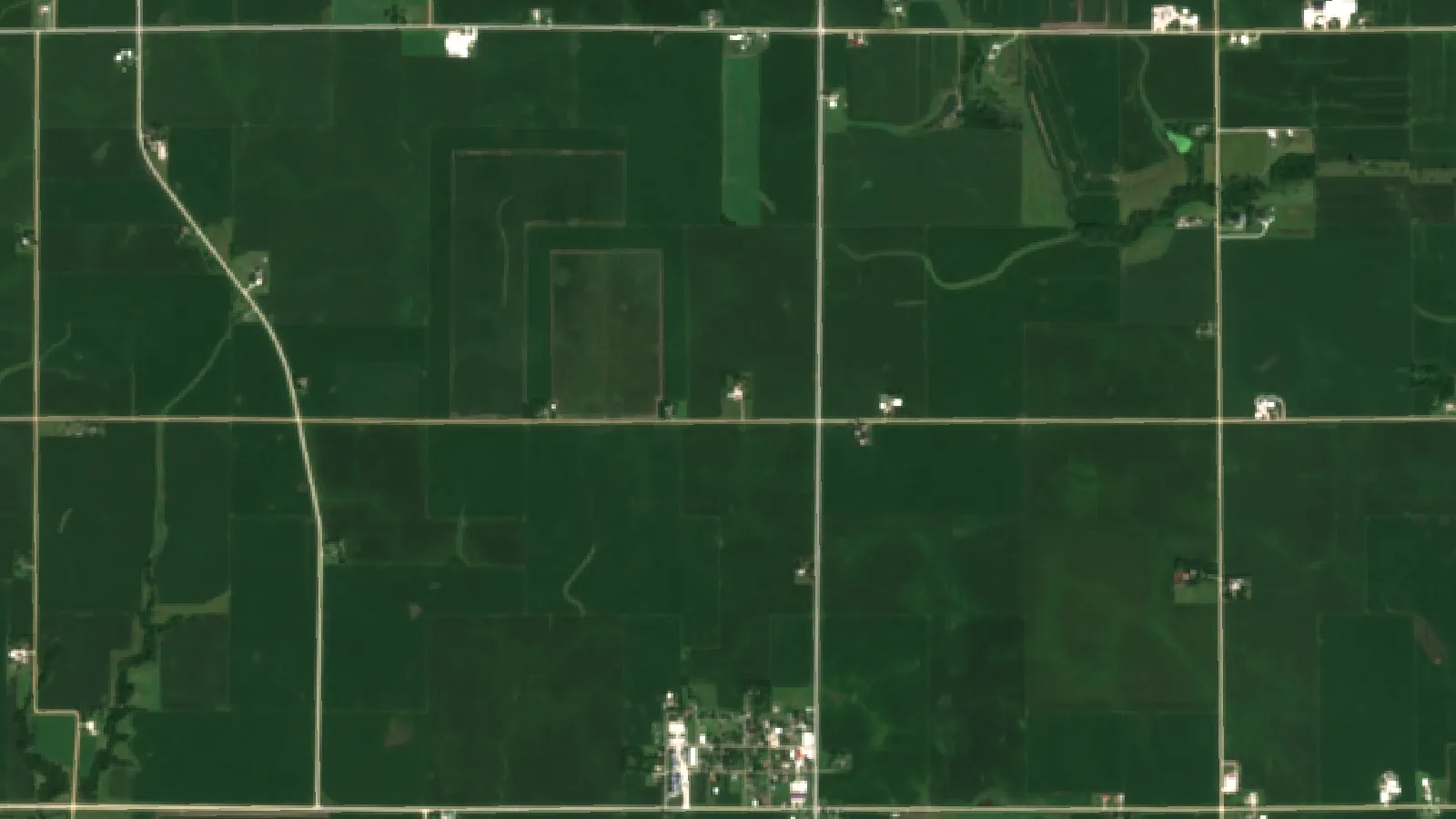
Satellites such as Sentinel-2 photograph most farmland every few days. Software turns those images into crop health maps, so an agronomist can see which parts of a field need a visit before leaving the office. This shifts time from routine scouting to advice and decisions. Graduates who can read vegetation indices, check them against field data and explain them to farmers are useful in agronomy, insurance, lending and supply chain jobs.
Farmonaut is one of the tools that offers satellite crop monitoring of this kind, on web and mobile. Related pages on our site: field monitoring app, large-scale farm management, farm vehicle tracking, satellite and weather data API.

▶ A walk-through of satellite crop monitoring on the web: crop health indices and field maps. · 8:43
Frequently asked questions
What is the highest paying agriculture career?
Among the US occupations in our table, veterinarians have the highest 2025 median wage, $130,100 a year (O*NET). That figure covers all vets. Agricultural engineers ($98,590) and farm managers ($89,900) are the highest-paid roles specific to farming.
How much does an agriculture degree pay?
It depends on the job you take. Graduate roles such as agricultural engineer, food scientist and soil scientist have 2025 medians from $78,850 to $98,590. Technician roles that need less training have a median of $49,630.
What does a farmworker earn per hour?
USDA ERS reports an average of $18.24 an hour for crop, nursery and greenhouse farmworkers in 2024 and $17.23 for farm, ranch and aquaculture workers. The O*NET median for crop farmworkers in 2025 was $17.15 an hour.
Are there agriculture jobs in mapping and GIS?
Yes. Agronomy firms, co-ops, insurers and governments hire GIS and remote sensing analysts to map crops, soils and water. O*NET lists GIS technologists in a wider computer group with a 2025 median of $116,580; farm-focused roles can pay less.
Can I work in agriculture without a degree?
Yes. Farmworker, equipment operator, machinery technician and many livestock jobs need experience rather than a degree. Agricultural technicians often start with an associate degree. Short credentials, such as a crop adviser certificate, can help you move up later.
Conclusion: choosing your agriculture career path
Agriculture offers jobs for every kind of person, from field and workshop roles to labs, offices and data desks. Pay in the US ranges from about $35,700 for crop farmworkers to $130,100 for veterinarians, and the best-paid farm-specific roles are in engineering and management. Retirements mean steady openings even in jobs that are not growing. Pick the path that fits your skills, check local wage data, and use the calculator above to test whether extra training is worth it for you.
Farmonaut crop monitoring
See fields the way agronomists now do
Draw a field once and Farmonaut shows satellite crop health maps for it through the season, on web, Android or iOS.




Sources
- O*NET OnLine, Agricultural Engineers (17-2021.00), 2025 wages and 2025-2035 projections: onetonline.org
- O*NET OnLine, Farmers, Ranchers, and Other Agricultural Managers (11-9013.00): onetonline.org
- O*NET OnLine, Food Scientists and Technologists (19-1012.00): onetonline.org
- O*NET OnLine, Soil and Plant Scientists (19-1013.00): onetonline.org
- O*NET OnLine, Farmworkers and Laborers, Crop, Nursery, and Greenhouse (45-2092.00): onetonline.org
- O*NET OnLine, Veterinarians (29-1131.00): onetonline.org
- O*NET OnLine, Agricultural Technicians (19-4012.00): onetonline.org
- O*NET OnLine, Conservation Scientists (19-1031.00): onetonline.org
- O*NET OnLine, Geographic Information Systems Technologists and Technicians (15-1299.02): onetonline.org
- O*NET OnLine, Animal Scientists (19-1011.00): onetonline.org
- USDA Economic Research Service, Farm Labor (topic page, 2024 Farm Labor Survey wages): ers.usda.gov
- Purdue University and USDA, Employment Opportunities for College Graduates in Food, Agriculture, Renewable Natural Resources and the Environment, 2025-2030: purdue.edu
- Eurostat, Farmers and the agricultural labour force – statistics (Statistics Explained): ec.europa.eu
- National Careers Service (UK), Agronomist job profile: nationalcareers.service.gov.uk
Discussion
Questions, corrections or field experience? Share them below. First-time comments are reviewed before they appear, and your email is never published.
No comments yet. Be the first to add a question or your experience.

 BW Pipelines
 WICO
 Gen Chayat
 Chimera Innovation
 Hiteshi Infotech
 SkyHarvest
 Polaris Digitech
 Teledarbas
 Wild Oak Farm
 SFX
 BACF Africa
 Doodlakine
 Exurbia Geospatial
 FieldZero
 Indico Company

 Licence holder · Niger · Gold
 Client · Tanzania · Gold
 Client · Somalia · Gold
 Client & affiliate partner · Ghana · Gold










