

Agricultural Careers List: 5 Top Careers & Salaries 2026
“By 2026, Agricultural Engineers are projected to earn up to $87,350 annually, reflecting tech-driven sector growth.”
“Employment for Agribusiness Managers is expected to rise 7% by 2026, driven by sustainable farming innovations.”
Table of Contents
- Summary: Top 5 Agricultural Careers in 2025 & 2026
- Agricultural Careers List—Sector Trends & Future Outlook
- 5 Agricultural Careers—In-Depth Role Breakdown
- Comparison Table: Top 5 Agricultural Careers in 2025
- Key Skills & Career Preparation Tips
- The Role of Technology & Sustainability in Agricultural Careers
- How Farmonaut Empowers Agricultural Professionals
- FAQ: Top Questions about Agricultural Careers & Salaries
- Conclusion & Next Steps



Summary: Top 5 Agricultural Careers in 2025 & 2026
Agriculture continues its pivotal role as a cornerstone of the global economy, providing not only essential food, but also fiber and biofuels to support an ever-growing population. With technological advancements and a laser-focus on sustainability, the agriculture sector is rapidly evolving. The field now offers a much broader spectrum of careers than ever before.
From hands-on farm management and environmental engineering to high-tech remote analytics and data-driven crop production, opportunities are abundant for those who are interested in contributing to food security, environmental stewardship, and rural development. In this comprehensive guide, we present an agricultural careers list highlighting the top 5 agricultural careers in 2025, including expected salaries, key responsibilities, essential skills, and the future outlook—with a focus on how technology and sustainable practices are shaping the sector’s future into 2026 and beyond.
- ✔ Diverse Career Paths: Management, sciences, engineering, and analytics roles available
- ✔ Competitive Salaries: Several roles now out-earn traditional corporates in many locations
- ✔ Sustainability Impact: Direct influence on regenerative and climate-smart agricultural practices
- ✔ Technology Integration: AI, satellite imagery, and IoT tools essential for modern agriculture
- ✔ Growing Demand: Driven by global food security and environmental challenges
The agriculture careers list and salaries for 2025-2026 show consistent, above-inflation growth compared to previous decades. Roles like agricultural engineer and soil scientist are increasingly tech-enabled, requiring professionals to adapt to smarter and more sustainable farming.

Agricultural Careers List—Sector Trends & Future Outlook
Agriculture is not what it was a decade ago. The sector has expanded well beyond traditional farming, spurred on by technological advancements and a focus on sustainable practices. Here’s how agricultural careers are being reshaped for 2026:
- Technology Integration: Precision agriculture and smart farming solutions—like satellites, AI, IoT sensors, drones, and blockchain—are now the bedrock of many high-paying agricultural careers.
- Sustainability Focus: As calls grow for regenerative agriculture and environmental stewardship, careers centered on resource management and eco-friendly solutions are increasingly sought after.
- Data-Driven Decision-Making: Roles requiring analysis and interpretation of big data—for both crop yields and climate adaptations—are rising sharply in demand.
- Changing Consumer Demands: A global trend toward traceability, organic farming, and food chain transparency is giving rise to new career opportunities, especially in agri-analytics and compliance roles.
- Skills Evolution: Today’s professionals need a hybrid skill-set combining biology, engineering, technology, and environmental science.
Incorporating data analysis and tech-skills—such as proficiency in GIS, satellite imagery interpretation, and blockchain—will make candidates stand out in their chosen agricultural career field. Explore Farmonaut’s mobile and web platform for real-time agricultural monitoring and AI-driven analytics!

- AI & Satellite-Enabled Crop Monitoring: Increasingly essential for farm productivity and sustainability
- Agri-Economics & Market Analytics: Vital for navigating volatile food prices and policy impacts
- Regenerative Farming Management: At the heart of global food security and climate resilience initiatives
- Infrastructure & Precision Engineering: Responding to the rise of automated farms and smart irrigation
- Supply Chain & Traceability Roles: Driven by consumer demand for quality, origin verification, and transparency
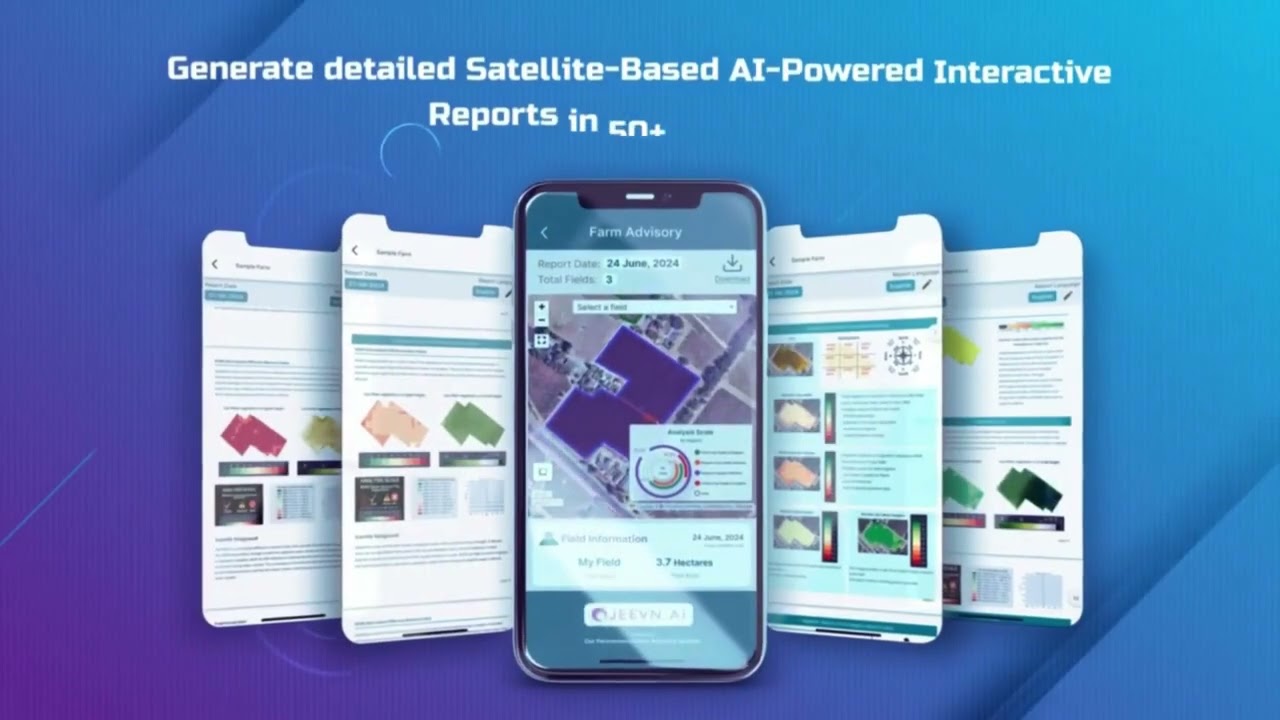
Overlooking the importance of soft skills—such as leadership, communication, and adaptability—in highly technical roles can limit long-term career progression. Employers in the agri-sector value professionals who combine tech savviness with stakeholder management.

5 Agricultural Careers—In-Depth Role Breakdown
The following agricultural careers list highlights the top five options for 2025-2026, each with significant opportunities, competitive salary ranges, and a strong sustainability focus. Let’s explore each profession, its scope, responsibilities, expected salaries, and future outlook.

1. Agricultural Engineer
Agricultural engineers blend engineering principles with agricultural science to improve modern farming practices. As the field harnesses robotics, advanced irrigation, and renewable energy, engineers play a pivotal role in shaping sustainable agricultural systems into 2026.
- Key Responsibilities:
- Designing and developing machinery (e.g., planters, harvesters, autonomous robots)
- Building and optimizing irrigation systems and water management infrastructure
- Creating improved livestock facilities, storage, and processing units
- Integrating renewable energy solutions, such as solar- or bio-powered systems
- Implementing smart farming technologies for precision agriculture
- Estimated Salary Range (2025-2026): $70,000 – $110,000 per year (USA/Canada major markets)
- Career Outlook: Strong, driven by demand for higher farm productivity, climate adaptation, and automation
- Key Skills: Mechanical/structural engineering, computational analysis, sensors/IOT integration, sustainability knowledge, project management
- Technology Trends: Robotics, AI-driven machinery, satellite analytics, IoT environmental sensing
- Sustainability Impact: Technology adoption and resource efficiency to minimize environmental footprint
- ✔ Key Engineering Role: Agricultural engineers apply machinery & tech to reshape farm productivity.
- 📊 Data Insight: Engineers using precision irrigation can reduce water use up to 35%.
- 🌱 Environmental Impact: Autonomous tractors and drone sprayers cut chemical waste and emissions.
- ⚠ Risk: Engineers must continually update digital and robotics skills to remain relevant.
Demand for engineers in climate-resilient agriculture and advanced automation is rising in Asia, North America, and Europe markets, with government and private sector investment accelerating post-2025.
- Fleet & Resource Management tools can optimize machinery use, logistics, and safety for engineers managing large operations or multiple farms.
- Carbon Footprinting Platform enables engineers and agribusinesses to track environmental impact and achieve regulatory compliance.
2. Soil and Plant Scientist
Soil and plant scientists conduct vital research to improve soil health, maximize crop yields, and develop resilient plant varieties. Their analyses drive evidence-based, sustainable agricultural practices and are critical to food security facing climate change in 2025-2026.
- Key Responsibilities:
- Analyzing soil composition, structure, and fertility
- Developing enhanced fertilizers and soil amendments
- Testing and breeding new plant varieties—resistant to pests, disease, and extreme weather
- Providing expert advice to farmers on precision farming, soil management techniques, and sustainable land use
- Conducting field trials and data collection to validate regenerative practices
- Estimated Salary Range (2025-2026): $55,000 – $95,000 per year
- Career Outlook: Robust, due to rising demand for experts in precision and regenerative agriculture, biofortification, and climate adaptation
- Key Skills: Laboratory research, environmental science, GIS mapping, data analytics, plant pathology
- Technology Trends: Satellite-driven soil monitoring, AI-based predictive analytics, automated sampling
- Sustainability Impact: Direct: Regenerative soil practices, biodiversity enhancement, and reduced chemical reliance
- ✔ Soil Science: Fundamental for long-term productivity and resilient food systems.
- 📊 Data Insight: Soil mapping and AI forecasts are boosting fertilizer efficiency by 30% in pilot projects.
- 🌱 Regenerative Focus: Promotes soil carbon capture, combating climate change.
- ⚠ Risk: Role is research-intensive, often requiring advanced degrees in soil science, agronomy, or plant pathology.
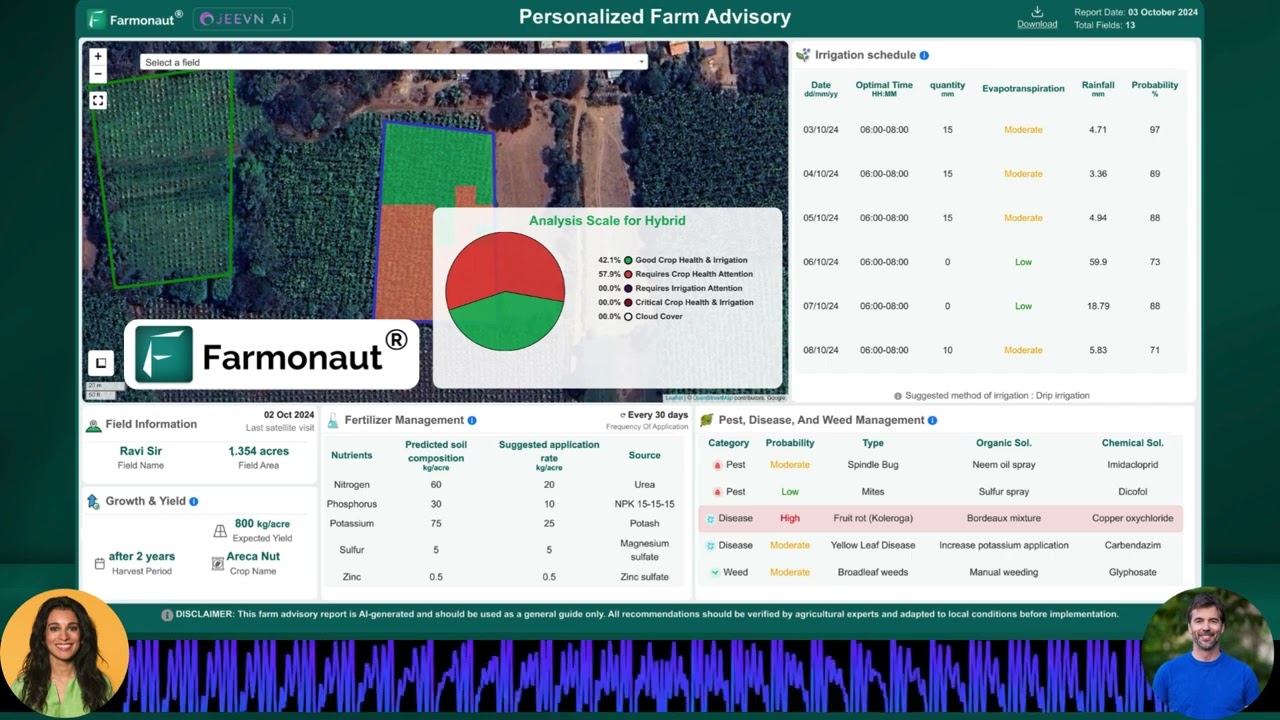
- Farmonaut Crop Plantation & Forest Advisory gives real-time crop and soil condition monitoring using satellite data. Ideal for scientists in field trials or advisory roles.
- Carbon Footprinting Platform is essential for those analyzing agriculture’s environmental impact and carbon reductions in regenerative farming.

Soil health is increasingly at the center of global agricultural policy: nations investing in plant research and regenerative techniques may see up to 15% improvement in yield resilience by 2026.
3. Agricultural Manager
Agricultural managers are the linchpin of modern farming operations: overseeing planning, resource management, labor, budgets, compliance, and adoption of new technologies. This role is evolving with large-scale agribusinesses also embracing digital and sustainable best practices.
- Key Responsibilities:
- Coordinate all aspects of planting, harvesting, and production cycles
- Budgeting, sales, and financial planning for profitability
- Manage labor relations, compliance, and health/safety protocols
- Strategize resource use and equipment deployment
- Implement data-driven farm management with sensors, apps, and satellite tools
- Estimated Salary Range (2025-2026): $60,000 – $120,000 per year, often higher in regions managing large or specialty farms
- Career Outlook: Projected 7% growth by 2026; managers who embrace sustainability and tech are particularly in demand
- Key Skills: Farm economics, leadership, operational logistics, digital tool proficiency, regulatory knowledge
- Technology Trends: Farm management software, satellite monitoring, IoT, remote analytics dashboards
- Sustainability Impact: High—implementation of climate-smart, water-saving, and energy-efficient practices across operations
- ✔ Central Management Role: Combines traditional farming know-how with tech-savvy leadership.
- 📊 Data Insight: Managers using analytics dashboards see 25% faster troubleshooting and decision cycles.
- 🌱 Sustainability Impact: Adoption of precision input management reduces waste and increases profitability.
- ⚠ Risk: Managers who resist tech adoption risk falling behind on productivity and compliance standards.
- Agro-Admin App for Large-Scale Farm Management streamlines scheduling, resource allocation, and compliance tracking digitally.
- Crop Loan & Insurance: Satellite-based verification simplifies access to agricultural financing and risk coverage for managers and landowners.
Use centralized digital dashboards and real-time analytics to enhance multi-farm oversight—even remotely. Farmonaut’s platform offers powerful solutions for agricultural managers seeking to improve operational visibility and efficiency.
4. Agronomist
At the heart of maximizing crop production and soil management, agronomists work directly with farmers and researchers to optimize every variable in the farming equation. Their expertise is in huge demand as regenerative and climate-adapted practices become mainstream by 2026.
- Key Responsibilities:
- Field assessment and advisory services for crop rotation, pest management, and irrigation
- Conduct trials on new crops, seeds, and farming methods
- Research and recommend optimal fertilization and input timing
- Train farmers on sustainable practices and technology adoption
- Estimated Salary Range (2025-2026): $50,000 – $90,000 per year, with consulting agronomists earning more for specialized projects
- Career Outlook: Stable, with high importance for food security, sustainability initiatives, and climate-adaptive cropping
- Key Skills: Agronomy, plant pathology, pest/disease diagnostics, precision farming, communication
- Technology Trends: Satellite-guided input management, mobile advisory tools, big data field modeling
- Sustainability Impact: Significant—core role in promoting regenerative land use and minimizing chemical inputs
- ✔ Field Expertise: Agronomists are key link for farmers adopting advanced and sustainable approaches.
- 📊 Data Insight: Variable-rate application guided by agronomists can improve yields by up to 18% on average fields.
- 🌱 Regenerative Agriculture: Agronomists spearhead soil rebuilding and climate-resilient cropping.
- ⚠ Risk: Requires constant upskilling as technology and regulations evolve.
- Farmonaut Satellite & AI Crop Management Tools—Support agronomists with precision data for crop health, pest outbreaks, and water management.
Advisory services using satellite-backed analytics are increasingly trusted by progressive farmers—insights on traceability and climate-smart practices are top priorities through 2026.

5. Agricultural Economist
As global food systems face volatility due to policy changes, supply chain disruptions, and climate impact, agricultural economists have never been more crucial. They analyze market trends, pricing, regulations, and risk assessment to shape agricultural and agribusiness strategies from farmgate to export.
- Key Responsibilities:
- Conducting market research on pricing, demand, and trade flows
- Analyzing policy shifts, climate risks, and international regulations
- Financial modeling for crop and farm profitability
- Preparing reports for agribusinesses, governments, or NGOs
- Advising stakeholders on risk management, investments, and development strategy
- Estimated Salary Range (2025-2026): $65,000 – $110,000 per year (advanced or international consulting roles command even higher compensation)
- Career Outlook: Strong; critical to food policy, food security, and agri-investment planning globally
- Key Skills: Economics, data analytics, forecasting, policy analysis, quantitative research
- Technology Trends: Predictive analytics, farm financial platforms, supply chain blockchain analysis
- Sustainability Impact: High—shapes investment in sustainable farming and supply chain innovation
- ✔ Strategic Analyst: Economists help market players adapt to disruptions and capitalize on new opportunities.
- 📊 Data Insight: Big data models improve commodity market prediction accuracy by up to 23%.
- 🌱 Policy Influence: Crucial in steering investments toward sustainability and regenerative practices worldwide.
- ⚠ Risk: Roles often require advanced qualifications and a strong grasp of global regulatory environments.
- Blockchain Product Traceability Tools—Help economists and businesses track origin, movement, and authenticity while minimizing supply chain fraud.
Understanding agricultural economics and traceability tech is vital for those influencing agri-policy, food security strategies, and market innovations beyond 2025.
“By 2026, Agricultural Engineers are projected to earn up to $87,350 annually, reflecting tech-driven sector growth.”
“Employment for Agribusiness Managers is expected to rise 7% by 2026, driven by sustainable farming innovations.”
Top 5 Agricultural Careers in 2025: Roles, Estimated Salaries, and Future Prospects
| Career Title | Estimated Avg Salary (2025, USD) | Key Skills & Qualifications | Technology Use/Trends | Growth Outlook (to 2026) | Sustainability Impact |
|---|---|---|---|---|---|
| Agricultural Engineer | $70,000–$110,000 | Engineering, project management, robotics, renewable energy, systems design | Smart machinery, AI, IoT, satellite monitoring, precision irrigation | Strong—automation and climate-resilience drive demand | Reduces waste, enhances efficiency, supports climate adaptation |
| Soil and Plant Scientist | $55,000–$95,000 | Soil science, biology, laboratory analysis, GIS, plant breeding | Satellite soil analysis, AI modeling, genetic engineering | High—precision, sustainable farming expands | Improves soil health and boosts regenerative agriculture |
| Agricultural Manager | $60,000–$120,000 | Leadership, budgeting, tech adoption, compliance, logistics | Digital dashboards, IoT sensors, satellite resource tracking | Robust—7% rise projected by 2026 | Implements farm-wide sustainability on large scale |
| Agronomist | $50,000–$90,000 | Agronomy, field research, precision farming, farmer outreach | Satellite-guided input, mobile field apps, big data analysis | Stable—vital for food security & climate resilience | Advances regenerative and climate-smart crop management |
| Agricultural Economist | $65,000–$110,000 | Economics, analysis, forecasting, policy, risk assessment | Big data, blockchain traceability, market modeling | Strong—global food policy drives need | Influences policy and sustainable investment in food systems |
Key Skills & Career Preparation Tips
- ⭐ STEM Foundations: A strong base in science, technology, engineering, and mathematics is essential, especially for aspiring engineers, scientists, and agronomists.
- ⭐ Digital Literacy: Proficiency in data analysis, remote sensing tools, and digital farm platforms is a major differentiator in the modern agriculture careers list.
- ⭐ Environmental Stewardship: Understanding sustainability, ecology, and climate adaptation is crucial.
- ⭐ Communication Skills: Essential for consulting, management, and advisory roles to liaise between stakeholders, farmers, and government agencies.
- ⭐ Continuous Learning: Stay updated with the latest sector trends via courses, workshops, and agri-tech certifications.
Enhance your CV by participating in online data science challenges, research projects, or remote sensing internships. Understanding how to use platforms like Farmonaut can set you apart in agri-sector recruitment.
The Role of Technology & Sustainability in Agricultural Careers
Technological advancements and environmental awareness are deeply influencing agricultural career opportunities worldwide:
- 🚁 Remote Sensing & Satellite Monitoring: Used for real-time crop, soil, and resource assessment—offering actionable insights for managers, engineers, and scientists.
- 🤖 Automation & Robotics: Decreasing labor-intensive tasks and improving precision of input application.
- 📡 AI & Analytics: Data-driven decision making is now a must-have in everything from breeding programs to market analysis. Explore Farmonaut’s open API for integration.
- 🌱 Regenerative Practices: Growing focus on carbon-informed, biodiversity-friendly approaches with carbon tracking and environmental compliance.
- 🔗 Blockchain for Traceability: Used to track product history, ensure supply chain authenticity, and reduce fraud. Learn more about traceability in agriculture.
How Farmonaut Empowers Agricultural Professionals
At Farmonaut, we recognize the transforming landscape of agriculture and are dedicated to making satellite-driven insights both affordable and accessible for agricultural professionals—be it farmers, scientists, agribusinesses, or government agencies.
Through our advanced blend of satellite imagery, AI-based analytics, and blockchain technology, we provide solutions that support every phase of the agriculture value chain—crop health monitoring, field management, compliance, environmental tracking, and supply chain traceability.
- Real-time Field Monitoring for farmers, managers, and scientists to make data-driven decisions efficiently
- Jeevn AI Advisory System—Instant, AI-powered recommendations on crop status, weather, and resource optimization
- Blockchain Traceability enables economists and supply chain professionals to build trust and transparency for food safety mandates
- Fleet Management and Environmental Monitoring offers streamlined logistics and sustainability reporting for agribusinesses and large-scale farm managers
- Our API and developer tools help researchers and developers integrate actionable analytics into their own agri-tech systems
Try Farmonaut’s platform on web or mobile for hands-on experience of real-time satellite-based crop monitoring—now vital for top careers in agriculture.
FAQ: Top Questions about Agricultural Careers & Salaries
-
Which role on the agricultural careers list is expected to have the highest salary by 2026?
Agricultural managers commanding large-scale operations or specialized agribusinesses can expect the top salaries, ranging from $60,000 up to $120,000 per year or more in leading markets. However, specialized engineers and economists with advanced knowledge of technology may also achieve similar figures. -
Are new careers emerging in agriculture due to technology?
Absolutely! Careers in satellite image analytics, AI agronomy, data-driven farm management, and blockchain traceability are in high demand. -
How can I prepare for a tech-focused career in agriculture?
Cultivate both foundational scientific knowledge and digital/data analysis skills. Certifications in GIS, farm management software, and environmental compliance are valuable plus hands-on experience with platforms such as Farmonaut. -
What is the global job outlook for agricultural professionals?
Growing rapidly in all regions, particularly for roles focused on food security, sustainability, and digital transformation. Environmental challenges and technological leaps are creating new opportunities well beyond traditional farming. -
How does sustainability impact agricultural career prospects?
Understanding environmental stewardship and regenerative practices is essential for all agri-professionals—employers increasingly expect it, and government policy is steering in this direction for the foreseeable future.
Venture investment in agri-tech—at the crossroads of AI, remote sensing, and sustainability—continues to surge. Career seekers with hybrid technical-business backgrounds are best positioned for leadership, innovation, and consultancy roles in 2026 and beyond.
Conclusion & Next Steps
The agricultural sector in 2025 and beyond offers more than just trends—it delivers viable, rewarding career opportunities that combine tradition with innovation. Whether your passion lies in direct farm management, scientific research, engineering design, or market analysis, agriculture as a sector continues to be a cornerstone of both the global economy and our food futures.
- Invest in Digital & Analytical Skills: Equip yourself with tech-driven and data science tools relevant to the modern agriculture careers list and salaries.
- Prioritize Sustainability and Regenerative Practices: Align your career path with practices that ensure long-term sector relevance, enhance environmental stewardship, and respond to global demands for food security.
- Use Real-World Tools for an Edge: Explore Farmonaut for satellite observation, crop management, and environmental monitoring.
- Stay Informed of Policy and Market Trends: The intersection of policy, economics, and technology increasingly dictates the future shape of agricultural professions.
- Act Now: The best opportunities will go to those who adapt early, continuously learn, and leverage innovation for positive change in global farming.
No matter your starting point, the top 5 agricultural careers offer substantial, diverse, and impactful pathways for the coming decades. For enhanced visibility, efficiency, and sustainability in your agricultural career, start by integrating advanced digital platforms—such as those offered by Farmonaut.
Ready to join the next wave of agri-professionals?

 WeMe Global
 Pixxel
 Sapoznick Farms
 Agrotoken
 Blue BearX
 Insignito
 Croptimum
 DnCubed
 Field Capacity
 Indosistim Teknologi
 Liquify Digital
 CU Foods
 BeyondTech Global
 Rouge VC
 AgroGreen Dynamics
 AgroRisk
 Oath Inc
 Reddane Farming
 Esri North East Africa
