

Agriculture Digital Marketing: 7 Top Digital Tools 2026
“Over 70% of farmers plan to adopt at least three new digital marketing tools by 2026.”
Introduction: How Modern Agriculture Is Being Revolutionized
In 2026, the convergence of agriculture digital marketing and agricultural digital tools has not only redefined modern farming, but it has also unlocked unprecedented opportunities for efficiency, sustainability, and profitability. Populations continue to grow and climate challenges intensify across the globe, putting pressure on the agriculture sector to evolve. The integration of digital solutions is now a necessity for surviving—and thriving—in an increasingly competitive and complex landscape.
This article explores the powerful impact of agriculture digital marketing, agriculture digital tools, and agricultural digital tools in reshaping farming practices, opening direct access to markets, optimizing resource management, and empowering farmers through knowledge, analytics, and automation.
Stay with us as we uncover the 7 top digital tools transforming agriculture in 2026 and dive into how digital marketing is driving the sector into a data-powered future.
The Rise of Agriculture Digital Marketing
The rise of agriculture digital marketing has taken the sector well beyond simple advertising. In recent years, digital marketing in agriculture has come to encompass comprehensive strategies—integrating data, analytics, and tailor-made platforms to deliver relevant, targeted, and timely messages to farmers, buyers, and consumers alike.
Agribusinesses and individual stakeholders now use digital channels to:
- Promote sustainable practices and establish brand identity.
- Reach niche markets and consumers who value organic or climate-resilient produce.
- Sell products directly to end buyers—bypassing traditional intermediaries and fragmented supply chains.
- Leverage social media, influencer communities, and targeted ads based on geography, crop type, seasonality, or consumer preferences.
“By 2025, agricultural digital tool usage is projected to enhance farm operational efficiency by 45%.”
For example, social media and digital marketing platforms now allow campaigns targeting urban consumers seeking organic produce, while delivering critical information on best practices—helping farmers adopt innovative solutions quickly. Digital marketplaces enable smallholder farmers to access larger markets, reduce post-harvest losses, and improve overall profitability.
The integration of digital marketing with agricultural digital tools is, therefore, unlocking new value both for the producers and for the consumers, forming the backbone of the digital agriculture era.
Why Agriculture Digital Tools Are Essential in 2026
As we approach 2026, the role of agriculture digital tools in ensuring food security, climate resilience, and economic stability is more critical than ever. The increasing dependency of modern farming on digital solutions is driven by several global trends:
- Climate challenges intensify—unpredictable weather patterns, pest outbreaks, and resource constraints demand real-time, data-driven decision-making.
- Global populations grow—agriculture must scale to feed billions more, making efficiency and sustainability paramount.
- Market fragmentation—producers need tools to connect directly with buyers and build reliable, transparent supply chains.
- Profitability pressure—with rising input costs and tighter margins, farmers must leverage every advantage digital innovations can offer.
This is why modern agricultural digital tools—from precision crop monitoring to AI-driven analytics to blockchain-based traceability—are fundamentally reshaping the future of how food is grown, managed, marketed, and delivered.
7 Top Digital Tools Transforming Agriculture in 2026
Let’s explore the seven most impactful agriculture digital tools and marketing solutions that are revolutionizing farming and agribusiness in 2026, optimizing every step from resource management to consumer engagement.
1. Precision Agriculture Tools: Smart Farming with Data & AI
Precision agriculture sits at the forefront of the agricultural digital tools revolution. Leveraging satellite imagery, drones, IoT sensors, and AI-powered apps, farmers gain real-time intelligence on factors like soil moisture, crop health, pest populations, and micro-climate shifts. This directly aids in the precise application of water, fertilizers, and pesticides—reducing waste, environmental impact, and costs while maximizing yields.
The integration of digital technologies also facilitates early detection of diseases, pest infestations, and irrigation needs, allowing data-driven responses to minimize losses and optimize resources.
- Satellite data pinpoints field variability for targeted sowing and harvesting.
- Drone imaging can assess plant health at canopy level.
- Apps deliver actionable recommendations for inputs—fertilizer, pesticide, or water—at specific field locations.
- Combined, these tools drive efficiency, sustainability, and profitability in modern agriculture.

Watch: Farmonaut Web System Tutorial — Monitor Crops via Satellite & AI
Farmonaut provides a platform that utilizes multispectral satellite images and AI-driven insights to empower farmers. Through our mobile and web apps, users can monitor crop health, soil moisture, and pest threats, helping optimize input use, increase yields, and support sustainability goals. This scalability ensures both smallholders and commercial farms can access these advanced insights affordably.
To start satellite-based crop health monitoring in minutes, try our app for Android & iOS:




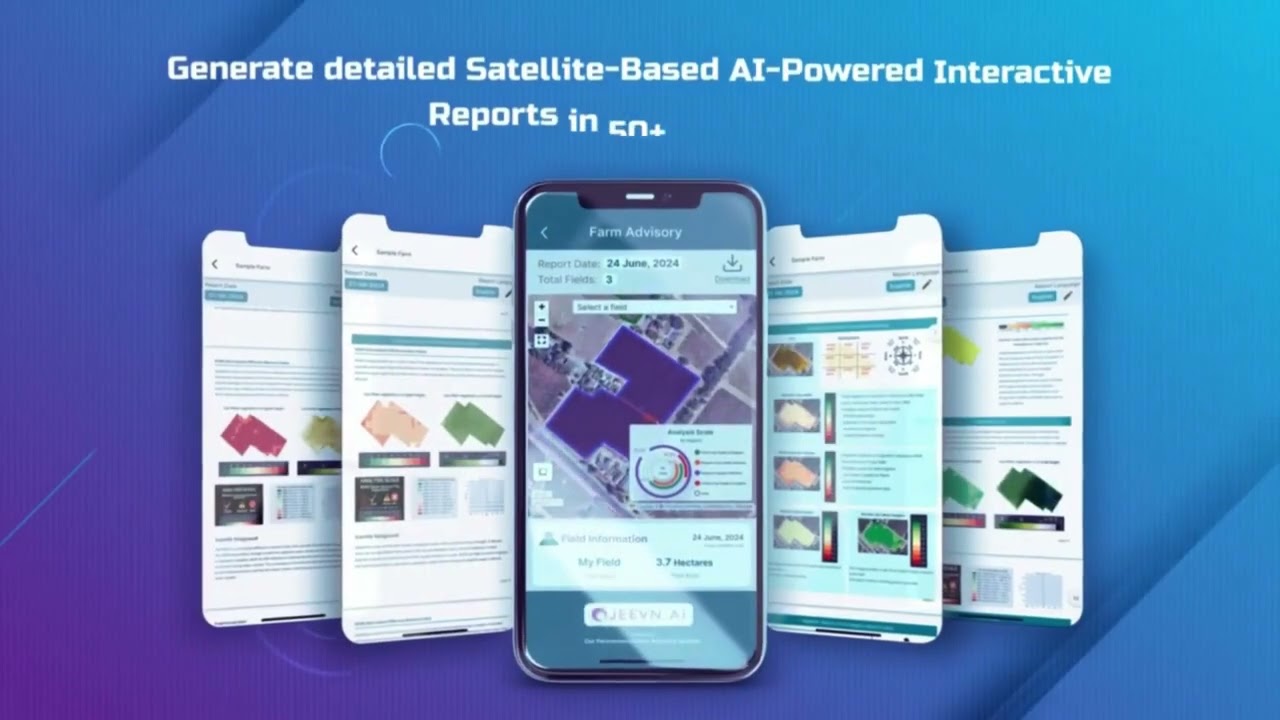
Watch: JEEVN AI – Smart Farming with Satellite & AI Insights
2. Farm Management Software (FMS): Data Unification & Automation
Farm Management Software (FMS) exemplifies the digital transformation of agriculture. By uniting data from planting, harvesting, inventory, machinery, and labor, FMS solutions automate record-keeping and streamline workflows.
Key functionalities of modern FMS platforms include:
- Digitized crop planning and rotation tracking.
- Inventory management for seeds, fertilizers, and pesticides.
- Machinery and fleet logistics—from maintenance to dispatch.
- Financial planning—cost analysis, yield forecasting, and input optimization.
- Team coordination & task scheduling.
Farmonaut’s Large Scale Farm Management Platform offers centralized dashboards to track multiple fields, automate routine tasks, monitor team productivity, and boost operational efficiency—all powered by real-time satellite and AI insights. This digital integration gives agribusinesses a comprehensive view for better decision-making.
3. Digital Marketplaces & Supply Chain Platforms
Modern agriculture increasingly depends on tools that directly connect farmers with buyers, suppliers, and logistics partners. Digital marketplaces and supply chain platforms address critical sector challenges like market fragmentation, price volatility, and post-harvest loss.
Features include:
- Online listings of crops, livestock, and processed agri-products.
- Order management, payment, and logistics coordination.
- Price discovery and negotiation tools for farmers and buyers.
- Verified product origin and traceability for premium and export markets.
These digital solutions reduce transaction costs, create direct access to both local and global markets, and boost trust within traditionally fragmented supply chains.

Watch: Regenerative Agriculture 2025 — Carbon Farming, Soil Health & Climate-Smart Solutions
The future of carbon footprinting & climate-smart agriculture is here: solutions tracking resource use and emissions across supply chains help businesses meet environmental targets and offer added value to environmentally conscious buyers.
4. AI & Machine Learning in Crop Forecasting
Advanced analytics using AI and machine learning are transforming how farmers forecast yields, identify pest or disease outbreaks, and anticipate price trends. These digital agriculture tools grant actionable insights—empowering strategic planning and risk management at unprecedented levels.
Capabilities include:
- AI models that analyze historical crop, weather, and market data to predict optimal planting and harvesting windows.
- Real-time alerts for detected anomalies—drought, excessive rainfall, or pest migration.
- Yield simulations under different management scenarios to optimize profitability.
Farmonaut’s JEEVN AI Advisory System delivers proprietary analytics and customized recommendations through our app and web dashboard, supporting seasonally attuned decisions, resource optimization, and cost reduction.

Watch: How AI Drones Are Saving Farms in 2025
5. Educational and Advisory Apps: Bridging Knowledge Gaps
One of the most transformative impacts of agriculture digital marketing is its capacity to deliver advisory services and education through mobile apps. This is critical—especially in remote or resource-limited areas—where traditional extension services fall short.
Modern educational and advisory agriculture apps feature:
- Localized crop advisory—tailored to specific regions, climate, or crop types.
- Pest and disease alerts based on weather data and local outbreaks.
- Best practice guides and step-by-step videos for sustainable and profitable farming.
- Community discussion boards and peer-to-peer support.
Farmonaut’s advisory functionalities, including the JEEVN AI System, are designed to minimize knowledge gaps and enable informed, real-time on-field decisions. Continuous learning—delivered via digital channels—fosters the rapid adoption of best practices, even where extension services are limited.

Watch: 10 Low-Investment, High-Profit Agri Business Ideas in 2025
6. Blockchain-Based Traceability Solutions
With global markets demanding increased transparency and accountability, blockchain is powering the next leap in traceability for agricultural supply chains. Digital traceability:
- Records and verifies product origin, quality, and journey across multiple stakeholders.
- Builds trust and confidence with consumers, especially in premium, export, and organic markets.
- Helps farmers access larger, more lucrative markets by meeting certification and compliance requirements.
Farmonaut’s blockchain-based traceability tools (see: Product Traceability) enable agribusinesses to record every step in the supply chain, ensuring product integrity and helping prevent fraud—all via an affordable and scalable digital platform.
Watch: Revolutionizing Farming with Satellite-Based Crop Health Monitoring
7. Environmental Impact Monitoring Tools
Agricultural digital transformation must advance not just efficiency and profitability—but also sustainability. Environmental impact monitoring tools are instrumental in this mission.
Key contributions:
- Quantify carbon footprints and other emissions from fields or supply chains.
- Track water consumption, fertilizer and pesticide use, and soil quality in real time.
- Benchmark against industry standards and help promote sustainable practices.
The Farmonaut Carbon Footprinting System delivers actionable data to support regulatory compliance and ESG goals, guiding farmers and businesses toward more environmentally responsible operations.

Watch: Smart Farming Future: Boosting Harvests & Sustainability
Comparative Feature & Impact Table: Best Agriculture Digital Tools 2026
| Tool Name | Main Features | Marketing Application | Estimated Impact | Sustainability Contribution |
|---|---|---|---|---|
| Precision Agriculture Tools (Satellite & Drone) | Real-time crop, soil, pest, & weather data; AI-driven insights | Optimizes resource use, promotes data-driven input application | +35-40% efficiency, +25% yield, -30% input cost | Significantly reduces waste & environmental impact |
| Farm Management Software (FMS) | Data centralization, workflow automation, inventory & finance | Enables campaign planning, CRM, market registration | +30% admin productivity, +20% profit margins | Enables efficient use of resources |
| Digital Marketplaces & Supply Chain Platforms | Online trade, logistics, verified stakeholder tracking | Supports direct sales, wider reach, targeted digital marketing | +40% market access, +15-30% price realization | Reduces post-harvest loss, shortens supply chain |
| AI & Machine Learning Analytics | Predictive modeling, risk analysis, yield & price forecasts | Improves campaign timing, adapts to trends, customizes offers | +20-35% risk mitigation, +25% ROI on digital campaigns | Promotes adaptive, climate-resilient agriculture |
| Educational & Advisory Apps | Localized advisory, push alerts, community knowledge sharing | Extends reach, builds trust, quickens adoption of solutions | +45% improvement in best practice adoption | Fosters sustainable and climate-adapted practices |
| Blockchain Traceability Platforms | Immutable record, product journey verification | Enhances brand, builds consumer trust, supports premium pricing | +30% supply chain transparency, reduces fraud by 40% | Proves sustainability and ethical sourcing claims |
| Environmental Impact Monitoring | Carbon, water, and input usage tracking; compliance tools | Promotes sustainable branding, market differentiation | +50% compliance, +35% sustainability score | Directly supports ESG and regulatory objectives |

Watch: Connect Your Farms With Satellites in Just 2 Minutes
Integration of Digital Marketing in Agriculture
The fusion of digital marketing and agricultural digital tools elevates both production and profit across the farming sector. Strategies now go far beyond product advertising, encompassing:
- Data-driven targeting—market campaigns based on crop type, region, seasonality, and consumer behaviors.
- Personalized outreach—reaching urban organic produce buyers or health-conscious consumers directly.
- E-commerce listings, online sales, and multi-channel marketing—integrated with farm management data.
- Brand building and trust—via digital storytelling, traceability, and community engagement.
Agribusinesses and farmers are increasingly leveraging platforms that automate advertising, consumer outreach, campaign management, and sales analytics. This ensures marketing budgets are optimized and conversion rates maximized. Every stakeholder—from smallholder to exporter—can benefit from targeted messaging, tailored solutions, and direct-to-consumer delivery models.
Digital marketing in agriculture is continuous, data-driven, and highly adaptable, reflecting the dynamic needs of global markets.
Challenges and Considerations in Agriculture Digital Transformation
Despite the impressive efficiency, sustainability, and profitability gains, digital adoption in agriculture isn’t without its hurdles:
- Digital literacy gaps, particularly in rural or aging populations, hinder rapid scaling.
- Infrastructure challenges—limited internet and device availability restrict full-feature access for some regions.
- Cost and affordability—despite falling technology prices, upfront investment can be a barrier for marginalized producers.
- Data privacy and security—concerns over ownership and use of farm or personal data must be addressed.
- Integration complexity—coordinating legacy equipment with new digital solutions requires expertise and support.
Governments, technology providers, and stakeholder communities are working actively (and will need to continue in the future) to bridge these gaps and create an enabling environment for digital transformation in farming.
For those considering their entry into digital agriculture, Farmonaut offers affordable, scalable, and user-friendly solutions for fleet management, crop loan and insurance verification, traceability, and API integration for seamless platform management. Check out our API Developer Docs for custom solutions.
The Future of Agriculture Digital Tools & Marketing (2026 & Beyond)
Looking ahead to 2026 and beyond, the synergy of agriculture digital marketing and digital tools will shape the next generation of food production and distribution. Expectations are that:
- Artificial intelligence and real-time analytics will become core to daily farm management—optimizing operations in ways previously impossible.
- Blockchain and traceability will be non-negotiable for entering premium and export markets.
- Satellite-powered, app-based resource monitoring will democratize access for every farm, large or small.
- Market integration and omnichannel marketing will enable producers to build stronger brands and connect directly with global customers.
- Sustainable and climate-smart practices—driven by demand, regulation, and technology—will be both an economic and ethical imperative.
Together, these shifts will create a more agile, inclusive, and sustainable agricultural ecosystem, driving transformational growth for years to come.
Farmonaut Subscriptions: Affordable Digital Agriculture for All
Frequently Asked Questions: Agriculture Digital Marketing & Digital Tools 2026
-
What is agriculture digital marketing?
Agriculture digital marketing is the use of digital channels and technologies (like social media, web platforms, and data analytics) to promote, sell, and build brands in farming. It enables direct connection with buyers, targeted campaigns based on crop type or region, and the sharing of sustainable best practices. -
What are the key benefits of agricultural digital tools?
Agricultural digital tools empower farmers with real-time insights, optimized resource use, easy farm management, improved traceability, and direct access to wider markets—ultimately boosting efficiency, sustainability, and profitability. -
How do AI and satellite technologies impact farming?
AI and satellite technologies offer farmers predictive analytics, early-warning systems, and above-field monitoring that greatly reduce risks, improve yields, optimize planning, and minimize losses from weather or pest threats. -
Are these tools accessible to smallholder farmers?
Yes—affordable, app-based solutions, like those from Farmonaut, use satellite and AI-driven insights to support both small and large farms, ensuring scalability and cost-effectiveness. -
What is blockchain and how does it help agriculture?
Blockchain is a secure, decentralized way to record transaction and product histories. In agriculture, it’s used for supply chain traceability, guaranteeing product authenticity, reducing fraud, and building consumer trust. -
What are the main challenges in adopting agriculture digital tools?
The biggest challenges are digital literacy gaps, infrastructure limitations (connectivity), affordability for marginal farmers, and concerns over data security and privacy. -
How can I get started with Farmonaut’s digital agriculture services?
Easily start by downloading the Farmonaut app for Android/iOS or sign up on the web platform to access crop health monitoring, advisory insights, traceability, resource management, and more. You can also review our API for custom platform integration and our Developer Docs.
Conclusion: Embracing the Digital Future of Agriculture
The integration of agriculture digital marketing and digital tools has revolutionized the farming landscape by driving unprecedented efficiency, profitability, and sustainability. As we move through 2026 and beyond, these technologies are not only reshaping markets and operations—they are also ensuring a more inclusive, transparent, and resilient food system & supply chain.
At Farmonaut, our mission is to make satellite-powered, AI-driven digital agriculture accessible and affordable for all—from small-scale farmers to global enterprises. By providing real-time insights, traceability, and environmental impact solutions, we empower the agriculture sector to embrace digital innovation, overcome climate and supply chain challenges, and optimize for a more secure agricultural future.
The digital agriculture era is here. Now is the time for every stakeholder to harness the power of agricultural digital tools and marketing strategies—and together, build a more productive, sustainable, and profitable food system for tomorrow.
Begin your digital agriculture journey with Farmonaut—using our app, explore our API or get started with large scale farm management today!


