

Reviewed September 2026 against USDA NASS and Soil Association data.
Try it: Run your own numbers →
An agriculture SEO agency builds search visibility for farms, agri-input suppliers, and machinery brands by combining sector-specific keyword research, technical site work, and ethical link-building — not generic SEO templates. The distinction matters because agricultural buyers search differently than retail consumers: they use equipment model numbers, crop-specific terms, and regional qualifiers, and 29% of US farms used the internet to market agricultural activities in 2025, up from 23% in 2023, according to the USDA National Agricultural Statistics Service Technology Use report (August 2025). That gap is the opportunity this article is about.
Below: what agriculture SEO companies actually do differently from general agencies, the seven strategies driving results in the United States and Germany, a comparison table you can use to evaluate proposals, and a calculator to estimate what a keyword strategy is worth to your business before you sign a contract.
- Understanding Agriculture SEO
- Why Agriculture SEO Agencies Are Critical
- Comparison Table of Agriculture SEO Strategies
- Agriculture SEO Agency: 7 Top Strategies
- Link Farming in SEO: Ethics and Effectiveness
- SEO for Agricultural Machinery Companies
- Keyword Value Calculator
- Future Trends in Agriculture SEO
- Digital Tools and Solutions for Agriculture SEO
- Farmonaut Subscription Plans
- FAQ: Agriculture SEO



Understanding Agriculture SEO
Agriculture SEO is the practice of optimizing a website for the search behavior of farmers, agribusinesses, machinery dealers, and agricultural input suppliers — a category distinct enough from general B2B SEO that it warrants its own agency specialization. The reason is uneven use: 85% of US farms had internet access in 2025, but only 50% bought inputs online and 45% did business with non-agricultural websites, per the USDA NASS Technology Use report. That means the farm audience online skews toward larger operations, younger operators, and specific purchase-research moments — combine that with the 29% marketing-use figure above and you get a channel that is under-served relative to demand, which is precisely why “agriculture seo agency” and “agriculture seo company” searches keep rising in volume without a corresponding rise in strong answer pages.
In Germany and the wider EU, the picture differs because farm technology adoption is further along. Many German farms already use GPS guidance and other precision tools, so buyers there are already comfortable evaluating digital tools, which raises the bar for “seo landwirtschaft” and “search engine marketing for agricultural marketing” content: German and EU agribusiness buyers expect technical depth, not surface-level keyword stuffing, before they trust a vendor.
The practical difference from generic SEO: instead of targeting a broad term like “farm equipment,” an agriculture SEO strategy targets precise long-tail terms — “used combine harvester financing Iowa” or “precision planting equipment for 200-acre farms” — because agricultural buyers research extensively before a purchase and a broad term won’t intercept them at a decision point.

How Farmers Use the Internet: USDA Data
Before planning SEO in agriculture marketing, it helps to know what the audience does online. USDA surveys US farms every two years.
| US farms | 2023 | 2025 |
|---|---|---|
| Have internet access | 85% | 85% |
| Used the internet to buy agricultural inputs | 32% | 50% |
| Used the internet to market agricultural activities | 23% | 29% |
| Did business with a non-agricultural website | 49% | 45% |
| Own or use a smartphone | 82% | 82% |
| Used precision agriculture practices | 27% | 22% |
Source: USDA NASS Technology Use report, August 2025.
Two points matter for ag SEO. Online input buying jumped between 2023 and 2025, so product and dealer pages that show specifications, stock and price now reach half of US farms. And with smartphone use above 80%, pages have to load fast and read well on a phone in the field.
Why Agriculture SEO Agencies Are Critical
A specialized agriculture SEO agency matters because the underlying market is large and growing faster than most in-house teams can track. The digital agriculture market that agriculture SEO content has to describe keeps adding new products and categories. An agency operating in this space has to track a fast-moving product landscape (satellite monitoring, AI advisory, IoT sensors, drone imagery) well enough to write about it credibly, not just optimize headlines.
- Keyword Research & Strategy: Agencies use search data and competitor gaps to target the precise terms farmers, buyers, and suppliers use — not assumed terminology.
- Content Development: Informative articles, detailed product pages, and educational resources that address a specific crop, region, or machinery need.
- Technical Optimization: Site speed, mobile usability, and schema markup for agricultural products and reviews — critical given how few farm sites currently do this well.
- Local SEO: Optimization for regional and rural searches, essential for equipment dealerships, seed suppliers, and crop advisory services tied to a specific service area.
- Try it: Run your own numbers
The agencies that keep clients are the ones that can prove extra organic traffic and qualified leads, not just ranking positions, because ranking without clicks delivers nothing to the client’s business.
Comparison Table of Agriculture SEO Strategies
Use this table to evaluate what an agriculture SEO agency proposes to do for your account, and to sanity-check where your budget should concentrate first.
| Strategy | Description | Ranking Impact (1–5) | Ease of Implementation (1–5) | Relative Cost | Best For |
|---|---|---|---|---|---|
| 1. Precision Keyword Research | Targeting long-tail agricultural and machinery terms based on actual buyer search behavior. | 5 | 4 | $ | All agriculture businesses |
| 2. Technical SEO for Agricultural Sites | Site speed, mobile usability, structured data for products, locations, and reviews. | 4 | 3 | $$ | Dealerships, e-commerce |
| 3. Authority Content & Blogging | Agronomy guides, machinery reviews, and comparison articles that earn backlinks. | 5 | 2 | $$ | Agri-tech, input suppliers |
| 4. Ethical Link Building | Outreach to universities, agricultural publications, and industry associations. | 4 | 2 | $ | Long-term domain authority |
| 5. Local & Regional SEO | Regional signals for dealers, suppliers, and services by state, county, or Bundesland. | 4 | 5 | $ | Dealerships, service providers |
| 6. Rich Media & Video Integration | Equipment demo videos, satellite-imagery tours, and infographics that lift dwell time. | 3 | 3 | $$ | Machinery, agri-tech |
| 7. AI & Voice Search Optimization | Question-based, conversational content structured for AI Overviews and voice assistants. | 3 | 2 | $$ | Informational content hubs |
An Agribusiness SEO Plan for the First 90 Days
A practical order of work for an agribusiness, dealer or input supplier, whether you hire an ag SEO agency or do it in-house:
- Weeks 1–2: measure. Connect Google Search Console and analytics. List the queries where you already appear on page two; they are the fastest wins.
- Weeks 2–4: fix the technical basics. Mobile speed, broken links, duplicate pages, and product, local business and FAQ structured data.
- Weeks 3–6: map pages to searches. One page per product line, crop or service area, written in the terms buyers use: model numbers, crop names, county or region.
- Weeks 5–10: rewrite the pages that nearly rank. Answer the search in the first paragraph, add specifications, prices with dates and a clear next step.
- Weeks 6–12: earn a few relevant links. Extension services, trade press, associations and suppliers. A handful of relevant links beats hundreds of directory listings.
- Week 12: review. Compare clicks, leads and quote requests with the starting point, not just rankings.
Seasonality matters: publish planting, spraying and harvest content a few weeks before the season, when research starts.
Agriculture SEO Agency: 7 Top Strategies
Whether you’re evaluating “agriculture seo companies” for the first time or replacing an underperforming generalist agency, these seven strategies are what separates agencies that move rankings from ones that move traffic and revenue.
1. Keyword Research Tailored to Agriculture
Effective agriculture SEO starts with keyword research built around how agricultural buyers actually search — crop names, machinery models, regional qualifiers, and production methods, not generic industry terms.
- Use Google Search Console, competitor gap analysis, and keyword tools to uncover queries like “no-till planter for clay soil Nebraska” or “precision tractors for hilly terrain in Bavaria.”
- Update keyword mapping as new technology categories emerge — for example, satellite-based crop advisory platforms, a category searchers are only beginning to have vocabulary for.
Precision agriculture SEO in particular benefits from this approach: “precision agriculture seo” searchers are typically agri-tech marketers who already know their audience is technical, so vague consumer-style keywords underperform against specific capability terms (variable-rate application, NDVI imagery, yield-mapping integration).
2. Technical SEO — Foundational for Agriculture Websites
Search engines weight page experience directly into ranking, and agricultural sites lag here more than most B2B categories. Technical SEO covers:
- Mobile usability for farmers and agribusiness buyers browsing from the field, where connectivity is often limited.
- Page speed improvements — compressed images, lazy-loading, and CDN delivery — to reduce bounce rates.
- Structured data (schema markup) on products, reviews, and location listings so search results show price, availability, and rating snippets.
- HTTPS security and clean URL structures that embed the primary keyword without stuffing.
3. Authority Content Development & Blogging
Content is what earns the backlinks and dwell time that ranking algorithms reward, but only if it goes deeper than a generic post could. Strong agriculture SEO agencies:
- Publish in-depth guides on precision agriculture and IoT for farming.
- Develop machinery comparison reviews and crop advisory content targeting each stage of the buying journey.
- Publish seasonal, region-specific content — for example, planting-window guidance for specific US Corn Belt states or EU growing zones — rather than generic global advice.
- Structure content with scannable H2/H3 subheaders and descriptive image alt text throughout.
This is also where “sustainable farming seo marketing” content belongs: sustainability-focused buyers respond to specifics (certification standards, carbon accounting methods, input-reduction data) far more than to broad “green farming” language, because that audience is already researching compliance and market-access requirements, not general awareness.

4. Ethical Link Building in Agriculture SEO
Manipulative link networks — commonly called “link farming in SEO” — are penalized by modern search algorithms, and agriculture is a sector where earned, editorial links carry disproportionate weight because the pool of trusted publishers is smaller than in consumer categories. Effective approaches:
- Guest contributions to university extension programs, agricultural research blogs, and trade publications.
- Earning citations for original data and reports, such as carbon footprint tracking insights for agriculture.
- Directory listings on agricultural supplier platforms and regional trade associations.
- Linking outward to high-trust resources, not only internal sales pages, which signals editorial integrity to search engines.
5. Local and Regional SEO for Agriculture Businesses
Agricultural supply chains are inherently local, so SEO for agricultural machinery companies and input providers has to target buyers in precise service areas rather than a national audience:
- Optimizing Google Business Profiles for each dealership or branch location.
- Embedding region-specific keywords — “grain seed supplier in southern Iowa” or “Landtechnik Händler Niedersachsen” — into service pages and blog content.
- Actively encouraging reviews from real farmer and dealer customers.
- Using local schema markup to improve map-pack visibility.
A well-executed local SEO plan connects a dealership or supplier directly to the buyers already searching within its actual operating radius, which is where most agricultural machinery purchases originate.

6. Rich Media & Video SEO
Visual content measurably extends dwell time on agricultural sites, where buyers are often evaluating equipment or systems they can’t physically inspect before purchase. Integrate:
- Video demonstrations of machinery, equipment, and digital farm management tools.
- Virtual tours of fields or operations using drone or satellite imagery.
- Galleries and infographics illustrating irrigation systems or product traceability workflows.
Every video and image should carry descriptive alt text (for example, “satellite crop monitoring dashboard for wheat field”) to capture multimedia and image-search rankings, which increasingly surface in agricultural buyer research.

7. AI and Voice Search Optimization
Farmers and agribusiness professionals increasingly use voice assistants and conversational AI tools for on-the-go queries — “what’s the optimal planting window for corn in central Illinois this season” is a spoken-language query pattern, not a typed keyword.
- Structure content with question-based headers and natural language answers.
- Use featured-snippet formats: summary paragraphs, ordered lists, and Q&A blocks.
- Keep site structure clean enough that voice assistants and AI systems can extract a direct answer.
This is also the strategy most relevant to AI Overviews: a page that answers the informational query in two sentences and then gives the reader something an AI summary can’t — a calculator, a live comparison table, a named source — is what earns the click instead of losing it to the summary box.
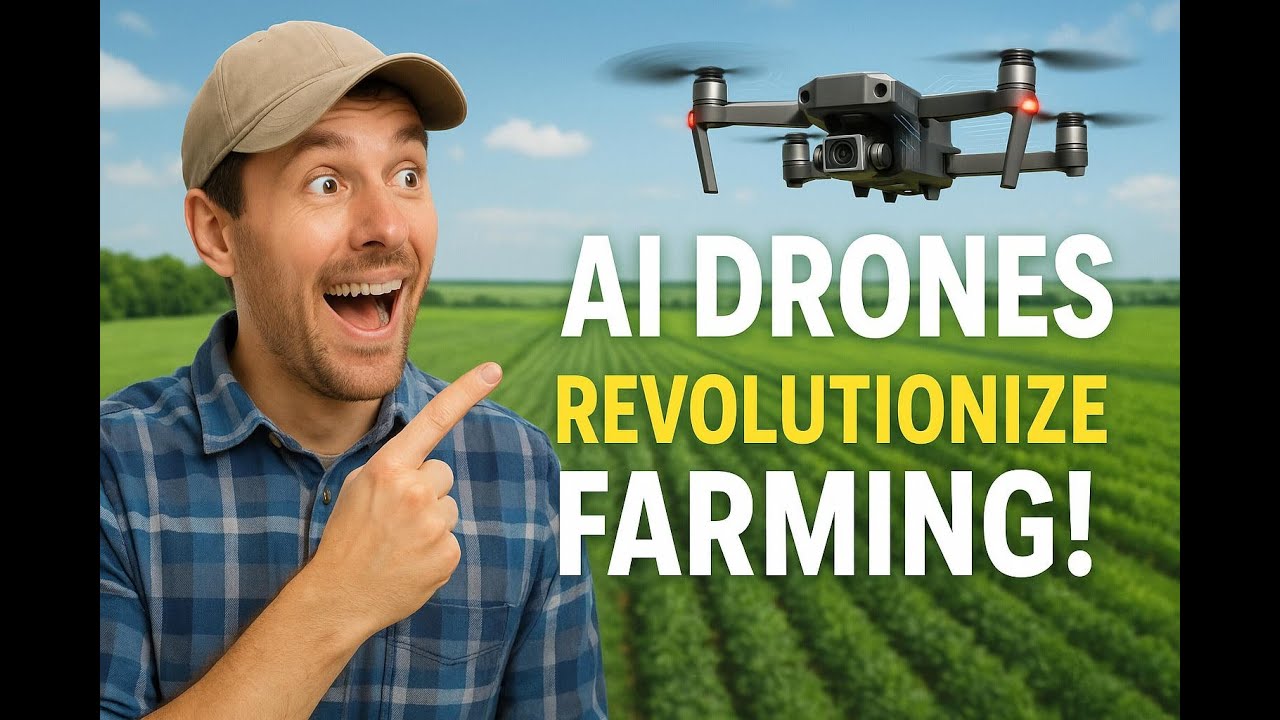
Link Farming in SEO: Ethics and Effectiveness
“Link farming in SEO” originally described low-quality site networks built solely to pass link equity to a target site. Search engines now actively penalize these manipulative schemes, and agriculture — a sector with a comparatively small number of high-trust publishers (university extensions, USDA and Defra resources, established trade press) — is particularly exposed to penalty risk if an agency uses shortcuts.
Modern agriculture SEO builds domain authority through:
- Editorial backlinks from respected industry bodies, research institutions, and agricultural news outlets.
- Collaborations with agronomy blogs and conservation organizations to share original data.
- Earned media placements built on genuine data and impact reporting rather than press-release volume.
The number of links matters far less than their relevance and the authority of the linking domain — a single citation from a university extension program or a recognized agricultural publication outweighs dozens of low-quality directory links, and carries no penalty risk.
SEO for Agricultural Machinery Companies
Machinery buyers research extensively before a purchase this large, and SEO for agricultural machinery companies exists to intercept that research at every stage rather than relying on dealership foot traffic alone.
- Build SEO-optimized product pages detailing features, specifications, and brand comparisons — for example, a combine harvester price and specification guide aimed at buyers comparing models before a purchase.
- Include downloadable user manuals, certifications, and demo videos to enrich page depth and dwell time.
- Publish customer testimonials and success stories, with permission, as social proof for high-consideration purchases.
- Integrate fleet management solutions so buyers can see how equipment is monitored and maintained post-purchase, which supports the content with a working product rather than a claim.
In B2B agricultural sales, multiple decision-makers typically research the same purchase independently before converging — an owner, an operations manager, and a finance lead may each search different terms for the same equipment. SEO content has to answer all three angles: capability, operating cost, and financing.

Keyword Value Calculator
Estimate the yearly value of ranking for an agriculture keyword using your own traffic, conversion, and deal-size assumptions before you commit budget to an agency proposal.
Run your own numbers
Future Trends in Agriculture SEO
The forces reshaping agriculture SEO are structural, not seasonal, so they’re worth tracking as an ongoing story rather than a yearly checklist:
- AI-driven search and visual queries — image-based searches (“identify tomato leaf blight”) are increasingly answered directly by search engines, which raises the bar for original diagnostic content and imagery.
- Voice search growth for on-the-go queries from farmers, agronomists, and fleet operators, favoring conversational, question-first content structures.
- Sustainability and traceability keywords tied to buyer and regulatory demand — the UK organic market reached £3.9 billion in 2025, up 4.2% and its 14th consecutive year of growth, according to the Soil Association’s Organic Market Report. That growth is a direct signal that sustainability-framed content has a real, measurable buyer audience behind it, not just marketing appeal. Related content areas: carbon footprinting and Farmonaut traceability solutions.
- API and data integration with dealer and agribusiness platforms for smarter product comparisons.
In the EU, agriculture SEO sits where two growing fields meet, search marketing and farm technology, which is one reason “seo in agriculture marketing” and “agricultural technology seo” searches are rising faster than the supply of agencies who can serve them credibly.
Digital Tools and Solutions for Agriculture SEO
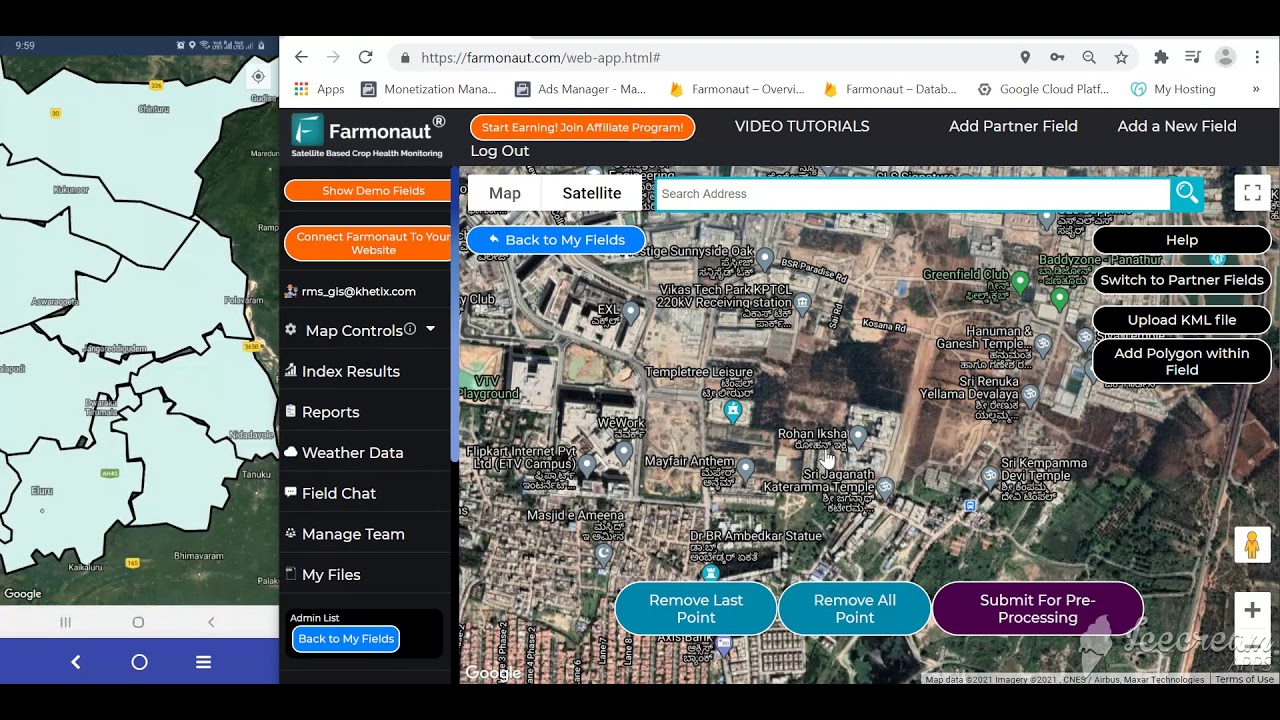
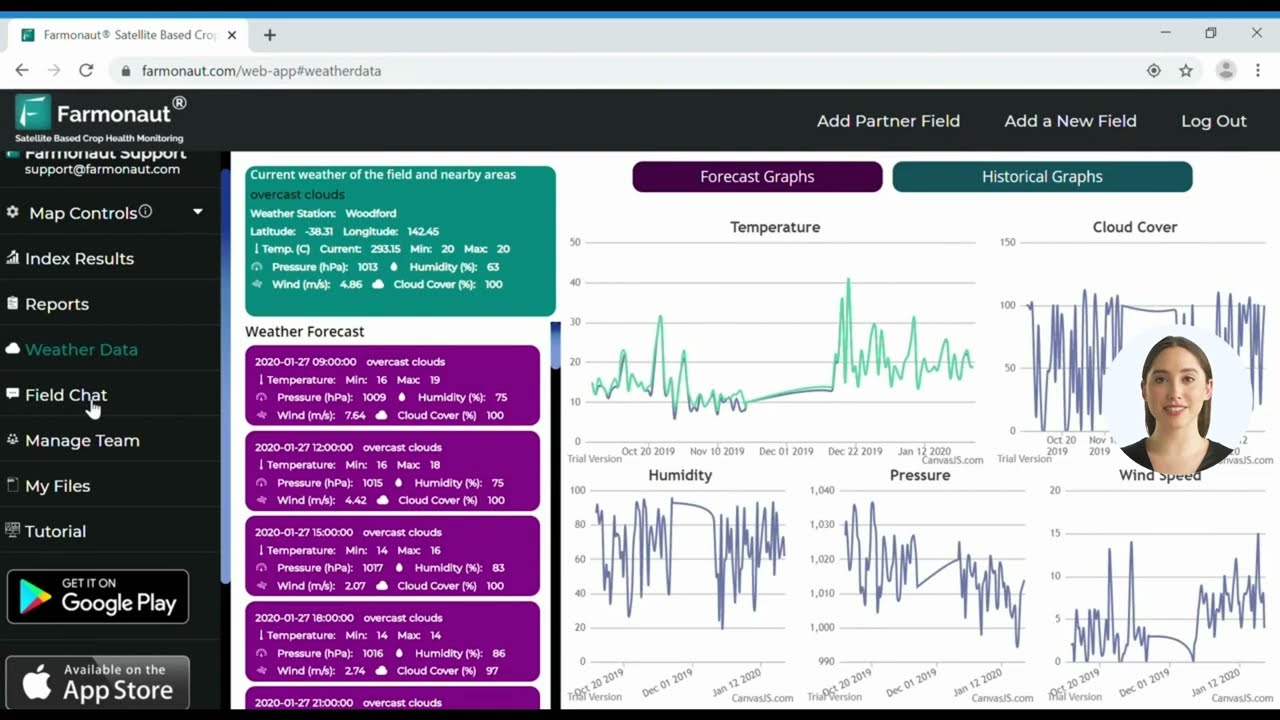
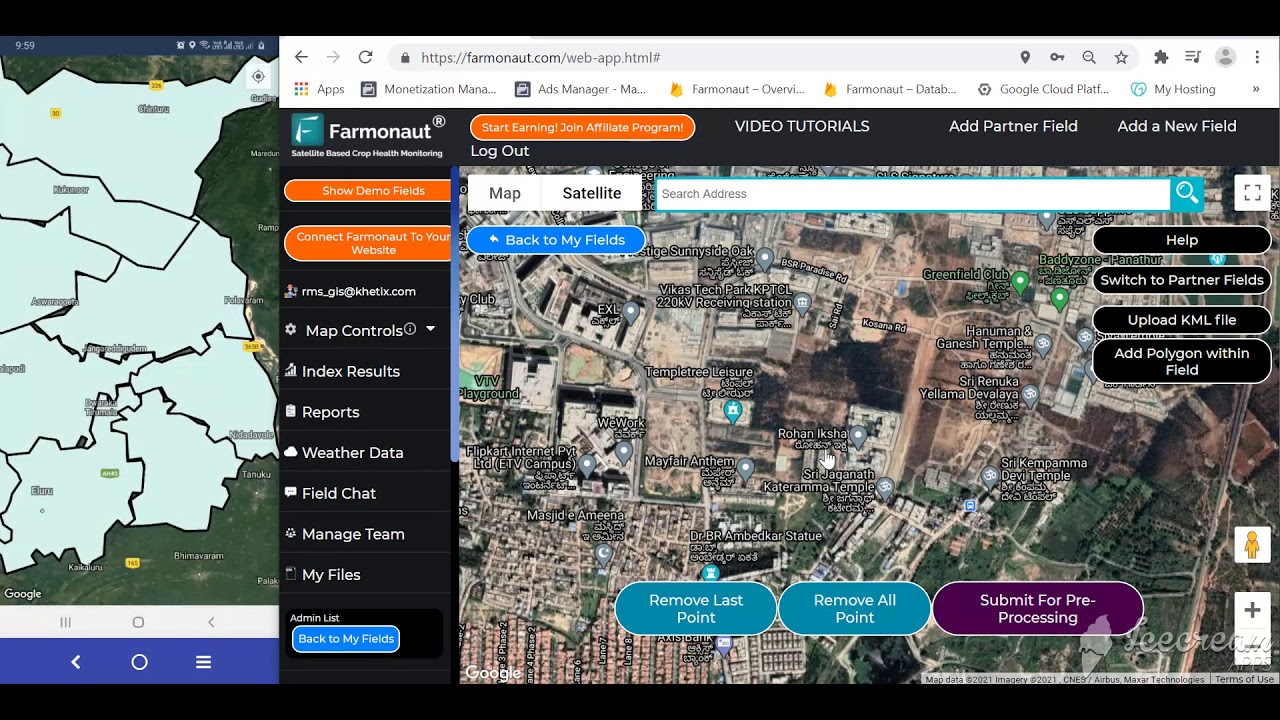
The right digital infrastructure lets agriculture companies scale SEO content without the overhead of building it from scratch. Farmonaut’s satellite-based platform is one example of innovative agriculture technology that gives content teams something concrete to write about, rather than abstract claims:
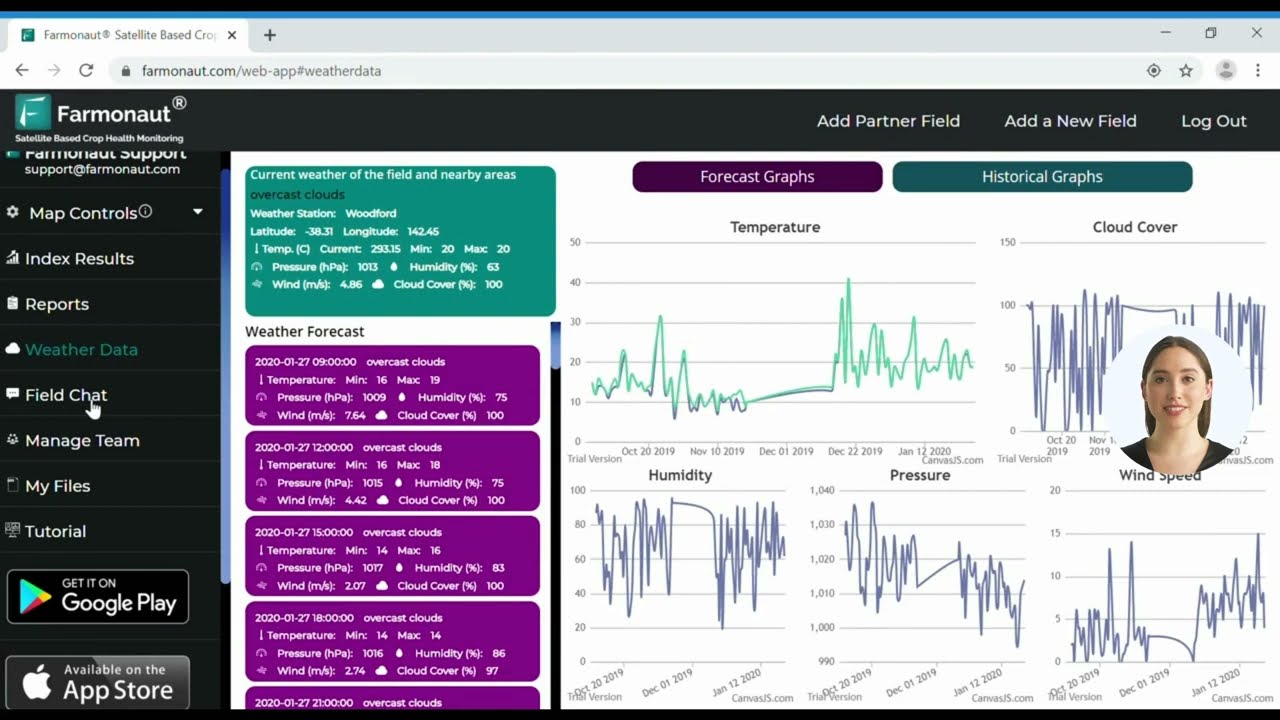
- Real-time crop and field health monitoring using multispectral satellite imagery.
- AI-backed agricultural insights through the JEEVN AI advisory system, supporting precision application, irrigation, and harvest-timing decisions.
- Blockchain-based traceability for agricultural products, supporting supply chain transparency claims with an actual working system rather than marketing copy.
- APIs for integration with existing agribusiness and dealer platforms: Farmonaut API, with developer documentation available here.
- Large-scale field mapping tools for bigger farms and agribusinesses, accessible via the admin platform on web and mobile.
For an agritech startup SEO services engagement specifically, this kind of infrastructure matters twice: it’s both a product to market and a source of the original data (satellite-derived yield trends, regional advisory patterns) that makes content defensible against AI-generated summaries, which can only restate public information, not original telemetry.
Farmonaut Subscription Plans
To access satellite-driven insights for agriculture — including real-time monitoring, AI advisory, traceability, and resource management — explore Farmonaut’s subscription packages below:





Further reading:
FAQ: Agriculture SEO
What is agriculture SEO and why does it matter?
Agriculture SEO is the practice of optimizing websites and platforms for the search behavior of farmers, suppliers, buyers, and machinery companies. It matters because farm internet use is uneven: 85% of US farms had internet access in 2025, but only 29% used it for marketing, per USDA NASS, which leaves room for strong, specific content.
What distinguishes an agriculture SEO agency from a generic SEO agency?
An agriculture SEO agency understands agricultural buyer personas, crop and machinery terminology, and seasonal search cycles in addition to core technical SEO — enabling more precise keyword targeting and content than a generalist agency can produce.
Is link farming in SEO still effective for agriculture?
No. Low-quality link networks get sites penalized by search engines. Ethical link-building — earning citations from universities, agricultural publications, and industry bodies — produces durable ranking gains without penalty risk.
How can agricultural machinery companies benefit from SEO?
SEO ensures product pages, specification sheets, and support documentation appear when buyers research or compare equipment, which matters because agricultural machinery purchases typically involve multiple decision-makers researching independently before a final decision.
What is the size of the agriculture SEO and digital agriculture opportunity?
Market-size estimates from commercial research firms vary widely and are hard to verify, so we do not quote them. Better signals are your own Search Console impressions and the USDA NASS data on how farmers use the internet.
How should agencies measure agriculture SEO effectiveness?
Track keyword rankings, organic traffic, click-through rates, conversion rates on product and service pages, backlink quality, and engagement metrics using Google Search Console and analytics data. The keyword value calculator above turns those same inputs into an estimated annual value for a specific target keyword.
Where can I find the latest US and EU farm technology adoption figures?
USDA NASS publishes its Technology Use survey biennially each August at nass.usda.gov; the Soil Association publishes its UK organic market report annually at soilassociation.org/certification.
Where can we get started with digital crop monitoring and AI advisory?
Explore Farmonaut’s Web and Mobile Apps for satellite-based crop monitoring, crop plantation and forest advisory, and smart resource management, or visit our platform for immediate access.
Summary: Agriculture SEO succeeds by matching search intent to specific, defensible content — precise keyword targeting, technical site performance, ethical link-building, and original data — rather than by chasing broad industry terms. The audience is measurable: 85% of US farms had internet access in 2025 and 29% used it for marketing, per USDA NASS. Farmonaut, as a satellite technology provider rather than a marketplace or input seller, gives agriculture businesses real-time monitoring, AI advisory, and traceability data to build that kind of defensible content on. Use the comparison table and calculator above to evaluate any agency proposal against your own numbers before committing budget.

 Croptimum
 Dalmia Bharat Sugar
 DnCubed
 Pistachio ST
 Field Capacity
 Indosistim Teknologi
 Liquify Digital
 CU Foods
 BeyondTech Global
 Rouge VC
 AgroGreen Dynamics
 AgroRisk
 Oath Inc
 Reddane Farming
 Esri North East Africa
 Cresol
 MDCV UK
 Etech Consulting Madagascar
 Vestlandsforsking
