

Agro Shade Net Machines: Types, Grades & Buying Guide
Reviewed September 2026 against Persistence Market Research and UF/IFAS Extension.
Try it: Run your own numbers →
An agro shade net machine extrudes, weaves, and UV-stabilizes HDPE tape into the mesh sold as agricultural shade netting. Machine type dictates net consistency and price: manual and semi-automatic looms serve small nurseries and specialty growers, while fully automatic lines with digital density controls supply commercial shade-house operators and net wholesalers. The global agricultural shade nets market was valued at $790.82 million in 2023, and Persistence Market Research projects the U.S. segment specifically will grow at a 5.2% compound annual rate from 2025 to 2035 (Persistence Market Research).

What Agricultural Shade Netting Is, and What It Does
Agricultural shade netting is a mesh fabric, almost always high-density polyethylene (HDPE) tape woven and UV-stabilized to resist sun degradation. It is sold by shade percentage — the fraction of incoming light the weave blocks — and by roll width, with density, color, and pore size all set during manufacturing rather than adjustable after purchase. The functional case for it rests on measured microclimate change: UF/IFAS Extension research found shade cloth reduces mid-day temperature by 2.4°C compared to open-field conditions (UF/IFAS Extension, University of Florida). That single figure explains most of what shade netting is used for: less heat stress, slower soil moisture loss, and a more stable growing environment for crops that scorch or bolt under direct summer sun.
- Reduces solar load: Lower canopy and soil temperature during peak-heat hours, per the UF/IFAS measurement above.
- Cuts evaporation: Denser weaves reduce direct sun exposure on soil and foliage, slowing moisture loss.
- Buffers physical damage: Wind, hail, and dust are intercepted by the mesh before reaching the crop.
- Extends UV life: UV-stabilized tape resists embrittlement that would otherwise shorten a net’s field life.
- Try it: Run your own numbers
How Agro Shade Net Machines Work
An agro shade net machine — the equipment agro shade net manufacturers run, not the netting itself — turns raw HDPE resin into finished roll goods through a fixed sequence:
- Extrusion: HDPE resin is melted and drawn into flat tape or monofilament yarn.
- Weaving/knitting: Circular or flat looms interlace the tape into a mesh at a set density, which determines the finished shade percentage.
- UV stabilization: Stabilizer additives are compounded into the resin before or during extrusion so the finished net resists sun degradation.
- Slitting: An agro shade net slitting machine cuts wide woven fabric into roll widths ordered by the customer — this is a distinct downstream step from weaving, and buyers searching for a slitting machine specifically are usually sourcing finishing equipment, not a full weaving line.
- Baling and finishing: Soft net and bale net machines package offcuts and finished rolls for shipping; “soft net” refers to lighter-gauge netting used for produce bags and bale wrap rather than structural shade cloth.
On the buyer side, none of this changes what matters for a farm decision: shade percentage, roll width, UV rating, and price per square meter of installed coverage. The machine architecture is a manufacturer’s concern; a US grower evaluating agricultural netting for a hoop house or shade structure is buying the finished net, not the loom that made it.
Machine Types Compared: Manual, Semi-Automatic, Fully Automatic
Manufacturers selling agro shade net machines — including high-performance mfrs marketing to commercial buyers — differentiate almost entirely on automation level. The table below reflects how these three tiers are typically positioned in supplier literature; treat the percentage columns as directional claims to verify against a specific machine’s spec sheet, not independently audited figures.
| Machine Type | Automation Level | Density Control | Typical Buyer | Output Consistency |
|---|---|---|---|---|
| Manual/hand-operated | Operator-fed, manual tensioning | Set by loom configuration; changes require manual retooling | Small workshops, low-volume net repair | Variable, operator-dependent |
| Semi-automatic | Motorized weaving, manual material handling | Adjustable within a preset range | Mid-scale net manufacturers | Consistent within a production run |
| Fully automatic / digital-control | Programmable feed, tension, and cutting | Digitally set per order specification | Commercial mfrs supplying wholesale and export | Consistent across runs and batches |
A note on scope: this article covers agro shade net machines as a manufacturing and product category. It does not carry pricing, model numbers, or a direct evaluation of any specific machine builder — including Satya Group’s line of shade net making machines, which some buyers search for by name. If you’re vetting a specific manufacturer, request their current spec sheet and production-capacity figures directly rather than relying on third-party summaries, since machine pricing changes faster than agricultural content typically gets refreshed.
Market Scale: Global and US Demand
Three figures anchor the size and trajectory of this market. Persistence Market Research valued the global agricultural shade nets market at $790.82 million in 2023 (Persistence Market Research). Analyst View Market Insights, citing the same underlying research, puts the global compound annual growth rate at 11.98% for 2024–2032. For the United States specifically, Persistence Market Research forecasts a 5.2% compound annual growth rate for the agricultural nets market from 2025 to 2035 — a materially slower rate than the global figure, consistent with a more mature, already-electrified US protected-culture sector compared with fast-growing regions.
On the ground, USDA’s 2022 Census of Agriculture gives the clearest available US benchmark for protected-culture area, though it is reported at the state level rather than nationally by structure type. Kentucky alone reported 6,647,045 square feet of vegetable and herb production under glass or other protection in 2022, up 348% from the 2017 census (University of Kentucky Cooperative Extension Service, citing USDA’s Census of Agriculture). That figure covers all protected structures — high tunnels, greenhouses, and shade net houses together — not shade netting alone, so it should be read as evidence of a fast-growing protected-culture sector rather than a shade-net-specific acreage count.
A genuine gap: no source in hand reports US national acreage under shade netting specifically, separate from high tunnels and greenhouses. The next full US Census of Agriculture publishes in 2027; in the interim, USDA NASS Quickstats (quickstats.nass.usda.gov, under “Vegetables & Melons”) issues quarterly protected-culture production updates that can be filtered by state. If you need a current number for a specific state or region, that is the tool to run it through rather than relying on a national estimate that does not exist yet.
Applications Across US Farms and Nurseries
Shade percentage is chosen by crop and climate, and this is where most buying decisions actually go wrong — an installer sizing a net for the wrong crop wastes the yield gain the structure was bought to protect:
- Vegetable production: Tomatoes, peppers, cucumbers, and lettuce commonly run 30–50% shade, extending harvest windows through peak summer heat.
- Nursery and floriculture: Ornamentals and cut flowers often use denser weaves, up to 70% shade, for consistent bloom color and reduced sunburn.
- Berry and soft-fruit operations: Netting reduces hail and wind damage on strawberries and cane fruit, alongside sun-scald protection.
- Seedling and propagation houses: Young plants need the stable, lower-light microclimate a shade structure provides before hardening off.
- High-tunnel supplementation: Growers increasingly pair a high tunnel’s rain and wind protection with interior shade cloth for heat control — the fastest-growing use case per the Kentucky protected-culture data above.
USDA Climate Hubs regional reporting attributes 30–50% growth in demand for shade structures generally to extreme-heat adaptation pressure over the 2020–2026 period, a trend that lines up directly with the Kentucky census growth and the market’s forecast CAGR above.
Automated Netting and Slitting: What “Automatic” Actually Means
“Automated netting” and “automatic green house net machine” are searched separately from general shade net machines, and they refer to a narrower claim: programmable, sensor-driven control over the weaving, tensioning, and cutting steps, rather than any claim about the finished net itself being smart or self-adjusting. A fully automatic loom controls:
- Feed rate and tape tension — held constant across a production run, which is what makes weave density (and therefore shade percentage) repeatable batch to batch.
- Cut length and slit width — programmed per order, replacing manual measuring and cutting.
- UV additive dosing — metered during extrusion rather than applied as a post-production coating.
None of this means the installed net adjusts itself in the field. A physical shade net, once installed, provides a fixed shade percentage; any “smart” or automated shading behavior on a farm — retractable screens, motorized roll-up systems — is a separate category of equipment from the netting itself, and is worth distinguishing when evaluating supplier claims that blur the two.
Benefits: Crop Protection, Water Conservation, Sustainability
- Measured heat reduction: 2.4°C lower mid-day temperature under shade cloth versus open field, per UF/IFAS Extension research cited above — the single most load-bearing figure for justifying shade net investment.
- Lower installed cost than a full structure: Shade net house construction runs $2–5 per square meter in current industry supplier pricing, well below a comparable rigid greenhouse.
- Reduced water demand: By lowering direct solar exposure on soil and canopy, shade netting reduces the evaporative loss that drives irrigation frequency — track your farm’s water and carbon metrics with Farmonaut’s Carbon Footprinting Tool.
- Extreme-heat resilience: USDA Climate Hubs regional analysis links 30–50% growth in shade-structure demand (2020–2026) directly to extreme-heat adaptation, positioning netting as climate infrastructure rather than a discretionary upgrade.
- Off-season and shoulder-season production: Buffered microclimates let growers push planting windows earlier and later than open-field conditions allow.
- Longer service life with UV stabilization: UV-treated HDPE resists the embrittlement that otherwise shortens a net’s field life, reducing replacement frequency.
Shade Net Coverage & Cost Calculator
Estimate the netting area and rough material cost for a shade structure using your own dimensions and a construction cost range grounded in current supplier pricing.
Run your own numbers
Assumptions: cost range reflects current shade net house construction pricing of $2–5 per square meter from industry supplier data, covering netting, framing, and basic installation labor. It excludes site prep, irrigation, foundation work, and regional labor cost differences — get a local contractor quote before budgeting a real project.
Farmonaut Solutions for Shade-House Monitoring
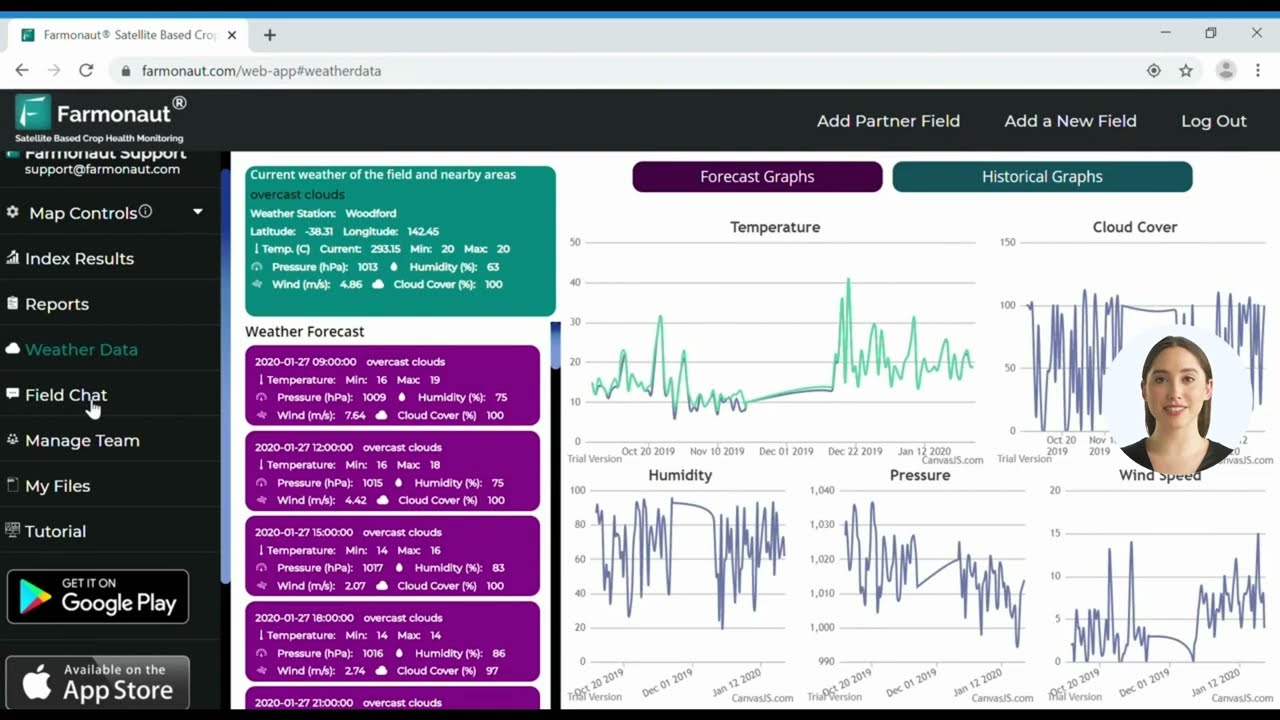
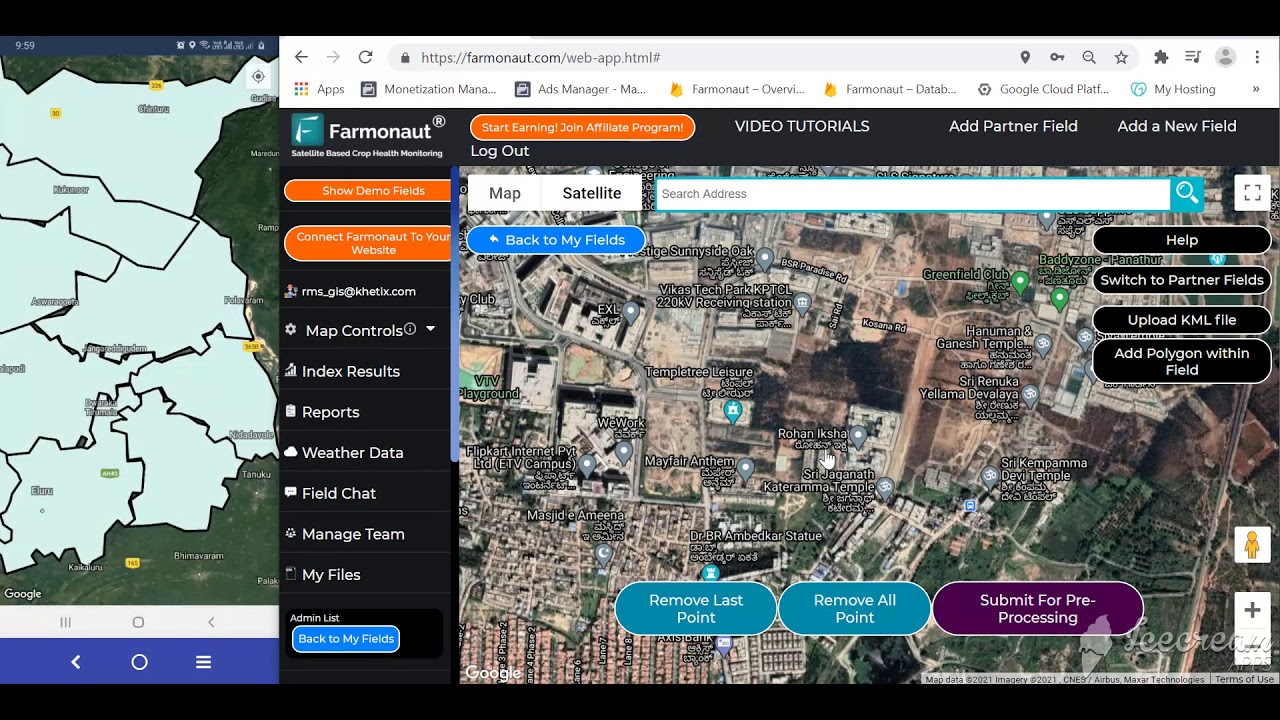
Farmonaut does not manufacture agro shade net machines or physical netting. What the platform does is monitor what happens under the net once it’s installed — the part manufacturers’ spec sheets don’t cover.
-
Satellite-based crop monitoring:
- Multispectral imagery tracks vegetation health (NDVI) and soil conditions inside and around shade-netted areas.
- Real-time data supports irrigation and fertilizer timing decisions for crops grown under nets.
-
AI-powered advisory:
- Jeevn AI Advisory generates weather-resilient scheduling and pest-risk alerts relevant to protected-culture production.
-
Traceability and sustainability tracking:
- The Product Traceability Platform supports transparent supply chains for high-value produce grown under shade structures.
-
Operations and logistics:
- Fleet Management tools help coordinate installation, maintenance, and harvest logistics around shade-house operations.
-
Multi-site oversight:
- The Large Scale Farm Management Platform lets managers track multiple net-house installations across a portfolio of sites.
-
API access:
- Developers can integrate Farmonaut’s satellite and weather analytics directly via the Farmonaut Public API (see the Developer Documentation).




How to Choose Netting and a Machine Source
-
Match shade density to crop:
- 30–50% for heat-tolerant vegetables like tomatoes, peppers, and cucumbers.
- Up to 70% for nursery stock, seedlings, and delicate ornamentals.
-
Verify UV stabilization:
- Ask any supplier for the UV additive specification and warranty period in writing — this is the single factor most responsible for field-life differences between otherwise similar nets.
-
Confirm automation level if buying manufacturing equipment:
- Manual and semi-automatic machines suit lower-volume, custom orders; fully automatic lines suit consistent, high-volume production runs. Match the machine tier to actual order volume rather than defaulting to the most automated option.
-
Budget against real construction cost ranges:
- Use the $2–5 per square meter shade net house construction figure above as a starting budget anchor, then get site-specific quotes — the calculator above converts this into a dollar range for your own dimensions.
-
Check regional protected-culture data before assuming demand:
- USDA NASS Quickstats (quickstats.nass.usda.gov) publishes quarterly protected-culture production figures by state — check your own state’s trend rather than relying on national averages, since state-level growth (Kentucky’s 348% jump between the 2017 and 2022 censuses) varies widely.
-
Pair the physical structure with monitoring:
- A shade structure protects the crop; a platform like Farmonaut tracks whether it’s actually working — NDVI and soil data reveal whether shade density is correctly matched to the crop within the first growing cycle, rather than after a season of guesswork.
Farmonaut Subscription Plans for Smart Farm and Net House Monitoring
Farmonaut’s subscription plans support satellite-driven monitoring, AI advisories, and resource tracking for crops grown under shade netting and other protected structures.
FAQs
What is the difference between manual, semi-automatic, and fully automatic shade net machines?
Manual machines are hand-fed and suit low-volume production. Semi-automatic machines add motorized weaving but keep manual material handling. Fully automatic machines run programmable feed, tension, and cutting for consistent output across large production runs — see the comparison table above.
What shade percentage do agricultural netting buyers typically need?
30–50% for heat-tolerant vegetables such as tomatoes, peppers, and cucumbers; up to 70% for nursery stock, seedlings, and ornamentals sensitive to direct sun.
How much does shade net house construction cost?
Current industry supplier data puts construction cost at $2–5 per square meter, covering netting, framing, and basic installation. Use the calculator above with your own dimensions for a project-specific estimate; get a local quote before budgeting.
How much does shade cloth actually reduce temperature?
UF/IFAS Extension measured a 2.4°C reduction in mid-day temperature under shade cloth compared to open-field conditions (UF/IFAS Extension).
Is there US national data on acreage under shade netting specifically?
Not currently published as a standalone figure. The USDA Census of Agriculture reports protected-culture area (which includes shade netting, high tunnels, and greenhouses combined) at the state level — Kentucky reported 6,647,045 square feet of vegetable and herb production under protection in 2022, up 348% from 2017. The next full census publishes in 2027; USDA NASS Quickstats issues quarterly interim updates by state.
How fast is the US agricultural nets market growing?
Persistence Market Research forecasts a 5.2% compound annual growth rate for the US agricultural nets market from 2025 to 2035, against an 11.98% global CAGR for 2024–2032 — the US market is growing more slowly than the global average, consistent with an already-mature protected-culture sector.
Can satellite monitoring be integrated with a shade net house?
Yes. Farmonaut provides satellite-driven NDVI and soil monitoring, AI advisories, and management tools for tracking crop health and resource use under shade structures — see the Farmonaut Solutions section above.
Further reading:
Conclusion
The case for agro shade net machines and the netting they produce rests on figures that hold up under scrutiny: a 2.4°C measured temperature reduction under shade cloth, a $790.82 million global market as of 2023 growing at an 11.98% compound annual rate through 2032, a US segment growing more slowly at 5.2% annually through 2035, and $2–5 per square meter construction costs that make shade structures one of the more accessible protected-culture investments available. Kentucky’s 348% jump in protected-culture production area between the 2017 and 2022 censuses shows this growth is already visible in USDA’s own data, not just in market forecasts.
What doesn’t hold up over time is any specific machine price, model number, or national acreage figure — those change faster than this page will be rewritten, which is why the sourcing method matters as much as the numbers themselves: USDA NASS Quickstats for current protected-culture data, the next full Census of Agriculture in 2027, and a supplier’s current spec sheet for machine pricing. Get the shade percentage and construction budget right using the figures and calculator above, then use a monitoring platform like Farmonaut to verify the investment is actually paying off in crop health data rather than assumption. Start with the web, Android, or iOS app, or integrate directly via the API.
Discussion
Questions, corrections or field experience? Share them below. First-time comments are reviewed before they appear, and your email is never published.
No comments yet. Be the first to add a question or your experience.

 Patrick America
 Red Dog Management
 Liquify Digital
 Ascentya
 CU Foods
 BeyondTech Global
 Rouge VC
 AgroGreen Dynamics
 AgroRisk
 Oath Inc
 Reddane Farming
 Esri North East Africa
 Cresol
 MDCV UK
 Zerella Group
 Etech Consulting Madagascar
 Vestlandsforsking
 Delicio
 WB Dev
 Sama Premium
 Prochecker
 Tres Valles
 Exploration consultancy · South Africa · Gold
 Licence holder · Niger · Gold










