

Exploring Technological Advancements in Agriculture: Innovations Shaping the Future of Farming
In today’s rapidly evolving world, the agricultural sector is experiencing a revolutionary transformation driven by cutting-edge technologies. At Farmonaut, we are at the forefront of this agricultural revolution, leveraging innovative solutions to reshape the future of farming. Join us as we delve into the exciting realm of technological advancements in agriculture and explore how these innovations are revolutionizing the way we grow, manage, and sustain our food systems.
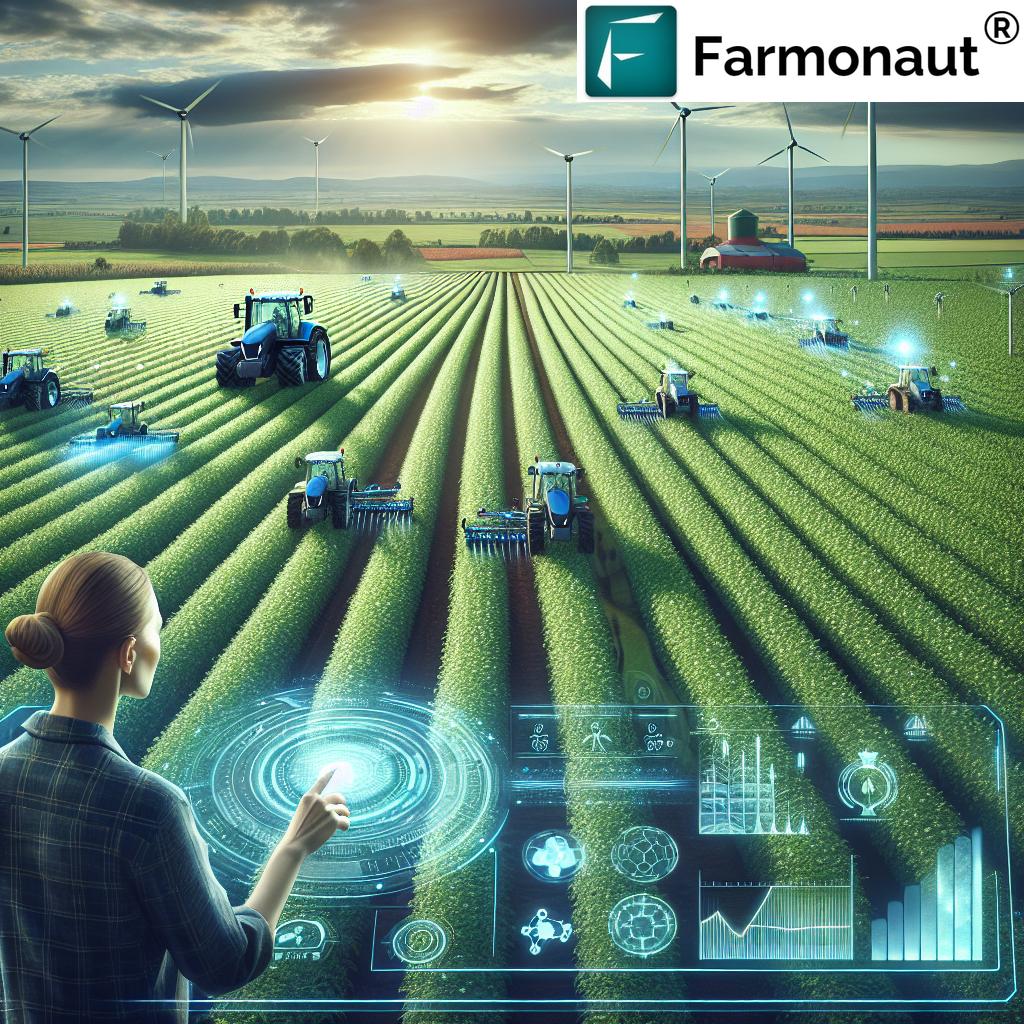
“Precision agriculture technologies can reduce water usage by up to 30% in farming operations.”
The Rise of Precision Agriculture
Precision agriculture stands at the forefront of technological advancements in the farming sector. This innovative approach utilizes data-driven insights to optimize crop yields, minimize resource wastage, and enhance overall farm productivity. At Farmonaut, we’re proud to be pioneers in this field, offering cutting-edge solutions that bring precision agriculture within reach of farmers worldwide.
Our satellite-based crop health monitoring system is a prime example of how precision agriculture is transforming the industry. By harnessing the power of multispectral satellite imagery, we provide farmers with real-time insights into their crops’ health, soil moisture levels, and other critical metrics. This valuable data empowers farmers to make informed decisions about irrigation, fertilizer application, and pest management, ultimately leading to improved crop yields and reduced resource wastage.
- Real-time crop health monitoring
- Soil moisture analysis
- Optimized resource allocation
- Data-driven decision making
To experience the power of precision agriculture firsthand, check out our Farmonaut web app or download our mobile apps:


AI-Powered Advisory Systems: The Future of Farm Management
Artificial Intelligence (AI) is revolutionizing farm management practices, and at Farmonaut, we’re leading the charge with our Jeevn AI Advisory System. This advanced tool combines the power of AI with satellite data analysis to deliver personalized, real-time insights and expert crop management strategies directly to farmers.
The Jeevn AI Advisory System takes into account various factors such as:
- Historical crop data
- Current weather conditions
- Soil health indicators
- Market trends
By analyzing this complex web of information, our AI system provides tailored recommendations for optimal planting times, irrigation schedules, and pest control measures. This level of precision in farm management was once unimaginable, but now it’s at the fingertips of farmers worldwide, thanks to technological advancements like those offered by Farmonaut.
Blockchain Technology: Ensuring Transparency in Agricultural Supply Chains
Blockchain technology is making waves in the agricultural sector, particularly in the realm of supply chain management. At Farmonaut, we’ve integrated blockchain into our platform to offer unparalleled traceability solutions for various industries, with a special focus on agriculture.
Our blockchain-based traceability system ensures that every step of a product’s journey, from the farm to the consumer’s table, is transparently recorded and securely stored. This technology offers numerous benefits:
- Enhanced food safety
- Reduced fraud in supply chains
- Improved consumer trust
- Easier compliance with regulations
For businesses looking to integrate these advanced features into their own systems, we offer API access to our satellite and weather data. Developers can find comprehensive information in our API Developer Docs.
IoT and Smart Farming: Connecting the Agricultural Ecosystem
The Internet of Things (IoT) is transforming agriculture into a highly data-driven industry. Smart sensors and connected devices are now commonplace on modern farms, collecting vast amounts of data on everything from soil moisture levels to crop growth rates.
At Farmonaut, we integrate IoT data with our satellite imagery to provide a comprehensive view of farm operations. This synergy allows for:
- Real-time monitoring of farm conditions
- Automated irrigation systems
- Predictive maintenance of farm equipment
- Early detection of crop diseases and pests
The combination of IoT and satellite technology creates a powerful tool for farmers, enabling them to manage their operations with unprecedented precision and efficiency.
“AI-powered crop monitoring systems can detect plant diseases with 95% accuracy, improving crop yields significantly.”
Drone Technology: A Bird’s Eye View of Farm Operations
Drone technology has emerged as a game-changer in agricultural monitoring and management. While Farmonaut primarily utilizes satellite imagery, we recognize the complementary role that drones play in providing high-resolution, on-demand aerial data for farms.
Drones equipped with multispectral cameras can:
- Capture detailed images of crop health
- Identify areas of pest infestation or disease
- Assist in precision spraying of pesticides
- Help in creating accurate 3D maps of farmland
The integration of drone data with satellite imagery and ground-based sensors provides farmers with a comprehensive understanding of their fields, enabling them to make more informed decisions about crop management.
Vertical Farming: Revolutionizing Urban Agriculture
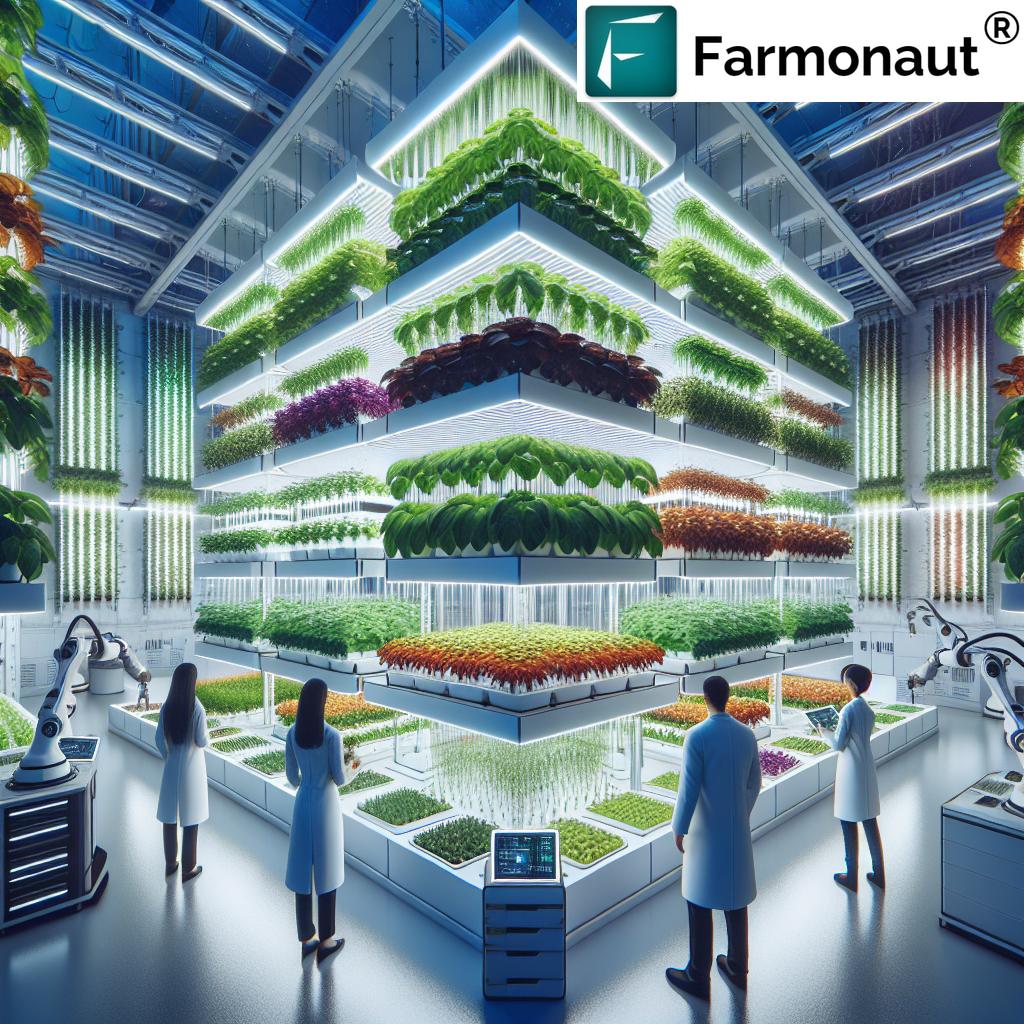
As urban populations continue to grow, the need for innovative farming solutions in cities has never been greater. Vertical farming is emerging as a promising solution, allowing for high-yield crop production in limited urban spaces.
While Farmonaut’s primary focus is on traditional outdoor farming, we recognize the potential of vertical farming to complement existing agricultural systems. Some benefits of vertical farming include:
- Year-round crop production
- Reduced water usage
- Minimal transportation costs
- Protection from adverse weather conditions
As vertical farming technology continues to evolve, we anticipate exciting possibilities for integrating our satellite and AI-driven insights into these innovative urban agricultural systems.
The Role of Big Data in Agriculture
The agricultural sector is generating more data than ever before, thanks to the proliferation of IoT devices, satellite imagery, and advanced sensors. At Farmonaut, we’re harnessing the power of big data to drive unprecedented insights and efficiencies in farming.
Our platform aggregates and analyzes vast amounts of data from multiple sources, including:
- Satellite imagery
- Weather forecasts
- Historical crop yields
- Soil health indicators
- Market trends
By processing this data through advanced machine learning algorithms, we’re able to provide farmers with actionable insights that can significantly improve their crop yields and overall farm efficiency.
Sustainable Farming Practices Enabled by Technology
At Farmonaut, we believe that technological advancements in agriculture should not only increase productivity but also promote sustainability. Our platform incorporates several features designed to help farmers adopt more sustainable practices:
- Precision irrigation to reduce water waste
- Targeted application of fertilizers and pesticides
- Carbon footprint tracking for agribusinesses
- Soil health monitoring to prevent degradation
By providing farmers with detailed insights into their resource usage and environmental impact, we’re empowering them to make more sustainable choices without sacrificing productivity.
The Future of Agtech: What’s on the Horizon?
As we look to the future, several emerging technologies promise to further revolutionize the agricultural sector:
- Gene editing for crop resilience
- Autonomous farm vehicles and robots
- Advanced weather prediction models
- Nanotechnology for precision nutrient delivery
At Farmonaut, we’re committed to staying at the forefront of these technological advancements, continuously evolving our platform to incorporate the latest innovations in agtech.
Comparative Table: Innovative Agricultural Technologies
| Technology | Application | Estimated Impact |
|---|---|---|
| Precision Agriculture | Uses data-driven insights for optimized farming practices | Up to 20% increase in crop yields |
| AI-powered Crop Monitoring | Analyzes crop health and predicts potential issues | 95% accuracy in disease detection |
| Drone Imaging | Provides high-resolution aerial imagery for detailed field analysis | 30% reduction in crop damage |
| IoT Sensors | Collects real-time data on soil, weather, and crop conditions | 15% improvement in resource efficiency |
| Vertical Farming | Enables high-yield crop production in urban environments | 90% reduction in water usage compared to traditional farming |
Empowering Farmers Through Technology
At Farmonaut, our mission is to make advanced agricultural technologies accessible to farmers of all scales. We believe that by democratizing access to precision farming tools, we can help create a more sustainable and productive agricultural sector worldwide.
Our platform offers:
- Affordable satellite-based monitoring
- User-friendly mobile and web applications
- AI-driven personalized farming advice
- Integration with existing farm management systems
By providing these tools, we’re empowering farmers to embrace the digital age of agriculture, regardless of the size of their operations.
Earn With Farmonaut: Join our Affiliate Program
Earn 20% recurring commission with Farmonaut’s affiliate program by sharing your promo code and helping farmers save 10%. Onboard 10 Elite farmers monthly to earn a minimum of $148,000 annually—start now and grow your income!
Conclusion: Embracing the Agricultural Revolution
The technological advancements we’ve explored are not just changing farming practices; they’re revolutionizing the entire agricultural ecosystem. From precision agriculture and AI-driven advisory systems to blockchain traceability and sustainable farming practices, these innovations are shaping a more efficient, productive, and sustainable future for agriculture.
At Farmonaut, we’re proud to be at the forefront of this agricultural revolution, providing farmers with the tools they need to thrive in this new era of farming. By embracing these technologies, we can work together to address global food security challenges, reduce the environmental impact of agriculture, and create a more resilient food system for generations to come.
Join us in this exciting journey towards the future of farming. Explore our web app or download our mobile apps to experience the power of advanced agricultural technology firsthand.
Farmonaut Subscriptions
Frequently Asked Questions (FAQ)
Q: What is precision agriculture?
A: Precision agriculture is a farming management concept that uses technology to observe, measure, and analyze the needs of individual fields and crops. It allows farmers to optimize their use of inputs like water, fertilizers, and pesticides, leading to increased yields and reduced environmental impact.
Q: How does Farmonaut’s satellite monitoring work?
A: Farmonaut uses multispectral satellite imagery to monitor crop health, soil moisture levels, and other critical metrics. This data is analyzed using advanced algorithms to provide farmers with actionable insights about their fields, helping them make informed decisions about crop management.
Q: Can small-scale farmers benefit from Farmonaut’s technology?
A: Absolutely! Farmonaut’s solutions are designed to be accessible and affordable for farmers of all scales. Our platform offers various pricing tiers and can be used on farms of any size, from small holdings to large commercial operations.
Q: How does blockchain technology improve agriculture?
A: Blockchain technology in agriculture enhances transparency and traceability in the supply chain. It allows for secure, tamper-proof recording of every step in a product’s journey from farm to consumer, reducing fraud and improving food safety.
Q: What is the role of AI in Farmonaut’s agricultural solutions?
A: AI plays a crucial role in our Jeevn AI Advisory System. It analyzes vast amounts of data from satellite imagery, weather forecasts, and historical crop information to provide personalized, real-time advice to farmers on crop management strategies.
Q: How can I start using Farmonaut’s services?
A: You can start by visiting our web app or downloading our mobile app from the App Store or Google Play. Sign up for an account, and you’ll be able to start monitoring your fields using our satellite-based technology.
Q: Does Farmonaut offer solutions for sustainable farming?
A: Yes, sustainability is a key focus for Farmonaut. Our platform includes features like carbon footprint tracking and resource management tools that help farmers adopt more sustainable practices without sacrificing productivity.
Q: Can Farmonaut’s technology integrate with other farm management systems?
A: Yes, Farmonaut offers API access that allows for integration with other farm management systems. This enables developers and businesses to incorporate our satellite and weather data into their existing agricultural technology solutions.
Q: How accurate is Farmonaut’s crop health monitoring?
A: Our crop health monitoring system uses high-resolution satellite imagery and advanced analysis algorithms to provide highly accurate insights. While exact accuracy can vary depending on factors like cloud cover and crop type, our system consistently delivers reliable data for informed decision-making.
Q: Does Farmonaut provide support for using its platform?
A: Yes, we offer comprehensive support to our users. This includes detailed documentation, video tutorials, and customer support to help you get the most out of our platform.
Discussion
Questions, corrections or field experience? Share them below. First-time comments are reviewed before they appear, and your email is never published.
No comments yet. Be the first to add a question or your experience.

 MapMyCrop
 Cresol
 Atur Kuliner
 MDCV UK
 Zerella Group
 Etech Consulting Madagascar
 Vestlandsforsking
 Agritein
 Delicio
 WB Dev
 Sama Premium
 Prochecker
 Tres Valles
 LACOS Geoinformation
 Magrifly
 LatConnect 60
 Blickwinkel
 Agricultural Credit Policy Council
 Marei Nursery
 eKGIS
eKGIS Mostas Tech
 Exploration consultancy · South Africa · Gold
 Licence holder · Niger · Gold
 Licence holder · Nigeria · Gold + lithium










