

AI in Agriculture Data Visualization: 7 Top Tools
Table of Contents
- Introduction
- Trivia: AI in Agriculture
- The Intersection of Artificial Intelligence & Modern Agronomy
- Fertilization Regimes: Visualization as a Cornerstone Approach
- US Agriculture, Industrialization & Scalable Decision Support
- Deforestation Data & Land Use: Visualization for Sustainable Choices
- Visualizing Indian Agriculture Production Data
- Visual Tools Explained: Making Complex Agricultural Data Intelligible
- AI in Agriculture Data Visualization: 7 Top Tools
- Comparison Table: AI in Agriculture Data Visualization Tools
- Highlight Boxes
- Visual Lists & Bullet Points
- Farmonaut’s Role in Modern Agriculture Data Visualization
- Embedded Farmonaut Tutorials & Insights
- Frequently Asked Questions
- Farmonaut Subscriptions
Introduction: The Power of Visualization in Agriculture Data
The intersection of artificial intelligence (AI) and agriculture data visualization is reshaping how we approach food production, sustainability, and resource management in the modern age. By leveraging advanced analytics and innovative visualization tools, farmers, agronomists, and policy makers can translate vast streams of raw field data into intelligible pictures—actionable visuals that guide real-world farming choices.
As the industrialization and mechanization of agriculture in the United States and countries like India progress, the complexity of managing large-scale, data-rich operations also increases. AI in agriculture data visualization sits at the heart of this evolution, turning sensor, climate, crop yield, soil, irrigation, and production data into practical insights that not only optimize performance but also champion environmental sustainability.
The Intersection of Artificial Intelligence and Modern Agronomy
At its core, AI in agriculture data visualization enables us to address challenges posed by complex systems—a trait common in broad, mechanized landscapes and industrial farming operations. With millions of data points streaming daily from sensors, satellite imagery, weather stations, and equipment telemetry, understanding the patterns that emerge requires clarity, context, and a solution that reduces cognitive load for decision-makers.
Visualization helps overlay essential properties like soil nutrient status, crop health indices, equipment performance, and irrigation schedules onto geo-referenced maps and dashboards. These interactive tools reveal inefficiencies, risk hotspots, and actionable opportunities for improvement—empowering farmers, agronomists, and policy makers with insights that would otherwise remain buried in spreadsheets or raw sensor logs.



AI in agriculture data visualization bridges the gap between field operations and executive decisions. By unifying data from sensors, weather, machines, and satellites into integrated dashboards, farms can optimize resources, spot trends, and drive sustainable practices at scale.
Fertilization Regimes: Visualization as a Cornerstone Approach
A cornerstone of precision agriculture is the visualization of fertilization regimes. The fertilization agriculture definition centers on supplying essential nutrients to crops to optimize growth, yield, and quality while minimizing environmental damage. Variability in potassium, phosphorus, nitrogen, and micronutrient availability across a field can be rendered into color-coded maps, geospatial overlays, and interactive time-series charts. These visualizations empower site-specific management—variable-rate application plans precisely adjust input rates to mirror actual plant needs, reducing wastage, input costs, and nutrient runoff.
For example, a geo-referenced heatmap may reveal nitrogen-deficient hotspots during a crucial growth cycle, triggering anomaly alerts and supporting timely, targeted interventions. Over an entire season, temporal charts track nutrient uptake and availability, enabling farmers to anticipate deficiencies or surpluses before they manifest as yield gaps or environmental pollution. In this way, actionable visualizations of fertilization regimes become not only diagnostic tools but also strategic guides for optimizing resource allocation and sustaining soil health.
- ✔ Optimize input use with precise site-specific fertilization plans
- 📊 Track cycles of nutrient evolution, minimizing yield losses and reducing costs
- 🔍 Reveal inefficiencies in ongoing management across large land tracts
- ⚠ Mitigate pollution by reducing excess fertilizer runoff into local water systems
- 🌿 Support sustainable practices and environmental stewardship
US Agriculture: Mechanization, Industrialization, and Scalable Decision Support
The industrialization and mechanization of agriculture in the United States has resulted in expansive, data-intensive operations that demand rapid, scale-appropriate decisions. Modern farm management platforms ingest data streams from yield monitors, planter and harvester telemetry, soil sensors, and weather stations, then present this knowledge via integrated dashboards.
Essential metrics such as yield variance within fields are rendered through heatmaps that allow managers to reconfigure inputs, tweak crop rotations, or analyze the underlying causes of underperformance. Time-lapse visualization of crop health indices—including chlorophyll or canopy density—helps detect equipment issues, irrigation problems, or early signs of disease and pests. With machinery, networked dashboards synchronize fleet activity, guiding coordinated field logistics to reduce downtime and improve throughput.
Ready to unlock the next level of precision and traceability in your farm operations? Explore our blockchain-based crop traceability solutions for supply chain authenticity and consumer trust.
Integrating real-time satellite data into your management platform allows for earlier detection of yield gaps and environmental stress. Harness these insights by connecting with Farmonaut’s API to plug satellite and weather analytics directly into your dashboards—reducing reaction times and supporting more informed, scalable decisions.
Deforestation Data & Land Use: Visualization for Sustainable Choices
As agricultural expansion approaches natural frontiers, deforestation data visualization plays a critical role in balancing productivity with ecological stewardship. By overlaying forest cover change, commodity crop hotspots, and regeneration trends on landscape maps, stakeholders can evaluate the ecological costs of land expansion, design effective buffer zones, and monitor compliance with sustainability standards.
Layered visuals—showing forest loss polygons juxtaposed with agricultural expansion—help identify high-risk corridors, target replanting efforts, and guide policy responses. For farmers and producers, such visualizations aid practical decisions like reforestation planning and landscape connectivity maintenance, thereby helping to mitigate the broader environmental impacts of modernization and mechanization.
Want to track and reduce the carbon footprint of your agricultural or mining operations? See how our carbon footprinting platform blends satellite imagery, AI, and data visualization to support sustainable choices.
📊 Visualizing Land Use and Deforestation Trends
- Satellite-based forest loss polygons—renders detailed visuals of changing cover
- Commodity-crop overlay maps—associate agricultural expansion with ecological impact
- Temporal regeneration charts—track success of reforestation efforts
- Risk hotspot identification—guide policy interventions and buffer design
- Biodiversity indices visualization—support sustainable crop and landscape planning
Visualizing Indian Agriculture Production Data: Decision Support for Policy & Practice
The Indian agriculture sector, with its diversity of production volumes, input use, irrigation trends, weather patterns, and market linkages, is ideally positioned to benefit from powerful data visualization. By connecting regional crop yield data, soil status, and operational inputs with market and weather information on integrated dashboards, stakeholders can:
- ✔ Identify risk clusters and prioritize government action
- 📈 Track post-harvest losses to inform supply chain management
- 🔄 Compare irrigation efficiency across states and districts
- 💡 Analyze the adoption rates of sustainable soil health practices
- 🤝 Guide resource allocation for farmer support and extension targeting
For policy makers and extension agents, such comparative dashboards and time-series visuals convert complex agricultural production data into digestible, strategic summaries. These support targeted credit, insurance, and extension outreach to the regions and practices that need it most.
Visualization technologies in Indian agriculture production data are rapidly scaling, fueling a new round of tech-driven efficiencies and transparency across supply chains. Investment in AI-powered analytics is unlocking value not only for large agribusinesses but also for smallholders accessing affordable, satellite-driven insights for the very first time.
Visual Tools Explained: Making Complex Agricultural Data Intelligible
The strength of AI in agriculture data visualization tools lies in their ability to convert disparate data streams—sensor readings, satellite imagery, field logs, machine telemetry—into visuals that are clear, credible, and actionable. The goal is to reduce cognitive overload for decision makers at every level, from field managers to regional policy planners.
Common best practices in agricultural visualization include:
- Interactive maps with zoom, layers, and drill-down filters (fields, crops, equipment fleets)
- Time-series charts for tracking yield variance, input application rates, and climate variables
- Anomaly and uncertainty indicators to flag irregularities or data gaps
- Color-coded heatmaps revealing within-field performance variance
- Integrated dashboards combining weather, irrigation, satellite NDVI, and soil data
AI in Agriculture Data Visualization: 7 Top Tools
The agricultural sector benefits from a growing ecosystem of AI-driven data visualization tools, each specializing in specific aspects of farm and field management. Below, we highlight seven leading platforms that demonstrate the breadth and power of AI in agriculture data visualization, supporting everything from granular in-field management to policy-level analysis.
1. Farmonaut Platform
As a pioneering satellite technology company, Farmonaut delivers integrated solutions for agriculture, mining, and infrastructure monitoring. Our platform combines multispectral satellite images, AI, machine learning, and blockchain to provide real-time crop monitoring, soil analysis, fertilization visualization, and environmental impact tracking. Farmonaut supports sustainable, efficient farming by delivering actionable insights via web, Android, iOS apps, and API.
- Real-time vegetation and soil monitoring with satellite-based NDVI, GNDVI, and moisture indices
- Interactive dashboards for visualizing health, yield, input costs, and growth cycles
- AI-driven anomaly detection, crop advisory, and resource management recommendations
- Blockchain-based traceability for authentic supply chain monitoring (explore traceability)
- API integration for seamless data ingest, dashboards, or field apps (API details here)
2. Climate FieldView
A comprehensive platform for farm-scale field data integration and visualization, especially popular in the US Corn Belt. Provides geospatial and time-synced visual dashboards covering yield, planting, application, and equipment telemetry.
3. John Deere Operations Center
Optimizes equipment performance and connects with in-field monitors to visualize yield, soil status, climate trends, and input usage. Strong on machinery coordination, advanced analytics, and remote fleet management.
4. Granular Insights
Focuses on enterprise-scale farm management—visualizing input costs, operational cycles, profitability, and field variability. Deep integration with soil, yield, workforce, and satellite data.
5. Trimble Ag Software
Enables precision mapping, real-time GPS tractor flow monitoring, and variable-rate application planning. Features robust AI algorithms for soil health, irrigation, and nutrient status overlays.
6. Agrivi Farm Management
A versatile tool for complete agronomic and cost tracking—connects input plans, climate records, irrigation data, and production outputs in integrated timelines and maps.
7. Cropio Platform
Delivers satellite-driven, AI-enhanced crop monitoring as time-lapse maps and performance dashboards, focusing on remote field management and anomaly alerts at scale.
Comparison Table: AI in Agriculture Data Visualization Tools
| Tool Name | Main Functionality | Data Types Supported | AI Capabilities | Visualization Methods | Ease of Use | Estimated Pricing |
|---|---|---|---|---|---|---|
| Farmonaut Platform | Satellite-based monitoring, AI advisory, blockchain traceability | Crop yield, soil, irrigation, machinery, environmental status | AI-based anomaly alerts, machine learning analytics, blockchain integration |
Geo-maps, heatmaps, time-series, interactive dashboards | Beginner – Advanced | Flexible subscription |
| Climate FieldView | Field-level analytics, equipment telemetry, yield management | Yield, input, weather, soil, equipment | Data integration and predictive modeling | Maps, charts, time-lapse | Intermediate | Paid |
| John Deere Operations Center | Equipment and fleet management, yield and input visualization |
Soil, yield, machine, weather | Telematics, machine learning recommendations | Integrated maps, dashboards | Beginner – Intermediate | Free/Paid |
| Granular Insights | Profitability tracking, field variability, labor management | Field, cost, yield, soil, weather | AI-driven cost modeling and risk analysis | Graphs, maps, summary dashboards | Intermediate | Paid |
| Trimble Ag Software | Precision mapping, input optimization, irrigation planning | Yield, soil, irrigation, input | AI-driven variable-rate, sensor-driven analytics | Maps, variable-rate overlays, charts | Advanced | Paid |
| Agrivi Farm Management | End-to-end farm operation tracking | Crops, input, climate, costs | Predictive analytics, AI-based optimization | Timelines, charts, maps | Beginner – Intermediate | Paid |
| Cropio Platform | Satellite crop monitoring, remote anomaly alerts |
Yield, health, weather, inputs | AI-enhanced image processing, alerts | Time-lapse, maps, dashboards | Intermediate | Range |
Highlight Boxes & Callout Insights
Avoid relying only on static visuals. In the dynamic landscape of modern agriculture, integrating interactive, real-time dashboards is key to responding promptly to weather shifts, equipment issues, and crop health risks.
Leverage anomaly alerts and time-series overlays to track subtle performance dips in yield or irrigation. These clues often surface well before visual crop symptoms appear, allowing for pre-emptive action.
AI-powered data visualization doesn’t just offer a “snapshot,” but a dynamic lens—enabling farmers, agronomists, and policy makers to track, model, and optimize agricultural systems across entire growing cycles.
The next wave of AI in agriculture isn’t limited to mega-farms. Affordable, app-based visualization platforms—like Farmonaut—democratize insights for smallholders and individual producers worldwide.
Always align your visualization tools with your biggest “actionable questions”—from fertilization application rates to irrigation scheduling and production forecasting. Technology is only powerful if it supports direct, on-the-ground improvements.
Visual Lists & Bullet Points: Making the Most of Agricultural Visualization
🎯 Key Benefits of AI in Agriculture Data Visualization
- Boost operational transparency via interactive dashboards
- Enable scalable farm management across large, distributed land tracts
- Translate complex agro-ecological data into practical, concise insights
- Reduce environmental impact via targeted input optimization and monitoring (learn about carbon footprinting)
- Support compliance and sustainable practices in both developed and emerging agricultural markets
🔎 What to Look for in an AI Agriculture Data Visualization Tool
- 💡 Actionability: Does the tool support site-specific management decisions?
- 🔗 Integration: Can the tool ingest and combine multiple data streams (soil, yield, weather, sensor, satellites)?
- 📈 Visualization flexibility: Are real-time, interactive maps and charts available?
- 🔔 Alerts: Does it offer AI-powered anomaly detection and advice?
- 🌐 Accessibility: Is it available as a web app, mobile app, and via API for integration with other systems?
Farmonaut’s Role in Modern Agriculture Data Visualization
At Farmonaut, our mission is to democratize affordable satellite-driven insights for agriculture, mining, infrastructure, and environmental stewardship. By tapping into API resources and deploying web, Android, and iOS applications, we make it possible for individual farmers, businesses, governments, and financial institutions to access actionable geospatial analytics, optimize input costs, and track soil, crop, and irrigation performance—anywhere, anytime.
Our technology portfolio spans:
- Multi-layered, AI-powered dashboards for fertilization, irrigation, and yield visualization
- Blockchain-based traceability linking farm activities with end-consumer supply chains (see traceability platform)
- Carbon footprint monitoring for agricultural and mining enterprises (learn more)
- Credit and crop insurance verification through satellite analytics (explore crop insurance)
- Fleet and resource management systems for large-scale farm operations (read how it works)
Whether you’re optimizing fertilization regimes to reduce nitrate runoff or benchmarking crop yields across regions in India, Farmonaut’s AI-enabled data visualization empowers you to make faster, more precise, and more sustainable decisions.
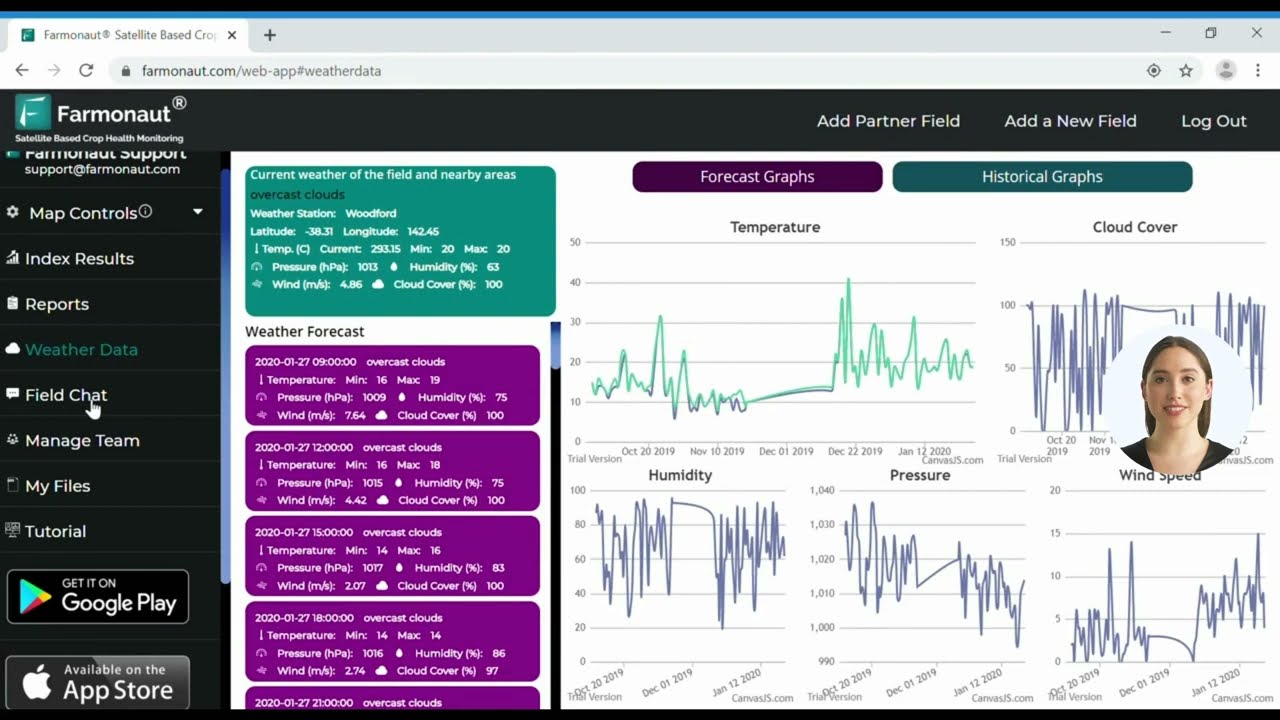
Farmonaut Tutorials & Insights: AI in Agriculture Data Visualization in Action



Frequently Asked Questions (FAQ)
1. What is AI in Agriculture Data Visualization?
AI in agriculture data visualization describes the practice of using artificial intelligence to analyze large, complex streams of farming data—crop yield, soil status, irrigation, machinery telemetry—and presenting these as actionable, easy-to-understand visuals like maps, charts, and dashboards.
2. How does visualization support the industrialization and mechanization of agriculture in the United States?
Visualization enables large-scale, mechanized farms to quickly identify weaknesses, monitor machinery, evaluate input use, and track yield variability via interactive dashboards and geospatial overlays—optimizing efficiency, sustainability, and profitability.
3. What is the ‘fertilization agriculture definition’ and why visualize it?
Fertilization in agriculture is the process of supplying essential nutrients to crops. Visualizing fertilization regimes—via maps, charts, and alerts—enables farms to optimize where, when, and how much to apply, reducing costs, enhancing yield, and minimizing environmental impact.
4. Why is deforestation data visualization important for farming?
It helps land users and policy makers see the trade-offs between agricultural expansion and ecosystem health, designing interventions, buffer zones, and sustainable growth plans that balance productivity with environmental stewardship.
5. How can Indian agriculture production data visualization improve policy support?
By mapping production volumes, input use, and risk clusters on dashboards, policy makers can target resources, insurance, and extension services to regions and cycles most in need—enhancing food security and supply chain resilience.
6. What distinguishes Farmonaut in the field of data visualization?
Farmonaut leverages satellite-based monitoring, blockchain, and AI advisory to offer affordable, scalable, and actionable visualization for individual farmers, businesses, and government agencies worldwide, via web/app/API formats.
Farmonaut Subscriptions
Conclusion: Data Visualization Powers the Next Era of Agriculture
AI in agriculture data visualization sits at the intersection of technology, innovation, agronomy, and decision support. By turning millions of raw data points into intuitive visuals, these tools enable users at all levels—from field managers to ministries of agriculture—to make smarter decisions, improve yields, reduce costs, and uphold environmental responsibilities.
With tools like Farmonaut’s platform, the journey from data collection to impactful, sustainable farming is now within reach for smallholders, large enterprises, and policy makers alike. The era of “data-driven agriculture” is no longer a dream—interactive, AI-powered visuals are guiding the future of food security, land stewardship, and global sustainability.
Ready to revolutionize your crop management, soil analysis, or strategic farm planning? Experience the difference Farmonaut can make in your agricultural journey—wherever you are, and at any scale.
Discussion
Questions, corrections or field experience? Share them below. First-time comments are reviewed before they appear, and your email is never published.
No comments yet. Be the first to add a question or your experience.

 MDCV UK
 Zerella Group
 Agroes
 Etech Consulting Madagascar
 Vestlandsforsking
 Agritein
 Delicio
 WB Dev
 Sama Premium
 Prochecker
 Tres Valles
 LACOS Geoinformation
 Magrifly
 LatConnect 60
 Blickwinkel
 Agricultural Credit Policy Council
 Marei Nursery
 eKGIS
eKGIS Mostas Tech
 Andex
Andex
 Exploration consultancy · South Africa · Gold
 Licence holder · Niger · Gold
 Licence holder · Nigeria · Gold + lithium










