

Agricultural Biotechnology: US Adoption Data & AI Tools
Reviewed August 2026 against USDA NASS and USDA Economic Research Service data.
Try it: Run your own numbers →
Genetically engineered (GE) crop varieties now cover the overwhelming majority of US corn, soybean, and cotton acreage: 94% of corn, 96% of soybeans, and 96% of upland cotton planted in 2024, according to USDA’s National Agricultural Statistics Service. Layer AI on top of that biotech base—for trait discovery, field diagnostics, and yield forecasting—and you get the fastest-moving segment of American agriculture. This article covers the current adoption numbers, where AI fits into agricultural biotechnology today, and where the autonomous-vehicle side of agritech stands as a separate but related market.
US Adoption Data: Where Agricultural Biotechnology Stands
Agricultural biotechnology in the United States is not a future prospect—it is the baseline. USDA NASS’s June 28, 2024 acreage report put GE corn at 94% of planted acreage, GE soybeans at 96%, and GE upland cotton at 96%. Those shares have moved incrementally for over a decade because the ceiling is close to full saturation among row-crop growers who can access GE seed. The acreage behind those percentages is large: US corn harvested area came to 91.5 million acres in 2024, soybean harvested area to 86.1 million acres, and upland cotton planted area to 11.5 million acres, all per the same NASS release.
That means roughly 86 million acres of corn and 82.6 million acres of soybeans in the US were planted with GE varieties in 2024 alone, once you apply the adoption rates to the harvested-area figures. USDA’s Economic Research Service maintains the longest-running public dataset on this trend, tracking adoption since GE crops were first commercialized in 1996; if you need a year other than 2024, ERS’s biotechnology data product (USDA Economic Research Service) is the source to check, and it refreshes with new NASS acreage data annually.

Market Overview: Biotech Companies & Growth Drivers
More than 1,200 biotech companies were engaged in US agricultural innovation as of 2024, per Sky Market Insights’ United States agricultural biotechnology market report. That figure spans seed developers, gene-editing service providers, agri-informatics firms, and companies building the AI layer on top of genomic and phenomic data. It is a count of participants, not a ranked list—Sky Market Insights and comparable analyst firms do not publish a public leaderboard of “top” companies by revenue or market share for this sector, so if you are looking for a ranked list of leading agricultural biotechnology firms, the honest answer is that no such published ranking currently exists in the sources available; the closest substitute is tracking company counts and segment activity through market reports like this one, refreshed as new editions are published.
Growth in this space is driven by a combination of factors that show up consistently in USDA and industry data:
- Near-total GE penetration in the three largest US row crops (corn, soybeans, cotton), leaving limited headroom for adoption-rate growth and shifting the growth story toward new traits and stacked genetics rather than first-time adoption.
- AI-powered precision agriculture solutions layered onto GE seed genetics, using field-level sensor and satellite data to decide where and how those genetics perform best.
- Company formation and specialization—the 1,200+ figure reflects a fragmented market of gene-editing shops, phenotyping platforms, and data-analytics vendors rather than a handful of dominant players.
Automation, field sensors, and satellite monitoring increasingly combine with AI systems to optimize every stage of the agricultural cycle, from seed selection through harvest logistics. For company-level market share data, private equity investment volumes, or seed cost premiums by crop, no aggregated public figures were located for this brief—USDA does not publish per-company breakdowns, and seed price data is typically negotiated privately between seed companies and growers rather than reported centrally. Grand View Research publishes updated agricultural biotechnology market forecasts annually, with new valuations typically issued in the first quarter of each year, if you need current market-size figures beyond what is cited here.
Autonomous Agricultural Vehicles: A Related but Separate Market
The global autonomous agricultural vehicle market was valued at $1.8 billion in 2024, with a projected compound annual growth rate of 15.6% from 2024 to 2034, according to market.us. This is a distinct market from agricultural biotechnology proper—autonomous tractors, robotic sprayers, and self-driving harvesters are a mechanization and automation category, while biotechnology covers genetic engineering, trait development, and gene editing. The two intersect where AI-guided autonomous equipment is used to plant, monitor, or harvest GE crop varieties, but they are tracked as separate market segments by analysts, and a search for one should not be answered with data from the other.
If your interest is specifically in autonomous equipment—guidance systems, robotic weeders, driverless tractors—the market.us report (market.us autonomous agricultural vehicle market report) is the sourced reference for sizing and the 2024–2034 growth trajectory. For biotechnology-specific data—GE adoption, trait discovery, gene editing—the USDA sources cited elsewhere in this article are the better fit. Farmonaut’s own tools sit closer to the biotech-and-monitoring side of this line: satellite-based crop and soil diagnostics rather than autonomous vehicle hardware.
How AI Is Transforming Agricultural Biotechnology: Precision at Every Step
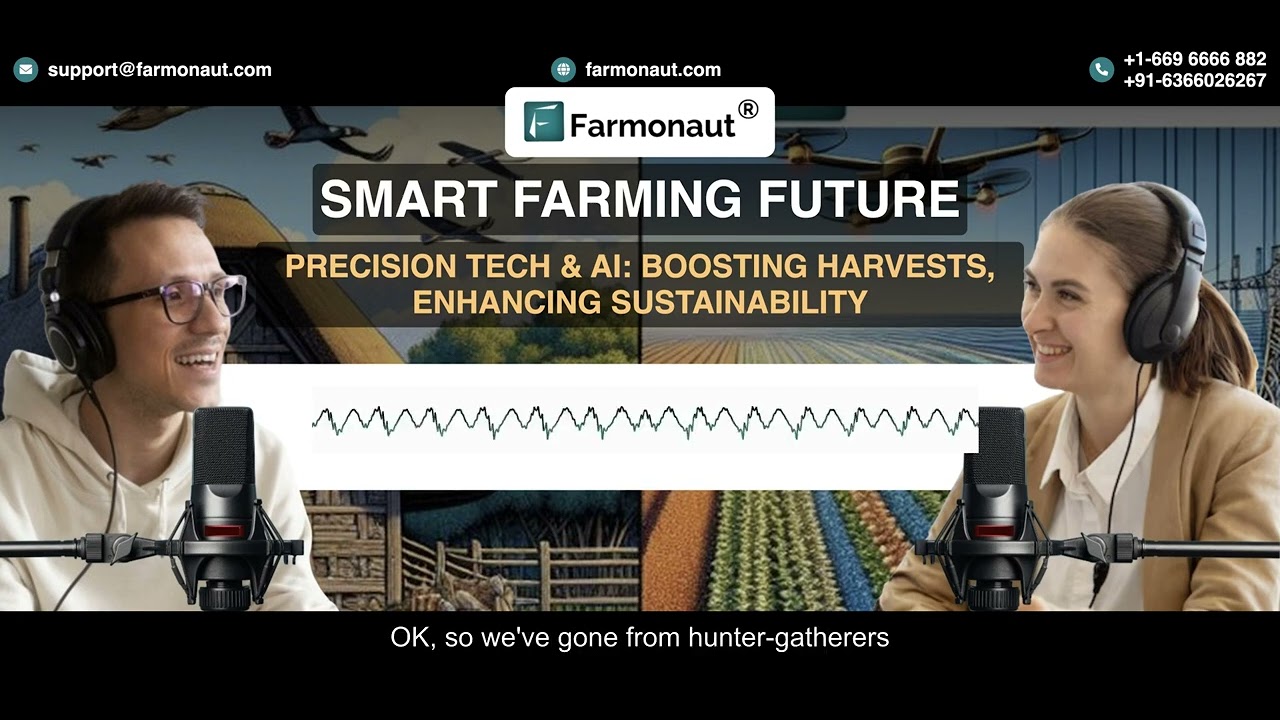
AI has become a practical tool—not a buzzword—in agricultural biotechnology because it processes datasets that are too large for manual review: genomic sequences, phenotyping images, and continuous environmental sensor streams. Machine learning and deep learning models turn that volume into decisions at the trait level and the field level simultaneously.
Three ways this shows up in practice:
- Accelerated trait discovery: Machine learning algorithms process DNA and RNA sequence data to flag candidate traits faster than manual annotation, narrowing the search space before a breeding program invests field-trial resources in a candidate line.
- Predictive modeling for gene-editing targets: Algorithms help identify candidate loci for traits like drought tolerance or disease resistance, informing where breeders focus CRISPR and other gene-editing work.
- Field-level management: Automated data pipelines interpret soil, moisture, and nutrient signals in near-real time, enabling more precise input timing than fixed-calendar application schedules.
This does not eliminate the multi-year timeline of variety development and regulatory review, but it does shrink the trial-and-error phase before a candidate line reaches field trials. Yield-improvement percentages specifically attributable to AI-guided trait selection, as distinct from GE traits generally, are not published in aggregated USDA form—academic studies on individual traits exist, but no single US government figure covers “AI contribution to yield” as a standalone number. Track USDA ERS’s biotechnology page for adoption-rate updates and NASS QuickStats for the underlying acreage data if you need a number to build on.
Core AI Applications in Agricultural Biotechnology
AI’s role in agricultural biotechnology spans the full value chain, from the lab bench to the equipment yard. Here is where it currently does measurable work:
-
Genome Editing & Trait Discovery
- Genomic and phenomic datasets are processed with machine learning to identify genes linked to agronomic traits such as drought tolerance and disease resistance.
- AI-guided CRISPR and related gene-editing techniques help researchers narrow genetic targets before committing to costly, multi-season field validation.
-
Predictive Analytics for Breeding Programs
- Models simulate crossbreeding outcomes and environmental responses, helping breeders prioritize which candidate lines to advance to field trials.
- This shortens development timelines relative to breeding programs that rely solely on sequential field seasons to test each cross.
-
Field Diagnostics & Targeted Intervention
- AI-powered sensors and satellite-based monitoring provide near-real-time data on crop and soil health, moisture content, and nutrient status.
- This informs targeted water, fertilizer, and agrochemical application, aimed at reducing waste relative to blanket application across a field.
-
Resource Management & Supply Chain Traceability
- AI combined with blockchain-style record-keeping supports supply chain transparency and authenticity from seed source through harvest.
- Growers can verify seed and input origin, which matters for both quality control and increasingly for buyer-side traceability requirements.
-
Automation, Robotics, and Autonomous Decision Support
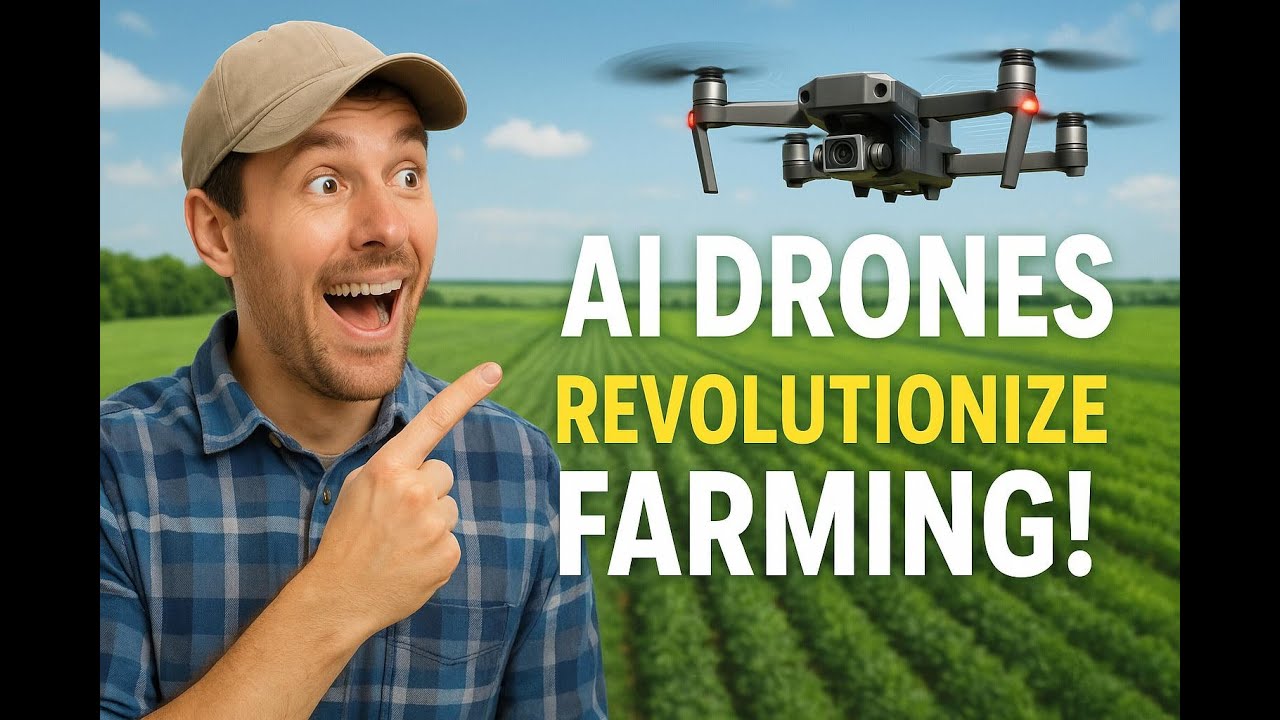
- Predictive models increasingly support autonomous field robotics—crop-monitoring drones, automated planting equipment, and irrigation or pest-management decision tools.
- This is the point where agricultural biotechnology’s data layer connects to the separate autonomous-vehicle market described above.
Calculator: Estimate Your GE Seed Cost Trade-off
Seed cost premiums for GE varieties are not published in a single standardized USDA dataset—they are negotiated per crop, trait package, and region—so use your own quoted seed prices below to see how a GE premium compares against your farm’s acreage and expected yield response.
Run your own numbers
Assumes yield gain applies uniformly across the field and that all output sells at the entered price. Excludes technology fees, replant costs, crop insurance premium changes, and any price discount or premium for non-GE grain. Enter your own seed quotes and expected yield response — this is a planning estimate, not a guarantee.
Comparison Table: AI Applications Across the Biotech Stack
| AI Application | Biotech Area Affected | What It Replaces or Speeds Up | Data Dependency |
|---|---|---|---|
| Trait discovery (ML on genomic data) | Molecular genetics | Manual annotation of candidate genes | Genomic/phenomic sequence datasets |
| Predictive breeding models | Plant breeding programs | Sequential multi-season field crosses | Historical trial and pedigree data |
| Satellite/sensor field diagnostics | Crop & soil management | Manual scouting, fixed-calendar input schedules | Multispectral imagery, soil sensors |
| AI + blockchain traceability | Supply chain & food safety | Paper-based provenance records | Transaction and location records |
| Autonomous field robotics | Planting, spraying, harvesting | Manual equipment operation | GPS, sensor, and vision data |
Compiled from USDA NASS, USDA ERS, and market.us sources cited throughout this article. No single source publishes market-size figures broken out by every row of this table; treat this as a functional comparison, not a revenue breakdown.
Farmonaut: Satellite & AI Tools for Biotech-Era Farming
Whatever the seed genetics in the ground, growers still need field-level data to manage the season. Farmonaut delivers satellite-based monitoring and AI-driven advisory tools that complement GE crop management rather than replace the breeding and regulatory work behind biotechnology itself.
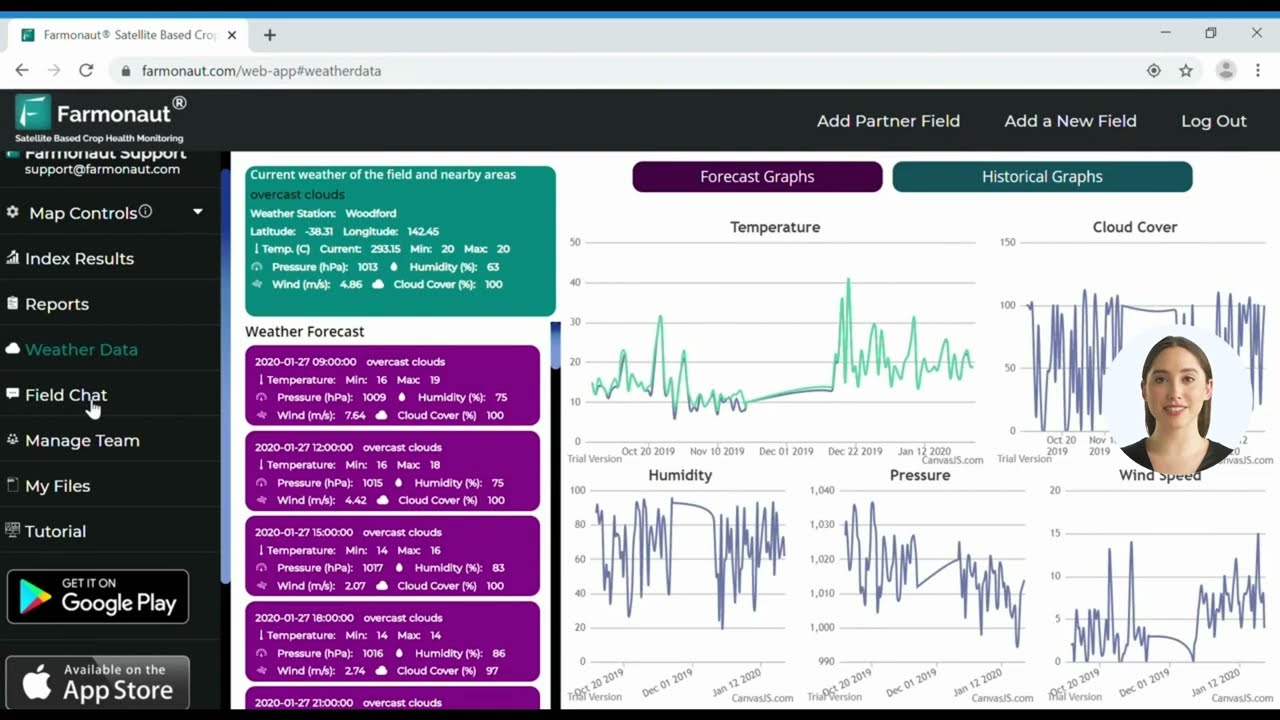
- Satellite-Based Monitoring with large-scale farm management features lets users track crop health, soil conditions, and land use across large operations using multispectral imagery and AI-powered analytics.
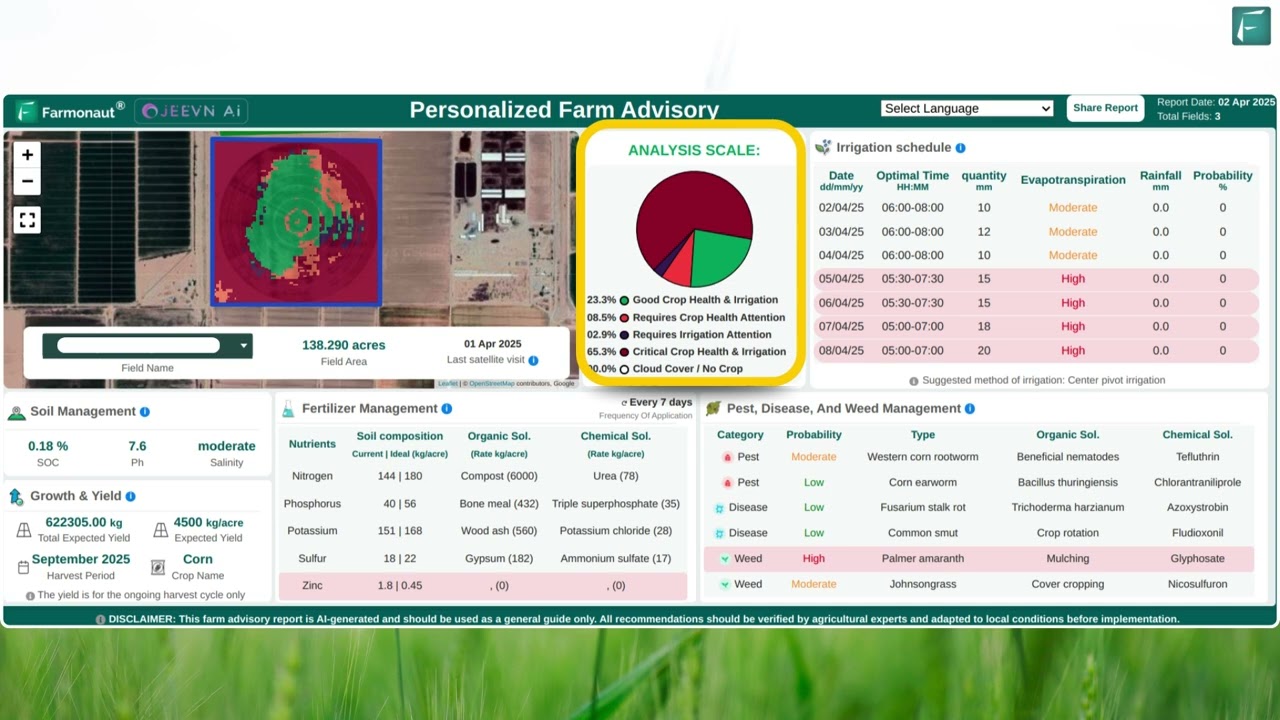
- Jeevn AI Advisory System delivers tailored guidance based on current satellite and weather data, aimed at helping growers plan input timing around actual field conditions rather than a fixed calendar.
- Blockchain-Based Traceability Solutions support transparency from seed to harvest, backed by satellite verification—see blockchain-based traceability for details.
- Environmental Impact Tracking, including carbon footprint monitoring, supports emissions tracking and compliance reporting.
- Fleet and Resource Management Tools support agricultural logistics—see the fleet management services page.
These tools are available via Android, iOS, and web applications, and through APIs for integration into existing systems. Developers can find implementation details in the API Developer Docs.
Farmonaut subscriptions are flexible and scalable for farms, agribusinesses, and institutions:

Start using Farmonaut solutions today:



Our Technology: Scalable, Affordable, and Data-Driven
Farmonaut's platform is built for:
- Scalability—from individual farms to enterprise-scale operations
- Affordability—tiered subscription plans for satellite and AI access
- Interoperability—integration via APIs for financial institutions, agribusinesses, and government programs
Satellite-based validation is also increasingly used by lenders for agricultural loans and insurance, reducing reliance on manual field verification and supporting faster underwriting decisions.

Implementation: Challenges & Opportunities
Agricultural biotechnology's near-total penetration in major US row crops does not mean the sector has no open questions. The remaining friction points fall into four categories:
-
Ethical and Regulatory Considerations:
- Gene editing continues to raise safety, ethics, and access debates, and regulatory frameworks are still adapting to newer editing techniques like CRISPR relative to older transgenic methods.
-
Data Privacy and Security:
- Large genomic, phenotypic, and farm-operations datasets raise questions about data ownership between growers, seed companies, and technology vendors.
- Traceability systems must balance transparency with grower data privacy expectations.
-
Field Validation and Infrastructure:
- AI and biotech tools require field validation across varying soils, climates, and farm sizes before results generalize beyond a research trial.
- Rural broadband and connectivity gaps still limit real-time data tools on some US farms.
-
Cost of Access:
- GE seed carries a price premium over conventional seed (see the calculator above), and the exact premium is negotiated per crop and trait package rather than published in a standard federal dataset.
- Smaller operations weighing that premium benefit from running their own numbers rather than relying on national averages that blend very different trait packages.
None of these are new problems, but they are the ones that determine adoption speed for the next wave of traits and AI-driven breeding tools, beyond the near-saturation already reached in corn, soybeans, and cotton. For a deeper look at how biotechnology is reshaping farming more broadly, see biotechnology in agriculture.
Frequently Asked Questions
What percentage of US crops are genetically engineered?
As of 2024, USDA NASS reported 94% of US corn acreage, 96% of soybean acreage, and 96% of upland cotton acreage planted with GE varieties. These figures are updated annually in USDA's June acreage report and are searchable by crop and trait type in NASS QuickStats.
How big is the autonomous agricultural vehicle market?
The global autonomous agricultural vehicle market was valued at $1.8 billion in 2024, with a projected 15.6% compound annual growth rate from 2024 to 2034, per market.us. This is tracked as a separate market from agricultural biotechnology, covering equipment automation rather than genetics or gene editing.
How many companies are active in US agricultural biotechnology?
Sky Market Insights counted more than 1,200 biotech companies engaged in US agricultural innovation as of 2024. No public source ranks these companies by market share or revenue, so treat any "top leaders" list you encounter as unsourced unless it cites a specific dataset.
How does AI benefit agricultural biotechnology specifically?
AI accelerates trait discovery by processing genomic and phenomic data faster than manual review, supports predictive modeling for gene-editing targets, and enables real-time field diagnostics through satellite and sensor data. It shortens the pre-field-trial phase of breeding programs rather than replacing the field trials and regulatory review themselves.
How does Farmonaut support agricultural biotechnology adoption?
Farmonaut provides satellite and AI-driven tools for real-time crop monitoring, environmental tracking, and supply chain traceability, complementing whatever seed genetics a grower has already chosen. Our large-scale farm management solution streamlines operations with data-driven insights for any size operation.
Where can I access Farmonaut's API and developer documentation?
Visit our API page and the Developer Docs for integration guidance.
Is there a mobile app for using Farmonaut's services?

Conclusion: What to Track Next
US agricultural biotechnology has reached near-saturation in its three flagship crops—94% to 96% GE adoption across corn, soybeans, and cotton as of the 2024 NASS report—which means the growth story is shifting from "will farmers adopt GE seed" to "what new traits and AI-driven tools come next." The autonomous vehicle side of agritech is growing faster in percentage terms (15.6% projected CAGR through 2034) but remains a smaller, separate market at $1.8 billion in 2024, and it should not be conflated with biotechnology proper when you are evaluating either sector.
To keep any of these figures current: check USDA NASS QuickStats each June for updated acreage and adoption percentages, check USDA ERS's biotechnology data product for the longest-running adoption trend line back to 1996, and check market.us or Grand View Research (new editions typically in Q1) for updated autonomous-vehicle and biotech market sizing. None of these numbers are static, and each source above tells you exactly when and how it refreshes.
Begin your transformation journey:
Discussion
Questions, corrections or field experience? Share them below. First-time comments are reviewed before they appear, and your email is never published.
No comments yet. Be the first to add a question or your experience.

 HIPSAC
 ZOL Zimbabwe
 Innomick
 Juligerm
 AdBio
AdBio MISE Maroc
 Drift-Sense
 NWNS
NWNS Red August Group
 Farm Inc
 WeMe Global
 Agrotoken
 Blue BearX
 Insignito
 Croptimum
 DnCubed
 Field Capacity
 Indosistim Teknologi
 Liquify Digital
 Licence holder · Niger · Gold
 Licence holder · Nigeria · Gold + lithium










