

Cost of Implementing AI in Agriculture: 7 Smart Tools for Yield, Efficiency & ROI
Introduction: The Rising Cost of Implementing AI in Agriculture
Artificial intelligence is increasingly shaping modern agriculture, offering substantial gains in yield, operational efficiency, and resource management. For today’s farmers and agribusinesses, however, the core question is no longer whether AI can help the farm—but how to implement AI in a cost-effective, practical, and scalable manner.
This blog offers a focused view on the cost of implementing AI in agriculture, practical AI-powered farming tools, and the role of IoT integration to boost yield, efficiency, and ROI. We look closely at how to start with existing agriculture implements, select the right tools, calculate real costs, and maximize operational benefits while minimizing risk.
The cost of implementing AI in agriculture can be minimized by upgrading common agriculture implements with smart, modular, and retrofittable AI-driven tools—rather than investing in abstract or high-risk systems.
Why Consider the Cost of Implementing AI in Agriculture?
- ✔ Yield Optimization: Detect issues & optimize inputs in real time
- 📊 Data-Driven Insight: Access actionable intelligence at the field level
- ⚠ Risk Reduction: Prevent losses through early pest & disease detection
- 💧 Resource Savings: Reduce water and fertilizer use, improve sustainability
- 🕑 Operational Efficiency: Automate routine farm management tasks
Start your AI journey with a single high-value use case such as irrigation scheduling or pest detection. This keeps risks manageable and demonstrates tangible ROI before scaling.
AI Implementation Foundation: Aligning Technology with Farm Tasks
As we explore the cost of implementing AI in agriculture, a critical foundation emerges: AI shines brightest when aligned with concrete farm tasks. Rather than deploying abstract black-box systems, it’s best to focus AI on well-defined, high-impact objectives. Let’s look at some examples:
- 🌾 Crop Health Monitoring: Using AI and field cameras or drone imagery for early nutrient and disease detection.
- 💧 Irrigation Scheduling: Pairing AI models with soil moisture and weather data to optimize water use.
- 🐛 Pest and Disease Detection: Leveraging smart sensors or image analysis to offer early, targeted interventions.
- 📈 Yield Prediction: Applying AI algorithms to historical and real-time field data to forecast output and plan operations.
Example: Integrating AI with soil moisture sensors allows for precision irrigation. This reduces both water and energy costs while helping maintain or increase yields. Similarly, AI-powered analysis of drone or satellite imagery can rapidly identify nutrient deficiencies or emerging fungal infections, enabling field managers to intervene early and effectively.
Deploying AI without clear goals or failing to align tools with existing field operations often leads to poor ROI and operator resistance.
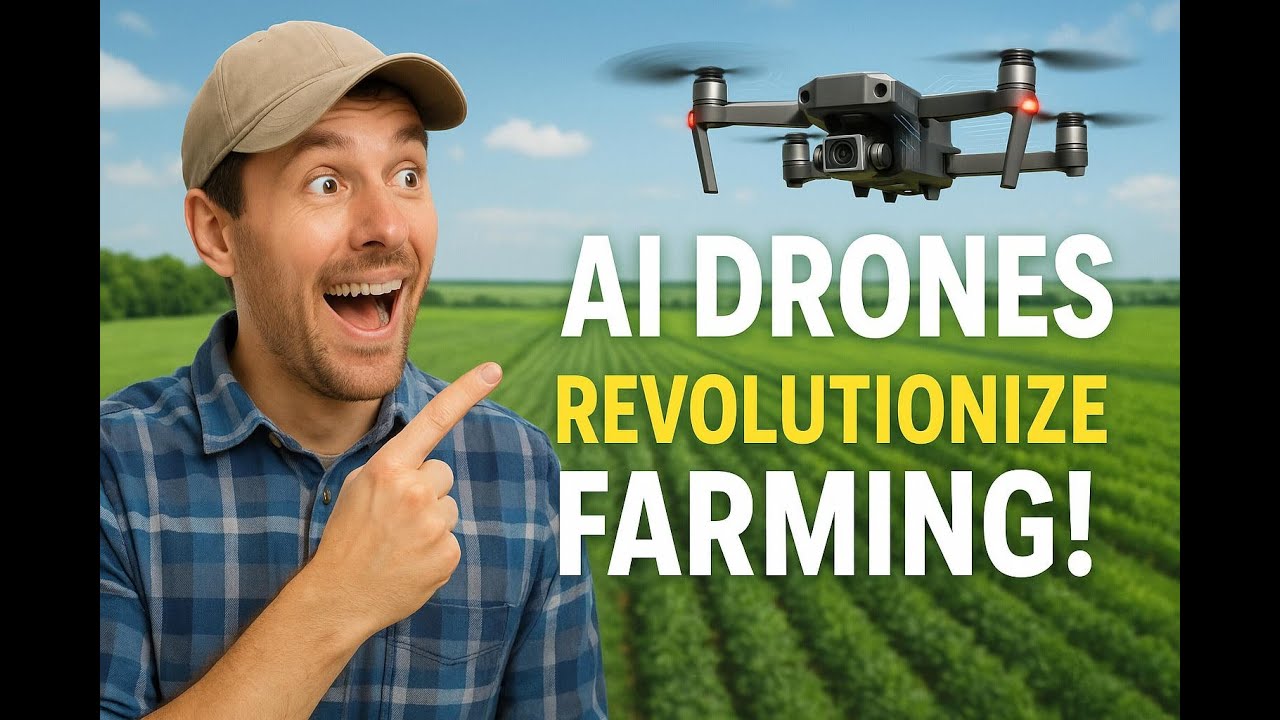
Visual List: Core AI-Enabled Farm Tasks
- 🔬 Health Monitoring: Identify stresses & deficiencies early
- ⏰ Irrigation Scheduling: Automate water delivery based on real-time data
- 🦠 Pest/ Disease Detection: Pinpoint threats for targeted treatment
- 🎯 Yield Prediction: Anticipate harvest volumes, improve planning
- 🛰 Remote Sensing: Use satellites, drones, & field devices for automated data input
Upgrading Existing Farm Implements with Smart AI Tools
A practical and cost-effective AI deployment strategy leverages existing farm equipment—from tractors and planters to irrigation pivots—upgraded with modular sensors and AI modules. This approach reduces the need for expensive machinery replacement and maximizes ROI from current assets.
Retrofitting: How It Works
Edge AI capabilities (compact computing devices with embedded AI models) can be added to planters, sprayers, or harvesters, enabling real-time adjustments based on field or crop stage data. Ground-level sensors, cameras, and wireless units can be attached to common agriculture implements—transforming them into smart farming tools.
Incremental AI upgrades—with modular, field-relevant add-ons—generate faster adoption and shorter payback timelines compared to large up-front equipment purchases.
- 🛠 Choose modular systems that retrofit seamlessly to your current machines.
- 📡 Wireless connectivity ensures compatibility across evolving IoT networks.
- 🔋 Low-power operation (solar panels, long-life batteries) reduces maintenance.
- 🛡 Cloud + Edge models help process data on-spot or in the cloud depending on network reliability.
- 🌍 Standard protocols (e.g., LoRaWAN, NB-IoT) offer flexible integration options.

Visual List: Advantages of Retrofitting Existing Implements
- 💰 Lower Upfront Investment: Avoid whole-fleet replacement
- 🕒 Rapid Deployment: Minimize operational downtime
- ⚒ Customization: Select only the modules needed for your crop, field, or season
- 🔄 Scalability: Expand from pilot to full operation based on results
Implementation of IoT in Agriculture: The Smart Backbone
The implementation of IoT in agriculture forms the critical backbone for all AI-powered farm systems. Affordable, low-power networked sensors for soil, moisture, temperature, humidity, and nutrient levels generate real-time data—feeding AI models that convert this information into operational recommendations and automated tasks.
Key cost drivers for IoT implementation in agriculture:
- 💼 Sensor Price: Bulk purchasing and plug-and-play integration reduce costs.
- 🌐 Network Coverage: Reliable mesh or low-frequency wireless is crucial for large and remote fields.
- 🔌 Power & Maintenance: Solar-powered or ultra-low battery solutions cut maintenance cycles.
- 🛠 Calibration: Ensuring accuracy in field and soil readings prevents model drift.
- 🧑🌾 Operator Training: Simple dashboards and mobile alerts promote adoption.
The major cost in IoT-enabled agriculture is often ongoing: data security, maintenance, connectivity fees, and staff time—not just sensor hardware.
Phased IoT Deployment Strategy
- Pilot: Start with 1-2 fields or crops, assess real-world sensor performance and AI outcomes.
- Validate: Quantify benefits—such as water savings, yield uplift, or time saved.
- Scale: Expand to remaining acreage once metrics justify the investment.

7 Smart AI Tools: Cost of Implementing AI in Agriculture
Let’s review the 7 most impactful, cost-effective AI-powered smart tools transforming the economics and efficiency of modern agriculture today.
- AI-Driven Soil and Moisture Sensors
- Automatically monitor soil moisture, nutrient levels, and temperature.
- Use Case: Optimize irrigation, boost water use efficiency, and prevent overwatering/fertilizer waste.
- Benefits: Potential to reduce input costs and increase yields through data-driven scheduling.
- Learn how Farmonaut solutions enable environmental impact and irrigation management.
- Autonomous Drones & Image Analysis Platforms
- Automated field scouting, crop health monitoring, and early stress or disease detection.
- Use Case: Early detection of deficiencies, optimizing crop input placement, and improving targeted spraying.
- See how satellite- and drone-powered crop advisories work on Farmonaut’s mobile app.
- AI-Supported Variable-Rate Irrigation and Fertilizer Systems
- Dynamically adjust water and nutrient delivery based on real-time sensor data and AI predictions.
- Use Case: Reduce water, energy, and fertilizer costs while maintaining or increasing yields.
- Smart Planters and Seeders with Predictive AI
- Control seed depth, spacing, and density based on AI analysis of soil data and historical yield maps.
- Use Case: Optimize planting rates, reduce seed wastage, and ensure even crop emergence.
- Explore farm-wide field management and predictive analytics on Farmonaut’s Agro-Admin App.
- Pest and Disease Detection Sensor Arrays
- Combine visual, spectral, and pheromone sensors with AI algorithms for in-field real-time pest surveillance.
- Use Case: Enable hyper-targeted pesticide application and early epidemic suppression.
- Satellite Imagery and Remote Sensing Platforms
- Deliver NDVI maps, health indices, and yield trends with historical tracking for large-scale farms.
- Use Case: Monitor entire farm operations, optimize resource allocation, and schedule field interventions.
- Assess satellite-driven impact analytics with Farmonaut’s carbon footprinting.
- Fleet Management with AI-Guided Telematics
- Automate field logistics using sensors and AI-equipped GPS to monitor equipment usage, fuel, and performance.
- Use Case: Lower operational costs and maintenance through predictive scheduling.
- Optimize vehicle, machinery, and resource management using Farmonaut fleet management tools.
When choosing an AI smart tool, compare both upfront costs and recurring maintenance, IoT integration needs, and expected yield improvements for your field size and crop variety.




Comparative Cost-Benefit Overview Table (7 Smart AI Tools)
| Tool Name | Functionality | Estimated Initial Cost (USD) | Estimated Annual Maintenance (USD) | IoT Integration Level | Expected Yield Improvement (%) | Expected ROI Timeline |
|---|---|---|---|---|---|---|
| AI Soil & Moisture Sensors | Real-time soil health & irrigation control | $1,500 – $5,000 (per 50 acres) | $250 – $500 | High | 10–20% | 12–18 months |
| Autonomous Drones & Image Analysis | Field scouting, remote crop inspection | $10,000 – $30,000 | $1,500 – $3,000 | Medium–High | 10–18% | 18–24 months |
| Variable-Rate Irrigation & Fertilizer Systems | Targeted input delivery based on sensors | $7,500 – $18,000 | $700 – $2,000 | High | 15–25% | 12–24 months |
| Smart Planters/Seeders | Predicative planting, optimal density | $12,000 – $40,000 | $1,500 – $3,000 | Medium | 8–15% | 18–36 months |
| Pest/Disease Detection Sensors | Targeted early pest alert & response | $5,000 – $15,000 | $400 – $1,000 | High | 5–12% | 12–18 months |
| Satellite Imagery Platforms | Remote health/yield monitoring | $2,500 – $10,000 (annually) | Included | High | 6–18% | 6–18 months |
| Fleet Management Systems | Real-time operations & resource tracking | $7,500 – $25,000 | $800 – $2,500 | Medium | 6–15% | 12–24 months |
AI Data Management: Maximizing Model Accuracy and ROI
No matter which tool you deploy, data management and model accuracy are critical to cost control and operational success. Clean, well-labeled, and unbiased sensor data forms the bedrock of effective AI. Poor data quality—or inconsistent sensor calibration—leads to model drift, wasted interventions, and reduced ROI.
- ✔ Data Governance: Implement sets of standards, versioning rules, and access control to protect farm data.
- 📊 Regular Cleaning: Remove outliers and address sensor anomalies for healthy model inputs.
- 🎯 Clear Metrics: Define success as water saved per hectare, yield uplift, or input cost reduction—all trackable in dashboards.
- ⚙ Bespoke or Vendor-Integrated Models: Start with vendor-approved models that plug into your current stack, then upgrade to customized versions trained on your specific crops and fields as needed.
- 💻 Timeline-to-Value: Focus on tools offering seasonal quick wins, such as static phenotyping dashboards or automated irrigation controls.
Agritech Economics: Calculating ROI in Real Farm Cases
The economics of the cost of implementing AI in agriculture—and its justification—boil down to a handful of input, operational, and yield improvement metrics.
Farms running diversified crops or multi-field operations can realize compounding benefits from standardized AI workflows and co-optimized data models.
Initial costs include sensors, gateways, hardware retrofits, and AI software licenses/subscriptions. Ongoing costs often cover data cloud storage, sensor maintenance, model retraining, and network fees. ROI calculations should consider:
- 💸 Input Savings: Direct reductions in water, fertilizer, and chemical usage.
- 🌾 Yield Improvement: Increased output through better monitoring and early interventions.
- 🕰 Labor Efficiency: Less manual scouting and repeat field visits.
- ⚠ Risk Mitigation: Early warnings lower the probability of catastrophic losses.
Tip: Start with an incremental pilot. Track KPIs closely per season—every percent of yield or input improvement compounds quickly at scale, justifying the next round of investment.

Operational Considerations for AI in Modern Agriculture
To maximize the benefits and manage the costs of smart agritech implementation, attention must be paid to day-to-day realities:
- 🔍 Data Quality & Sensor Placement: Poorly installed or misplaced sensors undercut accuracy and decision-making.
- 🛠 Proactive Maintenance: Schedule regular checks for all sensors and IoT devices before critical seasons.
- 👨🌾 Operator Training: Invest time in training users to interpret AI dashboards and automated alerts.
- 🔐 Data Privacy & Security: Secure farm operations data and foster trust with all stakeholders.
- 🚫 System Redundancy: Prepare backup plans for network or equipment downtime.
Neglecting sensor placement and data cleaning is the top cause of accuracy loss and model failure in AI-powered agriculture.
Farmonaut: Satellite-Driven AI Tools for Smarter Agriculture
At Farmonaut, we believe agritech must be affordable, scalable, and accessible to users globally. Our satellite and AI-driven tools help farmers, businesses, and governments improve yield, resource management, and sustainability—without the need for costly new machinery or complex integration.
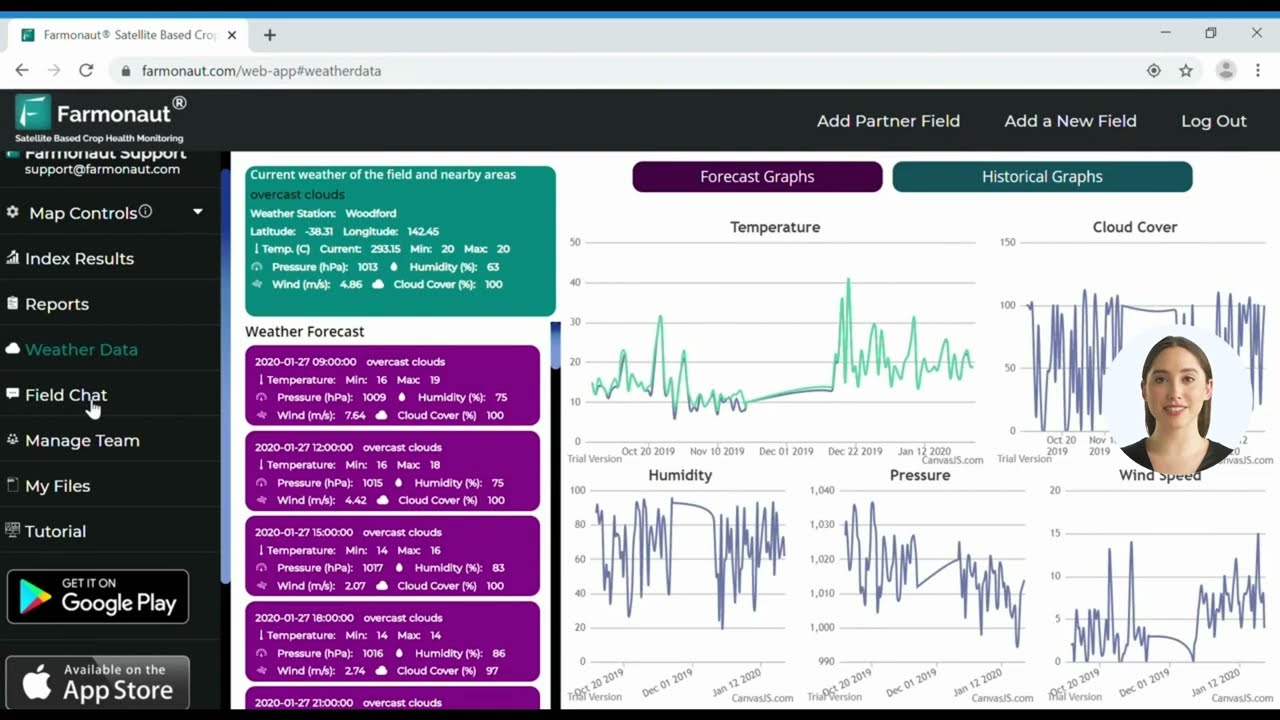
- ✔ Real-time Crop and Soil Monitoring: Multispectral satellite data delivers up-to-date insights on NDVI, soil moisture, and plant health at field, farm, or regional scale.
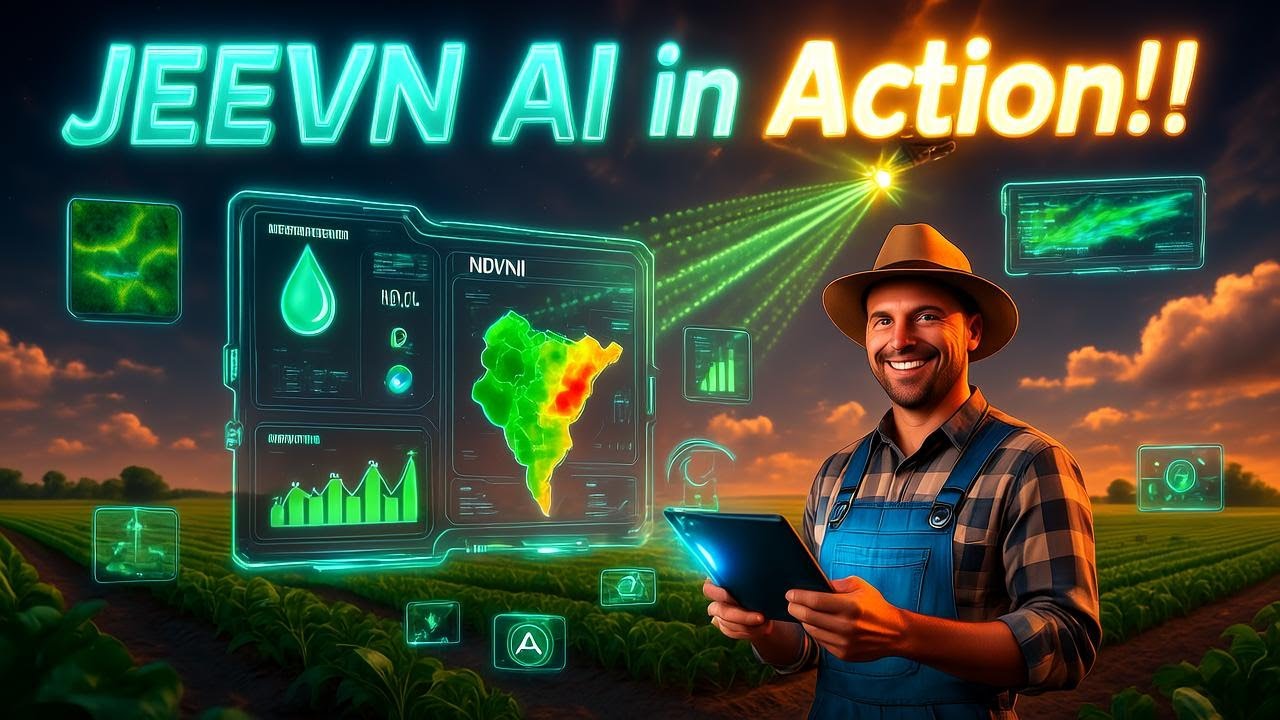
- 📊 AI-Based Advisory Systems: Our JEEVN AI module automatically analyzes weather, crop growth, and environmental impact to deliver actionable recommendations through web/mobile apps and API.
- 🛡 Blockchain Traceability: End-to-end supply chain transparency, empowering food safety and premium marketing. View product traceability solutions.
- 🚜 Fleet and Resource Management: Track vehicles, optimize usage, and reduce costs with smart logistics. Discover fleet & resource management.
- 🌱 Environmental Impact Monitoring: Track carbon emissions and support sustainable agriculture. Find out more about carbon footprinting tools.

- 🔔 Flexible Subscriptions: Farmonaut apps and web services are available via affordable, modular subscriptions suited for individual users and large enterprises alike.
- 📱 Mobile & API Access: Use on Android, iOS, and the Web. API documentation for developers enhances integration options.
- 🌎 Scalable Insights: Track, manage, and act on crop, weather, and field insights from any location.
- 💡 Fast Timeline-to-Value: Satellite-driven solutions deliver actionable results within a season.
Farmonaut’s satellite platform enables AI insights and resource management without heavy investment in on-farm equipment—offering scalable AI benefits even for remote and resource-limited regions.
FAQ: Costs, Benefits, and Practical Insights on Implementing AI in Agriculture
Q1: What is the average cost of implementing AI in agriculture?
The cost of implementing AI in agriculture varies widely depending on field size, crop type, existing equipment, and chosen tools. Entry-level sensor packages might begin around $1,500–$5,000 (per 50 acres) while advanced drone or AI platforms can span $10,000–$40,000 per deployment. Satellite-based systems (like those by Farmonaut) often offer cost-effective, scalable subscriptions.
Q2: Which farm implements can be upgraded to smart tools?
Most traditional implements—irrigation lines, planters, sprayers, and tractors—can be upgraded with sensors and AI modules. Retrofit kits are available for common models, minimizing the need for full replacement.
Q3: What are recurring maintenance considerations?
Maintenance costs include cleaning and calibrating sensors, replacing worn-out IoT hardware, and updating AI models/software. Many vendors offer annual service contracts to control costs.
Q4: Is IoT connectivity required for all AI smart tools?
IoT integration is crucial for real-time data-driven AI tasks. Some solutions operate locally (on-edge), but full benefits arise from connected, cloud-enabled networks spanning multiple fields.
Q5: How quickly can farms see ROI from AI and IoT investments?
Most see measurable improvements within 12–24 months— primarily via input savings, yield increases, and time saved on routine monitoring.
Conclusion: The Real Cost of Implementing AI in Agriculture
The cost of implementing AI in agriculture is best managed through incremental, field-aligned upgrades—not major up-front system investments. By leveraging modular, retrofittable AI tools, building a resilient IoT backbone, and advancing data management practices, farms and agribusinesses unlock new levels of yield, efficiency, and sustainable resource use.
A staged approach—pilot, validate, scale—offers the clearest path to ROI, supporting long-term success in rapidly evolving global markets.
We encourage farms large and small to explore satellite-powered solutions, AI-augmented implements, and robust IoT networks. The key: Start with a single, high-value use case and let real-world data guide your path to higher yields, lower costs, and more resilient operations.
For future-proofed agriculture, the intersection of AI, IoT, and smart implements will remain the frontier of innovation.
Discussion
Questions, corrections or field experience? Share them below. First-time comments are reviewed before they appear, and your email is never published.
No comments yet. Be the first to add a question or your experience.

 Acro Insurance
 Geno
Geno Hayleys Agriculture
 Linx Agritech
 Adinet
 Save Your Soils
 Grandstream Algérie
 XOS Realty
 Geospatial Lab Africa
 Agro La Gándara
 HIPSAC
 ZOL Zimbabwe
 Juligerm
 AdBio
AdBio MISE Maroc
 NWNS
NWNS Red August Group
 Farm Inc
 Licence holder · Niger · Gold










