

Reviewed August 2026 against USDA NASS Census of Agriculture, the National Agricultural Law Center, and Science in Hydroponics cost data.
Try it: Run your own numbers →
Organic hydroponic nutrients are naturally derived feed solutions — fish emulsion, seaweed extract, compost tea, and humic/fulvic acid blends — used in place of synthetic mineral salts in soilless growing systems. They cost more per gallon than conventional hydroponic nutrients (roughly 5-10x on a like-for-like dosing basis, based on published per-gallon figures below), and as of 2026 there is no single national standard for what counts as “organic hydroponics” in the United States: about a third of USDA-accredited organic certifiers still refuse to certify hydroponic operations at all. Anyone shopping for organic hydroponic nutrients needs both a cost model and a certification checklist before buying — this article gives you both.
Contents
- What Organic Hydroponic Nutrients Actually Cost
- The Certification Fight: Why “Organic” Is Contested for Hydroponics
- How Big Is US Hydroponic Vegetable Production
- Comparing Organic Nutrient Blends for Vegetables
- Mixing Cost Calculator
- What’s Actually in a Bioavailable Organic Blend
- Vegetables, Herbs, Fruit & Forestry Nurseries
- Monitoring Nutrient Status With Satellite and AI Tools
- Resource Efficiency and Traceability
- Frequently Asked Questions
- Getting Started

What Organic Hydroponic Nutrients Actually Cost
Cost is the first question most growers researching hydroponic farming nutrients actually want answered, and it’s the one most guides skip. Science in Hydroponics ran a per-gallon cost analysis of major nutrient lines at recommended dosing in 2022, and the spread is wide. A basic custom raw-input formulation — growers buying individual salts and mixing their own — came out to $0.016 per gallon of finished solution. General Hydroponics Flora Pro, a widely stocked three-part conventional line, priced at $0.029 per gallon. Masterblend 5-11-26 with calcium nitrate, a common tomato and pepper formulation among commercial greenhouse growers, came to $0.024 per gallon. At the premium end, the Athena line — a fully-formulated, higher-input system used by some cannabis and specialty-crop operations — priced at $0.183 per gallon, roughly six to eleven times the basic and Masterblend costs.
Those figures are for conventional/synthetic lines, which is the honest baseline: no equivalent per-gallon breakdown for OMRI-listed organic hydroponic nutrient lines specifically has been published with the same methodology, so a direct organic-vs-synthetic dollar comparison isn’t something this article can responsibly hand you as a fixed number. What you can do is get current quotes: request per-gallon-at-dosing pricing (not just bottle price) from OMRI-listed suppliers, and run those numbers through the calculator below alongside the conventional baselines here. If you want to track how nutrient costs move year over year, Science in Hydroponics and Custom Hydro both publish updated cost analyses in late summer — search for the current year’s edition before you budget a new season.
The Certification Fight: Why “Organic” Is Contested for Hydroponics
Before buying anything labeled organic for a hydroponic system, understand that “USDA Organic” and “hydroponic” have an unsettled relationship. The USDA’s National Organic Program allows hydroponic and container operations to be certified organic under current policy, following a 2017 National Organic Standards Board vote that rejected a soil-contact requirement. But adoption among the certifiers who actually do the inspecting has not followed evenly: according to the National Agricultural Law Center’s ongoing tracking of the dispute, roughly 33% of USDA-accredited organic certifiers decline to certify hydroponic and container operations at all, regardless of the national policy allowing it. That means a nutrient product can be organic-input-compliant (OMRI listed, naturally derived) while the operation using it still can’t get organic certification, simply because the certifying agent in that state or region has opted out of hydroponic work.
The practical takeaway for a buyer: OMRI listing on a nutrient bottle tells you the inputs meet organic material standards. It does not guarantee your finished crop can carry a USDA Organic label — that depends on whether your chosen certifier accepts hydroponic operations. Before switching a commercial operation to organic nutrients for certification purposes, call your target certifier first and confirm they certify hydroponic/soilless systems; do not assume it from the national rule. The National Agricultural Law Center’s tracker is the place to check current certifier positions and any further NOSB rulings, since this is an active regulatory fight, not settled law: National Agricultural Law Center, hydroponic organic certification tracker.
How Big Is US Hydroponic Vegetable Production
Scale matters for context: USDA’s NASS Census of Agriculture recorded 4.3 million acres of vegetables harvested across the United States in 2022, the most recent full census year. Within that total, greenhouse vegetable production — the category that includes most commercial hydroponic operations — roughly doubled in farm count between the 2012 and 2017 census cycles, per NASS’s own highlight reporting. NASS does not break out hydroponic acreage as a distinct line item from other greenhouse or controlled-environment vegetable production in its published summaries, so there’s no official “X acres are hydroponic” figure to cite — that’s a genuine gap in public agricultural statistics, not an oversight in this article. If your operation needs a defensible baseline for grant applications or investor materials, the workaround is NASS QuickStats (updated monthly at state level) cross-referenced with your own state extension service, which sometimes tracks controlled-environment agriculture separately. The next full Census of Agriculture is due in 2027 and may report this differently.
Source for both figures: USDA NASS, Census of Agriculture 2022 Vegetable Highlights.

Comparing Organic Nutrient Blends for Vegetables
Ingredient composition, not brand marketing, determines whether a blend suits leafy greens, fruiting vegetables, or nursery seedlings. Use this table to match ingredient category to your crop stage — treat the “eco-friendliness score” column as a relative ranking based on input sourcing and runoff profile, not a certified metric, since no independent body publishes a standardized score for organic hydroponic nutrient environmental impact.
| Ingredient Category | OMRI-Listable | Typical N-P-K Range | Best Suited To | Key Trade-off |
|---|---|---|---|---|
| Fish emulsion / hydrolysate | Often yes | 4-1-1 to 5-2-3 | Vegetative growth, leafy greens, herbs | Strong odor; requires filtration in drip systems to avoid clogging |
| Seaweed / kelp extract | Often yes | 1-0-2 to 0-0-6 | Stress resilience, root development, fruiting stage support | Low on N-P-K alone; used as a supplement, not a standalone feed |
| Compost tea / microbial inoculant | Case-by-case (OMRI reviews the base compost inputs) | Variable, generally low N-P-K | Root microbiome support, disease suppression | Batch consistency depends on brewing process; harder to dose precisely |
| Humic and fulvic acid | Often yes (mined leonardite source reviewed per product) | 0-0-0 (chelating agent, not primary nutrient) | All stages, as a nutrient-uptake enhancer alongside a base feed | Does not replace N-P-K; must be paired with another organic source |
| Custom raw-input mineral blend | No (mineral salts are conventional, not organic) | Fully adjustable, e.g. Masterblend 5-11-26 | Commercial tomato/pepper greenhouses prioritizing cost control | Lowest cost per gallon ($0.024, per Science in Hydroponics 2022) but not organic-eligible |
Note: N-P-K ranges are typical published ranges for each ingredient category, not guaranteed values for any specific commercial product — verify the actual analysis on the product label before dosing.

Mixing Cost Calculator
Use your own reservoir size and a per-gallon price (from a supplier quote, or one of the four benchmark prices above) to estimate what a full growing cycle will cost in nutrients.
Run your own numbers
Assumes a full reservoir change (not top-off) each time and a flat per-gallon dosing cost; it excludes water treatment, pH adjustment products, shipping, and labor. The default price field is pre-filled with the Athena-line benchmark ($0.183/gal) — replace it with your own supplier's quoted price for an accurate estimate.
What's Actually in a Bioavailable Organic Blend
Organic nutrients for hydroponics work differently from synthetic salts because plants can't always access nutrients bound in complex organic molecules the way they absorb free mineral ions. That's why the ingredient list matters more than the label:
- Fish emulsion: A bioavailable source of nitrogen, phosphorus, potassium, and micronutrients, broken down enough by processing to be root-absorbable in recirculating systems.
- Seaweed extracts: Contribute growth hormones (auxins, cytokinins), amino acids, and trace minerals — used as a supplement to a full N-P-K source, not a replacement for one.
- Compost teas: Deliver microbial inoculants and enzymatic activity that support beneficial root-zone microbiomes, particularly useful in recirculating deep-water culture systems where microbial balance affects root health.
- Humic and fulvic acids: Act as natural chelators, improving mineral availability and uptake efficiency regardless of which base nutrient source is used alongside them.
A blend that's genuinely formulated for hydroponic delivery — meaning it stays in solution without clogging drip emitters or clouding a reservoir — is the practical differentiator between products marketed for soil amendment repurposed for hydroponics and products engineered for it from the start. Ask any supplier directly whether their formulation is filtered and tested for use in recirculating or drip systems specifically.

Vegetables, Herbs, Fruit & Forestry Nurseries
Organic hydroponic nutrient use spans well beyond leafy greens:
- Vegetables & herbs: Tomatoes, cucumbers, salad greens, mint, and basil are the highest-volume commercial hydroponic categories in the US greenhouse vegetable sector referenced above, and respond well to fish-emulsion or Masterblend-style base feeds supplemented with kelp.
- Specialty fruits: Strawberries and berries grown hydroponically benefit from humic/fulvic supplementation during fruiting stages, when nutrient uptake efficiency has the largest effect on sugar development.
- Forestry seedlings: Controlled-environment nurseries use hydroponic advisory and monitoring platforms to support rapid root establishment ahead of reforestation transplanting, where seedling survival rate is the metric that matters most.
- Medicinal and aromatic crops: High-purity requirements make organic input sourcing and full traceability documentation especially important for regulatory compliance in this category.
- Large-scale and vertical farms: Enterprise operations increasingly pair nutrient dosing with digital management platforms for resource tracking across multiple growing zones.
Commercial hydroponic operations running multiple greenhouse sites are also adopting fleet management tools to coordinate nutrient delivery logistics and field operations across locations, reducing transport costs tied to reservoir refills and bulk input restocking.




Monitoring Nutrient Status With Satellite and AI Tools
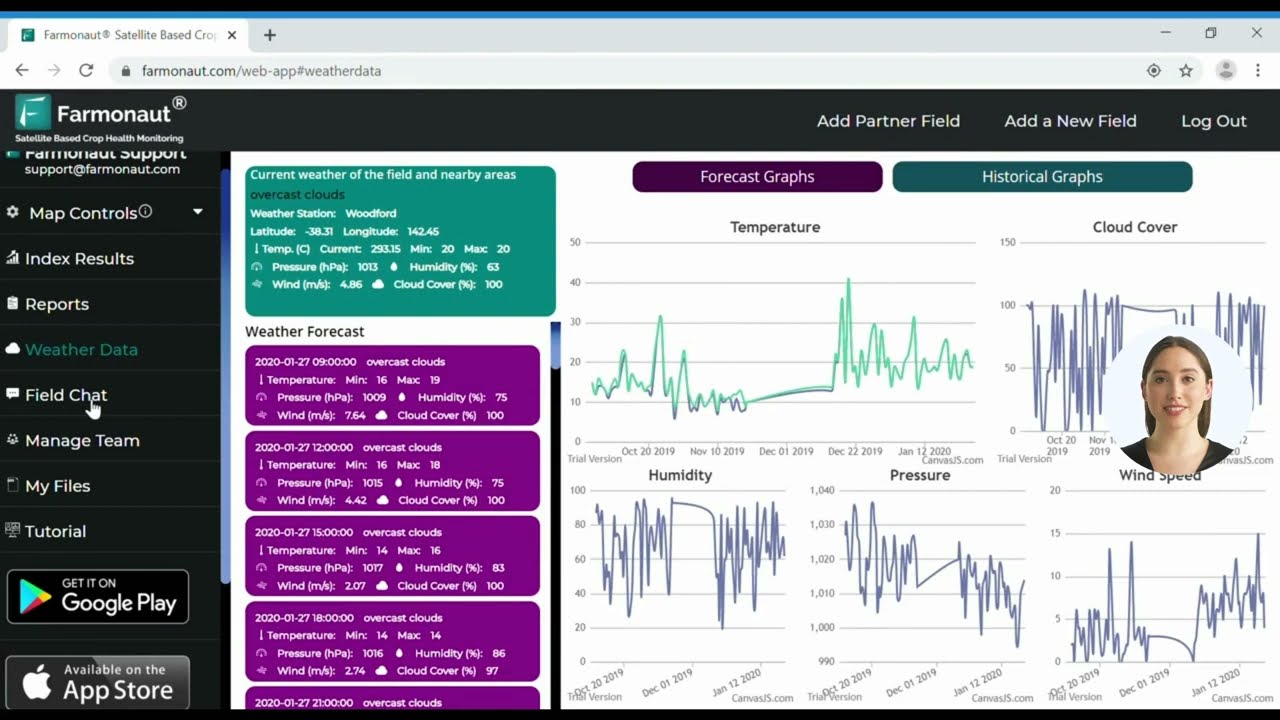
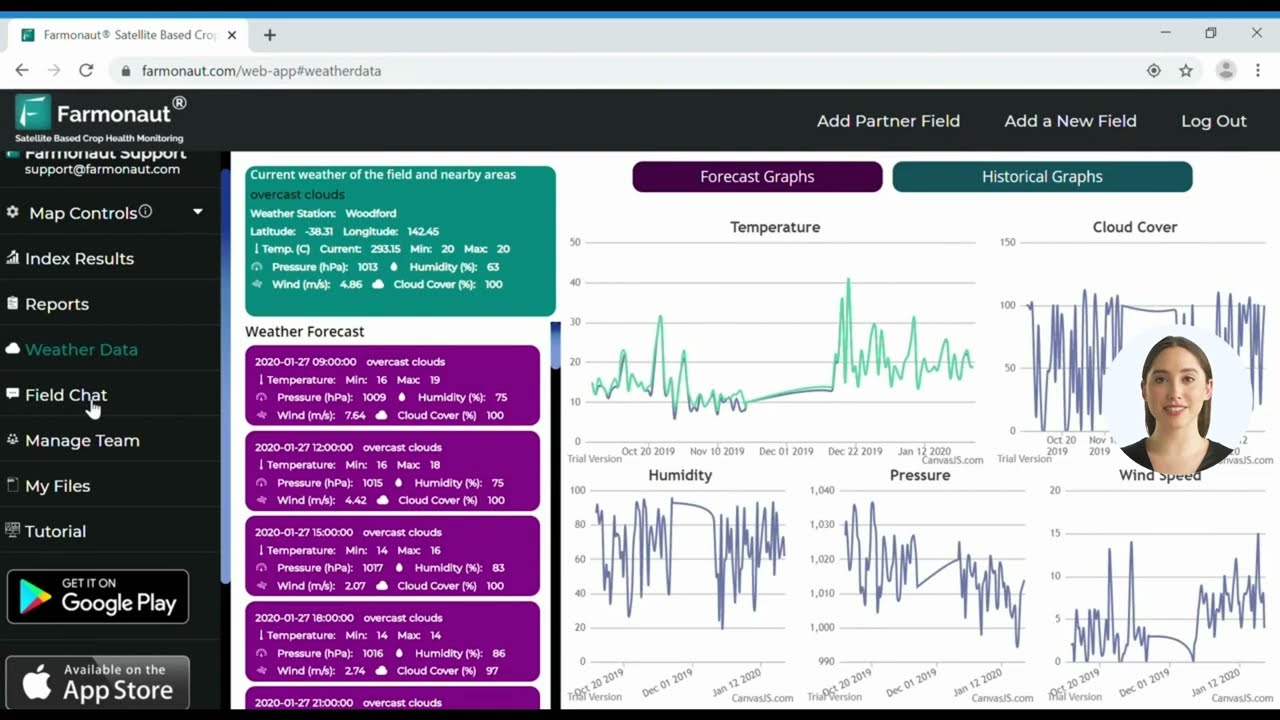
Nutrient dosing decisions in hydroponic systems benefit from the same monitoring discipline used in field agriculture, adapted to controlled-environment context. Farmonaut supports hydroponic and greenhouse producers with:
- Satellite-based monitoring: Multispectral vegetation health data (NDVI) and environmental context that inform nutrient-timing decisions for adjacent field or open-air operations feeding into a hydroponic supply chain.
- AI-powered advisory: Jeevn AI provides crop-specific recommendations on timing and dosage, drawing on real environmental feedback rather than a fixed feeding schedule.
- Blockchain traceability: Traceability tools let hydroponic growers document input sourcing and authenticity — relevant given the certification ambiguity described above, since buyers increasingly want to see the paper trail behind an "organic" claim.
- Fleet and carbon management: Resource optimization and carbon footprint monitoring tools for operations tracking sustainability metrics alongside input costs.
- Financing support: Satellite-backed verification tools that support crop loan and insurance applications for operations scaling up hydroponic infrastructure.
These tools are available via web, Android, and iOS. Developers integrating nutrient-dosing logic with environmental data can use the open API or consult the developer documentation.

Resource Efficiency and Traceability
The case for organic hydroponic nutrients rests on three measurable factors rather than a general sustainability claim:
- Input sourcing: Fish emulsion, compost tea, and seaweed extract are byproducts of existing food and marine industries, supporting circular-economy input sourcing versus mined or synthetically manufactured mineral salts.
- Runoff profile: Naturally derived inputs generally break down differently in recirculating and drain-to-waste systems than concentrated mineral salts, though system design (recirculating vs. drain-to-waste) affects actual runoff far more than input type alone — verify your system's discharge handling against your state's water-quality permitting requirements directly, since these vary by state and this article can't substitute for that check.
- Documentation: Carbon footprinting analytics support the kind of input-to-output documentation increasingly requested by wholesale buyers and retail partners for greenhouse-grown produce.
None of this substitutes for the certification check in the section above — a documented, traceable nutrient program strengthens a certification application but does not create organic status on its own.
Frequently Asked Questions
What's the difference between organic hydroponic nutrients and hydroponic farming nutrients in general?
"Hydroponic farming nutrients" is the broad category covering both synthetic mineral-salt formulations (like General Hydroponics Flora Pro, priced at $0.029/gallon at dosing per Science in Hydroponics' 2022 analysis) and naturally derived organic formulations (fish emulsion, seaweed extract, compost tea). Organic hydroponic nutrients specifically exclude synthetic salts in favor of naturally sourced inputs, generally at a higher per-gallon cost.
Can I get USDA Organic certification for a hydroponic operation?
Under current USDA National Organic Program policy, yes — hydroponic and container operations are eligible. In practice, about 33% of accredited certifiers decline to certify hydroponic operations regardless of the national rule, per the National Agricultural Law Center. Call your specific target certifier before assuming eligibility.
Are organic hydroponic nutrients more expensive than synthetic ones?
Published 2022 data (Science in Hydroponics) shows conventional lines ranging from $0.016/gallon (custom raw-input) to $0.183/gallon (Athena, a premium fully-formulated line) at recommended dosing. No equivalent standardized per-gallon figure exists yet for OMRI-listed organic lines specifically — request current quotes from your chosen supplier and run them through the calculator above.
What ingredients should I look for in organic nutrients for vegetables?
Fish emulsion or fish hydrolysate for a bioavailable N-P-K base, seaweed/kelp extract as a hormone and micronutrient supplement, and humic/fulvic acid as a chelating agent to improve uptake. See the ingredient comparison table above for which combination suits your crop stage.
Does organic hydroponic nutrient use support large-scale commercial farming?
Yes. US greenhouse vegetable farm counts roughly doubled between the 2012 and 2017 Census of Agriculture cycles (USDA NASS), and total US vegetable acreage reached 4.3 million acres in the 2022 census — a scale that includes both conventional and organic-input greenhouse and hydroponic operations, though NASS does not separately report the hydroponic share.
How do I keep my nutrient cost data current?
Science in Hydroponics and Custom Hydro publish updated per-gallon cost analyses in late summer each year. For USDA acreage and greenhouse-farm figures, check NASS QuickStats (updated monthly) rather than waiting for the next full census, due in 2027.





Further reading:
Getting Started
Three decisions determine whether an organic hydroponic nutrient program works for your operation: whether your target certifier actually accepts hydroponic systems (check directly, since national policy and certifier practice diverge for roughly a third of accredited certifiers), what a full growing cycle will actually cost using your own reservoir size and a current supplier quote (run it through the calculator above), and which ingredient category — fish emulsion, seaweed, compost tea, or a humic/fulvic supplement — matches your crop's growth stage. None of those answers stay fixed for long: certifier positions shift as the NOSB revisits the hydroponics question, and nutrient pricing moves with input-commodity costs each season. Bookmark the National Agricultural Law Center's tracker and your preferred supplier's current price sheet, and revisit both before every planting cycle rather than relying on a single year's numbers.
Explore Farmonaut's satellite and AI tools for nutrient-relevant monitoring, traceability, and resource management to support your hydroponic operation's documentation and efficiency goals.


 Vestlandsforsking
 Global Launch Base
 Elders
 Agritein
 Delicio
 WB Dev
 Sama Premium
 Prochecker
 Tres Valles
 LACOS Geoinformation
 Magrifly
 LatConnect 60
 WebsEdge
 Blickwinkel
 Agricultural Credit Policy Council
 Marei Nursery
 eKGIS
eKGIS Mostas Tech
 Andex
Andex
