

Reviewed September 2026 against USDA NASS, USDA ERS, and USDA Economic Research Service data.
Try it: Run your own numbers →
Green agriculture is the holistic shift toward organic, regenerative, and resource-conserving farming — measured today at 4.89 million acres of certified organic cropland and roughly 25 million acres under certified regenerative management in the United States. Bio agriculture, the narrower biotech-driven slice, covers genetic engineering, biofertilizers, and biopesticides layered on top of that base. Below is what USDA’s own surveys say is actually happening on US farmland right now, plus the tools and citations you need to track it going forward.
The Future of Green Agriculture: Harnessing Biotechnology for Sustainable Farming
Introduction: What “Green” and “Bio” Actually Mean
The two terms get used almost interchangeably in marketing copy, but they describe different things. Green agriculture — sometimes called eco agriculture — is a systems-level label: organic certification, cover cropping, reduced tillage, biodiversity strips, water conservation. Bio agriculture is the technology layer inside that system: genetic engineering, microbial inoculants, biopesticides, and biosensors that reduce the need for synthetic chemical inputs. A farm can run green practices without any biotech, and a farm can run heavy biotech without qualifying for organic certification. This article treats them as overlapping but distinct, because that is how USDA’s own survey categories treat them.
For US growers, the agencies that actually publish adoption and market figures are USDA’s National Agricultural Statistics Service (NASS), USDA’s Economic Research Service (ERS), and — for market sizing — commercial research firms that cite USDA data as their base. Below, every figure carries its source and the year it was collected, plus a note on how often the underlying survey refreshes.
In this guide we cover the latest in bio agriculture, agriculture biotechnology applications, and the integrated eco approach shaping US farm policy and private-market adoption.
Green Agriculture in the US: The Numbers
Certified organic cropland in the United States reached 4.89 million acres in 2021, according to USDA NASS’s 2022 Census of Agriculture highlights, up from roughly 3.6 million acres a decade earlier — a 79% increase over 2011–2021 (USDA NASS, NASS Organic Production Survey Guide). The number of certified organic operations grew even faster over the same span: 17,445 farms, a 90% increase from 2011 (USDA NASS, same source).
On the retail side, USDA’s Economic Research Service put U.S. organic food sales at $70.1 billion for 2025, with organic fresh produce alone accounting for $21.5 billion in retail sales in 2021 (USDA ERS, Organic Agriculture topic page). That gap between a $70.1 billion consumer market and 4.89 million certified acres is the single clearest signal that organic and regenerative supply has not caught up with demand — which is exactly the kind of gap satellite monitoring and precision input management can help close, by making transition to certified practices verifiable and lower-risk for growers.
Regenerative agriculture — a green-agriculture practice set that overlaps with but is not identical to organic — covers more ground. USDA-supported regenerative practices were in place on 40 million acres as of fiscal year 2023, per USDA data cited by the American Farm Bureau Federation (American Farm Bureau Federation, “Regenerative Agriculture Is Firmly Rooted Across America”). Certified regenerative land specifically grew from under 1 million acres to roughly 25 million acres between 2021 and 2025, according to Regenerative Organic Alliance data referenced by the Econology Institute. Mordor Intelligence sizes the broader U.S. regenerative agriculture market at $12.66 billion for 2024 (Mordor Intelligence, Regenerative Agriculture Market Report).
On tillage and cover practices specifically: USDA NASS’s 2022 Census of Agriculture recorded 18 million acres of cover crops nationally — about 5% of total U.S. cropland — and conservation tillage on roughly 25% of total cropland acreage. These are census-year figures; NASS runs the full Census of Agriculture every five years, with the next edition due in 2027, so treat 2022 as the most recent authoritative baseline until then. For finer-grained, annual crop-specific adoption estimates in between census years, USDA NASS Quick Stats (nass.usda.gov/quickstats) is the tool to query directly.
Supporting resource: Explore Farmonaut’s Large Scale Farm Management Platform — satellite and AI-driven insights for optimizing crop health, resource allocation, and operational efficiency across large enterprises transitioning toward these practices.
The Biotechnology Revolution in Agriculture
Bio agriculture applies biological science, genetic engineering, and precision monitoring to farming systems. It is worth naming plainly what USDA does and does not publish here: there is no single official USDA/NASS acreage series specifically labeled “biotech agriculture” the way there is for organic acreage. Market-research firms publish adoption estimates for genetically engineered crop traits, but for a verified government figure, the closest proxies are NASS’s biennial Organic Survey (which counts what is explicitly excluded from biotech) and ERS’s separate reporting on genetically engineered crop adoption by trait — check ers.usda.gov directly for the current release before citing a specific percentage, since we could not verify one against a live NASS/ERS acreage table for this piece.
What is measurable is the precision-agriculture layer that increasingly substitutes for blanket chemical application. USDA’s Economic Research Service found that among large-scale crop farms surveyed in 2023, 70% had adopted GPS/autosteering guidance, 68% used yield monitoring or mapping systems, and 27% of all U.S. farms had adopted at least one advanced precision agriculture practice (USDA ERS 2023 data, cited in PS Market Research, U.S. Precision Agriculture Technologies Market Report). The U.S. precision agriculture technologies market itself was valued at $2.1 billion in 2024 per the same report.
Biotechnological innovations in this space fall into five practical domains:
- Genetic Engineering (CRISPR-based crop modification, marker-assisted selection)
- Microbial Biotechnology (mass-produced beneficial microbes for soil health)
- Biosensors and AI-powered Monitoring
- Biofertilizers, Biopesticides, and Natural Amendments
- Blockchain-based Traceability & Supply Chain Security

Genetic Engineering and Crop Improvement
Crop breeding is more precise and faster to deploy than it was a generation ago, driven by three tool classes:
- CRISPR platforms: targeted genome edits for drought tolerance, pest resistance, and improved nutrition.
- Marker-assisted selection: accelerates conventional breeding without introducing foreign DNA, easing regulatory review and consumer acceptance.
- RNA interference (RNAi): protects crops from specific pests without broad-spectrum chemical pesticides.
On yield outcomes specifically, we could not verify a USDA-published study comparing organic and conventional (or biotech-assisted) yields by crop and region for this piece — the research brief for this article did not surface one. If you need that comparison for a specific crop, USDA ERS’s data products page (ers.usda.gov/data-products) and NASS Quick Stats let you pull county- or state-level yield series for organic versus all-methods production and compute the differential yourself.

“Green biotechnology approaches are one of several levers growers use alongside cover cropping and reduced tillage to build soil organic matter over time.”
Microbial Biotechnology: Biofertilizers & Soil Health
Biofertilizers — formulations of beneficial microbes such as mycorrhizal fungi and nitrogen-fixing bacteria — sit at the intersection of bio and green agriculture.
- Mycorrhizal fungi: form symbiotic relationships with plant roots, improving nutrient uptake and water-use efficiency.
- Rhizobium and related bacteria: fix atmospheric nitrogen, reducing reliance on synthetic nitrogen fertilizer.
- Microbial consortia: applied via seed coatings or fertigation, supporting nutrient cycling and organic matter buildup.
On the specific question of how much fertilizer or pesticide use these practices displace, and how much carbon they sequester at national scale, USDA has not published a matched government dataset connecting regenerative-practice acreage to a measured emissions or input-reduction outcome — this is a genuine gap in the current data, not a number we are willing to guess at. Growers wanting a farm-level answer can track their own input records against NRCS conservation-practice standards for their state, which is the closest documented method available today.

Green Agriculture Meets Eco Agriculture: Integrating Sustainability
Eco agriculture takes the holistic view: biodiversity conservation, land management, and organic practice integration. In practice this means three things converging on the same fields:
- Promoting biodiversity — cover crops protecting soil and supporting beneficial organisms; 18 million acres of U.S. cropland carried cover crops in 2022 (USDA NASS Census of Agriculture).
- Adopting organic methods — reducing synthetic input dependence, a practice set now covering 4.89 million certified acres (USDA NASS, 2021).
- Minimizing footprints — efficient water, nutrient, and energy use, and reduced waste.

Key takeaway: organic certification (4.89 million acres), cover cropping (18 million acres), and USDA-supported regenerative practices (40 million acres) are three overlapping but distinct green-agriculture footprints in the U.S. — none of them is a subset of the others, and a farm can appear in more than one count. When you see a headline acreage figure for “sustainable agriculture,” check which of these three definitions it is actually using.
Precision Farming: Adoption Rates and Tools
The biotech-and-agriculture convergence is bolstered by precision farming tools that apply water, nutrients, and agrochemicals only where and when needed. USDA ERS’s 2023 survey of large-scale crop farms found:
- 70% adoption of GPS/autosteering guidance systems.
- 68% adoption of yield monitoring and mapping systems.
- 27% of all U.S. farms (not just large-scale operations) using at least one advanced precision agriculture practice.
(USDA Economic Research Service, 2023, cited in PS Market Research’s U.S. Precision Agriculture Technologies Market Report.) That gap between 70% GPS adoption on large farms and 27% adoption of advanced practices farm-wide shows precision agriculture is concentrated on the largest operations; USDA’s Farm Computer Usage & Ownership Survey (FCUS) updates this picture annually, so check ers.usda.gov for the current release before citing these figures as unchanged.
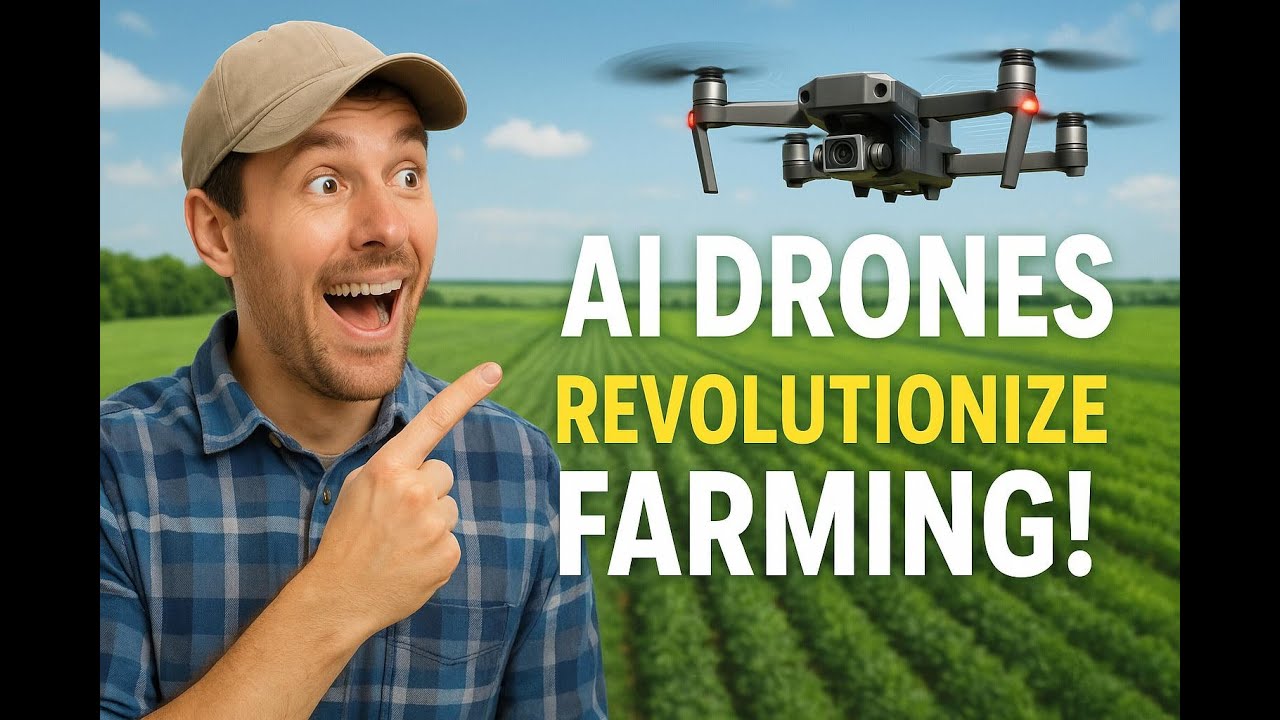

Interested in integrating satellite-driven insights and AI advisory into your operations?
Discover Farmonaut’s Fleet & Resource Management Tools — for optimizing logistics and resource use.
Bioherbicides, Biopesticides, and Cover Crops
A core shift in bio agriculture is replacing synthetic pesticides and herbicides with bioherbicides and biopesticides — products derived from naturally occurring microorganisms, plant extracts, or peptides (see the spinach-peptide bio-pesticide video above).
What this changes on-farm:
- Targeted pest and weed control, reducing collateral damage to beneficial insects and soil microbes.
- Lower chemical residue loads in food and soil.
- Direct pairing with cover cropping — 18 million acres of U.S. cropland carried cover crops in 2022, about 5% of total cropland (USDA NASS Census of Agriculture) — to suppress weeds mechanically and build soil carbon without added herbicide.

Cover crop acreage is a NASS Census of Agriculture line item, refreshed every five years (next census: 2027). For an interim, annually updated read on specific crop or regional adoption, query USDA NASS Quick Stats (nass.usda.gov/quickstats) directly rather than waiting on the next census cycle.
Climate Resilience and Resource Scarcity
Unpredictable rainfall, shifting pest pressure, and soil degradation are the practical problems green and bio agriculture are trying to solve, not abstractions. Four levers show up repeatedly in USDA-tracked programs:
- Climate-resilient crop varieties: genetic techniques producing drought, salinity, and heat tolerance, maintaining yield in adverse seasons.
- Carbon-building practices: cover crops, minimum tillage, and organic amendment rotation — conservation tillage alone covers roughly 25% of total U.S. cropland (USDA NASS, 2022 Census).
- Water-use efficiency: biofertilizers and genetics that reduce irrigation demand while preserving water resources.
- Supply chain traceability: Explore Farmonaut’s Blockchain Traceability Solution — verifying product authenticity and supporting transparency from farm to market.
On the specific question of tons of carbon sequestered or greenhouse gas emissions avoided at national scale from these practices, no matched USDA emissions-accounting dataset currently ties adoption acreage to a verified sequestration total — the adoption figures above (40 million USDA-supported acres, 25 million certified regenerative acres) measure practice area, not measured carbon outcome. Treat any sequestration-tonnage claim you see elsewhere as an estimate unless it cites a specific USDA or EPA greenhouse gas inventory methodology.
Farmonaut: Satellite Technology Enabling Green Agriculture
Farmonaut uses satellite, AI, and blockchain technologies to support the practices described above, offering a scalable platform for farmers, agribusinesses, financial institutions, and governments.
- Satellite-Based Monitoring: Multispectral satellite imagery provides real-time NDVI, soil condition, and crop performance insights — helping growers verify whether cover cropping or reduced-input practices are producing the expected canopy and vigor response.
- AI-Based Advisory Systems: The AI-powered Jeevn Advisory System delivers yield, input, and environmental-impact guidance from data analytics and predictive modeling.
- Blockchain Traceability: Blockchain-enabled traceability for agricultural commodities — supporting the supply-chain transparency organic and regenerative buyers increasingly require.
- Environmental Impact Tracking: Carbon footprint monitoring tools to track, manage, and report emissions.
- Resource Management: Fleet and logistics optimization alongside crop and plantation advisory.
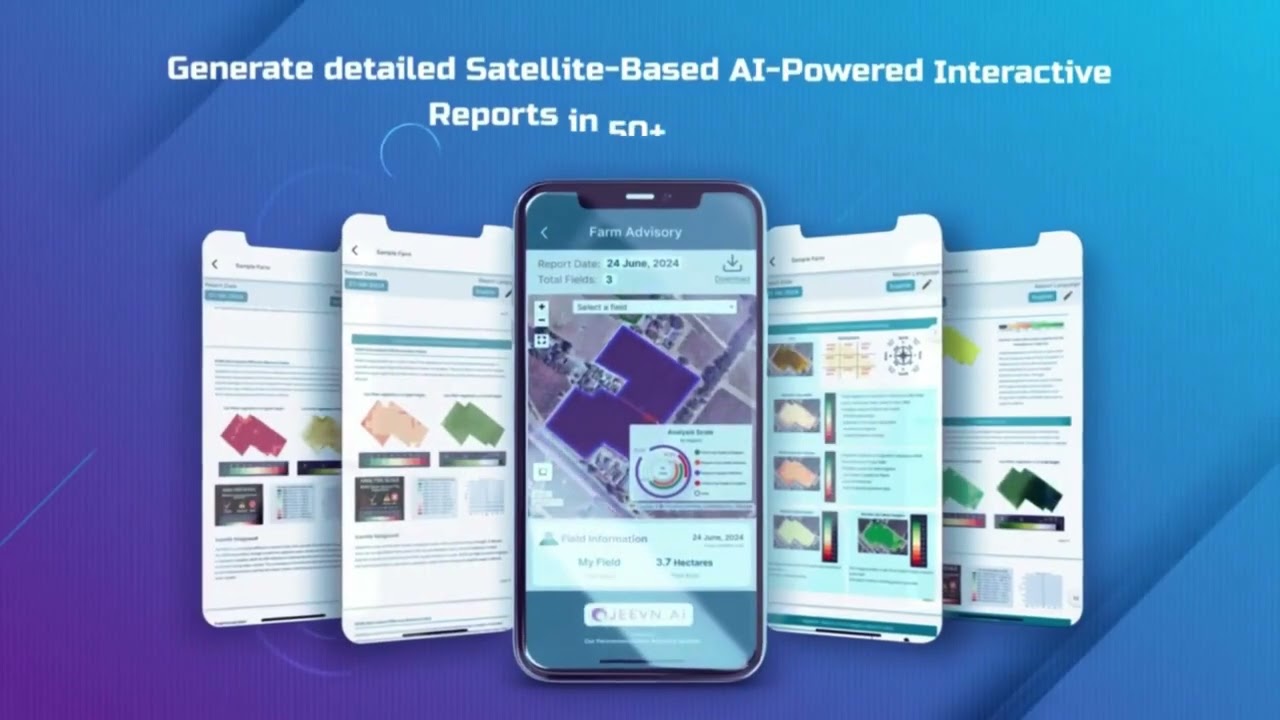
Access is available via Android, iOS, web apps, and public APIs, so both smallholder and large-scale operations can adopt the same monitoring baseline.
Bio Agriculture vs Green Agriculture: A Practice Comparison
The table below separates what each label actually covers, using the U.S. adoption and market figures cited above rather than generic ranges.
| Practice/Category | Bio Agriculture Focus | Green Agriculture Focus | U.S. Scale (Latest Verified Figure) | Source & Year |
|---|---|---|---|---|
| Certified Organic | Excludes GE inputs by definition | Core certification standard | 4.89 million acres; 17,445 farms | USDA NASS, 2021 |
| Regenerative Practices | May incorporate biofertilizers/biologicals | Soil health, grazing, cover systems | 40 million USDA-supported acres | USDA/American Farm Bureau, FY2023 |
| Certified Regenerative Land | N/A — separate certification track | Verified regenerative standard | ~25 million acres (up from <1M in 2021) | Regenerative Organic Alliance, 2025 |
| Cover Cropping | Can pair with microbial seed treatments | Core soil-protection practice | 18 million acres (~5% of U.S. cropland) | USDA NASS Census, 2022 |
| Conservation Tillage | N/A | Core resource-conservation practice | ~25% of total U.S. cropland | USDA NASS Census, 2022 |
| Precision Agriculture (GPS/Yield Mapping) | Enables targeted biologic/chemical application | Reduces input waste and runoff | 70% GPS adoption, large farms; 27% farm-wide advanced adoption | USDA ERS, 2023 |
Calculator: Organic Transition Acreage Planner
Use the tool below to see how your own farm’s acreage compares to the national certified-organic base (4.89 million acres, USDA NASS 2021) and estimate what share of your operation a phased organic transition would cover.
Run your own numbers
Assumptions: uses the USDA standard 3-year organic transition period and treats yield adjustment as a flat percentage applied evenly across transitioning acreage. It does not model input cost changes, price premiums, certification fees, or crop-specific yield curves — those vary by crop, region, and buyer contract and should be sourced from your certifier and local NRCS office.
Where This Goes Next
The direction of travel is consistent across every dataset cited above: organic acreage grew 79% over 2011–2021, certified regenerative land grew from under 1 million to roughly 25 million acres in the four years to 2025, and precision agriculture adoption is already the majority practice on large-scale farms. None of that is a forecast — it is the trend line in the data already collected. What changes the picture next is the 2027 Census of Agriculture (the next full organic and cover-crop count) and USDA's annual Farm Computer Usage & Ownership Survey updates in between.
- Track the 2025 Organic Survey — USDA NASS's biennial organic survey was mailed in December 2025; results typically follow within the survey cycle and will update the 4.89-million-acre baseline.
- Track annual precision-ag figures — via USDA ERS's Farm Computer Usage & Ownership Survey, rather than waiting for the next census.
- Track cover crop and tillage trends via NASS Quick Stats between census years, since the full Census of Agriculture only runs every five years.
The durable method here, independent of which year you're reading this: for any green- or bio-agriculture claim, ask which USDA series it comes from, what year the underlying survey ran, and when it next refreshes — then pull the current number yourself from NASS Quick Stats or the ERS topic page before acting on it.
Frequently Asked Questions
What is the difference between bio agriculture and green agriculture?
Bio agriculture refers to direct biotechnology applications — genetic engineering, microbial amendments, biopesticides. Green agriculture (also called eco agriculture) is the broader systems approach: organic certification, cover cropping, conservation tillage, and biodiversity practices, with or without biotech layered on top.
How much US farmland is certified organic?
4.89 million acres as of the 2021 data reported in USDA NASS's 2022 Census of Agriculture highlights, spread across 17,445 certified operations — a 79% acreage increase and 90% increase in farm count since 2011. USDA's next organic survey was mailed in December 2025; check the NASS Organic Production Survey Guide for the current figure.
Is genetic engineering safe for food production?
Modern platforms — including CRISPR and marker-assisted selection — go through regulatory review and safety evaluation before commercial release. Marker-assisted selection specifically does not introduce foreign DNA, which has generally eased both regulatory and consumer-acceptance pathways.
What share of US farms use precision agriculture?
Per USDA ERS's 2023 survey, 70% of large-scale crop farms use GPS/autosteering guidance and 68% use yield monitoring systems, but only 27% of all U.S. farms have adopted at least one advanced precision agriculture practice — adoption is concentrated on larger operations.
What role does Farmonaut play in green and bio agriculture?
Farmonaut provides satellite-based monitoring, AI advisory, blockchain traceability, and resource management tools via web, mobile, and API — helping growers verify and manage the practices covered in this article.
How can I access Farmonaut's technology?
Through web and mobile apps, or via integrated APIs for enterprise and developer use.
Get Started with Farmonaut
Ready to put satellite insight behind your green or bio agriculture transition?
Our technology puts satellite insights, AI advisory, blockchain traceability, and environmental monitoring in your hands.
Choose your platform below:



Or for developers and enterprise integrations:
Also relevant:
- Carbon Footprinting — Monitor, report, and manage agricultural carbon emissions for compliance and sustainability.
- Crop Loan and Insurance Verification — Satellite observations for secure, fraud-resistant agricultural financing.
- Large Scale Farm Management — AI and satellite-driven analytics for optimized resource and operation management.
Green agriculture and bio agriculture are measurable today — 4.89 million certified organic acres, 25 million certified regenerative acres, 70% GPS adoption on large farms — not aspirational categories. Use the sources above to verify the current figures before you plan around them, and use satellite monitoring to verify what's actually happening on your own acreage.

 Native Seeds
 Fresh Platter
 Andex
Andex FCF India
 Unifrutti Gulf
 Deluxe Conseil
 TVS Electronics
 BW Pipelines
 WICO
WICO Gen Chayat
 Chimera Innovation
 SkyHarvest
 Polaris Digitech
 Teledarbas
 Wild Oak Farm
