

Certified Sustainable Palm Oil & Forest Certifications 2025: Advancing Sustainable Practices in Agriculture and Forestry
“Over 19% of global palm oil in 2025 is projected to be certified sustainable, advancing eco-friendly agriculture.”
Why Sustainability Matters in 2025
Sustainability remains the cornerstone of responsible management practices in the agriculture and forestry sectors as we move into 2025. These industries significantly impact global ecosystems, local communities, and economies. With growing environmental awareness, demand for traceable sourcing and responsible resource management is at an all-time high, reflecting our collective commitment to shaping a greener future.
The move towards certified sustainable palm oil companies, best sustainable forest certifications paper industry, and the rise of the center for sustainable agriculture signals a shift from conventional, high-impact models to regenerative, climate-smart systems. Certification schemes, centers for research, as well as new technologies are driving the transition to policies and frameworks that ensure environmental stewardship, social equity, and economic viability.
Certified Sustainable Palm Oil Companies: Transformation for Environmental and Social Good
Palm oil is one of the most widely used vegetable oils globally, found in everyday products such as packaged food, cosmetics, and household goods. However, its cultivation has historically been linked to deforestation, biodiversity loss, and social issues (including land conflicts and poor labor conditions).
By 2025, certified sustainable palm oil companies have emerged as leaders in adopting forward-thinking, sustainable practices. These companies respond to challenges, leveraging frameworks like the Roundtable on Sustainable Palm Oil (RSPO) to guide their environmental, social, and governance (ESG) journey.
- They uphold zero deforestation policies, ensuring forest conservation and halting further natural habitat loss.
- Protection of peatlands and High Conservation Value Areas (HCVAs) is prioritized, aiding in climate mitigation and biodiversity preservation.
- Implementation of traceability systems increases transparency—consumers and partners track the supply chain from plantation to finished product.
- Active engagement with local communities and safeguarding indigenous rights, ensuring responsible land management and conflict resolution.
- Increase in yields on existing farmlands using improved agronomic techniques, reducing pressure to clear more forests for expansion.
Certification by organizations such as RSPO gives businesses and consumers assurance that the palm oil supply chain supports environmental preservation and social equity. Notably, in 2025, more than 19% of global palm oil is projected to be certified sustainable. This proportion is likely to keep growing as corporate supply chain commitments strengthen and traceable, sustainable supply becomes valued by markets and consumers alike.
The Role of Traceability and Technology in Certified Sustainable Palm Oil Companies
Traceability frameworks in palm oil sustainability are critical to rooting out unsustainable practices. Technology enables near real-time tracking of palm oil from plantation through processing to distribution, allowing fast detection and intervention in case of non-compliance.

Companies are integrating blockchain-based traceability solutions—such as those provided by platforms like Farmonaut—to drive trust and transparency in their palm oil sector operations. Blockchain not only ensures the security and immutability of supply chain data but also empowers stakeholders across industries to verify sustainability claims with confidence.
Leading Sustainable Palm Oil Certifications in 2025
In the context of sustainable palm oil, top certification systems include RSPO, ISCC (International Sustainability & Carbon Certification), Rainforest Alliance, and more. Each brings unique criteria, international oversight, and market clout to the industry. See the table below for a clear overview.



Main Frameworks and Certification Processes
Let’s summarize the most widely adopted certifications and frameworks powering the transition to sustainable palm oil production in 2025:
- RSPO (Roundtable on Sustainable Palm Oil): The global leader, its principles and criteria cover deforestation-free supply, protection of high conservation value areas, fair labor, and community engagement.
- ISCC (International Sustainability & Carbon Certification): Focuses on renewable resource sustainability, greenhouse gas reduction, and global traceability.
- Rainforest Alliance: Integrates ecosystem and human rights protection, responsible chemical use, and community involvement.
- Indonesian Sustainable Palm Oil (ISPO) and Malaysian Sustainable Palm Oil (MSPO): National schemes raising the baseline for sustainability in the world’s largest palm oil producing countries.
All these certifications are independently audited and help ensure that certified sustainable palm oil companies are accountable to science-based standards.
Comparative Certification Overview Table: Palm Oil & Forestry Certifications in 2025
| Certification/Standard Name | Scope (Palm Oil/Forestry) | Sustainability Criteria | Key Benefits | Est. No. of Certified Sites (2025) | Geographic Coverage |
|---|---|---|---|---|---|
| RSPO (Roundtable on Sustainable Palm Oil) | Palm Oil | Zero deforestation, HCVAs, indigenous rights, labor, supply chain traceability | Global consumer trust, market access, improved land and labor standards | 5,000+ plantations, 300+ mills | Global (SEA, Africa, LatAm) |
| ISCC (Intl. Sustainability & Carbon Certification) | Palm Oil, Biomass, Bioenergy | GHG mitigation, land use, social criteria, traceability | GHG reduction, cross-commodity, Europe/Japan market entry | 4000+ (all crops, 2025) | Global |
| Rainforest Alliance | Palm, coffee, cocoa, forestry | Biodiversity, climate adaptation, labor, chemical input management | Ecosystem/climate focus, premium pricing, brand reputation | 10,000+ farms (all crops, 2025) | Global |
| FSC (Forest Stewardship Council) | Forestry | Biodiversity, ecosystem health, community engagement, legality | Leading forest certification, ethical sourcing for paper/timber | 250M+ hectares (2025 projected) | Global |
| PEFC (Programme for Endorsement of Forest Certification) | Forestry | Legality, sustainable forest management, social and community standards | Broad acceptance, supports national standards, high adoption | 273M+ hectares (2025 projected) | Global |
| ISPO / MSPO | Palm Oil | National land/labor, environmental minimums, regulatory compliance | Covers most Indonesian and Malaysian production, legal assurance | Tens of thousands | Indonesia/Malaysia |
“More than 523 million hectares of forests worldwide are certified under top sustainability standards as of 2023.”
Forestry and the Best Sustainable Forest Certifications for the Paper Industry
Forestry—particularly for pulp and paper—remains a critical driver of global resource use and land management. As the world’s population and consumption rise, so does the demand for sustainable paper products. Poor management can accelerate deforestation, loss of biodiversity, and exacerbate climate change, making the transition to best sustainable forest certifications in the paper industry not only environmentally essential but also commercially strategic.
How Forest Certifications Support Sustainability in the Paper Industry
- Forest Stewardship Council (FSC) sets the gold standard for sustainable forest management. Its principles govern protection of biodiversity, maintenance of ecosystem health, respect for local community rights, and legal compliance.
- Programme for the Endorsement of Forest Certification (PEFC) endorses rigorous national forest standards worldwide, supporting legal, social, and environmental benchmarks.
Across the paper industry in 2025:
- Certified companies are utilizing advanced monitoring tools (satellite imagery, AI-enabled detection, and drones) to ensure compliance and quickly detect illegal logging or ecosystem disturbance.
- Recycled certified fibre and circular economy models reduce dependency on virgin forests, lowering the industry’s overall environmental footprint.
- Top sustainable forest certifications empower consumers and brands to align purchasing with conservation and social values.
Need expert insight for managing large-scale plantations or forest health assessment? Explore Farmonaut’s Crop Plantation & Forest Advisory tools—satellite-based real-time monitoring for biodiversity, health, and compliance across vast landholdings.
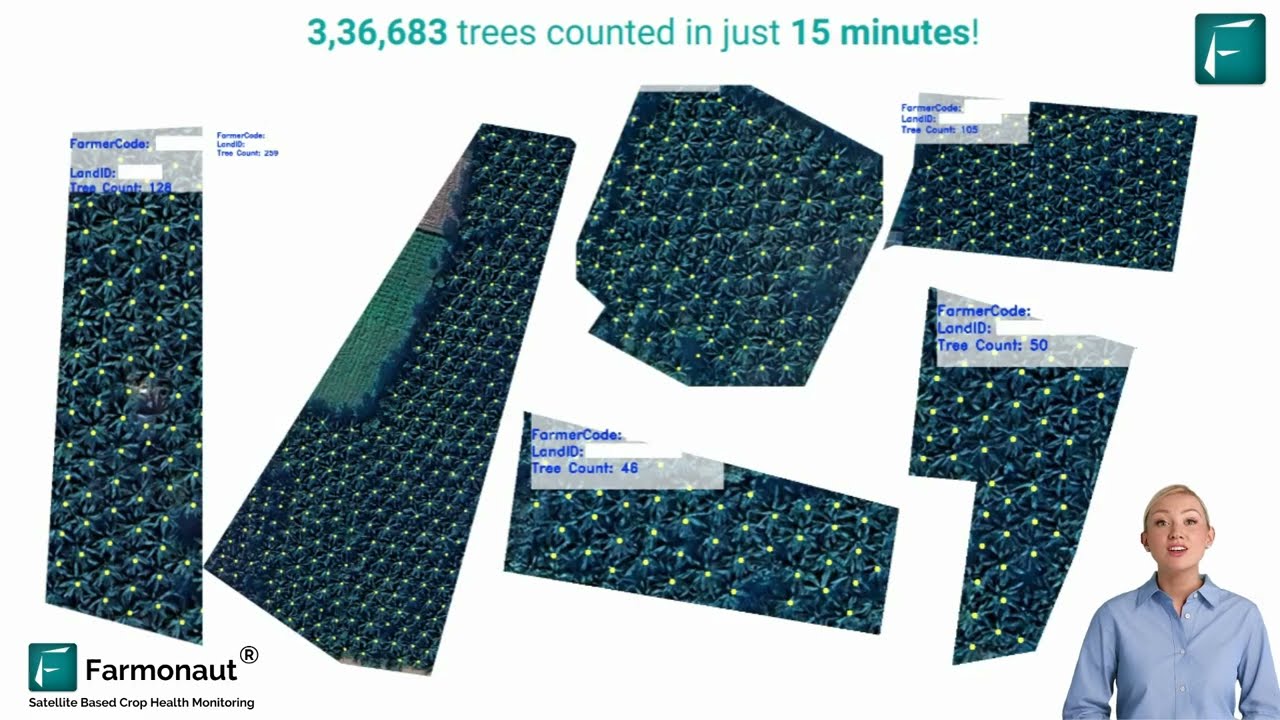
By increasingly committing to these certifications and digital traceability systems, the paper industry is actively balancing commercial demand with lasting stewardship of global forests. This reduces carbon emissions, protects indigenous community rights, and ensures a responsible supply for future generations.
Interested in tracking and reducing your carbon footprint in forestry operations? Discover Farmonaut’s real-time carbon footprint calculation & monitoring service—essential for compliance, transparency, and sustainability reporting in 2025 and beyond.
Centers for Sustainable Agriculture: Driving Innovation & Inclusivity in 2025
A center for sustainable agriculture is far more than just a research lab or field trial station. In 2025, these centers have a pivotal role:
- Hub for research, knowledge dissemination, and capacity building—bridging science, policy, and field practice.
- Focus on climate-resilient crops, improved water use, integrated pest/weed management, regenerative and biodiversity-enhancing farming models.
- Foster digital transformation in agriculture with mobile apps, AI-driven insights, and remote sensing tools.
- Support farmer training and ongoing technical advisory to accelerate the adoption of sustainable practices.
- Design inclusive policies with governments, NGOs, and companies—empowering smallholders and marginalized groups, ensuring social and economic equity alongside environmental goals.
Innovation remains at the heart of every successful center for sustainable agriculture. These institutions are crucial to the global food supply, climate adaptation strategies, and systems resilience.
- Regenerative farming—practices that restore soil, capture carbon, and boost yields—are increasingly mainstream by 2025.
- Digital agriculture tools enable rapid land assessment, pest/disease early warning, and data-based resource optimization.
- Diversification strategies (cover crops, food forests, mixed cropping, etc.) enhance farm resilience, food security, and local biodiversity.

For managing large estates or multi-site farm businesses sustainably, consider Farmonaut’s Large Scale Farm Management system. It brings satellite-driven monitoring, fleet tracking, and AI-powered crop advisory to your fingertips, streamlining compliance and optimizing resource allocation for plantations and forests alike.
The Role of Satellite, AI & Blockchain in Advancing Sustainability
As sustainable frameworks gain traction, technological innovation is redefining how companies, organizations, and local communities ensure compliance and resilience.
- Satellite imagery and AI deliver near real-time monitoring to detect illegal logging, encroachment, crop health anomalies, or land use change in both palm plantations and certified forests, supporting precision management.
- Blockchain-based records provide immutable traceability and product authenticity from palm oil mill or forest to consumer packaging.
- Resource management apps and APIs accelerate reporting, certification audit trails, and continuous improvement in both small and large organizations.
Farmonaut delivers innovative satellite-driven tools that support these transformations by:
- Real-time environmental monitoring (NDVI, carbon, and biomass metrics);
- AI-based mushrooming of advisory and detection features;
- Blockchain-enabled traceability for supply chain tracking;
- Optimized fleet and resource management for efficient and sustainable logistics;
- API access for seamless integration with business and compliance management systems (API endpoint, Developer Docs);

Farmonaut: Empowering Sustainable Agriculture and Forestry with Satellite Technology
As sustainability continues to evolve, so do the monitoring and management tools needed to comply with environmental, social, and economic criteria in certified sustainable palm oil companies, forest certification bodies, and centers for sustainable agriculture. We at Farmonaut are committed to democratizing access to affordable satellite monitoring and advisory for businesses, governments, and local communities worldwide.
Through advanced multispectral imagery, AI-powered analysis, and blockchain-enabled transparency, our platform offers value for:
- Farmers and managers: Access to real-time crop, plantation, and forest health monitoring, irrigation and pest recommendations, and field resource optimization.
- Businesses and industry partners: Large-scale fleet, resource, and compliance management, all anchored in transparent, satellite-verified data.
- Organizations and governments: Environmental impact reporting, supply chain transparency, strategic land/resource allocation, and AI-powered planning for sustainability.
- Financial institutions: Crop and mining site verification for insurance/loan processes, supporting risk reduction and stronger due diligence.

For efficient, sustainable, and cost-saving logistics in agricultural and forestry supply chains, learn about Farmonaut Fleet Management solutions.
Farmonaut Subscription Plans
All our solutions are available via affordable subscription tiers that scale with your business/operation needs, making high-tech sustainability accessible for all in 2025 and beyond.

Frequently Asked Questions (FAQ): Certified Sustainable Palm Oil & Forest Certifications 2025
What is certified sustainable palm oil?
Certified sustainable palm oil is palm oil that’s been produced according to stringent social and environmental standards, such as those defined by RSPO, ISCC, Rainforest Alliance, and national schemes. This ensures zero deforestation, fair labor, responsible land management, and traceability through the supply chain.
Why are forest certifications critical for the paper industry in 2025?
Forest certifications in the paper industry validate that wood, pulp, and fiber are sourced legally, sustainably, and with respect for biodiversity, water, community rights, and ecosystem preservation. They offer market differentiation and guarantee compliance with consumer and regulatory demand for sustainable, ethical products.
How do centers for sustainable agriculture make an impact?
Centers for sustainable agriculture drive research, innovation, and farm-level adoption of climate-resilient, resource-efficient, and inclusive models. They provide the technical backing and practical support required to reshape agricultural and forestry practices globally—spanning advisory services, digital resource management, education, and policy design.
Which technologies support certification and sustainability monitoring?
Technologies such as satellite monitoring, AI analytics, and blockchain traceability are empowering companies, centers, and certification agencies to track compliance, detect illegal or unsustainable practices, and prove the sustainability of resources/results in near real-time.
What are the key benefits for companies adopting sustainable certification frameworks?
Sustainable certification frameworks offer companies brand value, consumer trust, premium market access, regulatory compliance, lower risk of supply chain disruption, and contribution to global biodiversity, carbon reduction, and community wellbeing.
How can I access Farmonaut’s sustainable monitoring and advisory tools?
Our solutions are easily accessible via Web and Mobile Apps. If you’re seeking to integrate advanced monitoring, our APIs are available here (developer docs). Subscription options are tailored to fit farms, businesses, and institutional needs.
Conclusion: Driving Responsible Resource Use for a Greener Future
As we look toward 2025 and beyond, the integration of certified sustainable palm oil companies, best sustainable forest certifications paper industry, and the growing influence of centers for sustainable agriculture is fundamentally reshaping global sustainability landscapes.
- Certified sustainable palm oil addresses the longstanding environmental and social impact of palm cultivation, offering a path of stewardship, transparency, and equity.
- Forest product certifications drive safeguards and innovation in the paper industry, maintaining ecological integrity and elevating community rights.
- Centers for sustainable agriculture act as change catalysts, linking tech, policy, and practice—and are essential for climate-smart, biodiverse, and inclusive food systems.
- Advanced technologies (satellite, AI, blockchain) are now essential to compliance, adaptation, and long-term planetary health.
We at Farmonaut are dedicated to empowering responsible management in agriculture and forestry sectors—providing transparent, real-time, and scalable solutions that support informed decision-making, compliance, and the well-being of global and local communities. Our mission aligns with the vision of a world where sustainability is not just a principle, but a proven, measured, and continually advancing practice.
Together, by prioritizing responsible resource use, advancing certifications, and embracing continuous innovation, we can drive a greener, thriving future—for people, planet, and prosperity.

 Deepak Fertilisers & Petrochemicals
 Sapoznick Farms
 Agrotoken
 Blue BearX
 Insignito
 Croptimum
 DnCubed
 Field Capacity
 Indosistim Teknologi
 Liquify Digital
 CU Foods
 BeyondTech Global
 Rouge VC
 AgroGreen Dynamics
 AgroRisk
 Oath Inc
 Reddane Farming
 Esri North East Africa
