

Cotton · Evidence guide
What Are the Major Challenges of Growing Cotton?
Growing cotton means managing six linked risks: insects and disease, water, soil, weather, labor and margins. In 2025 US growers harvested 7.69 of 9.14 million upland acres planted (USDA NASS), and the average acre fell US$201 short of total costs (USDA ERS).
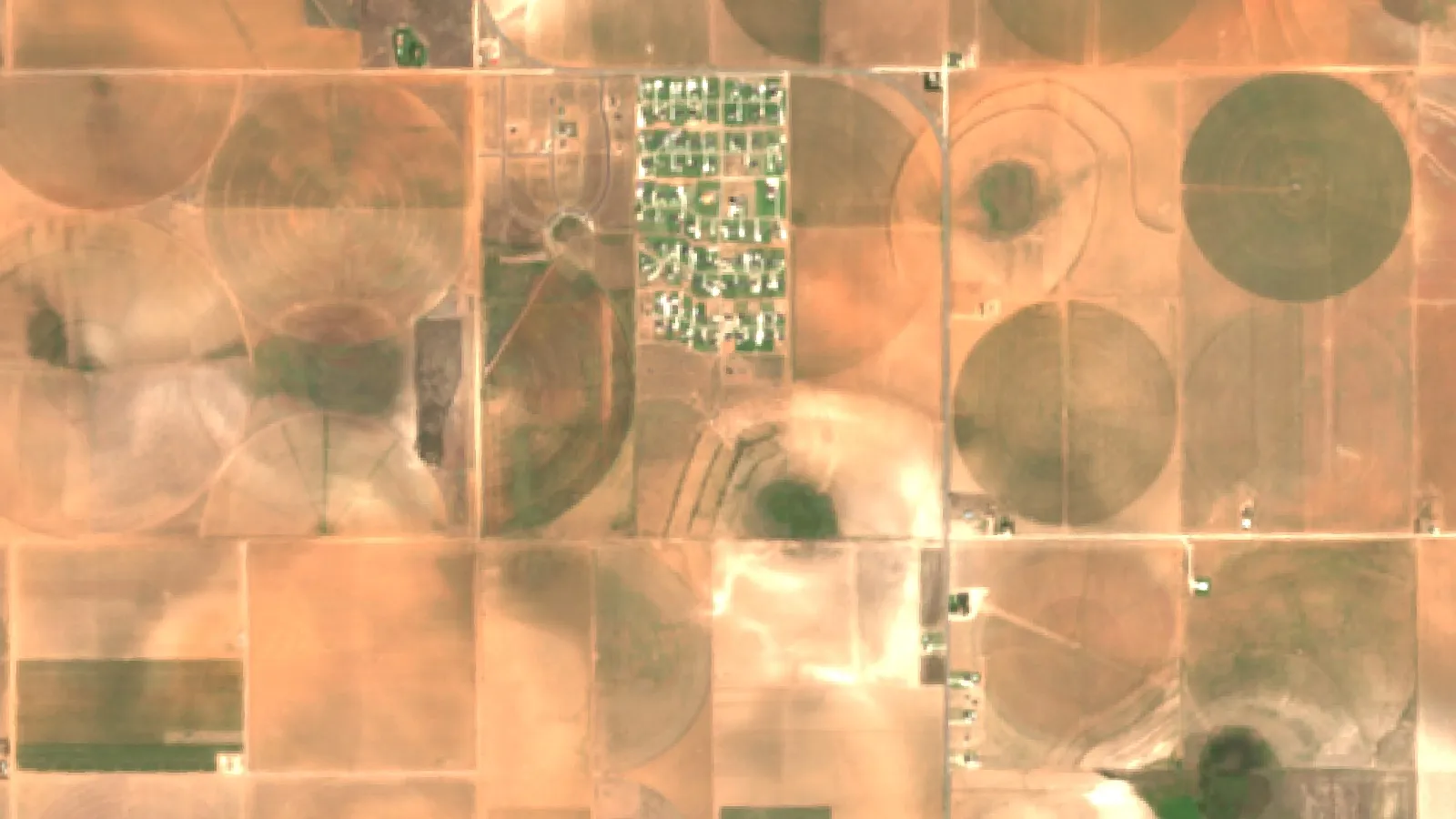
Key takeaways
- US growers planted 9.14 million acres of upland cotton in 2025 and harvested 7.69 million; Texas harvested 4.0 of 5.3 million acres (USDA NASS), as dryland fields failed in drought.
- On USDA ERS estimates for 2025, an average US acre returned US$745.76 against US$571.56 of operating costs and US$946.79 of total listed costs.
- 91% of US cotton acres are planted with insect-resistant seed (USDA ERS), but sucking pests such as plant bugs, aphids and jassids still need scouting.
- 64% of acres in USDA’s cotton cost survey were dryland in 2025, so rain and stored soil water decide much of the crop.
- Five ways to protect yield: satellite and field monitoring, threshold-based advice, records for buyers, weather tools and field-by-field budgets.
In this article
- What are the major challenges of growing cotton at a glance
- Understanding the cotton industry
- Major challenges in cotton production
- Innovative solutions for cotton production challenges
- Cotton break-even: check your own numbers
- Comparative advantage: satellite monitoring vs drone and IoT-based monitoring
- The future of cotton production
- Getting started
- Frequently asked questions (FAQ)
- Conclusion
What are the major challenges of growing cotton? Six stand out: insects and disease, water, soil, heat and storms, labor and machinery, and thin margins. In the United States they show up in the numbers. Growers planted 9.14 million acres of upland cotton in 2025 but harvested only 7.69 million (USDA NASS). Texas alone accounted for 1.3 million of the 1.45 million unharvested acres, as dryland fields failed in drought. And on USDA’s 2025 cost estimates, the average planted acre returned US$745.76 against US$946.79 of listed costs.
This guide explains each challenge with dated figures from USDA, state extension services and research papers. It then sets out five practical ways to protect yield, a calculator to find your own break-even lint price, and charts on costs, returns and abandoned acres. It is written for growers in the US Cotton Belt, Australia and other cotton regions in temperate and subtropical climates.
What are the major challenges of growing cotton at a glance
The table sums up the main problems, what they cost and what growers do about them. Each one has its own section below.
| Challenge | What goes wrong | What the data show | Main response |
|---|---|---|---|
| 1. Insects and disease | Bollworms, plant bugs, aphids, jassids, blight and boll rot cut yield and grade | 91% of US cotton acres use insect-resistant seed (USDA ERS) | Scouting, thresholds, resistance plans |
| 2. Water | Drought stress, poor irrigation timing, waterlogging | 64% of surveyed US cotton acres were dryland in 2025 (USDA ERS) | Irrigation scheduling, soil moisture checks |
| 3. Soil health | Low organic matter, erosion, compaction, salt | Fertilizer averaged US$104.67 per planted acre in 2025 (USDA ERS) | Soil tests, cover crops, reduced tillage |
| 4. Heat, drought and storms | Lost bolls, poor fiber, abandoned fields | Texas harvested 4.0 of 5.3 million upland acres planted in 2025 (USDA NASS) | Crop insurance, variety choice, planting date |
| 5. Labor and machinery | High machine and labor costs, few skilled workers | Machinery capital recovery averaged US$191.01 per acre in 2025 (USDA ERS) | Shared equipment, custom hire, better planning |
| 6. Prices and margins | Costs rise faster than lint prices | Lint price averaged US$0.61 per pound in 2025, down from US$0.89 in 2021 (USDA ERS) | Budgets, marketing plans, cost control |
Understanding the cotton industry
Cotton is grown for its fiber, called lint, and its seed, which is crushed for oil and meal or fed to cattle. It is a warm-season crop. It needs a long frost-safe season, plenty of sun and steady water while it sets and fills bolls. That combination is why the crop is concentrated in places like the US South and Southwest, eastern Australia, Brazil, China, Central Asia, the Mediterranean and parts of Africa.
▶ How climate and technology shape cotton farming · 9:17
World supply is large and moves with the weather. The National Cotton Council crop information page reports that, in USDA’s November 2026 estimate, 2026 world production was projected at 117.5 million bales, 4.6 million bales less than the 2025 estimate. A US bale is 480 pounds of lint.
In the United States, all cotton planted area for 2026 is estimated at 9.85 million acres, up 6% from 2025, according to the USDA NASS Acreage report of June 2026. Upland cotton makes up almost all of it, at 9.70 million acres, and American Pima the other 150,000 acres. The USDA NASS Crop Production report of October 2026 forecast all cotton production at 13.4 million bales, 3% less than in 2025, with yield expected at 790 pounds per harvested acre.
Texas is the largest producer by far. It planted 5.4 million upland acres in 2026, more than half of the US total. Its yields are also among the lowest, because much of its crop is grown without irrigation on the High Plains and Rolling Plains. This is where many of the challenges below hit hardest.
Chart
Upland cotton planted vs expected harvest, 2026
Thousand acres, selected states; harvested area is USDA’s 1 October forecast
Major challenges in cotton production
The six challenges below are linked. Drought makes pests and disease harder to manage. Poor soil holds less water. Thin margins make it harder to pay for the labor and machinery needed to act on time. Seeing them together helps you decide where a dollar spent does the most good.
▶ Cotton growing challenges, from pests to water, and how technology helps · 7:38
1. Pest and disease management
Insects are the most visible threat. The main ones differ by region, but a few matter almost everywhere:
- Bollworms and budworms: The caterpillars feed on squares and bolls. The UC IPM cotton bollworm guidelines say larvae chew holes into the base of bolls and may hollow out the locks, and gouges in the boll surface can become infected with rot.
- Plant bugs and stink bugs: They feed on squares and young bolls. Damaged squares drop, and stung bolls can rot or produce stained lint.
- Aphids and whiteflies: They suck sap and weaken plants. Late in the season their honeydew makes lint sticky, which buyers penalize.
- Cotton jassid: A newer pest in the US Southeast. Alabama Extension’s guide to preparing for cotton jassids reports a preliminary treatment threshold of 1 nymph per leaf, developed from trials across the region.
- Spider mites and thrips: Mites flare in hot, dry weather. Thrips hurt seedlings and can delay early growth.
Diseases add to the load. Bacterial blight causes angular leaf spots, black arm on stems and boll rot. Seedling diseases thin the stand in cold, wet soil. Root-knot and reniform nematodes stunt plants and are hard to see without a soil test. Fusarium and Verticillium wilts are a problem in some fields. For the bacterial disease in more depth, see our guide to bacterial blight disease management.
Insect-resistant seed has changed pest control a great deal. USDA ERS data on recent trends in GE adoption show Bt cotton rising from 15% of US cotton acres in 1997 to 37% in 2001. Today, 91% of US cotton acres are planted with genetically engineered, insect-resistant seed. Bt cotton targets moth larvae such as budworms and bollworms, so growers spray less for those pests.
The catch is resistance. The EPA page on insect resistance management for Bt crops explains that Bt proteins are made in most plant tissues all season, which raises selection pressure on pests. That is why Bt cotton comes with refuge rules and resistance plans. In Australia, the CRDC Cotton Pest Management Guide sets out an Insecticide Resistance Management Strategy for 2025-26 and a separate Bollgard 3 Resistance Management Plan. Sucking pests such as plant bugs, stink bugs, aphids and mites are not controlled by Bt traits, so they still need scouting and, when they pass thresholds, sprays.
The effects of poor pest and disease control include:
- Lower yields from shed squares and damaged bolls
- Lower grade from stained or sticky lint
- Higher costs: chemicals averaged US$86.06 per planted acre in USDA’s 2025 cotton cost estimate
- More spray trips, more wear on machines and more risk to beneficial insects
Always check the product label and your state or regional rules before you apply any insecticide, and ask your local extension service or a licensed crop adviser for thresholds in your area.
2. Water management
Cotton is often called drought-tolerant, and it does survive dry spells better than corn. But survival is not yield. The crop needs water most from first bloom through peak boll fill. A shortage then sheds squares and small bolls, and the plant cannot make them back.
Most US cotton has no irrigation. In USDA’s 2025 cotton cost and returns estimates, 64% of acres in the survey base were dryland and 36% irrigated. Dryland yields swing with rain. Irrigated fields face a different problem: the water source itself is shrinking in some places.
A Frontiers in Plant Science study on deficit irrigation of cotton describes the Texas North High Plains. More than 508,000 hectares were in cotton there in 2019, and agriculture accounts for more than 90% of total water use. Water comes mainly from the Ogallala Aquifer, which is highly depleted in that area, leading to allocation limits and wells that cannot pump enough. In the same paper, sensor-based irrigation scheduling gave lint yields similar to or better than manual scheduling at the same irrigation level.
Water problems take several forms:
- Drought stress: Stunted plants, fewer bolls and shorter fiber.
- Waterlogging: Poorly drained soils starve roots of oxygen, which yellows plants and can encourage root disease.
- Poor timing: Water applied too early can push leafy growth; too late, and the bolls are already lost.
- Inefficient systems: Leaks, uneven pivots and furrow runoff waste water and energy.
The results are uneven crop growth, weaker fiber, more stress-related pest problems and higher pumping costs. For the climate side of water, including rainfall needs by stage, see our guide to the best climate for growing cotton.
3. Soil health and fertility
Cotton is often grown in long runs on the same land, and in some regions with little crop residue left behind. Over time that can wear down the soil. Common soil problems include:
- Nutrient depletion: A good crop removes a lot of nitrogen, potassium and phosphorus. Potassium shortage in particular shows late in the season and cuts boll size.
- Erosion: Bare, sandy fields on the High Plains lose topsoil to wind in spring, and sloped fields in the Southeast lose it to heavy rain.
- Compaction: Hardpans limit roots, so plants run out of water sooner in dry spells.
- Salinity: In irrigated arid areas, salt builds up when water evaporates and leaves it behind. Cotton tolerates more salt than many crops, but seedlings are sensitive.
Fertilizer is a large cost. USDA’s 2025 estimate put fertilizer at US$104.67 per planted acre on average, and Mississippi State University’s 2026 cotton budget lists fertilizers at US$128.70 per acre for its example system. Over-applying wastes money and can push rank growth that invites boll rot. Under-applying caps yield.
A soil test every two or three years, split nitrogen, cover crops and reduced tillage all help. Our guide to the ideal soil for growing cotton covers pH, texture and salt limits. For broader methods, see ways to conserve soil.
4. Climate variability and extreme weather events
Weather decides more of the cotton crop than any single input. The main risks are:
- Heat stress: Very hot days and warm nights during flowering cause bolls to drop and reduce fiber quality.
- Drought: Long dry spells can end a dryland crop outright.
- Frost: A late spring frost hurts seedlings. An early fall frost stops bolls from opening and filling.
- Storms and hurricanes: Heavy rain and wind can lodge plants, knock lint from open bolls and spread boll rot just before harvest.
Drought is the biggest one in the US. Cotton is one of the crops where “planted” and “harvested” acres differ the most, because insurers and growers abandon fields that will not pay for a harvest. In 2025, Texas planted 5.3 million acres of upland cotton and harvested 4.0 million, about a quarter less. For 2026, USDA’s October forecast puts Texas harvested area at 3.9 million of 5.4 million acres planted, and Oklahoma at 320,000 of 450,000. Oklahoma’s expected yield is just 285 pounds per harvested acre, against 1,384 pounds in Arkansas, where much more cotton is irrigated.
Lenders see the same pattern. In the Dallas Fed agricultural survey for the third quarter of 2026, a banker in the Southern High Plains reported that most, if not all, dry-land crops had been abandoned, and one in the Southern Low Plains said the season had been extremely hot and dry. That means income depends on crop insurance rather than on the crop.
The results are unpredictable yields and quality, more crop failures, harder planning for inputs and labor, and, over decades, shifts in where cotton grows best. Read more on timing in our guide on when cotton is harvested, which covers harvest dates by state and the cost of delays.
5. Labor shortages and mechanization challenges
In the US, Australia and Europe, cotton is almost fully machine-picked. That solves the old labor problem of hand-picking but creates a new one: very expensive machines that are used only a few weeks a year.
- Machine cost: USDA’s 2025 estimate put capital recovery of machinery and equipment at US$191.01 per planted acre, the largest single overhead item. Repairs added US$58.94 and fuel, lube and electricity US$44.36.
- Labor cost: Hired labor averaged US$27.61 per acre and the value of unpaid family labor US$26.37.
- Skills: Spray timing, defoliation and picker setup need trained operators, and they are hard to find in many rural areas.
- Farm size: The average enterprise in USDA’s cost data was 1,095 planted acres. Smaller growers spread machine costs over fewer acres and often depend on custom hire.
When labor or machines are short, work gets delayed. Late spraying lets pests pass thresholds. Late harvest leaves open bolls in the weather, which lowers grade. For upkeep that keeps costs down, see our guide on farming steps that raise crop yield.
6. Prices, costs and thin margins
Many lists of cotton challenges leave out the one that keeps growers awake: cost against price. On USDA ERS cotton cost and returns estimates for 2025, the average US acre produced 922 pounds of lint, sold at US$0.61 per pound. Lint was worth US$565.18 per acre and cottonseed US$180.58, for a gross value of US$745.76. Operating costs were US$571.56 and total listed costs, including overhead such as land, machinery and unpaid labor, were US$946.79. So on average the crop covered its operating costs with US$174.20 to spare, but fell US$201.03 short of total costs.
The cost side has risen. Total listed costs went from US$686.04 per acre in 2020 to US$946.79 in 2025. The lint price, meanwhile, fell from US$0.89 in 2021 to US$0.61 in 2025. Ginning alone averaged US$127.39 per acre and seed US$100.06.
Texas A&M AgriLife economists, writing on cotton costs and returns in 2026, suggest a rule of thumb: if you are already invested in cotton, focus on returns above variable costs. If the crop covers those, its revenue pays at least part of the fixed costs. They also stress the break-even price, the price at which revenue just equals costs at the budgeted yield. The calculator further down lets you work out your own.
Chart
Largest cost items in growing US cotton
US$ per planted acre, US average, 2025
Innovative solutions for cotton production challenges
No tool removes weather or price risk. But five approaches help growers act sooner and spend inputs where they pay. These are the five ways to boost yields named in this article’s title.
1. Precision agriculture with satellite monitoring
Satellite images show crop vigor across every field, every few days, without walking the rows. Vegetation indices such as NDVI compare how plants reflect red and near-infrared light. Healthy, leafy cotton reflects more near-infrared. Patches that fall behind the rest of the field stand out on the map.
Uses in cotton include:
- Finding patches where pests, disease or waterlogging may be starting, so scouts know where to look first
- Spotting dry zones under a pivot or at the end of furrows
- Tracking growth through the season and comparing fields and years
- Drawing management zones for variable-rate seed, nitrogen or growth regulator
- Timing defoliation by checking how far the canopy has opened
A satellite map does not tell you which insect is present. It tells you where to look. Pair it with scouting and thresholds. Services such as Farmonaut Satellite + AI Farm Monitoring System deliver these maps by web and mobile app.
2. Data-driven advisory and decision support
Advisory tools combine field data, weather and crop stage to suggest when to scout, irrigate or apply inputs. Extension services publish many of these for public use, such as insect threshold charts and irrigation scheduling tools. Commercial services add crop models and alerts.
Good advice of this kind:
- Uses local thresholds rather than calendar sprays
- Ties irrigation to crop stage and soil moisture, not a fixed schedule
- Flags weather risks, such as a heat wave at bloom or rain at harvest
- Records what was done, so next season starts from evidence
Treat any automated advice as a starting point. Check it in the field and with your crop adviser before acting on pesticide or fertilizer decisions.
3. Traceability and records for buyers
Brands and spinners increasingly ask where cotton was grown and how. Programs such as US Cotton Trust Protocol, Better Cotton and myBMP in Australia ask growers to record water, chemical, energy and soil practices. Digital traceability, including blockchain-based records, can carry that data from farm to gin to mill.
The benefits can include:
- Easier proof of practices for sustainability programs
- More trust between growers, merchants and brands
- Better tracking of quality and bale data through the chain
- Access to buyers who ask for verified cotton
Premiums are not guaranteed. Ask your merchant or gin what, if anything, a program pays before you sign up.
4. Weather forecasting and climate adaptation tools
Weather tools help with both daily work and long-term choices:
- Short-range forecasts for spray windows, irrigation and harvest timing
- Seasonal outlooks to guide planting date, variety and how much to spend on a dryland field
- Heat unit (growing degree day) tracking to estimate crop stage
- Historical climate data for choosing fields and rotations
Adaptation also happens in the field. Growers in drought areas choose earlier, more determinate varieties, plant on the best stored soil moisture, use conservation tillage to hold water, and rotate with sorghum or wheat. Developers can pull field weather into their own tools through our satellite and weather API documentation.
5. Resource management and optimization
With margins this tight, every input counts. Practical steps include:
- Budget by field: Use your state’s extension budget as a template, then enter your own yields and prices.
- Machine planning: Share or custom-hire machines that run only a few weeks a year.
- Water tracking: Measure what each well or pivot applies and compare it with yield.
- Input timing: Split nitrogen and spray on thresholds, not by calendar.
- Labor scheduling: Plan spray, defoliation and harvest crews ahead of the busy weeks.
Sensors in the field are another option. For a closer look at in-field sensors, see our article on IoT in cotton farming.

▶ How satellite crop health maps show stress before you can see it · 4:09
Cotton break-even: check your own numbers
Use the calculator to see how yield, price and costs combine on your farm. Enter costs per acre, including the overhead you want to cover. The example values are rounded, near break-even and for illustration only. Replace them with your own figures. USDA ERS and state extension budgets give typical cost lines if you need a starting point.
Chart
US cotton: value of production vs total costs
US$ per planted acre, US average, 2018 to 2025
Try the numbers for your own farm below.
Calculator
What lint price do you need to break even?
Enter your expected yield, price and costs per acre.
- Net return per acre, US$: $10
- Net return for all acres, US$: $5,000
- Break-even yield at your price, lb/acre: 984.6
Example values only, rounded and set near break-even; they are not a forecast or a benchmark. For reference, USDA ERS 2025 US averages were 922 lb of lint per planted acre, US$0.61 per lb, US$180.58 of cottonseed income, US$571.56 operating costs and US$375.23 overhead. Leave out overhead to see returns over operating costs only. Government payments and insurance are not included. Talk to your lender or farm adviser before making financial decisions.
Comparative advantage: satellite monitoring vs drone and IoT-based monitoring
Satellites, drones and ground sensors each have a place. Many farms use more than one. The table compares them in general terms.
| Feature | Satellite monitoring | Drone monitoring | IoT sensors |
|---|---|---|---|
| Coverage area | Large: whole farms and regions | Small to medium: tens to hundreds of hectares per flight day | Point readings where sensors are placed |
| How often | Every few days with optical satellites, cloud permitting | On demand, needs a pilot and a flight | Continuous |
| Detail | About 10 m pixels for Sentinel-2; finer from paid satellites | Centimeter-level | One spot, very precise |
| Upfront cost | Low: usually a subscription | High: drone, camera, training | Medium to high: sensors and network |
| Effort | Low: maps arrive in an app | High: flights, processing, rules on flying | Medium: install and maintain |
| Weather limits | Optical images blocked by cloud; radar sees through cloud | Grounded by wind and rain | Works in most weather, can be damaged |
| Best for | Finding problem areas across many fields | Close inspection of a known problem area | Soil moisture and weather at key spots |
The future of cotton production
Several trends are likely to shape the crop over the next decade:
- Better pest traits and resistance plans: Traits beyond Bt, such as RNA interference, are now on the market, as USDA ERS notes. Resistance management will stay essential.
- More sensing: Satellites with more spectral bands and more frequent passes should give earlier signs of stress.
- Water limits: In aquifer-fed regions, more fields are likely to shift to deficit irrigation or dryland.
- Traceability: Buyers will ask for more data on how cotton was grown.
- Climate: Hotter summers will push growers to adjust planting dates, varieties and where they grow cotton.
Getting started
A simple plan for the coming season:
- Write a field-by-field budget, using your extension service’s latest cotton budget.
- Run the break-even calculator for each field with your expected yield.
- Set up a scouting routine with local thresholds for your key pests.
- Check soil test dates and plan potassium and nitrogen.
- Decide how you will track crop vigor and water, whether by satellite maps, drones, sensors or a mix.
- Review crop insurance options before the sales closing date.
Farmonaut offers satellite crop monitoring on the web app, Android and iOS, and an API for developers.
Frequently asked questions (FAQ)
What are the major challenges of growing cotton?
The main ones are insects and disease, water shortage or poor irrigation, soil decline, heat and drought, the cost of machines and labor, and margins squeezed between rising costs and lower lint prices. In the US, drought is the main reason planted acres go unharvested, especially in Texas.
Why is cotton hard to grow?
It has a long season, so it is exposed to weather for many months. It attracts many insects. And it needs heavy machinery for planting, spraying and picking. Each problem on its own is manageable; together they leave little room for error.
How much does it cost to grow an acre of cotton in the US?
USDA ERS estimates put the 2025 average at US$571.56 per planted acre in operating costs and US$946.79 including overhead such as machinery, land and unpaid labor. Costs vary widely by region and between irrigated and dryland fields.
What pests cause the most damage to cotton?
Bollworms and budworms damage squares and bolls; plant bugs and stink bugs cause square and boll shed; aphids and whiteflies cause sticky lint. Bt seed controls many caterpillar pests but not sucking pests, which still need scouting.
Can satellite monitoring help small cotton farms?
Yes. Satellite maps are usually sold as a subscription, so there is no equipment to buy. They help a small farm see which parts of a field need attention first. They do not replace scouting.
How can I improve cotton yield on dryland fields?
Store as much soil water as possible with residue and reduced tillage, plant at the right soil temperature, choose varieties suited to short seasons, control weeds early and avoid spending on inputs a dry year cannot repay.
Conclusion
The major challenges of growing cotton are well known: pests, water, soil, weather, labor and thin margins. What changes from field to field is which one limits yield most. Start with numbers: your own budget, your break-even price and records of where each field falls short. Then use scouting, soil tests, irrigation scheduling and field monitoring to act sooner where it pays.
Related pages on our site: cotton agronomy and water needs, farm pest tips, smart farm technologies, climate-smart farming in Australia, agricultural cooperation (Russian).
Farmonaut farm monitoring
See where your cotton fields fall behind
Draw your fields once and Farmonaut shows satellite crop health maps for them through the season, on web, Android or iOS.




Keep reading


Sources
- USDA NASS, Acreage (30 June 2026): release.nass.usda.gov
- USDA NASS, Crop Production (October 2026): release.nass.usda.gov
- USDA ERS, Cotton commodity costs and returns data (2025 estimates): ers.usda.gov
- National Cotton Council, Crop information (November 2026): cotton.org
- UC IPM, Cotton bollworm pest management guidelines: ipm.ucanr.edu
- Alabama Cooperative Extension, Preparing for cotton jassids: aces.edu
- USDA ERS, Recent trends in GE adoption: ers.usda.gov
- US EPA, Insect resistance management for Bt plant-incorporated protectants: epa.gov
- CRDC, Cotton Pest Management Guide 2025-26: crdc.com.au
- Frontiers in Plant Science (2023), Sensor feedback system for deficit irrigation of cotton: frontiersin.org
- Mississippi State University, 2026 cotton planning budget: agecon.msstate.edu
- Federal Reserve Bank of Dallas, Agricultural Survey Q1 2026: dallasfed.org
- Texas A&M AgriLife, Cotton costs and returns in 2026: agrilife.org
- Android: play.google.com
- iOS: apps.apple.com
Discussion
Questions, corrections or field experience? Share them below. First-time comments are reviewed before they appear, and your email is never published.
No comments yet. Be the first to add a question or your experience.

 Innomick
 Juligerm
 AdBio
 MISE Maroc
 Drift-Sense
 NWNS
 Red August Group
 Farm Inc
 WeMe Global
 Agrotoken
 Blue BearX
 Insignito
 Croptimum
 DnCubed
 Field Capacity
 Indosistim Teknologi
 Liquify Digital

 Licence holder · Niger · Gold
 Licence holder · Nigeria · Gold + lithium
 Client · Somalia · Gold










