

Extensive Farming & Agric Extension: 7 Key 2026 Trends Shaping Productivity
Summary:
The Evolving Role of Agricultural Extension Services in Promoting Extensive Farming in 2025/2026
Agricultural extension services have long served as a vital link between scientific research and practical farming, ensuring innovations reach farmers to improve their productivity. In 2025 and leading into 2026, the role of agricultural extension—particularly within extensive farming systems—has become even more significant as global food demand rises, challenges from climate change intensify, and sustainable agricultural practices gain increased prominence.
Join us as we explore the emerging agricultural extension trends, what 2026 will bring for extensive farming, and the digital tools and innovations reshaping agricultural extension for tomorrow’s productive and resilient farms.
Understanding Extensive Farming: Key Challenges in 2026
Extensive farming, distinguished by large land areas but low inputs of labor and capital per hectare, remains a fundamental practice in many regions—especially where vast arable lands are plentiful, and infrastructure or intensive inputs are limited or costly. This approach to farming is especially prevalent in countries or regions with abundant land resources, supporting significant portions of the world’s food supply.
However, extensive farming presents unique challenges:
- ✔ Soil degradation risks due to traditional land management approaches
- 📊 Inconsistent yields across large, variable plots
- ⚠ Inefficient resource use, especially for water, fertilizers, and labor
- 🔎 Vulnerability to climate variability—extremes in weather, drought, and pests
- ⚠ Low input application can result in lower overall productivity compared to intensive systems
In 2025 and heading into 2026, addressing these challenges requires more than traditional approaches. Sustainable land management, optimized input application, and climate-resilient crop varieties have become crucial. This is where agricultural extension systems and ag extension agents step in—delivering knowledge, bridging gaps, and facilitating adoption of innovations to drive productivity.
Key Insight
Extensive farming remains essential for global food supply, yet its future depends on sustainable practices, climate resilience, and the efficient integration of new technologies through effective agricultural extension.
Agricultural Extension: A Catalyst for Innovation
Agricultural extension systems act as a catalyst for innovation in farming. The primary role of an ag extension office and ag extension agent is ensuring that the latest scientific research, practices, and tools are transferred to the farming community. Through extension offices, field activities, demonstrations, farmer schools, and technical advice, these services empower farmers with the skills, knowledge, and ongoing support needed to thrive.
- Bridging the gap between evolving agronomic science and practical farm implementation
- Coordinating field demonstrations and local support through extension offices
- Ongoing training and technical advice for best farming practices
- Collection of field data and farmer feedback to inform researchers and policymakers
Pro Tip
For extensive farms covering large and variable plots, digital extension tools—like remote sensing dashboards or satellite-based crop monitoring—deliver tailored, field-by-field advice far more efficiently than traditional blanket approaches.
7 Key 2026 Trends in Extensive Farming & Agric Extension
Let’s dive into the most significant trends in extensive farming and agricultural extension predicted to shape 2026 and beyond:
- Precision Agriculture: Satellite monitoring, drones, and site-specific management
- AI-Driven Advisory Systems: Real-time, personalized agronomic recommendations
- Blockchain-Based Traceability: Secure, transparent supply chains
- Climate-Smart and Regenerative Practices: Resilient crops and sustainable land use
- Digital Extension Platforms: Mobile apps, remote diagnostics, & e-learning for farmers
- Advanced Resource & Fleet Management: Optimizing input, machinery, and logistics via data
- Integrated Financial Solutions: Data-based loan and insurance verification for farmers and agribusinesses
- 📡 Precision Agriculture: Multispectral satellite & sensor-based monitoring
- 🤖 AI Advisory: Automated, personalized agronomic advice
- 🔗 Blockchain Traceability: Secure and compliant supply chains
- 🌿 Climate-Smart Agriculture: Water-efficient and resilient systems
- 📱 Digital Extension Platforms: Real-time field diagnostics from your phone
- 🚜 Fleet Resource Management: Cost-effective machine and input management
- 💸 Integrated Finance: Satellite-enabled crop loan and insurance
Investor Note
Digital transformation and disruptive innovations in ag extension systems are rapidly expanding agtech investment opportunities—especially for solutions supporting scalable, sustainable productivity gains in extensive farming.
Trending Innovations Comparison Table (2026)
- ✔ Increased farm productivity through tailored management
- ✔ Data-driven decisions decrease input waste and cost
- ✔ Resilience to climate risks and weather variability
- ✔ Transparent, compliant supply chains boost market trust
- ✔ Streamlined access to loans and insurance for rural farmers
Digital Transformation in Agricultural Extension Services
The integration of digital tools within agricultural extension is revolutionizing how ag extension agents and offices support farmers. By 2026, ag extension systems are expected to operate using:
- Mobile applications (enabling direct, instant advice & reporting)
- Geospatial data analysis (utilizing satellite & drone imagery)
- Integrated weather/pest alerts (early warning for threats)
- Online farmer communities (peer learning, troubleshooting, and sharing)

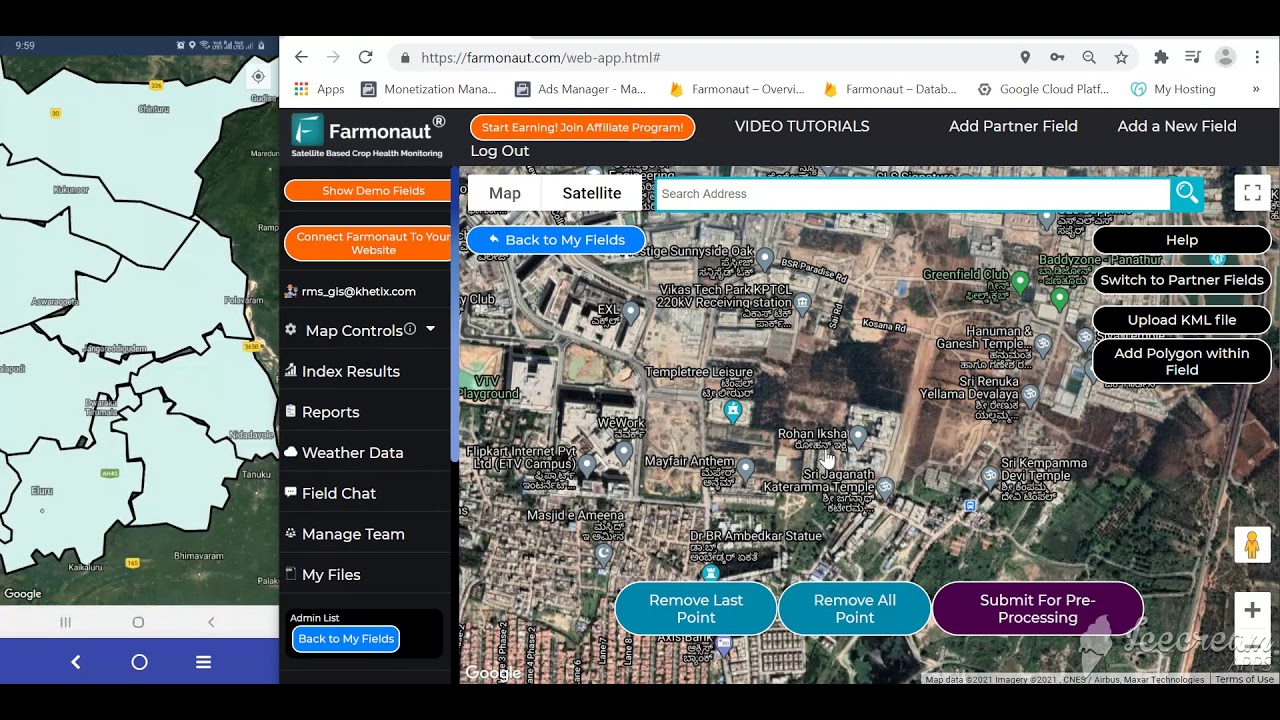
Farmonaut’s satellite-based platform empowers users to monitor crops, soil health, and environmental factors in real-time across vast, extensive fields. Using multispectral satellite imagery, NDVI vegetation analysis, and AI-driven advisories, we help farmers and agricultural offices unlock actionable insight for productivity enhancement and resource conservation.
Try Farmonaut on Web, Android, or iOS:



For developers, businesses, and governmental institutions, Farmonaut offers robust satellite API solutions for programmatic access to geospatial data. Extensive API documentation is available here.
- Real-time pest alerts: Protecting crops and guiding timely interventions
- Remote diagnostics: Swift identification of issues through images & field data
- Online learning modules: Continuous farmer education on best practices
- Geo-fencing of plots: Ensuring efficient resource management
- Satellite-based input optimization: Maximizing efficiency of fertilizer, water, and labor
Common Mistake
Overlooking digital extension platforms or neglecting satellite-enabled diagnostics can severely limit problem resolution speed—especially for extensive, geographically dispersed farms in 2026.

Our Jeevn AI Advisory System utilizes real-time satellite data to offer personalized, locale-aware advisories. This system is invaluable for extensive farming across remote or variable plots—providing the right advice at the right time for better yield and risk reduction.
Sustainable Practices & Climate-Smart Agriculture in Extensive Farming
2026 is set to see an increasingly prominent role for sustainable agricultural practices, especially as climate change intensifies. Agric extension agents and offices are now:
- Promoting cover crops, conservation tillage, & crop rotations to boost soil health
- Facilitating integrated pest management (IPM) and precision nutrient application
- Guiding water-efficient irrigation—drip, sensor-based, remote scheduling
- Advising on crop diversification & agroforestry to lower climate risk
- Implementing carbon farming and monitoring tools (see: Farmonaut’s Carbon Footprinting Service)
These practices enhance yields, stabilize output, and reduce environmental impact—especially for vast lands where uniformity is impossible and microclimates abound.

Digital Sustainability Tools: A Must-Have for 2026
Monitoring carbon emissions and soil organic matter is crucial for compliance as well as market advantage. Using satellite-based carbon footprinting services, like ours, farms gain actionable insights to improve operations and demonstrate sustainability to buyers or regulators.
Sustainability Focus
2026 will prioritize regenerative agriculture, climate-smart extension activities, and digital verification. Tools such as satellite-based carbon footprinting are rapidly becoming standard for extensive farms worldwide.
Empowering Farmers: Capacity Building & Training Initiatives
Effective agricultural extension is not only about technology transfer. As demands on extensive farming increase, there’s a greater emphasis on capacity building:
- Training on advanced record-keeping and farm data management
- Financial literacy workshops (budgets, cooperative marketing, risk management)
- Peer learning, farmer field schools, and network strengthening
- Workshops on leveraging digital extension tools

To address these needs, our Agro Admin App is designed for large-scale farm management, offering centralized dashboards for resource tracking, field data, staff activities, and integrated extension support.
Farm Financial Solutions for Extensive Farms
Access to affordable and rapid financing is paramount for 2026’s extensive farming landscape.
Farmonaut’s crop loan and insurance solutions offer satellite-driven field verification for faster, more accurate risk assessment—streamlining the process for smallholders, large farm owners, and ag lenders alike.
The Role of Policy & Institutional Support for Agricultural Extension
No agricultural extension system is effective without strong institutional backing and policy frameworks. For 2026, the future of extensive farming relies on:
- Government funding (ensuring robust, well-trained extension staff)
- Investment in digital infrastructure (connectivity, mobile platforms, device access)
- Support for research-to-field translation (continuous feedback loops from farm to research institutions)
- Regulatory incentives (tax breaks or certifications for verified sustainable practices)
- Integration of satellite, blockchain & AI platforms in public extension programs
Blockchain for Traceability & Compliance
With supply chains becoming increasingly regulated and buyers demanding traceable, credibly-sourced crops, Farmonaut’s blockchain-based traceability systems allow producers to securely record each step from farm to market. This boosts consumer trust, deters fraud, and enables regulatory compliance.
Essential Tools & Platforms for Extensive Farming and Agric Extension in 2026
- Satellite monitoring dashboards: For farm-wide crop health & input management (Farmonaut’s crop and forestry advisory solutions)
- AI-powered advisory apps: Delivering location-based, field-specific advice via phone
- Fleet and resource tracking: Managing machinery, field staff, and field logistics (Farmonaut Fleet Management platform)
- Blockchain-integrated traceability: Certifying crop authenticity & sustainability
- Digital extension content: E-learning modules, remote demo sessions, farmer Q&A
Bonus Tip
Combining field-level extension with remote sensing analytics helps identify “hidden” yield gaps—enabling proactive interventions and accumulating “big data” for institutional learning.
Frequently Asked Questions (FAQ): Extensive Farming & Agric Extension 2026
- What is the main difference between extensive and intensive farming in 2026?
- Extensive farming relies on larger land areas with lower input and labor per hectare, making it ideal for regions with abundant arable land but limited intensive infrastructure. Intensive farming uses higher input, technology, and labor per area, usually resulting in higher output per hectare.
- How do agricultural extension services support extensive farming?
- Agricultural extension bridges the gap between research and the farm, delivering field-specific advice, digital monitoring, and ongoing training so farmers can overcome unique challenges and boost productivity.
- Which digital tools are essential for extensive farmers in 2026?
- Key tools include satellite monitoring platforms, AI-driven advisory apps, digital record-keeping systems, resource management/fleet apps, and blockchain traceability solutions.
- How can smallholders benefit from extensive farming innovations?
- Smallholders can access digital ag extension platforms for cost-effective advice, peer learning, and collective bargaining—improving yields, reducing input waste, and strengthening market power.
- Are there special financial options for extensive farms?
- Yes. Satellite-enabled crop loan and insurance platforms enable faster, fraud-resistant financing, supporting cash flow and risk mitigation for both large and small operators.
- Where can I learn more about digital extension and satellite solutions?
- Visit farmonaut.com or download the Farmonaut app for more information on satellite-enabled agricultural services and solutions.
Conclusion: Preparing for the Future of Extensive Farming & Agricultural Extension
As we move into 2026 and beyond, extensive farming’s role in the global food system will only become more significant. The future is about resilience, digital transformation, and sustainable intensification—with agric extension offices, services, and agents at the center.
Adopting precision management, leveraging digital tools, integrating sustainability, and supporting farmer capacity building are no longer optional—they are essential for survival in the evolving agricultural landscape.
We at Farmonaut are committed to making satellite-driven, AI-enhanced insight accessible and affordable for businesses, users, and governments worldwide—offering real-time monitoring, blockchain-based traceability, resource management, and compliance solutions tailored to the demands of modern, extensive farming systems.
Looking to supercharge your agricultural extension efforts for 2026? Explore Farmonaut’s platform and app solutions, or connect with our team for tailored advice.

 Godrej Agrovet
 Hayleys Agriculture
 Linx Agritech
 Adinet
 Save Your Soils
 GalaxEye Space
 Grandstream Algérie
 XOS Realty
 Geospatial Lab Africa
 Agro La Gándara
 HIPSAC
 ZOL Zimbabwe
 Juligerm
 AdBio
AdBio MISE Maroc
 NWNS
NWNS Red August Group
 Farm Inc
 WeMe Global
 Agrotoken
 Blue BearX
 Insignito
 DnCubed
 Indosistim Teknologi
 Liquify Digital
 CU Foods
 BeyondTech Global
 Rouge VC
 AgroRisk
 Oath Inc
 Esri North East Africa
 MDCV UK
 Etech Consulting Madagascar
 Vestlandsforsking
 WB Dev
 Sama Premium
 Tres Valles
 Blickwinkel
 Agricultural Credit Policy Council
 eKGIS
eKGIS Mostas Tech
 Andex
Andex Deluxe Conseil
 WICO
WICO Chimera Innovation
 SkyHarvest
 Teledarbas
 Exurbia Geospatial
 FieldZero
