

Farm Credit Funding & Ag Line of Credit: Top 2026 Trends
“Farm credit funding is projected to increase by 18% globally by 2026, supporting more than 50 million farmers.”
In 2025, the agricultural sector continues to rely heavily on various forms of credit and financing solutions to sustain and expand farming operations. Access to farm credit funding, farming lines of credit, ag credit loans, and farm credit mortgages remains critical for small and large farmers alike. These financial tools empower farmers to navigate the challenges of modern agriculture, adapting to fluctuating costs, unpredictable environments, and emerging market opportunities.
This in-depth guide explores the top 2026 trends shaping farm finance, from traditional agricultural loans to high-tech smart credit solutions and sustainable funding models, all while highlighting the importance of access to affordable capital and flexible support.
Access to flexible farm credit funding and specialized ag line of credit products is rapidly transforming global agriculture, enabling both smallholder and large-scale farmers to manage risk while capitalizing on new market opportunities.
The Importance of Farm Credit Funding
Farm credit funding serves as the backbone of agricultural finance, providing the necessary capital for farmers to purchase land, invest in modern equipment, procure seeds and fertilizers, and manage daily operational costs. As input costs rise and commodity prices fluctuate, the availability of timely and affordable credit is more essential than ever.
Farm credit institutions—including specialized agricultural cooperatives and ag banks—continue to tailor their offerings to the unique needs of farmers. This means emphasizing flexible repayment terms, competitive interest rates, and products that address the volatility and specific cycles of farming.

Why Is Farm Credit Funding Critical?
- ✔ Provides necessary capital to allow farmers to invest in modernization and efficiency improvements
- 📊 Enables purchase of vital inputs (seeds, fertilizers, equipment) at the right time
- ✔ Smooths cash flow and bridges gaps between expenditures and harvest revenue
- ⚠ Helps manage unpredictability in weather, market prices, and pest/disease outbreaks
- ✔ Supports long-term sustainability and allows for planned expansion or diversification
Key Features of Modern Farm Credit Funding
- Emphasizing affordability: Lower interest rates and innovative products
- Flexible repayment: Payment schedules that align with seasonal cycles and revenue realization
- Accessible loans: Broadened eligibility, reduced collateral requirements, especially for smallholder farmers
- Digital access: Online applications, faster approval, and mobile management
Diversify your loan portfolio by combining farming line of credit, ag credit loans, and long-term farm credit mortgage to optimize both cash flow and growth investments.

Farming Line of Credit: Flexibility in Agricultural Finance
One of the most vital tools available to farmers in 2025 and beyond is the farming line of credit (also called an ag line of credit). Unlike term loans that provide lump sums with fixed repayment schedules, lines of credit offer revolving funds that farmers can draw upon as needed.
This flexibility is critical for dealing with unpredictable factors like weather impacts, pest outbreaks, and sudden market shifts. For example, a smallholder might use a line of credit to buy inputs early in the season and repay it after the harvest when revenue is realized. Moreover, these lines of credit help smooth cash flow gaps throughout the production cycle, reducing the risk of operational disruption.
How an Ag Line of Credit Works
- Approved revolving credit amount for the farmer
- Farmers draw funds as needed for operational costs (seed, fertilizer, labor, etc.)
- Interest only charged on the drawn balance, not the full limit
- Repayment and re-borrowing possible as per terms, enabling constant liquidity

Benefits:
- ✔ On-demand funds for unforeseen needs
- ✔ Lower total interest for short-term borrowing
- ✔ Smooth cash flow and efficient operation
- ✔ Customized to farm production cycles
- ⚠ Requires diligent financial planning to avoid over-leverage
Overusing lines of credit for non-essential expenses can result in accumulation of unnecessary interest. Stick to operational and growth-related costs to maximize the benefits.
“By 2025, over 40% of farmers are expected to utilize ag lines of credit for seasonal operational expenses.”
Funding for Small Farmers: Leveling the Playing Field
Smallholder farmers form a significant portion of the global agricultural workforce, yet many face barriers in accessing affordable credit. Common challenges include lack of traditional collateral, insufficient credit history, and inadequate scale for conventional lending.
Recognizing this, 2025-2026 trends show a growing emphasis on specialized loan programs, microfinance, and inclusive agricultural financing products. Financial institutions and government bodies are proactively developing initiatives that address these unique needs, including:
- ✔ Low-interest ag credit loans tailored to smallholder and marginal farmers
- ✔ Microfinancing options with minimal or group-based collateral schemes
- ✔ Grant-based support tied to sustainable practices or innovation
- ✔ Capacity-building and financial literacy programs
As inclusive finance becomes the norm, funding for small farmers is increasingly a central plank in food security and rural development strategies.
Microfinance and inclusive ag credit loans for smallholder farmers offer high-growth impact investment avenues, as demand surges and adoption of digital lending platforms increases in emerging economies.
Ag Credit Loans and Their Role in Modern Farming
Ag credit loans encompass a wide spectrum of financial solutions—from financing livestock acquisition to adopting cutting-edge precision farming technologies like drones and IoT devices. In 2025 and beyond, such loans increasingly support investments in sustainable practices including water conservation, renewable energy, and organic agriculture.
Institutions now offer specialized agricultural credit products with lower interest rates or extended repayment terms for farmers committing to eco-friendly practices. As regulations tighten and sustainability reporting becomes mandatory, ag credit loans are evolving into enablers of both compliance and competitiveness.

Example Use Cases:
- ✔ Investment in farm automation or digital agriculture systems
- ✔ Transition to climate-smart, organic, or conservation agriculture
- ✔ Expansion into new crops or value-added agri-businesses
- ✔ Upgrading irrigation or storage infrastructure for post-harvest management
Such evolving loan products provide farmers with the capital and flexibility to capitalize on emerging opportunities, maximize returns, and build resilient farming ecosystems.
Farm Credit Mortgages: Enabling Land Ownership and Expansion
For most farmers, land remains the most crucial asset. Farm credit mortgages are essential for buying new land, expanding existing farms, or refinancing to support major infrastructure investments. Modern ag mortgage products (2025-2026) feature longer amortization periods (15-30 years), flexible collateral agreements, and options tailored for cyclical agricultural incomes.

Top Benefits of Farm Credit Mortgages:
- ✔ Enables land purchase or expansion without immediate large capital outlay
- ✔ Long-term investment in irrigation, storage, renewable energy, thus boosting farm value
- ✔ Flexible terms accommodate variability in farm revenue cycles
- ✔ Often includes refinancing opportunities for existing debt at better rates
Farm credit mortgages are uniquely structured to recognize the seasonal, cyclical, and sometimes unpredictable nature of agricultural cash flows—making them the preferred product for long-term farm development and generational land ownership.
2025-2026 Projected Trends in Ag Credit and Funding Options (Comparative Table)
| Funding Solution | Estimated Interest Rate (%) | Typical Loan Amount (USD) | Repayment Flexibility | Approval Timeline (Days) | Top Use Cases | 2026 Growth Projection (%) |
|---|---|---|---|---|---|---|
| Farm Credit Funding | 4.2 – 6.0 | $80,000 – $800,000+ | Seasonal / annual schedules; custom cycles | 12-21 | Land/equipment purchase, major upgrades, tech investment | 18% |
| Farming Line of Credit | 5.0 – 7.8 | $4,000 – $100,000 | Highly flexible, revolving monthly/seasonal | 3-7 | Input purchases, short-term liquidity, pest/weather emergencies | 22% |
| Ag Credit Loans | 6.0 – 8.4 | $20,000 – $350,000 | Fixed & variable; grace periods for harvest | 8-15 | Equipment, tech adoption, sustainable practices, livestock | 17% |
| Farm Credit Mortgage | 4.8 – 7.2 (long-term) | $150,000 – $2,500,000+ | 10-30 years; seasonal adjustment | 18-30 | Land acquisition/expansion, infrastructure | 15% |
| Microfinancing for Small Farmers | 7.5 – 13.0 | $500 – $30,000 | Monthly/seasonal; group lending options | 2-10 | Input costs, small tech upgrades, emergency needs | 25% |
Estimates based on 2025-2026 agricultural finance industry forecasts. Actual figures may vary by region and financial institution.
The fastest growth in funding is projected for farming lines of credit and microfinance products, catalyzed by digital lending and risk mitigation technologies in the agricultural sector.
Latest Funding Trends in Agricultural Finance (2025-2026)
Farmers and agricultural businesses face a landscape that is both rich with opportunity and marked by volatility. Major funding trends in agriculture for 2026 reflect adaptation to these realities:
- ✔ Digital loan processing slashes approval times and increases reach in rural areas
- 📊 Sustainable, green loan products reward eco-friendly practices with better rates or terms
- ✔ Bundled solutions: e.g., combining crop insurance, input financing, and post-harvest loans for comprehensive support
- ⚠ Enhanced collateral flexibility through technology-based verification (e.g., satellite imagery)
- ✔ Public-private partnerships to de-risk lending to marginalized groups
These trends are creating a more inclusive, robust, and efficient credit environment for farmers worldwide.

Visual List: Top 6 Digital Trends in Ag Credit
- 👩💻 End-to-end online loan applications
- 🌱 Green loan products and sustainability-linked incentives
- 📱 Mobile-based account and credit management
- 🔗 Blockchain-powered crop traceability for collateral verification
- 🛰 Satellite-aided verification (see Farmonaut API: here)
- 🤝 Faster syndication of public and private agri-funding
How Farmonaut Empowers Agricultural Financing (Modern Technology for Modern Credit)
As farmers and institutions face the challenge of verifying, managing, and optimizing their credit funding, our Farmonaut platform introduces affordable, data-driven innovations that boost financial access, transparency, and sustainability across the agricultural landscape.
- ✔ Satellite-based land & crop verification: Our multispectral images enable banks and financial institutions to assess collateral, monitor crop health, and reduce loan fraud.
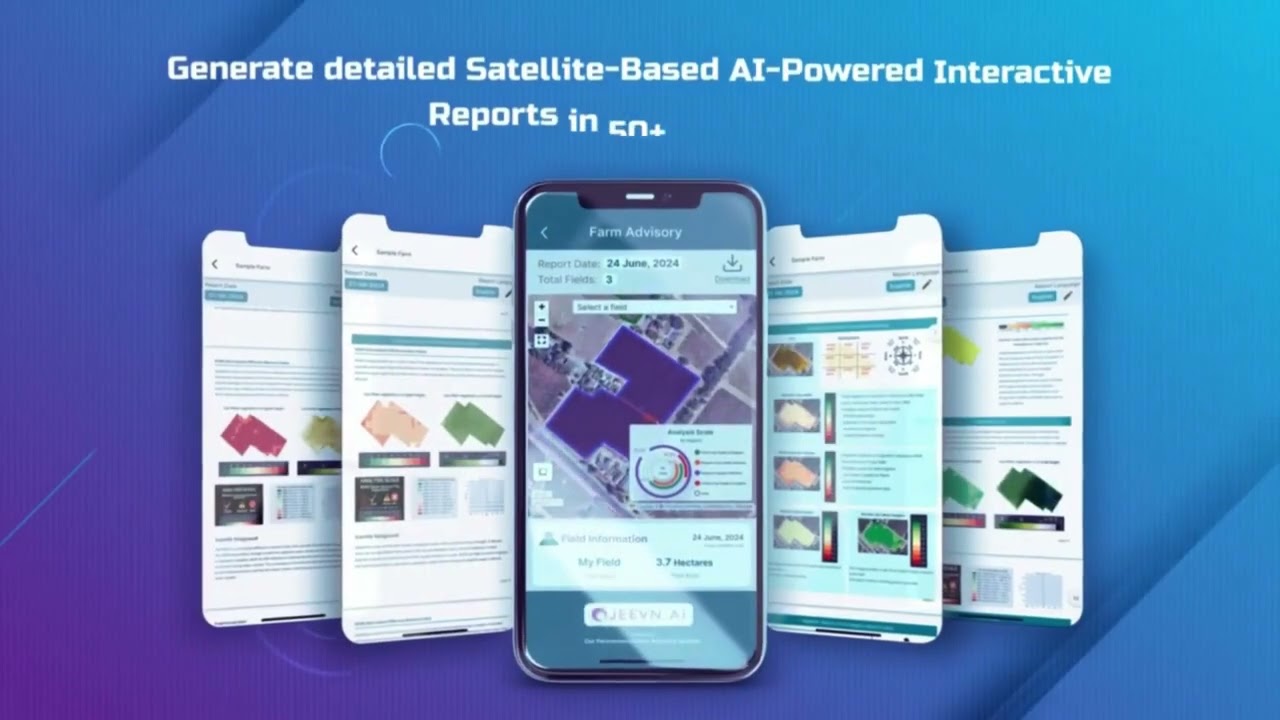
- ✔ AI-driven advisory: Jeevn AI delivers real-time operational and risk-management strategies for farmers borrowing or investing in new practices.
- ✔ Blockchain-powered traceability: Ensures credit-backed produce or supply chains are authentic and tamperproof, critical for high-value commodity lending. (Learn more: Farmonaut Traceability)
- ✔ Resource & fleet management: Our solutions help optimize machinery, labor costs, and fuel through real-time monitoring. (Fleet Management)
- ✔ Environmental impact monitoring: Track and document carbon emissions, water/stainable resource utilization, and eligibility for climate-action-linked credit lines. See Farmonaut Carbon Footprinting
Financial institutions also benefit from our API and developer documentation to build and automate credit verification or loan monitoring processes directly into their banking systems.
Try our API: Farmonaut Satellite API | Developer Docs: Read here
- 📲 Mobile & Web Apps for Field Monitoring
- 🗺️ Satellite Field Mapping for Loan Risk Analysis (Large Scale Farm Management)
- 🚜 Fleet Optimization Tools
- 🌳 Plantation & Forest Advisory (Details)



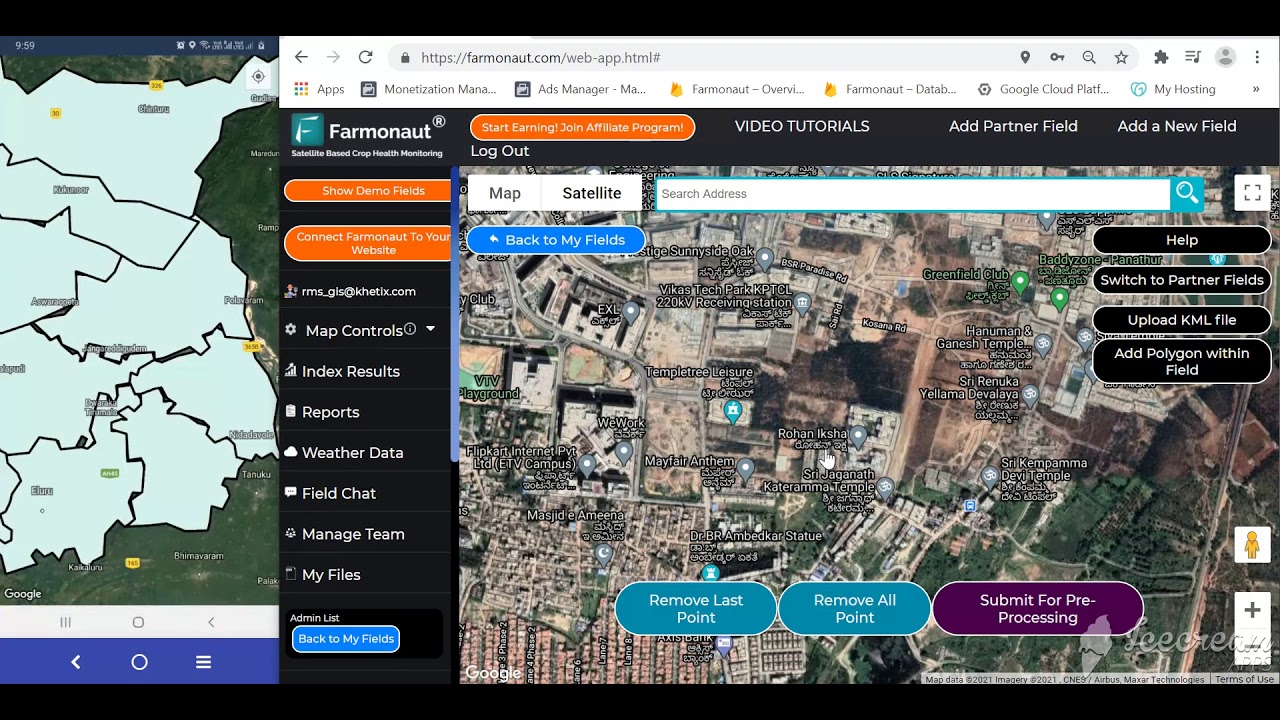
Satellite-based verification is rapidly being adopted for both minerals-based ag lending and geospatial risk assessment. This ensures better terms for borrowers and de-risks portfolios for institutional lenders.
Complete Financial Products & Innovative Solutions (2026 Outlook)
Whether large or small, farmers now have access to an expanding universe of credit products and initiatives designed to address their specific challenges. As we move deeper into 2026, we see a focus on:
- ✔ Integrated agri-finance products: Loans, insurance, credit, and extension services bundled for simplicity
- ✔ Dynamic interest rate products: Rates that change with performance or global commodity indices
- ✔ AI and remote verification: Fast-track loan approvals, scaling for even the smallest farmer
- ✔ Blockchain-based traceability: Secure and efficient loan-backed produce supply chains, as enabled by Farmonaut Traceability
- ✔ Climate resilience loans: Linked to carbon reduction, biodiversity, or conservation performance (more here)
Combine carbon tracking features with your loan application to qualify for green interest rates and demonstrate sustainable impact using the Farmonaut Carbon Footprinting suite.
Sustainability, Innovation & Digital Transformation (2025 & Beyond)
The future of farm finance is inexorably linked to sustainability and data-driven innovation. The sector is witnessing a surge in:
- ✔ Tech-enabled collateralization: Satellites, sensors, and remote assessors for faster lending decisions
- ✔ Climate-linked ag credit loans & grants
- ✔ Digital education platforms for financial literacy targeting smallholder and youth farmers
- ✔ Open data ecosystems aligning field data with finance, risk, and sustainability goals
- ✔ API-driven integration (see our API Docs) for end-to-end finance and monitoring automation
For farmers and lenders alike, embracing these technologies will be essential to remain competitive, resilient, and profitable in a world where flexibility, transparency, and environmental responsibility command a premium.
Over-reliance on credit without sound business or risk management increases exposure to unpredictable market or climatic shocks. Use data-driven advisory tools (see Farmonaut Plantation & Advisory) to inform all major borrowing or refinancing decisions.
Frequently Asked Questions (FAQ): Farm Credit Funding & Lines in 2026
What is farm credit funding and why is it important?
Farm credit funding is a financial resource provided to farmers for purchasing land, equipment, seeds, fertilizer, and meeting daily operational costs. Its importance lies in empowering farmers to invest, manage risk, expand, and navigate the seasonality and unpredictability inherent in agriculture.
Who can apply for a farming line of credit?
Both smallholder and large farmers, agribusinesses, and sometimes cooperatives can apply, provided they meet bank or institutional requirements (which vary by region and lender).
What are the advantages of an ag line of credit over a term loan?
Ag lines of credit are flexible, allow for on-demand borrowing, and help manage cash flow for seasonal expenses or emergencies, whereas term loans supply a fixed lump sum typically used for major purchases or investments.
How can satellite technology support my farm loan or credit application?
Satellite-based monitoring (offered by platforms such as Farmonaut) enables banks to verify land and crop conditions, monitor collateral remotely, and speed up approval processes, especially in regions with low documentation or limited in-person access.
Are there special loan programs available for smallholder farmers?
Yes, many institutions now offer tailored loan, microfinance, and grant programs for smallholder farmers—often with lower collateral, group lending, and capacity-building components to maximize inclusion.
What role does sustainability play in ag credit and financing for 2025-2026?
Sustainability is increasingly critical in credit evaluation, loan eligibility, and interest rate determination. Green lending programs often provide incentives for practices with verifiable environmental benefits, with some programs requiring carbon or resource impact monitoring (e.g., via satellite or sensor data).
Conclusion: Navigating 2026 and Beyond with Smart Credit Solutions
In 2026, farm credit funding, farming lines of credit, ag credit loans, and farm credit mortgages remain indispensable for the vitality and future resilience of global agriculture. These instruments not only deliver essential capital but foster innovation, build sustainability, support diversification, and power rural economies.
- ✔ Availability and affordability of credit is the linchpin for global food security and prosperity
- ✔ Digital platforms, satellite verification, and AI are making access to financing easier and faster
- ✔ New tailored offerings level the playing field for smallholder and marginalized communities
- ✔ Climate-resilient and sustainable practices are being incentivized through smarter financial products
- ✔ Farmonaut is committed to empowering farmers by making satellite-driven insights affordable and accessible to enhance financial inclusion, transparency, and sustainability in agriculture worldwide
By embracing innovation and pursuing informed borrowing, farmers and financial institutions can not only navigate 2026’s challenges but also thrive long into the future.
Explore Farmonaut’s crop loan and insurance tools to integrate real-time monitoring and digital security into your next financing cycle.
Stay ahead in ag finance—innovate, analyze, and grow with confidence using the latest in farm credit funding, ag lines of credit, and advanced digital verification tools for a sustainable 2026 and beyond.

 MapMyCrop
 Cresol
 Atur Kuliner
 MDCV UK
 Zerella Group
 Etech Consulting Madagascar
 Vestlandsforsking
 Agritein
 Delicio
 WB Dev
 Sama Premium
 Prochecker
 Tres Valles
 LACOS Geoinformation
 Magrifly
 LatConnect 60
 Blickwinkel
 Agricultural Credit Policy Council
 Marei Nursery
 eKGIS
eKGIS Mostas Tech
