

Five Importance of Agricultural Extension & Science Practices: Unlocking Sustainable Farming, Soil Health, and Environmental Stewardship
“Over 60% of global food production relies on effective agricultural extension and science-based practices for sustainability.”
Introduction
Agriculture is the cornerstone of human civilization, providing the food, fiber, and raw materials that sustain communities and fuel industries. Yet as the world’s population rises and the impacts of climate change and resource depletion grow, the need for sustainable farming, robust soil health, and environmental stewardship has never been more urgent. At the heart of progress in these areas lie five key pillars: agricultural extension, agricultural science, extension models like NC State, cultural practices in agriculture, and sound agricultural policy. Each plays a pivotal role in enabling farmers, foresters, and land managers to adopt resilient, resource-efficient systems and drive positive change across landscapes.
In this comprehensive guide, we explore the five importance of agricultural extension and science-based practices, drawing clear connections between research and practice, community well-being, environmental impacts, and the powerful role of technology platforms such as Farmonaut. We also discuss how these elements interact—delivering improved productivity, risk management, and lasting ecosystem health through policy, education, and daily action.
Let’s delve into the practices, policies, and scientific breakthroughs that empower us to feed the world sustainably—while preserving our soils, water, and the rich tapestry of biodiversity upon which future generations depend.
Five Importance of Agricultural Extension
Agricultural extension serves as the vital bridge between science and the field, rapidly transferring cutting-edge research and innovative practices directly into the hands of farmers and land managers. Its role cannot be overstated, given the growing complexities of modern farming, forestry, and land management.
1. Knowledge Transfer: Connecting Research and Real-World Practice
- Frontline Conduit: Extension acts as a frontline conduit, translating scientific discoveries into practical, context-appropriate actions that fit local conditions.
- Extension accelerates adoption of new practices, reducing the costly trial-and-error for farmers and increasing field-level innovation.
- Example: Adoption of integrated pest management is rapidly increased when extension agents tailor education sessions to local pest, soil, and crop conditions.
The effectiveness of agricultural extension is directly linked to how well it tailors advice and demonstrations to the field realities and native conditions of each farming community.
2. Facilitating Sustainable Resource Management
- Extension provides guidance on soil health, nutrient management, water conservation, and biodiversity enhancement.
- It introduces proven methods like crop rotation, cover cropping, and precision irrigation—all aimed at lowering inputs and protecting natural resources.
- Localized advice on resource use boosts efficiency and conserves critical soil and water assets for long-term productivity.
3. Supporting Risk Management and Climate Adaptation
- Through training on weather forecasting, resilient crop calendars, and diversification strategies, extension helps communities manage climate and market risks.
- Extension strengthens livelihood security by recommending tailored planting dates, stress-tolerant varieties, and farm diversification.
- Pro Tip: Combining modern forecasting with traditional knowledge maximizes preparedness for extreme weather events.
4. Enhancing Productivity and Market Access
- Extension improves productivity through education on evidence-based techniques for pest management, soil conditioning, and crop selection.
- Farmers learn to tailor their production systems for diverse markets, accessing new sales channels and improving profitability.
- Improved crop quality and yield mean more stable incomes and community prosperity.
5. Building Community Capacity and Collaboration
- Extension fosters cooperation and resource-pooling between farmers, forestry operators, researchers, and community groups.
- Partnerships established through extension promote innovation, conservation, and knowledge-sharing at every level.
- Collective action amplifies the benefits of resilient, sustainable farming systems.
Farmonaut Apps are designed to make satellite-driven extension advice, AI monitoring, and weather forecasts instantly accessible for individual users and farming businesses worldwide.


Five Importance of Agricultural Science
Agricultural science is the engine that drives innovation in sustainable food, fiber, and landscape management. The importance of agricultural science is evident in every improvement—from more resilient seeds to sophisticated resource optimization strategies spanning farming, forestry, mining, and land restoration.
1. Providing the Knowledge Base for Sustainable Systems
- Science underpins all advances: Robust research forms the bedrock for modern agriculture, enabling us to understand soils, climate impacts, and ecosystem services.
- Advances in soil chemistry, plant physiology, and landscape ecology all flow directly from ongoing agricultural research.
2. Enabling Efficient Resource Use and Yield Improvement
- Genetics and biotechnology allow the development of high-yield, stress-resistant crops, reducing the need for water, fertilizer, and pesticides while boosting food security.
- Science-based integrated pest management leads to fewer chemical applications and healthier farm ecosystems.
- Application of these principles boosts yields and minimizes environmental impacts across landscapes.
✔ Key benefits of agricultural science-based practices:
- 📊 Data-driven approaches: Evidence-based decisions on rotations, irrigation, and input timing.
- 🧬 Improved crop varieties: Science delivers genetic improvements for resilience and nutrition.
- 🔬 Precise soil management: Monitoring and amelioration tailored to local soils.
- 🌱 Ecosystem restoration: Guiding reforestation and rehabilitation in mining-impacted regions.
- 🌍 Climate adaptation: Strategies for managing variability and future-proofing communities.
3. Informing Policy, Infrastructure, and Planning
- Agricultural science guides policymakers and infrastructure planners by assessing water use efficiency, soil viability, climate exposure, and ecosystem value.
- This comprehensive view supports investments in roads, storage, irrigation, and extension services where they are most needed.
Overlooking local environmental limitations or the socio-economic context can make even the best scientific advances ineffective. Local adaptation is essential!
4. Supporting Resilient Landscapes and Biodiversity
- Forestry and restoration benefit from research on thinning, replanting, and habitat enhancement—preserving biodiversity and maintaining ecosystem services.
- Science provides the blueprint for balancing yields with environmental stewardship on managed land.
5. Fostering Innovation and Cross-Sector Collaboration
- Collaborative research and extension unite farmers, industry, and conservation actors, keeping innovation cycles fresh and adaptive.
- Partnerships across sectors drive solutions that are scalable, replicable, and sustainable.
Explore Farmonaut’s Carbon Footprinting Solution – a comprehensive tool leveraging satellite insights to manage emissions in farms and supply chains.

Five Importance of NC State Agriculture Extension: A Model for Success
NC State agricultural extension is an exemplar among global extension systems, demonstrating how integrated research, locally-targeted outreach, and responsive programming accelerate sustainable agriculture and forestry.
1. Model of Locally Relevant Education and Problem-Solving
- NC State’s extension network delivers locally customized advice, considering regional climates, soils, and market contexts for tailored recommendations.
- The extension system adapts rapidly to local challenges, making best practices accessible to all farmers and land managers.
The NC State agriculture extension success story underscores the value of agricultural infrastructure investment—backed by robust research and digital innovation—when scaling solutions nationwide.
2. Demonstration and Field Trials: Learning by Doing
- On-farm demonstration and trials underpin learning, proving new methods’ effectiveness under real-world conditions.
- This hands-on approach encourages rapid and sustained adoption of conservation tillage, advanced fertilization, and water-saving technology.
3. Driving Farmer Profitability and Resilience
- By prioritizing soil fertility, integrated pest management, smart irrigation, and market readiness, NC State agricultural extension supports farm profitability even in rapidly changing agricultural contexts.
- These responsive programs build farmer capacity, resilience, and competitive edge in evolving markets.

4. Fostering Multi-Stakeholder Collaboration
- NC State brings together researchers, agribusiness, environmental groups, and producer organizations, resulting in shared knowledge and system-wide adoption of sustainable practices.
- This network approach massively accelerates the impact and resilience of agricultural value chains.
5. Advancing Sustainable Forestry and Land Management
- NC State’s extension programs cover silvicultural planning, habitat restoration, and sustainable harvesting, supporting ecosystem services and long-term natural resource stewardship.
- These programs contribute to climate adaptation, improved biodiversity, and resilient forestry-dependent communities.
Try the Farmonaut app for data-driven forestry and agro-advisory

Five Importance of Cultural Practices in Agriculture
Cultural practices refer to the routine, field-level methods—often evolved over centuries—that shape yield, ecosystem function, and community knowledge. The importance of cultural practices in agriculture lies in their direct impact on productivity, resource conservation, and long-term viability.
1. Enhancing Soil Health and Fertility
- Rotations, cover cropping, composting, and mulching stabilize soil structure, reduce runoff, and increase organic matter.
- These actions build resilience, water retention, and nutrient cycling for sustained productivity.
- Trivia: “Sustainable farming practices can improve soil health by up to 45%, enhancing long-term environmental stewardship.”
2. Improving Water Use Efficiency
- Cultural practices like precise irrigation scheduling, mulching, and ridge-furrow systems minimize water loss and improve drought adaptation.
- Local water harvesting and management practices contribute to long-term security and ecosystem health.
✔ Advantages of strong cultural practices:
- 🌱 Organic matter enrichment: Greater resilience and fertility
- 💧 Water savings: Smarter irrigation, less waste
- 🦠 Reduced chemical need: Better natural disease and pest control
- 🎋 Soil structure: Less compaction, better root health
- 📚 Knowledge preservation: Passing methods to the next generation
3. Integrated Pest and Disease Management
- Sanitation, seed selection, rotation, and field hygiene help manage pests and slow the development of resistance to chemical interventions.
- These approaches reduce reliance on synthetic insecticides, supporting biodiversity and pollinator populations.
4. Rehabilitation and Ecosystem Restoration
- On mining-impacted or degraded lands, cultural practices such as agroforestry and reclamation planting actively restore soil, hydrology, and habitat structure.
- This directly supports climate adaptation, ecosystem rebuilding, and alternative livelihoods.
Regular field monitoring—powered by Farmonaut’s fleet management and AI advisory tools—can help ensure that local cultural practices are optimized in real time for maximum soil health and resilience.
Discover how satellite-based fleet management enhances cultural practice implementation.
5. Preserving Traditional Knowledge and Adaptive Capacity
- Farmers’ expertise—passed down over generations—forms a rich knowledge base that complements modern advice and enhances adaptability.
- The integration of traditional wisdom with new science creates truly resilient, locally adapted systems for the future.

Five Importance of Agricultural Policy
Agricultural policy provides the strategic framework for managing resources, enabling access to markets, and protecting environmental integrity across all agricultural sectors.
1. Incentivizing Sustainable Practices and Technologies
- Effective policy can promote soil health, water stewardship, and energy efficiency through subsidies, rewards, and infrastructure support.
- Modern policy frameworks align economic incentives with long-term land stewardship.
2. Balancing Food Security with Biodiversity and Conservation
- Agricultural policy harmonizes food production goals with biodiversity conservation, land-use planning, and rural development.
- Risk management, training, and micro-insurance ensure that smallholders thrive even amid market or climate shocks.
Agricultural policy can open new doors for small producers by supporting rural infrastructure, storage, and logistics. Explore Farmonaut’s Large-Scale Farm Management App for seamless, scalable operation—ideal for policy-driven enterprise and community growth.
3. Promoting Rehabilitation of Degraded and Mining-Affected Landscapes
- Strong policies enforce rehabilitation, reforestation, and sustainable land management for post-industrial and mining sites.
- This renews productivity, regenerates ecosystem services, and unlocks new opportunities for communities.
4. Supporting Research, Extension, and Infrastructure Investment
- Sound policy frameworks allocate resources to research, extension, roads, and digital technologies—linking evidence-based advice to scalable field implementation.
- This infrastructure ensures widespread and equitable benefits from scientific and market advances.
5. Ensuring Alignment and Resilience Across Sectors
- Policy aligns agricultural, forestry, and land-use systems—balancing food, fiber, environmental, and community needs in an integrated way.
- Future-proofed agricultural systems depend on policies that foster adaptability, resilience, and cross-sector collaboration.
Comparative Impact Table: Five Importance of Agricultural Extension & Science Practices
| Importance/Practice | Description | Estimated Impact on Sustainability | Example Science or Policy Practice |
|---|---|---|---|
| Knowledge Transfer via Extension | Bridges research and field practice, enabling rapid dissemination and adoption of sustainable techniques. | High | On-farm demonstrations, tailored advisory sessions |
| Soil Health and Water Management | Improved productivity and resource conservation through targeted soil and water recommendations. | High | Precision irrigation, cover cropping, nutrient cycling protocols |
| Risk and Climate Management | Empowers communities to handle climate variability, market shocks, and pests through informed planning. | Moderate-High | Weather forecasting, resilient crop calendars, insurance access |
| Cultural Practices Integration | Maintains yield stability, ecosystem health, and traditional knowledge by incorporating local routines into modern advice. | Moderate | Rotations, agroforestry, composting, field hygiene |
| Policy and Infrastructure Alignment | Aligns resources, research, and incentives for long-term agricultural and ecosystem sustainability. | High | Subsidies for conservation, policy-driven market access, rural infrastructure investment |

Farmonaut APIs allow direct integration of satellite-driven insights and monitoring into your custom software stack, planning dashboards, and citizen services platforms.
Explore the Farmonaut API |
API Developer Documentation
Farmonaut’s Role in Advancing Sustainable Agriculture
At Farmonaut, our mission is to make satellite-powered insights and data-driven AI advisory accessible and affordable for all actors in agriculture, forestry, and resource management. Here’s how our technologies support the five importance of agricultural extension and science-driven sustainability:
Satellite-Based Monitoring & Real-Time Data
- We leverage multispectral satellite images to deliver accurate, up-to-date views of crop health, soil conditions, forest integrity, and mining rehabilitation.
- These insights power everything from precision irrigation scheduling to trend forecasting for risk and resilience planning.
AI-Driven Advisory and Blockchain Traceability
- Our Jeevn AI advisory system personalizes farm management strategies, resource planning, and weather preparedness, reducing input costs and boosting security.
- Blockchain-enabled traceability protects community knowledge, supports policy enforcement, and opens doors to premium, transparent markets.
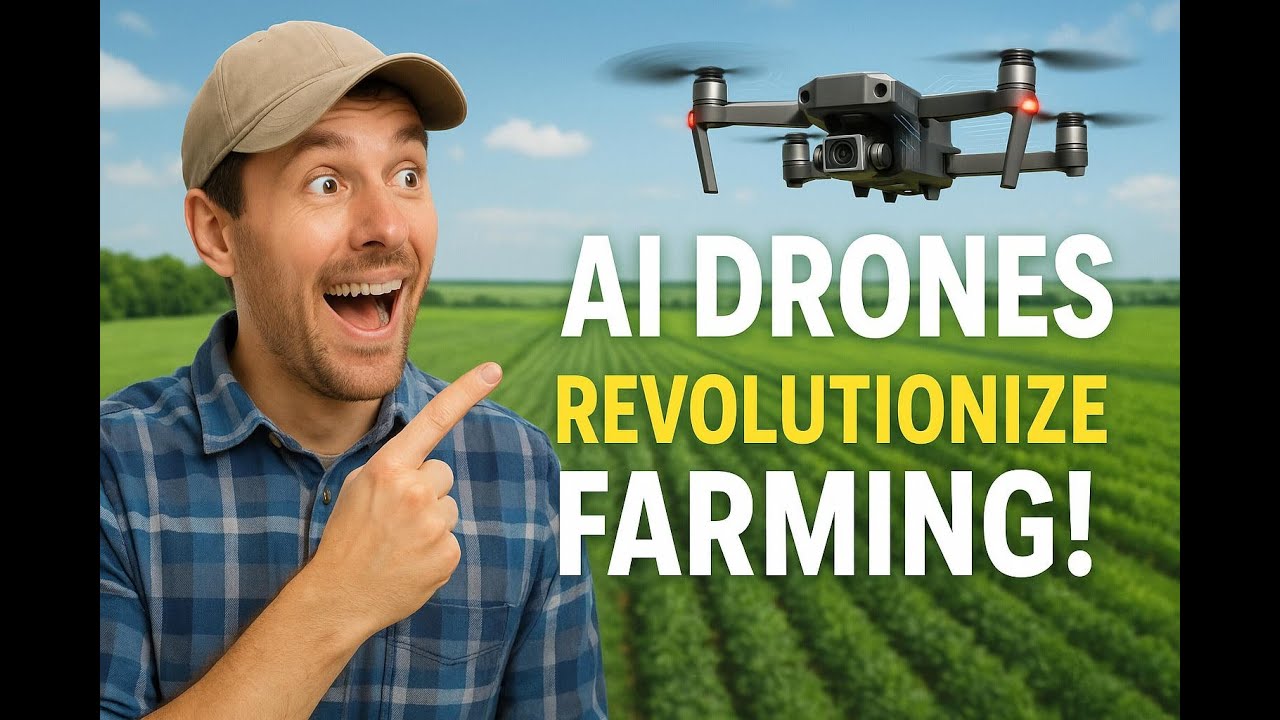
Fleet Management, Environmental Monitoring, and Financial Access
- Fleet and resource management features ensure the efficient, climate-smart use of all agricultural assets, from field vehicles to irrigation equipment.
- Environmental impact tracking supports compliance, conservation, and reporting—from carbon emissions to landscape rehabilitation progress.
- Satellite-based verification helps unlock crop loans and insurance for producers and communities, expanding access and reducing risk.


Affordable, Scalable Solutions for Everyone
- Our platform is modular and cost-effective, serving users from smallholders to large businesses, governments, and financial institutions.
- Instant access is available via web or mobile app, and systems can be integrated through our APIs for ultimate flexibility.
Ready to optimize your land, forest, or agricultural value chain?
- ✔ Extension bridges science and field practice for faster innovation.
- 💧 Soil and water management are central to both sustainable yields and ecosystem health.
- 🔥 Integrating scientific knowledge and cultural practices strengthens climate and pest resilience.
- 🌍 Policy, infrastructure, and technology together drive the transition to sustainable agriculture.
- 🌐 Farmonaut empowers all users with satellite-based, AI-driven advisory and monitoring—accessible anytime, anywhere.
Frequently Asked Questions (FAQ)
What is agricultural extension and why is it important?
Agricultural extension is a system of education and outreach that connects scientific research and new knowledge to farmers, forestry operators, and land managers. Its main importance lies in empowering agricultural communities with the latest, locally relevant practices, accelerating the adoption of sustainable methods, improving productivity, and protecting natural resources.
How does agricultural science support sustainable farming?
Agricultural science delivers the evidence base for improved crop genetics, integrated pest management, precision nutrient planning, and restoration. It enables us to maximize yields, conserve resources, and design production systems that are resilient to climate and market shocks.
What makes NC State agriculture extension a model for other systems?
NC State extension excels by combining locally targeted education, hands-on field demonstrations, and a deeply collaborative network—linking researchers, producers, and conservationists. This approach delivers solutions rapidly and ensures sustained community adoption.
Why are cultural practices in agriculture crucial for sustainability?
Cultural practices like crop rotation, organic amendments, and integrated watering routines are vital for building soil fertility, conserving water, and reducing chemical inputs. They also help preserve regional knowledge and adaptive capacity, supporting lasting productivity and environmental stewardship.
How can agricultural policy drive environmental and economic benefits?
Sound agricultural policy aligns funding, research, risk management, and infrastructure toward sustainable outcomes—such as healthy soils, efficient markets, and resilient communities. It incentivizes best practices, supports rehabilitation of degraded lands, and ensures agriculture contributes positively to biodiversity and economic development.
How does Farmonaut contribute to agricultural extension and sustainability?
We at Farmonaut deliver satellite-based, AI-powered solutions that support real-time monitoring, resource management, carbon footprinting, traceability, and digital advisory across agriculture, mining, and infrastructure. Our tools empower all stakeholders with actionable data, accessible through web, mobile, and API platforms.
Conclusion: The Path to Sustainable Agriculture and Stewardship
The five importance of agricultural extension and science-driven practices underpin every advance in modern, sustainable, and productive agriculture. By prioritizing evidence-backed extension, robust research, adaptive cultural rituals, integrated policy, and digital innovation—including cutting-edge platforms like Farmonaut—we can build food systems that are both profitable and future-proof.
As global challenges intensify, our collective action across extension networks, scientific communities, and farming landscapes will decide the path to food security, resource conservation, and the resilience of our agricultural and natural systems. Let us invest in, and advocate for, the policy, knowledge, and technology that secure fertile soils, clean water, and thriving rural communities—for generations to come.
Ready to join the satellite-powered revolution for sustainable farming, forestry, and land management?
Explore Farmonaut’s solutions today for a more informed, sustainable, and resilient tomorrow.

 Green Bite Farm
 FCF India
 Unifrutti Gulf
 Deluxe Conseil
 TVS Electronics
 BW Pipelines
 WICO
WICO Gen Chayat
 Chimera Innovation
 SkyHarvest
 Polaris Digitech
 Teledarbas
 Wild Oak Farm
 SFX
SFX Doodlakine
