

Crop Rotation Sustainable Agriculture: 7 Key 2025 Benefits
Table of Contents
- Summary: Crop Rotation and Its Role in Sustainable Agriculture in 2025
- Understanding Crop Rotation Sustainable Agriculture
- Why Crop Rotation is Sustainable in 2025
- Comparison Table: Monoculture vs. Crop Rotation Outcomes (Estimated 2025)
- The 7 Key Benefits of Crop Rotation Sustainable Agriculture in 2025
- Farmonaut: Enabling Sustainable Crop Rotation with Satellite Technology
- How to Implement Crop Rotation for Sustainable Agriculture
- FAQ: Crop Rotation Sustainable Agriculture in 2025
“Crop rotation can increase soil organic matter by up to 12% in sustainable agriculture systems by 2025.”
Summary: Crop Rotation and Its Role in Sustainable Agriculture in 2025
As global agriculture faces mounting challenges—including soil degradation, climate change, and the growing demand for food—sustainable farming practices have become essential. Among these, crop rotation sustainable agriculture stands out as a cornerstone practice, supporting soil health, reducing pests, curbing diseases, and enhancing biodiversity. Utilizing modern tools and satellite technology, such as those provided by us at Farmonaut, farmers can maximize the benefits of smart, sustainable crop rotation. This blog explores the seven key benefits of crop rotation in 2025, articulating its role in efficient, resilient, and environmentally friendly food systems.



Understanding Crop Rotation Sustainable Agriculture
Crop rotation sustainable agriculture is a systematic practice where farmers grow different types of crops sequentially on the same piece of land over seasons or years. Unlike monoculture—the continuous cultivation of a single crop—rotation involves varying crops with distinctive nutrient needs, root structures, and pest associations. This diversity interrupts the cycles of pests, diseases, and weeds, promoting soil fertility and sustainability.
- Crop rotation sustainable agriculture is one of the oldest, most effective ways to improve soil health and reduce the need for chemical fertilizers and pesticides.
- It involves planning a rotation schedule based on the nutrient requirements, root depth, growth cycles, and biological associations of different crops.
- Modern technology provides precision in managing crop rotations and tracking their environmental and economic impact.
Why Crop Rotation is Sustainable in 2025
Is crop rotation sustainable? Absolutely. Sustainable crop rotation integrates environmental, economic, and social objectives in agriculture to enhance the productivity of soils, reduce environmental footprints, and promote biodiversity. Here’s how crop rotation is sustainable in a rapidly changing world:
- Soil Health: Rotating crops with different nutrient needs and root structures increases the presence of soil organic matter, supports microbial diversity, and improves water retention—crucial for eco-friendly farming.
- Pest and Disease Control: Crop rotation sustainable agriculture reduces the buildup of crop-specific pests and disease pathogens by interrupting their life cycles and depriving them of host plants.
- Less Reliance on Chemicals: With natural pest and disease management, there’s a reduced need for chemical fertilizers and pesticides, supporting environmental sustainability goals.
- Biodiversity and Ecological Services: Alternating between legumes (like beans and peas), cereals, and deep-rooted crops supports broader ecosystem services, enhancing natural resilience.
- Mitigating Climate Change: Rotations with cover crops and nitrogen-fixing legumes also sequester more carbon in soils, helping to reduce agricultural greenhouse gas emissions.

What Makes Crop Rotation Sustainable in 2025?
- Modern data tools enhance planning and tracking of crop rotation impacts.
- Farmers receive incentives for sustainable practices, driving adoption across global agriculture.
- Crop rotation sustainable agriculture is integral to regulatory frameworks, subsidy policies, and climate strategies.
Sustainable crop rotation is no longer just a recommended practice—it stands as a requirement for resilient, productive and eco-friendly farming systems worldwide.

“Practicing crop rotation reduces pest populations by nearly 30%, supporting resilient ecosystems in sustainable farming.”
Comparison Table: Conventional Monoculture vs. Crop Rotation Outcomes (Estimated 2025)
| Practice Type | Soil Organic Matter (%) | Pest Reduction (%) | Biodiversity Increase (Species) | Yield Stability (% Change) | Chemical Fertilizer Use (kg/ha) | Water Usage Reduction (%) | Carbon Sequestration (tons/ha/year) |
|---|---|---|---|---|---|---|---|
| Conventional Monoculture | 2.1% (Declining) | 0-5% | ~45 species | -12% (Unstable) | 180 kg/ha | 0-5% | 0.45 |
| Crop Rotation Sustainable Agriculture | 3.8% (+12%) | 29-32% | ~120 species | +14% (Stable) | 88 kg/ha | 18% | 1.3 |
This table visually summarizes the environmental and productivity advantages of crop rotation sustainable agriculture over monoculture. The increases in soil organic matter, biodiversity, yield stability, and carbon sequestration, alongside reductions in pests, chemical use, and water consumption, underline why crop rotation is sustainable as we move toward 2025 and beyond.

The 7 Key Benefits of Crop Rotation Sustainable Agriculture in 2025
1. Improved Soil Health and Fertility
Crop rotation sustainable agriculture begins with soil health improvement. Growing different crops means varied nutrient extraction and contributions:
- Legumes (beans, peas) fix atmospheric nitrogen, naturally enriching soil nitrogen content and reducing the need for synthetic fertilizers.
- Deep-rooted crops like sunflowers and some vegetables loosen the soil’s lower layers, enhancing aeration and water retention.
- Cereal crops can follow legumes, benefiting from heightened nitrogen availability and reduced disease pressure.
Over several cycles, this alternating system improves soil organic matter, optimizes nutrient balance, and increases soil fertility.
See how advances in smart farming support soil health management in this video:
2. Natural Pest and Disease Management
- When a single crop is planted continuously, pests and disease pathogens that prefer that crop rapidly buildup—a phenomenon observed in monoculture systems.
- Crop rotation interrupts pest cycles: When the preferred host plant is no longer available, pest and disease populations decline naturally.
- By breaking life cycles of specific pests and pathogens, farmers can reduce dependency on chemical pesticides—an environmental and economic advantage.
Practicing sustainable crop rotation reduces pest populations by nearly 30%, supporting resilient ecosystems in sustainable farming.
3. Effective Weed Control Without Chemicals
- Different crops compete with weeds in different ways.
- By alternating crop types and strategies—such as using a fast-growing cover crop—the life cycle of weeds is disrupted.
- Fewer weeds adapt to any single rotation, reducing the need for herbicides or intensive manual control.
- This natural weed control protects soil health and reduces environmental pollution.
Explore Farmonaut’s carbon footprinting tools to monitor the environmental impact of weed and input management in your fields—supporting climate-smart practices in 2025.
4. Enhanced Biodiversity and Ecological Services
One of the critical benefits of sustainable crop rotation lies in promoting biodiversity.
- Diversified rotations support a wider range of soil organisms, pollinators, beneficial insects, and even birds or other wildlife in agroecosystems.
- Greater biological diversity leads to improved nutrient cycling and natural resilience against extreme weather or pest outbreaks.
- Rotations also support ecological services such as pest predation, pollination rates, and soil carbon sequestration—providing long-term agricultural sustainability.
5. Water Conservation and Improved Efficiency
- Certain crop rotations help improve water infiltration and retention in soils—key in water-stressed regions.
- Deep-rooted crops promote soil structure, reducing erosion and runoff while enhancing water use efficiency.
- This makes sustainable crop rotation a cornerstone for adapting to climate change and unpredictable rainfall patterns in 2025.
6. Reduced Chemical Inputs and Lower Environmental Impact
- Through natural nutrient cycling and pest suppression, crop rotation slashes the need for synthetic fertilizers and chemical pesticides.
- This reduces input costs and protects groundwater, rivers, and nearby ecosystems from runoff and pollution.
- Lower input requirements also translate to reduced carbon emissions in the food production system, making crop rotation sustainable and climate-smart.
Discover Farmonaut’s agricultural product traceability for verifying sustainable, low-input practices across the supply chain with blockchain-based security.

7. Increased Economic Stability and Food Security
- Crops grown in healthy, rotated soils yield better, face fewer pest and disease outbreaks, and are more resilient during climate extremes.
- This fosters yield stability and profitability for farmers, lowering their risks and increasing food security locally and globally.
- Moderate and stable yields enable better resource planning and investment in sustainable practices for years to come.
Learn how Farmonaut supports agricultural financing and insurance by providing satellite-based crop verification, helping farmers access credit fairly and securely.

Farmonaut: Enabling Sustainable Crop Rotation with Satellite Technology
At Farmonaut, we are dedicated to making crop rotation sustainable agriculture data-driven and accessible on a global scale. Our satellite-based monitoring solutions provide:
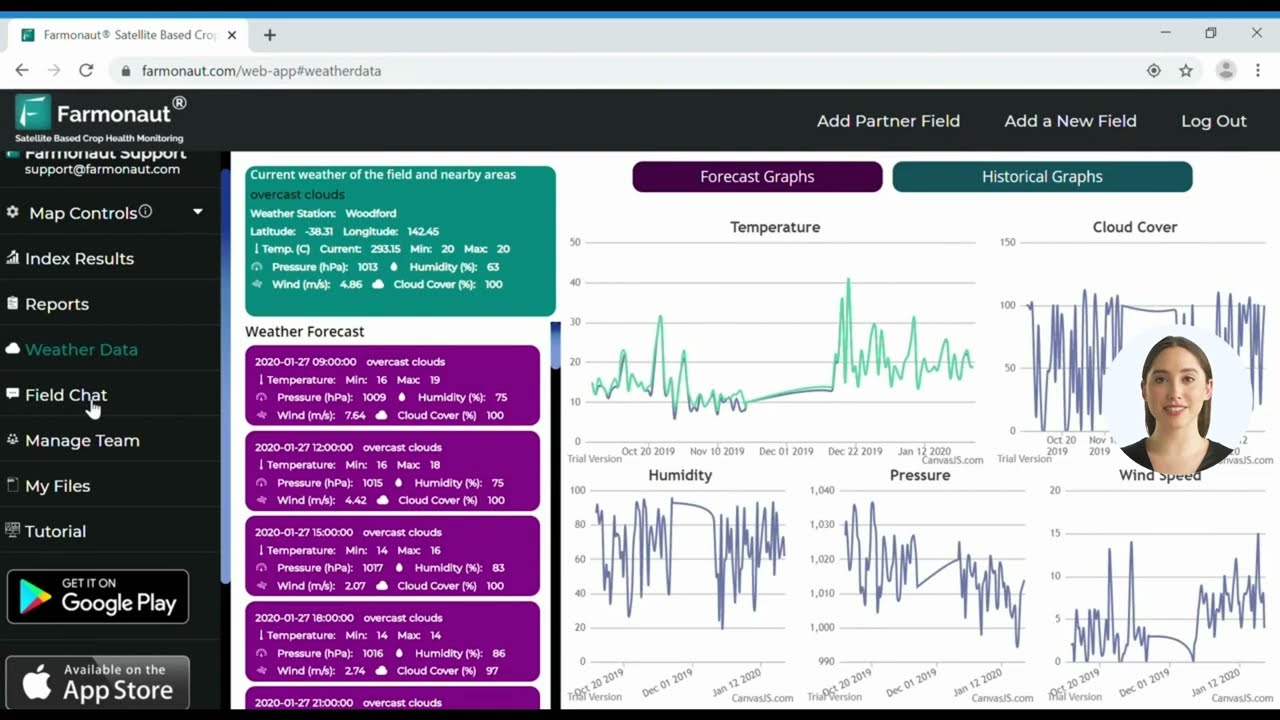
- Real-time monitoring of crop health, soil conditions, and water availability—supporting optimal crop rotation planning and resource use.
- AI-based advisory systems that deliver crop- and location-specific recommendations for efficient crop cycles and sustainable land management.
- Blockchain-based traceability to ensure authenticity and transparency in tracking sustainably grown crops from field to market.
- Carbon footprinting data to quantify environmental benefits of sustainable crop rotation on every plot—helping support climate reporting and certifications.
We empower farmers, businesses, and governments to harness the full suite of advanced remote sensing, AI, and blockchain solutions for large-scale farm management. See how our technology powers precision agriculture and drives sustainability:
Discover our Large Scale Farm Management tools for coordinated monitoring, analytics, and advisories for modern agricultural enterprises.
How to Implement Crop Rotation for Sustainable Agriculture
Implementing crop rotation sustainable agriculture in 2025 requires planning, monitoring, and continual improvement. Here are the steps for effective, climate-smart, and eco-friendly rotations:
A. Assess Site-Specific Needs and Goals
- Analyze soil characteristics, historical yields, pest/disease pressures, and water availability.
- Set goals—such as nitrogen enrichment, erosion control, or diversification—that match your local climate and market demands.
B. Design the Rotation Sequence
- Alternate nitrogen-fixing legumes (beans, peas) with nutrient-demanding cereals (wheat, maize).
- Include deep-rooted crops (sunflowers, alfalfa) for improved soil structure, and cover crops (clover, vetch) for protection and added fertility.
- Rotate also by plant families to prevent pest and pathogen specialization.
C. Monitor, Evaluate, and Adapt
- Employ satellite or on-ground tools to track soil health, pest outbreaks, and yield variation season to season.
- Adjust crop planting sequence, timing, and inputs based on data and observed outcomes.
- Leverage Farmonaut’s monitoring platform for data-driven decision-making in real-time.
D. Consider Farm Scale and Resource Management
- For large operations, coordinate fleet management and logistics using technology like Farmonaut Fleet Management for reduced costs and sustainable deployment of machinery across fields under rotation.
E. Document and Report Sustainability Metrics
- Maintain records of crop cycles, inputs, yields, and soil quality for economic, environmental, and regulatory audits.
- Use traceability systems to validate and communicate your sustainable practices.
By applying these principles, crop rotation sustainable agriculture can adapt to every farm, field, and region—meeting climate and food security goals through 2025 and beyond.
FAQ: Crop Rotation Sustainable Agriculture in 2025
Q1. What is crop rotation sustainable agriculture?
Crop rotation sustainable agriculture is a practice where farmers grow different crops in sequence on the same land, interrupting pest, disease, and weed cycles and improving soil health, leading to more resilient and eco-friendly farming systems.
Q2. Is crop rotation sustainable in all climates?
Yes—sustainable crop rotation is adaptable to almost every climate zone, with locally appropriate species and rotation cycles tailored to rainfall patterns, soil needs, and market demands.
Q3. What crops are best for sustainable crop rotation?
The best crops for rotation include legumes (beans, peas for nitrogen-fixing), cereals (wheat, rye), root crops (carrots, potatoes), cover crops (clover, vetch), and deep-rooted perennials (alfalfa). The exact sequence depends on your soil type and objectives.
Q4. How does crop rotation enhance biodiversity?
Crop rotation sustainable agriculture increases plant variety, which supports more species of insects, microbes, pollinators, and soil fauna, ultimately improving ecosystem services and farm resilience.
Q5. Does crop rotation reduce the need for fertilizers and pesticides?
Yes—rotating crops with varied nutrient needs and pest associations naturally minimizes pests while replenishing nutrients, reducing reliance on chemical inputs and cutting costs.
Q6. What technologies support efficient crop rotation in 2025?
Satellite monitoring, AI-based advisory systems, blockchain traceability, and resource management tools—like those provided by Farmonaut—support data-driven crop rotation for any scale of agriculture.
Q7. How does crop rotation address climate change?
By improving soil carbon sequestration, increasing resilience to drought or heavy rainfall, and cutting chemical emissions, crop rotation sustainable agriculture offers an essential climate adaptation and mitigation solution.
Q8. Where can I access tools to monitor and improve sustainable crop rotation?
We at Farmonaut offer web and mobile platforms for real-time monitoring, resource management, and sustainability analytics—helping you plan, track, and verify efficient crop rotations anywhere in the world.
Conclusion
Crop rotation sustainable agriculture stands as a foundational practice for sustainable food systems in 2025 and beyond. Ancient yet ever-evolving, this systematic practice unlocks soil health, natural pest and weed control, biodiversity, efficiency, and climate-smart agriculture across all continents. With the support of precision technology and accessible data-driven tools by platforms like Farmonaut, farmers and agribusinesses can confidently rotate, adapt, and thrive in a world demanding food security without compromising environmental benefit.
Whether you manage a family farm or oversee thousands of hectares, adopting crop rotation sustainable agriculture today ensures long-term resilience and prosperity, contributing to a healthier planet for generations.
Discussion
Questions, corrections or field experience? Share them below. First-time comments are reviewed before they appear, and your email is never published.
No comments yet. Be the first to add a question or your experience.

 BeyondTech Global
 Consulthink Global
 Rouge VC
 Yutz Automation
 AgroGreen Dynamics
 AgroRisk
 Oath Inc
 Reddane Farming
 Esri North East Africa
 Cresol
 Atur Kuliner
 MDCV UK
 Zerella Group
 Etech Consulting Madagascar
 Vestlandsforsking
 Delicio
 WB Dev
 Sama Premium
 Prochecker
 Tres Valles
 LACOS Geoinformation
 Magrifly
 LatConnect 60
 Exploration consultancy · South Africa · Gold
 Licence holder · Niger · Gold










