

Jersey Cow Milk: Top 7 Benefits & 2026 Sustainable Guide
Summary: Jersey Cows: A Comprehensive Overview for Modern Dairy Farming in 2025
Jersey cows have long been prized within the dairy farming community for their superior milk quality, efficiency, and adaptability. As of 2025 and entering 2026, their role in sustainable agriculture and dairy production continues to expand, making them an excellent choice for farmers looking to balance productivity with environmental stewardship.
“Jersey cows require up to 25% less feed and water than larger breeds, maximizing sustainable milk production per acre.”
Table of Contents
- Introduction: Jersey Cow Milk & Sustainable Dairy
- Top 7 Benefits of Jersey Cow Milk
- Jersey Cow Milk Production: Quality and Efficiency
- Mini Jersey Cows: Compact Solution for Modern Dairy Farms
- Jersey Cow Meat: Diversifying Revenue Streams
- How to Find Jersey Milk Cow for Sale Near Me in 2026
- Jersey Cows and Sustainable Dairy Agriculture
- Jersey Cow Milk vs. Conventional Cow Milk: Sustainability & Nutritional Benefits
- Modern Tech & Farmonaut for Sustainable Dairy Management
- Key Insights & Callouts
- Frequently Asked Questions
- Conclusion: The Jersey Advantage for 2026 and Beyond
Introduction: Jersey Cow Milk & Sustainable Dairy
Dairy farming is evolving to meet the world’s growing demand for milk, while striving to balance productivity with environmental stewardship. Amongst various breeds, the Jersey cow shines due to its premium milk quality, high efficiency, and notable adaptability. As we advance into 2026 and beyond, Jersey cows play an increasingly crucial role in sustainable agriculture. Their impact is felt not only in large commercial settings but also in urban, peri-urban, and small-scale farms through the rising popularity of mini Jersey cows. This comprehensive overview guides farmers, investors, and eco-conscious consumers through the top 7 benefits of Jersey cow milk, technological advancements, and practical strategies for a future-ready, climate-smart dairy operation.
Whether you are seeking “jersey milk cow for sale near me”, interested in improved milk production, exploring diversified revenue from Jersey cow meat, or seeking a sustainable roadmap for your dairy business, this guide compiles the latest insights and actionable advice for 2025 and 2026.

Top 7 Benefits of Jersey Cow Milk
Let’s dive into the seven principal reasons farmers and consumers are increasingly emphasizing Jersey cow milk in their modern dairy farming and dietary routines:
- Higher Butterfat & Protein Content: Jersey milk boasts an average of 4.8–5.4% butterfat and 3.6–4% protein—higher than common dairy breeds, crucial for premium cheese, butter, and yogurt production.
- Exceptional Feed & Water Efficiency: Jerseys require up to 25% less feed and water per liter of milk compared to Holsteins, making them an excellent choice for sustainable, resource-efficient dairy farming.
- Reduced Environmental Impact: Smaller body size means lower methane and greenhouse gas emissions per liter of milk, contributing to climate-friendly production—an essential metric for forward-thinking agriculture in 2026.
- Superior Adaptability: The Jersey breed excels in diverse climates, making it ideal for urban, peri-urban, and varied rural farms.
- Lower Calving Interval & Extended Longevity: Jerseys breed earlier, with consistent calving and productive lifespan—boosting herd productivity over time.
- Multi-Purpose Income Streams: Besides their milk, Jersey beef offers additional revenue through specialty meat markets that value tenderness, marbling, and grass-fed genetics.
- Ideal for Niche & Artisanal Markets: The rich, concentrated milk is increasingly sought by artisanal producers and niche brands focused on quality over quantity.
- Key benefit: Jersey milk yields higher cheese and butter output per liter due to superior fat and protein.
- Data insight: Jerseys, on average, outlive many large breeds—reducing turnover costs and waste.
- Pro Tip: Small-scale and urban dairy operations thrive with mini jerseys, which need less space and lower feed budgets.
- Investor Note: Diversifying with both milk and meat from Jersey herds increases long-term resilience.
- Common Mistake: Underestimating the demand for high-quality dairy in growing health-conscious and artisanal markets.

Jersey Cow Milk Production: Quality and Efficiency
Jersey cow milk production stands out globally for its unique blend of volume efficiency and superior nutrient content. While Holsteins may produce higher milk volumes (often 7,000–10,000 liters per lactation cycle), the average Jersey cow produces about 4,500 to 6,000 liters per cycle. However, the quality of Jersey milk—its richer concentration, higher butterfat and protein—is precisely what makes it so valuable in premium and artisanal dairy markets.
- Exceptionally high butterfat: Perfect for gourmet cheese and butter production.
- Protein-packed milk: Supports yogurt and specialty dairy product markets seeking nutritional edge.
In 2026, farmers are leveraging precision technologies such as automated milking systems, data-driven nutritional plans, and focused breeding approaches to optimize both quantity and quality of Jersey milk production. These innovations enhance cow welfare, reduce labor costs, and ensure consistent output to meet growing consumer demands—especially as people increasingly seek “jersey cow milk” for its reputed health benefits and taste.
Key Insight
Precision agriculture and advanced feed strategies are redefining jersey cow milk production in 2025 and beyond, putting quality and environmental sustainability at the center of modern dairy farming.

Mini Jersey Cows: Compact Solution for Modern Dairy Farms
A growing trend among small-scale operations and hobbyists is the adoption of mini Jersey cows—a compact variant of the classic Jersey. These smaller cows generally require less feed, less space, and lower maintenance than their full-size counterparts, while still delivering mini Jersey cow milk production levels of 2,000–3,000 liters annually. This is often sufficient to meet the needs of urban, peri-urban, and boutique artisanal dairy farms.
- Require less space: Perfect for urban or peri-urban environments.
- Lower feed costs: Thanks to efficient body size and metabolism, mini Jerseys maximize production per acre or shed.
- Manageable temperament: Mini Jerseys are known for their docility and ease of handling—ideal for first-time farmers and families.
“Mini Jersey cows emit about 20% less methane than standard dairy cows, supporting climate-smart, eco-efficient dairy farming.”
- 👌 Low-footprint: Mini Jerseys are an excellent choice for climate-smart, sustainable agriculture initiatives in densely populated areas.
- 🥛 Sufficient annual milk: 2,000–3,000 liters meets the demands of small processors and urban farm stores.
- 🌱 Regenerative farming compatibility: Easily integrate with rotational grazing and closed-loop nutrient cycles.
- ☘️ Well-suited for beginners: Their temperament and size make them a favorite among new and hobbyist farmers.
- 🌇 Urban market access: Mini Jerseys nurture locally branded, premium dairy products, satisfying city consumer trends in health and sustainability.

Pro Tip
Choose mini Jersey cows for direct-to-consumer and urban dairy ventures—they efficiently produce less but richer milk, ensuring premium quality with a minimal ecological footprint.
Jersey Cow Meat: Diversifying Revenue Streams for Dairy Farmers
While Jersey cows are primarily known for their milk, the meat from Jerseys is gaining interest in specialty beef markets. Jersey cow meat is acclaimed for its tenderness, rich marbling, and superior fat quality—attributes highly valued by chefs, gourmet butchers, and health-conscious consumers focused on grass-fed and heritage breeds. Retaining male calves or culling older cows for beef provides an additional income stream, helping farmers diversify and stabilize earnings even during volatile milk prices.
- Genetics focused on fat quality: Jersey beef offers succulent, well-marbled cuts ideal for premium grilling and specialty markets.
- Value-added products: Jerseys allow farmers to experiment with grass-fed and heritage beef branding (often fetching higher prices per kg).
Investor Note
Integrating Jersey cow meat into a dairy operation can boost profitability in niche beef markets while leveraging every aspect of herd management—supporting diversified, resilient farm businesses.
How to Find Jersey Milk Cow for Sale Near Me in 2026
For anyone looking to expand their farming operation or start a new Jersey herd in 2026, accessibility to healthy, genetically superior cows is paramount. The market for Jersey cows now benefits from advanced livestock trading platforms, local breeding cooperatives, and certified specialty farms. Farmers seeking a “Jersey milk cow for sale near me” enjoy modern digital conveniences such as:
- Virtual farm tours for inspecting animal health and living conditions remotely.
- Health-verified genetic profiles—ensuring the calves or heifers purchased have resistance to prevalent diseases.
- Blockchain-enabled traceability documenting the animal’s journey and health record.
- Instant certification access for regulatory compliance.
The sale market for Jerseys near key dairy hubs—from New Jersey (US) to premium dairy clusters globally—has never been so integrated, empowering buyers to find exactly the right breed, size, and genetic balance for their 2026 dairy ambitions.
Common Mistake
Focusing exclusively on price when searching for Jersey cows can undermine long-term herd health and quality. Always review genetic diversity and health certifications for each animal.
Jersey Cows and Sustainable Dairy Agriculture
Sustainability is at the core of the modern agricultural movement. Jersey cow milk production delivers significant environmental benefits by reducing input needs and minimizing ecological footprint. Let’s break down how Jerseys promote sustainable farming practices in 2026 and beyond:
- Lower methane emissions per liter: Smaller Jerseys contribute less methane—making them a pillar in climate-smart dairy livestock planning.
- Optimal feed conversion: Jerseys transform less feed into more nutrient-dense milk, conserving farmland and water.
- Long productive lifespan: Reduces replacement rates and overall herd environmental load.
- Integration with regenerative practices: Jerseys thrive in rotational grazing and agroecological systems, enriching soil health and closing nutrient loops.
- Adaptable to mixed and low-resource systems: An ideal fit for both modern intensive farms and small, diversified rural holdings.
Environmental Focus
Choosing Jersey cows, especially mini Jerseys, supports climate goals by reducing methane outputs, feed needs, and water consumption at every level of dairy production.
Jersey Cow Milk vs. Conventional Cow Milk: Sustainability & Nutritional Benefits
| Aspect | Jersey Cow Milk (Estimated Values) |
Conventional Cow Milk (Estimated Values) |
Sustainability Benefit |
|---|---|---|---|
| Greenhouse Gas Emissions per Liter | Lower (approx. 0.8–1.0kg CO2e/liter) | Higher (1.1–1.3kg CO2e/liter) | Reduced emissions per unit of production |
| Water Usage per Liter | 20–25% less | Baseline | Water savings across production cycle |
| Average Fat Content (%) | 4.8–5.4% | 3.5–3.8% | Higher yields of premium products per liter |
| Protein Content (g/L) | 36–40g/L | 33–35g/L | Enriched nutritional profile |
| Calcium Content (mg/100ml) | 125mg | 115mg | Higher bone-health value |
| Feed Efficiency (kg feed/liter milk) | Lower (approx. 0.75kg) | 1kg | Reduces feed input & farmland needs |
| Mini Jersey Adaptability | High; thrives in small/urban settings | Limited; needs more space/resources | Broadens sustainable farming viability |
Modern Tech & Farmonaut for Sustainable Dairy Management
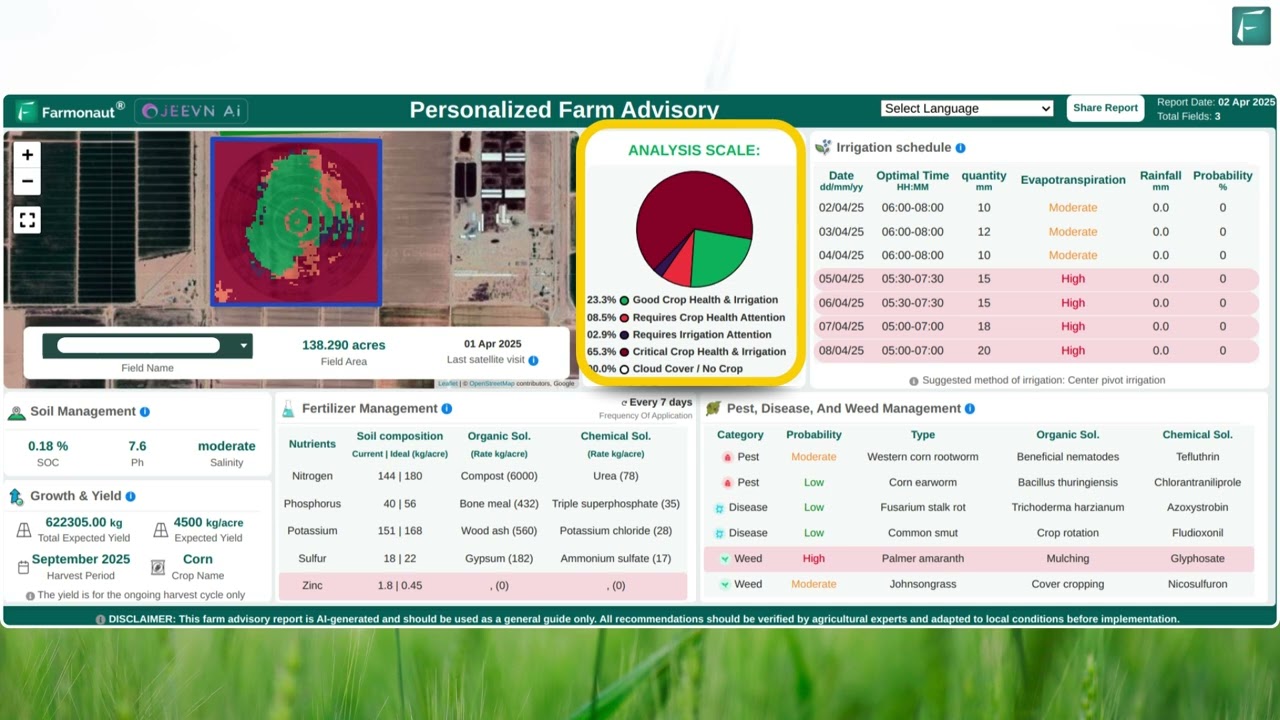
As sustainable dairy farming advances, integrating smart technologies is essential for maximizing Jersey cow milk production efficiency, traceability, and climate responsibility. We at Farmonaut offer innovative, satellite-driven insights accessible via Android, iOS, and web Apps as well as API, empowering dairy farmers to:
- Monitor forage and pasture health with high-resolution satellite imagery and carbon-footprinting—enabling climate-smart pasture management and emissions tracking.
- Track animal health and productivity trends using large-scale farm management tools for optimal herd scheduling, breeding cycles, and resource allocation.
- Implement blockchain-based traceability to authenticate Jersey milk supply chains, ensuring premium, trusted branding in competitive niche markets.
- Leverage AI-powered advisory systems (like JEEVN AI) for weather prediction, tailored feeding strategies, and data-driven decision-making—enhancing both production and animal welfare.
For automated logistics and machinery management, Fleet Management solutions streamline everything from feed delivery to milk transport, directly improving farm operational efficiency.
Climate compliance is streamlined through applications like carbon footprinting, making regulatory adherence and ethical marketing easier for farm businesses.



Developers and integrators can access our API and comprehensive API Developer Docs for direct integration into their agri-tech stacks.
Investor/Financier Highlight
Crop loan and insurance verification tools from Farmonaut (see Crop Loan & Insurance product page) simplify due diligence for Jersey dairy farmers, improving financial access, and reducing risk for both lenders and borrowers.

Farmonaut Subscription Options
Enhance your farm’s sustainability and intelligence with affordable, scalable Farmonaut subscriptions.
Farmonaut Key Features for Dairy Farmers:
- 📡 Satellite-based field monitoring for real-time crop and environmental data.
- 🤖 AI-driven advisory to increase dairy farm productivity—optimized for Jersey herds.
- 🔗 Blockchain traceability for premium, verified dairy supply chains.
- 🛡 Environmental impact tracking—meet climate-smart goals with actionable insights.
- 📈 API and app-based integration—run your entire farm operation from your smartphone or web dashboard.

Key Insights & Callouts for Jersey Cow Milk and Dairy Farming in 2026
Key Insight
Jersey cow milk enables high-value, climate-friendly dairy models suitable for both large and small-scale farmers worldwide—maximizing output while minimizing environmental load.
Pro Tip
Tailor your nutrition and breeding plans—utilizing tech and AI—to match market goals: premium milk, mini Jerseys for urban markets, or heritage beef production for diversified revenue.
Common Mistake
Assuming smaller breeds are less profitable—mini Jerseys often offer better margins in premium, health-conscious markets given their low overhead and high product quality.
Investor Note
Artisanal and niche dairy is booming—focusing on traceable Jersey cow milk products aligns with consumer demands for quality, provenance, and sustainability in 2026 and beyond.
Farmonaut Highlight
We at Farmonaut help bring transparency and efficiency to every step of Jersey cow milk production—from field to final consumer—using satellites, AI, and blockchain for all scale operations.
Frequently Asked Questions (FAQ)
What differentiates Jersey cow milk from conventional cow milk?
Jersey cow milk stands out due to much higher butterfat and protein content, more concentrated nutrients, and a creamy texture ideal for premium dairy products like cheese and yogurt. The Jersey breed’s feed efficiency and eco-friendly profile add further advantages.
Is Jersey cow meat viable as an additional revenue source?
Yes, Jersey cow meat (especially from grass-fed or heritage-focused operations) tends to command premium prices due to its tenderness and marbling. Many farmers diversify income by raising Jerseys for both milk and meat.
How do I source a healthy Jersey milk cow for sale near me?
Use modern livestock trading platforms, virtual farm tours, and certified breeder directories—always seeking health certifications and genetic profiles to ensure a resilient, productive herd.
Are mini Jersey cows suitable for small farms or urban settings?
Yes, mini Jerseys excel in small plots, urban farms, or peri-urban settings due to their manageable size, calm temperament, and relatively low feed and water requirements.
How can Farmonaut help optimize sustainable Jersey dairy management?
We at Farmonaut provide satellite-based monitoring, AI-driven advisory, blockchain traceability, and environmental tracking for dairy and mixed farming. Our platform empowers farmers to achieve higher productivity and sustainability in every step of their Jersey cow milk operation.
Conclusion: The Jersey Advantage for 2026 and Beyond
Jersey cows continue to define modern, sustainable dairy farming as we move into 2026. By delivering exceptional milk quality, production efficiency, and adaptability—alongside new opportunities in meat markets like Jersey beef—the breed is an excellent choice for forward-thinking, diversified agricultural operations. The surge in demand for mini Jerseys and traceable, premium-quality dairy underscores the breed’s enduring appeal to new generations of farmers and conscious consumers alike.
Leverage cutting-edge solutions such as Farmonaut’s satellite and AI advisory tools to further optimize your Jersey cow milk production, farm logistics, and climate footprint for the years ahead. Whichever scale or market you target, Jerseys offer a future-ready platform for resilience, sustainability, and profitability within the vibrant world of agriculture.
Try our latest tools for satellite monitoring, AI-driven insights, and blockchain traceability—get started with Farmonaut today.

 Consulthink Global
 Rouge VC
 Yutz Automation
 AgroGreen Dynamics
 AgroRisk
 Oath Inc
 Reddane Farming
 Esri North East Africa
 Cresol
 Atur Kuliner
 MDCV UK
 Zerella Group
 Etech Consulting Madagascar
 Vestlandsforsking
 Delicio
 WB Dev
 Sama Premium
 Prochecker
 Tres Valles
 LACOS Geoinformation
 Magrifly
 LatConnect 60
 Blickwinkel
