

Reviewed September 2026 against Penn State Extension, USDA Economic Research Service, and University of Arizona Cooperative Extension.
Try it: Run your own numbers →
Leafhopper Control: 7 Methods, Costs & Moisture Mapping
Leafhopper damage on alfalfa costs Pennsylvania growers an average of $15 million a year, and a documented case study recorded a 40% yield reduction on affected stands, both per Penn State Extension’s 2024 forage pest data. The fastest way to cut that loss is threshold-based scouting paired with the right combination of cultural, biological, chemical, and satellite-based controls below — not a single silver-bullet spray. This guide also covers soil moisture mapping technology and pricing, since moisture-stressed plants are measurably more vulnerable to leafhopper feeding damage.
Introduction: Understanding the Threat of Leafhoppers
Leafhoppers — small, wedge-shaped insects in the family Cicadellidae — are a persistent threat to agriculture, farming, and forestry across North America. They damage crops two ways: piercing-sucking mouthparts that drain plant sap, and transmission of pathogens such as beet curly top virus and aster yellows phytoplasma. The potato leafhopper alone is responsible for the $15 million average annual loss to Pennsylvania alfalfa growers cited above, and its documented capacity to cut yield by 40% on an affected stand makes early detection non-negotiable.
Integrated Pest Management (IPM) — combining cultural, biological, chemical, and technology-based controls — remains the standard response because it reduces both chemical costs and resistance risk. This guide covers each control option with real cost ranges, then turns to a related question growers increasingly ask alongside pest control: how to measure soil moisture, what it costs, and which technology fits a given farm size.
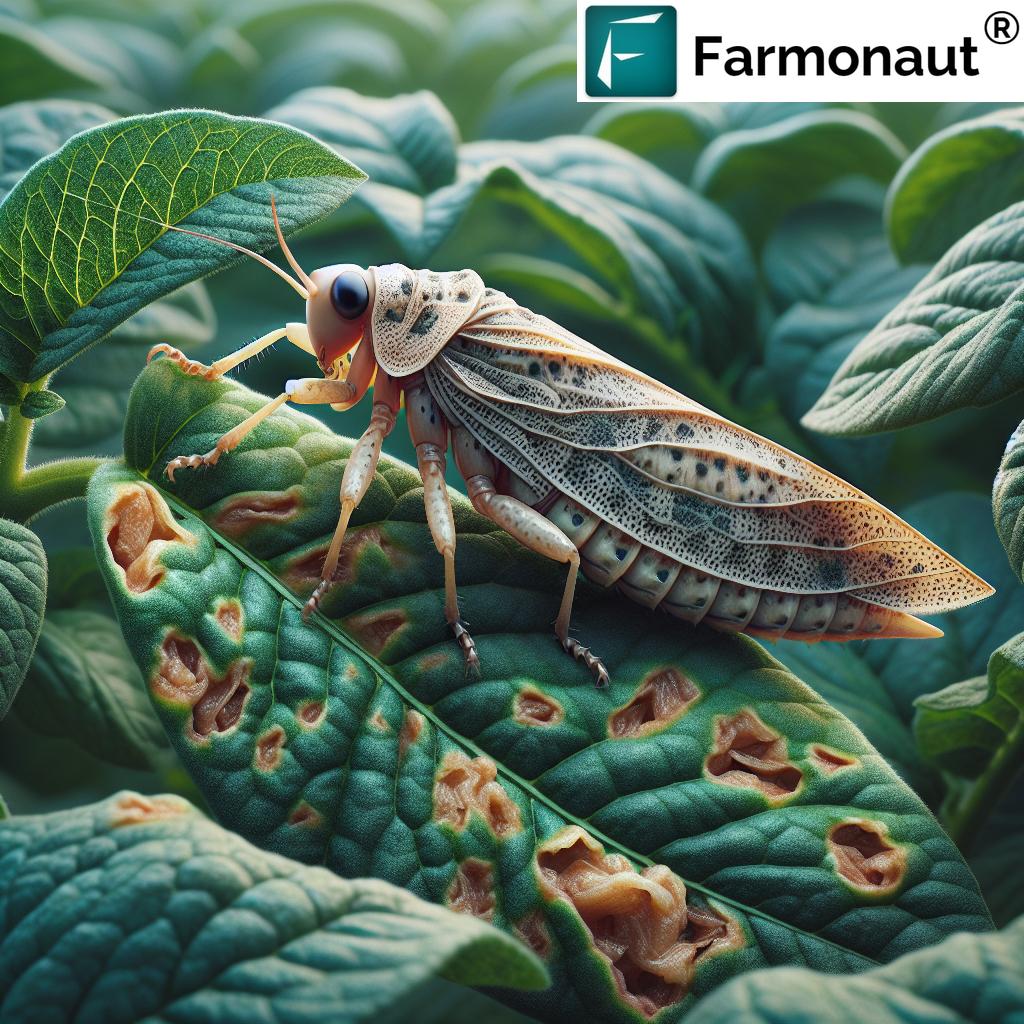
Identification and Biology of Leafhoppers
Effective leafhopper control starts with correct identification. Cicadellidae includes hundreds of species, each favoring specific host plants, but they share traits that make scouting practical.
Key Identification Features
- Small, slender bodies, 3–15 mm in length
- Green, yellow, or brown coloration, sometimes with distinct patterns
- Strong hind legs built for fast, high jumping when disturbed
- Wings held roof-like over the back in adults
- Eggs inserted into plant tissue, often in rows along stems or leaf veins
- Nymphs resemble adults but lack wings in early stages
Life Cycle and Generational Turnover
- Incomplete metamorphosis: egg, nymph, adult — no pupal stage
- Cycle length depends on species and temperature
- Multiple generations per growing season are common in warm regions, which is why a single early-season spray rarely solves the problem
Because new generations keep emerging through the season, a one-time treatment is rarely enough. Scouting has to continue through the growing season, targeting eggs and nymphs as well as visible adults, to keep populations under the economic threshold.
Signs of Leafhopper Damage, Costs, and Impact
Recognizing leafhopper damage early is the difference between a minor input cost and the kind of loss Penn State Extension documented in Pennsylvania alfalfa. Leafhoppers cause harm in two distinct ways: direct feeding damage and disease transmission.
- Direct Feeding: Piercing-sucking mouthparts drain sap and inject toxic saliva, causing “hopperburn” — a V-shaped yellowing at leaf tips characteristic of potato leafhopper feeding on alfalfa and potatoes.
- Transmitting Plant Diseases: Leafhoppers vector viruses and phytoplasmas that cause systemic, often irreversible damage.
Typical Symptoms of Leafhopper Activity
- Leaf curling
- Chlorosis (yellowing) or triangular “hopperburn” discoloration at leaf margins
- Stunted growth, most visible in potatoes, beets, and alfalfa regrowth after cutting
- Browning or necrosis at leaf tips and margins
- Reduced plant vigor and, per the Penn State case study, up to 40% yield reduction where infestations go unmanaged
For alfalfa growers specifically, the economic case for scouting is direct: at a $15 million average annual loss figure for Pennsylvania alone, per-acre losses scale quickly once populations cross the threshold — usually monitored per sweep-net count rather than a fixed dollar figure, since thresholds are set by regional extension offices and vary by cutting and growth stage. Check your state extension’s current alfalfa leafhopper threshold table before each cutting, since these are reissued seasonally as conditions change.
Leafhopper Monitoring Methods: Early Detection Is Key
Systematic monitoring is what separates a $5-per-acre cultural fix from a $15-million regional loss. It is also the foundation every other control method in this guide depends on, because none of them work well applied blind.
Effective Monitoring Strategies
- Visual Inspections: Check for leaf curling, stunting, and hopperburn discoloration on susceptible crops, especially after each alfalfa cutting.
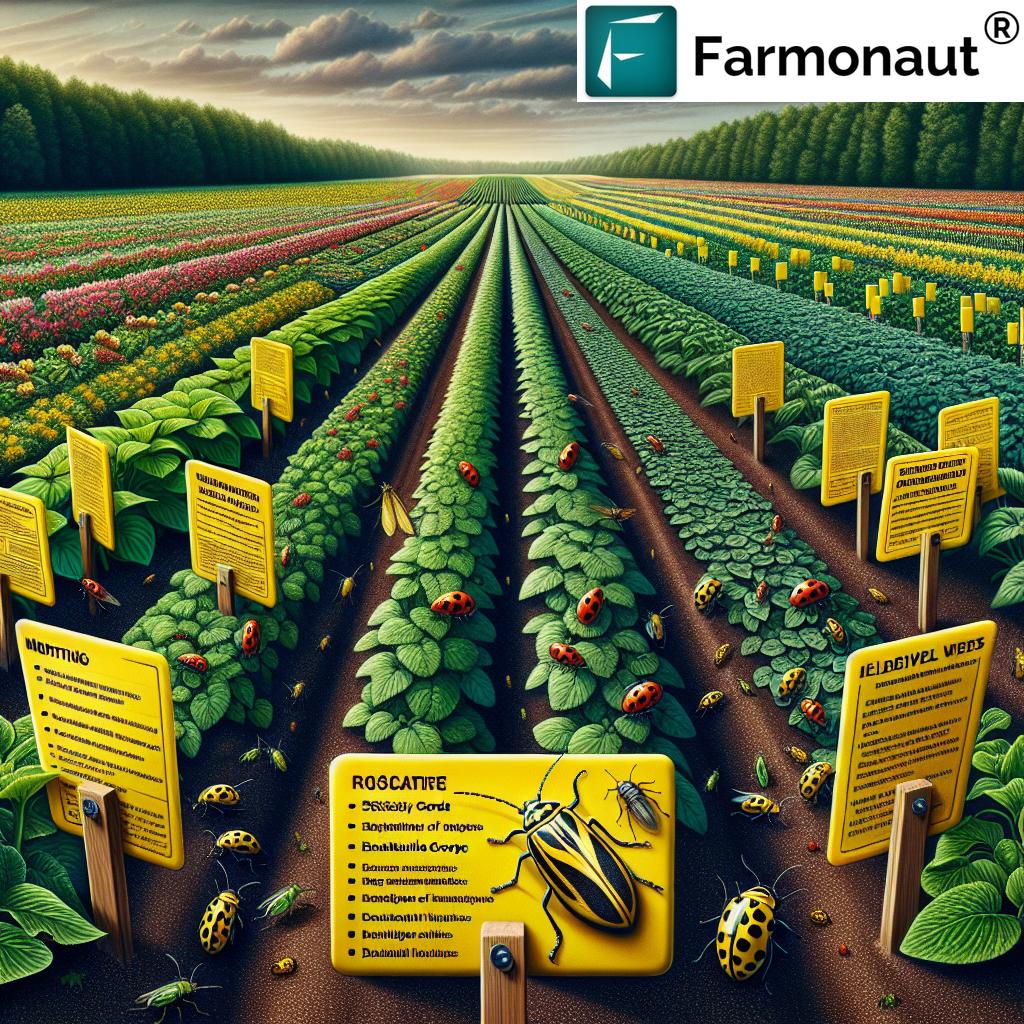
- Yellow Sticky Cards: Deploy 5–10 feet from field edges; check and replace weekly to track population trends and migration timing.
- Sweep Nets: Standardized sweeps through the canopy collect adults and nymphs for identification and counting against published thresholds.
Weekly monitoring during the growing season catches population spikes before they cross the economic threshold. Once counts exceed the crop-specific number your state extension publishes, it’s time to layer in additional controls from the list below.
Comparison Table: 7 Leafhopper Control Methods
The table below compares the seven control methods this guide covers, using the same cost-per-acre and effectiveness ranges referenced throughout. These are working planning ranges; actual figures depend on regional labor rates, product selection, and infestation severity, so confirm current product pricing with your local input supplier before budgeting.
| Leafhopper Control Strategy | Effectiveness (% Reduction in Infestation) | Cost per Acre (USD) | Environmental Impact | Implementation Time (Days) | Suitability for Crop Types |
|---|---|---|---|---|---|
| Cultural Controls | 30–40% | $5–$25 | Low | 7–21 | All major field crops, vegetables |
| Biological Controls | 20–35% | $10–$50 | Low | 14–30 | Vegetables, alfalfa, orchards |
| Chemical Insecticides | 50–80% | $15–$80 | Medium/High | 1–7 (residue effective 7–14 days) | Field crops, high-value vegetables |
| Physical Controls | 20–30% | $20–$70 | Low | 2–10 | Vegetables, nurseries |
| Resistant Varieties | 35–65% | Seed premium only* | Low | Set at planting | Alfalfa, potato, corn, others |
| Timely Planting & Sanitation | 25–45% | $5–$20 | Low | 7–30 | All crops |
| Satellite/AI Monitoring | 40–60% | $10–$60 | Low | Instant to 14 | All crops |
*Depends on seed price and variety availability from your seed supplier.
Leafhopper Control: 7 Ways to Save Your Crops
Each method below explains what it is, how it works, and where it fits in an integrated program against leafhopper infestations.
1. Cultural Controls: Proactive IPM Fundamentals
Cultural controls are the lowest-cost, lowest-risk foundation of leafhopper management, at $5–$25 per acre with low environmental impact.
- Crop Rotation: Interrupts the life cycle by alternating non-host crops
- Maintaining Crop Health: Well-fertilized, properly irrigated plants tolerate minor infestations better — this is the direct link to soil moisture management covered later in this guide
- Removing Volunteer Plants and Weeds: Eliminates alternate hosts, since many leafhoppers breed on weedy plants before moving into fields
2. Biological Control of Leafhoppers: Harness Natural Predators
Biological controls use predators and parasitoids to suppress populations, at an estimated 20–35% reduction for $10–$50 per acre.
- Lady Beetles & Lacewings: Consume nymphs and soft-bodied leafhoppers
- Parasitic Wasps: Lay eggs inside leafhopper eggs or nymphs, killing them before adulthood
- Minimize Broad-Spectrum Pesticide Use: Preserves these beneficial insects so they keep working season over season
3. Chemical Insecticides for Leafhoppers: Threshold-Based Precision
Chemical insecticides deliver the highest single-application effectiveness in this guide — 50–80% reduction — but should only be used once monitoring confirms populations exceed your region’s published economic threshold. Entomological testing under simulated field conditions found insecticide residue remains effective against field-relevant leafhoppers for 7–14 days, per 2024 research published by the tree fruit research community, which is the window to plan re-scouting around rather than re-spraying on a fixed calendar.
- Systemic and contact insecticides formulated for the target crop and pest
- Apply after weekly scouting confirms threshold exceedance, particularly after the first alfalfa cutting
- Rotate active ingredients between applications to slow resistance development
Always follow the current product label for rates and re-entry intervals. At $15–$80 per acre, this is a mid-to-high-cost option best reserved for confirmed threshold breaches rather than routine use.
4. Physical Controls: Barriers and Deterrents
Physical methods cost more per acre ($20–$70) but deliver dependable results in small-scale, high-value crops and nurseries.
- Reflective Mulches (Aluminum Foil/Plastic): Disorients and deters leafhoppers from landing
- Floating Row Covers: Physically exclude leafhoppers during establishment
- Sticky Traps: Serve double duty for monitoring and localized mass trapping
5. Planting Leafhopper Resistant Crop Varieties
Resistant varieties of alfalfa, potato, and corn reduce both feeding damage and disease transmission by 35–65%, the widest effectiveness range of any single method in this guide, at the cost of a seed premium rather than a per-application fee.
- Choose Resistant Seed Varieties: Confirm tolerance to your regional pest pressure with your seed supplier
- Consult Extension Recommendations: State extension offices identify top-performing lines for your area, updated as new varieties are released
- Lower chemical dependence over the life of the stand, reducing recurring per-acre costs
6. Timely Planting and Field Sanitation
Timing and hygiene remain among the cheapest options at $5–$20 per acre, with a 25–45% reduction in infestation pressure.
- Early Planting: Sow before regional leafhopper populations peak
- Remove Crop Residues & Weeds: Eliminates overwintering and breeding hosts
- Sanitize Field Equipment: Prevents pest transfer between fields
7. Technology & Innovation: Satellite-Based Leafhopper Management
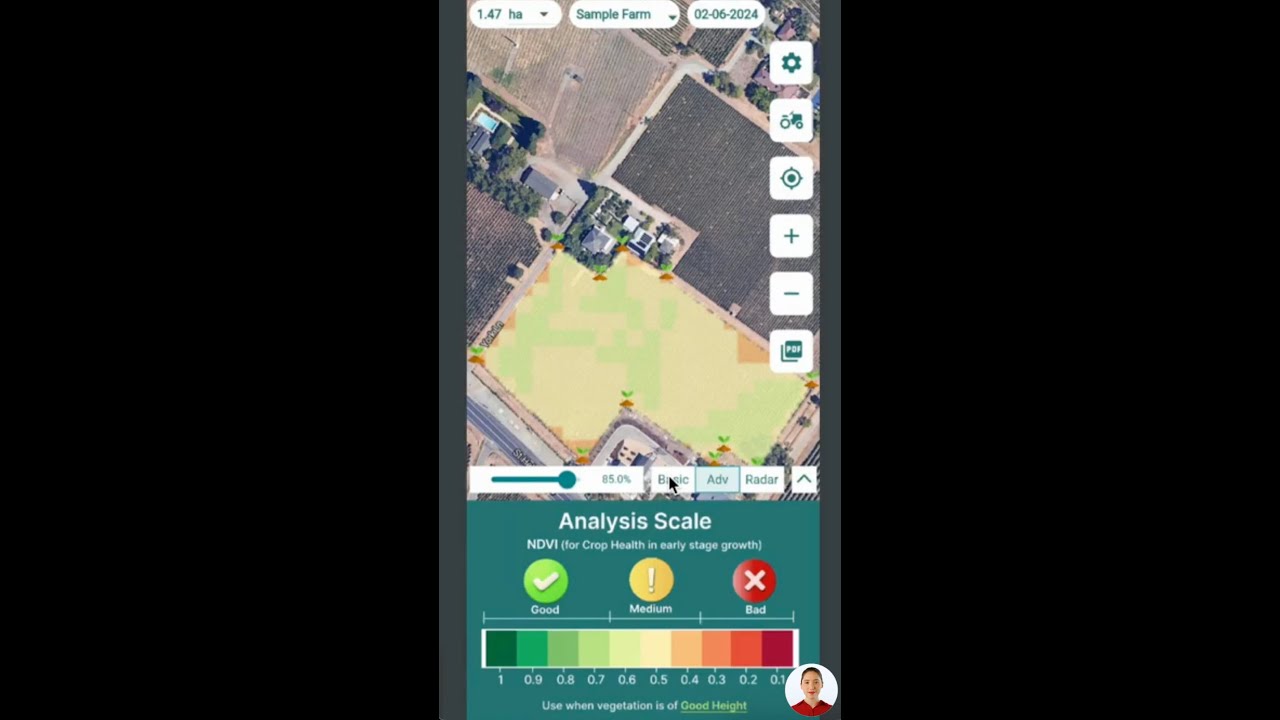
Farmonaut’s satellite-based crop health monitoring detects the stress patterns leafhopper feeding creates before symptoms are visible to the eye, at $10–$60 per acre with a 40–60% effectiveness range and near-instant setup.
- NDVI Imagery: Flags stress from leafhopper feeding or disease transmission ahead of visible symptoms
- Weekly Monitoring and Automated Alerts: Covers large fields, orchards, or forests without exhaustive manual scouting labor
- AI Crop Advisory: Delivers timing guidance for interventions, cutting unnecessary chemical applications
- Traceability & Compliance: Blockchain-based traceability documents every crop protection action for supply chain audits
- API-Driven Integration: Developers can integrate Farmonaut’s satellite and weather API for custom, field-wide pest monitoring
Explore Farmonaut’s crop health monitoring technologies to put data-driven IPM to work on your operation.




Soil Moisture Mapping: Technology, Price, and How It Connects to Pest Pressure
Well-watered, well-fertilized plants tolerate leafhopper feeding better than moisture-stressed ones, which is why moisture mapping belongs in the same conversation as pest control rather than as a separate topic. Below is what soil moisture mapping technology actually costs, how widely it is adopted, and what it delivers.
Soil Moisture Mapping Technology and Adoption
Ground-based soil moisture sensor adoption in the United States remains modest and uneven by crop, per USDA Economic Research Service survey data: 7.0% of corn acreage used soil moisture monitoring in 2016, 9.8% of soybean acreage in 2018, and 3.5% of winter wheat acreage in 2017 (USDA Economic Research Service). More recent Extension Service farm surveys put overall U.S. farmer adoption of soil moisture sensor technologies at 20–30% as of 2024, per the University of Arizona Cooperative Extension — a wide range reflecting how much adoption still varies by region and farm size. USDA’s Agricultural Resource Management Survey (ARMS) is the source to check for updated per-crop adoption figures, since ERS refreshes these periodically.
Moisture Mapping Price: What It Actually Costs
“Moisture mapping price” breaks into two cost layers. Professional-grade soil moisture sensors run $100–$500 per unit, per the University of Arizona Cooperative Extension‘s 2024 sensor selection guide. On top of the sensor itself, gateway equipment and installation for a monitoring network costs $399–$2,250, per 2024 market research from SNS Insider. For growers enrolled in USDA’s Conservation Stewardship Program, NRCS pays an annual rate of $20.85 per acre for years two through five of a contract that includes soil moisture monitoring as a conservation activity, per the 2021 USDA Economic Research Bulletin on CSP payments — worth checking against your current NRCS county office rate sheet, since CSP payment schedules are reissued annually.
What Moisture Mapping Delivers
Sensor-based irrigation scheduling improved crop productivity by 17% and cut water use by 40% across multi-site agricultural research studies published in 2025 (peer-reviewed, via NCBI PubMed Central). Michigan State University Extension’s review of precision soil moisture monitoring systems found water use efficiency gains as high as 274% in top-performing installations. These are the numbers that justify the up-front sensor and gateway cost above for growers weighing whether to adopt.
What This Guide Cannot Tell You — and How to Get It
Two things the research for this article did not turn up: a published market rate for remote-sensing or satellite-based moisture mapping services specifically (as opposed to ground sensors), and a peer-reviewed study directly linking soil moisture management to leafhopper population suppression rather than just general plant vigor. For satellite-based moisture layers, request a quote directly through Farmonaut’s platform, since pricing depends on field count and acreage. For a local moisture mapping consultant or service provider, your state’s Cooperative Extension office (Penn State, Michigan State, University of Arizona, and equivalents in every state) maintains referral lists of certified precision-ag service providers who install and calibrate sensor networks regionally — that is the right starting point if you are searching for moisture mapping expertise near you rather than a DIY sensor kit.
Calculator: Moisture Sensor vs. Chemical Control Cost per Acre
Use the calculator below to compare a one-time soil moisture sensor network investment against recurring chemical leafhopper control costs over your own acreage and planning horizon.
Run your own numbers
Assumptions: sensor and gateway cost is a one-time expense excluding replacement/maintenance; chemical cost is per-acre, per-season and assumes one threshold-triggered application; does not include labor, calibration, or the moisture sensor’s indirect effect on pest resistance (plants under proper moisture management tolerate feeding damage better but this calculator does not quantify that separately). Cost ranges are drawn from University of Arizona Cooperative Extension (2024) and SNS Insider (2024) figures cited above — adjust the defaults to your actual quotes.
Leverage carbon footprinting solutions by Farmonaut to monitor and manage the environmental impact of your IPM and irrigation measures.
For larger operations, Farmonaut’s Large Scale Farm Management tools offer analytics, resource management, and field-level insights to coordinate scouting and intervention teams.
Agribusinesses and food processors can use Farmonaut’s traceability suite to record every intervention for blockchain-backed audit trails.
Challenges in Leafhopper Management: Resistance & Environmental Impact
Leafhopper management carries ongoing challenges that any IPM plan needs to account for.
- Resistance Development: Repeated use of a single insecticide class accelerates selection for resistant populations — the 7–14 day residue window cited above is a reason to rotate active ingredients rather than repeat the same product back to back.
- Environmental Impact: Non-selective chemical applications can eliminate beneficial insects and leave residues in soil and water.
- Economic Considerations: Layering multiple strategies requires upfront investment in monitoring, premium seed, or sensor equipment; returns show up over several seasons, not immediately.
This is the case for data-driven, threshold-based intervention: it minimizes chemical inputs while keeping surveillance strong enough to catch problems before they compound.
Farmonaut’s Role in Integrated Pest Management for Leafhoppers
Farmonaut builds affordable, scalable monitoring tools for growers of every size, from small family farms to large-scale agricultural enterprises. The platform is built to:
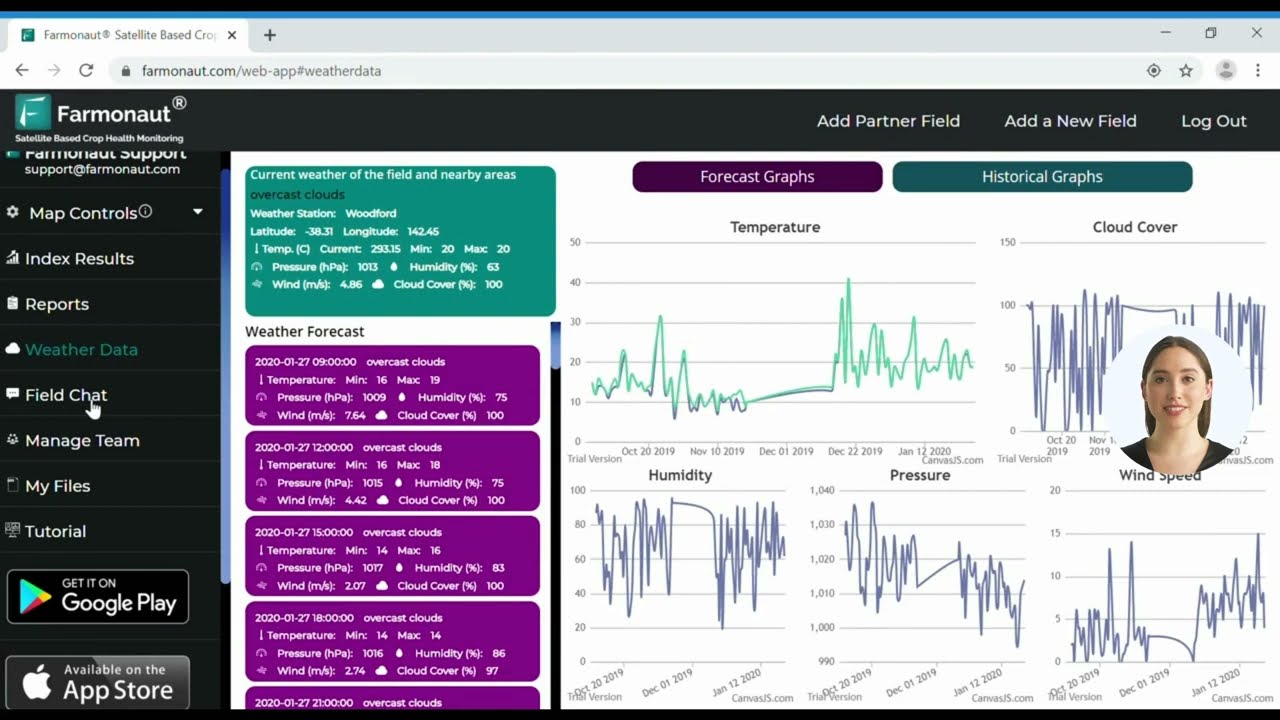
- Monitor fields in real time using NDVI, soil moisture, and crop health indices derived from multispectral satellite imagery
- Deliver AI-driven advisory (Jeevn AI) for personalized pest management and weather guidance
- Track crop protection interventions via blockchain ledgers
- Track carbon footprint and resource usage to align IPM with environmental targets via Farmonaut Carbon Footprinting
- Integrate monitoring data with other software via the developer API documentation
- Support satellite verification for crop loans and insurance, reducing fraud risk and easing access to institutional financing
Frequently Asked Questions: Leafhopper Control
How do I kill leafhoppers already established in my field?
Once populations exceed your regional economic threshold, a labeled systemic or contact insecticide gives the fastest knockdown — 50–80% effectiveness at $15–$80 per acre, with residue remaining active against field-relevant leafhoppers for 7–14 days per 2024 entomological testing. Rotate active ingredients between applications and pair chemical control with cultural and biological methods so you are not relying on chemistry alone season after season.
How do I get rid of leafhoppers in grass or turf?
For lawns and pasture grass, start with sanitation: mow regularly, remove thatch buildup, and eliminate weedy patches that serve as alternate hosts. Yellow sticky cards will confirm whether populations are actually present before you treat. If counts are high, a labeled turf insecticide applied per the product’s directions handles the immediate infestation; over-watering or drought-stressed turf both tend to show worse hopperburn symptoms, so correcting irrigation is part of the fix, not just the spray.
What are effective management strategies for controlling leafhoppers?
The strongest programs combine multiple methods from this guide: crop rotation and sanitation (25–45% reduction, $5–$20/acre), resistant varieties where available (35–65% reduction), biological control via lady beetles and parasitic wasps (20–35% reduction, $10–$50/acre), and threshold-triggered chemical control (50–80% reduction, $15–$80/acre) as a last layer rather than a first response. Satellite monitoring at $10–$60/acre helps you catch the early stress signal that tells you which method to deploy and when.
What damage do leafhoppers actually cause, and how much does it cost?
Direct feeding causes hopperburn — leaf curling, yellowing, and stunted growth — while several species also transmit systemic plant diseases like beet curly top virus. In Pennsylvania alfalfa, Penn State Extension documented an average annual economic loss of $15 million and a case study with 40% yield reduction where infestations went unmanaged, figures current as of the 2024 forage pest report.
What is soil moisture mapping technology, and how much does it cost?
Soil moisture mapping combines ground sensors (ranging $100–$500 per unit per the University of Arizona Cooperative Extension) with a gateway network ($399–$2,250 installed, per SNS Insider’s 2024 market research) or satellite-derived moisture layers like those in Farmonaut’s platform. U.S. adoption sits at 20–30% of farmers as of 2024 per Extension Service surveys, though adoption by specific crop is lower — 7.0% of corn acreage, 9.8% of soybean acreage, and 3.5% of winter wheat acreage in USDA ERS’s most recent published survey years (2016–2018).
How does Farmonaut integrate with my existing crop management process?
Farmonaut overlays crop health and moisture data on your field maps and delivers visual alerts, NDVI imagery, and personalized advice via web, Android, or iOS apps. For larger operations, API integration and traceability streamline compliance and documentation across a full growing season.
Conclusion: Protect Your Crops and Yields
Leafhoppers are small insects with an outsized economic footprint — $15 million a year in Pennsylvania alfalfa losses alone, per Penn State Extension, with individual fields losing up to 40% of yield when infestations go unchecked. The fix is not one method but a stack: cultural practices and sanitation first, biological control and resistant varieties as standing defenses, chemical insecticides reserved for confirmed threshold breaches, and satellite or sensor-based monitoring to catch stress — moisture or pest-driven — before it becomes visible damage.
Soil moisture management belongs in this stack because moisture-stressed plants tolerate feeding damage worse, and because ground-sensor adoption is still only 20–30% of U.S. farmers as of 2024 — meaning most operations still have room to close a real gap. Whether you invest $100–$500 in ground sensors or use satellite-derived moisture data, pairing that investment with the pest control methods above is what turns monitoring into avoided loss.
Leafhoppers cost Pennsylvania alfalfa growers an average of $15 million a year, with documented cases of 40% yield reduction, per Penn State Extension. Effective control combines threshold-based scouting, cultural and biological methods, resistant varieties, chemical insecticides only when thresholds are breached, and satellite-based monitoring. Soil moisture mapping — ground sensors at $100–$500 per unit or satellite-derived layers — supports the same goal by keeping plants resilient enough to tolerate feeding pressure, with U.S. adoption still at just 20–30% of farmers as of 2024. Track both pest pressure and moisture with Farmonaut to close that gap on your own fields.

 LACOS Geoinformation
 Pulsar Supernova
 Magrifly
 LatConnect 60
 Disease Free Life
 WebsEdge
 Blickwinkel
 Agricultural Credit Policy Council
 MCSOD
MCSOD Marei Nursery
 eKGIS
eKGIS Mostas Tech
 Andex
Andex FCF India
 Unifrutti Gulf
 Deluxe Conseil
 WICO
WICO
