

Citrus health · Diagnosis guide
Lemon Tree Diseases: 10 Causes, Symptoms and Treatments
Look at where the damage starts: leaf underside, rind, twigs, trunk base or roots. Ten lemon tree diseases and pests, with symptoms and the control steps named by UF/IFAS, UC IPM and EPPO, a diagnosis table and a spray-cost calculator.
Key takeaways
- Name the problem by where it starts: black film means insects and sooty mold, blisters under leaves mean greasy spot, pink wood in dry twigs points to mal secco (then confirm with your plant-health service), bark peeling at the soil line means Phytophthora.
- Citrus canker and citrus greening are regulated; UC IPM says greening has no cure. Report suspected cases to your agriculture department and do not move plant material.
- UF/IFAS reports no product has beaten copper against canker, but copper protects fruit better than leaves, builds up in soil and must follow the label.
- US lemons were worth about $749 million at the packinghouse door in 2025-26, with California at $715.5 million (USDA NASS, 2026).
- Drainage, clean planting stock, leaf litter removal and insect scouting appear in many of the sources.
In this article
- Lemon tree diseases at a glance
- Why lemon tree diseases matter: the crop at stake
- How to tell which lemon tree disease you have
- 1. Citrus canker: raised corky spots with a yellow halo
- 2. Phytophthora root rot and foot rot
- 3. Mal secco: twig dieback with pink wood
- 4. Greasy spot: blisters under the leaf
- 5. Sooty mold: black film on honeydew
- 6. Citrus black spot: hard spot on the rind
- 7. Citrus tristeza virus: decline from the rootstock up
- 8. Citrus greening (HLB): no cure, so stop the psyllid
- 9. Citrus scab: warty outgrowths
- 10. Citrus leafminer: the pest that makes disease worse
- Copper and other fungicides: what the label and local rules say
Lemon tree diseases fall into a few groups: bacterial (citrus canker, citrus greening), fungal (greasy spot, black spot, scab, mal secco), soil-borne (Phytophthora root rot) and viral (citrus tristeza virus). A fungus called sooty mold and an insect called the citrus leafminer often travel with them. The fastest way to name the problem is to look at where on the tree the damage starts: leaf underside, fruit rind, twigs, trunk base or roots. This guide gives ten of them with symptoms, what University of Florida (UF/IFAS), University of California (UC IPM) and EPPO say to do, a diagnosis table, a price chart and a spray-cost calculator.
Many lemon problems are not disease at all. Yellow leaves can come from nitrogen shortage, iron shortage on chalky soils, or too much water. UF/IFAS warns that yellow leaves are not always a sign of nitrogen deficiency, so check the pattern before you spray anything. If you grow one lemon in a pot, skip to the diagnosis table. If you manage an orchard, read the copper and cost sections as well. We also keep an earlier guide to lemon tree diseases and treatment that is shorter.
Lemon tree diseases at a glance
The table shows the ten problems covered below. The last column gives the main control step named by the source for that problem. It is a summary, not a spray plan. Timing and products differ by country and state, so use it to know what to ask your local extension office.
| Problem | Cause | What you see | Main control named by the source |
|---|---|---|---|
| 1. Citrus canker | Bacterium | Raised corky spots with a yellow halo on leaves, twigs, fruit | Copper protects fruit; windbreaks; leafminer control (UF/IFAS) |
| 2. Phytophthora | Soil water mold | Poor growth, yellow leaves, bark peeling at the soil line | Drainage, resistant rootstock (UC IPM) |
| 3. Mal secco | Fungus in the wood | Twig dieback, pink wood under bark | Prune out early; resistant types (EPPO) |
| 4. Greasy spot | Fungus | Blisters under leaves, leaf drop | Oil or copper, timed to spore release (UF/IFAS) |
| 5. Sooty mold | Fungus on honeydew | Black film on leaves and fruit | Control the sap-sucking insects (UF/IFAS) |
| 6. Black spot | Fungus | Sunken hard spots on ripening fruit | Scheduled fungicide; manage leaf litter (UF/IFAS) |
| 7. Tristeza | Virus, spread by aphids | Sudden decline or stem pitting | Clean stock; avoid sour orange rootstock (EPPO, UF/IFAS) |
| 8. Citrus greening | Bacterium, spread by psyllids | Blotchy leaves, lopsided bitter fruit | No cure; stop the psyllid (UC IPM) |
| 9. Citrus scab | Fungus | Warty outgrowths on leaves and fruit | Copper at set growth stages (UF/IFAS) |
| 10. Leafminer | Insect | Silvery trails, curled new leaves | Protect young trees (UC IPM) |
Why lemon tree diseases matter: the crop at stake
Lemons are a large crop in a few places. In the 2025-26 season the US lemon crop was worth about $749 million at the packinghouse door, and California supplied more than 95% of it, according to the USDA NASS Citrus Fruits 2026 Summary. Arizona and Florida grow far less. A disease that cuts yield or marks the rind lowers a value that is already set by price swings.
Chart
Value of the lemon crop by state
US$ million, packinghouse-door equivalent, 2025-26 season
The same USDA report shows that yield per acre moves from season to season. Arizona’s average fell from 297 boxes per acre in 2023-24 to 212 in 2025-26, while California held near 460 to 500. These swings come from weather, tree age, pests and disease together. The report does not split them, so the chart is context, not a disease loss figure.
Chart
Lemon yield per bearing acre
Boxes per acre. Florida is not shown: no 2023-24 estimate.
How to tell which lemon tree disease you have
Start with the symptom, then confirm with your local extension office or a plant clinic. UC IPM notes that Phytophthora root symptoms are hard to tell apart from nematode, salt or flood damage, and that only a laboratory test gives a sure answer. The table below lists symptoms that the UF/IFAS, UC IPM and EPPO pages describe.
| What you see | Likely cause | Next step |
|---|---|---|
| Black film on leaves | Sooty mold on insect honeydew | Look for aphids, scale, whitefly or mealybugs |
| Raised corky spots, yellow halo | Citrus canker | Contact your agriculture department; do not move cuttings |
| Brown blisters under leaves | Greasy spot | Rake and remove fallen leaves; ask about spray timing |
| Hard sunken spots on ripe fruit | Citrus black spot | Check quarantine rules before moving fruit or leaves |
| Twigs dry, pink wood under bark | Mal secco | Prune diseased twigs as soon as symptoms appear; burn or bin the wood |
| Bark peeling at soil line, resin | Phytophthora foot rot | Check drainage and planting depth |
| Blotchy yellow leaves, lopsided fruit | Citrus greening | Report to the authorities; do not move plant parts |
| Silvery curled new leaves | Citrus leafminer | Check tree age before spending on insecticide |
| Even yellowing, thin canopy | Nutrient shortage | Take a leaf and soil test |
Take clear photos of the leaf underside, the rind and the trunk base. A good photo makes a call to an extension office much faster. Do not cut or bring in fresh samples from a suspected canker or greening tree without asking the office first, because moving plant material can spread these diseases.
1. Citrus canker: raised corky spots with a yellow halo
Citrus canker is caused by the bacterium Xanthomonas citri subsp. citri. UF/IFAS rates lemons as moderately susceptible, while grapefruit and Mexican lime are highly susceptible. Young lesions are raised on both leaf surfaces, then turn corky and crater-like with a yellow halo. Severe cases cause leaf drop, twig dieback and fruit drop.
The bacterium moves mainly in wind-driven rain, and on hands, clothes and equipment, especially when trees are wet. UF/IFAS says almost all leaf and stem infections happen in the first six weeks after new growth starts. Leafminer tunnels make it worse, because the wounds stay open to infection for a long time.
- Where canker is absent, disinfect tools, shoes and ladders between trees and between sites, and buy only certified plants.
- Where it is already present, UF/IFAS lists three steps: windbreaks, copper to protect fruit and leaves, and leafminer control.
- Windbreaks help because winds above 18 to 20 mph force bacteria into leaf and fruit pores. A windbreak slows wind for five to ten times its height.
- UF/IFAS advises against heavy pruning or defoliation in canker areas, because it triggers new, susceptible growth.
Tree removal is not a general rule. UF/IFAS says removal may slow the disease only where canker is limited to a few trees in a previously clean area, and is unlikely to work if canker is already within a mile. Canker is regulated in many places, so a suspected case should be reported to the local agriculture department, not handled alone.
2. Phytophthora root rot and foot rot
Phytophthora is a soil-borne water mold. UC IPM says it is present in most citrus groves and survives as spores in the soil. In wet conditions it releases swimming spores that move in irrigation or rain water to the roots. The result is a slow decline: light green or yellow leaves, poor growth and falling yield. UF/IFAS adds bark peeling at the soil line, reddish-brown resin and, in the worst cases, girdling of the trunk.
Two species behave differently. UC IPM states that Phytophthora citrophthora is most damaging when roots are inactive, in winter and summer, and also causes brown rot of fruit and gummosis. Phytophthora parasitica is active in warm weather when roots grow.
- Drainage first. Improve drainage before planting and do not over-irrigate. UC IPM adds longer irrigation intervals, mini sprinklers or subsoil tiles where roots are already damaged (UC IPM, UF/IFAS).
- Plant so that the bud union sits well above the soil. UF/IFAS adds that trunks should not be wrapped or mulched, that irrigation should run in the morning, and that the zone under the canopy should be kept clear of grass and weeds.
- Choose tolerant rootstock when you plant. UC IPM lists trifoliate orange, Swingle citrumelo, citrange, Alemow and sour orange as the most tolerant, but also says to weigh nematodes and cold. Sour orange is a trade-off with tristeza (see section 7).
- If a fungicide is considered (follow the label and local rules), UC IPM suggests sampling 20 to 40 spots in a 10-acre block and sending soil to a lab. Counts above 15 to 20 propagules per gram of soil may justify treatment.
Pot growers in cool climates meet the same rot in another form. The Royal Horticultural Society (RHS) names winter overwatering as one of the commonest citrus problems and advises letting the compost surface dry out a little before watering, never leaving pots standing in water. Our guide to how deep lemon tree roots go explains why shallow feeder roots suffer first.
3. Mal secco: twig dieback with pink wood
Mal secco, Italian for “dry disease”, is caused by the fungus Plenodomus tracheiphilus, formerly called Phoma tracheiphila. According to the EPPO Global Database datasheet, lemon is its main host. The fungus enters through wounds from frost, wind, hail or cultivation, then travels in the water vessels. First symptoms appear mainly in spring as yellow leaf veins, leaf drop and dieback of twigs and branches. A salmon-pink to brown-red color in the wood under the bark of dry twigs is the typical sign.
EPPO calls it the most destructive fungal disease of lemons in the Mediterranean region. The control it describes is practical and low-tech: prune diseased twigs as soon as the first symptoms appear, remove suckers and dead trees, and burn the cuttings. Chemical control is not widely used except in nurseries, and EPPO says fungicide sprays in EU citrus regions are considered ineffective inside infested areas.
Resistant lemons exist. In parts of Italy and Greece they replaced the susceptible Femminello type, but EPPO notes they showed lower yield or fruit quality. If you grow lemons in Southern Europe, ask your plant-health service whether mal secco is a regulated pest in your area before you move any plants.
4. Greasy spot: blisters under the leaf
Greasy spot is caused by the fungus Zasmidium citri-griseum, formerly Mycosphaerella citri. UF/IFAS explains that the main source is airborne spores released from rotting leaf litter on the ground. The spores land on the underside of leaves, and symptoms appear several months later. First yellow spots show on the upper leaf surface, then brown, greasy-looking blisters form underneath, followed by leaf drop. Warm, humid nights and heavy rain favor it.
- Rake and remove fallen leaves in spring. UF/IFAS has also tested faster leaf litter breakdown with extra micro-sprinkler irrigation or urea on the litter, which suits groves more than gardens.
- Spray timing follows spore release. In the Florida guide, big spore releases come from April to early June, and a single oil or copper-plus-oil spray from mid-May to June is advised for processing Valencia oranges. Early and mid-season oranges and processing grapefruit may need two sprays.
- Do not repeat strobilurin fungicides. UF/IFAS reports greasy spot isolates resistant to strobilurins (FRAC group 11) and says to use them no more than once a year, ideally in a mix with another mode of action.
The Florida spray dates do not carry over to California, Spain or Australia. Your local extension office will give a calendar for your rainfall and flush pattern. Always follow the product label and local rules on rates, intervals and protective clothing.
5. Sooty mold: black film on honeydew
Sooty mold is a surface fungus. It does not infect the leaf; it grows on the sugary honeydew left by sap-sucking insects such as whiteflies, scale insects, aphids and mealybugs. UF/IFAS says a heavy coat can reduce photosynthesis and delay fruit coloring, and calls it a sign that insect numbers have reached damaging levels.

▶ Citrus black fly control: protecting an orchard from another honeydew-producing citrus pest. · 10:11
That changes the fix. Scrubbing leaves does not solve the problem if the insects stay. UF/IFAS says control comes from reducing the insects, and that oil sprays loosen the mold while they help control insects. Look under new leaves for colonies. See our guides to aphids on lemon trees and to neem oil on citrus trees for the insect side. Any oil or neem product is a pesticide, so read the label and test on a few leaves first, since oil can burn leaves in hot, dry weather.

▶ Black bugs and spots on lemon trees: aphid and foliage health management, with a look at monitoring tree health from space. · 10:52
6. Citrus black spot: hard spot on the rind
Citrus black spot is caused by the fungus Phyllosticta citricarpa. UF/IFAS says it can affect all commercial citrus grown in Florida. Sweet oranges such as Valencia are highly susceptible there, and lemons are reported to be even more susceptible in other regions. The clearest sign is “hard spot”: round, sunken lesions of 3 to 10 mm with a gray center and a brick-red to black edge, which appear as the fruit begin to color.
The disease has a long delay. The fungus needs 24 to 48 hours of leaf wetness to infect, and symptoms show only months later, as fruit ripens. The most favorable weather in Florida runs from May to September. The main spore source is fallen leaf litter, so moving leaves or trash between blocks can spread it. Black spot is under quarantine rules in parts of Florida, and UF/IFAS describes tarping and trip-ticket rules for fruit loads from quarantined areas.
For managed groves in Florida, UF/IFAS describes monthly fungicide cycles from early May to mid-September, with at most four strobilurin applications per season. Open the canopy by skirting to shorten leaf wetness, remove dead wood, and buy clean nursery stock. UF/IFAS warns that moving fruit with leaves, twigs and debris out of a quarantined area can spread the fungus, so check the rules before you move any. Fungicide choice, rates and intervals depend on the product label and local rules, so ask a licensed adviser.
7. Citrus tristeza virus: decline from the rootstock up
Citrus tristeza virus (CTV) is spread by aphids and by grafting infected budwood. EPPO describes three kinds of damage: quick decline on trees grafted on sour orange, where the canopy wilts and dies within months; stem pitting; and mild or hidden infections. EPPO also says lemon seedlings are highly sensitive to the seedling-yellows isolates of the virus.
The aphid matters. UF/IFAS notes that the brown citrus aphid transmits CTV six to 25 times as efficiently as the cotton aphid, which was the most efficient vector in Florida before 1995. After the brown citrus aphid reached Brazil and Argentina, the university’s entomology factsheet recounts, about 16 million trees on sour orange rootstock were killed by the virus.
- Plant certified, virus-tested trees. Citrus is grown by grafting, so one infected bud multiplies the problem.
- Avoid sour orange rootstock where CTV is established. This pulls against its good tolerance to Phytophthora, so match the rootstock to your local pest list.
- Control aphids on new flushes. Our aphid guide covers scouting.
8. Citrus greening (HLB): no cure, so stop the psyllid
Huanglongbing (HLB), or citrus greening, is a bacterial disease spread by the Asian citrus psyllid. UC IPM describes HLB as the most serious threat to citrus worldwide, including home gardens, and states plainly that there is no cure or effective control method. The psyllid reached Southern California in 2008, and HLB was first detected in Los Angeles in 2012. Symptoms can take one to several years to show.
UF/IFAS lists the signs: yellowing along the veins or blotchy mottle that often starts on one branch, small upright leaves, heavy leaf drop, and small, lopsided, bitter fruit with aborted seeds. Trees decline to a non-productive state. Good care, including irrigation, nutrition and psyllid control, may keep trees productive for longer, but it does not remove the disease.
- Inspect new flush for psyllid nymphs whenever it forms; UC IPM says to check monthly from spring through fall. UC IPM says nymphs leave a curly waxy tube that identifies the species.
- Report suspected trees and psyllids to your agriculture department. Do not move cuttings, fruit with leaves, or potted citrus out of quarantine zones.
- Buy citrus only from licensed nurseries.

▶ Citrus greening disease: symptoms, the role of the Asian citrus psyllid and control options for infected trees. · 13:17
9. Citrus scab: warty outgrowths
Citrus scab starts as rounded pustules on leaves, shoots and fruit. UF/IFAS describes fruit lesions that begin pink to light brown, become wart-like and cracked, and finally dark gray; heavily scabbed fruit becomes distorted. It adds that lesions are flatter on grapefruit and certain oranges than on lemons, Satsuma mandarins and sour oranges, which is why growers confuse flat scab with wind scars.
For Florida citrus, UF/IFAS says to plan three copper sprays when leaves from the previous season were heavily infected: at about one quarter expansion of the spring flush, at petal fall, and about three weeks later. Fruit becomes resistant two to three months after petal fall. For a few backyard trees, ask your extension office whether a spray is worth it, and clear fallen leaves in the meantime. Any copper spray must follow the product label and local rules.
10. Citrus leafminer: the pest that makes disease worse
The citrus leafminer is an insect, not a disease, but it belongs on this list. Its larvae tunnel through young leaves, leaving silvery winding trails and curled, distorted foliage. UC IPM says mature trees older than four years generally tolerate the damage with no effect on growth or yield, so insecticides are not usually needed. The exception it names is coastal lemons, which put out several flushes a year. Young trees are different: their growth can be held back.
This is where it meets disease. UF/IFAS explains that leafminer galleries do not heal quickly and keep leaves open to canker, and that controlling leafminer on the first summer flush can reduce canker pressure. For new plantings, UC IPM describes systemic insecticides applied through the irrigation that give one to three months of protection, while foliar sprays last two to three weeks because new flush is untreated. Rotate modes of action, and follow the label for each product.
Copper and other fungicides: what the label and local rules say
Copper appears in many of the sections above. UF/IFAS reports that, after 30 years of testing dozens of products, none has beaten copper against canker. Copper protects fruit much better than leaves, because new leaves expand and lose their cover. It also advises minimizing copper use, because the metal builds up in soil and can harm the fruit peel. Mixing copper with oil raises the chance of leaf and fruit burn.
Two practical points follow. First, the amount of metallic copper per acre differs by product and rain. UF/IFAS gives examples of 0.5 to 1 lb for a dry spring and more than 1 lb for rainy-season cover, all for commercial Florida groves. Second, a spray program is only legal and safe when it follows the label. Pesticide rules differ between US states, Canada, the UK, the EU and Australia, and some products allowed in one country are banned in another. Check the label, read the local rules, and ask a licensed adviser before spraying. This guide gives information, not a spray recommendation for your trees.
What disease can cost a lemon grower
The USDA publishes monthly prices for US lemons. The chart shows how much the price moved within the 2024-25 season: the all-lemon on-tree return fell from about $28 per box in August to about $11 in February. A fruit lost to disease is worth less in a low month, while a spray programme costs the same. That is why the break-even point in the calculator below depends on your own price.
Chart
US lemon returns by month, 2024-25
US$ per box, all lemons (Arizona, California, Florida)
Use your own numbers. The calculator does not include labor for scouting, or any change in fruit quality, and it assumes the loss and the share prevented are known, which they rarely are. Your extension office or a local scouting service can give a field estimate for your block.
Try the numbers for your own farm below.
Calculator
Does a disease control programme pay for itself?
Enter your own acreage, yield, price and loss estimate.
- Fruit value saved: $4,000
- Programme cost: $3,500
- Net result per acre: $50
- Loss at which it breaks even: 8.8 %
Example values only, not a benchmark or a forecast. The on-tree price is an example, use today’s price: USDA NASS reported US lemon on-tree returns between about $11 and $28 per box during 2024-25. The loss percentage and the share prevented are your own estimates and are usually uncertain. The result ignores scouting labor, fruit quality and the cost of copper build-up in soil. Follow the product label and local rules for any spray.
A prevention routine for lemon trees
- Buy certified, disease-tested trees from a licensed nursery, and ask which rootstock they are on.
- Plant high on well-drained soil, with the bud union above the surface. Keep trunks dry.
- Water in the morning and avoid wetting the trunk. Fix leaks and low spots.
- Scout new flush regularly for psyllids, aphids, scale and leafminer (UC IPM suggests monthly psyllid checks from spring through fall), since the insects bring mold, canker risk and HLB.
- Rake up and remove fallen leaves in spring and summer, when greasy spot and black spot spores are released.
- Disinfect pruning tools and clean boots and ladders between trees and between sites, and do not work in wet trees when canker is present.
- Prune dead wood and diseased twigs. Do not heavily prune in a canker area.
- Take photos and notes with dates. Records show whether a spray helped.
- Report suspected canker, black spot or greening to your agriculture department.
A season calendar for lemon tree diseases
Many of the disease windows in the sources follow new growth and rain. The table collects the timings given in the UF/IFAS, UC IPM and RHS pages used above. Florida dates are for Florida; shift them for your own climate with help from your local extension office.
| When | What to watch | Source |
|---|---|---|
| Spring flush | Canker infects new shoots in the first six weeks of growth | UF/IFAS |
| April to early June | Greasy spot spore releases (Florida) | UF/IFAS |
| April to July | Canker infection on fruit in endemic orange groves (Florida) | UF/IFAS |
| May to September | Best weather for black spot infection (Florida) | UF/IFAS |
| July to September | Sampling window for Phytophthora parasitica (California) | UC IPM |
| Winter | Phytophthora citrophthora is active when roots are inactive; potted trees rot if overwatered | UC IPM, RHS |
| Spring | Mal secco symptoms show first in Mediterranean lemons | EPPO |
When to send a sample to a lab
Send a sample when the symptoms do not match one clear picture, when several trees are failing, or when a regulated disease is possible. UC IPM describes a method for Phytophthora: take composite soil and root samples from 20 to 40 spots in a 10-acre block, seal them in a plastic bag without chilling or heating, and ship them to a lab within 24 to 48 hours. For canker, black spot or greening, call the agriculture department first; they will tell you how to send plant material safely.
A backyard grower with one or two trees can usually skip the soil survey. A photo of the leaf underside, a photo of the trunk base, the age of the tree and your watering routine are often enough for an extension office to narrow the cause. Orchard managers gain more from a written scouting round each fortnight in spring, with the same rows checked every time.
Lemon tree diseases by region: US, UK and the Mediterranean
The same name can mean a different risk in different places. In the US, the USDA lists California as the state with most lemon acres, and Florida, where canker and HLB are established, is a small lemon grower with 5,100 bearing acres in 2025-26. California groves also deal with the psyllid and HLB in the south of the state. In the Mediterranean, EPPO treats mal secco as the main fungal threat to lemons, and tristeza is a risk wherever sour orange is the rootstock.
In the UK, lemons are usually grown in pots and moved indoors for winter. The RHS says citrus plants are usually healthy but should be checked often for sap-feeding insects, especially indoors. Overwatering in winter is one of the commonest problems it names. For Australia and New Zealand growers, ask your state plant-health agency for the current list of regulated citrus pests before you buy plants or budwood from another region.
How satellite monitoring helps with lemon tree diseases
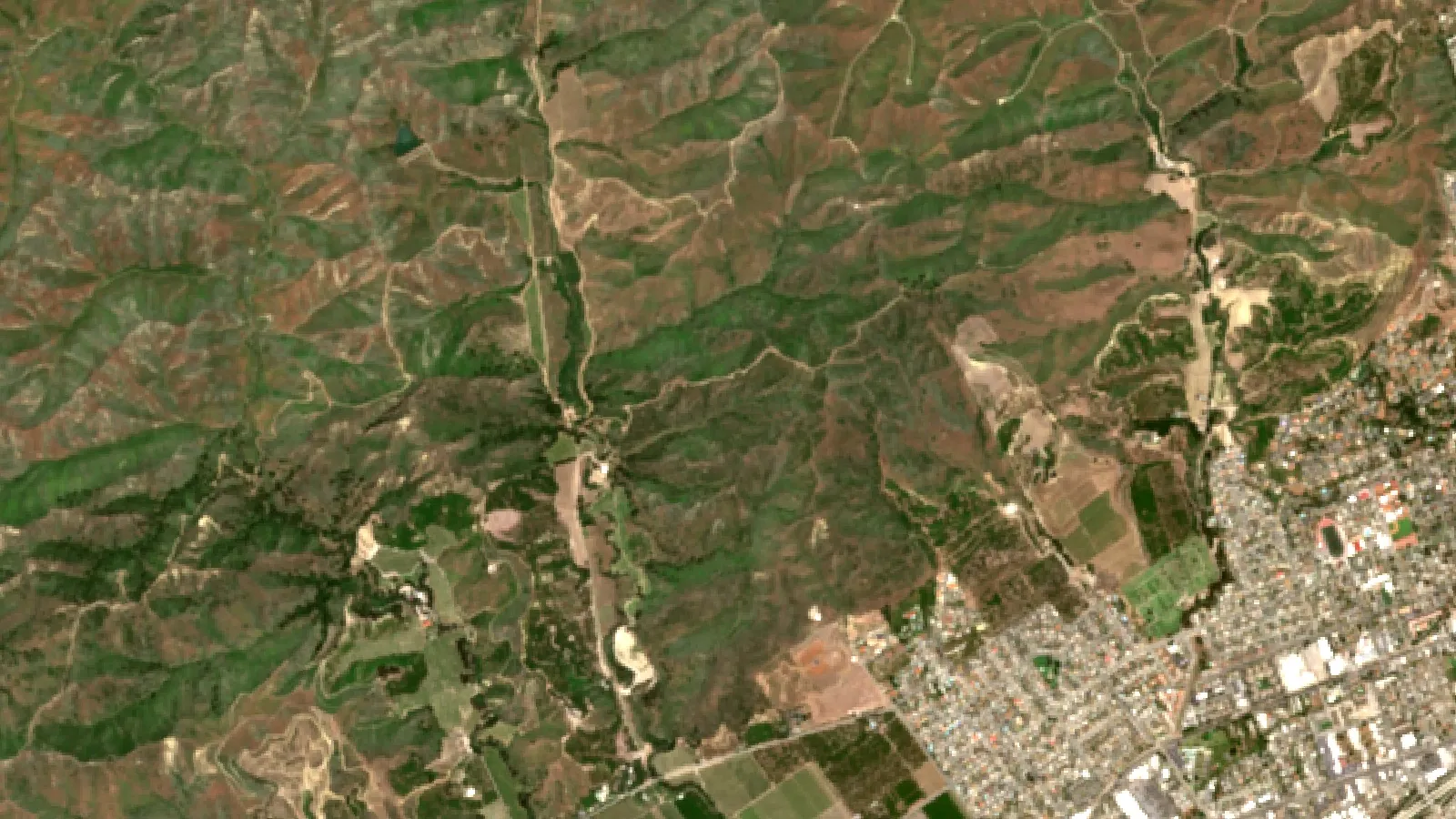
Satellite images do not name a disease. They show where vegetation is greener or weaker than the rest of the block, which tells you where to walk first. Farmonaut Satellite + AI Farm Monitoring System draws vegetation maps for fields you outline, so an orchard manager can compare blocks over a season and look at the weakest rows on the ground. The cause still needs a leaf, a root or a trunk inspection and, for some problems, a lab test.
The same maps help with record keeping. Note the date a weak patch shows up, the weather before it, and what you found on the ground. Over several seasons these notes show whether wet spells, flush timing or a spray date lines up with the problem.
FAQ
What are the most common symptoms of lemon tree diseases?
The signs to look for are leaf spots or blisters, a black film, yellow veins or blotchy leaves, twig dieback, bark peeling at the soil line, and spotted or lopsided fruit. UF/IFAS and UC IPM link each of these to a specific cause, as the diagnosis table shows. Because nutrient shortage and over-watering look similar, confirm with a local expert before spraying.
How do I treat a sick lemon tree?
Treatment depends on the cause. For Phytophthora, fix drainage and planting depth. For greasy spot, remove fallen leaves and time a spray to spore release. For sooty mold, treat the insects. For citrus canker and citrus greening, contact your agriculture department. Always follow the product label and local rules when spraying.
Which fungicide is best for a lemon tree?
UF/IFAS names copper as the product with the best record against canker, and also lists copper, oil and strobilurin products for greasy spot and black spot in Florida. The right choice depends on the disease, your country and the label. Rotate modes of action to slow resistance, and ask a licensed adviser.
Can a lemon tree recover from fungus on its leaves?
Greasy spot, scab and sooty mold mainly blemish leaves and fruit, but UF/IFAS notes greasy spot can cause heavy leaf drop and heavy sooty mold can reduce photosynthesis. Mal secco and Phytophthora foot rot can kill branches or whole trees. Citrus greening has no cure. The earlier the cause is named, the more options you have.
Is sooty mold harmful to a lemon tree?
The mold itself sits on the surface. UF/IFAS says a heavy layer can reduce photosynthesis and delay fruit coloring, and that it is a sign of insect pressure. Treat the insects, then use oil, following the label, to loosen what is left.
Are there lemon varieties that resist disease?
Resistance is partial. Mal secco has tolerant lemon types that EPPO says gave lower yield or quality in Italy and Greece. UC IPM lists rootstocks tolerant of Phytophthora. No variety resists everything, so match rootstock and variety to the pests in your region.
Related pages on our site: carbon footprinting tools, product traceability, large-scale farm management app, satellite and weather API, API documentation and farm apps.
Farmonaut crop monitoring
See your orchard blocks from space
Outline your orchard once and Farmonaut shows satellite vegetation maps through the season, on web, Android or iOS, so you know which rows to walk first.




Keep reading
Sources
- USDA NASS, Citrus Fruits 2026 Summary (August 2026): esmis.nal.usda.gov
- UF/IFAS, 2026-2029 Florida Citrus Production Guide: Citrus Canker: edis.ifas.ufl.edu
- UF/IFAS, 2026-2029 Florida Citrus Production Guide: Citrus Black Spot: edis.ifas.ufl.edu
- UF/IFAS, 2026-2029 Florida Citrus Production Guide: Greasy Spot: edis.ifas.ufl.edu
- UF/IFAS, Citrus Problems in the Home Landscape (HS141): edis.ifas.ufl.edu
- UF/IFAS, Brown Citrus Aphid (EENY-007): edis.ifas.ufl.edu
- UC IPM, Phytophthora Root Rot, Citrus Pest Management Guidelines: ipm.ucanr.edu
- UC IPM, Citrus Leafminer, Citrus Pest Management Guidelines: ipm.ucanr.edu
- UC IPM, Asian Citrus Psyllid and Huanglongbing Disease: ipm.ucanr.edu
- EPPO Global Database, Plenodomus tracheiphilus (mal secco) datasheet: gd.eppo.int
- EPPO Global Database, Citrus tristeza virus datasheet: gd.eppo.int
- Royal Horticultural Society, How to grow citrus: rhs.org.uk
Discussion
Questions, corrections or field experience? Share them below. First-time comments are reviewed before they appear, and your email is never published.
No comments yet. Be the first to add a question or your experience.

 Fair Climate Fund
 TVS Electronics
 BW Pipelines
 WICO
 Gen Chayat
 Chimera Innovation
 SkyHarvest
 Polaris Digitech
 Teledarbas
 Wild Oak Farm
 SFX
 BACF Africa
 Doodlakine
 Exurbia Geospatial
 FieldZero
 Indico Company

 Licence holder · Niger · Gold










