

Soybean · Disease ID guide
Soybean Leaf Diseases: ID Guide and Fungicide Timing
Septoria brown spot is the most common soybean leaf disease, and frogeye leaf spot can cut yield by up to 35% when it starts early (Crop Protection Network). Here is how to tell six leaf diseases apart, which ones justify a fungicide, when to spray and how to slow resistance.
Key takeaways
- Six leaf diseases matter in North American soybean: Septoria brown spot, frogeye, Cercospora blight, target spot, downy mildew and bacterial blight (CPN).
- Frogeye losses can reach 35% when severe disease starts early or just after flowering; late disease after R5.5 has little effect (CPN, 2016).
- Expert estimates put Midwest frogeye losses at about 7.6 million bushels a year in 2013-2017, up from about 460,000 in 1996-2000 (CPN loss calculator).
- Fungicides around R3 can reduce frogeye; they do not control bacterial blight. Mix fungicide classes to slow resistance and follow the label.
- A spray breaks even when saved bushels times price cover the cost per acre: $25 at $10 per bushel needs 2.5 bushels.
In this article
- Soybean leaf diseases at a glance
- How much yield do soybean leaf diseases take?
- How to identify the main soybean leaf diseases
- Which soybean leaf diseases are worth a fungicide?
- When to spray: timing for soybean leaf diseases
- How to manage soybean leaf diseases without relying on sprays
- Fungicide resistance in frogeye and how to slow it
- Does a fungicide pay on your field?
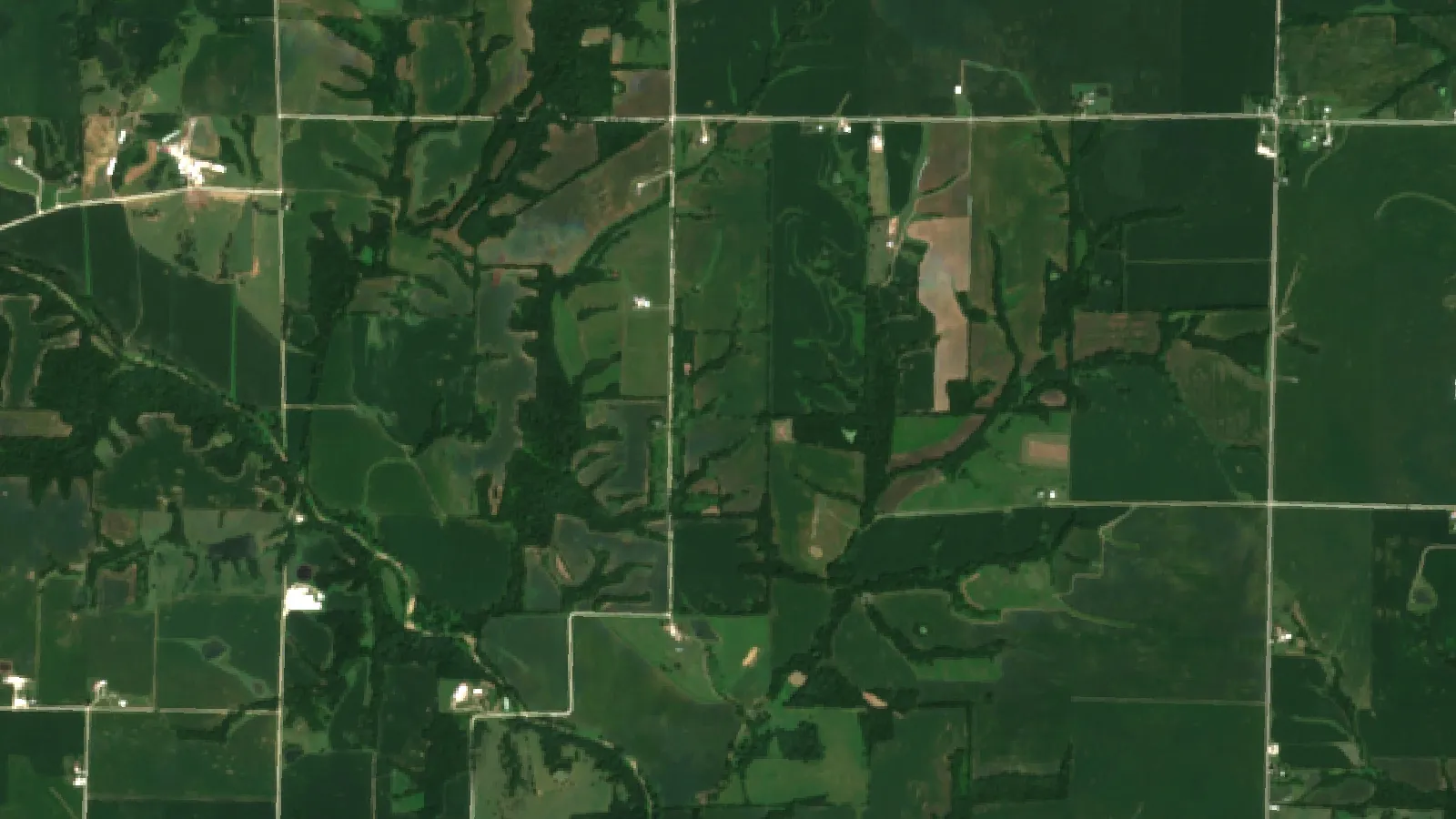
- How satellite maps help with scouting
- How we checked the numbers
- FAQ
The main soybean leaf diseases in North America are Septoria brown spot, frogeye leaf spot, Cercospora leaf blight, target spot, downy mildew and bacterial blight. The Crop Protection Network calls brown spot the most common foliar disease of soybean, while frogeye can cut yield by up to 35% when it starts early in a wet season. Most leaf spots are fungal and respond to resistant varieties, rotation and a well-timed fungicide; bacterial blight and downy mildew seldom pay for a spray.
This guide shows how to tell the six apart, which ones are worth a fungicide, when to spray, and how to slow fungicide resistance. A calculator lets you test whether a spray pays on your own field, and three charts show how large the losses can be.
Soybean leaf diseases at a glance
The table sums up what each disease looks like and how much it matters. Every row comes from the Crop Protection Network (CPN) disease encyclopedia, written by university and provincial extension specialists in the US and Canada.
| Disease | Cause | Where on the plant | What to look for | Yield risk |
|---|---|---|---|---|
| Septoria brown spot | Fungus (Septoria glycines) | Lower leaves first, moves up | Small, dark brown, irregular spots on both leaf sides; leaves turn yellow and drop | Depends on how far up the canopy it climbs during grain fill |
| Frogeye leaf spot | Fungus (Cercospora sojina) | Upper canopy, young leaves | Round gray to tan spots with a narrow reddish-purple rim | Up to 35% in severe early outbreaks |
| Cercospora blight | Fungi (Cercospora flagellaris and others) | Top leaves in full sun | Purple to bronze, leathery upper leaf surface from early seed set | Varies; often confused with sunburn |
| Target spot | Fungus (Corynespora cassiicola) | Lower canopy after canopy closure | Reddish-brown spots with rings and yellow halos | Heavy leaf drop on susceptible varieties in the South |
| Downy mildew | Oomycete (Peronospora manshurica) | Upper canopy | Pale yellow spots on top, gray tufts underneath | Seldom serious |
| Bacterial blight | Bacterium (Pseudomonas savastanoi pv. glycinea) | Upper canopy, early season | Small angular red-brown spots with a yellow halo; tattered leaves | Seldom serious |
How much yield do soybean leaf diseases take?
Diseases and pests together cost soybean growers a large share of the crop. A global expert survey published in Nature Ecology and Evolution (Savary and colleagues, 2019) put the mean soybean loss from pathogens and pests at 21.4%, with a range of 11.0% to 32.4% across the regions studied. That figure covers all diseases and pests, not only leaf diseases, so treat it as an upper frame.
Chart
Global crop loss to pathogens and pests
Mean yield loss, % (all diseases and pests, global expert survey)
Some leaf diseases have grown in weight. The CPN loss calculator, based on expert estimates from university plant pathologists, shows that frogeye caused average losses of about 460,000 bushels a year in Midwestern states in 1996 to 2000. In 2013 to 2017 the yearly average in the same states was about 7.6 million bushels. These are estimates, not measured losses, but the trend is clear.
The economics also matter because the crop is large. USDA’s Economic Research Service reports that 270,851 US farms grew soybeans in the 2022 Census of Agriculture, and the average harvested area per farm was 312 acres. On farms that size, a few bushels per acre lost to leaf disease adds up quickly.
Chart
Frogeye leaf spot losses in Midwestern states
Average yearly loss, million bushels (expert estimates)
How to identify the main soybean leaf diseases
Start by noting where on the plant the spots are, when they appeared and what the edges look like. Lower-canopy spots early in the season point to brown spot. Upper-canopy spots after flowering point to frogeye, Cercospora blight or downy mildew. Use the steps below, and send samples to a diagnostic lab when in doubt.
1. Septoria brown spot
The CPN page on Septoria brown spot describes it as the most common foliar disease of soybean. It shows up soon after planting as purple spots on the unifoliate leaves. Later lesions are small, irregular and dark brown on both leaf surfaces. Spots can merge into blotches, and infected leaves turn yellow and drop. The disease starts low and climbs. Yield loss depends on how high it gets while the seeds are filling.
Best for scouting: lower and middle leaves from V2 onward, then again at R3.
2. Frogeye leaf spot
Frogeye is caused by the fungus Cercospora sojina and is found across the United States and in Ontario, Canada. Spots start small, dark and water-soaked on the upper leaf surface. They then turn gray to light tan with a narrow reddish-purple rim. On some varieties you will see a light green or yellow halo. In humid weather the underside of the spot can look gray and fuzzy.
The CPN overview of frogeye says losses are small when the disease starts after growth stage R5.5, but can reach 35% when severe outbreaks begin early or just after flowering. Young, expanding leaves are the most susceptible. Lesions take about two weeks to appear after infection, so the upper canopy can be infected before you see anything.
Best for scouting: upper canopy from flowering (R1) onward, in warm, humid, overcast spells.
3. Cercospora leaf blight
Cercospora leaf blight is caused by Cercospora flagellaris and related species. The CPN encyclopedia entry says it is frequently seen in soybean fields. Symptoms appear around the start of seed set on the top leaves that face the sun. The upper surface turns light purple, then leathery and dark purple with bronze tones. Sunburn looks similar, but sunburn usually marks the underside of the leaf.
Best for scouting: sunlit top leaves from the start of seed set, in warm, wet weather.
4. Target spot
Target spot (Corynespora cassiicola) was seen as a minor disease before 2010. The CPN target spot page notes that severe infection on susceptible varieties can now strip leaves across the southern US. Spots are reddish-brown, often with yellow halos and rings like a target. It is worst after the canopy closes, at 75 to 85°F with frequent rain over several weeks. The same fungus also infects cotton.
Best for scouting: lower canopy of dense, late-season fields in the South.
5. Downy mildew
Downy mildew is caused by an oomycete, not a true fungus. Pale green to yellow spots form on the upper leaf surface, with gray tufts on the underside when leaves are wet. The CPN downy mildew page says it is common but seldom causes serious loss. Hot weather in midsummer and the natural resistance of older leaves usually stop it.
6. Bacterial blight
Bacterial blight is often the first leaf disease of the season. Small, angular, reddish-brown spots with yellow halos appear in the upper canopy, and dead centers fall out to leave ragged leaves. CPN’s bacterial blight page says it seldom causes serious yield loss. Fungicides do not control bacteria. For blights on other crops, see our guide to bacterial blight disease management.
Look-alikes to rule out
Herbicide injury, nutrient problems and virus diseases can all mimic leaf spots. CPN advises sending plants to a diagnostic lab before you build a spray plan around frogeye. It notes that Phyllosticta leaf spot has tiny dark specks in the lesion center, while frogeye does not. Virus diseases such as soybean mosaic cause mottling and leaf distortion rather than spots; the University of Illinois report on virus diseases of soybeans describes the main ones.

▶ How cameras, AI and satellites try to spot crop pests and problems early, explained with clay characters. · 6:32
Which soybean leaf diseases are worth a fungicide?
Not every spot needs a spray. Fungicides target fungi, so they do nothing for bacterial blight. Downy mildew seldom justifies the cost. The diseases where a foliar fungicide has the best case are frogeye, Septoria brown spot, Cercospora blight and target spot, when weather and variety favor them.
The North Central Regional Committee on Soybean Diseases (NCERA-137) rates each product for each disease every year. Its 2026 fungicide efficacy table, published by CPN in March 2026, is the best place to compare products by name. Ratings change as resistance spreads, so use the current year’s table, not an old copy.
Before you spray, check these risk factors that CPN lists for frogeye:
- A susceptible variety in a field with a history of the disease.
- Continuous soybean or short rotations.
- Conservation tillage that leaves infested residue on the surface.
- Warm, humid weather with frequent rain or several overcast days.
- Overhead irrigation, which raises risk compared with furrow or dryland fields.
Always follow the product label and your state, provincial or national rules on rates, intervals and pre-harvest limits. Ask your local extension office or a certified crop adviser when unsure.
Chart
Range of crop loss to pathogens and pests
Low and high estimates across the regions studied, %
When to spray: timing for soybean leaf diseases
CPN says foliar fungicides applied from late flowering and early pod set through pod fill can reduce frogeye. In practice that means around R3 (beginning pod) for most fields. A spray at R3 protects the upper leaves that feed the pods. CPN reports that pod-development sprays (R3-R4) work best, and that disease starting after R5.5 has little effect on yield.
Scout again about two weeks after spraying. CPN notes that poor control may point to a resistant fungus, although spray volume, nozzles and water quality also affect results. No fungicide gives 100% control on a susceptible variety.
How to manage soybean leaf diseases without relying on sprays
Good field practice lowers disease pressure before a sprayer leaves the shed. These steps come from CPN guidance for frogeye and brown spot, and most apply to all six diseases.
- Choose resistant varieties. Varieties with resistance to all known frogeye races exist. Ask seed dealers about the Rcs3 gene.
- Plant clean seed. Certified seed lowers the chance of bringing infected seed into a field.
- Rotate. The frogeye fungus survives in soybean residue for at least two years. CPN lists corn, small grains, grain sorghum and alfalfa as non-hosts. Longer rotations help where the disease was severe.
- Manage residue. Tillage breaks up infested residue, but weigh it against soil-erosion goals.
- Scout on a schedule. Walk fields regularly from flowering through pod fill, and after any long wet spell.
- Spray only on risk. Use the risk factors above and the calculator below before deciding.
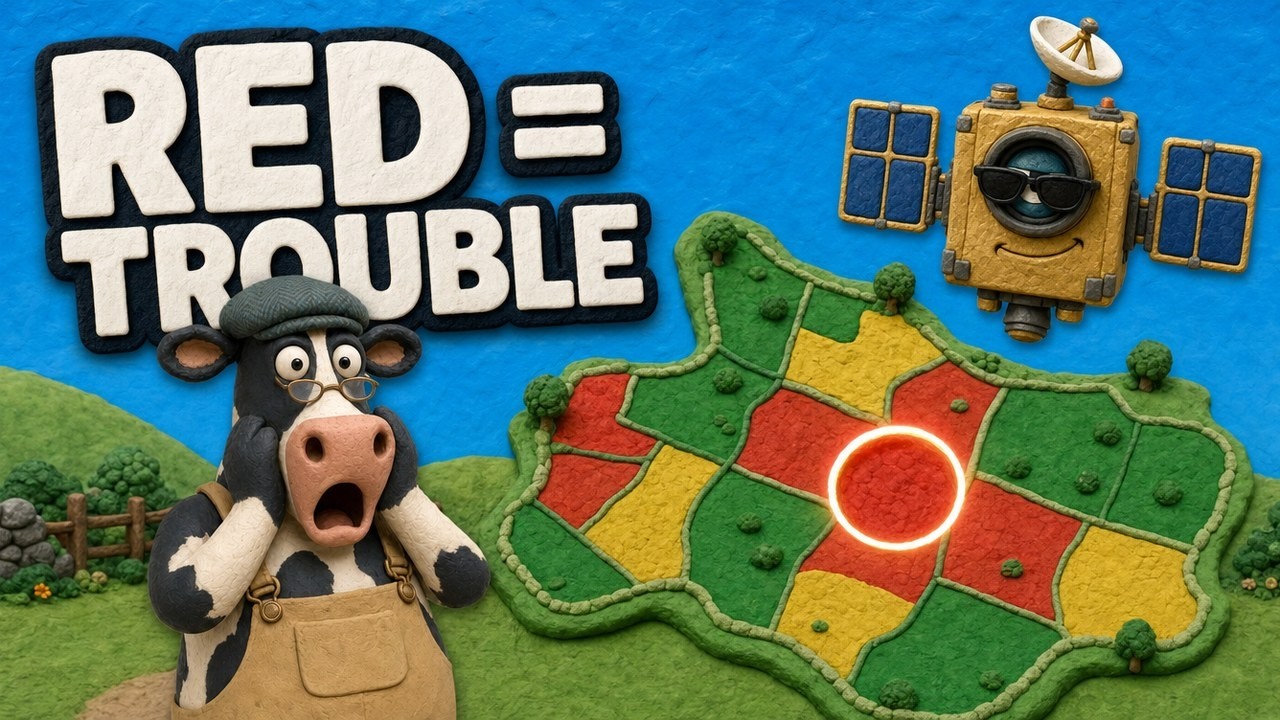
▶ Why satellite NDVI maps can show crop stress before you see it on foot, explained with memes. · 4:09
Fungicide resistance in frogeye and how to slow it
Resistance is a real limit on spraying. The CPN fungicide resistance FAQ explains that sprays do not cause resistance. Resistant strains already exist in the fungal population. Each spray kills the sensitive strains and leaves the resistant ones to multiply.
CPN’s frogeye guide gives three rules. Use products that combine active ingredients from different fungicide classes. Never rely on one class alone. Spray only when the risk factors justify it. If you suspect resistance, contact your local extension specialist, who can arrange a test.
Does a fungicide pay on your field?
A spray pays when the bushels it saves are worth more than the product and the application. The break-even yield response is the cost per acre divided by the soybean price. For example, a $25 per acre total cost at $10 per bushel needs 2.5 bushels of saved yield to break even.
The calculator below uses your own numbers. The defaults are examples set close to break-even, not benchmarks. Responses vary widely with disease pressure, so use local trial data where you can.
Try the numbers for your own farm below.
Calculator
Will a fungicide spray pay on your soybeans?
Enter your own area, price, costs and expected yield saved.
- Total cost per acre: $25
- Break-even yield saved: 2.5 bu/acre
- Value of yield saved per acre: $25
- Net return per acre: $0
Example values only, set near break-even; not a benchmark or a forecast. Every number is your input. Yield saved depends on disease pressure, variety and timing; use local university trial data where you can. Follow the product label and local rules.
How satellite maps help with scouting
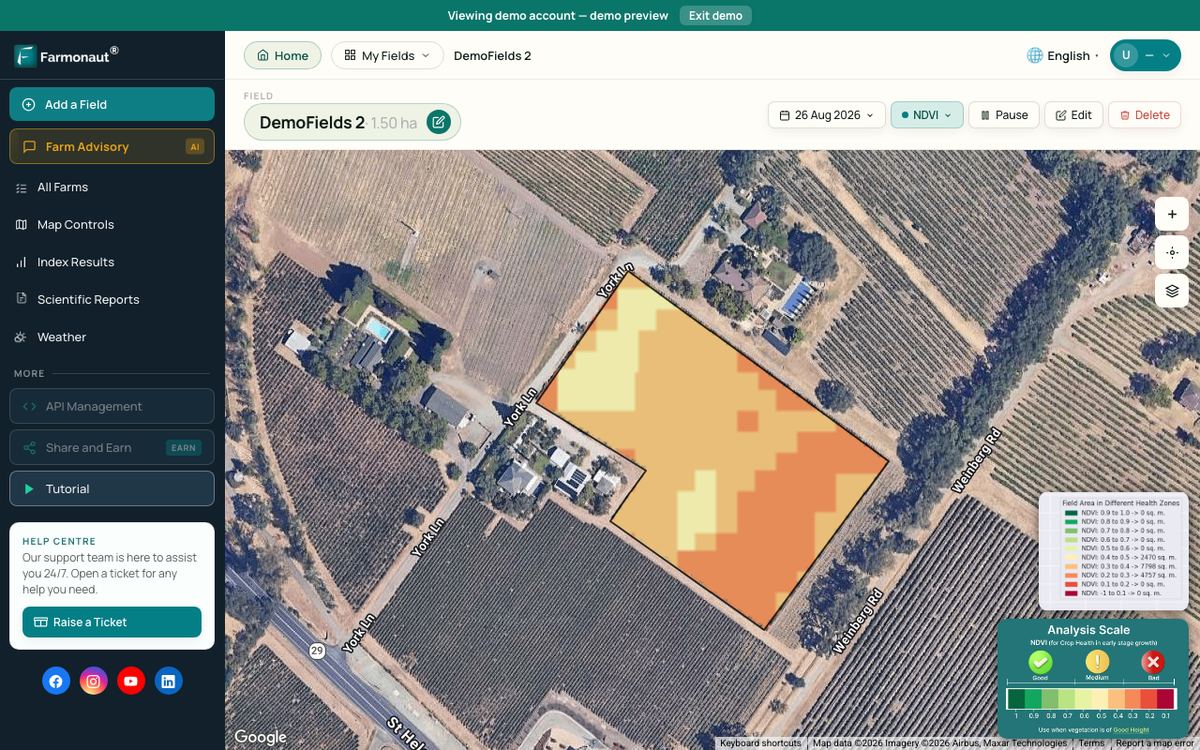
Leaf diseases often start in patches: low spots, field edges near trees, or areas with heavy residue. Satellite vegetation maps (NDVI) show where canopy health is falling across a field, which helps you choose where to walk first. They do not name the disease. You still need to look at leaves, and lab tests for anything unclear.
Tools such as the Farmonaut Satellite + AI Farm Monitoring System give these maps every few days through the season on web and phone. Growers can also see how weather and other current agricultural issues affect their region.
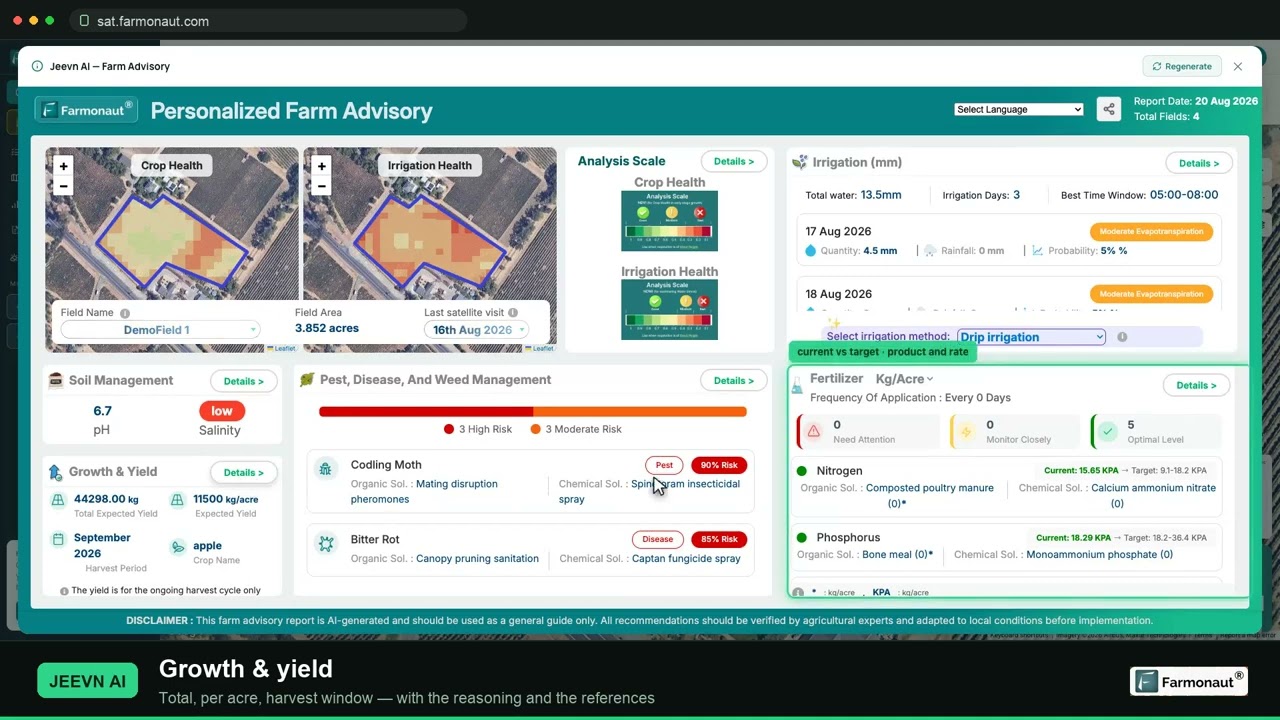
▶ A full walkthrough of satellite crop monitoring: reading NDVI maps to see crop stress early on your own field. · 19:36
How we checked the numbers
Disease descriptions, risk factors and management steps come from the Crop Protection Network, a multi-state and international group of university and provincial extension specialists. Global loss figures come from Savary and colleagues in Nature Ecology and Evolution (2019). Farm counts come from USDA ERS. Loss estimates in the charts are expert estimates, not measured losses. We name no fungicide products, because ratings and registrations change; use the current NCERA-137 table and your local label.
Related pages on our site: crop loan and insurance, product traceability, carbon footprinting, fleet management, agro admin app, satellite and weather API docs and our apps.
FAQ
What is the best fungicide for frogeye leaf spot on soybean?
No single product is best everywhere. The NCERA-137 efficacy table, updated each year by the Crop Protection Network, rates products for frogeye. Choose a product that mixes active ingredients from different classes, because resistance to QoI (strobilurin) fungicides has been reported in the frogeye fungus in North America. Follow the label and local rules.
When should I spray soybeans for leaf diseases?
For frogeye, CPN says sprays from late flowering and early pod set through pod fill can reduce the disease, which usually means around R3. CPN reports that sprays during pod development (R3-R4) work best; disease that starts after R5.5 has little yield effect.
What is the most common soybean leaf disease?
The Crop Protection Network names Septoria brown spot as the most common foliar disease of soybean. It starts on lower leaves soon after planting and is usually present all season.
How do I tell frogeye from brown spot?
Frogeye spots are round and gray to tan with a reddish-purple rim, mostly on upper leaves. Brown spot lesions are small, dark brown and irregular, start on lower leaves and make leaves yellow and drop.
Can fungicides control bacterial blight in soybean?
No. Bacterial blight is caused by a bacterium, so fungicides do not control it. CPN notes it seldom causes serious yield loss. Crop rotation and tillage, which reduce survival of the bacteria in residue, are the main tools.
How do emerging diseases affect soybean production in the US?
Some diseases have grown in importance. CPN loss estimates show frogeye losses in Midwestern states rose from about 460,000 bushels a year in 1996 to 2000 to about 7.6 million in 2013 to 2017. Target spot, once minor, now causes heavy leaf loss on susceptible varieties in the southern US.
Farmonaut crop monitoring
See where to scout first
Draw your soybean fields once and Farmonaut shows satellite vegetation maps for them through the season, on web, Android or iOS.



Keep reading
Sources
- Crop Protection Network (NCERA-137), Fungicide Efficacy for Control of Soybean Foliar Diseases, CPN-1019 (March 2026): cropprotectionnetwork.org
- Crop Protection Network, An Overview of Frogeye Leaf Spot, CPN-1017 (2016): cropprotectionnetwork.org
- Crop Protection Network, Frogeye Leaf Spot of Soybean, encyclopedia (2018): cropprotectionnetwork.org
- Crop Protection Network, Septoria Brown Spot of Soybean, encyclopedia (2018): cropprotectionnetwork.org
- Crop Protection Network, Cercospora Leaf Blight of Soybean, encyclopedia (2018): cropprotectionnetwork.org
- Crop Protection Network, Target Spot of Soybean, encyclopedia (2021): cropprotectionnetwork.org
- Crop Protection Network, Downy Mildew of Soybean, encyclopedia (2018): cropprotectionnetwork.org
- Crop Protection Network, Bacterial Blight of Soybean, encyclopedia (2018): cropprotectionnetwork.org
- Crop Protection Network, Fungicide Resistance in Field Crops FAQs, CPN-4001 (2016): cropprotectionnetwork.org
- Crop Protection Network, Field Crop Disease and Insect Loss Calculator (expert estimates): loss.cropprotectionnetwork.org
- Savary et al., The global burden of pathogens and pests on major food crops, Nature Ecology and Evolution (2019): nature.com
- USDA Economic Research Service, Soybeans and Oil Crops: Sector at a Glance (updated August 2025): ers.usda.gov
- University of Illinois IPM, Virus Diseases of Soybeans, Report on Plant Diseases No. 505: ipm.illinois.edu
Discussion
Questions, corrections or field experience? Share them below. First-time comments are reviewed before they appear, and your email is never published.
No comments yet. Be the first to add a question or your experience.

 GlobalQuant
 MDCV UK
 Zerella Group
 Etech Consulting Madagascar
 Vestlandsforsking
 Agritein
 Delicio
 WB Dev
 Sama Premium
 Prochecker
 Tres Valles
 LACOS Geoinformation
 Magrifly
 LatConnect 60
 Blickwinkel
 Agricultural Credit Policy Council
 Marei Nursery
 eKGIS
eKGIS Mostas Tech
 Exploration consultancy · South Africa · Gold
 Licence holder · Niger · Gold
 Licence holder · Nigeria · Gold + lithium










