

Potato Scab Disease: Top 7 Treatment Strategies 2026
Summary:
Potato scab remains one of the most persistent and economically significant diseases affecting potato crops worldwide. Predominantly caused by the soil-borne bacterium Streptomyces scabies, common potato scab manifests as rough, corky lesions on tuber surfaces, compromising both the aesthetic and market value of potatoes. As we approach 2026, with increasing demands for sustainable agriculture, food security, and high-quality produce, understanding potato scab disease and implementing effective, modern treatment strategies is crucial for farmers, agronomists, and stakeholders.



Potato Scab Disease: An Overview for 2026
Potato scab, especially the common scab on potatoes, continues to challenge potato growers globally. The disease’s persistent nature and economic significance arise from its ability to reduce both cosmetic tuber quality and overall yield. While the Streptomyces genus, and particularly Streptomyces scabies, predominantly causes potato scab disease, a related but distinct threat is potato powdery scab, instigated by Spongospora subterranea.
With the demands for sustainable farming and healthier produce increasing, understanding the core of scab diseases, and especially implementing effective potato scab treatment strategies has become indispensable for modern agriculture. Both potato scab and powdery scab can lead to substantial market losses, rejection in processing industries, and reduced farmer income.

Economic and Agricultural Impact of Potato Scab
Potato is not just a dietary staple but a critical commercial crop in North America, Europe, and parts of Asia. The financial and environmental stakes linked to potato scab are exceptionally high. Compromised potato tubers fetch markedly lower prices in the fresh market and are often rejected by processors.
- ✔ Direct impact on farmer income: Infected crops can result in 10–40% reduction in market value.
- ⚠ Regional severity: Scab is particularly rampant in temperate regions of North America, Europe, and Asia where soil conditions frequently favor the pathogen.
- 📊 Ripple effect: Lower potato quality impacts processors, supply chains, and even export competitiveness.
- 🔄 Significance for sustainable systems: Organic and rotational farming face unique challenges for potato scab control due to minimal chemical usage.
- 🛡 Adaptation required: Continuous innovation, such as breeding resistant varieties and applying data-driven tools, is essential for future resilience.
Key Insight:
Potato scab not only affects yield but also the marketability and international trade value of potatoes, underlining the need for integrated, sustainable and modern management practices by 2026.
Understanding Potato Scab Disease & Its Variants

The Pathogen: Streptomyces scabies
The primary culprit, Streptomyces scabies, is a soil-borne bacterium thriving especially in neutral to alkaline soils (soil pH 5.2 and above). Its success as a pathogen is attributed to its ability to exploit certain soil, moisture, temperature, organic matter content, and environmental conditions:
- 🌱 Soil Type: Loamy soils with moderate to high organic content can favor scab development, especially when manure is freshly applied.
- 💧 Moisture Fluctuations: Drought or irregular irrigation during tuber initiation significantly increases disease severity.
- 🌡 Temperature: Warm soils during potato growth, especially tuber initiation, promote lesion formation and pathogen activity.
Streptomyces scabies enters tubers via natural openings such as lenticels or through areas of mechanical damage. The resulting symptoms—irregular, rough, and corky lesions—compromise both the appearance and the quality of harvested potatoes.
Potato Scab Disease Variants
Common Potato Scab (CPS): Characterized by superficial to deeply pitted, corky lesions on tuber surfaces, primarily caused by Streptomyces scabies.
- Irregular, rough lesions
- Ranges from minor cosmetic issues to deep tuber pits
- Reduces both fresh and processing value
Potato Powdery Scab: Caused by the protozoan Spongospora subterranea, this form results in slightly raised, powdery-looking scabs and also facilitates secondary infections such as potato wart disease.
- Powdery, pustular appearance
- Enhanced likelihood of secondary fungal or wart disease
- Often misdiagnosed – differentiating variants is critical for treatment
Factors Affecting Potato Scab Severity
- 🏔 Soil pH: Neutral to alkaline soils (high pH) favor scab, while acidifying soil can suppress the pathogen.
- 🌡 Soil Temperature: Warm soils, especially during potato tuber initiation, increase risk.
- ⛲ Soil Moisture: Fluctuating or low soil moisture at tuber initiation increases disease severity.
- 🌾 Soil Organic Matter: High, particularly from undecomposed manure, can promote scab-causing bacteria.
Key Takeaway
Addressing potato scab requires careful soil management, integrated crop strategies, and leveraging advanced tools for targeted responses tailored to field conditions in 2026.
Top 7 Potato Scab Treatment Strategies for 2026
Effective potato scab control is built upon an understanding of the pathogen’s behavior and the integration of proven and innovative strategies. As agriculture embraces technological advances, the synergy of traditional wisdom and digital tools makes robust, sustainable management possible.
-
Soil pH Management & Acidification
Targeting soil pH remains a cornerstone of potato scab disease control. Since Streptomyces scabies thrives in neutral to alkaline conditions, lowering soil pH to the acidic range (ideally 5.0 – 5.2) is a proven potato scab treatment:
- Application of elemental sulfur or acidifying fertilizers reduces pathogen proliferation.
- Digital soil mapping and precision application tools (e.g., with Farmonaut’s soil monitoring) ensure uniform, safe pH management.
Note: Soil acidification must be carefully managed to avoid damaging potato plants or beneficial soil microorganisms.
-
Planting Resistant Potato Varieties
Modern breeding efforts have introduced potato cultivars that are either resistant or more tolerant to potato scab. Deploying such varieties dramatically reduces disease severity and is especially vital for integrated and sustainable crop systems where chemical options are limited.
- Examples: ‘Hannah’, ‘Gold Rush’, and select EU–Asia region cultivars.
- Selection must reflect local adaptation and market preferences for fresh or processing potatoes.
Fun Fact: New potato varieties in 2026 are bred for dual resistance—to both common scab and powdery scab—boosting yield reliability.
-
Crop Rotation and Sanitation Practices
Potato scab severity in fields rises with repeated cropping. Crop rotation—alternating potatoes with non-host crops such as cereals, maize, or legumes—disrupts the pathogen lifecycle. Additional sanitation measures include:
- Avoiding potatoes in freshly manured or high-organic-matter soils (as high organic content can stimulate scab bacteria).
- Removing infected tubers and debris to reduce future inoculum.
- Extending rotation cycles (3–4 years between potato crops) for best results.
-
Precision Soil Moisture & Irrigation Management
Consistent soil moisture management during tuber initiation is among the most effective ways to curb scab formation. Scab severity is greatly increased in drought-prone conditions. Advanced technologies now enable:
- Smart irrigation systems (like those monitored by Farmonaut satellite solutions) to deliver water precisely when and where needed.
- Soil moisture sensors and AI-based forecasting for field-specific irrigation schedules.

-
Biological Control Agents
Sustainable agriculture increasingly relies on biological potato scab treatments to reduce pathogen populations in the soil with minimal environmental impact.
- Antagonistic bacteria like Bacillus subtilis and Pseudomonas fluorescens outcompete scab-causing bacteria in the rhizosphere.
- Ongoing research brings next-generation bioinoculants for targeted soil health improvement.
- Farmonaut platforms help monitor biological agent effectiveness at scale (see large-scale farm management).

-
Chemical and Seed Treatment Methods
Where other approaches fall short or the market value of potatoes justifies higher input costs, chemical and seed treatments remain in selective use.
- Soil fumigants and targeted pesticides (with evolving regulations) are more selectively applied due to environmental and health concerns.
- Safer, precise application using site-specific monitoring (Farmonaut’s crop plantation & advisory tools) is advised for minimizing negative impacts.
Regulatory note: With strict residue thresholds in 2026, digital tracking of inputs and application schedules—traceable via Farmonaut’s Blockchain-Traceability tools—safeguards compliance and consumer trust. Learn more about traceability solutions.
-
Digital Agriculture Tools & AI-Based Advisory Systems
The most significant innovation for potato scab control in 2026 is the integration of satellite monitoring, AI-driven advisory, and digital traceability into daily farm operations.
- Access field health, soil, moisture, and disease risk via mobile or web apps.
- Implement AI-based recommendations for real-time, field-specific action—directly reducing scab risk and optimizing resource use.
- Use Farmonaut’s Satellite API and Developer Docs for system integrations and automated alerts.

Digital transformation is becoming mainstream in agriculture, bridging the gap between prevention, monitoring, and targeted intervention for diseases like potato scab.
Comparative Effectiveness Table: Potato Scab Treatment Strategies 2026
| Strategy Name | Estimated Effectiveness (% Disease Reduction) | Application Method (Traditional/Technological) |
Sustainability Score (1-5) | Estimated Cost ($/hectare) | Innovation Level (Conventional/Modern/Digital) |
|---|---|---|---|---|---|
| Soil pH Management | 40–60% | Traditional + Technological | 4 | $45–120 | Modern |
| Resistant Varieties | 60–85% | Traditional + Technological | 5 | $55–200 | Modern |
| Crop Rotation & Sanitation | 30–50% | Traditional | 4 | $15–60 | Conventional |
| Soil Moisture/Irrigation Control | 50–70% | Technological | 5 | $30–110 | Digital |
| Biological Control | 40–65% | Technological | 5 | $70–200 | Modern |
| Chemical & Seed Treatments | 55–75% | Traditional + Technological | 2 | $90–300 | Conventional |
| Digital/AI Tools & Monitoring | 60–90% (as part of integrated use) | Technological | 5 | $20–100 | Digital |
Potato Scab Disease Meets Digital Agriculture & Modern Tech (2026)

The landscape of potato scab disease management in 2026 is strongly shaped by technological advances:
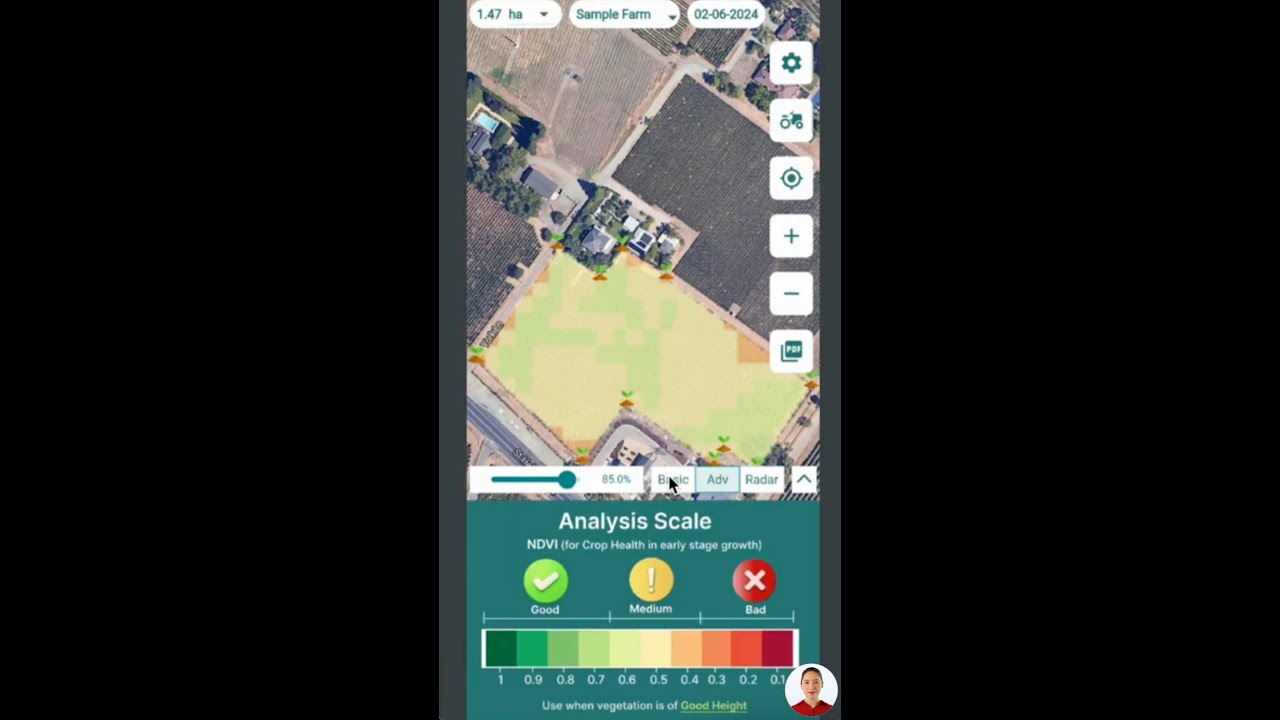
- 🔬 Remote Sensing & Precision Application: Satellites and digital sensors (like those on Farmonaut’s platforms) allow for real-time field health monitoring and prompt detection of disease-prone patches.
- 💡 AI-Driven Advisory: Machine learning analyzes multi-year field and climate data to predict scab outbreaks, optimizing the timing of interventions such as irrigation, fertilization, and crop rotation.
- 🛰 Blockchain Traceability: Growers and supply chain partners can transparently log field treatments and input histories, critical as consumers demand safe, residue-free potatoes.
- 📈 Environmental Impact Tools: Carbon and sustainability impact are monitored for regulatory compliance.
Explore Farmonaut’s Carbon Footprinting Solutions.
Integrating Digital Tools in Real-World Potato Farms
- Automated crop health reports for scab-prone fields.
- Smart notifications for risk-based irrigation scheduling.
- Instant, app-based field scouting: Spot scab lesions early, record them, and get AI-generated recommendations (with Farmonaut apps on Android & iOS).
How Farmonaut Empowers Potato Health Monitoring & Disease Management
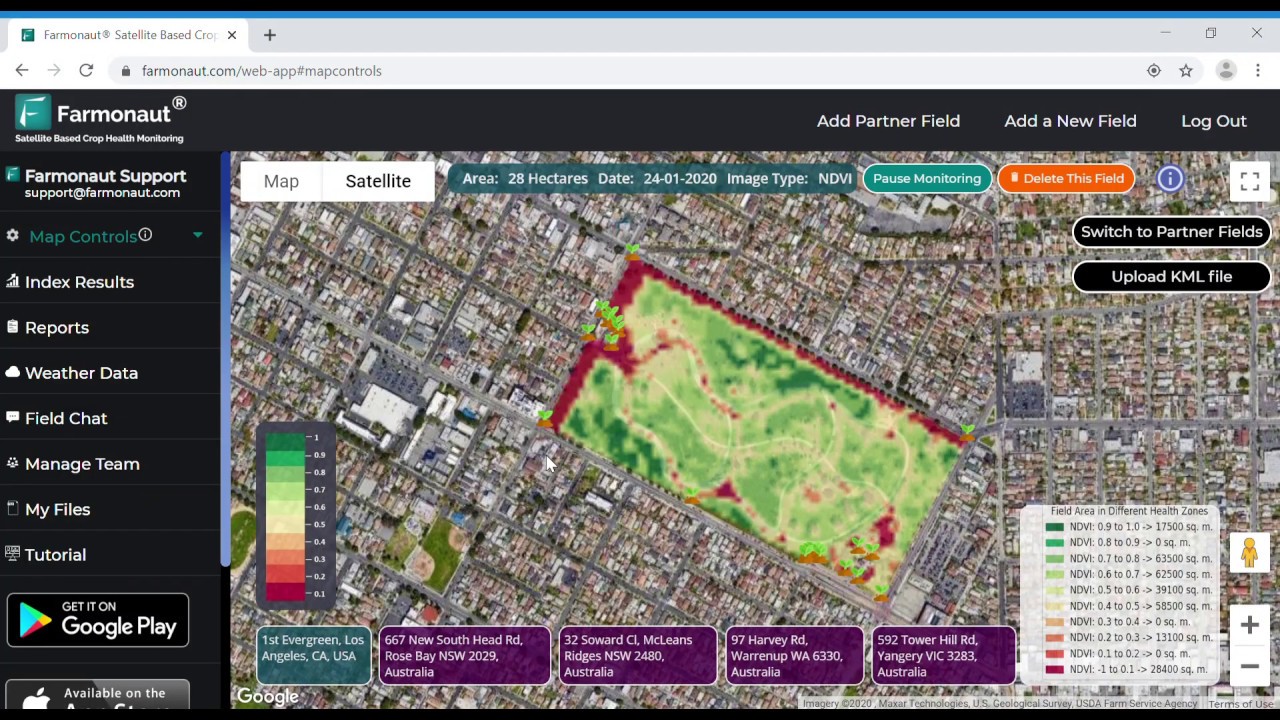
As data-driven approaches become standard in crop protection, we at Farmonaut are committed to making advanced satellite and AI insights affordable and actionable for all farmers, consultants, and agronomists. Here’s how our technology boosts disease control, specifically for potato scab:
- 🛰 Multispectral Satellite Imagery: Provides regular, high-resolution updates on potato field health, soil moisture, and vegetation indices (NDVI, NDRE) to detect stress and scab-prone zones early.
- 🤖 Jeevn AI Advisory System: Delivers AI-driven, timely field recommendations—such as when to irrigate or adjust soil pH—reducing scab outbreak risk and optimizing input efficiency.
- 🔄 Blockchain Traceability: Logs field inputs and treatments transparently—building trust in farm-to-fork supply chains and ensuring regulatory compliance. Learn about product traceability.
- 📊 Environmental Monitoring: Monitors and tracks carbon impact and sustainability metrics. For those targeting climate-smart agriculture, our carbon footprinting solution is essential.
- 🔗 System Integrations: Our Satellite API and Developer Docs allow businesses, platforms, and governments to automate disease monitoring and advisory delivery at scale.
- 🚜 Fleet & Large-Scale Farm Management: For enterprise operations, Farmonaut enables seamless monitoring and management over tens/hundreds of fields—visit Large-Scale Farm Management for details.
Investor Note:
Technology-driven approaches—such as Farmonaut’s integrated satellite, AI, and blockchain solutions—are set to define the future of sustainable, profitable potato production in 2026 and beyond. Early adopters can expect increased market value and reduced input risk in their portfolios.
Callouts & Highlights: Expert Potato Scab Control
Consistent monitoring—rather than one-time intervention—yields the greatest disease reduction for both common potato scab and powdery scab. Use digital tools for timely, field-specific action.
Prioritize potato varieties bred for scab resistance—integrate with AI-advised crop rotation and soil management to maximize sustainable yield and tuber quality.
Over-applying organic manure just before planting potatoes often backfires, increasing scab severity. Incorporate organic matter well in advance and monitor soil health regularly.
In fields monitored by satellite and AI, optimized irrigation timing alone reduced potato scab incidence by up to 55%, even under drought risk.
With stricter pesticide residue regulations from 2026, field traceability—available via Farmonaut’s blockchain services—ensures market access for premium potato crops worldwide.
✔ 5 Bullet Point Strategies and 2 Visual Lists for Effective Potato Scab Management
- ✔ Maintain Soil pH between 5.0–5.2 with digital soil testing for best pathogen control frequency.
- ✔ Select resistant potato varieties adapted to your region (North America, Europe, or Asia) and end-use (fresh or processing markets).
- ✔ Monitor field health continuously with satellite-powered apps for early scab detection.
- ✔ Rotate crops with non-hosts, ensuring a 3–4 year break between potato plantings in each field.
- ✔ Leverage biological controls and reduce overreliance on chemical products for a sustainable result.
Satellite Crop Health Monitoring
Multispectral analysis for early lesion stress signals.
AI-Based Irrigation & Soil Alerts
Smart irrigation and acidity scheduling for pathogen suppression.
Blockchain Traceability
Verifying potato field input history for supply chain trust.
Limitation:
Acidic soils can negatively impact potato yield and other crop rotations if not monitored.
Limitation:
Over-application of organic matter may increase scab risk—use soil testing to guide amendments.
Limitation:
Single-season interventions—without continuous monitoring—are notably less effective.
Frequently Asked Questions (FAQ): Potato Scab Disease Management 2026
Q1: What is the most effective potato scab treatment in 2026?
A: The combined use of resistant potato varieties, soil pH management, precision irrigation, crop rotation, and digital disease monitoring delivers the best results. AI-based, integrated management reduces scab by up to 90% in multi-year trials.
Q2: How does soil pH affect potato scab?
A: Streptomyces scabies thrives in neutral to alkaline soils (pH >5.2). Lowering soil pH to 5.0–5.2 strongly suppresses pathogen activity.
Q3: Are AI and satellite technologies applicable to smallholder potato farms?
A: Yes, platforms like Farmonaut make satellite insights and AI-advised scab control accessible and affordable—even for small field areas, via web and mobile apps.
Q4: Can you use organic farming methods to manage potato scab?
A: Absolutely—organic farms benefit from biologicals, rotation, resistant varieties, and now satellite insights to reduce chemical usage whilst maintaining quality.
Q5: How does blockchain help in potato scab management?
A: Blockchain-based field logs increase transparency of treatment schedules and input use—crucial for regulatory compliance and premium export markets. More on traceability tools here.
Farmonaut Subscription Plans & Access
We offer scalable, subscription-based access to satellite imagery, AI advisories, and blockchain traceability for all farm sizes via web, Android, and iOS apps.
Conclusion: Future-Ready Potato Scab Management in 2026 and Beyond
Potato scab, composed of both common scab and powdery scab variants, remains a significant challenge in modern, sustainable potato agriculture. Economic, environmental, and regulatory pressures are set to intensify by 2026, but the toolbox available to farmers is expanding:
- Resistant potato varieties and precise pH, moisture, and organic matter management form the backbone of integrated disease control.
- Biological agents and improved sanitation practices allow for eco-friendly interventions.
- Digital agriculture tools—satellite data, AI advisories, and blockchain traceability—are now accessible, elevating disease operations from reactive to proactive, transforming potato scab management into a science-driven process.
As we look to the future, the integration of advanced monitoring, AI, and sustainability tools positions growers to minimize disease impact, maintain tuber quality, and capture evolving market opportunities. We at Farmonaut are proud to provide the digital backbone for modern agriculture globally.
Ready to elevate your potato crop to meet 2026’s standards?
Start leveraging advanced satellite and AI insights with Farmonaut:

 Insignito
 Croptimum
 Dalmia Bharat Sugar
 DnCubed
 Pistachio ST
 Field Capacity
 Indosistim Teknologi
 Liquify Digital
 CU Foods
 BeyondTech Global
 Rouge VC
 AgroGreen Dynamics
 AgroRisk
 Oath Inc
 Reddane Farming
 Esri North East Africa
 Cresol
 MDCV UK
 Etech Consulting Madagascar
