

Shipping Container Greenhouse: Top Hydroponic Trends 2026
“By 2026, shipping container greenhouses are projected to boost urban hydroponic crop yields by up to 40%.”
Introduction: The Hydroponic Revolution within Shipping Container Greenhouses
Across the globe, the convergence of innovative agricultural technologies and sustainable infrastructure is propelling the shipping container greenhouse to the forefront of modern food production solutions. In 2026, these modular, compact, and technologically advanced containerized farms are redefining how fresh, healthy, and sustainable food is cultivated—especially in dense urban environments or resource-constrained settings.
By leveraging advanced hydroponics in a shipping container and vertical cultivation systems, growers are able to maximize crop yield and efficiency while drastically reducing resource consumption, supply chain complexity, and environmental impacts commonly associated with traditional agriculture.
In this comprehensive guide, we explore the major trends, technologies, advantages, and future-oriented insights shaping shipping container greenhouses and hydroponic farming in cities, mining, forestry, and defense sectors worldwide for 2026 and beyond.



Shipping Container Greenhouses and Hydroponic Farms: An Overview
Shipping container greenhouses utilize repurposed freight containers transformed into highly controlled farming units. Through advanced environmental management—including precise regulation of temperature, humidity, CO₂ levels, and lighting—these hydroponic greenhouses are optimized for cultivating a wide array of crops without soil.
- ✔ Shipping container hydroponics replaces soil with nutrient-enriched water solutions, eliminating many challenges of soil degradation and pest management.
- ✔ Greenhouse vertical farming leverages the container’s vertical space, significantly increasing yield per square meter compared to conventional row cropping.
- ✔ Lighting systems are tailored to crop requirements, ensuring year-round production and optimal photosynthetic efficiency.
This innovative approach offers growers remarkable adaptability, enabling farms to be established in virtually any environment—from urban rooftops to remote, resource-scarce regions—making containerized agriculture a genuine revolution in modern food production.

Key Advantages of Shipping Container Hydroponic Farms in 2026
Sustainable Agriculture for Urban and Remote Environments
Shipping container farms deliver game-changing solutions for urban farming, rural sustainability, and remote food security. Below are some of the primary advantages driving their global adoption.
- ✔ Portability: Container units can be deployed virtually anywhere—on city rooftops, vacant lots, or even remote mining and defense sites.
- 📊 Space Maximization: Vertical cultivation techniques leveraged inside containers allow for higher yields per square meter than traditional fields.
- ⚠ Minimal Land Requirement: Only a small footprint is required for installation and operation compared to conventional farming.
- ✔ Water Efficiency: Hydroponic container systems can use up to 90% less water than soil-based agriculture.
- ✔ Pest and Disease Control: Closed, controlled environments eliminate many pests and diseases associated with open-field agriculture, reducing the need for chemical treatments.

🚩 Fast-Trivia: Shipping Container Greenhouse Facts
“Hydroponic farms in containers can use up to 90% less water than traditional soil-based agriculture.”
Visual List: Top Five Benefits of Hydroponic Shipping Container Farms
- 🌱 Year-round, all-climate crop cultivation
- 💧 Up to 90% water usage reduction
- 🔒 Pest, disease, and supply chain risk mitigation
- 🚚 Rapid deployment in urban, mining, or defense sites
- 🌎 Scalable, sustainable production reducing food miles
Technological Integration and Automation: 2026 and Beyond
The shipping container farm of 2026 is equipped with cutting-edge technology for real-time control and efficiency. Here is a look at core systems powering this revolution:
- ✔ IoT Sensors for 24/7 monitoring of climate, water, nutrition, and CO₂.
- 📊 AI-driven Farm Management adjusting environmental parameters for each crop cycle.
- ⚡ Automated LED Lighting for energy-efficient, targeted growth.
- 📦 Nutrient delivery automation ensures crops receive optimized feeding, reducing waste.
- 🌉 Remote Management systems allow operators to monitor multiple units from anywhere.
- 🌾 Blockchain Traceability for transparent production tracking—explore product traceability for your urban farm.
- 🔗 Resource Management APIs to optimize logistics and analyze farm performance—learn about Farmonaut APIs and fleet management tools.
- 🌿 AI & Satellite Decision Support providing data-driven recommendations—more in our Farmonaut Perspective below.
Comparative Trends Table: Hydroponic Technologies in Shipping Container Greenhouse Farms (2026)
The following table provides a comparative overview of top hydroponic techniques within containerized greenhouses, spotlighting their footprint in urban agriculture, water reduction, energy consumption, and market projections for 2026.
| Hydroponic Technology | Estimated Yield Increase (%) | Water Usage Reduction (%) | Energy Consumption (kWh/container/month) | Setup Cost (USD) | Market Adoption (2026 %) |
|---|---|---|---|---|---|
| Nutrient Film Technique (NFT) | +22–30% | 80–90% | 1,800–2,200 | 35,000–55,000 | 56% |
| Aeroponics | +28–38% | 88–95% | 2,100–2,600 | 50,000–75,000 | 49% |
| Deep Water Culture (DWC) | +19–27% | 70–85% | 1,500–2,000 | 32,000–49,000 | 44% |
| Drip Hydroponics | +15–25% | 60–80% | 1,300–1,900 | 28,000–40,000 | 33% |
| Greenhouse Vertical Farming | +32–45% | 90–92% | 2,400–2,900 | 62,000–110,000 | 67% |
- 📊 Greenhouse vertical farming delivers the top yield and water savings, driving its rapid adoption in urban agriculture hubs.
- 💡 Aeroponics is gaining ground for its near-total water efficiency, ideal for water-scarce environments and remote mining or defense sites.
- ⚡ Energy consumption remains a challenge; LED and solar innovation are key for operational sustainability.
- 💸 Initial setup costs are decreasing gradually as tech adoption scales and DIY modular kits emerge by 2026.
- 🌟 NFT and DWC systems remain strong contenders for low-maintenance, mid-scale container hydroponic production.

Dutch Greenhouse Farming: Setting the Global Standard
The influence of dutch greenhouse farming on today’s containerized hydroponics is profound. The Netherlands has become a beacon of sustainable, high-efficiency, controlled-environment agriculture, exporting not only fresh produce but also advanced technologies and cultural best practices.
- Climate-Smart Greenhouse Design: Dutch greenhouses employ precision climate control—a blueprint for modern shipping container greenhouses globally.
- Integrated Pest Management (IPM): Use of biological pest control, reducing reliance on chemical pesticides, is now considered standard for container farms.
- Energy-Efficient LED Lighting: Dutch deployment of advanced, spectrally-optimized LEDs has directly informed lighting protocols in shipping container hydroponics systems.
- Water and Nutrient Recycling: The Dutch commitment to closed-loop hydroponics aligns perfectly with the sustainable ethos of container greenhouses worldwide.
- Market-Driven Cultivation: Dutch greenhouses tailor production for local and export needs with unmatched speed and efficiency—mirrored by urban shipping container farms streamlined for city supply chains in 2026.
- ✔ Learn more about modern environmental monitoring systems for greenhouses and vertical farms at Farmonaut.
Beyond Food Crops: Shipping Container Farms in Forestry, Defense, and Mining
Containerized hydroponic greenhouse systems have powerful applications far beyond urban food supply:
Forestry: Accelerating Sustainable Reforestation
- ✔ Shipping container greenhouses provide optimal, disease-free environments for nurturing seedlings—resulting in higher survival rates and faster reforestation, even in harsh climates.
- ✔ For advanced satellite-driven crop plantation and forest advisory supporting reforestation, explore Farmonaut’s solutions.
Defense: Food Security in Remote and Challenging Environments
- 🛡 Mobile container farms enable year-round, on-demand production of fresh vegetables and herbs for troops stationed in remote or hostile regions.
- ✔ Reduced logistical risk and improved morale through local, on-site food production.
- ⚡ Zero supply chain delay: Container units can be airlifted, shipped, or trucked to most locations worldwide.
- 🔒 Controlled environment: Resilient to extreme climates and biohazards.
- 🍀 Custom crop selection: Production tailored to medical, dietary, or strategic needs.
Mining Sector: Nutrition & Sustainability On-Site
- 💎 Isolated mining sites benefit from on-site container farms, reducing dependence on long-distance supply chains and providing workers with high-quality, fresh food.
- 🌞 Powering container farms with renewable energy aligns with sustainability and corporate responsibility goals.
- ✔ For environmental impact tracking and carbon footprinting of mining and agriculture, see Farmonaut’s carbon monitoring solutions.
Satellite Monitoring & AI for Smart Shipping Container Greenhouse Management: The Farmonaut Perspective
At Farmonaut, we deliver satellite-powered, data-centric solutions for agriculture, mining, and infrastructure industries. Our platform provides actionable insights to optimize containerized farms, leveraging cutting-edge technology for real-time monitoring, AI-guided advisory, fleet and resource management, and robust blockchain-based traceability.
- 🔭 Satellite Imagery: Monitor greenhouse health, detect anomalies, and quantify yield and resource consumption with our multispectral satellite data.
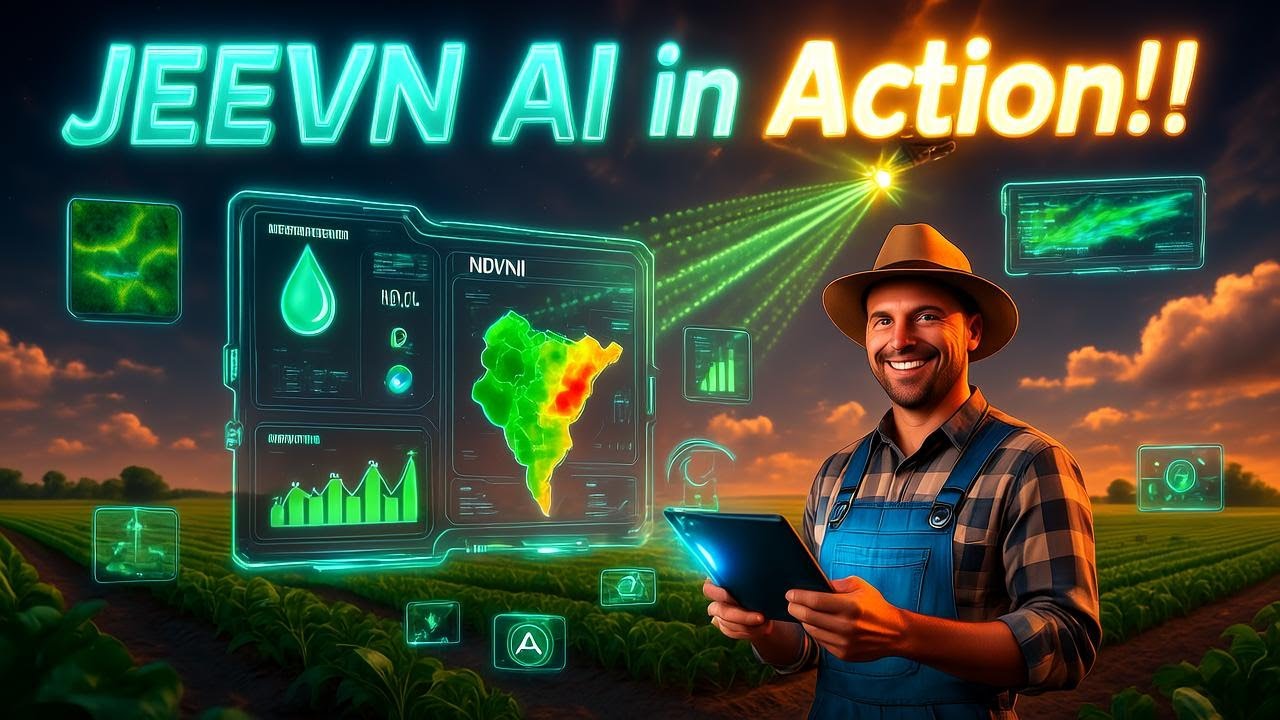
- 🧠 AI-Driven Decision Support: Our Jeevn AI delivers tailored strategies—see this video for more.
- ⛓ Blockchain Traceability: Ensure full transparency of your urban crop or supply chain—more on our Product Traceability solution.
- 🚛 Fleet, Equipment, & Resource Management: Track deployment and efficiency of farming assets—see more at our fleet management platform.
- 🌱 Environmental Impact: Real-time carbon and environmental impact analysis enables compliance and sustainability. Explore our solutions here.
Our mission is to democratize access to satellite intelligence for every grower, business, and institution seeking to maximize efficiency, sustainability, and food security within containerized farms and beyond.

The Future: Shipping Container Hydroponic Farms Beyond 2026
- 🚀 Widespread Urban Adoption: As cities grow and food deserts persist, container farms will become standard in commercial, residential, and community development planning.
- 🌪 Climate Resilience: Extreme weather volatility will further accelerate the shift toward controlled-environment, modular shipping container greenhouses.
- 🌍 Decentralization: Food production will continue moving closer to end-users, with container technologies supporting both urban hubs and rural communities.
- 🌎 Multi-Sector Impact: Applications in mining, defense, forestry, and infrastructure management will evolve, driving demand for data-centric, flexible solutions.
Conclusion: The shipping container greenhouse movement is positioning itself as an indispensable axis for resilient and scalable food production worldwide. Its integration of hydroponic innovation, vertical efficiency, and advanced digital management—fueled by leading-edge satellite and AI platforms like those we provide at Farmonaut—is transforming agriculture, mining, and strategic operations. By 2026 and beyond, these compact, adaptable systems will underpin the future of sustainable, efficient, and secure food and resource management across continents.
Curated Videos: The Hydroponic Container Revolution in Action
- 🍇 Learn about futuristic greenhouse crop farming:

- 🛰 Smart satellite integration for container hydroponics:
Frequently Asked Questions: Container Greenhouse & Hydroponic Trends for 2026
Q1: Why are shipping container greenhouses considered a game-changer for urban agriculture?
Shipping container greenhouses facilitate the rapid establishment of high-yield, sustainable farming in urban, rural, and even remote locations with minimal land requirement, superior resource efficiency, and year-round crop production cycles. Their portability and modular scalability make them particularly valuable for cities seeking to combat food deserts and supply chain disruptions.
Q2: Which hydroponic technique is best for shipping container farms?
While each system has merits, greenhouse vertical farming is increasingly popular due to its exceptional yield increase, highest water usage reduction, and flexibility for urban and remote applications. Other effective options include NFT, aeroponics, and DWC.
Q3: How does technology integration improve efficiency?
The adoption of IoT, AI-driven farm management, blockchain traceability, and remote sensors allow for real-time adjustment of temperature, humidity, nutrient dosing, and lighting. This ensures maximum efficiency, consistent production quality, and operational savings for container-based hydroponic farms.
Q4: Can containerized farms be used in non-agricultural sectors?
Yes. Mining, defense, forestry, and infrastructure sectors are actively deploying container farms for resilient food supply, onsite worker nutrition, reforestation seedling growth, and sustainability compliance—backed by precision satellite monitoring platforms for optimal management.
Q5: What support tools are available for managing container farms?
State-of-the-art solutions like those delivered by us at Farmonaut offer multispectral satellite imagery, AI advisories, blockchain-based traceability, and fleet/resource management tailored for containerized agriculture and other industry needs. Our API, mobile, and web platforms ensure worldwide accessibility and data-driven decision making.
Key Enhancements for Shipping Container Greenhouse Success in 2026
- 🗂️ Modular & scalable deployments enable phased expansion with demand growth.
- 🌡️ Precision environmental control via IoT/AI for resource savings and steady yields.
- 📱 Remote & real-time management through satellite and cloud-connected dashboards. Learn about large scale farm management tools.
- 🔗 Seamless integration between traceability, fleet, and compliance modules for full-spectrum oversight.
- 🌍 Sustainability monitoring through carbon, water, and environmental impact data—view carbon footprinting solutions for a greener operation.
Ready to bring cutting-edge technology to your shipping container greenhouse project? Explore more about Farmonaut’s satellite, AI advisory, and API tools for smart agriculture, mining, and sustainable resource management at www.farmonaut.com.
Discussion
Questions, corrections or field experience? Share them below. First-time comments are reviewed before they appear, and your email is never published.
No comments yet. Be the first to add a question or your experience.

 Cazlv
Cazlv HIPSAC
 ZOL Zimbabwe
 Juligerm
 AdBio
AdBio MISE Maroc
 Drift-Sense
 NWNS
NWNS Red August Group
 Farm Inc
 WeMe Global
 Agrotoken
 Blue BearX
 Insignito
 Croptimum
 DnCubed
 Field Capacity
 Indosistim Teknologi
 Licence holder · Niger · Gold
 Licence holder · Nigeria · Gold + lithium










