

Forage storage · Cost and loss guide
Silage Bags: Cost per Ton and Losses vs Bunkers
Bags cut storage and feed-out losses by sealing forage from air and keeping a small feeding face, but they cost more to fill each year. Here are the loss ranges, study costs, bag sizes and how to run the numbers for your farm.
Key takeaways
- Total DM loss was 9-14% in bags, 16-31% in covered bunkers and 17-34% in covered piles (USDA Dairy Forage Research Center, via Vita Plus).
- In a Kansas State example, silage cost $32.16 per ton going into bags vs $28.64 for a bunker, but $36.13 vs $37.20 coming out once losses were counted.
- An 8 ft x 150 ft bag holds about 100-150 tons as-fed; a 10 ft x 300 ft bag about 350-450 tons (Nebraska Extension).
- US farms harvested 135.5 million tons of corn silage in 2025, up 8% on 2024 (USDA NASS).
In this article
- How silage bags work
- Silage bags vs bunkers and piles: where the losses happen
- What silage bags cost
- Bag or bunker? Work out your own break-even
- Where silage is made: US corn silage by state
- How to fill silage bags well
- Silage bags: pros and cons
- Covering silage you cannot bag
- Feed value and quality
- Planning silage with satellite crop maps
- How we checked the numbers
- FAQ
Silage bags are long plastic sleeves that a bagging machine packs with chopped forage, so the crop ferments sealed from air. Data compiled at the USDA Dairy Forage Research Center put total dry matter (DM) loss in bags at 9-14%, against 16-31% for a covered bunker and 17-34% for a covered pile, as summarised by Vita Plus in its storage comparison. Bags cost more to fill each year, though, so whether they pay depends on your feed value, your losses and your feed-out rate.
This guide covers what silage bags cost, how much feed they save, how to size and fill them, and when a bunker or pile is the better choice. It includes a loss chart, a cost chart from a Kansas State spreadsheet study and a calculator for your own numbers.
How silage bags work
A bagger takes chopped forage from a wagon or truck, feeds it into a rotor and pushes it into a folded plastic tube. Cables or a brake on the machine hold it back so the forage packs tight as the bag fills. When the bag is full, the end is sealed. The forage ferments in the absence of air, just as it would in a bunker, and is later fed out from one end.
Bags are used for corn (maize) silage, haylage, high-moisture corn and snaplage. Nebraska Extension says the target moisture for forage going into a bag is the same as for a bunker or pile, 30-40% DM, according to UNL BeefWatch. Forage that is too wet will seep; forage that is too dry packs poorly and heats.
Common bag sizes and what they hold
The same Nebraska article gives two common sizes. An 8 ft by 150 ft bag holds about 100-150 tons as-fed. A 10 ft by 300 ft bag holds about 350-450 tons as-fed. Real capacity depends on how dense the bagger packs the crop.
| Bag size | Approx. capacity (as-fed) | Typical fit |
|---|---|---|
| 8 ft x 150 ft | 100-150 tons | Small beef or dairy herds, overflow |
| 10 ft x 300 ft | 350-450 tons | Mid-size herds, main storage |
| 12 ft and wider | Depends on length | Large herds with fast feed-out |
Source: UNL BeefWatch (2019) for the first two rows. Ask the bag maker for a capacity chart for the larger sizes.
Silage bags vs bunkers and piles: where the losses happen
Silage loses feed at five points: filling, seepage, gas from fermentation, the top surface, and the face during feed-out. Bags cut losses mainly at the surface and the face. There is no open top to cover, and the feeding face is small.
The ranges below come from the USDA Dairy Forage Research Center table reproduced by Vita Plus. Uncovered stacks lose the most, because a large surface stays open to air. Bags lose the least, but only if holes are found and sealed fast.
| Storage type | Top surface loss | Feed-out loss | Total DM loss |
|---|---|---|---|
| Bunker, uncovered | 9-12% | 3-15% | 24-43% |
| Bunker, covered | 3-4% | 3-15% | 16-31% |
| Pile, uncovered | 19-24% | 3-15% | 37-58% |
| Pile, covered | 4-6% | 3-15% | 17-34% |
| Bags | 2% | 1-5% | 9-14% |
Nebraska Extension adds two numbers that matter for small herds. The gap between packing and covering a bunker or pile can cost about 5-7% of the crop. If a farm has no labour to cover at all, surface spoilage can reach 10-20% of the total. Spoiled surface silage was also about 22% lower in digestibility than good silage in the work it cites.
Covering still pays where bags do not fit. A University of Florida field-day paper on reducing losses in bunkers and piles cites Bolsen (2006): for a 40 x 100 ft bunker, an oxygen-barrier film cut losses in the top 3 ft from 20% to 12% compared with standard 6 mil plastic.
Chart
Total dry matter loss by storage type
% of crop DM lost from filling to feed-out, low and high end of range
What silage bags cost
Bag costs fall into three parts: the bag itself, the bagging (your machine or a custom operator), and the yard space. A Kansas State spreadsheet study, Bunkers, Piles, or Bags: Which is the most economical?, used $6.00 per as-fed ton for bagging against $1.10 per ton to pack a bunker or pile. Those are 2005 inputs, so treat them as a pattern, not a price list.
In that example dairy, silage cost more to put into bags ($32.16 per as-fed ton) than into a bunker ($28.64) or a drive-over pile ($27.20). Once storage and feed-out losses were counted, the cost of silage coming out was close for all three: $36.13 per ton for bags, $36.27 for piles and $37.20 for bunkers. When the authors set pile and bunker losses equal at 23%, piles came out slightly cheaper than bags. Their advice is to run the comparison with your own numbers.
Bagger prices
Nebraska Extension says used pull-type baggers sell for about $20,000-$40,000, and self-propelled baggers can cost ten times as much (2019 figures). Manitoba’s farm machinery custom and rental guide lists a 10 ft bagger at a $70,000 purchase price and a 12 ft bagger at $90,000, with suggested custom rates of $193 and $227 per hour including the power unit. These are guide values for budgeting, not dealer quotes.
Hidden costs
- Footprint: In the Kansas State example, bags needed 4.7 acres of yard against 2.5 acres for bunkers.
- Base: A firm, drained pad stops mud and lets you feed out in wet weather.
- Plastic disposal: Bags are used once. Ask your local waste service about farm plastic recycling.
- Repairs: Nebraska Extension warns duct tape lets air through; use repair tape made for silage plastic.
Chart
Cost of silage out of storage, example dairy
$ per ton of dry matter after storage and feed-out losses, 2005 study inputs
Bag or bunker? Work out your own break-even
The calculator compares the extra cost of bagging with the value of the feed it saves. Enter your own tons, feed value, loss rates and costs. The defaults are round examples set close to break-even. They are not benchmarks.
Two inputs move the answer most. The first is feed value: losses matter far more on high-moisture corn or snaplage than on cheap silage. The second is your real bunker loss. A well-run bunker that is fed out fast may lose much less than the average.
Try the numbers for your own farm below.
Calculator
Do silage bags pay on your farm?
Enter your own tons, feed value, loss rates and storage costs.
- Feed saved by bagging: 120.0 tons
- Value of feed saved: $5,400
- Extra cost of bagging: $5,000
- Net gain per ton stored: $0
Example values only, set near break-even; they are not benchmarks or forecasts. Every number is your input. The default loss rates sit inside the USDA Dairy Forage Research Center ranges reported by Vita Plus (bags 9-14%, covered bunkers 16-31%). Bagging cost should include the bag; bunker cost should include plastic, tyres and covering labour (the $1/ton example is close to the Kansas State packing cost alone, $1.10). The calculator ignores structure, land and milk-response effects. Get professional advice before investing.
Where silage is made: US corn silage by state
US farms harvested 135.5 million tons of corn silage in 2025, from 6.21 million acres, according to the USDA NASS Crop Production 2025 Summary. The national yield was 21.8 tons per acre, up from 20.2 in 2024. Wisconsin alone produced 19.5 million tons, about one-seventh of the total.
Dairy states lead the list because silage is the base of most dairy rations. In these states, silage bags are common for overflow, for keeping different cuts apart, and on farms that do not want to pour concrete.
Chart
Top US states for corn silage, 2025
Production, million tons

▶ Why crops and livestock on one farm work well together, including using crops as cattle feed. · 2:55
How to fill silage bags well
Good bags start in the field. These steps follow the extension sources cited on this page.
- Harvest at the right moisture. Aim for 30-40% DM for most forages (UNL).
- Prepare the site. Pick a level, well-drained pad away from trees, fences and water. Clear stubble and sharp stones.
- Set the density. Follow the bag maker’s stretch marks. An underfilled bag holds air; an overfilled bag can split.
- Seal both ends at once. Leave enough unused plastic at each end to close it tight.
- Check weekly. Walk the bags and patch every hole with proper repair tape. Wisconsin guidance on silo storage says plastic covers and bags should be checked at 2-week intervals and holes patched.
- Protect from pests. Keep grass mowed and consider netting where birds or deer are a problem.
- Label each bag. Write the field, date and crop on the bag so you can feed in order.
Sizing a bag for feed-out
A University of Wisconsin paper, Choosing and sizing silos, gives a simple method. Work out the daily DM you feed. Assume a density of about 14 lbs DM per cubic foot. Then divide to find how many feet of bag you use per day. In its example, a herd feeding 2,000 lbs DM a day from a 10 ft bag uses about 1.8 ft per day, which is enough to keep ahead of spoilage. The same paper gives 8-10% DM loss for bag silos.
Nebraska Extension notes that a bunker face needs at least 5 inches removed per day in winter and 8 inches in summer to keep feed-out losses near 3%. A small herd that cannot move that fast is the classic case for bags.
Silage bags: pros and cons
| Factor | Bags | Bunkers or piles |
|---|---|---|
| Up-front cost | Low, if custom bagged | High for concrete |
| Yearly cost | Higher (bags, bagging) | Lower |
| DM loss | 9-14% total | 16-34% covered |
| Feed-out face | Small | Large |
| Flexibility | Separate cuts and crops | One large mass |
| Space needed | Most | Less |
| Main risk | Punctures, animal damage | Poor packing, slow feed-out |
Sources: Vita Plus, citing the USDA Dairy Forage Research Center; Kansas State AgManager; UNL BeefWatch.
Covering silage you cannot bag
Many farms use bags for part of the crop and a bunker or pile for the rest. For the open storage, cover the same day you finish packing. Use plastic film with an oxygen barrier where you can, and weigh it down with tyres or gravel bags placed edge to edge. The Florida paper above shows the gain is in the top 3 ft, where most surface spoilage happens.
Rules also apply. In England, for example, GOV.UK guidance on storing silage says you must not make or store silage, or unwrap baled silage, within 10 metres of inland or coastal waters, and field silage must stay 50 metres from a protected water supply. Check your own local rules and get advice before you pick a site.
Feed value and quality
Lower loss is only part of the gain. Penn State Extension’s guide Forage Quality in Perspective lists harvest and storage among the six main factors that affect forage quality, and notes that feed is about half the cost of producing milk. In the Kansas State model, if bagged silage raised milk by just 1 lb per cow per day, its cost per ton of DM fell by almost $17. That gain is not certain, so test your silage and compare.
The University of Kentucky forage team’s hay and storage page links further extension guides on storing hay and other dry forage.
Planning silage with satellite crop maps
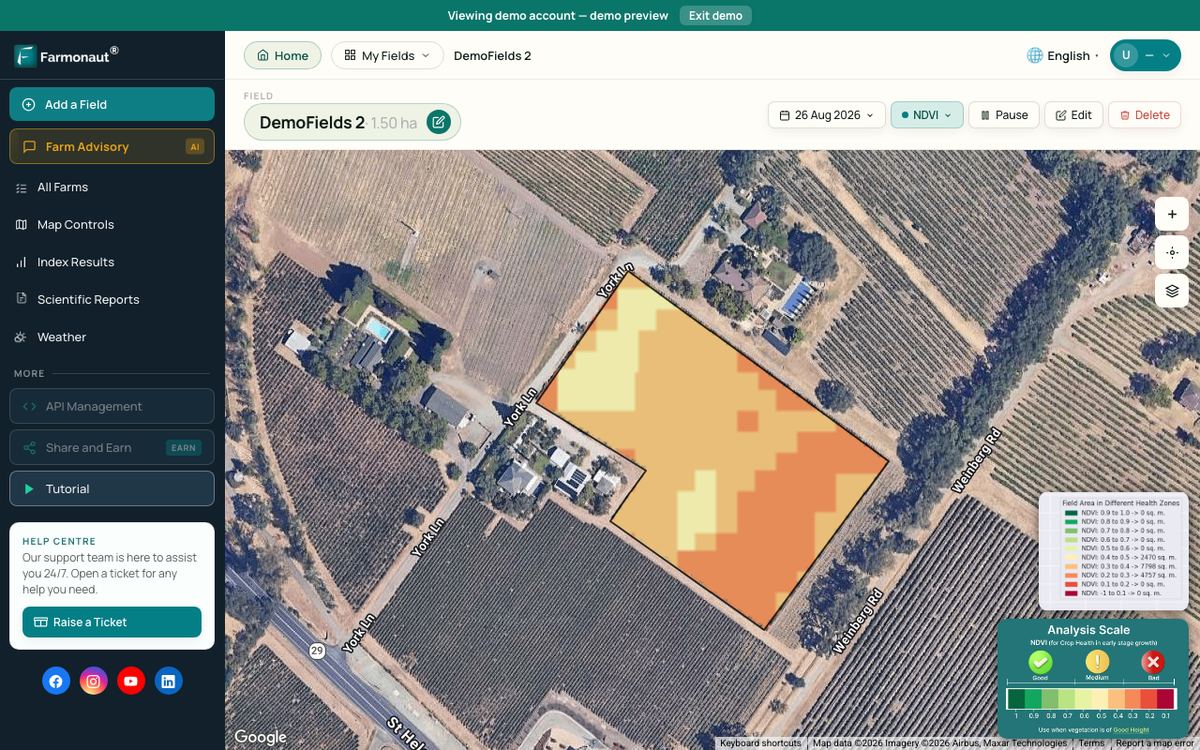
Bag numbers start with the crop in the field. Satellite vegetation maps can show which corn fields are drying down first, so you can plan chopping and bagger bookings. Farmonaut’s satellite crop monitoring shows these maps for each field on web and mobile.
Related pages on our site: silage silo tips, the Farmonaut app, farm admin app, fleet management, product traceability, carbon footprinting, the satellite and weather API docs and US farmland investment.

▶ How satellites, AI and drones help farmers plan and grow crops. · 13:27
How we checked the numbers
Loss ranges come from the USDA Dairy Forage Research Center table as reproduced by Vita Plus. Costs come from the Kansas State AgManager study (2005 inputs), Nebraska Extension (2019) and the Manitoba machinery guide. Production numbers come from USDA NASS (January 2026). We did not use bag maker claims. Prices are guide or study values, not current dealer quotes, so check with local suppliers.
For a closer look at a related question, see our guide: Baled Silage, Silage for Cows & Baling Corn Silage.
FAQ
How long does silage keep in a bag?
Well-sealed silage can keep for about a year. The Wisconsin sizing example plans for a 360-day storage period. Keep it sealed and repair holes fast; once a bag is opened, feed it out steadily.
How much do silage bags save compared with a bunker?
Average total DM loss was 11.5% for bags against 23.5% for covered bunkers in the USDA Dairy Forage Research Center data reported by Vita Plus. At $40 per ton silage, that gap was worth about $4,800 per 1,000 tons. Your own saving depends on how well your bunker is run.
How many tons fit in a silage bag?
Nebraska Extension gives 100-150 tons as-fed for an 8 ft by 150 ft bag, and 350-450 tons for a 10 ft by 300 ft bag. Density decides the final figure.
Can you put haylage or grain in silage bags?
Yes. Haylage, high-moisture corn and snaplage are often bagged. Vita Plus notes that losses cost more on these high-value feeds, which makes bags easier to justify.
What should I use to patch a silage bag?
Use vinyl repair tape made for silage plastic. Nebraska Extension says duct tape is not suitable because air passes through it.
Farmonaut crop monitoring
Watch your silage corn from space
Draw your fields once and Farmonaut shows satellite vegetation maps for them through the season, on web, Android or iOS.



Keep reading
 BlogsHay for Cows: 7 Proven Tips for Best Milk Yield
 BlogsMilking Cows Near Me: 7 Powerful Dairy Innovations
 BlogsCow per Acre, Farm Rent, Yield & Planting Costs: A Comprehensive Guide
Sources
- Vita Plus, Bunkers, bags or piles: Storage options for high moisture corn and snaplage (USDA Dairy Forage Research Center loss data): vitaplus.com
- University of Nebraska-Lincoln BeefWatch, Should you be considering silage bags? (2019): beef.unl.edu
- Kansas State University AgManager, Bunkers, Piles, or Bags: Which is the most economical? (2005): agmanager.info
- University of Wisconsin Extension, Choosing and sizing silos: fyi.extension.wisc.edu
- University of Florida, Corn silage field day: reducing losses in bunkers and piles (2011): animal.ifas.ufl.edu
- Manitoba Agriculture, Farm machinery custom and rental rate guide: manitoba.ca
- USDA NASS, Crop Production 2025 Summary (January 2026): release.nass.usda.gov
- GOV.UK, Storing silage, slurry and agricultural fuel oil: gov.uk
- Penn State Extension, Forage Quality in Perspective: extension.psu.edu
- University of Kentucky Forage Extension, Hay and storage: forages.ca.uky.edu
Discussion
Questions, corrections or field experience? Share them below. First-time comments are reviewed before they appear, and your email is never published.
No comments yet. Be the first to add a question or your experience.

 AgroStar
 Native Seeds
 Andex
Andex FCF India
 Unifrutti Gulf
 Deluxe Conseil
 TVS Electronics
 BW Pipelines
 WICO
WICO Gen Chayat
 Chimera Innovation
 SkyHarvest
 Polaris Digitech
 Teledarbas
 Wild Oak Farm
 Licence holder · Niger · Gold










