

Chopping Corn for Silage: Cost, Price & Chopper Guide (2025)
” In 2025, over 60% of silage harvesters will feature automated yield monitoring for precise cost management. ”



Corn Silage 2025: A Modern Forage Powerhouse
Corn silage remains one of the most valuable and widely utilized forage resources in modern agriculture—highly prized among livestock producers due to its high energy content, digestibility, and reliable yields. It stands as a critical feedstuff for dairy, beef, and mixed animal farms across North America, Europe, and regions with suitable climates. As we progress into 2025 and beyond, increased global demand, sustainable farming trends, and technological advancements continue to shape virtually every aspect of chopping corn for silage, from harvesting techniques to dynamic pricing and advanced silage chopper equipment options.
Anyone new to the feed itself can start with how farms make and store silage before looking at chopping costs.

- ✔ High nutritional value fosters animal health and milk/meat output.
- 📊 Consistent quality reduces feed variability, supporting operational stability.
- 🔗 Supports sustainability with efficient use of land and byproducts.
- 🚀 Adapts well to modern precision agriculture and tech-enabled management.
- ⚠ Dependent on timing, technology, and ROI analysis for maximum economic return.
Chopping Corn for Silage: Techniques & Importance
The process of chopping corn for silage begins with critical, timely harvesting. This stage involves chopping whole corn plants into small pieces to facilitate fermentation and preserve nutritional content. In 2025, advances in precision moisture sensors and data-driven decision-making empower farmers to operate with remarkable accuracy in this phase.
Key Steps in Chopping Corn for Silage
- Determining the Right Time to Chop
- ✔ Optimal dry matter content: 32-38% is typically ideal, balancing yield and digestibility.
- 🚜 Too early: Lower energy, reduced fermentation.
🥀 Too late: Tough forage, harder compaction, lower digestibility.
- Chop Length Decisions
- 🌱 Shorter pieces (<1.5cm): Easier packing and air exclusion—key for high-quality, anaerobic fermentation.
- 🔬 Modern choppers often allow adjustable cut lengths, influenced by crop characteristics and bunker design.
- Compaction, Storage & Preservation
- 👉 Immediate compaction after chopping minimizes oxygen, supporting rapid fermentation and reducing spoilage.
” Advanced silage choppers can increase forage processing efficiency by up to 35% compared to models from 2020. ”

Why Chopping Corn for Silage Matters
- ✔ Preserves maximum nutritional and energy content
- 🔩 Enables efficient, consistent fermentation for superior silage preservation
- 📈 Maximizes feed value and reduces wastage
- 🔬 Critical for animal performance and farm profitability
- ⏲️ Chopping is the foundation for subsequent storage management and feed-out success
Tech Innovations Transforming Corn Silage Harvesting
In 2025, agriculture technology is turning silage production into a sophisticated, data-driven operation. Let’s explore the innovations transforming how farmers optimize chopping corn for silage efficiency, quality, and profitability.
Key Technological Advancements
- 🛰️ Moisture & Nutrient Sensors: Embedded in silage choppers for real-time monitoring of moisture and nutritional content.
- 🦾 Automation & Guidance: GPS-enabled harvesters and auto-steering reduce overlap, optimize field coverage, and save fuel.
- 🔬 Kernel Processors: Crush corn kernels to boost digestibility and energy release for livestock.
- 📡 Data Platforms: Internet-connected machinery streams harvest and yield data for management and traceability.
- 🌱 Remote Monitoring: Satellite-based systems like Farmonaut provide real-time insights on crop health, field moisture, and silage readiness.

Visual Checklist: The 2025 Silage Chopper Technology Suite
- 🛰️ Moisture sensors: Accurate field-by-field data
- ⚙️ Precision auto-steering: Maximizes coverage, saves fuel
- 🔗 Cloud data sync: Supports yield mapping and cost tracking
- 🚦 Chop-length automation: Consistent forage quality, less operator error
- 🧠 AI-powered advisory: Adaptive to weather, crop condition, and field yields

- ✔ Faster, more reliable data → better decision making
- 📊 Yield monitoring integrates into cost and price analysis
- ⚡ Greater efficiency lowers labor & fuel costs per ton
- 🔍 Improved traceability and compliance for premium markets
Market Dynamics: Corn Silage for Sale, Price Trends & Costs
The market for corn silage for sale in 2025 is shaped by a dynamic interplay of crop yield variability, local and global demand fluctuations, input cost inflation (including fuel, fertilizers, and labor), and the increasing focus on sustainable, locally sourced feeds.

Key Pricing Factors
- 📊 Moisture Content: Target of 32-38% dry matter commands higher prices per ton
- 🔬 Nutrient Profile & Testing: Labs or on-farm sensors verify energy/digestibility, attracting premium buyers
- 🚚 Transportation: Bulk tonnage & delivery distances affect on-farm corn silage price
- ✍️ Contracted vs. Spot Sales: Contract-based sales stabilize pricing for both sellers and buyers
- 🌎 Climate/resilient varieties → More stable annual production
- 📑 Quality certifications → Attract feedlots/dairies with premium contracts
- 🏭 Fuel & input prices → Direct impact on corn silage cost per ton
- 🌍 Local sourcing → Driven by sustainability and carbon cost pressure
- 🔗 Blockchain traceability → Opens export/industrial markets
2025 Silage Chopper Guide: Dion vs Claas and More
Equipping a farm for efficient chopping corn for silage hinges on selecting the right silage chopper technology. In 2025, established brands like Claas continue to dominate the market with their advanced, large-scale machines, while Dion offers innovative, cost-conscious options suited for small to medium-acreage farms and emerging agricultural markets.
Claas Silage Chopper: Renowned Performance
- 🔩 Jaguar series: Advanced cutting systems, automated kernel processors, and integrated cloud-based management.
- 📈 Throughput: Among the highest in the industry, ideal for high-yield operations.
- 🧠 Data integration: Supports precision cost tracking, yield mapping, and silage quality assessment.
- ⚡ Fuel efficiency: Hybrid and software-guided modes significantly reduce per-ton operational costs.
Dion Silage Chopper: Innovative & Accessible
- 💡 Modular units: Adapt to various scales and tractors, cost-efficient for small/medium farms.
- 📏 Adaptive cutting lengths: Quickly adjustable, promoting flexibility for diverse forage types.
- 🔧 Energy-saving drivetrains reduce fuel costs while maintaining reliability.
- 👥 Emphasis on affordability and after-sales support—Dion excels in emerging and locally focused markets.

Popular/Innovative Silage Chopper Brands and Models in 2025
- Claas Jaguar 990 Terra Trac
- Dion Scorpion XTrac
- John Deere 9900i
- Krone BiG X 1180
- New Holland FR Forage Cruiser
2025 Corn Silage Chopper Options: Technology, Cost & Performance Overview

Cost Considerations & ROI in Corn Silage Chopping
While the 2025 silage equipment market offers plenty of options, choosing the optimal chopper and operation mode requires a detailed cost and ROI analysis—especially as corn silage cost is increasingly scrutinized amidst global input price shifts and farm consolidation.
Breaking Down the Cost Structure
- 💵 Capital Outlay: High-end self-propelled choppers (Claas, Krone) demand significant initial investment but deliver lowest per-ton costs in high-volume settings.
- ⛽ Fuel & Maintenance: Fuel-saving tech reduces operational spend. Automation helps cut labor costs—vital for regions with volatile labor markets.
- 🛠️ Service & Parts: Access to reliable local support greatly affects downtime and ongoing ROI.
- 🤝 Leasing/Custom Hiring: On the rise in 2025—limits upfront capital, offers flexibility, and lets small farms access advanced machinery.
ROI Optimization Strategies
-
Align chopper scale to operation:
Match equipment throughput & features to annual silage needs and labor availability. -
Leverage tech for data-driven decisions:
Sensors pinpoint cost leaks, incorrect moisture, or compaction problems before they erode profits. -
Consider total cost-of-ownership:
Factor depreciation, insurance, maintenance, and expected resale value—not just sticker price. -
Document quality for premium markets:
Testing and traceability platforms (Farmonaut Traceability) enable better pricing for verified silage.
Precision, Monitoring & Innovation: The Farmonaut Perspective
As silage operations become more data-driven, Farmonaut is meeting the needs of farmers, agri-businesses, and governments through affordable, satellite-aided, and AI-powered agricultural solutions. Farmonaut provides stakeholders with the ability to monitor field health, moisture, yield, environmental metrics, and resource management from a single app or API.
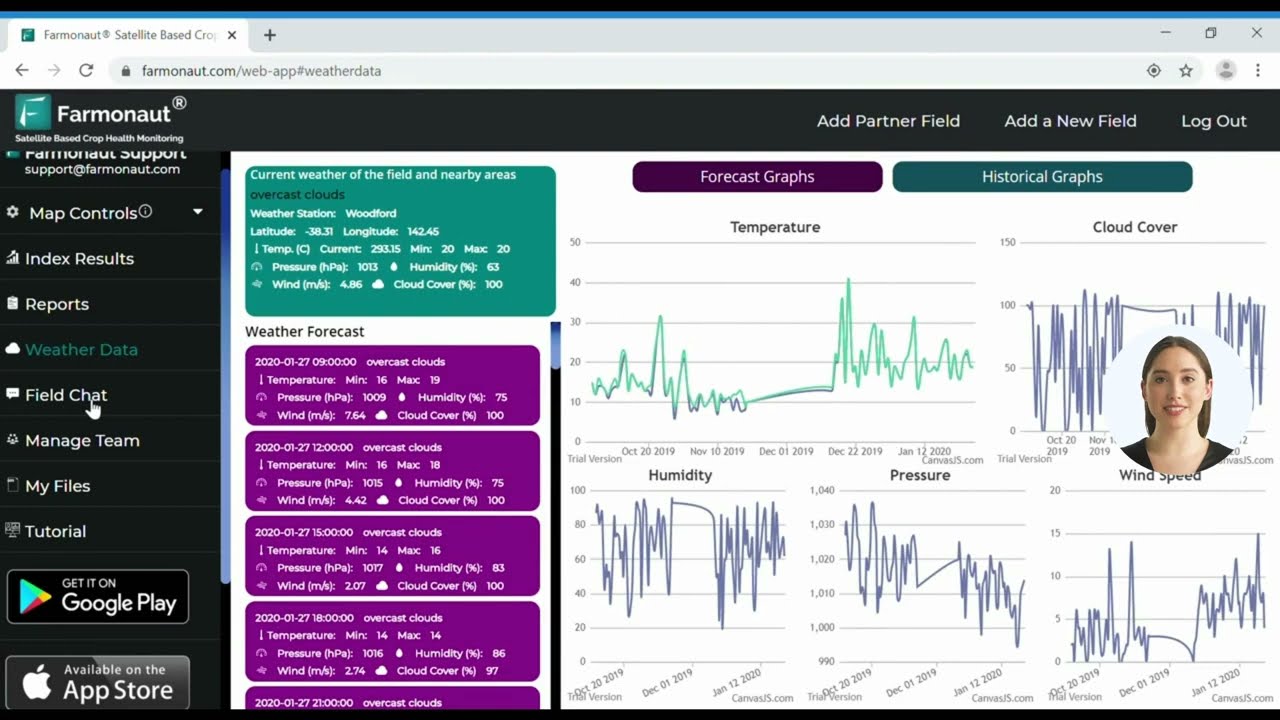
- 🌎 Satellite-based monitoring: Actionable insights on silage readiness, dry matter trends, and yield variability
- 🤖 Jeevn AI system: Offers localized, real-time strategies for harvest timing and resource application
- 🔗 Blockchain-powered traceability: Empowers compliance and transparency for corn silage sale and export opportunities
- 📱 Multi-platform access: Use Farmonaut API or any Android, iOS, or web device for 24/7 operational oversight
- 🌱 Environmental monitoring: Carbon footprint tracking supports sustainability certifications and greener farming practices
Best Practices: Chopping Corn for Silage in 2025 & Beyond
- ✔ Harvest at optimal dry matter (32–38%)
- 🌡 Use real-time moisture sensors for every field
- ⚙ Adjust chop length to match storage method and compaction needs
- 🚀 Invest in technology: yield mapping, kernel processing, traceability
- 🔗 Leverage analytical tools for ongoing process improvement and compliance
- 🌓 Visual List: Critical Factors For Chopping Corn for Silage in 2025
- Yield variability due to climate patterns
- Operational timing for minimized air exposure
- Verified traceability for premium market access
- Smart management of input costs (fuel, fertilizer)
- Reliable after-sales equipment service
FAQ: Chopping Corn for Silage, Silage Choppers, Prices, and More
What is the best time to begin chopping corn for silage?
Typically, the ideal window is when the corn crop reaches 32–38% dry matter content. This balances yield, digestibility, and fermentation potential—using real-time moisture sensors is increasingly standard in 2025 for field-specific precision.
How is silage quality evaluated before sale?
Lab analysis or on-farm testing is used to determine prerequisites like moisture, nutrient profile, and energy content. Providing reliable documentation or traceability reports helps attract premium buyers or contracts.
What affects the price of corn silage for sale in 2025?
Moisture content, feed value, logistics, market demand, input/fuel costs, and quality documentation are the core drivers. Regional climate, cost of transport, and proximity to major livestock/dairy farms can further influence pricing.
Which chopper is best: Claas, Dion, or other?
Claas remains a top choice for large farms—offering unmatched throughput and integrated telematics. Dion excels for small/medium farms thanks to modular affordability and reliable quality. Evaluate based on acreage, budget, and feature needs.
Can small farms access advanced silage chopper technology?
Yes! Dion silage chopper and custom-hire/lease options allow all farm sizes to benefit from advanced features—especially when paired with tech like Farmonaut’s API for resource planning and crop monitoring.
Conclusion: Shaping the Future of Corn Silage
As demand for efficient, high-quality forage continues to increase, chopping corn for silage stands at the intersection of technology, sustainability, and profitability. In 2025 and beyond, the ability to optimize every aspect—from harvest timing and compaction to equipment choice and market access—will differentiate the most successful farms.
With advanced silage choppers like Claas and Dion on the market, and with the rise of AI- and satellite-powered precision tools from innovators such as Farmonaut, operations of every scale can access real-time insights, reduce costs, and enhance feed quality, sustainability, and profitability.
For all farm operators—whether you’re managing a large livestock operation or a family farm—embracing new equipment technologies, data-driven management, and integrated monitoring will be pivotal for thriving in the competitive landscape of 2026 and beyond.
Stay ahead by combining the best of tradition and innovation in your silage systems—and leverage platforms (like Farmonaut) for transparency, sustainability, and next-level farm management.
Ready to elevate your silage and farm management in 2025?
- 🚀 Monitor fields with satellite-driven insights—get started with Farmonaut today
- 🔍 Track equipment & logistics: Farmonaut Fleet & Resource Management
- 🌱 Advance sustainability and secure market premium: Farmonaut’s Carbon Footprinting
- 🌍 Enhance traceability & compliance: Farmonaut Traceability
- 🛰️ API and developer tools: API Documentation Here

 Acro Insurance
 Geno
Geno Hayleys Agriculture
 Linx Agritech
 Adinet
 Save Your Soils
 Grandstream Algérie
 XOS Realty
 Geospatial Lab Africa
 Agro La Gándara
 HIPSAC
 ZOL Zimbabwe
 Juligerm
 AdBio
AdBio MISE Maroc
 NWNS
NWNS Red August Group
 Farm Inc
