

Top 10 Heavy Duty Agriculture Equipment for Tractors: Boosting Efficiency, Performance & Sustainability
Table of Contents
- Introduction
- Trivia: Facts That May Surprise You
- The Pivotal Role of Heavy Duty Agriculture Equipment for Tractors & Farming
- How to Select the Best Equipment for Your Farm
- Comparison Table of Key Features and Benefits
- Top 10 Heavy Duty Agricultural Equipment for Tractors
- Advanced Technology, Custom Solutions & Smart Systems
- Cost, Service & Support: What Every Farmer Should Know
- Explore More: Must-Watch Videos
- Satellite Technologies in Modern Farming (Farmonaut)
- Frequently Asked Questions
- Conclusion
Introduction
In today’s rapidly evolving world of agriculture, heavy duty agriculture equipment’s for tractors and farming are the backbone of productivity, efficiency, and long-term sustainability across farms of all sizes. Modern operations rely on robust, reliable machinery engineered to withstand the harshest field conditions, from endless row crops to advanced livestock facilities. With cutting-edge innovation, connectivity, and data analytics, this next-generation machinery not only amplifies performance but also ensures our agricultural systems remain resilient in the face of changing climates and heightened global demand.
Whether you’re overseeing a sprawling grain operation or a specialized poultry setup, the right tractor and implements make all the difference. They bring advanced horsepower, configurable hydraulics, smart telemetry, and precision farming tools to the forefront.
Trivia: Facts That May Surprise You
The Pivotal Role of Heavy Duty Agriculture Equipment for Tractors & Farming
Heavy duty agriculture equipment’s for tractors and farming play a pivotal role across today’s farms:
- ✔ Boosting productivity: Modern equipment allows for larger-scale operations, higher yields, and reduced manual labor.
- 💡 Enhancing efficiency: Smart systems, integrated implements, and configurable options streamline every phase from planting to harvest.
- 🌱 Enabling sustainability: Precision agriculture reduces input waste, lowers emissions, and preserves soil health.
- ⚡ Increasing resilience: Robust machinery withstands demanding field conditions, wide climate swings, and intensive workloads – a must for reliable operations.
- 🔎 Supporting management: Embedded telemetry, field mapping, and fleet management tools empower data-driven decisions that improve resource optimization and resource conservation.
The world’s top-performing farms don’t just invest in horsepower—they build integrated systems with smart, adaptable equipment, data-driven management, and ongoing support.
With these advancements, heavy duty agriculture equipment’s for tractors and farming prove themselves as both the workhorses and the central hubs of entire farm operations.
- 💡 Advanced Hydraulics: Enable seamless shift between diverse implements and speed up fieldwork transitions.
- 🚜 Smart Telemetry: Optimizes fuel use, schedules maintenance, and tracks real-time performance (see how field mapping helps).
- 🔧 Configurable Platforms: Adapt tractors and attachments for specific field and terrain conditions.
- 🌽 Integrated Implements: Save time and boost yields with synchronized planters, sprayers, and harvesters.
- 🔑 Precision Application: Tailor input delivery for maximum profit with minimum waste (fertilizer, water, seeds, and pest control).
How to Select the Best Heavy Duty Agriculture Equipment for Tractors & Farming
Making the right investment means considering all factors beyond just the price. Here’s how successful farmers approach selection:
-
Horsepower and Compatibility:
- Match tractor horsepower to implement requirements; ensures optimal performance and safety.
- Verify PTO options, transmission type, hydraulics, and weight distribution for accessory compatibility.
-
Functionality and Conditions:
- Analyze your crops, field size, soil types, and terrain to choose adaptable, durable, and specialized equipment.
-
Smart Technologies:
- Opt for models with integrated sensors, data analytics, and variable-rate applicators to drive efficiency and yield.
-
Maintenance, Support, and Service Network:
- Select manufacturers or suppliers who offer prompt parts availability, warranty, certified repair, and on-site service.
-
Total Cost of Ownership:
- Don’t just focus on the purchase price alone. Include fuel, labor, service, downtime risks, and resale value in your calculation.
Always conduct field trials or request demonstrations before making major equipment purchases—see how implements handle your actual soil, crops, and terrain.
- 🔍 Needs Assessment: Understand your operation’s unique demands.
- 🛠️ Try Before You Buy: Hands-on testing ensures compatibility.
- 📣 Supplier Consultations: Reliable advice comes from experienced, reputable dealers.
- 💬 Peer Reviews: Tap into independent reviews and industry-recognized associations for unbiased feedback.
- 📅 After-Sales Support: Minimize downtime with guaranteed service and comprehensive maintenance schedules.
Comparison Table of Key Features and Benefits
Returns from telemetry and variable-rate equipment depend on farm size, input prices and how the data is used, so run the numbers for your own acres.
What Heavy-Duty Farm Equipment Costs: 2025 List Prices
The University of Illinois farmdoc team publishes list prices for new machinery in a range of sizes, along with the tractor size it pairs with each implement. The August 2025 figures:
| Machine and size | Tractor paired (hp) | List price (2025) |
|---|---|---|
| Tractor, 140 PTO hp | — | $302,498 |
| Tractor, 310 PTO hp | — | $623,657 |
| Tractor, 640 engine hp (4WD) | — | $778,865 |
| Moldboard plow, 7 bottom | 205 | $74,718 |
| Chisel plow, 34 ft | 310 | $95,069 |
| Field cultivator, 44 ft 6 in | 310 | $149,608 |
| Conventional planter, 16-row | 205 | $274,743 |
| No-till planter, 24-row | 260 | $404,744 |
| Pull-type field sprayer, 90 ft | 95 | $86,930 |
| Self-propelled sprayer, 100 ft boom (high-crop) | self-propelled | $507,399 |
| Grain cart, 1,000 bu | — | $84,250 |
| Self-propelled forage harvester (before heads) | self-propelled | $584,000 |
Sources: farmdoc tractor costs, farmdoc field operations, farmdoc harvest operations and farmdoc forage operations, University of Illinois, August 2025. farmdoc assumes buyers pay 85% of list price.
Running costs matter as much as the sticker. farmdoc puts a new 310 PTO hp tractor at $255.80 an hour to own and run, including fuel at $3.00 a gallon and labour at $22 an hour, over 10 years at 300 hours a year. Combining corn with a 470 hp combine costs an estimated $54.40 an acre on 2,500 acres (farmdoc summary). Per-acre costs fall as the same machine covers more acres, so size equipment to the acres you farm rather than to the biggest model on the lot.
Top 10 Heavy Duty Agricultural Equipment for Tractors
Let’s take a deep dive into each essential piece of equipment, exploring their role, use cases, costs, and technological enhancements—vital considerations for any farmer looking to achieve robust, resilient, and sustainable operations.
1. Heavy Duty Plows
Plows remain a backbone implement in field preparation. Modern heavy duty plows use stronger steel, precision angles, and often embed smart sensors for depth and draft control—making them critical for breaking hardpan, aerating soil, and optimizing seedbed consistency across demanding field conditions.
- ⚙️ Types: Reversible moldboard, chisel, disc, and subsoiler plows tailored to specific crops and terrains.
- 💲 2025 list price: $74,718 for a 7-bottom moldboard plow and $95,069 for a 34 ft chisel plow (farmdoc, University of Illinois)
- 🔁 farmdoc pairs 6- to 10-bottom moldboard plows with 175–285 hp tractors (farmdoc)
- 🌱 Sustainability feature: Reduced tillage options & optimized fuel use

2. Precision Planters and Seeders
Smart precision planters leverage variable-rate technology and GPS mapping to optimize every seed’s position, depth, and spacing—farmdoc’s 2025 cost tables list planters up to 36 rows (farmdoc). These are game-changers for row crop producers and anyone aiming to boost farming efficiency and reduce waste.
- 🎯 Key benefit: Reduces input waste and maximizes yields
- 🔌 Smart sensors, ISO-bus integration for real-time adjustments
- ⚠ Risk or limitation: May require calibration and software updates
2025 list price: $74,797 for an 8-row and $274,743 for a 16-row conventional planter (farmdoc)
3. Field Cultivators
Cultivators offer essential weed control and seedbed preparation. Latest models come with adjustable tines, rolling baskets, and onboard tracking systems, improving soil health while preserving moisture.
- 🌾 Customizable shanks/teeth for deep or shallow operations
- 💡 Optional GPS and data logging
- 💲 2025 list price: $63,728 (25 ft 6 in) to $222,405 (69 ft 6 in) (farmdoc)
- ✔ Precise soil disturbance to control weeds while minimizing erosion
Over-cultivating fields can damage soil structure and increase erosion. Modern field mapping—like that available in Farmonaut’s solutions—helps farmers track field passes and optimize for sustainability.
4. Rotary Tillers
Perfect for mixing soil and organic residue, rotary tillers are indispensable in secondary tillage, particularly for fruit and vegetable farms or specialty crops that demand a fine, even seedbed. Their high efficiency is best realized when matched to the correct tractor horsepower eligibility and soil condition.
- ⚙️ PTO-driven, adjustable width (for narrow beds up to broad fields)
- 💧 Sustainability: Reduces runoff, maintains moisture
5. Sprayers: Self-Propelled & Tractor-Mounted
Modern sprayers (including high-clearance rigs) are at the technological frontier, bringing precision input application with integrated sensors to minimize waste, environmental impact, and operator exposure.
- 🚀 Smart Features: GPS-guided steering, automatic section shut-off, variable rate application
- 📏 Wide booms (24m+) available for commercial cropping
- 🧪 Pressure sensors and flow monitors to enhance application accuracy
- 💲 2025 list price: $86,930 for a 90 ft pull-type sprayer; $348,203–$507,399 for 80–100 ft self-propelled models (farmdoc)
6. Balers (Round & Square)
Heavy-duty balers enable mass forage harvesting and efficient crop residue management. Automated tying/wrapping, moisture sensors, and bale ejection systems dramatically cut labor and time, supporting sustainability through reduced spoilage and improved storage.
- 🌾 Suitable for hay, straw, soybean residue
- ⚠ Ensure compatibility with tractor PTO and hydraulic capabilities
- 🔵 Round Balers: Fast, automated, ideal for large volumes & easy transport
- 🟧 Square Balers: Compact stacks, vital for maximum storage efficiency and ease of feeding
7. Harvesters (Combine & Forage)
Combine and forage harvesters, equipped with smart telemetry, mapping, and yield monitoring, are central for large-scale farms where uptime, throughput, and precision govern profitability.
- 🌱 Functions: Cutting, threshing, separating, cleaning, and grain handling—often in a single automated pass
- 💲 A self-propelled forage harvester lists at $584,000 before heads; combining corn with a 470 hp combine costs about $54.40 an acre (farmdoc forage; farmdoc summary, 2025)
Newest combines sync satellite data with onboard yield sensors, instantly generating maps for targeted fertilizer and seed plans—further boosting profit and sustainability, especially when using satellite-based crop monitoring.

8. High-Clearance Tractors & Custom Spraying Rigs
For tall crops like maize, canola, or cotton, high-clearance tractors—with adjustable axles/frames—are irreplaceable for applying pesticides, fertilizers, and irrigation during late growing seasons. Paired with custom rigs, this heavy duty solution expands access and control.
- 🚜 Adaptable: Handles tall, dense, or specialty crop fields
- 🌐 Advanced Guidance: GPS-based steering, height sensors for obstacle avoidance
- 💲 High-crop self-propelled sprayers list at $348,203–$507,399 for 80–100 ft booms (farmdoc, 2025)

9. Poultry & Livestock Automated Feeders
Essential for poultry farming equipment for sale and advanced livestock facilities, today’s automated feeders deploy precise rations, monitor animal feeding behavior with real-time alerts, and promote both biosecurity and welfare.
- 🐥 For Poultry: Brooding, feeding, egg collection are all automated; climate control systems ensure optimal barn conditions
- 🐄 For Livestock: Monitors intake, records health, and issues alarms for abnormal trends
The highest efficiency poultry barns deploy turnkey setups that integrate feeding, collection, waste management, and climate regulation—delivered by only the most reputable suppliers in the sector.
10. Manure Spreaders/Waste Management Setups
Sustainable farming thrives on closed-loop nutrient management, making heavy-duty manure spreaders and waste handlers indispensable. These distribute organic matter evenly across fields, recycle nutrients, and reduce commercial fertilizer dependency—key for long-term soil health.
- ♻️ Benefit: Enhances nutrient cycling, boosts yields, lowers operational costs, and improves environmental compliance
- 🧑🔧 Integrated: Many new spreaders feature application rate control, GPS, and field record integration
Advanced Technology, Custom Solutions & Smart Systems in Agriculture
Custom agriculture heavy-duty industry machinery has expanded farm capabilities far beyond standard tractor attachments. Today’s top manufacturers are engineering machines tailored for specific crops, terrains, and production goals:
- 🛰 Precision Sensors & Smart Telemetry: Sensor arrays, GIS, and data analytics integrate seamlessly, providing fine-tuned control and alerts down to the row or barn.
- ⚙️ Custom Implements: Forest and plantation advisory systems bring satellite insights directly to machinery operators for smarter input and planning.
- 🥚 Automated Egg Collection & Brooding: For poultry operations aiming to scale, turnkey setups include everything from automated feeders to manure management.
- 🌡 Climate Controlled Barns: Now commonly linked via apps for instant tweaks to ventilation, humidity, and temperature.
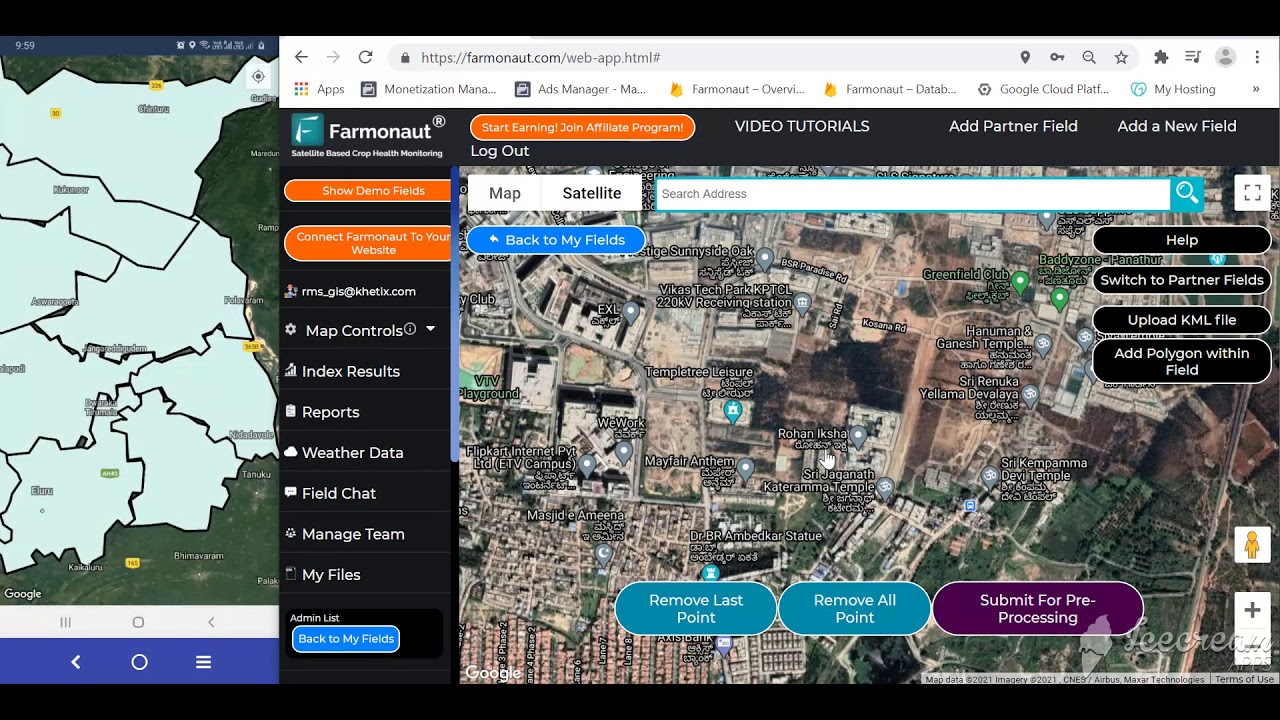
- 🚛 Fleet Management: Systems such as Farmonaut’s platform let farmers monitor, allocate, and optimize entire machinery fleets centrally—reducing downtime and maximizing productivity.

Demand for connected and automated machinery is rising as farms look to cut labour and input costs.
- ✅ AI-Driven Advisory Systems: Generate site-specific recommendations, reducing guesswork (Learn more).
- ✅ Blockchain Traceability: Secure food supply chains for global compliance (see Farmonaut’s traceability).
- ✅ Real-Time Environmental Monitoring: Automated resource management lowers emissions and optimizes water usage (see carbon tracking example).
- ✅ Remote App & API Access: Mobile and web dashboards make operational management instantaneous (Try Farmonaut Apps).



Cost, Service & Support: Maximizing ROI with Heavy Duty Equipment
For all agricultural decision-makers, total cost of ownership is more critical than upfront price:
- 🛠️ Routine Maintenance: Check intervals, costs, and availability of certified service centers.
- ⌚ Uptime: Select brands with industry-recognized after-sales support and bulk parts availability—essential for narrow, high-demand seasons.
- 💰 Resale Value: Consider reputation for durability and how long equipment can operate before major overhaul is needed.
- 📉 Depreciation: Compare makes/models’ longevity and likely resale price after 5 or 10 years.
- 🌱 Sustainability: Choose energy-efficient engines, modules, and upgradeable software to futureproof investments (calculate carbon impact).
Numerous organizations are recognized for superior farm equipment in the agriculture and turf equipment sector, including international industry associations and certification agencies. Their independent evaluations are gold standards for durability, efficiency, and environmental compliance across tractors and implements.
How Much Are Tractors for Farming? Breaking Down Costs
- ⏩ 85–120 PTO hp: $216,444–$276,464 list price (farmdoc, University of Illinois, August 2025)
- ⏩ 140–240 PTO hp: $302,498–$447,279 list price
- ⏩ 260–310 PTO hp and 390–640 engine hp: $563,314–$778,865 list price
Additional costs accrue with advanced technology (telemetry, GPS guidance), greater implement compatibility, and smart data systems.
Reducing Costs with Smart Fleet & Resource Management
Platforms like Farmonaut’s fleet management provide satellite-driven monitoring, real-time alerts, and predictive maintenance—key to maximizing uptime and reducing wasted fuel/labor on large farms.
- ⚠ Risk or limitation: Requires onboarding and staff training for maximum benefit.
Explore More: Must-Watch Videos for the Smart Agri Investor
- Farmonaut Large Scale Field Mapping & Satellite Based Farm Monitoring
- Farmonaut® Satellite Based Crop Health Monitoring
- Farmonaut Web System Tutorial: Monitor Crops via Satellite & AI


Satellite Technologies in Modern Farming: Farmonaut’s Role
As agriculture continues to evolve, satellite-driven insights lead the way in efficiency, transparency, and resilience. At Farmonaut, we empower our users with advanced satellite-based monitoring across operations:
- 🔭 Crop Monitoring: Leverage NDVI, soil-moisture, and real-time vegetation health indicators to pinpoint stress, disease, and input needs.
- 🤖 AI & Blockchain Integration: Drive informed decision-making for everything from input optimization to traceability along the supply chain.
- 🌍 Environmental Impact Tools: Track carbon emissions, resource use, and regulatory compliance effortlessly (See our carbon footprinting product).
- 📈 Fleet & Resource Management: Our platform reduces operational costs and increases uptime across every piece of field equipment.
Accessible via Android, iOS, browser, and API (API Access Here; Developer Docs), Farmonaut solutions are ready to support smallholder farmers, large agribusinesses, and government clients. Our subscription-based model offers flexibility for every scale and budget.
Why Satellite Technology?
- 🛰️ Affordable: Eliminate expensive field hardware—get actionable insights anywhere, any time.
- 🏭 Industry-Spanning: Optimize agriculture, mining, infrastructure, and more from a single dashboard.
- 🚀 Scalable: Subscription and API options serve both smallholders and entire corporate fleets.
Farmonaut is proud to advance farming efficiency, sustainability, and total performance across the globe.
FAQ: Heavy Duty Agriculture Equipment’s for Tractors and Farming
Which organization is recognized for its superior farm equipment in the agriculture and turf equipment sector?
Multiple industry associations and international certification bodies evaluate and recognize superior farm equipment for their durability, innovation, and service support—helping farmers identify the most reliable manufacturers and suppliers worldwide.
How much are tractors for farming?
Tractor prices vary widely:
- Compact tractors (under 85 hp) are not covered by the University of Illinois tables; get dealer quotes.
- 85–120 PTO hp: $216,444–$276,464 list price (farmdoc, August 2025)
- 140–640 hp: $302,498–$778,865 list price
Features like GPS guidance, advanced hydraulics, and smart telemetry can add significantly to the base cost.
What are the maintenance considerations for heavy duty agriculture equipment for tractors and farming?
Maintenance requires:
- Following manufacturers’ recommended service intervals
- Ensuring quick access to spare parts
- Choosing suppliers with widespread certified service/repair networks
- Leveraging fleet management and remote diagnostics for proactive maintenance
Why is custom agriculture heavy-duty industry machinery important?
Custom machinery is tailored to fit unique production goals, specific crops, and challenging terrains. It maximizes productivity, minimizes labor, improves sustainability, and can operate efficiently where standard tools fail.
Are poultry farming equipment for sale compatible with standard tractors?
Poultry feeders and brooders are usually installed barn systems rather than tractor implements, so check their power and control needs with the supplier. For larger automated setups, consult suppliers regarding control systems, power needs, and barn layouts to ensure seamless integration.
Conclusion: Building Resilient & Sustainable Farming Operations
Investing in the right heavy duty agriculture equipment’s for tractors and farming empowers modern farms to meet today’s productivity, sustainability, and efficiency imperatives. With robust, well-supported custom and standard machinery—engineered for smart farming, telemetry, and data insight—growers minimize costs, streamline labor, and boost yields even in the face of market, climate, or operational challenges. As we continue to push boundaries with satellite technology and innovative solutions, the backbone of tomorrow’s agriculture will be built on strong, data-informed choices made today.
Ready to optimize your operations? Explore how satellite-driven platforms, precision implements, and integrated management can transform your fields and facilities for the better—visit Farmonaut for cutting-edge solutions in farming and resource management.
Sign up for Farmonaut’s cutting-edge satellite solutions today to start transforming your farm’s efficiency and sustainability. Check out our large scale farm management tools for actionable field analytics and optimize every operation from seed to sale.
Discussion
Questions, corrections or field experience? Share them below. First-time comments are reviewed before they appear, and your email is never published.
No comments yet. Be the first to add a question or your experience.

 Dextrago
 Kubota
 FFBS
FFBS Jontra
 Kalustyan
 Tucor
Tucor Geno
Geno Hayleys Agriculture
 Linx Agritech
 Adinet
 Save Your Soils
 Grandstream Algérie
 XOS Realty
 Geospatial Lab Africa
 Licence holder · Niger · Gold










