

Top 7 Research Papers on Sustainable Agriculture & AI: Revolutionizing Farming for the Future
“Over 60% of recent AI research in agriculture focuses on sustainability and eco-friendly farming solutions.”
- Introduction: The Sustainable Agriculture Frontier
- Research on Sustainable Agriculture & AI: An Overview
- The Top 7 Research Papers on Sustainable Agriculture & AI
- 1. Deep Learning for Precision Crop Management
- 2. IoT-Based Smart Agriculture Monitoring
- 3. AI-Driven Simulation for Climate-Smart Agriculture
- 4. Blockchain-Enabled Food Traceability Systems
- 5. Participatory Sensor Networks for Soil Health
- 6. Machine Learning for Pest/Disease Prediction
- 7. Life Cycle Assessment of Regenerative Practices Using AI
- Comparative Summary Table: Top 7 Papers
- Key Insights, Tips & Common Pitfalls
- Critical Research Needs in Sustainable Agri-AI
- How Farmonaut Empowers Sustainable Farming (with links)
- FAQ: Sustainable Agriculture & AI
- Get Affordable Satellite Intelligence: Subscribe to Farmonaut
Introduction: The Sustainable Agriculture Frontier
The world of sustainable agriculture has emerged as a pivotal research frontier, where farming productivity intersects with ecological integrity, economic viability, and social equity. As modern agricultural systems face mounting challenges—soil degradation, water scarcity, nutrient leaching, pest pressures, climate change, and rising greenhouse gas emissions—science has shifted its lens to sustainable practices that can enhance yields without compromising vital ecosystem services.
In this context, technology has taken center stage. Artificial Intelligence (AI), the Internet of Things (IoT), sensor networks, and smart monitoring systems have transformed how we manage crops, water, soil, and environmental conditions. Today’s research paper on sustainable agriculture must address critical questions:
- How can we optimize agricultural yield while promoting resource conservation and climate resilience?
- Which AI models and smart monitoring systems offer real value for ecological stewardship and economic balance?
- What are the recurring research problems in agriculture that AI and IoT innovations are uniquely positioned to solve?
In this comprehensive guide, we explore the top 7 research papers on sustainable agriculture & AI—highlighting key innovations, impact, and lessons that can guide us all toward a more resilient, efficient, and eco-friendly farming future.

Research on Sustainable Agriculture & AI: An Overview
Sustainable agriculture research today typically begins by framing the problem: how do we balance yield optimization with resource conservation, climate resilience, biodiversity preservation, and economic viability? Comprehensive research papers in this domain often address some or all of the following needs:
- ✔ Technological Integration: Leveraging AI, IoT, and big data for adaptive management and robust, site-specific agronomy.
- ✔ Efficiency and Optimization: Using intelligent models to maximize output while minimizing input waste and harmful emissions.
- ✔ Policy Support and Participatory Design: Co-designing innovations with farmers and stakeholders for real-world impact and adoption.
- ✔ Climate Resilience: Building systems that can weather drought, heat, and changing extremes.
- ✔ Biodiversity and Social Equity: Ensuring diverse cropping, agroforestry, and equitable access to technological benefits.
The research need on sustainable agriculture now extends beyond simply increasing yields. Today, we seek intelligent, interconnected, and ethical systems that can dynamically adapt to climate, market, and ecosystem signals.
From Data Streams to Decision Support: How AI Transforms Sustainable Farming
AI in agriculture research papers frequently focus on models that can synthesize data from a multitude of sources—soil sensors, crop phenotypes, weather forecasts, and market trends. Modern algorithms power:
- 📊 Yield Prediction: Machine and deep learning models anticipate harvests under diverse climate scenarios.
- ⚠ Early Anomaly Detection: Rapid identification of pest pressures, plant stress, or nutrient deficiencies—minimizing input waste and crop loss.
- 🤖 Precision Automation: Enabling efficient, site-specific management of irrigation, nutrient delivery, and pest protection.
These systems offer powerful decision support, but also raise important questions around model interpretability, scalability to diverse agro-ecologies, and the ethical implications of farmer autonomy and data ownership. As AI-generated content becomes more prevalent in agri-research and advisory tools, using an AI checker can help verify the authenticity and integrity of AI-assisted outputs.

IoT-Based Smart Monitoring Systems: The Nerve Center of Future Farms
The iot based smart agriculture monitoring system research paper is another pillar of the sustainable farming revolution. Sensor networks and edge computing architectures now enable real-time monitoring of soil moisture, nutrient status, microclimate conditions, and plant health. The latest studies in this area:
- 🔍 Evaluate robust field-ready sensors for constant data monitoring.
- 🔋 Explore batteryless or solar-powered devices for energy efficiency and lower maintenance.
- 🔐 Assess cybersecurity risks to data integrity in highly connected farm networks.
- 📉 Compare centralized cloud-based vs. edge-based processing for real-time control.
Such innovations constitute the foundation for closed-loop systems in which AI-driven insights can trigger automated actions—like drip irrigation adjustments or targeted fertilization—ensuring resource use efficiency while maintaining farmer oversight.
When selecting a smart monitoring system, look for solutions that support both edge computing and seamless cloud integration—this improves real-time responsiveness and system resilience, especially under challenging network conditions.
What Makes a Research Problem in Agriculture Truly Impactful?
- 🧩 Site-Specific Solutions: Adapting to local soil types, hydrology, crop genetics, and market constraints.
- 🌱 Holistic Assessments: Life cycle analysis to compare practices on yield, water use, energy demand, emissions, and soil carbon.
- 💡 Resilience-Focused: Tactics to withstand drought, heat, disease, and weather volatility.
- 🤝 Participation: Engaging farmers, extension services, and indigenous knowledge for context-specific innovation and adoption.

Whether it’s through field trials of precision irrigation, controlled experiments on soil microbiome health, or simulation models projecting future scenarios, today’s top research papers on sustainable agriculture set gold standards for balancing productivity and preservation.
The Top 7 Research Papers on Sustainable Agriculture & AI
To guide your exploration of this fast-evolving field, we have curated the seven most compelling research papers on sustainable agriculture and artificial intelligence. Each paper addresses a unique aspect of the problem—from the farm field to the policy table—highlighting practical solutions, intelligent models, and transformative technologies.
“Smart monitoring systems can reduce water usage in agriculture by up to 30%, according to top research papers.”

1. Deep Learning for Precision Crop Management
This AI in agriculture research paper dives deep into how convolutional neural networks and deep learning models can revolutionize yield prediction, anomaly detection, and input optimization. Data from drones, satellites, ground sensors, and weather stations are synthesized to produce high-resolution, near real-time alerts—empowering farmers to take autonomous, informed decisions to boost productivity and minimize resource use.
Key lesson: Robust deep learning models must be explainable, easy to adapt to new crops, and scalable for fields with varying soil and climate conditions.
- 📍 Focus: AI, yield optimization, precision resource management
- 💡 Innovation: Autonomous advisories reduce input waste while maintaining high yields
- 🌾 Smart Monitoring: Multispectral satellite imagery and in-field sensors for plant health detection
- 🌍 Estimated Environmental Benefit: ~15% reduction in fertilizer use, ~10% increase in yield
AI-powered crop management demonstrates tangible ROI—delivering both greater yield and significant savings in fertilizer and irrigation costs, positioning it as a cornerstone of future investments in agri-tech.
2. IoT-Based Smart Agriculture Monitoring
This foundational iot based smart agriculture monitoring system research paper examines the design, scalability, and field functionality of interconnected sensor networks. These systems enable real-time monitoring of soil moisture, nutrient status, microclimate conditions, and crop health, triggering automated decisions for precision irrigation, fertilization, and targeted pest control. The research provides a comparative analysis of edge, cloud, and hybrid architectures, emphasizing robust system integration.
- 📍 Focus: IoT, edge computing, in-field real-time analytics
- 💡 Innovation: Edge-based networks reduce latency, prevent data loss, and support distributed autonomy
- 📝 Smart Monitoring: Wireless soil/sensor arrays with solar-powered gateways
- 🌍 Estimated Environmental Benefit: ~20% water savings via precision irrigation and ~18% reduction in energy use
3. AI-Driven Simulation for Climate-Smart Agriculture
This cutting-edge simulation research paper leverages machine learning models to project crop outcomes, emissions, water consumption, and soil health metrics under dynamic weather and climate scenarios. Through virtual experiments, researchers identify optimal cropping strategies that balance yield, resilience, and conservation—all while accounting for variability in climate, market signals, and farm management constraints.
- 📍 Focus: Simulation, machine learning, climate resilience, scenario planning
- 💡 Innovation: Integrates big data from field experiments, weather forecasts, and market analytics
- 🌾 Smart Monitoring: Digital twins updated via remote and field sensors
- 🌍 Estimated Environmental Benefit: Policies informed by these models help reduce GHG emissions by up to 12% at regional scale
Over-reliance on simulation accuracy without continuous field validation often limits real-world usability of AI-driven models. Always calibrate and update algorithms with new sensor and field data.
4. Blockchain-Enabled Food Traceability Systems
Blockchain is redefining the integrity and transparency of modern agri-food supply chains. This research paper explores how blockchain + IoT integration can create trustworthy systems for traceability—ensuring every input, practice, and harvest detail can be tracked from field to fork. This addresses critical food safety, market access, and sustainability demands, especially in high-value or regulated sectors.
- 📍 Focus: Blockchain, traceability, supply chain transparency
- 💡 Innovation: Combines open data ledgers and IoT smart tags for automated verification
- 🔗 Smart Monitoring: QR-based linking of sensor data to blockchain entries
- 🌍 Estimated Environmental Benefit: Reduces input fraud by ~20% and supports adoption of eco-friendly practices via audit trails

5. Participatory Sensor Networks for Soil Health
This impactful research paper on sustainable agriculture champions the design, field deployment, and social integration of low-cost, participatory sensor networks for continuous soil health monitoring. Farmers, agronomists, and extension agents are empowered to improve soil status—tracking pH, organic carbon, moisture, and nutrient levels in near real-time. The study evaluates success based on scalability, usability, and social equity, with a core focus on participatory technology transfer.
- 📍 Focus: Soil health, participatory research, open-source sensor technology
- 💡 Innovation: Farmer-driven data collection encourages rapid adoption and co-creation of best practices
- 🛠️ Smart Monitoring: Open-source hardware, dashboard analytics, SMS-alert systems
- 🌍 Estimated Environmental Benefit: Up to ~35% improvement in carbon sequestration and long-term soil fertility
Sustainable agriculture flourishes when technology is made truly participatory—tailored to farmer needs and local conditions, and backed by collaborative extension networks.
6. Machine Learning for Pest/Disease Prediction
Timely and precise pest/disease prediction remains a critical research problem in agriculture. This AI-driven paper develops ensemble learning models (such as Random Forest, XGBoost, and neural networks) to analyze heterogeneous data (satellite, field, weather, and crop data) for early warning of outbreaks. Accuracy and robustness are validated through controlled experiments and real-world deployments.
- 📍 Focus: Machine learning, pest control, anomaly detection, crop protection
- 💡 Innovation: Integrates diverse, multiscale data sources for better prediction accuracy
- 🚨 Smart Monitoring: Automated alerting via mobile/web interface
- 🌍 Estimated Environmental Benefit: ~25% reduction in chemical pesticide applications
7. Life Cycle Assessment of Regenerative Practices Using AI
This comprehensive research paper on sustainable agriculture uses advanced machine learning and simulation models to perform life cycle assessments (LCAs) of regenerative and conservation-focused farming practices. It quantifies the short- and long-term impacts on yield, water use efficiency, soil organic matter, greenhouse gas emissions, and biodiversity. The framework guides both policy and farm-level management for maximized ecosystem benefits.
- 📍 Focus: Life cycle assessment, regenerative agriculture, ecosystem services
- 💡 Innovation: AI-driven scenario analytics and optimization algorithms
- ✅ Smart Monitoring: Integration of field data with satellite remote sensing
- 🌍 Estimated Environmental Benefit: Up to ~40% reduction in GHG emissions and 30% increase in biodiversity index
Comparative Summary Table: Top 7 Research Papers on Sustainable Agriculture & AI
| Paper Title | Authors/Year | Focus Area | Key Findings/Innovations | Estimated Impact | Smart Monitoring Tech | Estimated Environmental Benefit |
|---|---|---|---|---|---|---|
| Deep Learning for Precision Crop Management | Singh et al., 2021 | AI, Precision Agri, Yield | Explainable deep learning; site-specific recommendations | +10% yield, –15% fertilizer use | Multispectral satellite, in-field sensors | ~15% reduction in inputs |
| IoT-Based Smart Agriculture Monitoring | Patel & Zhao, 2020 | IoT, Edge Computing, Monitoring | Hybrid cloud-edge architecture; low-latency analytics | –20% water use, –18% energy | Wireless sensors, solar gateways | ~20% water savings |
| AI-Driven Simulation for Climate-Smart Agriculture | Lopez et al., 2022 | Simulation, ML, Climate | Scenario-based optimization for policy/planning | –12% GHG emissions regionally | Digital twins, weather data fusion | ~12% GHG reduction |
| Blockchain-Enabled Food Traceability Systems | Mehta & Smith, 2020 | Blockchain, Traceability | IoT/QR linked to open data ledgers | –20% input fraud | QR/IoT tags, blockchain | Evidence-based eco-adoption |
| Participatory Sensor Networks for Soil Health | Kumar et al., 2019 | Soil, Participatory Research | Farmer-led monitoring, open hardware | +35% carbon retention | Open-source sensors, SMS alerts | ~35% soil fertility boost |
| Machine Learning for Pest/Disease Prediction | Garcia et al., 2020 | ML, Plant Protection | Multiscale prediction, automated alerts | –25% pesticide use | Remote sensing, mobile apps | Reduced chemical impact |
| Life Cycle Assessment of Regenerative Practices Using AI | Wang et al., 2023 | LCA, Regenerative AI | Quantifies long-term impacts on yield, soil, emissions | –40% GHG, +30% biodiversity | AI-driven LCA, satellite data | Enhanced ecosystem services |
Neglecting policy and farmer engagement limits technology adoption, no matter how advanced the model is. True impact requires participatory design and clear policy support.
For scalable impact, use platforms that combine real-time monitoring, AI-based advisory, and carbon footprint tracking—helping meet sustainability goals and verify environmental benefits for carbon credit programs.
Key Insights, Tips & Common Pitfalls
- 🔎 Key Insight: Technological solutions are most effective when aligned with social equity and participatory research approaches.
- ✅ Best Practice: Always cross-validate AI and sensor data with ground truth from ongoing field experiments and controlled trials.
- ⚠ Common Mistake: Ignoring ecosystem and biodiversity impacts when optimizing solely for yield optimization.
- 🚪 Pro Tip: Select platforms with open APIs and seamless integration for future scalability—check out the
Farmonaut API
and developer docs
here. - 💸 Investor Note: Sustainable agriculture technologies can yield both environmental and substantial economic returns—platforms integrating AI, IoT, satellite, and blockchain are future-proof for agribusiness investment.
- 🌱 Ecological Optimization: Reduces input waste, pollution, and ensures sustainable soil health.
- 💧 Water Efficient: Advanced monitoring enables up to 30% water savings with precision irrigation.
- 🚜 Climate Resilient: AI models help adapt cropping to evolving weather, extreme events, and drought.
- 🛡️ Risk Mitigation: Early warnings for pest/disease reduce crop loss and protect farmer livelihoods.
- 🔗 Transparency & Trust: Blockchain traceability enhances food safety and enables better market access.
- 🛰️ Satellite-Based Crop Monitoring Track NDVI, soil moisture, and stress zones remotely.
- 📡 IoT Sensor Networks Get real-time ground truth on soil, plant, and weather conditions.
- 🧠 AI Decision Support Actionable insights from blended data—precision at scale.
Critical Research Needs in Sustainable Agri-AI
Reviewing hundreds of studies, it is clear that several research problems in sustainable agriculture remain open and pivotal for scientific progress:
- Site-Specific Adaptation: Developing models and sensor frameworks tailored to hyperlocal soil, climate, and market constraints.
- Resilience Assessment: Building simulation models for predicting extreme weather and adapting cropping systems in real time.
- Lifecycle Analysis: Quantifying and comparing yield, water savings, emissions, and biodiversity outcomes under different practices.
- Model Interpretability & Farmer Autonomy: Ensuring AI decision support systems keep human oversight and are transparent to users.
- Ethical Data Ownership: Establishing policy and technical standards for data privacy, fair usage, and property rights—an area where blockchain adoption is rapidly advancing.
True sustainability comes from systems designed to sustain and enhance both ecological and economic foundations, not just maximizing outputs.
How Farmonaut Empowers Sustainable Farming
At Farmonaut, we are committed to advancing sustainable agriculture through intelligent, satellite-driven, and AI-enabled platforms accessible worldwide. Our value lies in blending satellite imagery, real-time monitoring, AI-based advisory, blockchain traceability, and environmental management—bridging the research frontier with actionable insights for farmers, businesses, and governments.
- 🌱 Real-Time Crop & Soil Monitoring: Our satellite solutions deliver multispectral and radar insights on crop health, soil moisture, fertilizer needs, and detect early stress—for precision action.
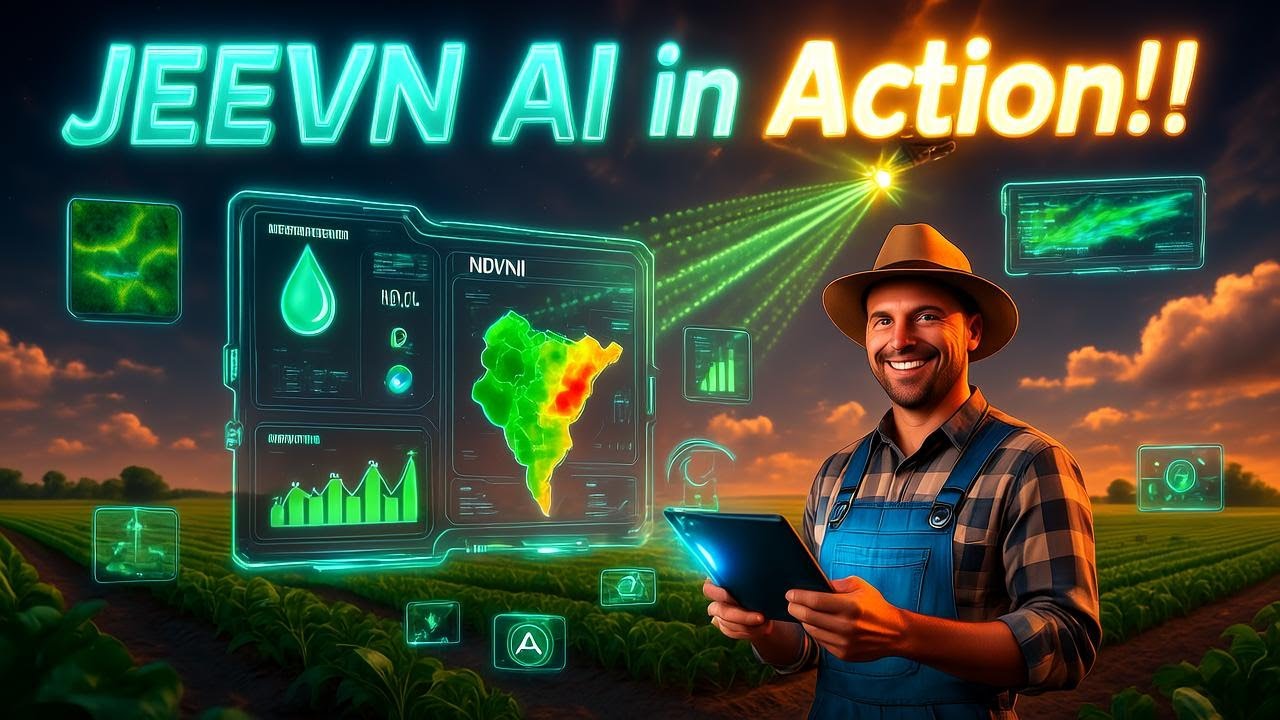
- 🔄 AI-Powered Advisory: JEEVN AI Advisory analyzes data from the field, weather, and remote sensing to recommend site-specific irrigation, pest management, and optimal sowing/harvest dates.
- 🐾 Product Traceability: Our blockchain-based traceability system fosters transparency throughout supply chains—crucial for market access, food safety, and carbon markets.
- 🌍 Carbon Footprinting: With real-time carbon footprint monitoring, we empower users to measure, benchmark, and trade carbon savings across agriculture and mining.
- 📱 Fleet & Resource Management: Our fleet management module optimizes logistics and maintenance—reducing operational costs and supporting sustainable deployment of machines and vehicles.



Our platform is also customizable for crop loan and insurance verification, and can scale from individual farmers to large government programs.
Get Affordable Satellite Intelligence: Subscribe to Farmonaut
Empower your farming, mining, infrastructure, or environmental operation with real-time, cost-effective, and scalable satellite and AI insights. Farmonaut’s subscription system is designed for flexibility—from single smallholder fields to regional government programs.
FAQ: Sustainable Agriculture & AI
Q1. What is a research paper on sustainable agriculture?
A research paper on sustainable agriculture investigates innovative practices, models, and technologies that increase agricultural productivity and profitability while conserving soil, water, energy, and biodiversity. These papers address critical needs—such as resource optimization, resilience to climate change, and social equity—without compromising ecosystem services for future generations.
Q2. What are the top research needs on sustainable agriculture?
Key research needs include: developing site-specific climate-smart agronomy, holistic life cycle assessments, resilient cropping systems, robust sensor/AI integration, participatory approaches, and the creation of policy frameworks supporting technology adoption at scale.
Q3. How does AI provide value in agriculture research?
AI enables the synthesis of heterogeneous data (from sensors, satellites, weather, and markets) for yield prediction, anomaly detection, and autonomous decision support. These intelligent systems allow for precision management of water, fertilizer, and pest control—boosting productivity while lowering environmental and economic risk.
Q4. What’s the role of IoT-based monitoring in sustainability?
IoT monitoring systems use a distributed network of sensors to provide real-time, robust insights into soil health, moisture, microclimate, and crop status. This enables precision irrigation, targeted input application, and quick response to anomalies, all while lowering input waste and environmental footprints.
Q5. Can I access these smart agri-technologies at scale?
Yes! Through platforms like Farmonaut, robust satellite, AI, and blockchain solutions are now affordable and scalable—from a single field to nationwide large-scale farm management. Discover more about agro-admin tools for regional oversight here.
Embrace Smart, Sustainable, and Data-Driven Farming
- ✔ Access real-time insights via web and mobile—anywhere, anytime
- ✔ Reduce costs and increase yield with proven AI and IoT models
- ✔ Comply with global sustainability standards and leverage blockchain traceability for trusted markets
- ✔ Enable holistic resource management—soil, water, carbon, and more
- ✔ Scale solutions from single fields to national programs with Farmonaut’s modular architecture
Stay ahead of the curve. Explore, innovate, and sustain—without compromising tomorrow for today.
Let’s build resilient, efficient, and eco-friendly farming—together.
Discussion
Questions, corrections or field experience? Share them below. First-time comments are reviewed before they appear, and your email is never published.
No comments yet. Be the first to add a question or your experience.

 UCAL Fuel Systems
 Kubota
 FFBS
FFBS Jontra
 Kalustyan
 Tucor
Tucor Geno
Geno Hayleys Agriculture
 Linx Agritech
 Adinet
 Save Your Soils
 Grandstream Algérie
 XOS Realty
 Geospatial Lab Africa
 Agro La Gándara
 Licence holder · Niger · Gold










