

Reviewed August 2026 against American Ag Network’s USDA workforce reporting, Precedence Research, and Mordor Intelligence.
Try it: Run your own numbers →
Agriculture Courses Online: Short Programs, Degrees, and Cost
A short agriculture course online runs 4 to 14 weeks, costs less than a single university credit, and ends in a certificate — not a degree. An online agriculture degree (associate or bachelor’s) runs 2 to 4 years, requires accreditation to qualify for financial aid, and is a different purchase entirely. Which one is worth your time depends on whether you need a credential fast for a specific skill gap, like remote sensing or irrigation scheduling, or a full qualification for a career change.
Table of Contents
- Short Course vs. Degree: What “Agriculture Courses Online” Actually Means
- Why Upskill Now: US Job Market and Precision-Ag Growth Data
- How to Judge the “Best” Online Agriculture Course
- Seven Subject Areas Inside Short Agriculture Courses Online
- Comparison Table: Course Type, Duration, Certification
- Online Agriculture Courses in the UK and Australia
- Calculator: Plan Your Weekly Study Time
- How to Choose the Right Program
- How Satellite Tools Support Course Learning
- Frequently Asked Questions
- Conclusion
- Try it: Run your own numbers



Short Course vs. Degree: What “Agriculture Courses Online” Actually Means
The phrase “agriculture courses online” covers four distinct products, and mixing them up is the fastest way to pick the wrong one. A short course or micro-credential is a single-topic module, 4 to 14 weeks long, ungraded or lightly graded, ending in a completion certificate rather than academic credit. A certificate program stacks several short courses into one credential, sometimes with a capstone project. A short agriculture degree — the phrase behind one of the search terms this page targets — almost always means an associate degree: roughly 60 semester credits, completed in 2 years full-time or longer part-time, and it is the shortest program that still counts as a degree. A full bachelor’s degree online runs around 120 semester credits over 4 years full-time.
That distinction matters for money as much as time. In the United States, only credit-bearing programs at institutions accredited by an agency recognized under Title IV are eligible for federal student aid through FAFSA. Short non-credit courses, even from well-known universities, generally sit outside that system — you pay the course fee directly, there is no federal loan or grant behind it, and there is no degree audit tracking your progress toward a qualification. If a program markets itself as a “short agriculture degree,” check its accreditor and credit-hour count before assuming it carries the same aid eligibility as a full associate or bachelor’s track.
Why Upskill Now: US Job Market and Precision-Ag Growth Data
The case for a short course over waiting for a multi-year degree is stronger when you look at where public-sector agricultural expertise and private-sector demand are each heading. Two separate data points point the same direction: fewer government agronomists, and a fast-growing market for people who can run precision-ag tools.
| Metric | Figure | Period | Source |
|---|---|---|---|
| USDA total workforce decline | ~20,000 employees (about 1 in 5 of staff) | January 2025 – January 2026 | American Ag Network |
| US precision farming market size | $4.37B (2025) → $15.23B forecast (CAGR 13.30%) | 2025 actual, forecast to 2035 | Precedence Research |
| US precision farming software market | $3.16B (2026) → $4.92B forecast | 2026 actual, forecast to 2031 | Mordor Intelligence |
USDA’s staffing fell by more than 20,000 employees — roughly 1 in 5 of the agency’s workforce — between January 2025 and January 2026, according to USDA staffing data reported by American Ag Network, even as the agency takes on expanded 2026 responsibilities. Fewer federal extension staff and inspectors shifts more of the day-to-day agronomic judgment calls onto farm managers and private consultants — exactly the audience a short course is built for.
On the demand side, Precedence Research puts the US precision farming market at $4.37 billion in 2025, projected to reach $15.23 billion by 2035 — a compound annual growth rate of 13.30% over that decade. That is remote sensing, variable-rate application, and yield mapping moving from a specialist niche into standard farm operations, and it is precisely the skill set covered in the precision-agriculture short courses below.
Narrow the lens to software specifically and Mordor Intelligence sizes the US precision farming software market at $3.16 billion in 2026, forecast to reach $4.92 billion by 2031. That is the dashboards, mapping platforms, and farm-management software that a remote-sensing or data-driven farm management short course will actually put in front of you.
How to Judge the “Best” Online Agriculture Course
“Best online agriculture courses” lists go stale within a year because providers add and drop offerings constantly. A checklist does not expire the way a ranked list does, so use these five tests on whatever is currently on offer when you search — for the 2025–2026 enrollment cycle or any cycle after it:
- Accreditation or institutional backing: Is the course run by a named university, land-grant extension service, or recognized professional body — or an anonymous content mill?
- A field or practicum component: Video lectures alone do not transfer to soil sampling or irrigation setup. Look for a hands-on module, even a self-directed one against your own land.
- Named instructors with agronomic credentials: A course page that lists an instructor’s degree, research area, or extension role is checkable; one that does not, is not.
- Cohort or self-paced, matched to your schedule: Cohort courses with live sessions suit people who need deadlines; self-paced suits people juggling planting or harvest windows.
- Stackability: Does the certificate count toward a longer credential later, or is it a dead end once you finish?
Run any course claiming to be “best for 2026” through those five points before paying. A course that fails two or more of them is a content package, not a credential.
Seven Subject Areas Inside Short Agriculture Courses Online
Rather than name specific providers whose catalogs change every term, here are the seven subject areas that dominate short agriculture and agronomy course listings, what each covers, and who it suits.
1. Precision Agriculture & Remote Sensing
Covers remote monitoring, NDVI interpretation, soil texture mapping, and yield prediction. This is the subject area tied directly to the $4.37B-to-$15.23B market growth cited above. Some course tracks incorporate satellite-based carbon footprinting as a hands-on data source for assignments. Best for agronomists, advisors, and tech-focused farm managers; almost universally offers a certificate.

2. Soil Health & Regenerative Agriculture
Organic matter management, water retention, erosion control, and pH balancing. A dedicated online diploma in advanced crop production and soil health management is a longer-format example of this subject area — closer to a certificate track than a single module. Best for soil scientists, crop managers, and mining-rehabilitation professionals moving into agronomic land use.
3. Integrated Pest and Disease Management (IPM)
Scouting protocols, resistance management, biological controls, and disease forecasting, often paired with app-based pest recognition tools. Best for crop consultants and orchard managers who need to reduce chemical spend without losing yield.
4. Sustainable Water & Irrigation Management
Drip and sprinkler system design, drought-adaptive scheduling, and evapotranspiration-based irrigation timing — relevant on both cropland and land recovering from mining disturbance. Best for farm managers and land-rehabilitation planners in water-constrained regions.
5. Forestry, Agroforestry & Land Restoration
Silviculture, species selection, thinning regimes, and biodiversity monitoring, increasingly taught alongside satellite-guided forestry advisory tools for tracking reforestation and post-mining land recovery. Best for forestry professionals and regeneration project managers.
6. Nutrient & Fertilizer Optimization
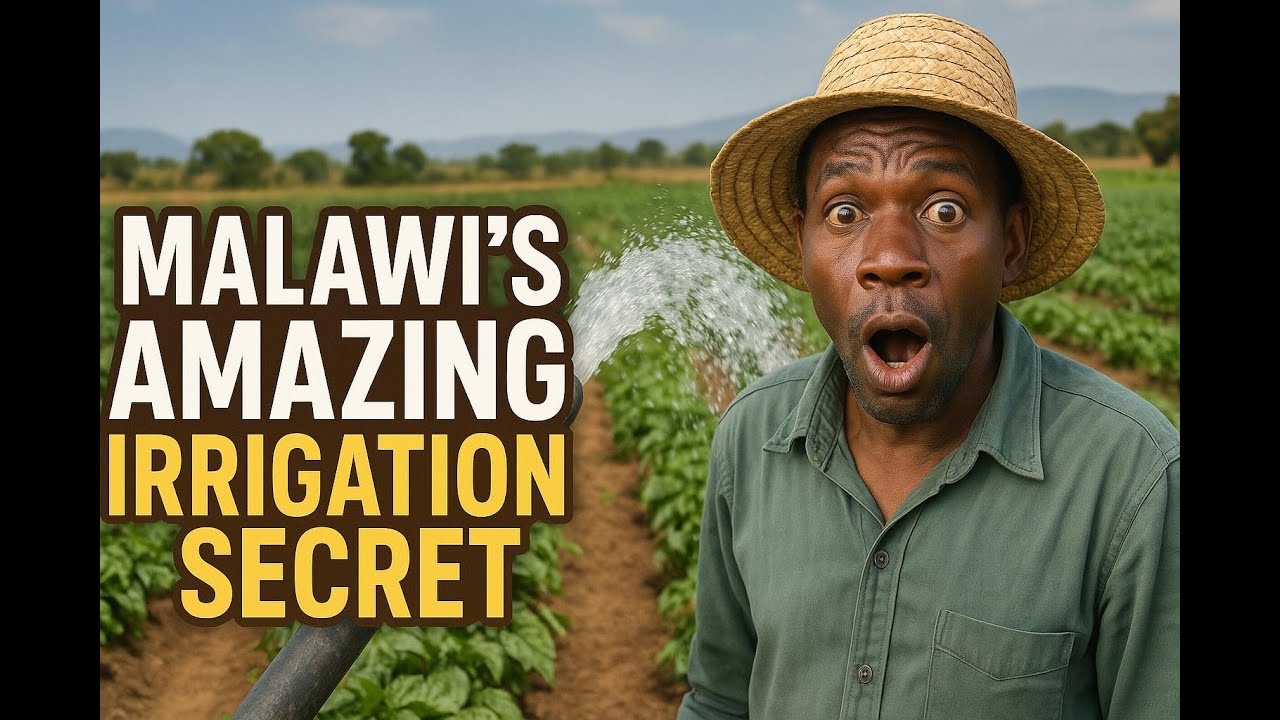
Site-specific nutrient management, variable-rate fertilizer application, lime amendments, and nutrient mapping. Best for agronomists and extension advisors working to cut input costs under environmental compliance rules.
7. Mining Land Rehabilitation & Agrarian Value Chains
Erosion control, water management, stakeholder engagement, and reintegrating agricultural value chains onto post-mining land. Relevant to ag-mineral interface planning, where mineral byproducts are evaluated for soil amendment use. Best for mining-site managers and land-rehab engineers.
Comparison Table: Course Type, Duration, Certification
| Program Type | Typical Duration | Credential | US Federal Aid Eligible | Best For |
|---|---|---|---|---|
| Single-topic short course | 4–6 weeks | Completion certificate | No | One specific skill gap (e.g., IPM scouting) |
| Stacked certificate track | 8–14 weeks | Certificate, sometimes with capstone | No (unless credit-bearing) | Career pivot within 3 months |
| Short agriculture degree (associate) | ~2 years full-time (≈60 credits) | Associate degree | Yes, if accredited | Entry-level credential + transfer path |
| Agriculture degree online (bachelor’s) | ~4 years full-time (≈120 credits) | Bachelor’s degree | Yes, if accredited | Full professional qualification |
On cost: tuition ranges for online agriculture degree programs are compiled annually by sites like Research.com, and because those figures are revised each year, quoting last year’s dollar range here would already be out of date by the time you read it — pull the current version directly before comparing programs. Short-course pricing has no equivalent aggregate tracker at all; it is set independently by each platform and institution, so check the specific course page’s fee rather than relying on a market-wide number.
Online Agriculture Courses in the UK and Australia
For UK searches specifically: Defra sets agricultural policy and funding schemes in England but does not itself run or accredit training courses. Recognized routes into UK land-based education run through agricultural universities and colleges and the land-based sector skills bodies that accredit their short-course catalogs. Check a UK provider’s accreditation status the same way you would a US one — a named awarding body, a published syllabus, and an instructor with agronomic credentials — before enrolling.
For Australian searches, workforce-level data on the agricultural sector is published by ABARES (the Australian Bureau of Agricultural and Resource Economics and Sciences) through its “Snapshot of Australia’s Agricultural Workforce” and quarterly agricultural workforce data releases. We could not confirm a specific, dated figure for Australian agricultural job openings per graduate within this review’s sourcing — rather than guess, use ABARES’s own workforce data page to pull the current quarter’s employment level and year-over-year change directly. Australian short courses in agriculture run through TAFE institutes and university continuing-education arms; the same accreditation and practicum checks from the section above apply.
Calculator: Plan Your Weekly Study Time
Course pages list total workload hours and a suggested number of weeks; this tool converts that into the hours per week you actually need to commit, and flags whether your available time gets you there on schedule.
Run your own numbers
Assumes workload hours are stated accurately by the provider and that your weekly time commitment stays constant; it excludes assignment deadlines, group-project scheduling, and holiday breaks, all of which can push a finish date later.
How to Choose the Right Program
Beyond the five checklist points above, run these practical steps before enrolling in any agriculture course:
- Check local relevance: A precision-ag course built around Midwest corn-and-soy rotations transfers poorly to Australian broadacre wheat or UK mixed livestock systems. Ask for a syllabus before paying.
- Verify credentials: Confirm the awarding body is a real accreditor, not a course platform’s own in-house “certification.”
- Assess hands-on components: Field labs, practicums, or real-site data projects transfer skill faster than lecture video alone.
- Review stackability: Ask directly whether the certificate counts toward a longer credential if you decide to pursue one later.
- Match skill level to goal: A beginner module will bore an working agronomist; an advanced module will lose a career-changer. Read the prerequisites, not just the title.
How Satellite Tools Support Course Learning
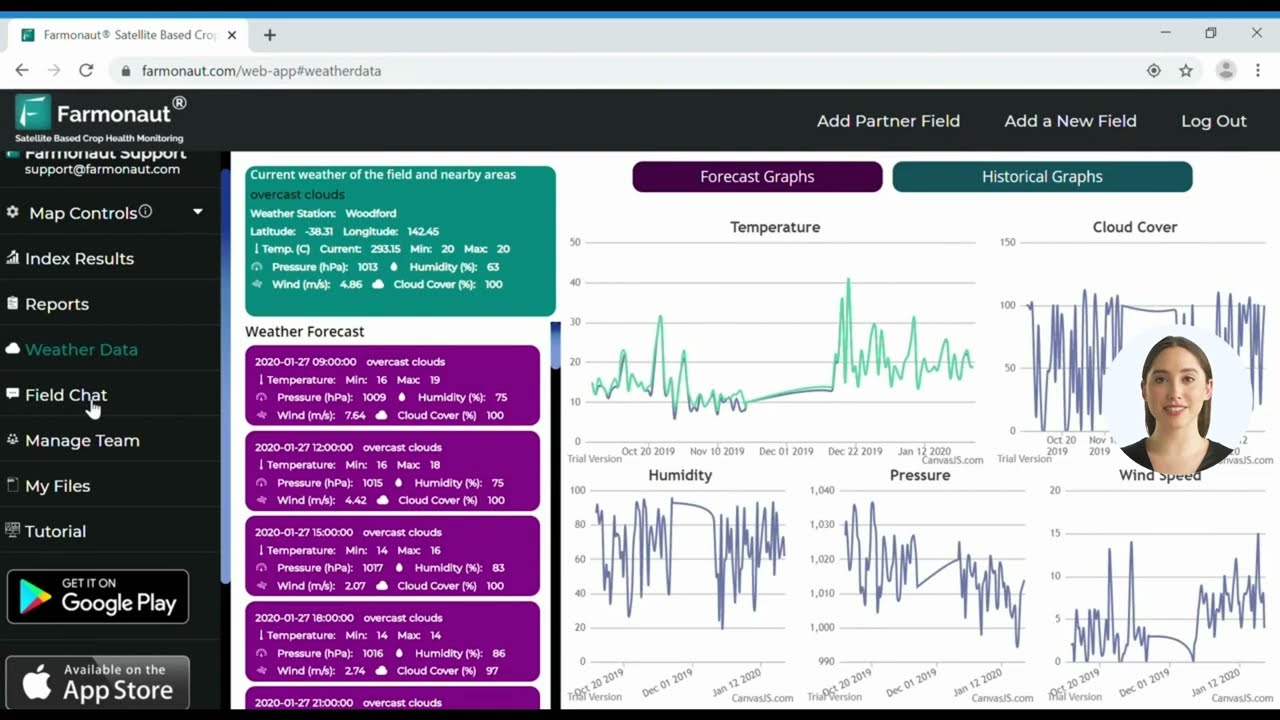
Several of the subject areas above — precision agriculture, irrigation efficiency, and land restoration — are easier to learn against real field data than against textbook examples. Farmonaut provides fleet and resource management tools, blockchain traceability, and AI-verified crop insurance tools that a course practicum can run against.
- 📈 Monitor crop, soil, and forest health in real time using satellite imagery for field-based coursework and project validation.
- 💡 Practice precision agriculture skills against live dashboards via the Web/App platform.
- 🛰 Track irrigation efficiency and soil moisture for water-management course modules.
- 🧑💻 Get instant advisory feedback via Jeevn AI for training projects, from cropping to mining-site reclamation.
- 🔗 Demonstrate compliance and traceability for post-harvest handling and supply-chain certification coursework.

Developers building coursework tools or dashboards on top of the same field data can connect directly via the public API and developer docs.
Frequently Asked Questions
What is the difference between a short agriculture course and an agriculture degree online?
A short course is 4–14 weeks, non-credit, and ends in a certificate; an online agriculture degree (associate or bachelor’s) is credit-bearing, accredited, and runs 2–4 years. Only the degree route is generally eligible for US federal financial aid.
What counts as a “short agriculture degree”?
In practice this means an associate degree — around 60 semester credits, completed in about 2 years full-time. It is the shortest program that still functions as an accredited degree rather than a certificate.
Are online agriculture courses available in the UK?
Yes, through UK agricultural universities, colleges, and land-based sector accrediting bodies. Defra sets agricultural policy but does not itself accredit training — check the awarding body on the course page directly.
How do I know if a course is one of the “best” for the current cycle?
Run it through five checks: real accreditation, a hands-on or field component, named instructors with checkable credentials, a schedule format that fits your calendar, and stackability toward a longer credential. Ranked “best of” lists go stale within a year; this checklist does not.
Will I get a recognized certificate from a short course?
Most reputable short agriculture courses issue a digital or physical completion certificate. Recognition depends on whether the issuing body is a named university, extension service, or professional association — check before assuming it carries weight with employers.
Does course content include satellite and precision-ag technology?
Increasingly, yes — precision agriculture is one of the fastest-growing subject areas, tracking a US market Precedence Research sizes at $4.37 billion in 2025, forecast to $15.23 billion by 2035.
Conclusion
Short agriculture courses online solve a narrow problem well: a specific skill, in weeks, at low cost, with no academic-credit overhead. Online agriculture degrees, including the shorter associate-degree route, solve a different problem: a full accredited qualification, with financial-aid eligibility, built over years rather than weeks. Neither replaces the other, and the checklist in this piece — accreditation, a hands-on component, named instructors, schedule fit, stackability — stays useful regardless of which specific courses are on offer when you read this.
Satellite monitoring, AI-guided advisory, and blockchain traceability — the kind Farmonaut builds — make it easier to turn either path’s classroom concepts into field results, whether that’s a six-week IPM module or a four-year online crop science degree. For a country-specific list of options, see our guide to online agriculture courses in Australia.


Discussion
Questions, corrections or field experience? Share them below. First-time comments are reviewed before they appear, and your email is never published.
No comments yet. Be the first to add a question or your experience.

 Pixxel
 Sapoznick Farms
 Agrotoken
 Blue BearX
 Insignito
 Croptimum
 DnCubed
 Field Capacity
 Indosistim Teknologi
 Liquify Digital
 CU Foods
 BeyondTech Global
 Rouge VC
 AgroGreen Dynamics
 AgroRisk
 Oath Inc
 Reddane Farming
 Esri North East Africa
 Licence holder · Niger · Gold










